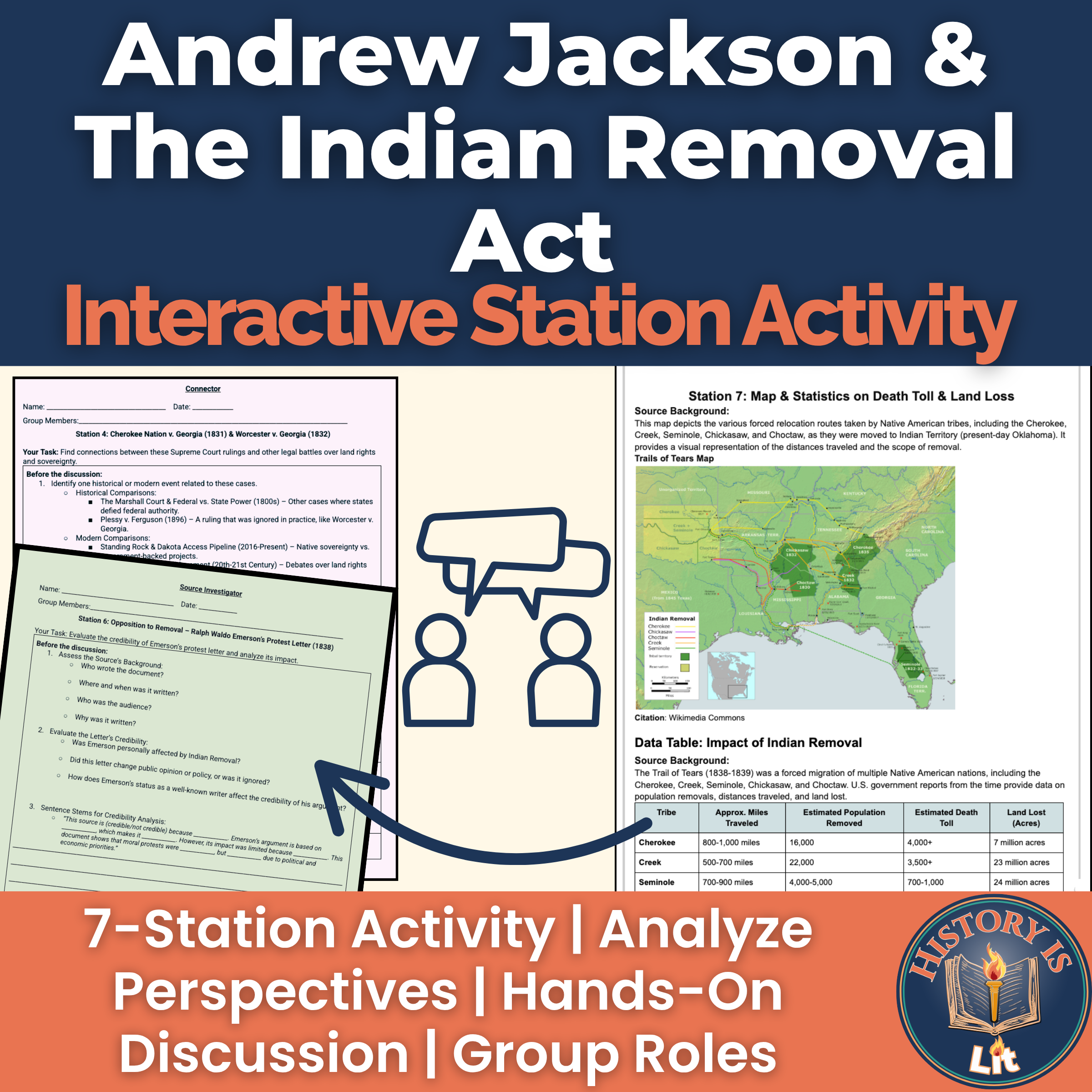
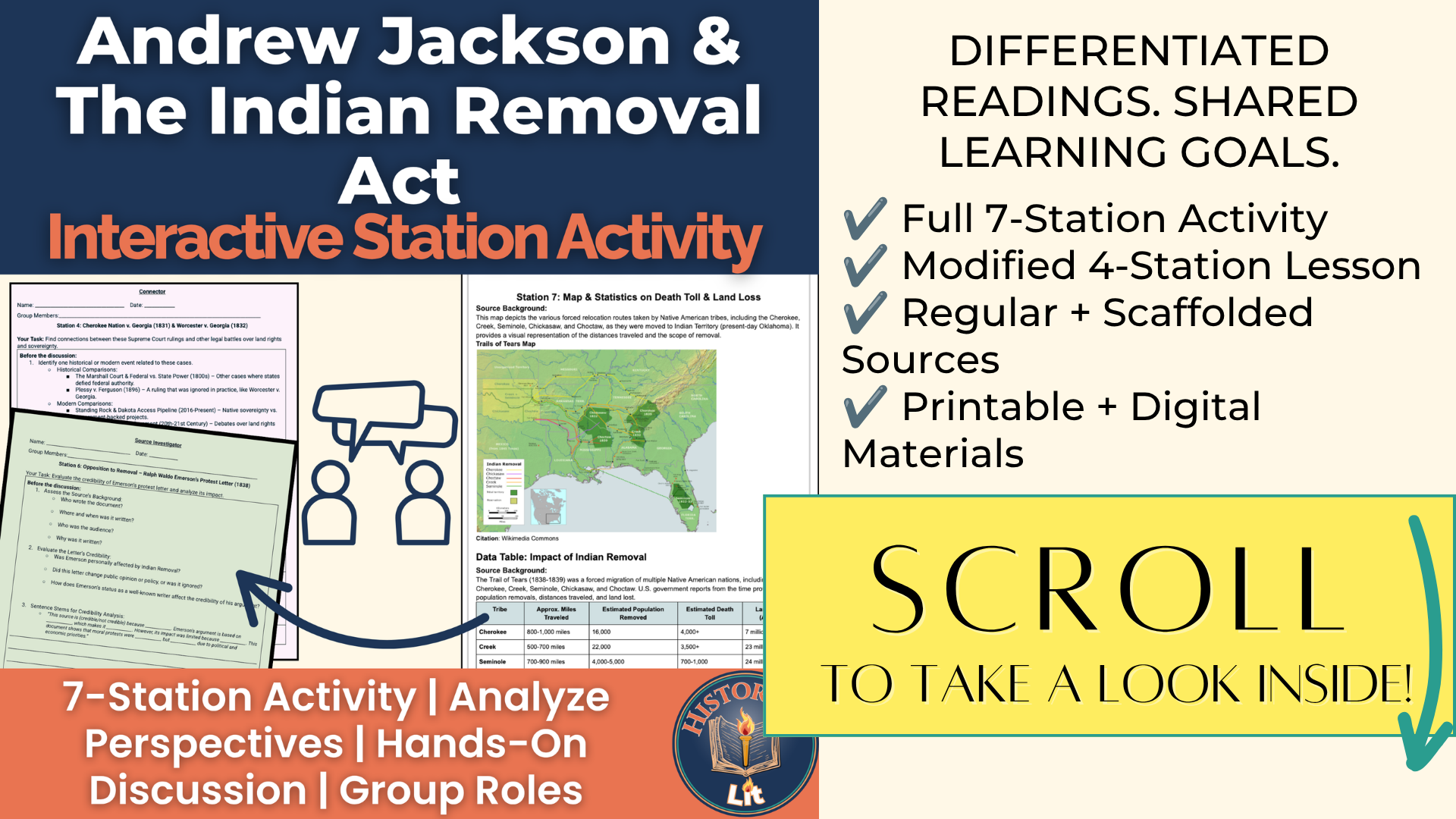
Looking for an engaging Indian Removal Act lesson that gets students analyzing primary sources and thinking critically about Andrew Jackson's presidency? This 6th–8th grade U.S. History station activity includes differentiated primary and secondary sources, historical analysis questions, and editable Google Slides to help students examine the Indian Removal Act, its consequences, and the perspectives surrounding Indian removal.
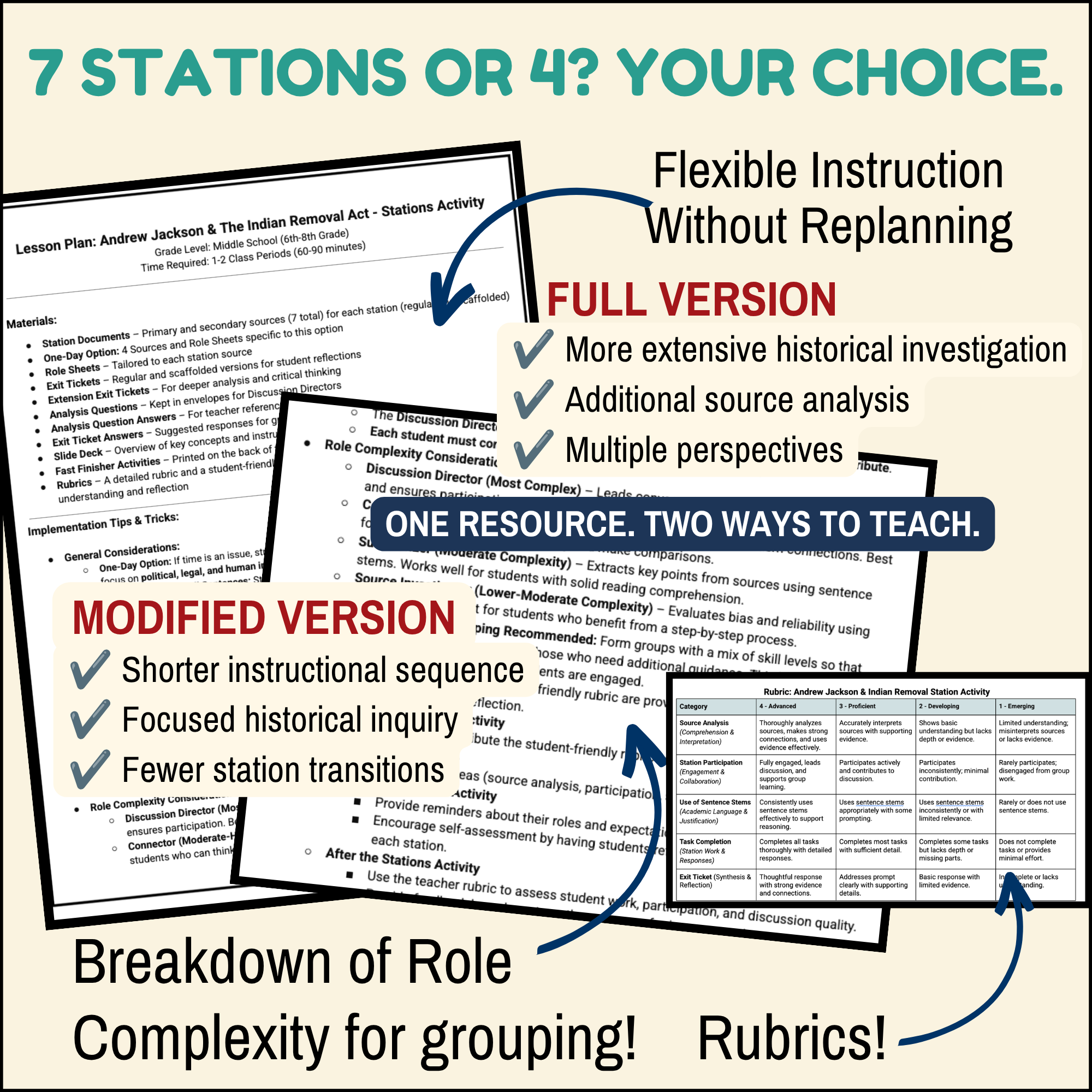
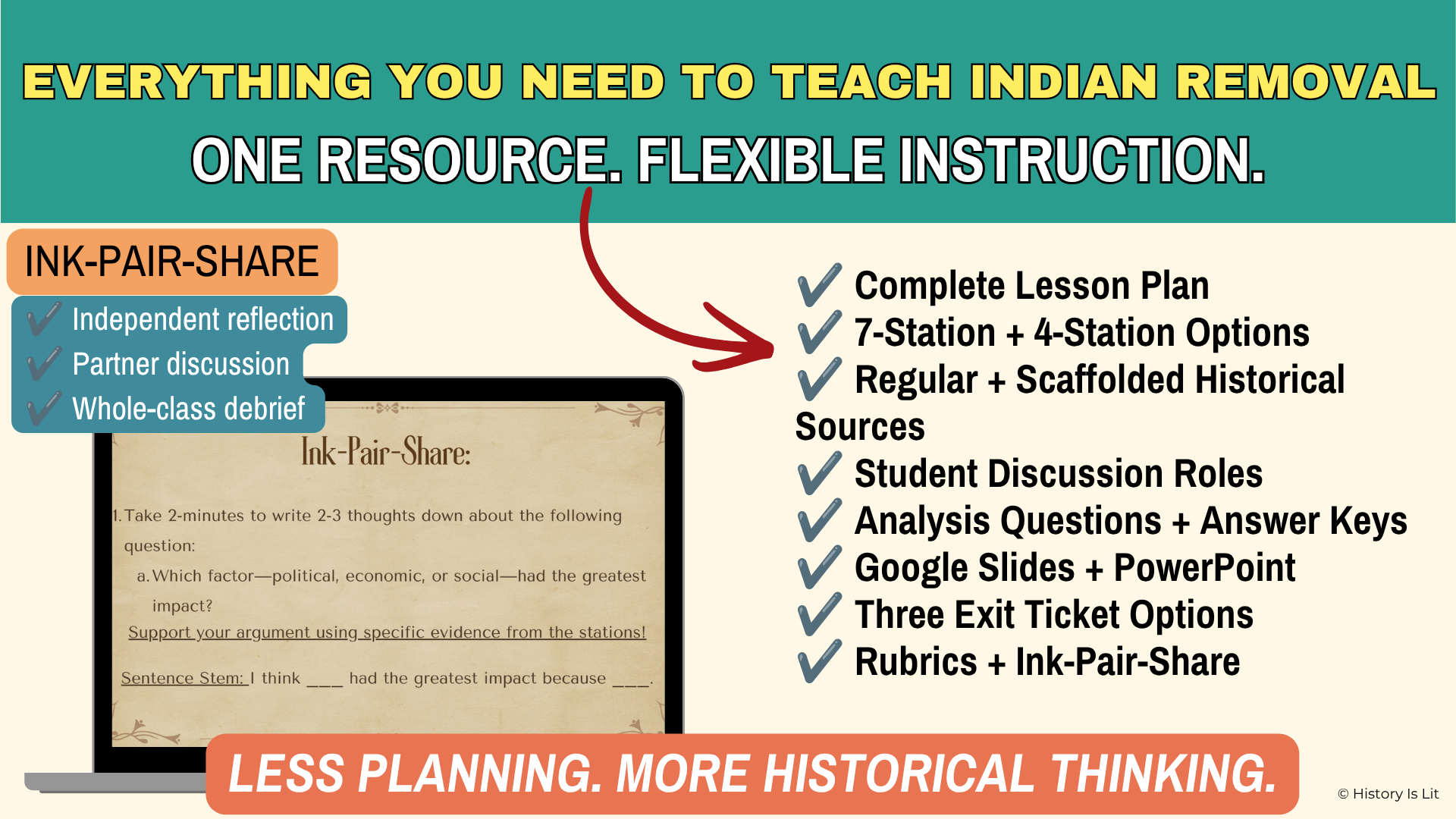
With 7 ready-to-use stations or a modified 4-station version, you can adapt the lesson to your students' needs without spending hours preparing materials.
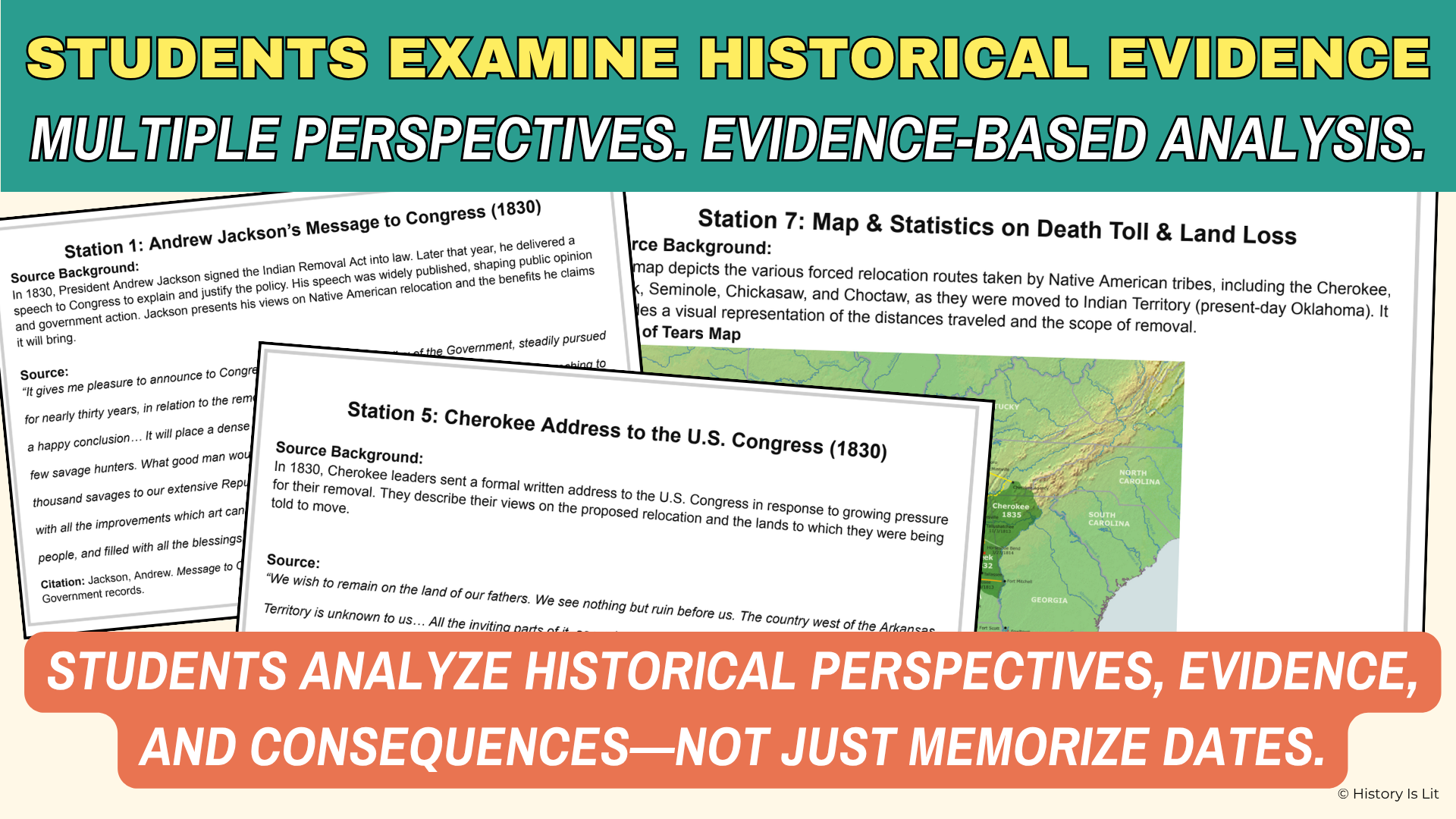
Students examine historical evidence, consider different perspectives, and develop evidence-based conclusions about this significant chapter in American history.
Indian Removal Act Station Activity
Detailed Lesson Plan: Choose between a full 7-station activity or a modified 4-station version.
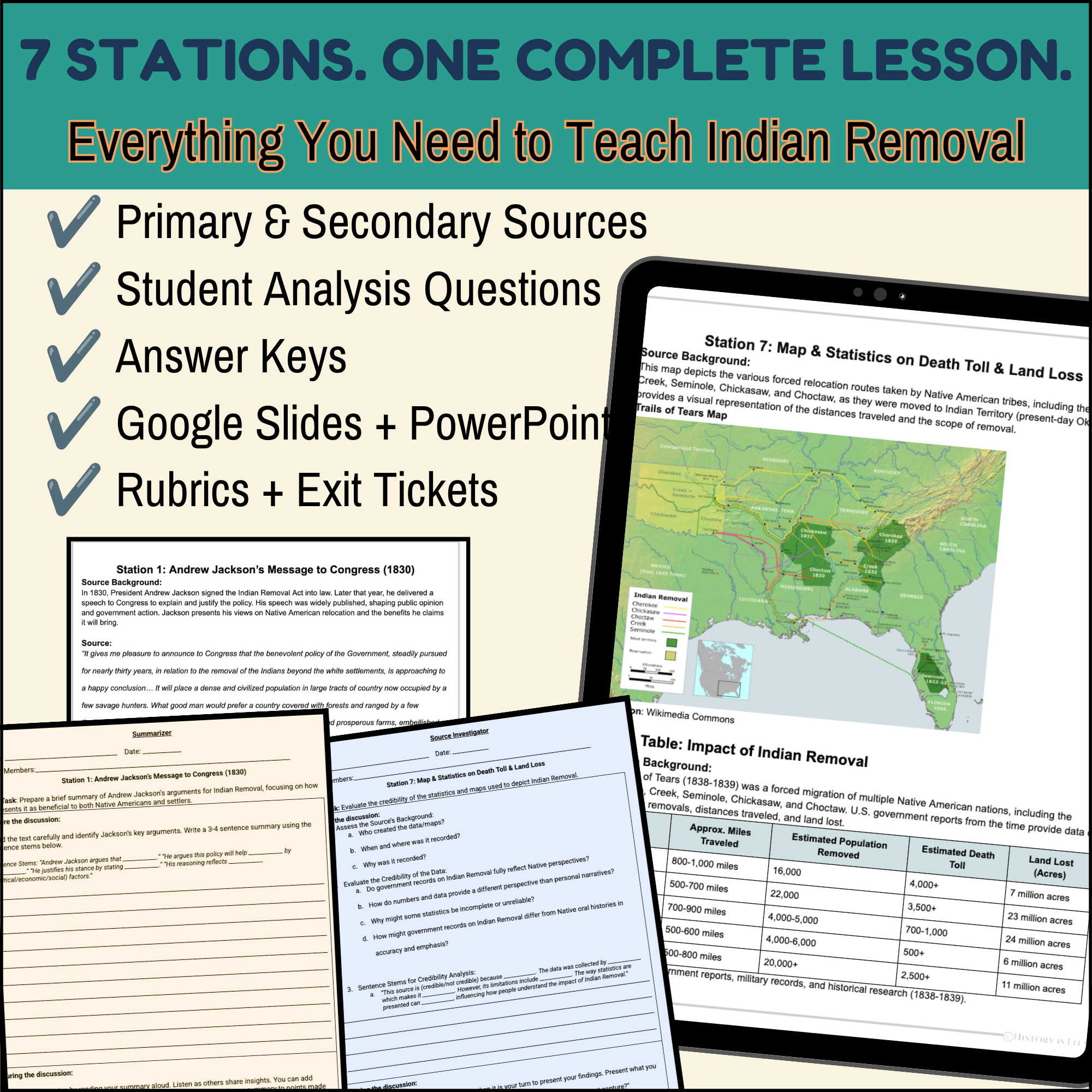
Primary & Secondary Sources: Historical documents and informational texts for source analysis.
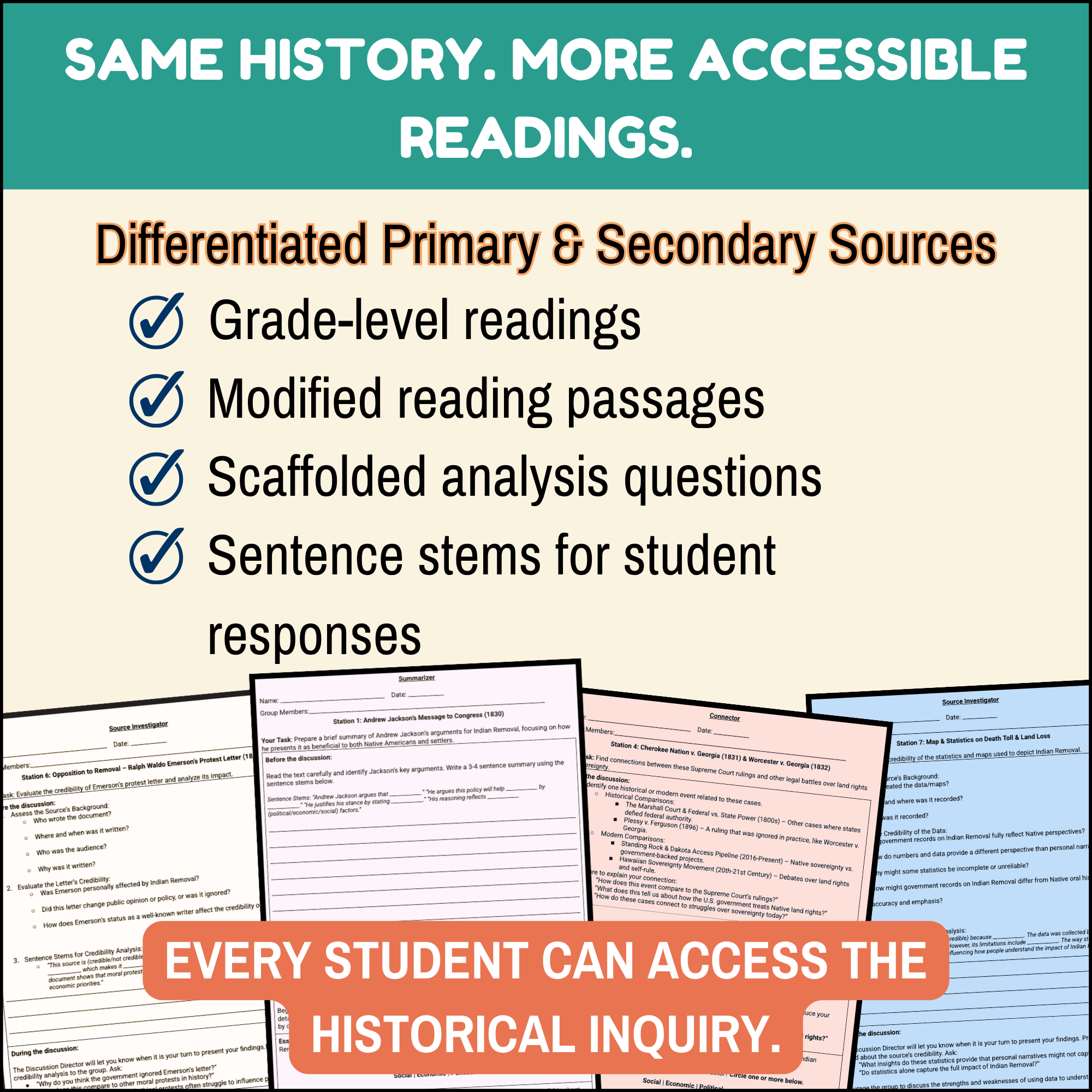
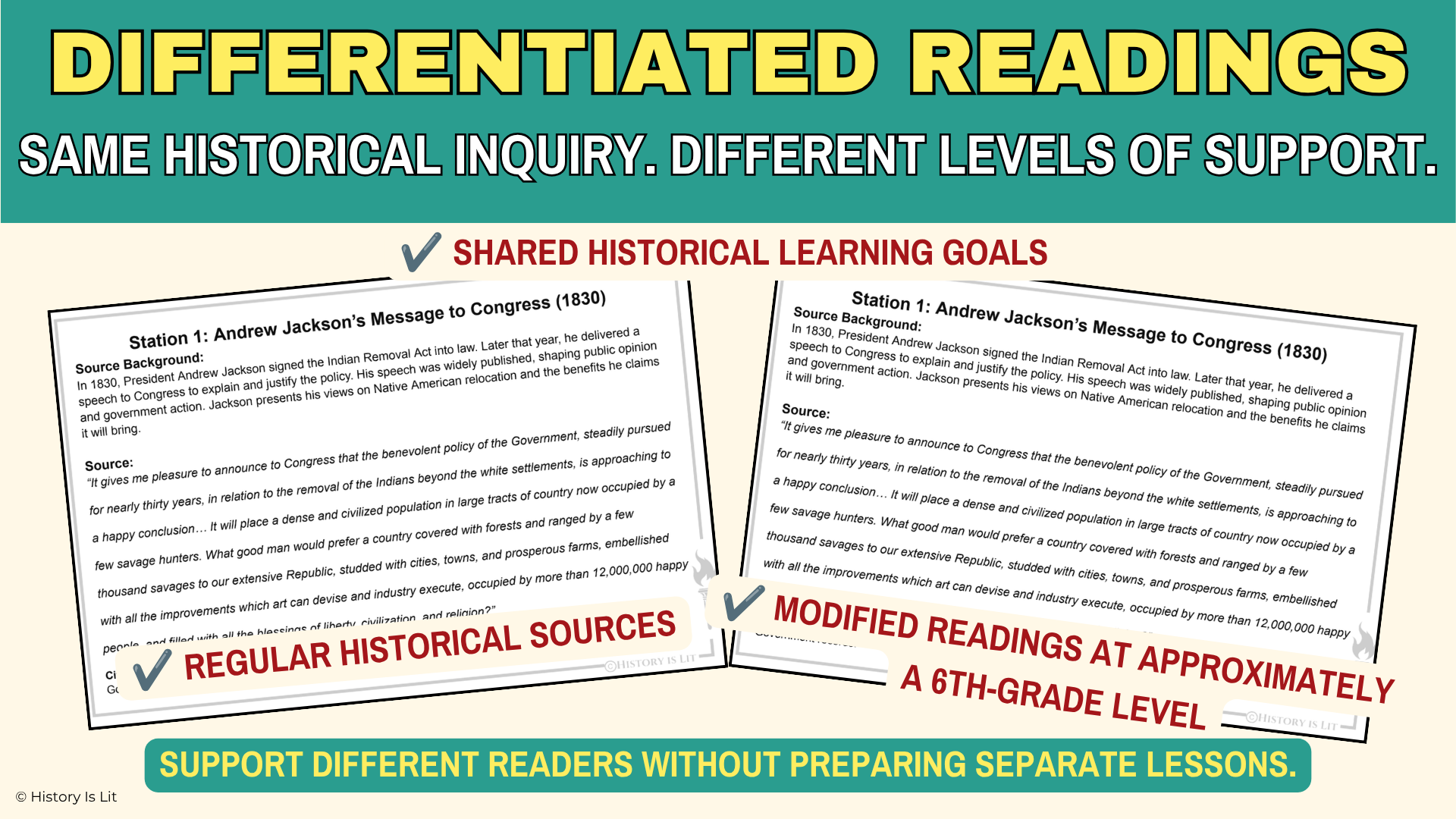
Modified Reading Passages: Scaffolded versions designed to support approximately 6th-grade reading levels.
Analysis Questions & Answer Keys: Guide students through historical inquiry and evidence-based responses.
Printable & Digital Materials
Google Slides & PowerPoint: Customize the presentation by adding slides. Core slide content is locked to preserve the original structure.
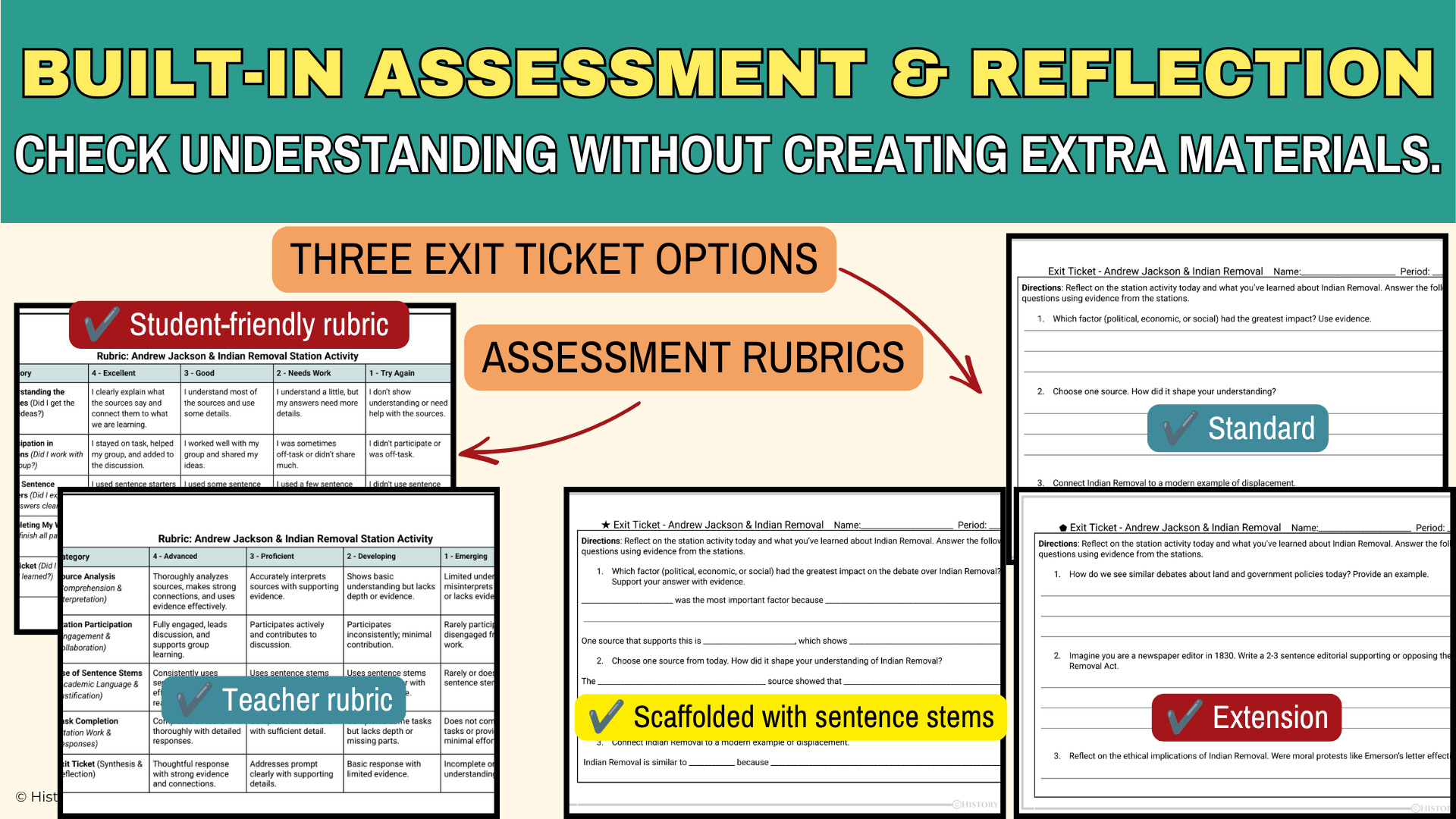
Student-Friendly Rubrics: Printable and digital versions for assessment and reflection.
Three Exit Ticket Options: Standard, scaffolded with sentence stems, and extension.
Ink-Pair-Share Activity: Helps students process their thinking before the whole-class discussion.
✔ Save Planning Time: Ready-to-use station activities, sources, questions, and answer keys make lesson preparation easier.
✔ Differentiate With Ease: Modified readings, sentence stems, and multiple exit ticket options help support students with different learning needs.
✔ Build Primary Source Analysis Skills: Students examine historical evidence, consider different perspectives, and support their conclusions.
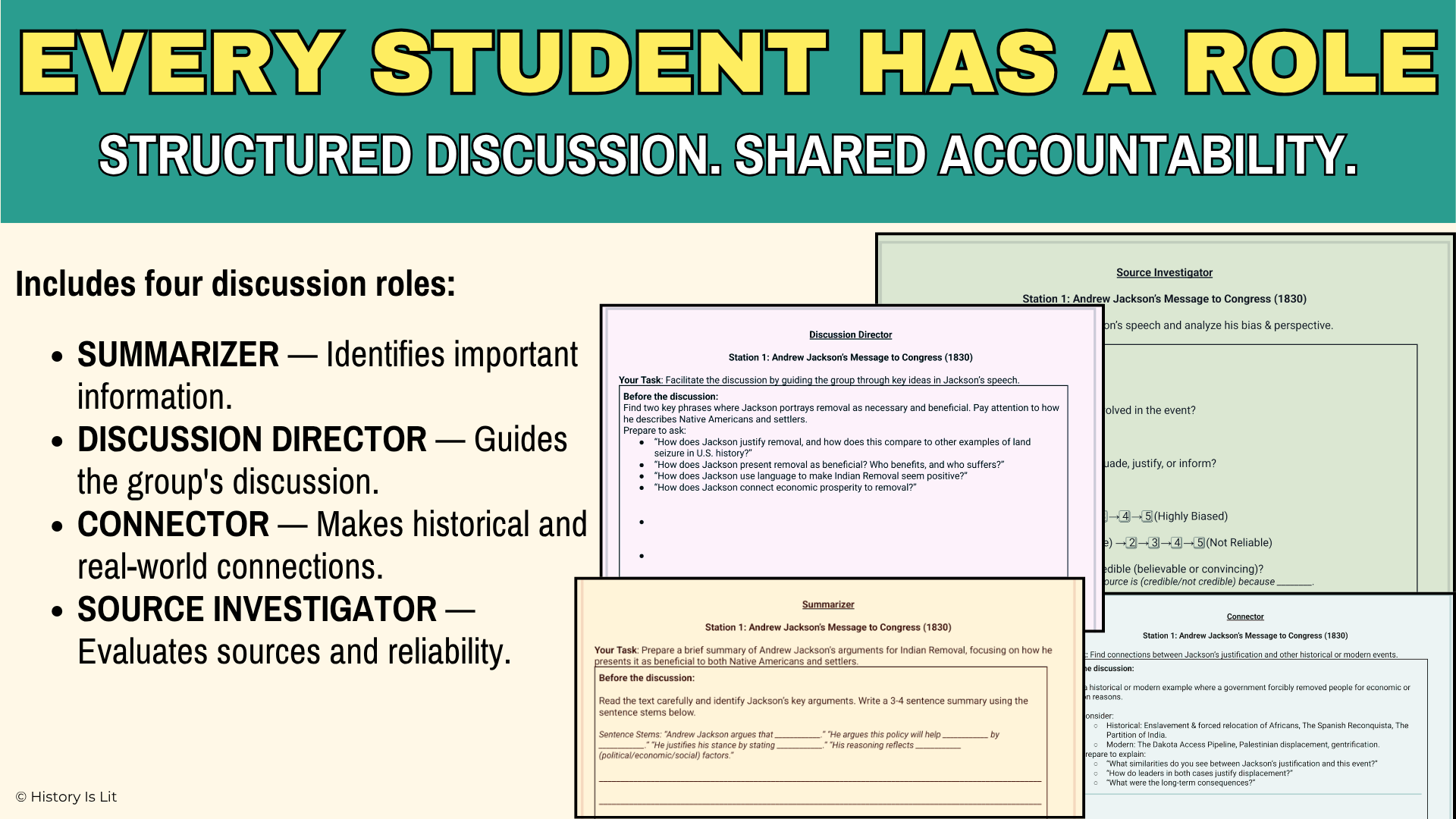
✔ Encourage Meaningful Discussions: Station rotations and Ink-Pair-Share give students opportunities to collaborate and explain their thinking.
✔ Flexible Instruction: Choose seven stations for a more extensive lesson or four stations when instructional time is limited.
6th–8th Grade U.S. History
Andrew Jackson's Presidency
Indian Removal Act Lessons
Trail of Tears & Westward Expansion Units
Primary & Secondary Source Analysis
Historical Inquiry & Evidence-Based Writing
Differentiated Social Studies Instruction
History Stations & Collaborative Learning
This activity provides opportunities for students to practice:
Analyzing primary and secondary sources.
Identifying historical perspectives.
Citing textual evidence.
Examining historical causes and consequences.
Evaluating arguments using historical evidence.
Discussing the consequences of federal Indian removal policies for Native American nations.
Help students move beyond memorizing historical events and examine the policies, perspectives, and consequences of Indian removal through historical evidence.
Grab this Indian Removal Act station activity and get students reading, analyzing, and discussing history—with the lesson materials ready to go!
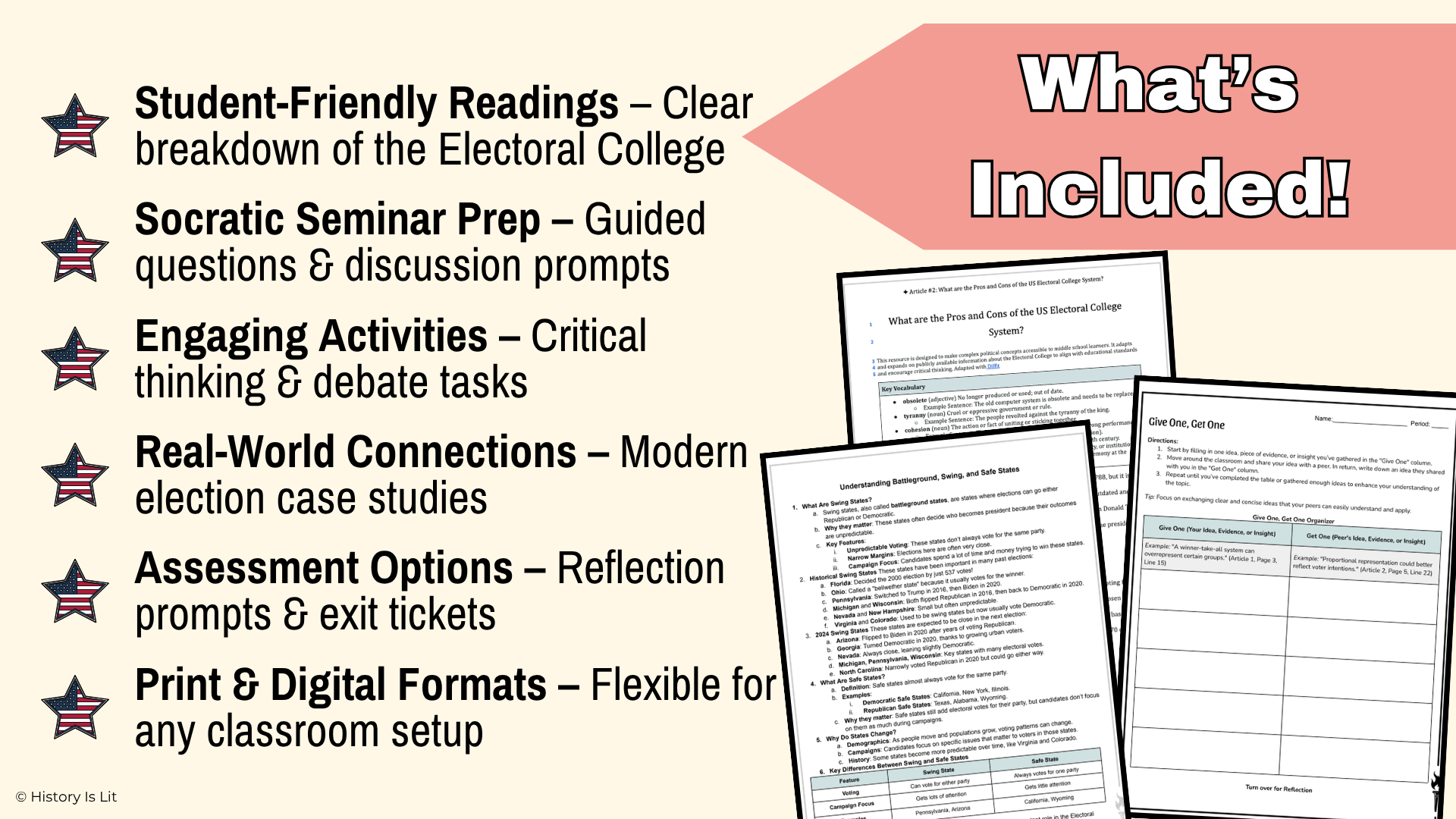
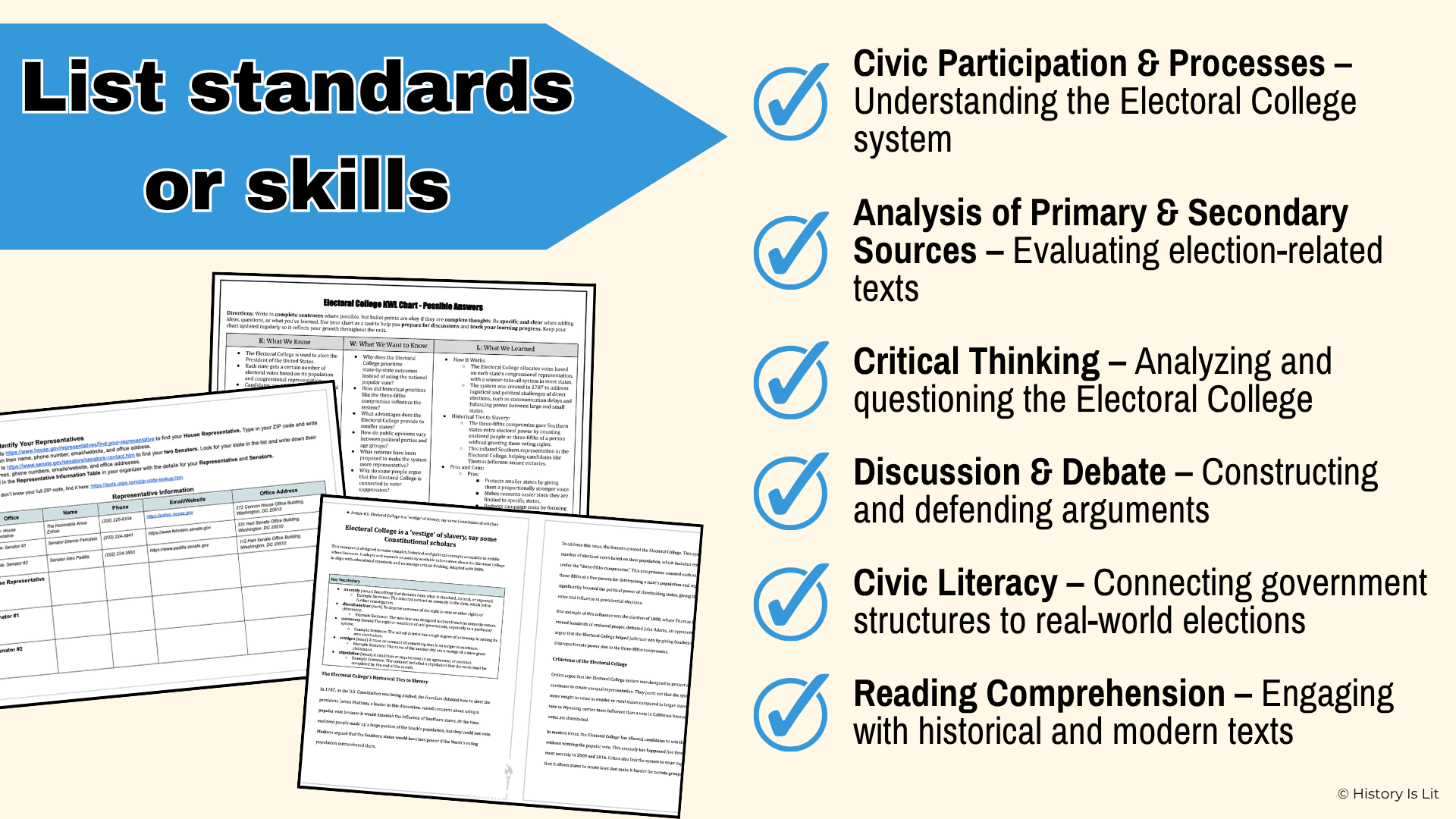
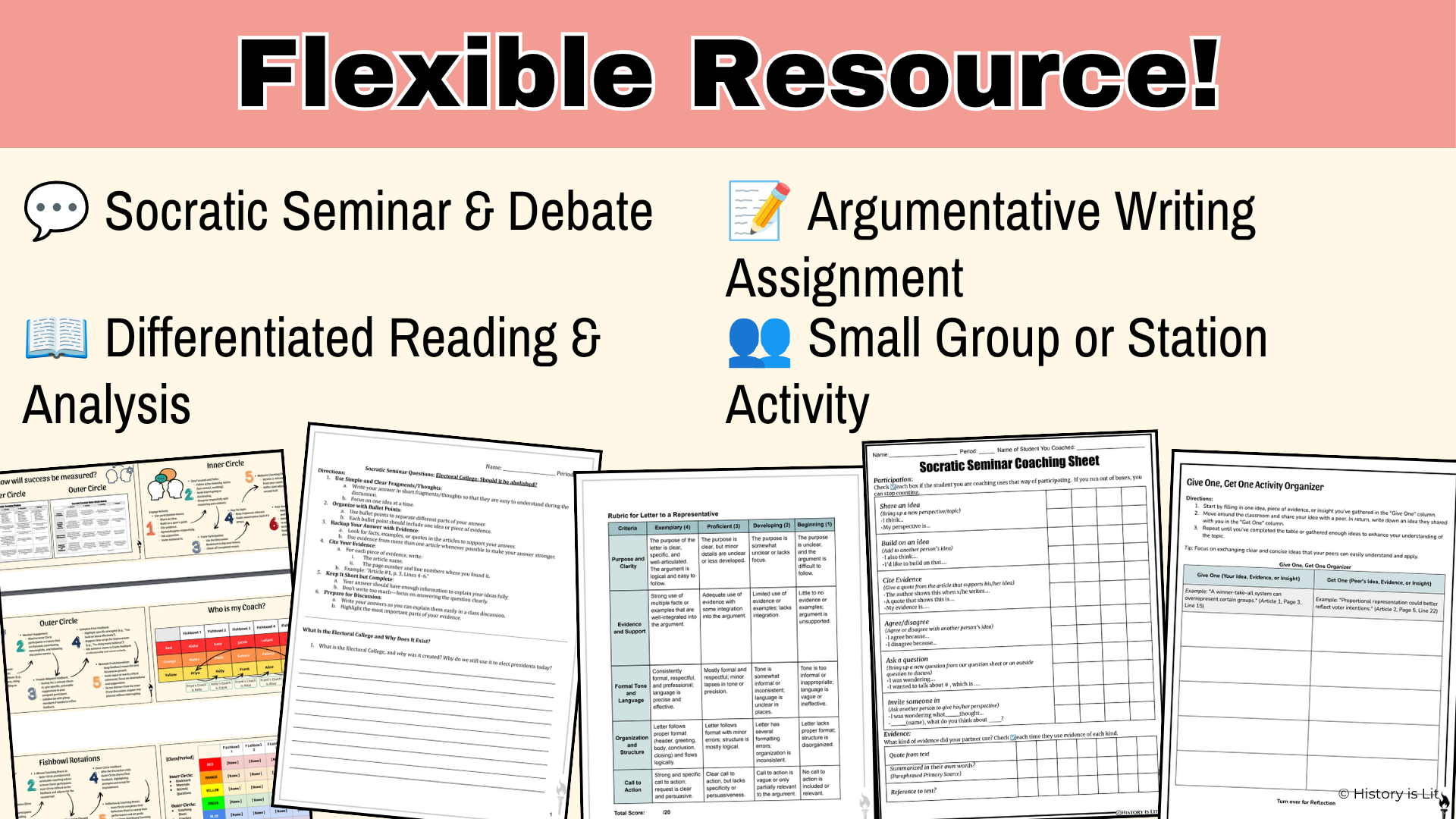
Teaching the Electoral College can be challenging, especially when students are trying to understand how presidential elections work, why the Electoral College exists, and whether it fairly represents voters.
You want students to do more than memorize electoral votes. You want them to examine different perspectives, evaluate evidence, and develop their own informed opinions about the American electoral system.
But finding accessible readings, creating meaningful discussion questions, and planning engaging civics activities takes time.
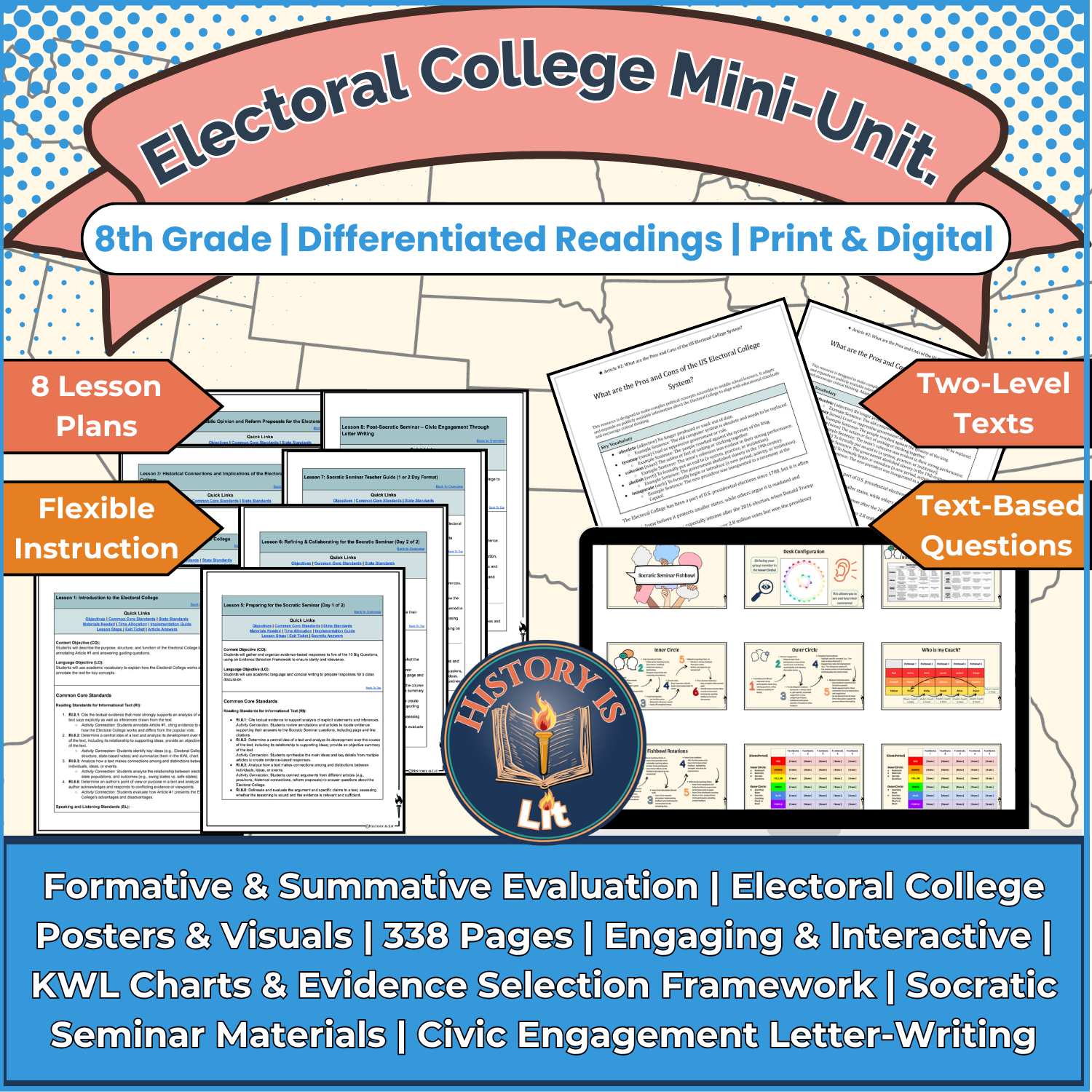
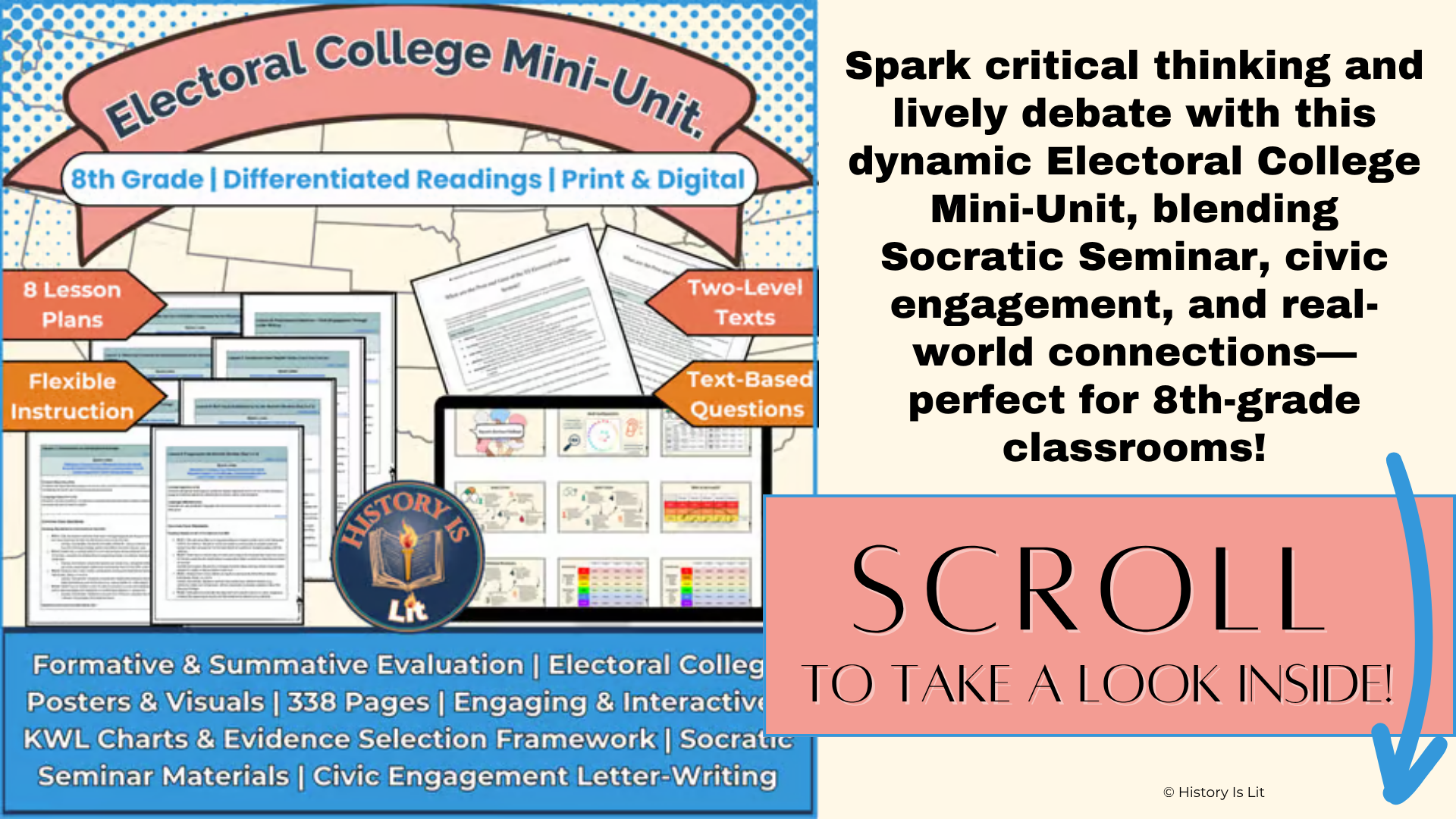
That's why I created this 8-Lesson Electoral College Mini-Unit for Middle School U.S. History and Civics.
This comprehensive unit includes differentiated informational texts, graphic organizers, interactive activities, Socratic Seminar materials, and an argumentative letter-writing activity to help students explore how the Electoral College works and evaluate its role in American democracy.
Instead of simply telling students whether the Electoral College is fair, this unit encourages them to investigate the issue, consider multiple perspectives, and support their conclusions with evidence.
Eight structured lessons. Differentiated readings. Meaningful discussions. One complete Electoral College unit.
This 8-lesson Electoral College unit provides the instructional materials, activities, and assessments you need to teach students about presidential elections, representation, and civic participation.
Lesson Plans & Teacher Resources
8 Complete Lessons: Structured lessons that guide students through learning about the Electoral College.
Teacher Pacing Guide: Helps you organize instruction and manage your unit.
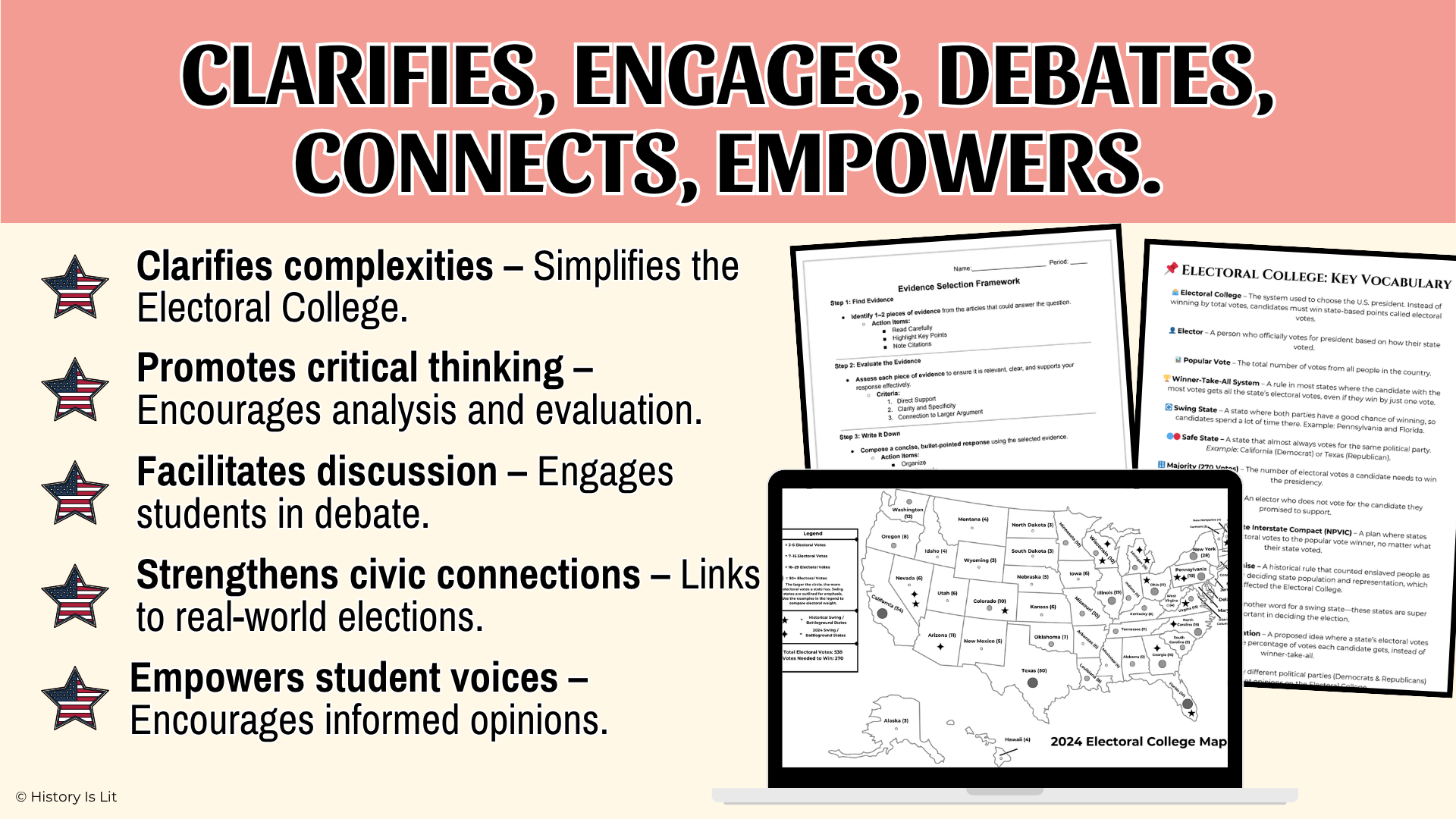
Electoral College Posters & Visuals: Support student understanding of important concepts and vocabulary.
Printable & Digital Materials: Ready-to-use PDFs and editable Google Docs/Slides.
Differentiated Electoral College Readings
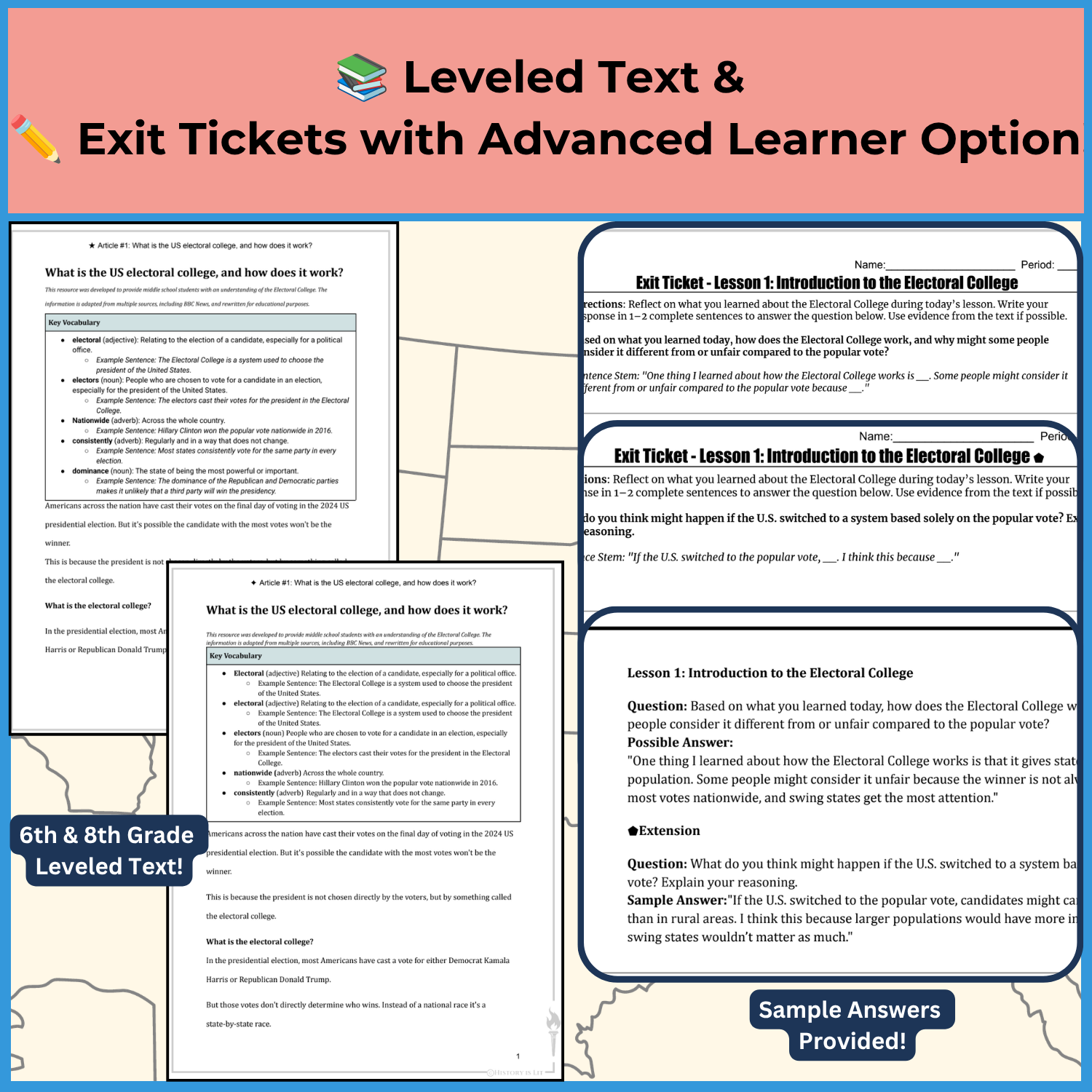
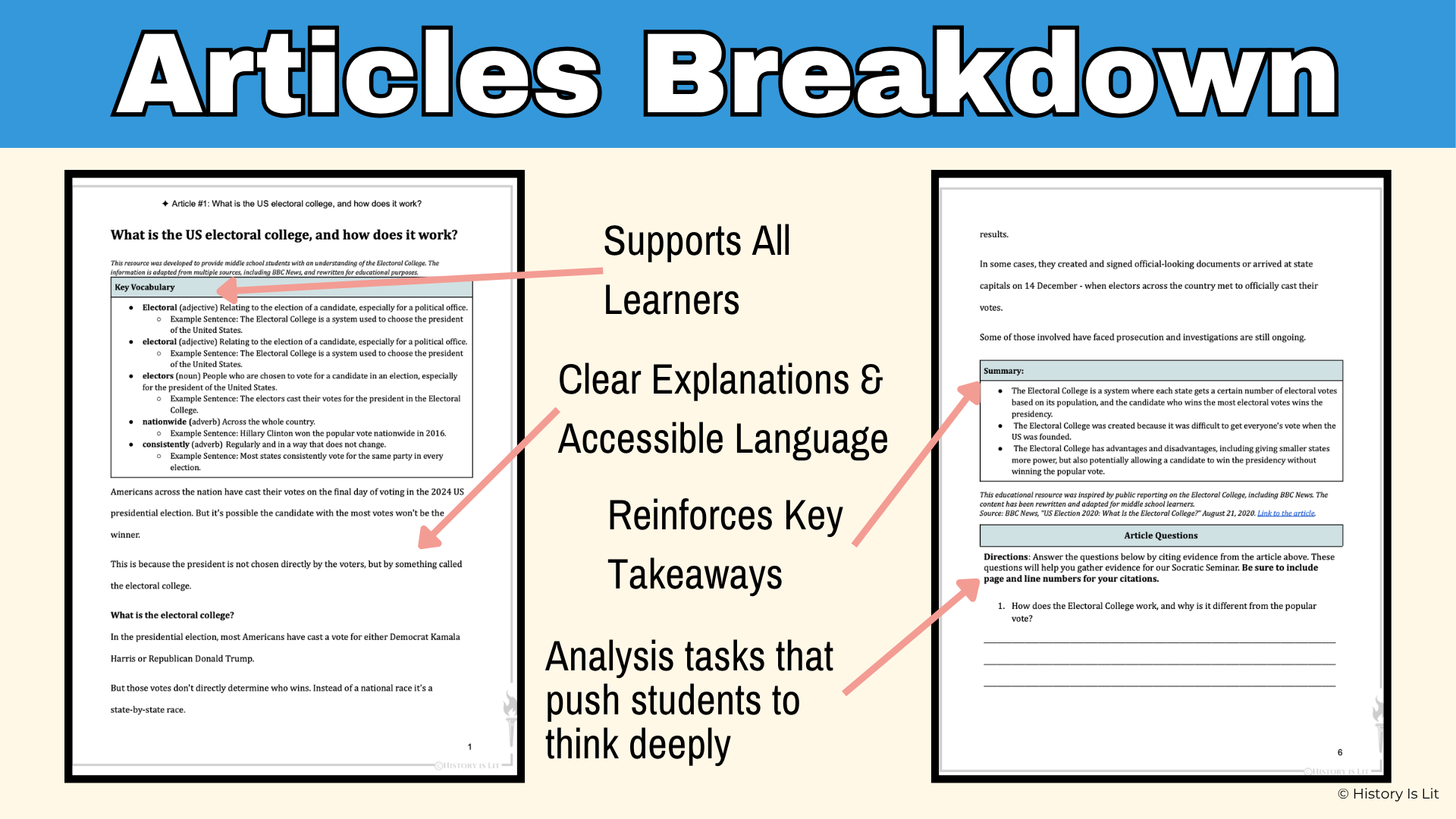
Grade-Level Informational Articles: Introduce students to Electoral College concepts and different perspectives.
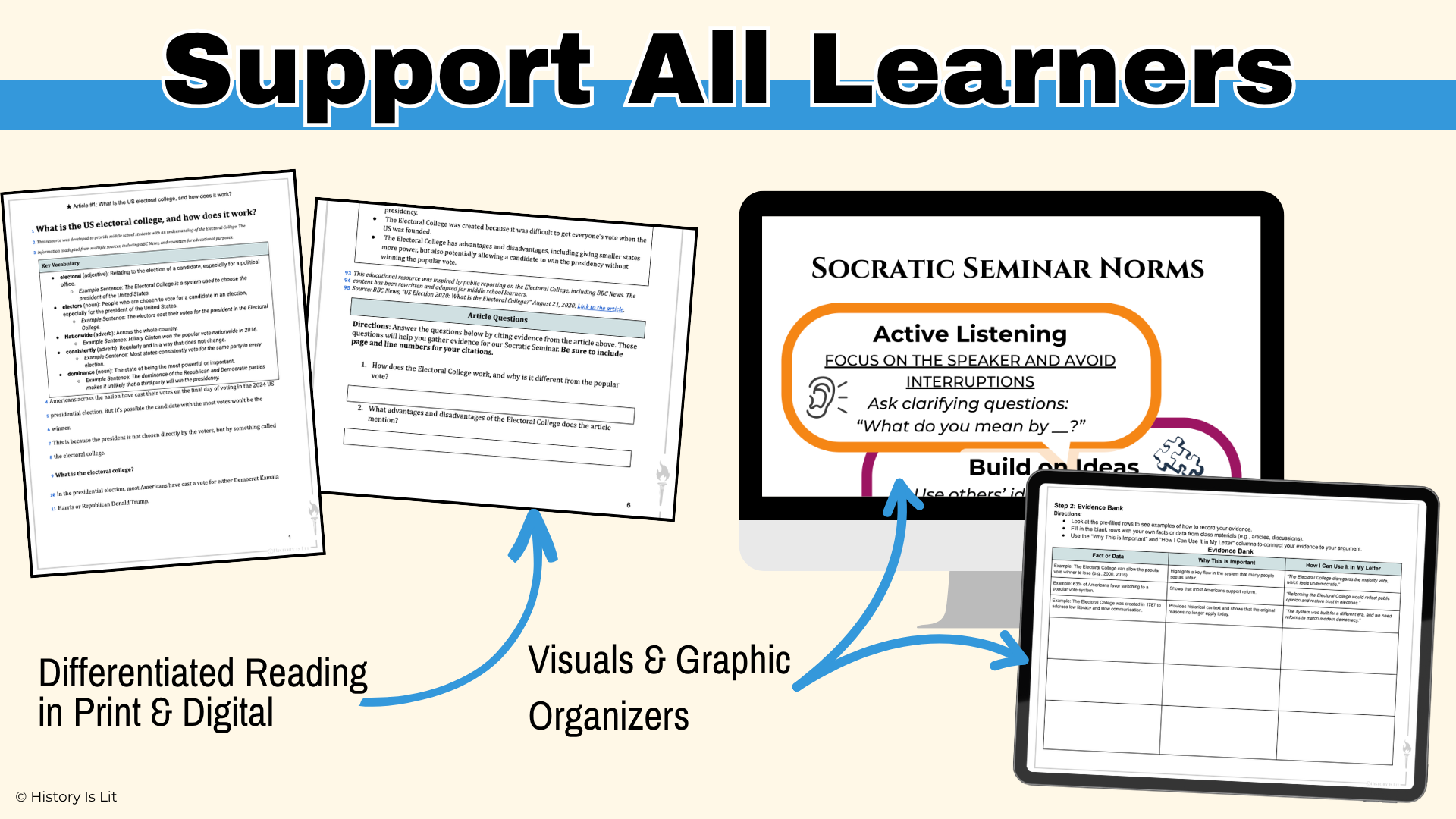
Modified Reading Passages: Provide accessible versions for students who need additional reading support.
KWL Charts: Activate prior knowledge, guide inquiry, and encourage reflection.
Evidence Selection Graphic Organizers: Help students identify relevant information and support their arguments.
Interactive Learning Activities
Give One, Get One Activity: Students exchange ideas and gather evidence from classmates.
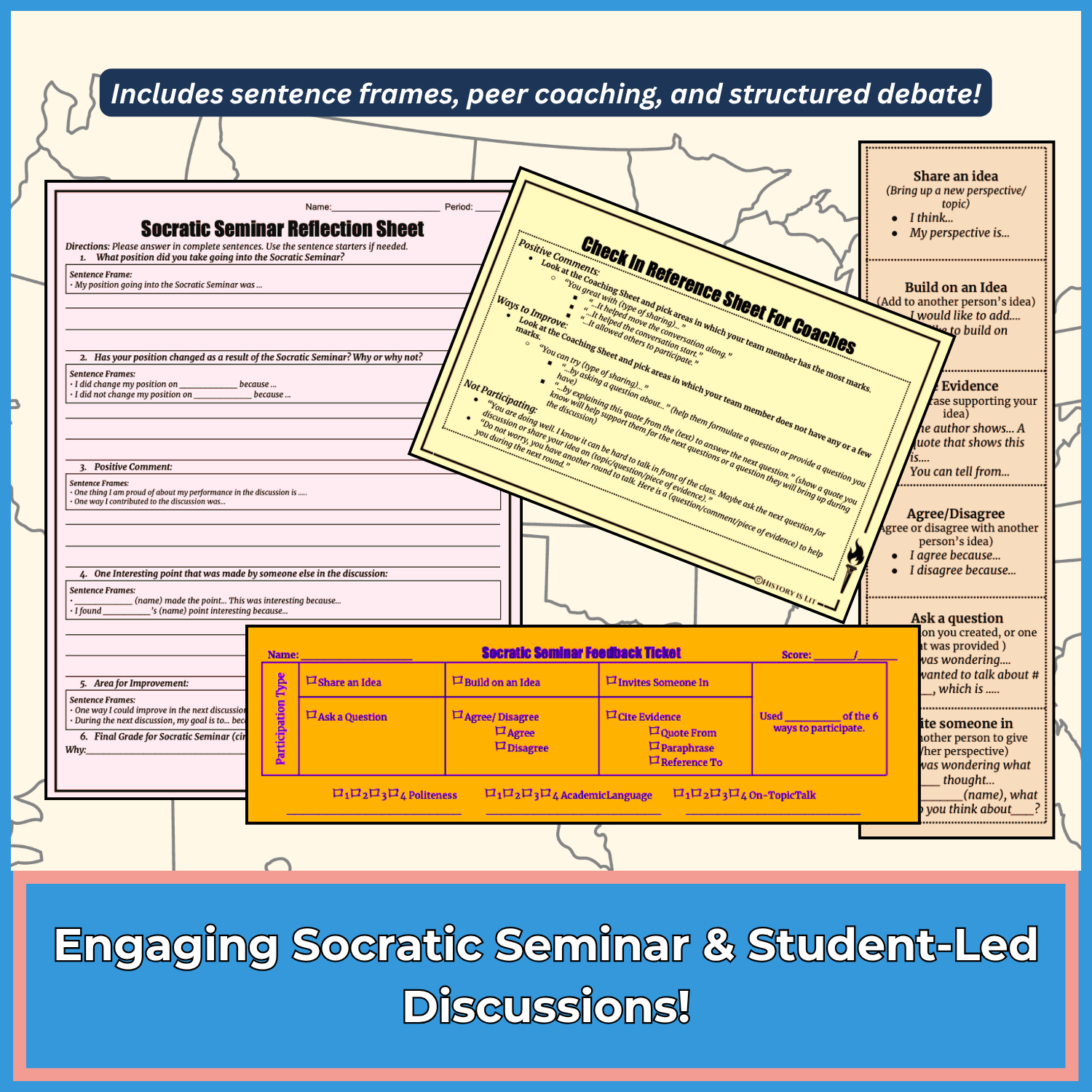
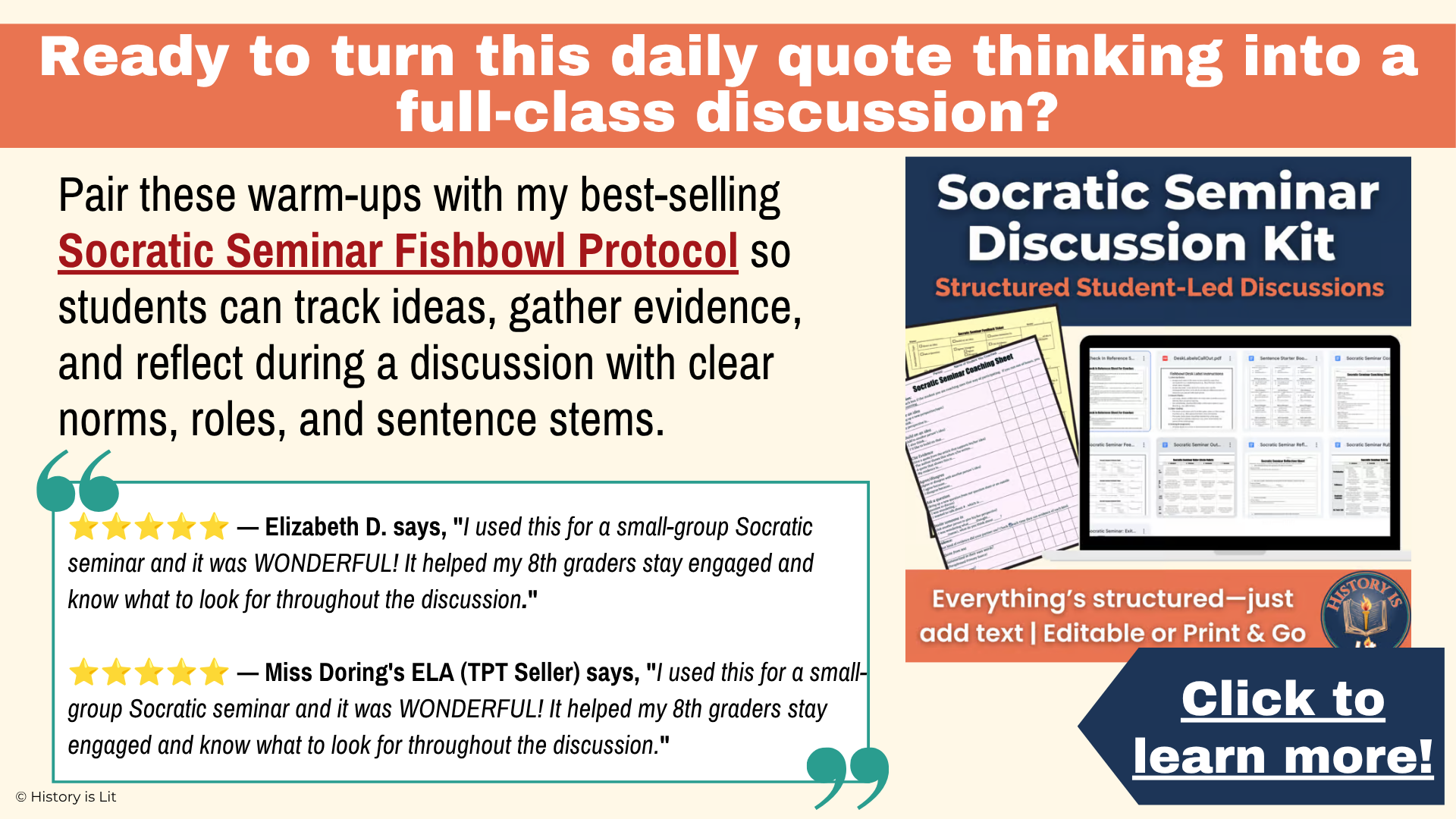
Socratic Seminar Fishbowl Discussion: Encourages students to examine different perspectives through structured academic discussion.
Discussion Sentence Frames: Support students in expressing opinions, asking questions, and responding to classmates.
Student Coaching Sheets: Keep students actively engaged while observing and evaluating discussions.
Feedback Tickets: Encourage constructive peer feedback and reflection.
Assessment & Civic Engagement
Exit Tickets: Check student understanding throughout the unit.
Reflection Sheets: Encourage students to evaluate their learning and consider different perspectives.
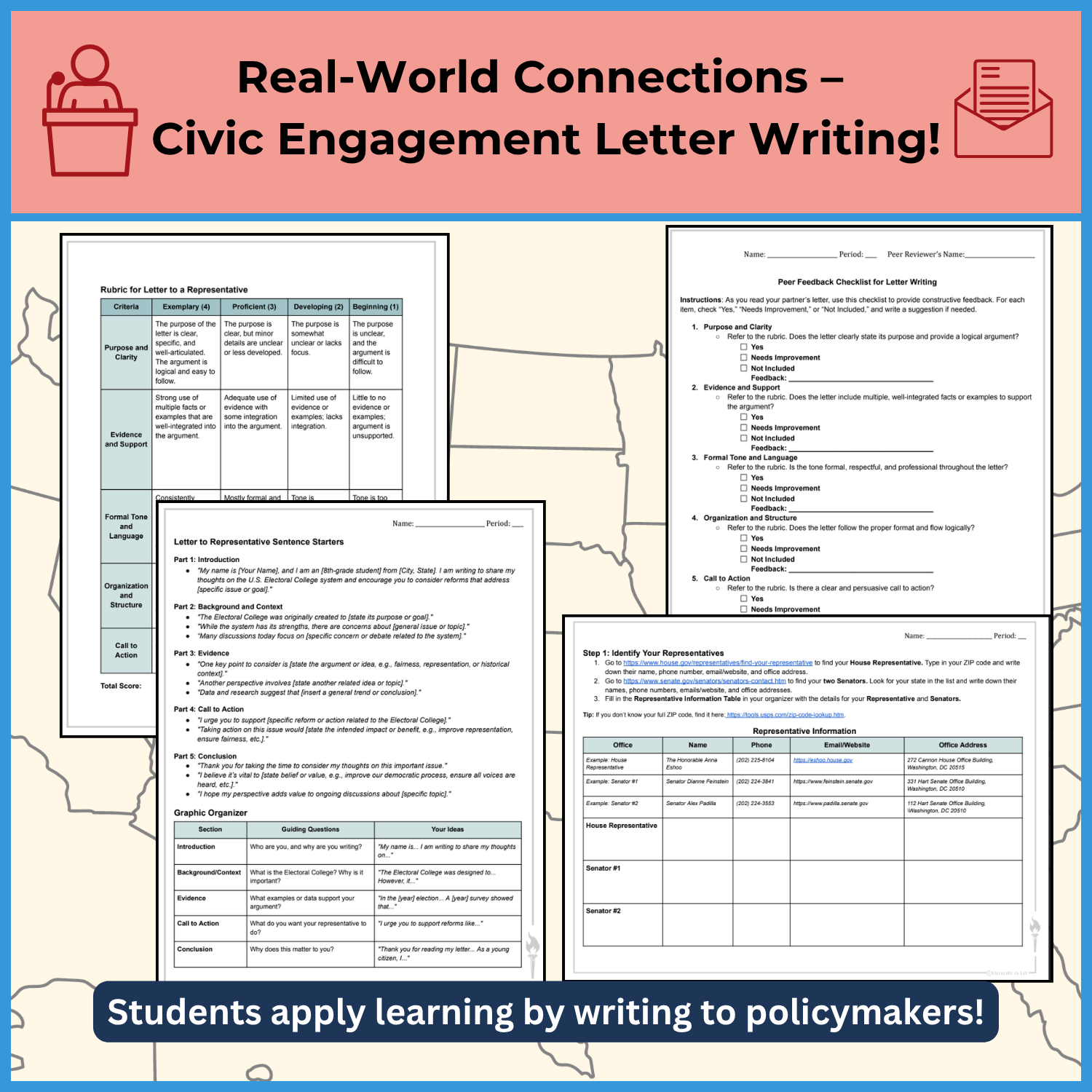
Civic Engagement Letter-Writing Activity: Students develop an evidence-based argument and communicate their position through a letter.
Argument-Building Tools: Help students select evidence and organize their reasoning.
Teach a Complex Topic With Clear, Structured Lessons
The Electoral College can be confusing for middle school students. This mini-unit breaks the topic into manageable lessons that build understanding and encourage students to think critically about presidential elections.
Differentiate Without Creating Multiple Lessons
Grade-level and modified readings allow students with different reading needs to explore the same essential concepts and participate in shared classroom discussions.
Encourage Evidence-Based Arguments
Students examine different perspectives on the Electoral College and use evidence to develop, explain, and defend their positions.
Make Student Discussions More Meaningful
The included Socratic Seminar Fishbowl materials provide structure for classroom conversations. Discussion starters, sentence frames, and coaching sheets help students participate thoughtfully while keeping both circles accountable.
Connect Civics to Real-World Participation
The letter-writing activity gives students an opportunity to apply their learning by developing and communicating an informed position on a civic issue.
Save Valuable Planning Time
With lesson plans, differentiated readings, graphic organizers, discussion materials, and assessments included, you won't need to build an Electoral College unit from scratch.
Throughout this Electoral College lesson plan unit, students explore questions about presidential elections and American democracy.
Students develop an understanding of:
How the Electoral College works in presidential elections.
Why the Electoral College was established.
How electoral votes relate to presidential election outcomes.
Different perspectives on the Electoral College.
Arguments for maintaining or reforming the Electoral College.
The relationship between voting, representation, and democracy.
How citizens can participate in civic discussions and communicate their views.
Rather than focusing only on how the system works, students consider important questions about fairness, representation, and civic responsibility.
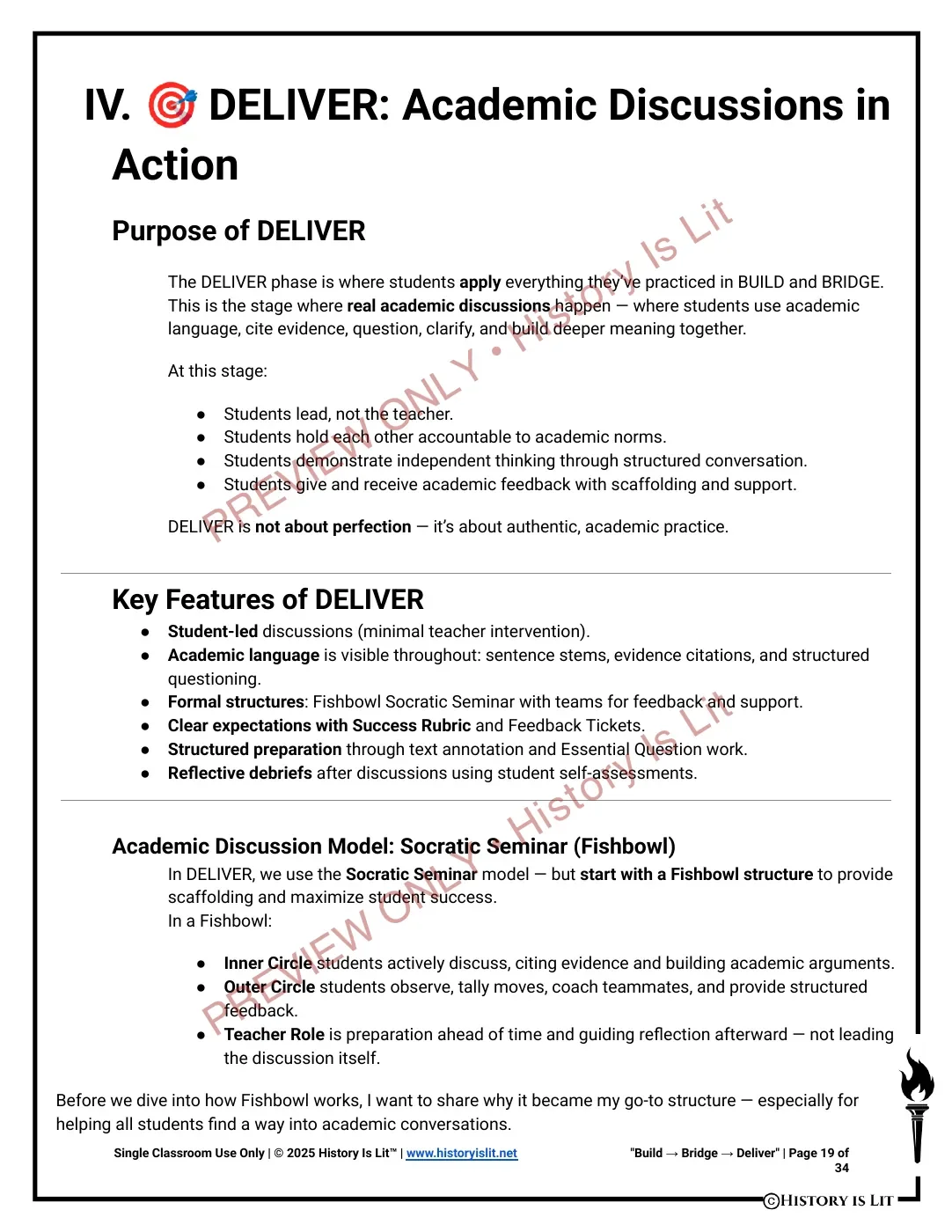
One of the key components of this unit is the Electoral College Socratic Seminar Fishbowl Discussion.
Students use evidence from their readings and activities to discuss different perspectives on the Electoral College.
Inner Circle Students:
Participate in evidence-based academic discussions.
Ask thoughtful questions about the Electoral College.
Evaluate arguments and consider opposing perspectives.
Build on classmates' ideas.
Outer Circle Students:
Actively listen and observe the discussion.
Use coaching sheets to evaluate discussion skills.
Provide constructive peer feedback.
Reflect on evidence and arguments presented.
This structured approach gives students opportunities to practice critical thinking, respectful disagreement, and collaborative discussion skills.
Students take their learning beyond the classroom through a civic engagement letter-writing activity.
Using evidence gathered throughout the unit, students develop an argument about the Electoral College and communicate their position in writing.
This activity encourages students to:
Develop a clear claim.
Select relevant supporting evidence.
Explain their reasoning.
Consider alternative perspectives.
Communicate their ideas in an organized, persuasive letter.
It's a meaningful way to connect middle school civics, argumentative writing, and real-world civic participation.
This Electoral College mini-unit is designed for 8th-grade U.S. History and middle school civics classrooms.
Use it for:
Electoral College lessons.
Presidential election units.
U.S. Constitution and government instruction.
Civics and citizenship activities.
Argumentative writing practice.
Socratic Seminars and classroom debates.
Primary and secondary source analysis.
Critical thinking and evidence-based discussions.
The materials can also be used when studying presidential elections, democratic institutions, or the role of citizens in government.
This unit provides opportunities to practice Common Core literacy and speaking and listening skills, including:
CCSS RH.6-8.1: Cite textual evidence to support analysis of primary and secondary sources.
CCSS RH.6-8.2: Determine the central ideas or information of historical sources.
CCSS WHST.6-8.1: Write arguments focused on discipline-specific content.
CCSS SL.8.1: Engage effectively in collaborative discussions, building on others' ideas and expressing their own clearly.
CCSS SL.8.4: Present claims and findings using relevant evidence and appropriate organization.
Specific standards addressed depend on the lesson and activity.
Understanding the Electoral College requires more than learning how electoral votes are counted.
Students need opportunities to investigate why the system was created, consider how it affects presidential elections, and evaluate competing arguments about its role in American democracy.
This Electoral College mini-unit uses differentiated readings, evidence-based activities, structured discussion, and argumentative writing to help students form informed conclusions.
Students aren't simply learning about the Electoral College. They're learning how to evaluate a complex civic issue using evidence and reasoning.
The Electoral College Mini-Unit: Lesson Plans & Pacing Guide is a 143-page PDF with bookmarks for easy navigation.
To access the bookmarks, download the PDF and open it in a desktop PDF reader, such as Adobe Acrobat or Preview.
Please note: Bookmarks are not supported in Google Drive's PDF viewer.
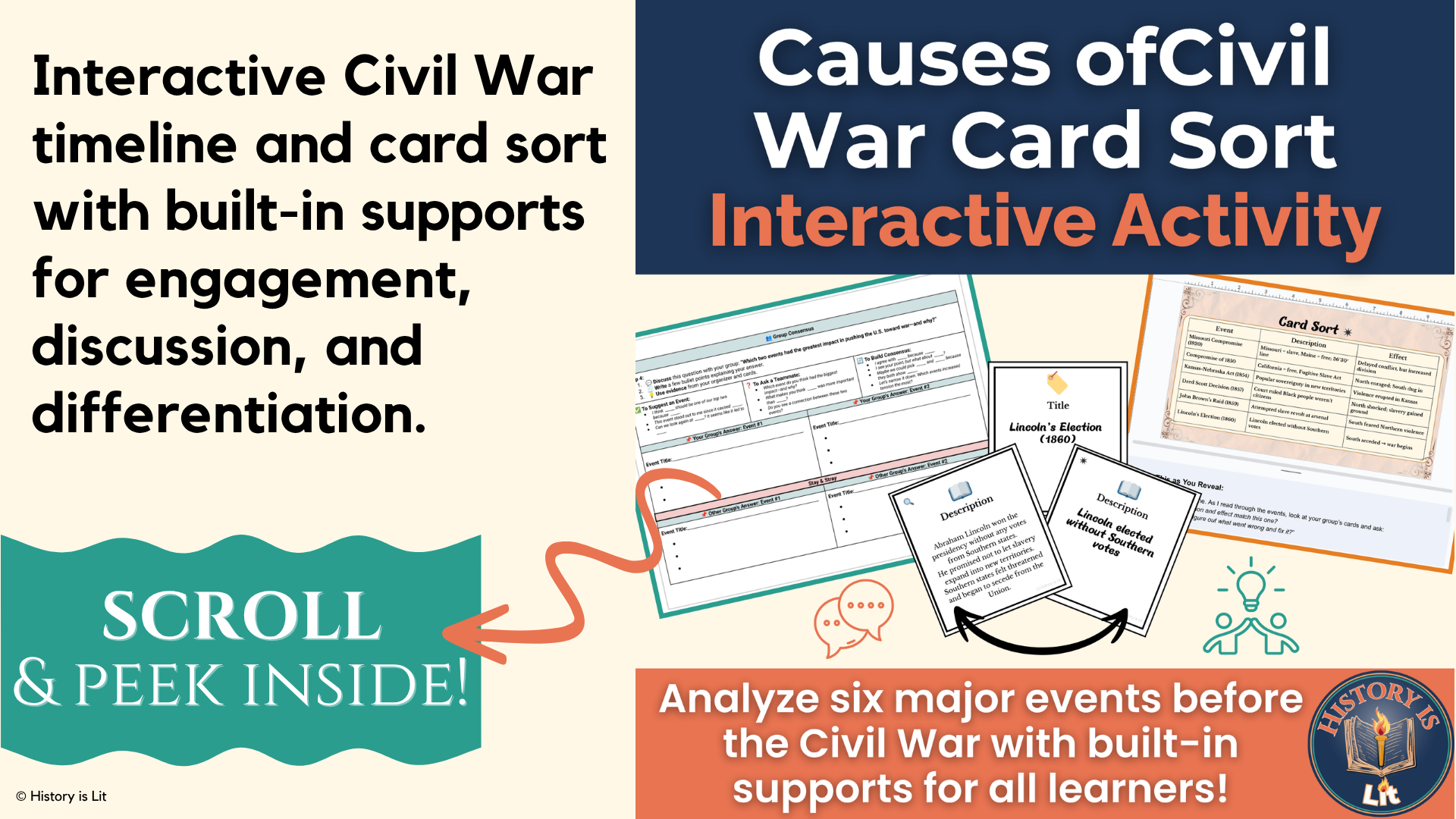
Struggling to keep students engaged while teaching the Civil War and Reconstruction?
You know the feeling. Students are tired of worksheets, discussions fall flat, and getting everyone to participate feels like an uphill battle. You need something that gets students thinking, talking, and working together—without spending hours preparing another lesson.
That's why I created this Civil War & Reconstruction Activity Bundle.
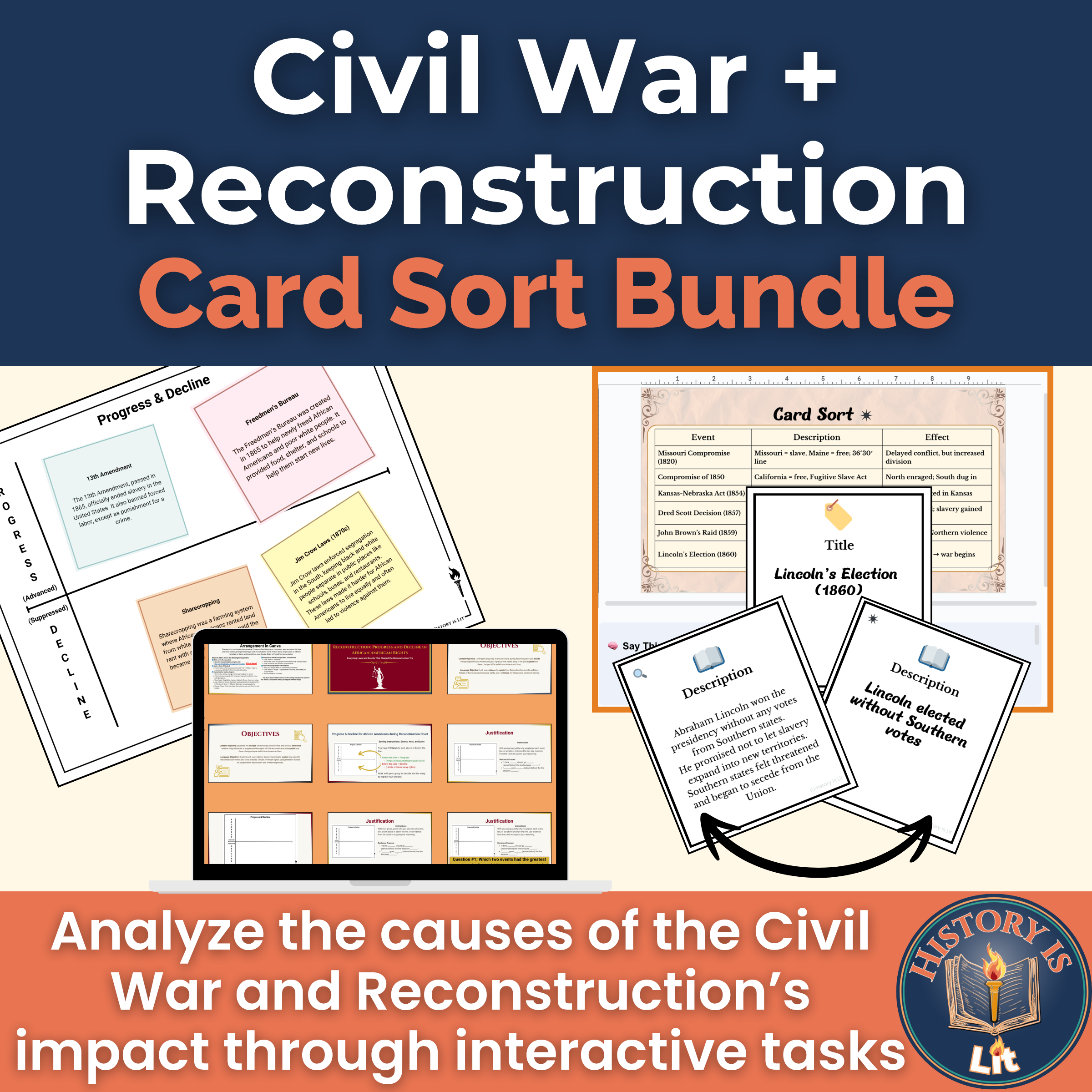
These two interactive U.S. History card sort activities help students explore the causes of the Civil War and evaluate the successes and setbacks of Reconstruction through hands-on learning, historical analysis, and structured academic discussions.
Instead of passively reading about historical events, students work together to sequence events, analyze cause-and-effect relationships, evaluate historical outcomes, and defend their thinking.
And with differentiated materials, vocabulary supports, and ready-to-use activities, you can spend less time preparing and more time supporting student learning.
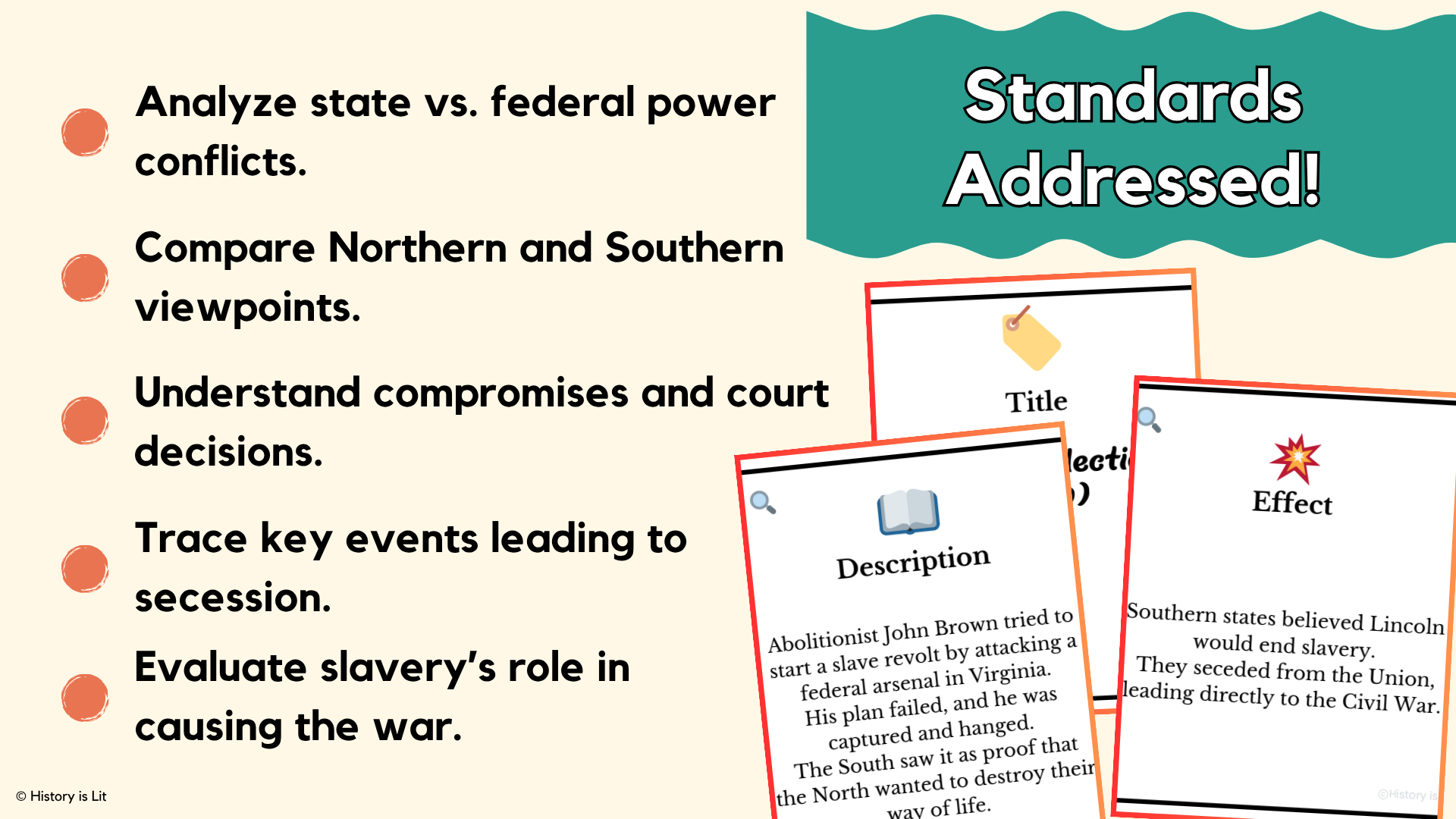
Help students understand how key events and growing sectional tensions contributed to the Civil War.
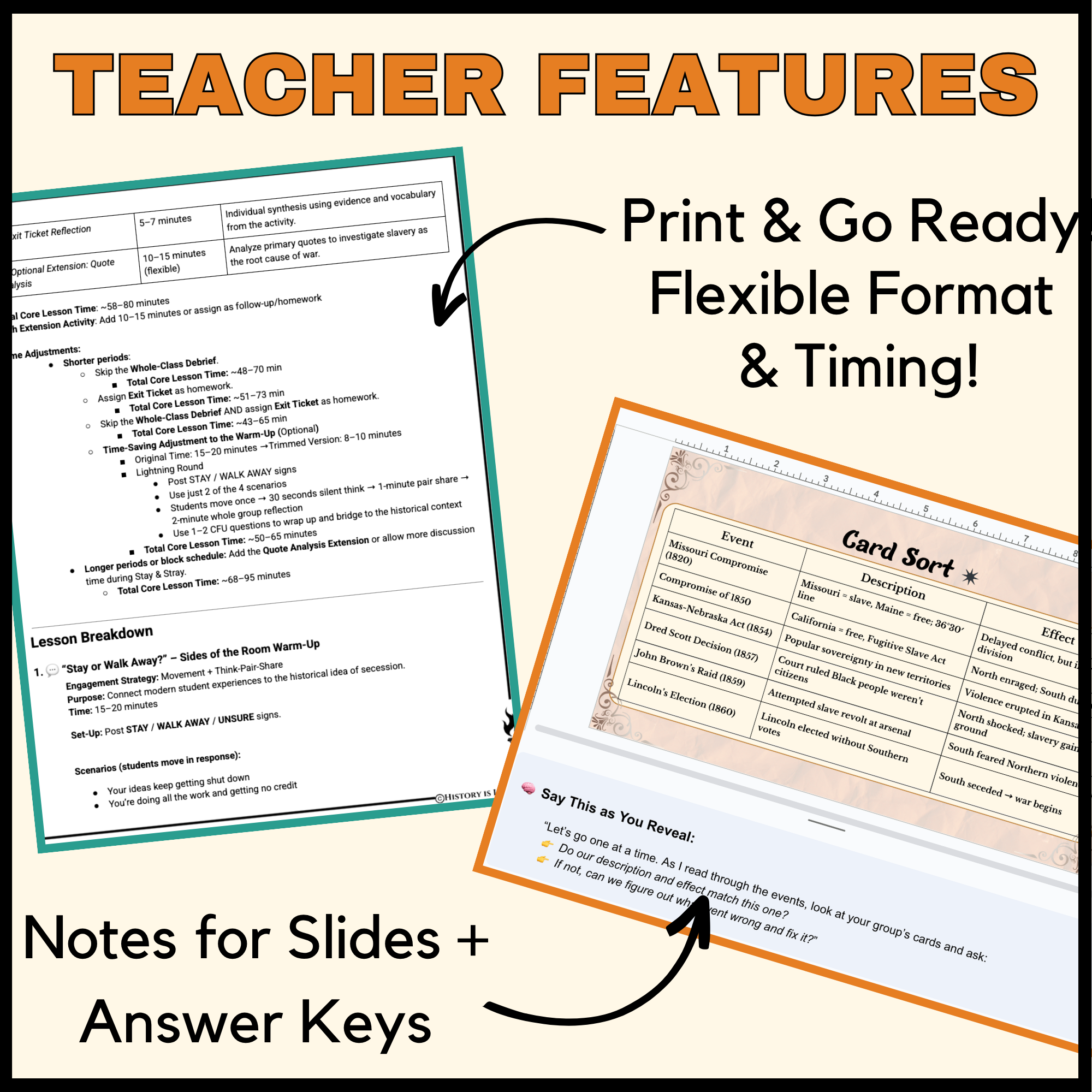
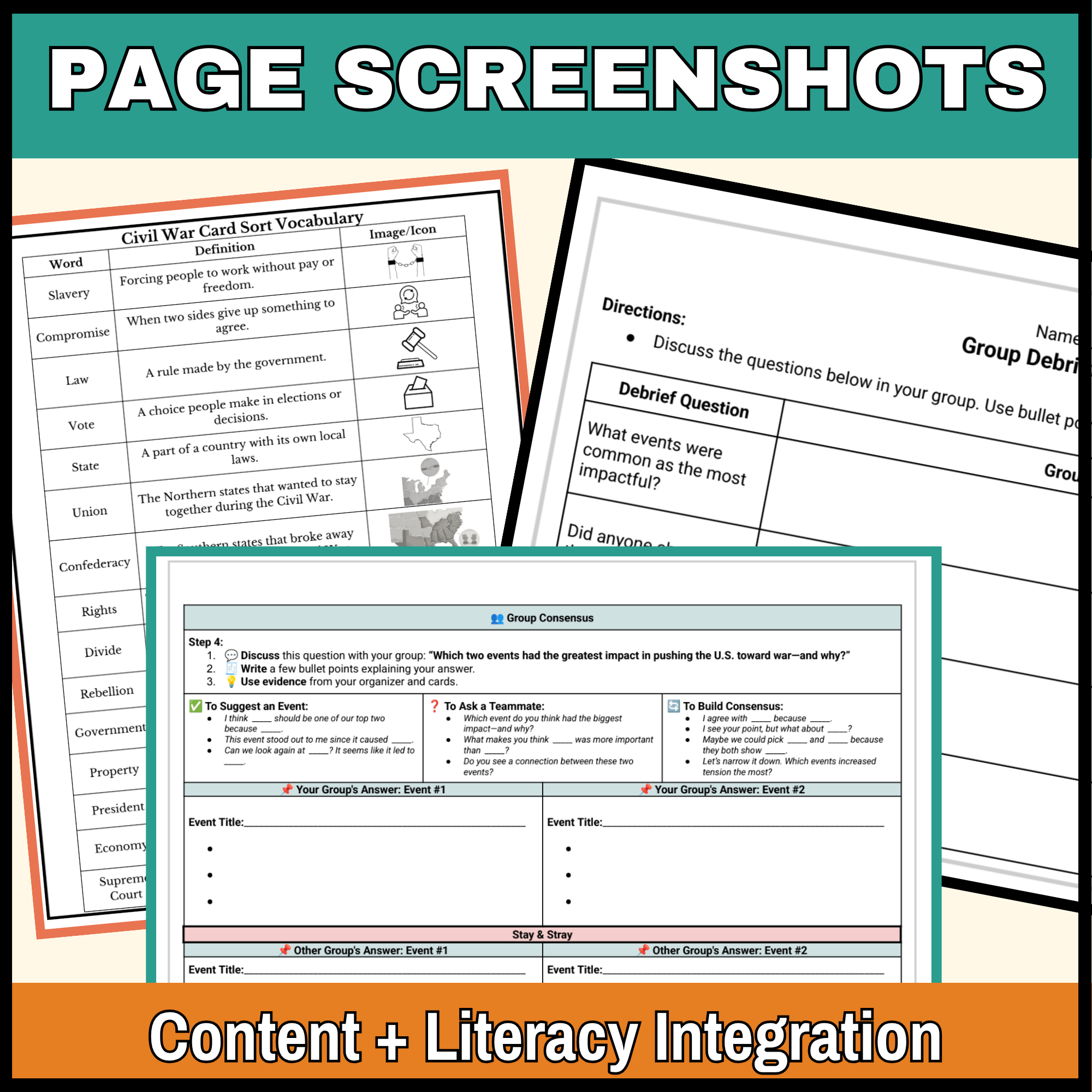
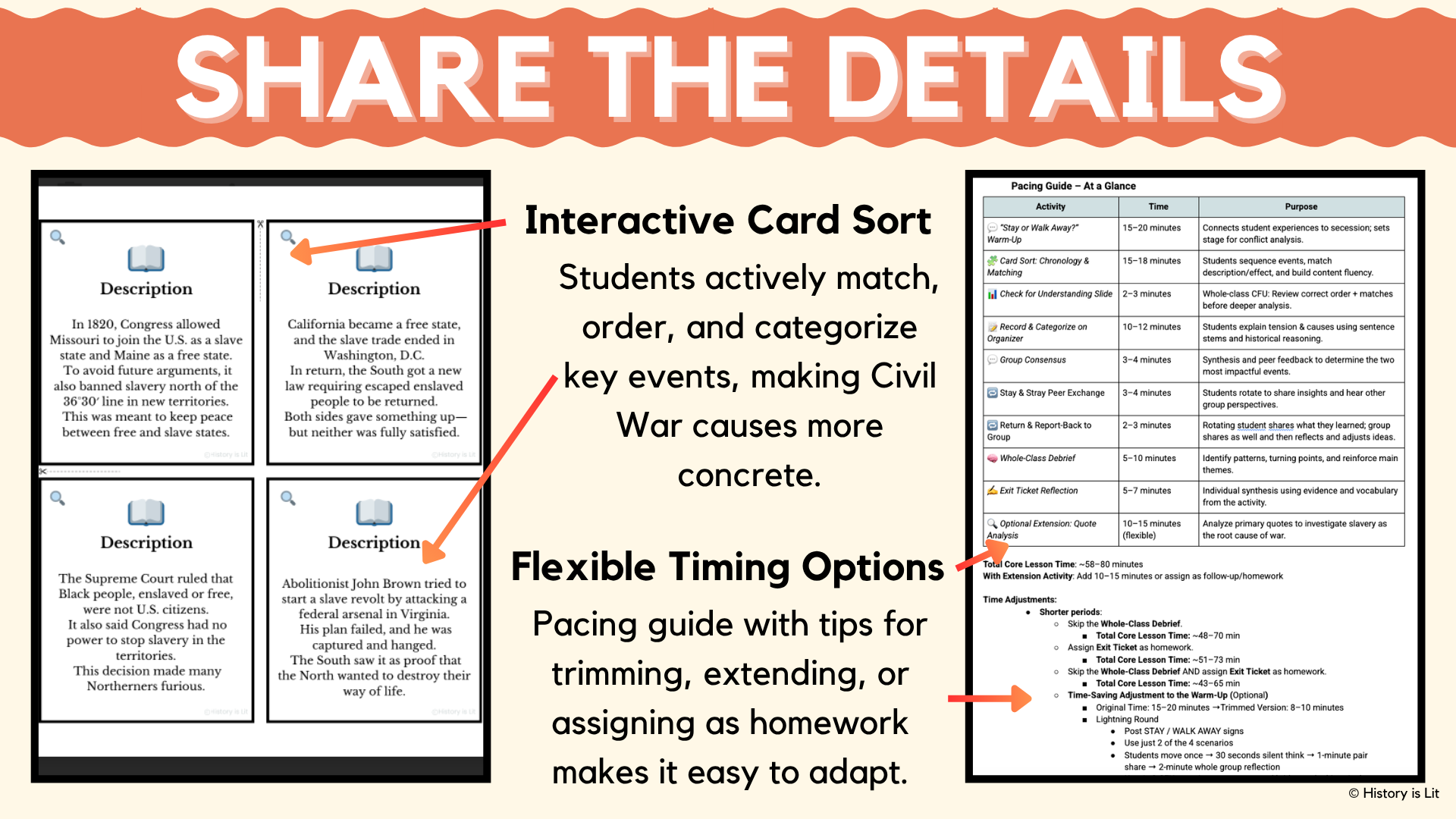
18 interactive cards – Match six historical events with their descriptions and effects.
Differentiated versions – Full-text and limited-text options to support different reading needs.
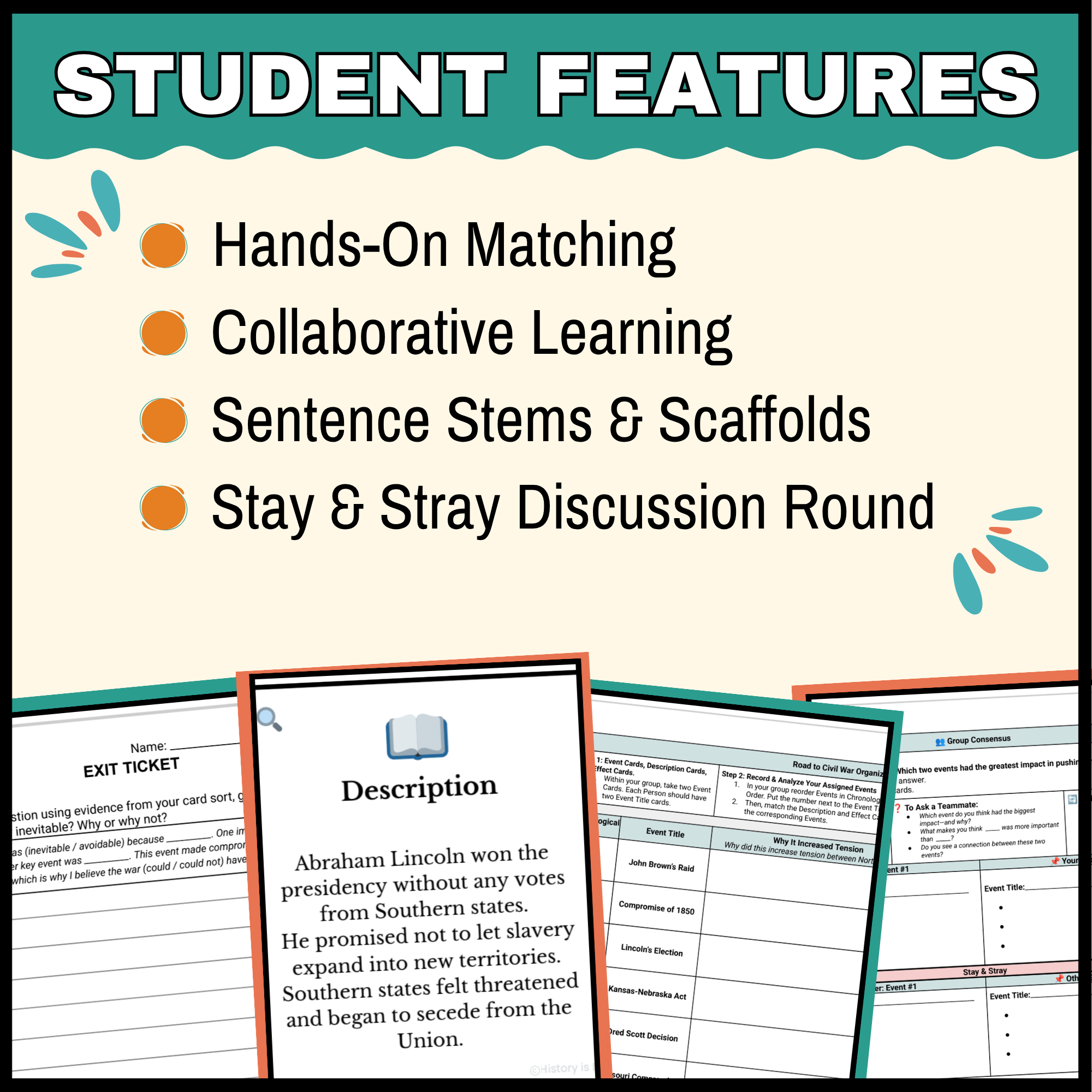
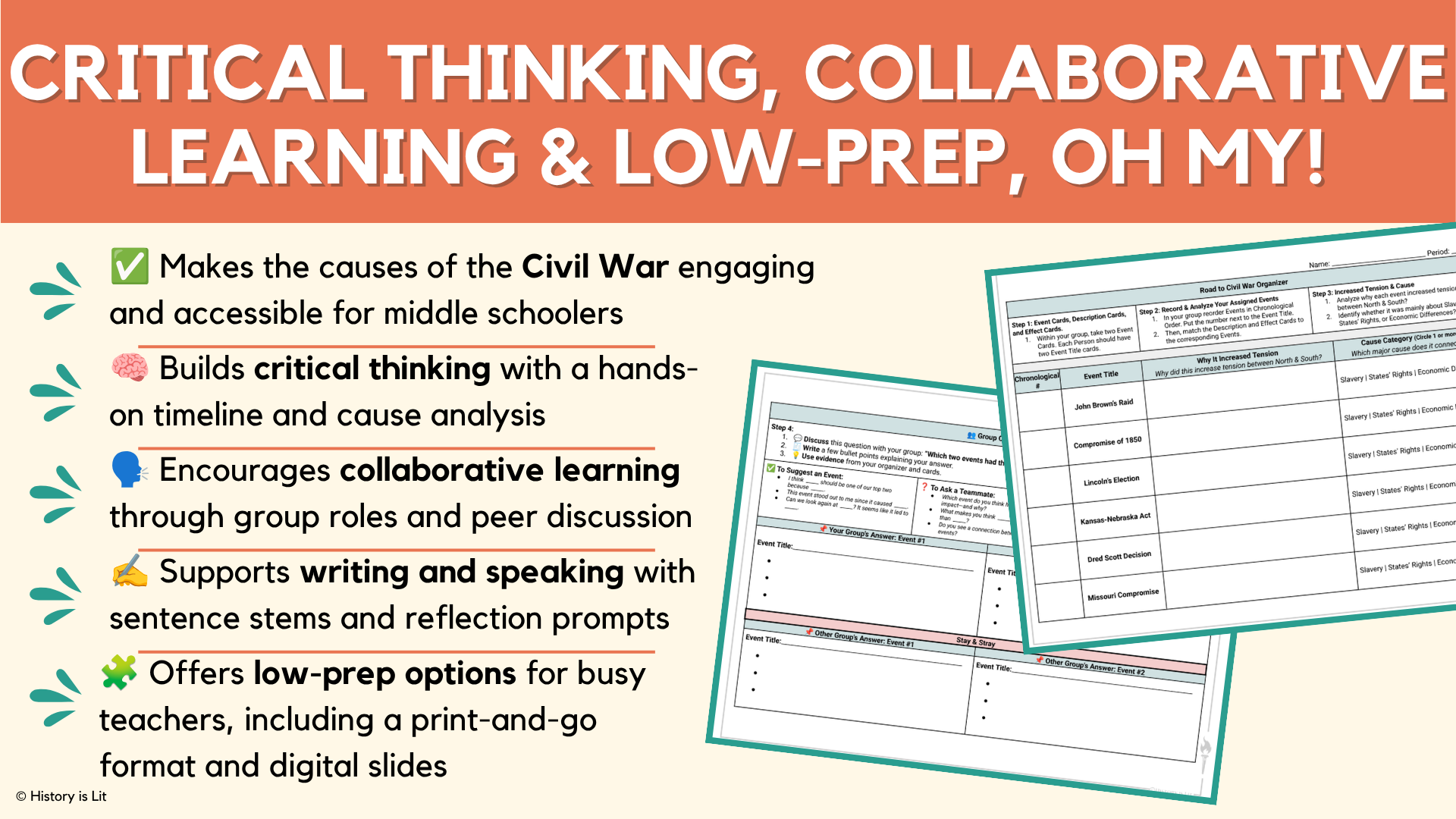
Road to Civil War Organizer – Sequence events and analyze cause-and-effect relationships.
Group Debrief & Exit Ticket – Encourage discussion and check understanding.
Optional Extension – Was It Really About Slavery? primary source quote analysis.
Vocabulary Supports – Accessible language to support comprehension.
Teacher Guide, Rubric & Answer Keys – Simplify implementation and assessment.
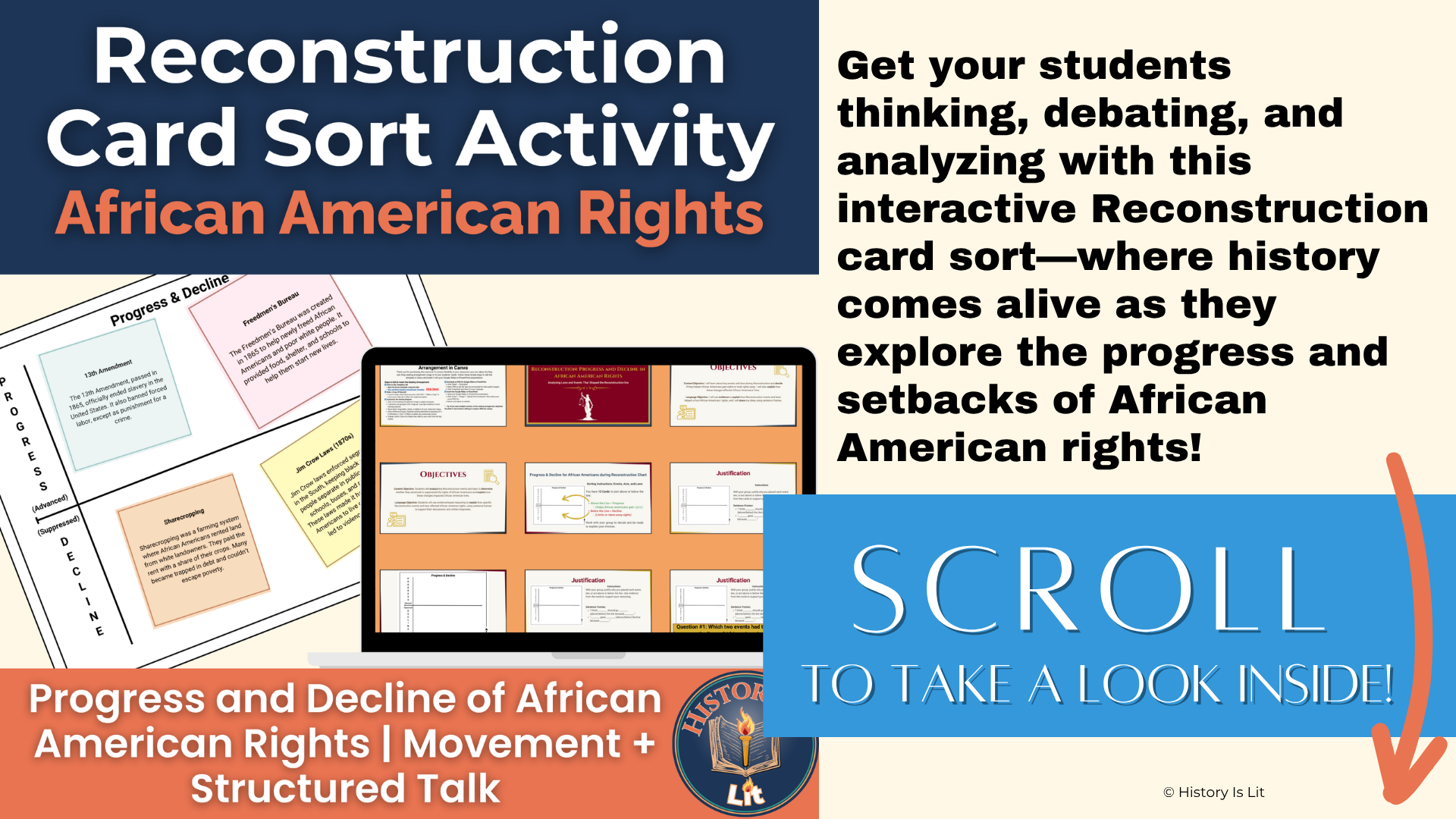
Move beyond memorizing amendments and laws by having students evaluate the impact of Reconstruction.
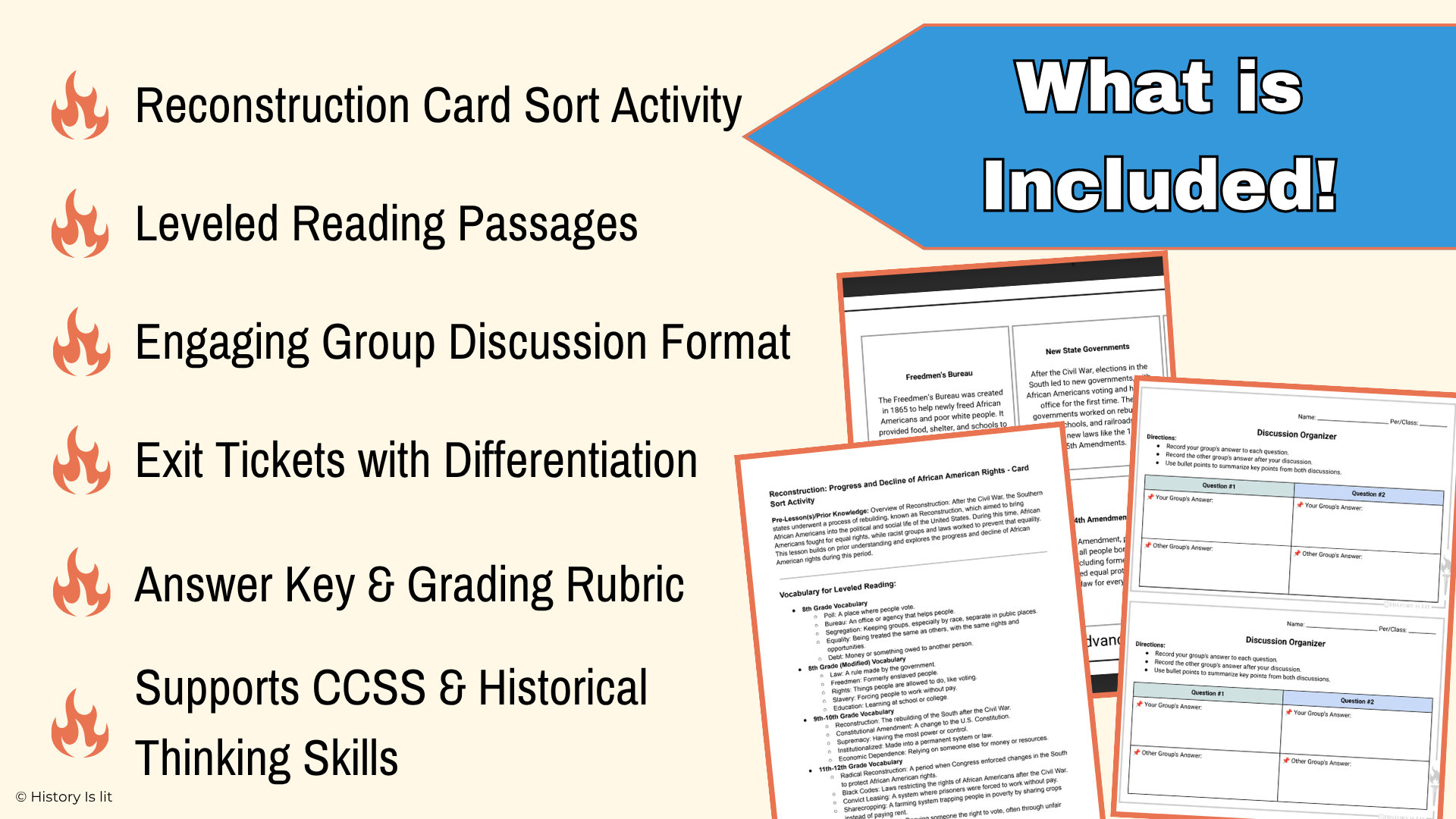
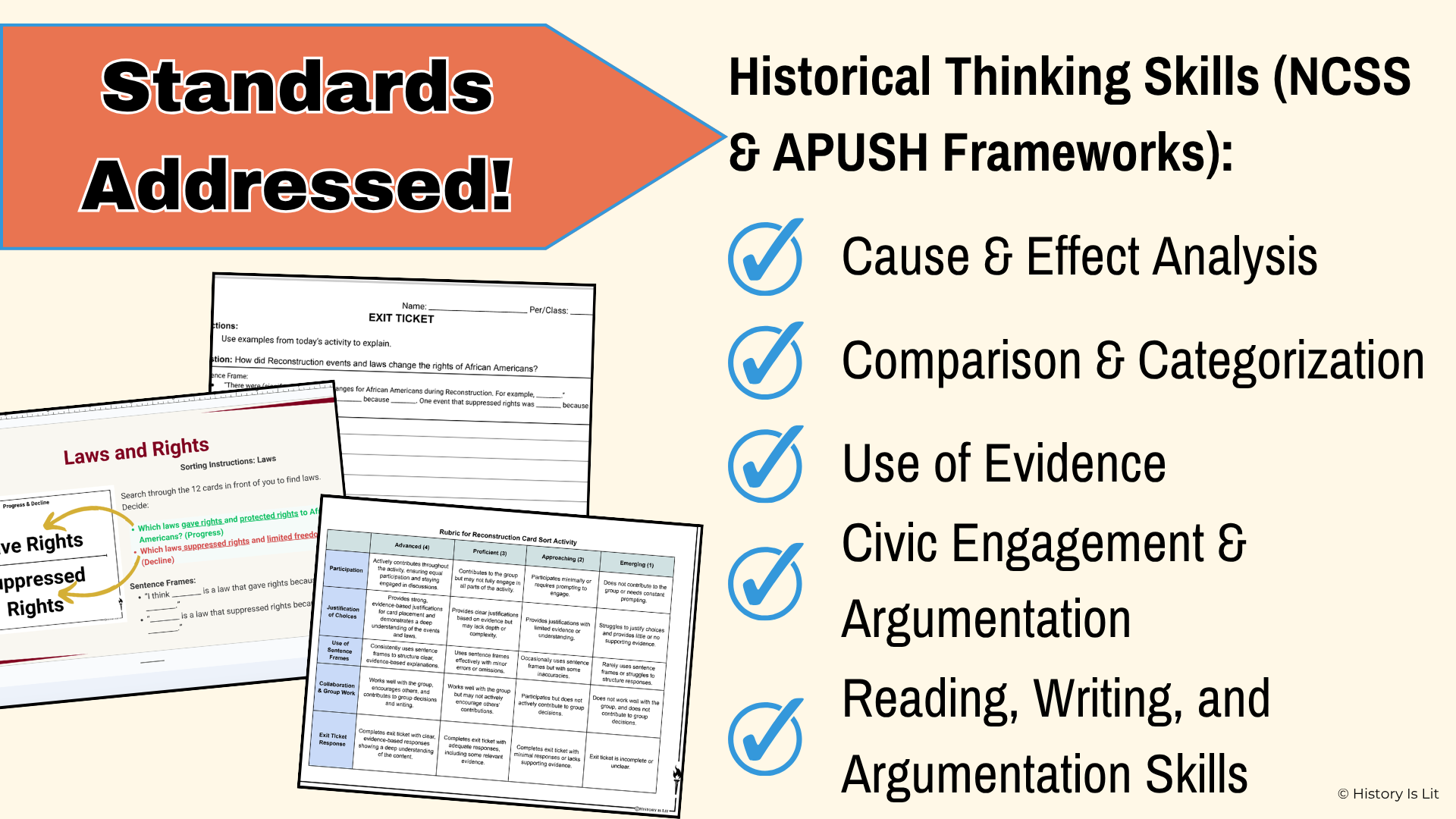
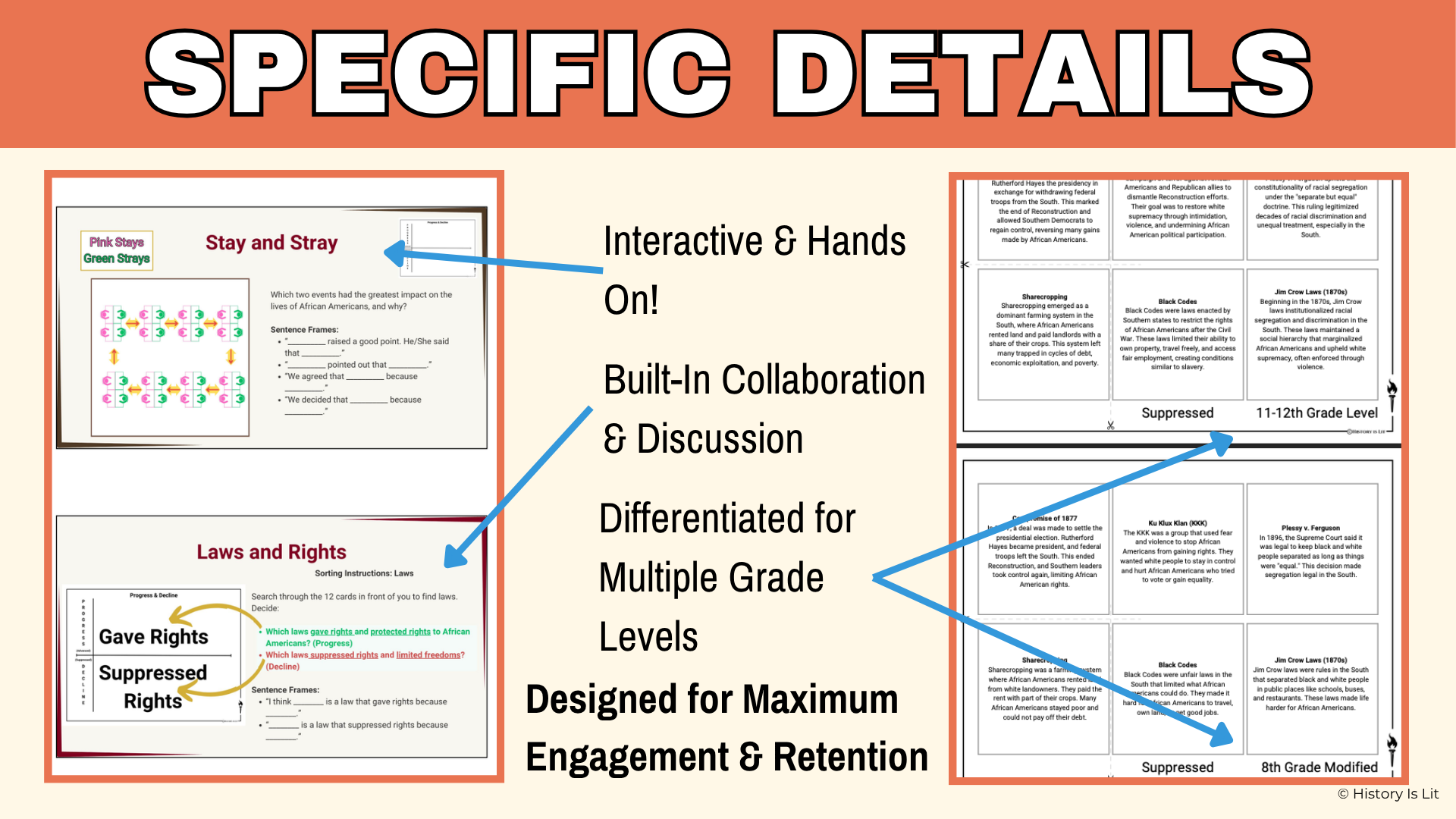
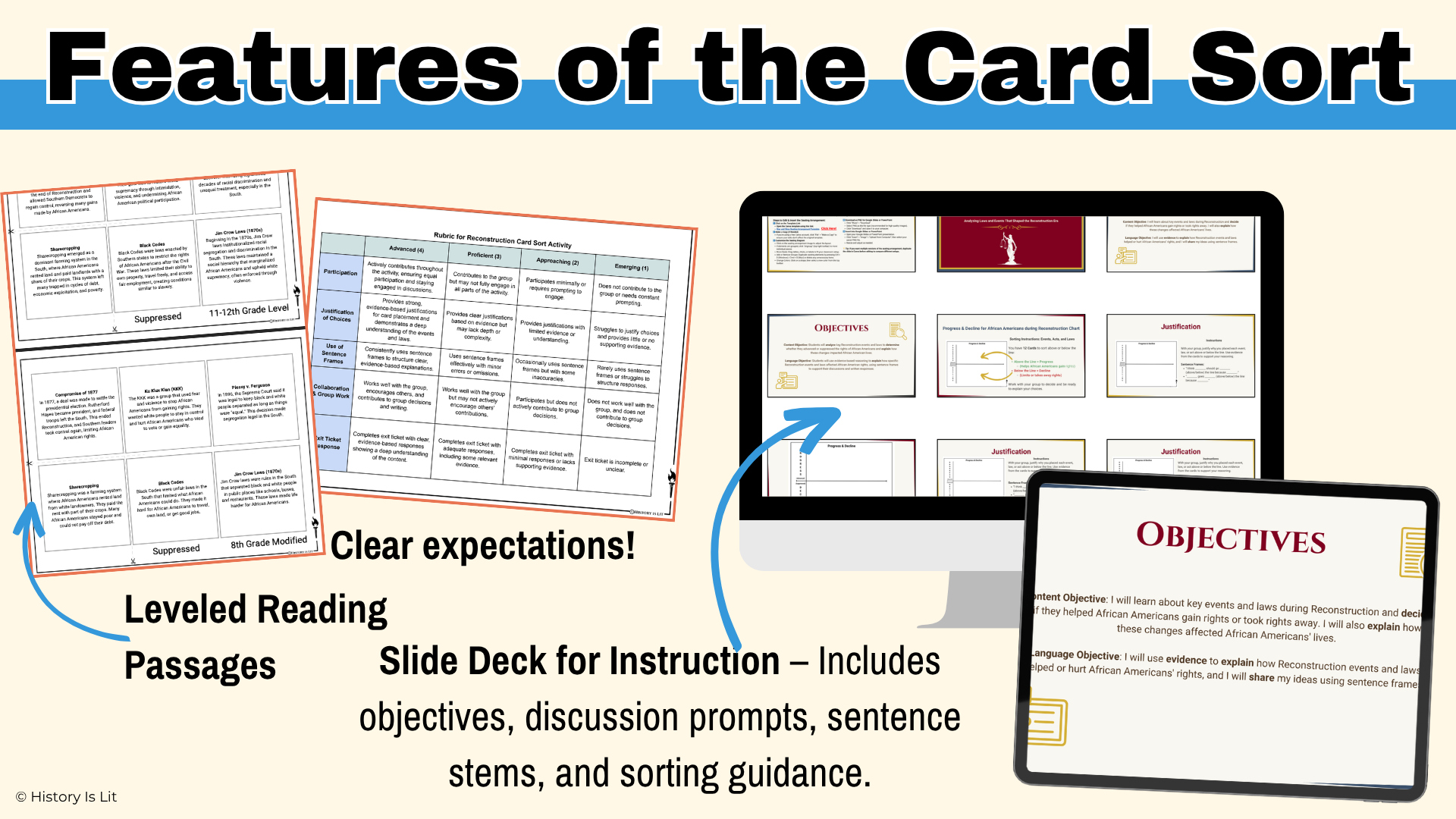
Interactive Card Sort – Categorize key Reconstruction events as progress or setbacks.
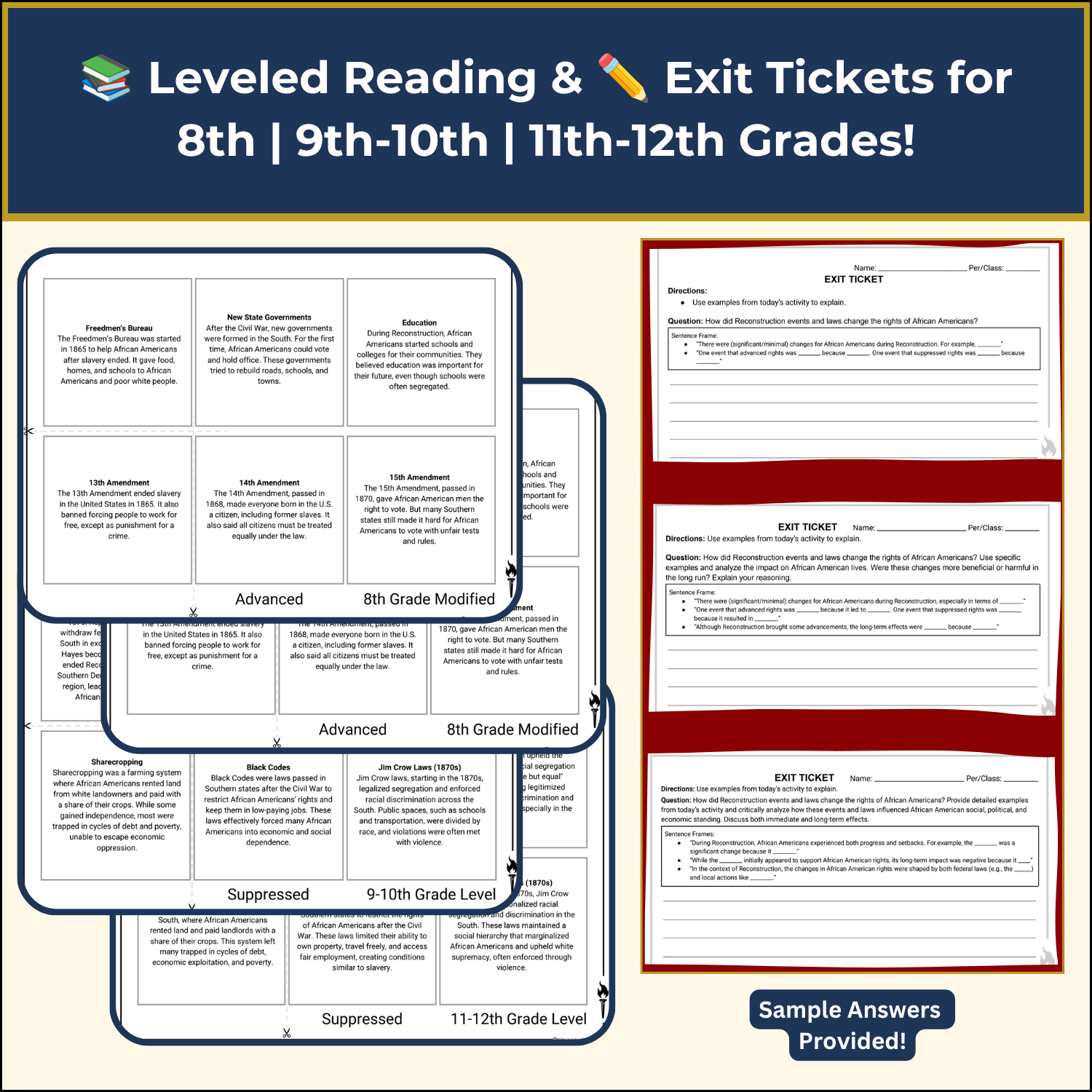
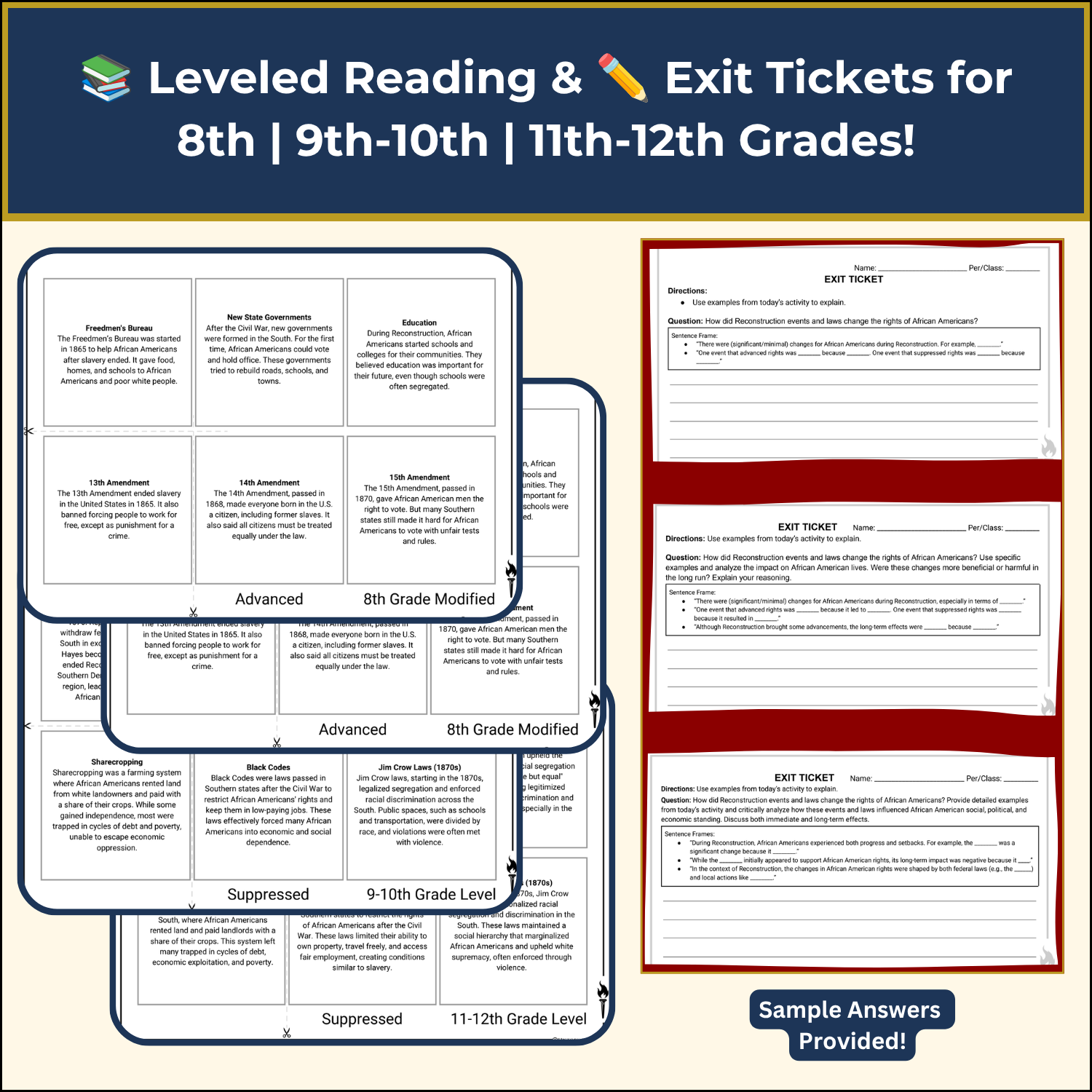
Leveled Reading Passages – Differentiated texts for grades 8–12.
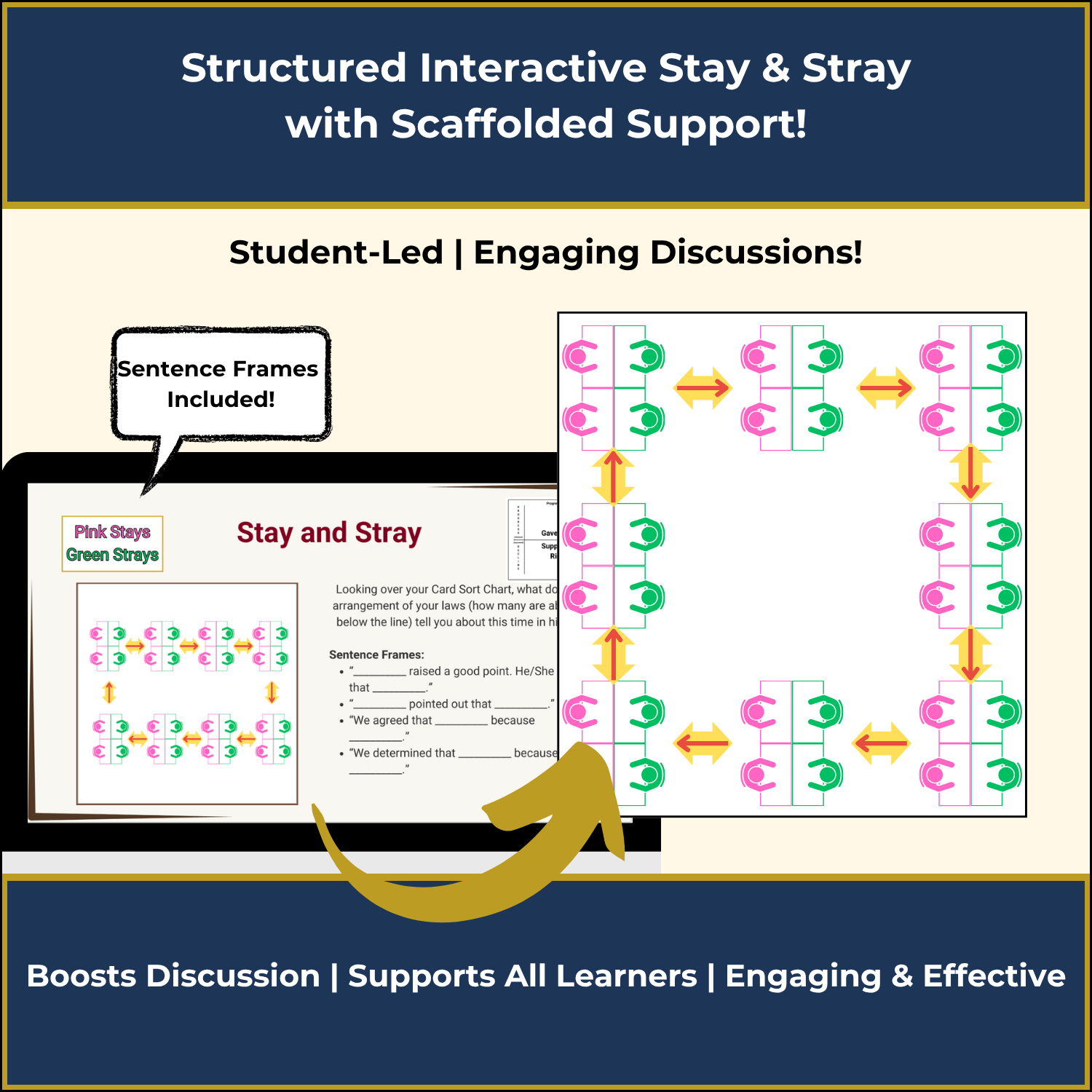
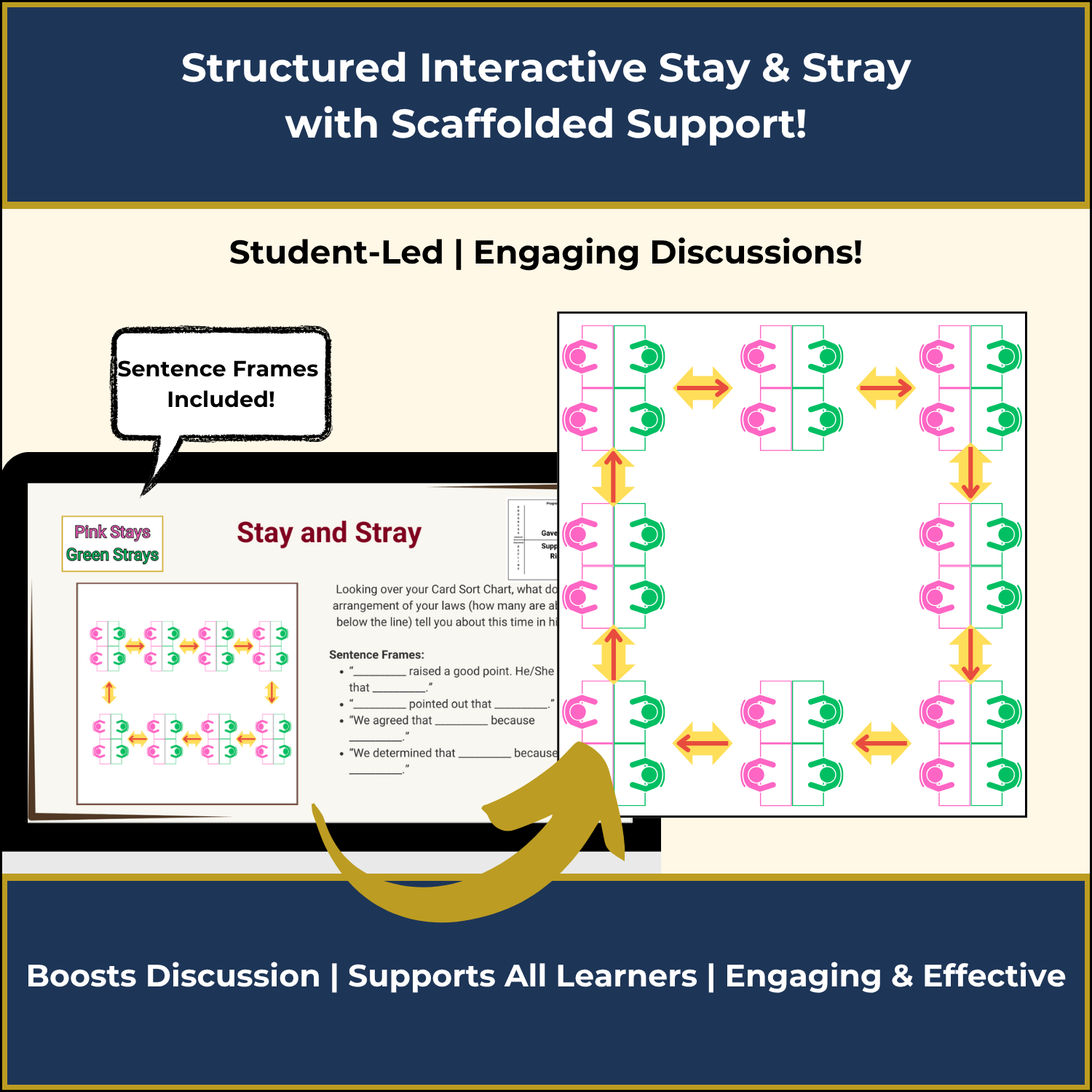
Stay & Stray Discussion Protocol – Get students moving, sharing ideas, and defending their reasoning.
Differentiated Exit Tickets – Assess students' understanding and historical thinking.
Answer Key & Grading Rubric – Make assessment manageable.
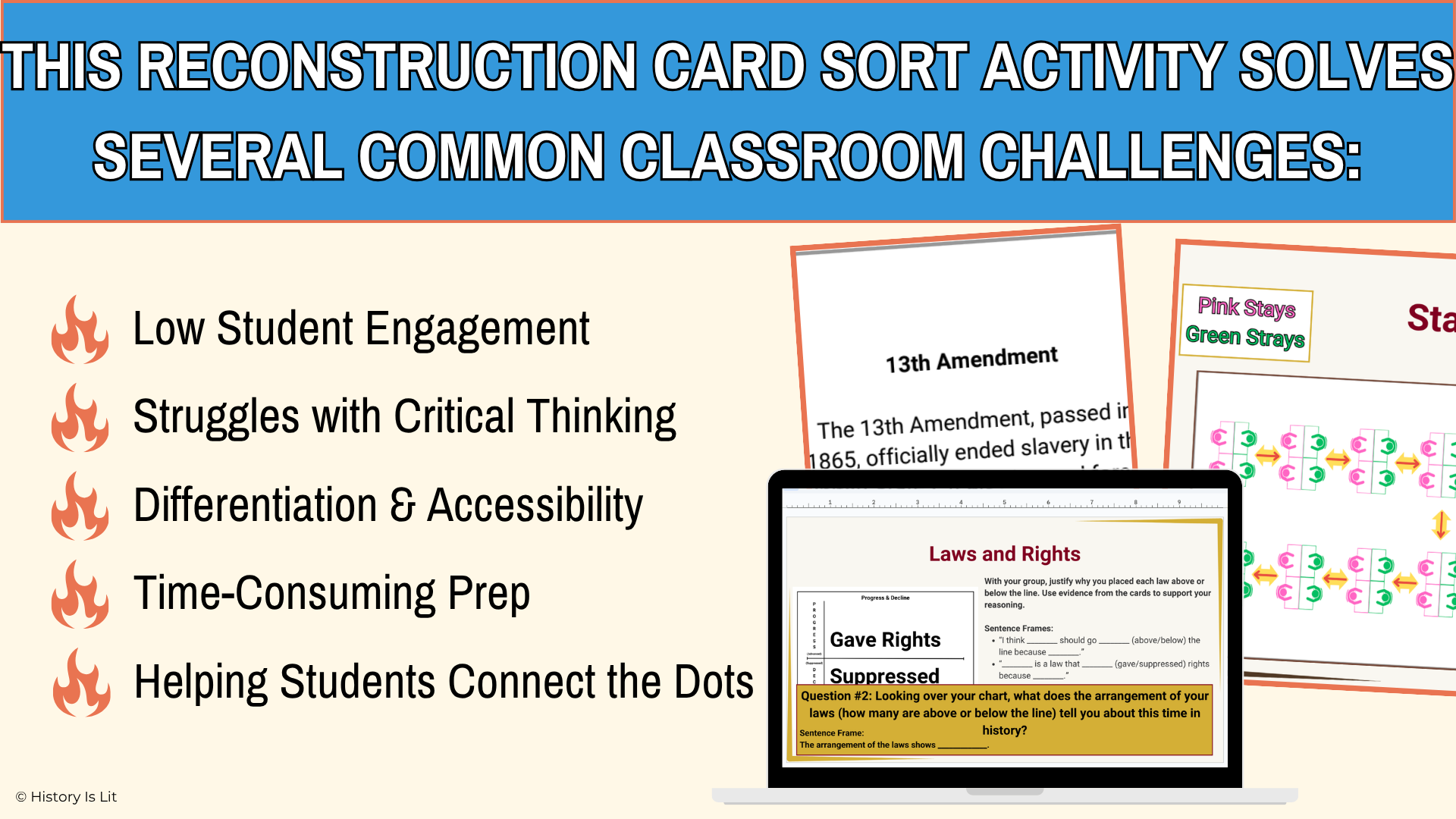
✅ Minimal Prep, Maximum Engagement – Print, organize, and get students working.
✅ Built-In Differentiation – Multiple reading levels and vocabulary supports help make historical content accessible.
✅ Purposeful Academic Discussion – Structured activities encourage students to explain their thinking, support their claims, and respond to classmates.
✅ Historical Thinking Skills – Students analyze cause and effect, evaluate historical significance, and make evidence-based judgments.
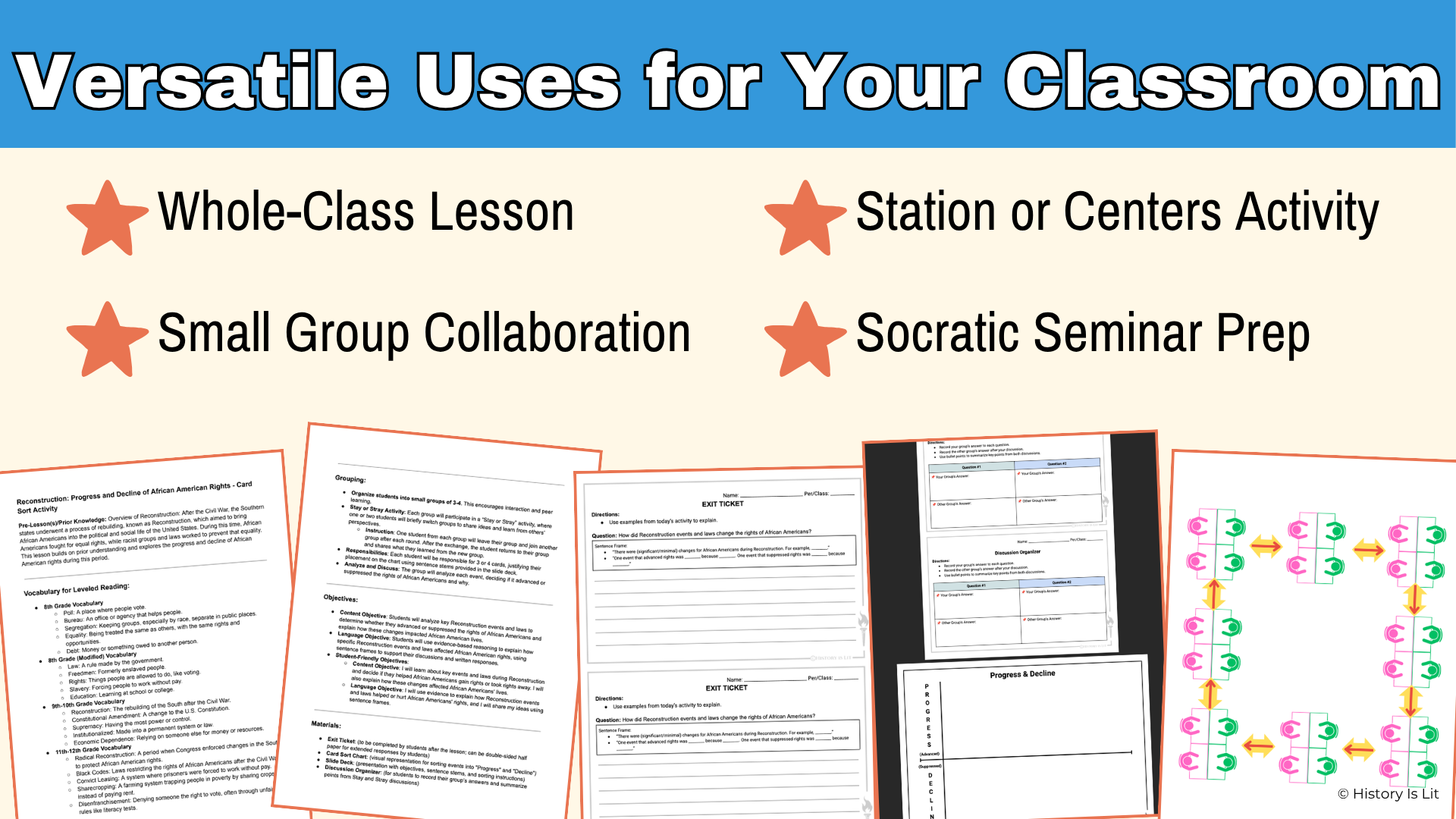
✅ Flexible Classroom Use – Great for introducing concepts, reinforcing learning, reviewing content, or assessing understanding.
Students aren't just reading about the Civil War and Reconstruction. They're actively working with historical information.
Through sorting, sequencing, discussion, and reflection, students practice making connections between historical events and explaining their reasoning.
The goal isn't just to get students talking. It's to teach them how to think critically and contribute meaningfully to academic discussions.
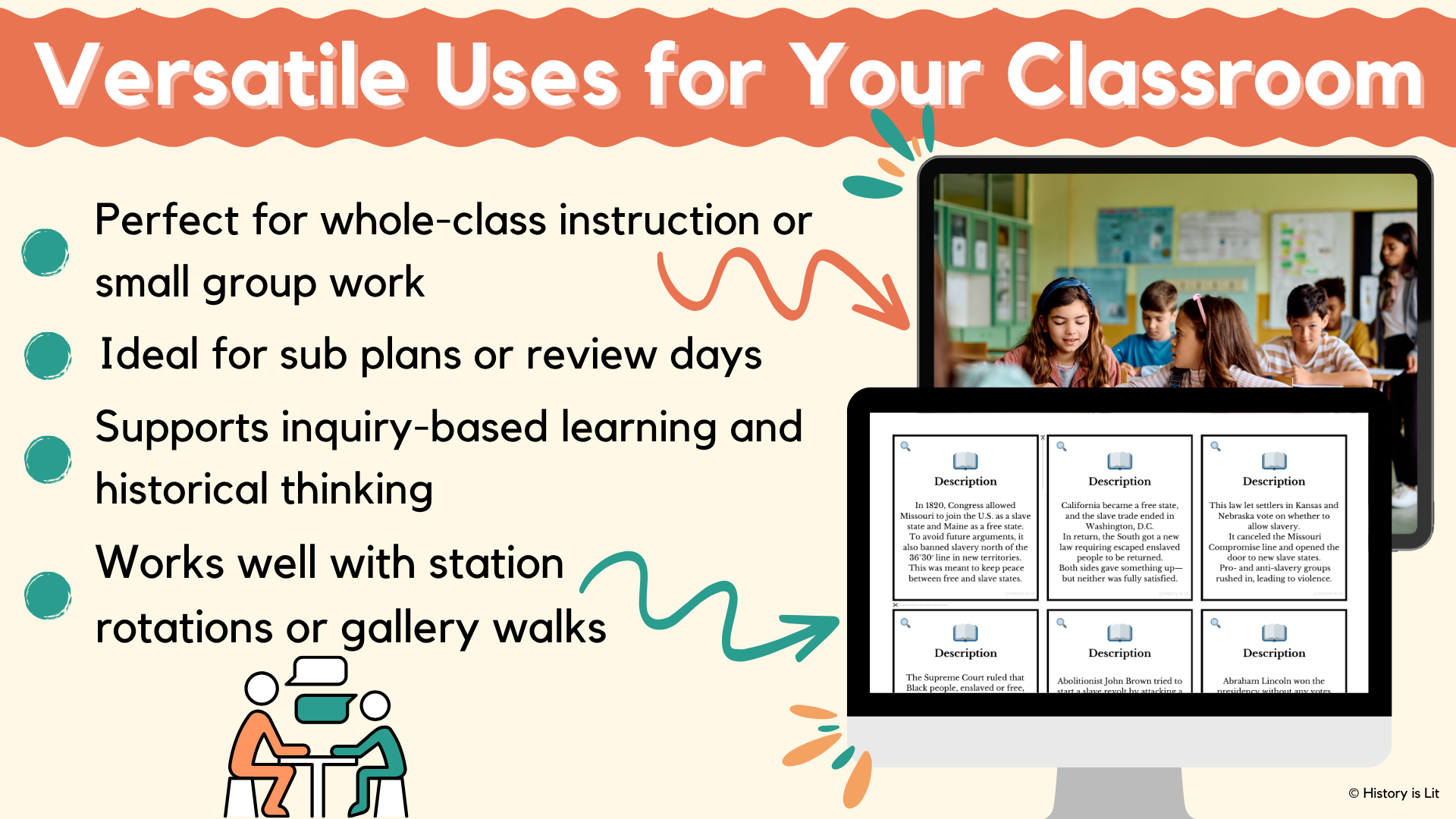
Middle and high school U.S. History classes (grades 7–12)
Civil War and Reconstruction units
Collaborative learning and small-group activities
Historical analysis and critical thinking
End-of-year review and formative assessment
Differentiated instruction
Teaching the Civil War and Reconstruction doesn't have to mean another lecture or passive reading activity.
With these interactive card sorts, students can explore important historical events, work collaboratively, and explain their thinking—all with the structure and support they need.
Get students sorting, discussing, and analyzing history with activities that make their thinking visible.
Keep History Lit! 🔥
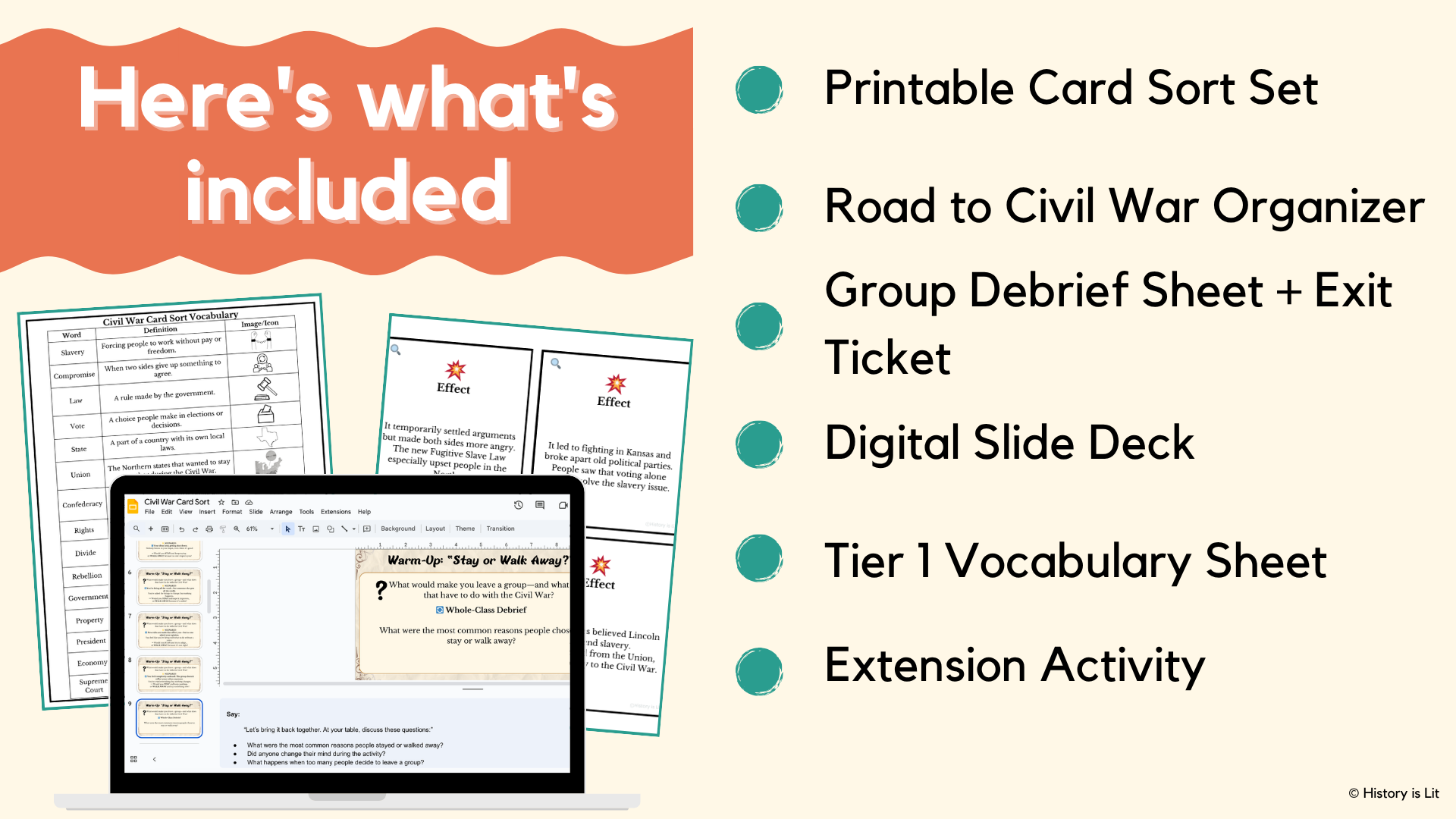
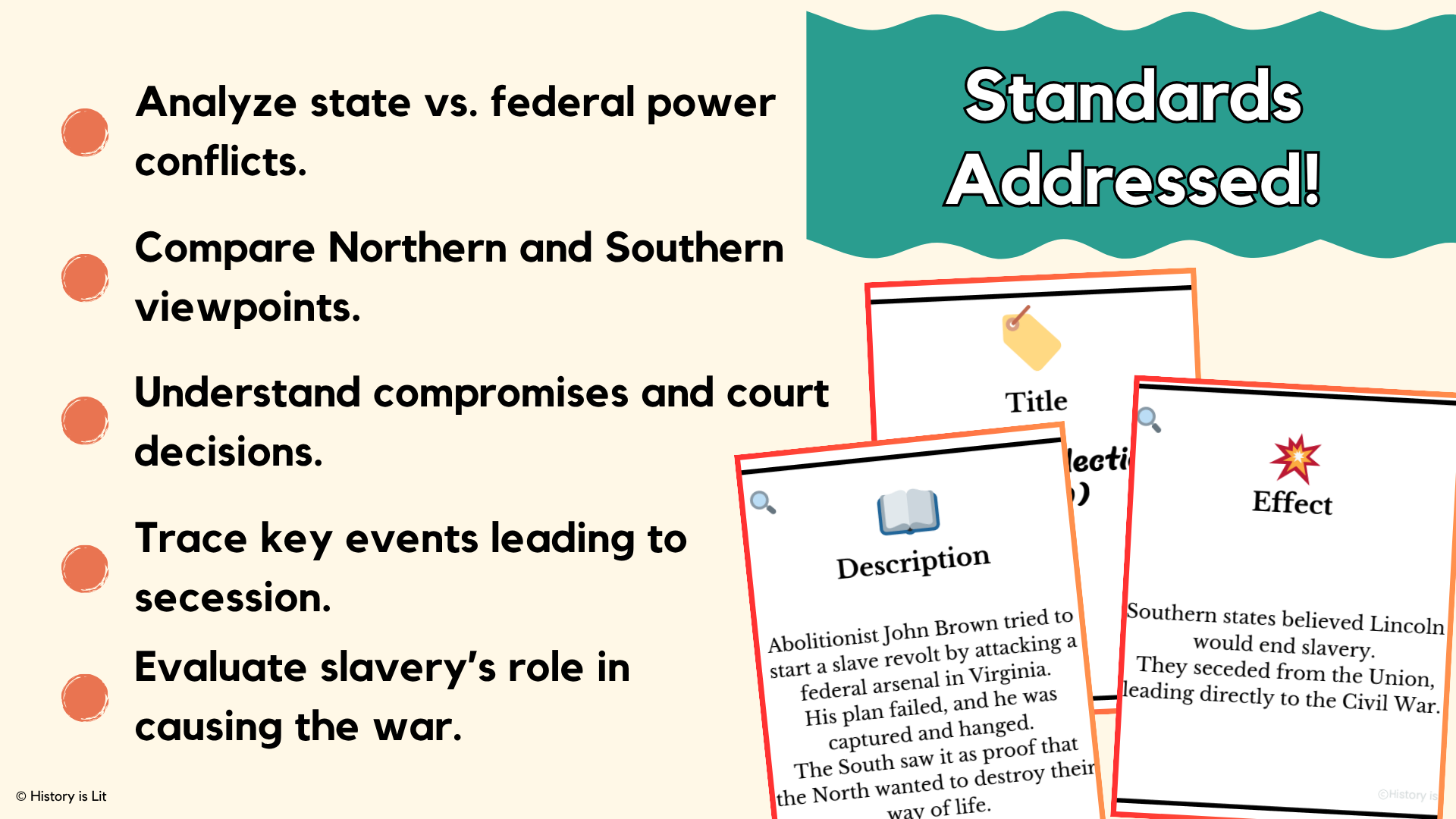
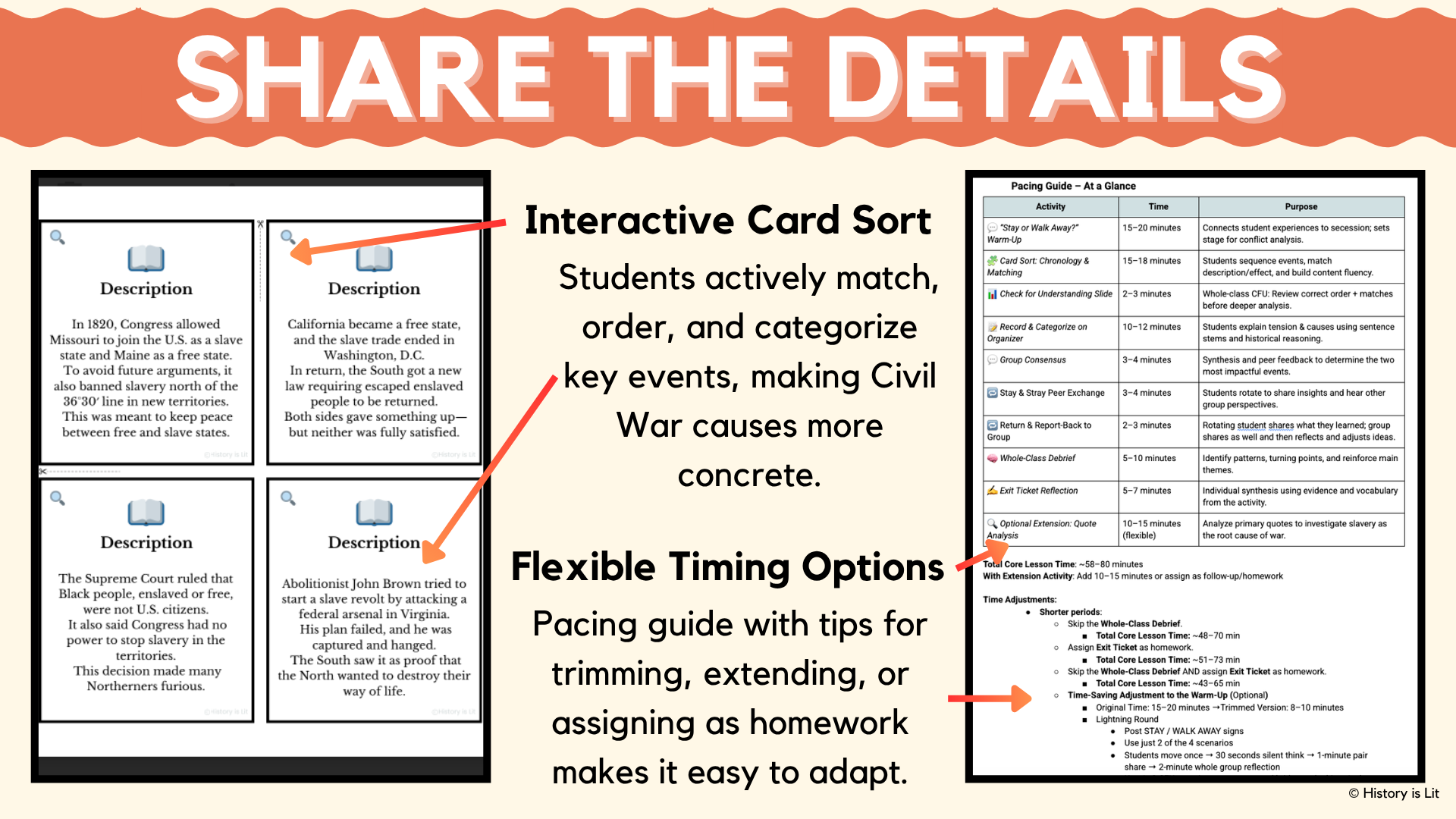
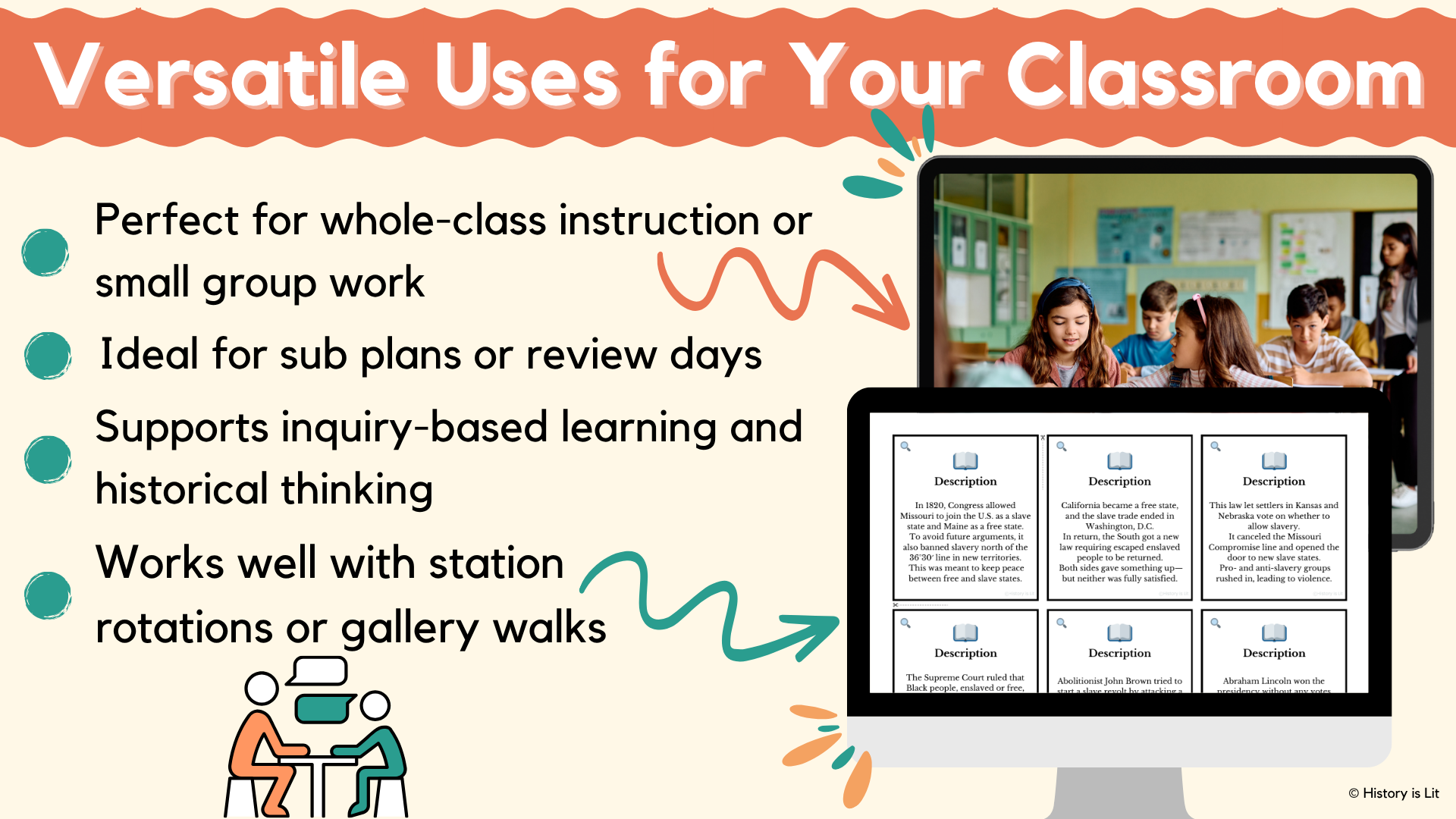
It’s the end of the year, and let’s be honest — we’re all running on fumes. Testing is looming, Spring Break feels like a distant memory, and Spring Fever is real. Your students are burnt out, and let’s face it — so are you. Whatever worked in the past is no longer cutting it. The last thing you want is more worksheets or dry activities that no one cares about.
You’re trying to keep students engaged, but it feels like no matter what you do, they’re just done. The thought of trying to get them to sit through another boring lesson or passive activity feels like the final straw. You need something that gets them talking, thinking, and moving, but without taking up all your precious prep time. And, frankly, you need it to work — right now.
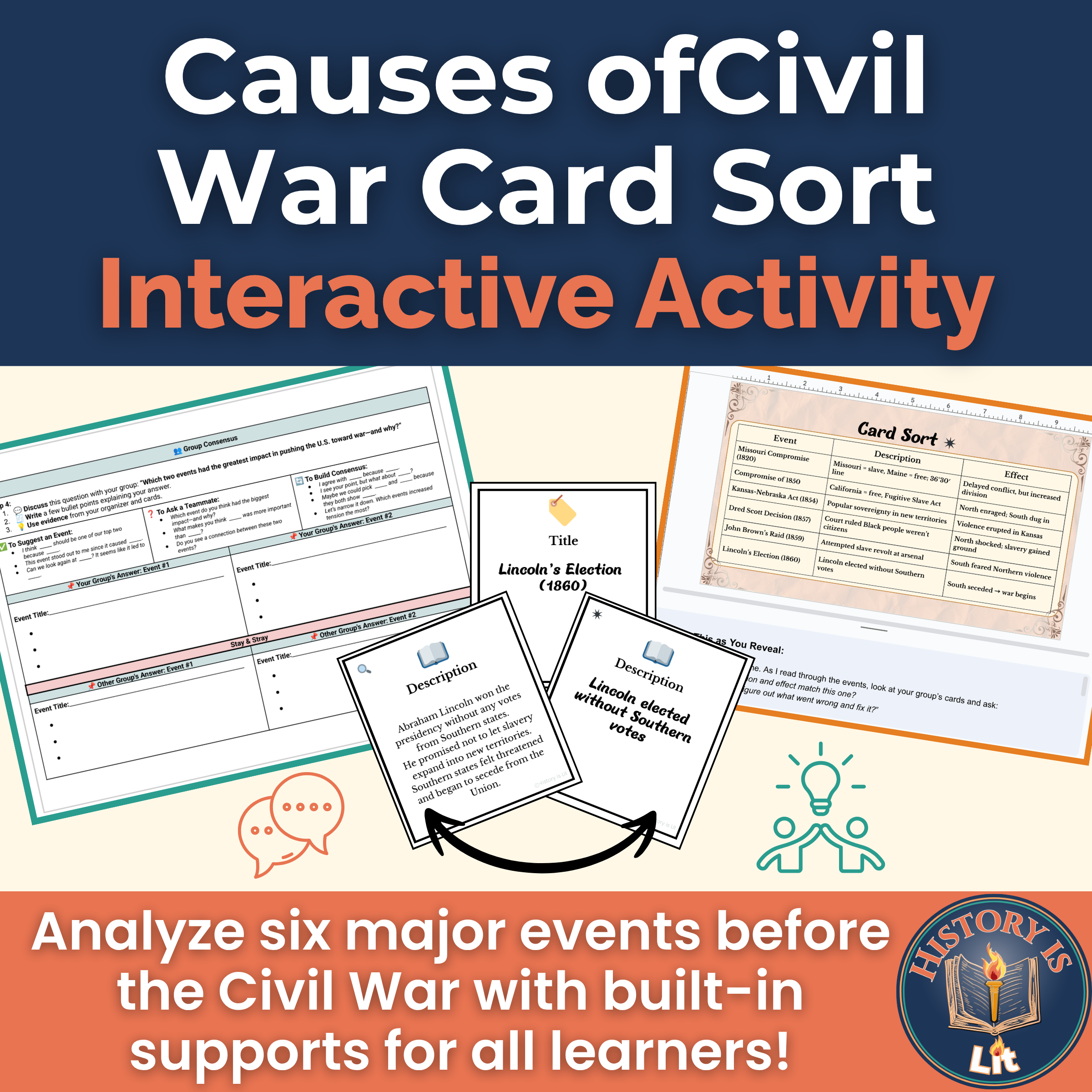
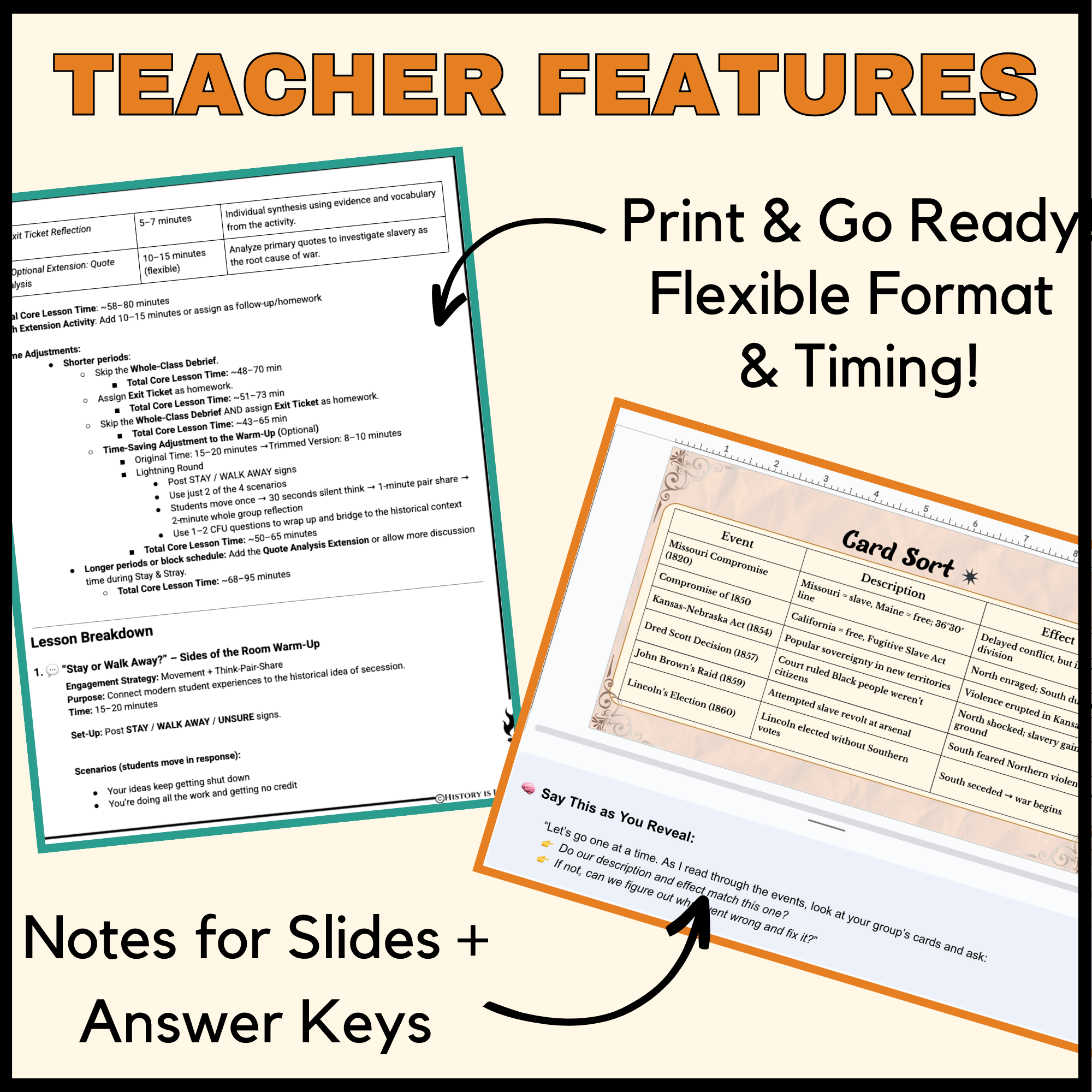
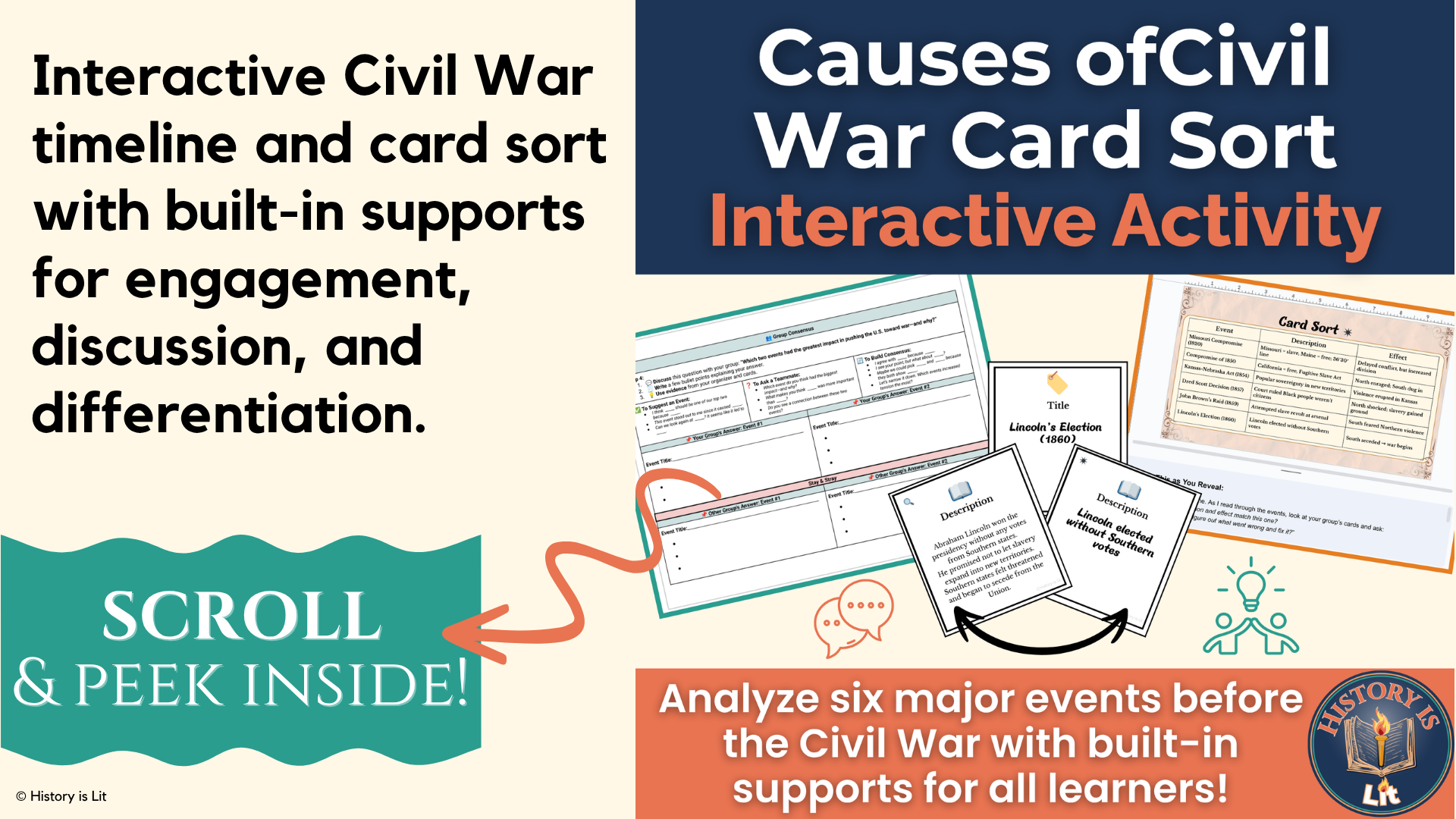
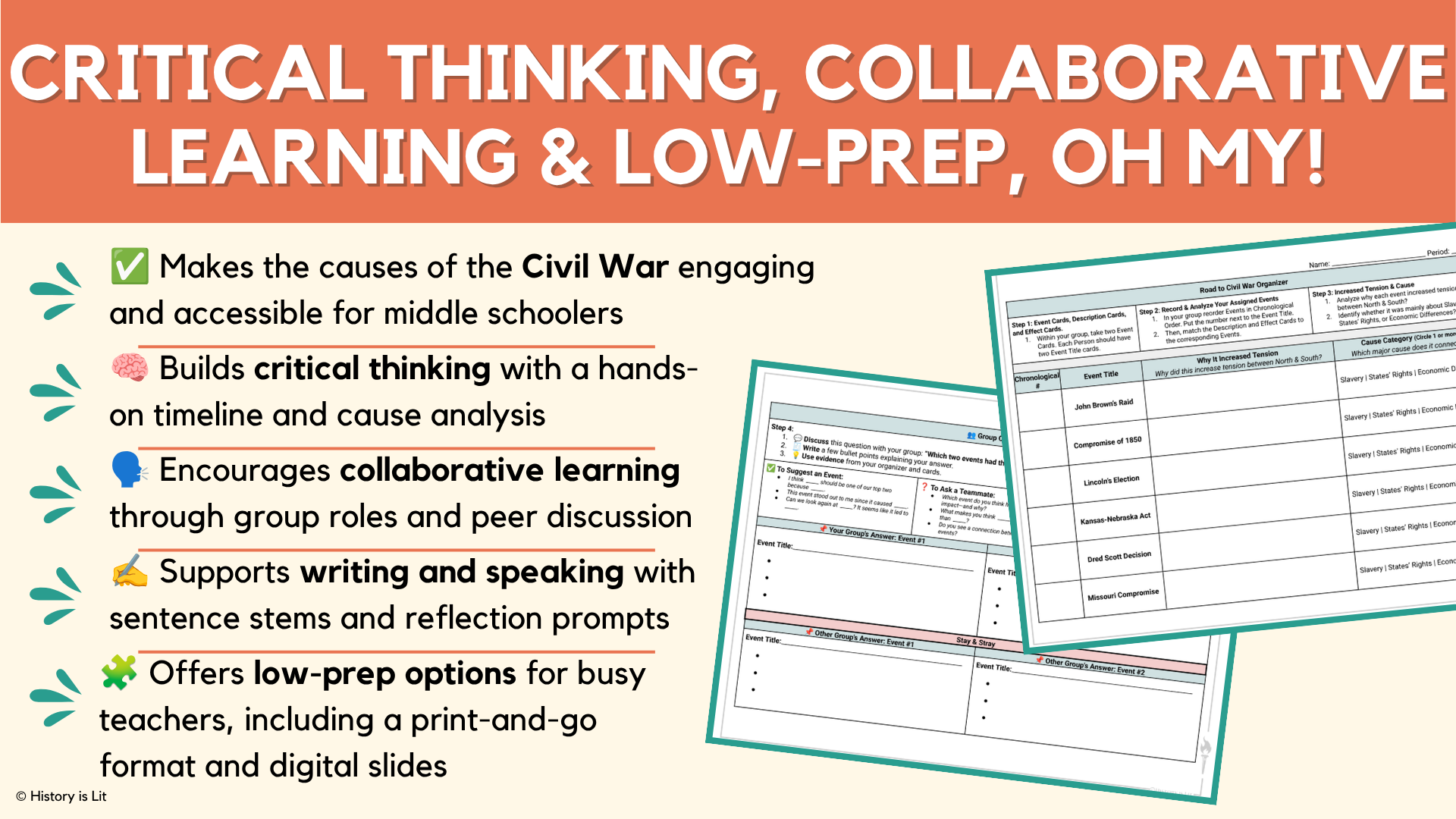
That’s exactly why I created the Civil War Card Sort. It’s a hands-on, interactive activity that engages your students in meaningful ways without the burnout. They’ll analyze six key events leading up to the Civil War, using sentence stems and vocabulary supports to build their critical thinking while you get the break you need. Plus, it’s differentiated for all types of learners and can be done with minimal prep — just print or assign digitally, and go!
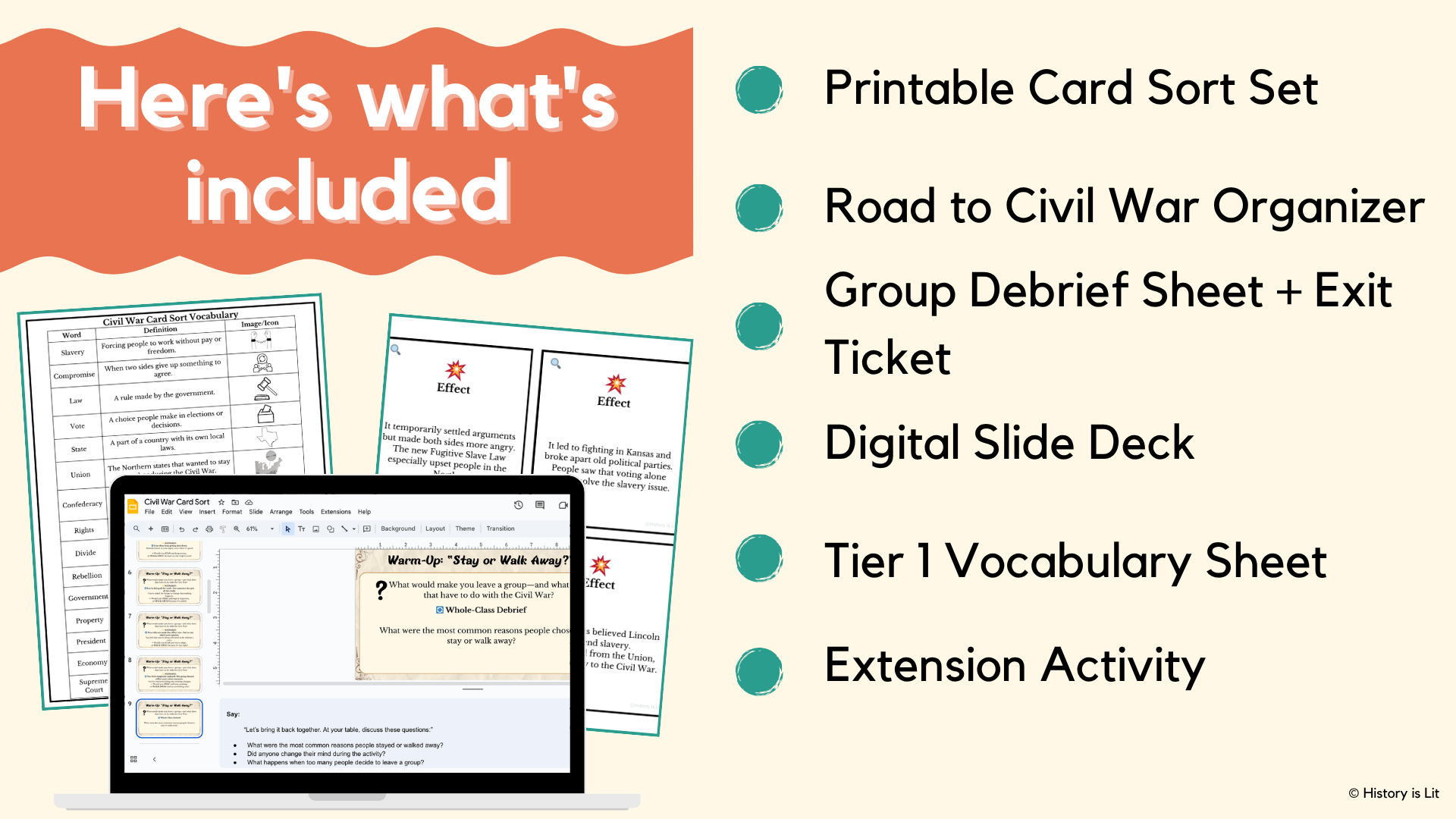
What’s Included:
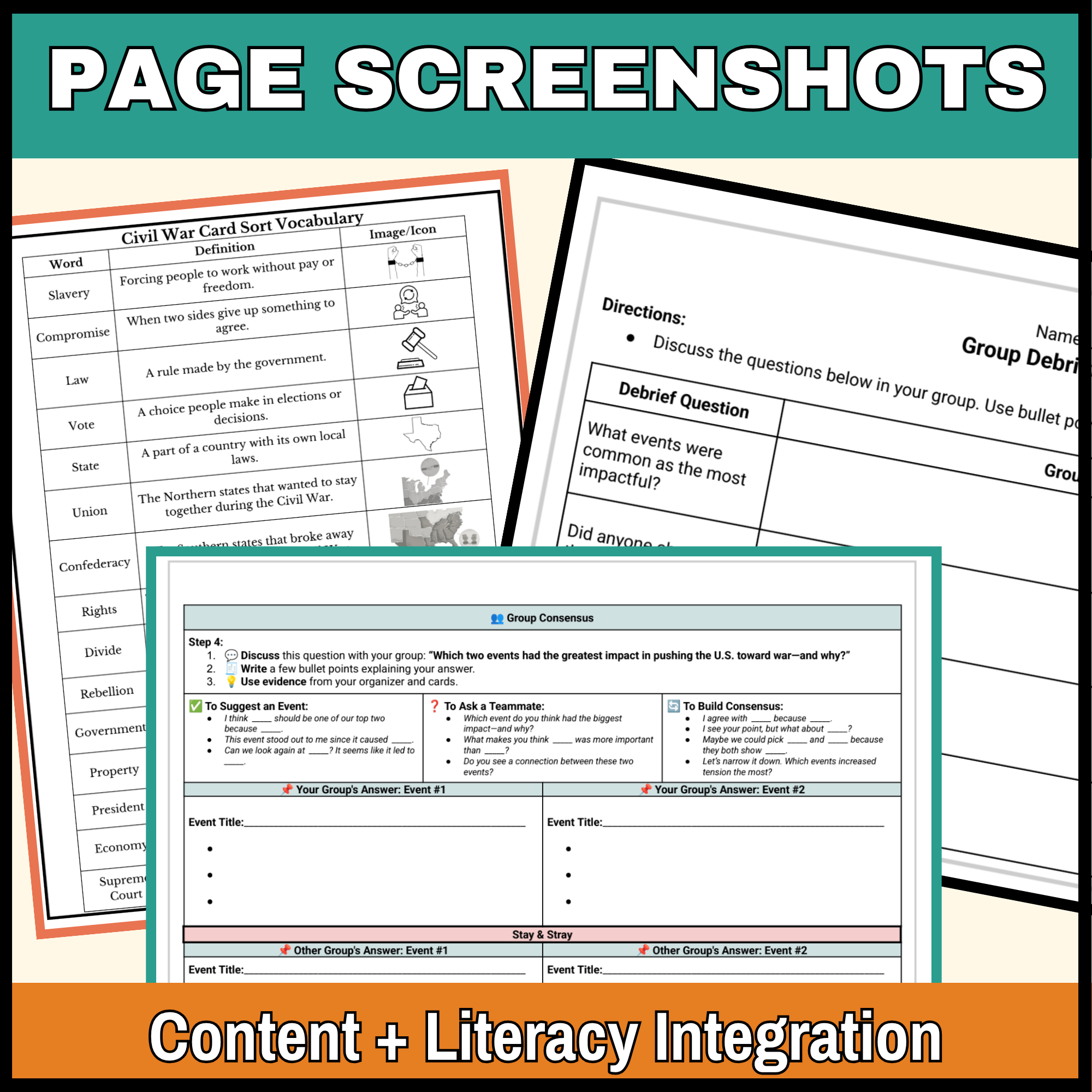
Printable Card Sort (18 cards: 6 titles, 6 descriptions, 6 effects)
▸ Includes Limited Text and Full Text versions
“Stay or Walk Away?” warm-up signs (to get students talking)
Road to Civil War Organizer (for sequencing and analysis)
Group Debrief Sheet + Exit Ticket
Tier 1 Vocabulary List for simplified language support
Optional Extension: “Was It Really About Slavery?” Quote Analysis
Teacher Guide + Pacing Breakdown
Answer Keys for both card versions
Student Rubric (for Organizer + Exit Ticket)
Why Students Love It:
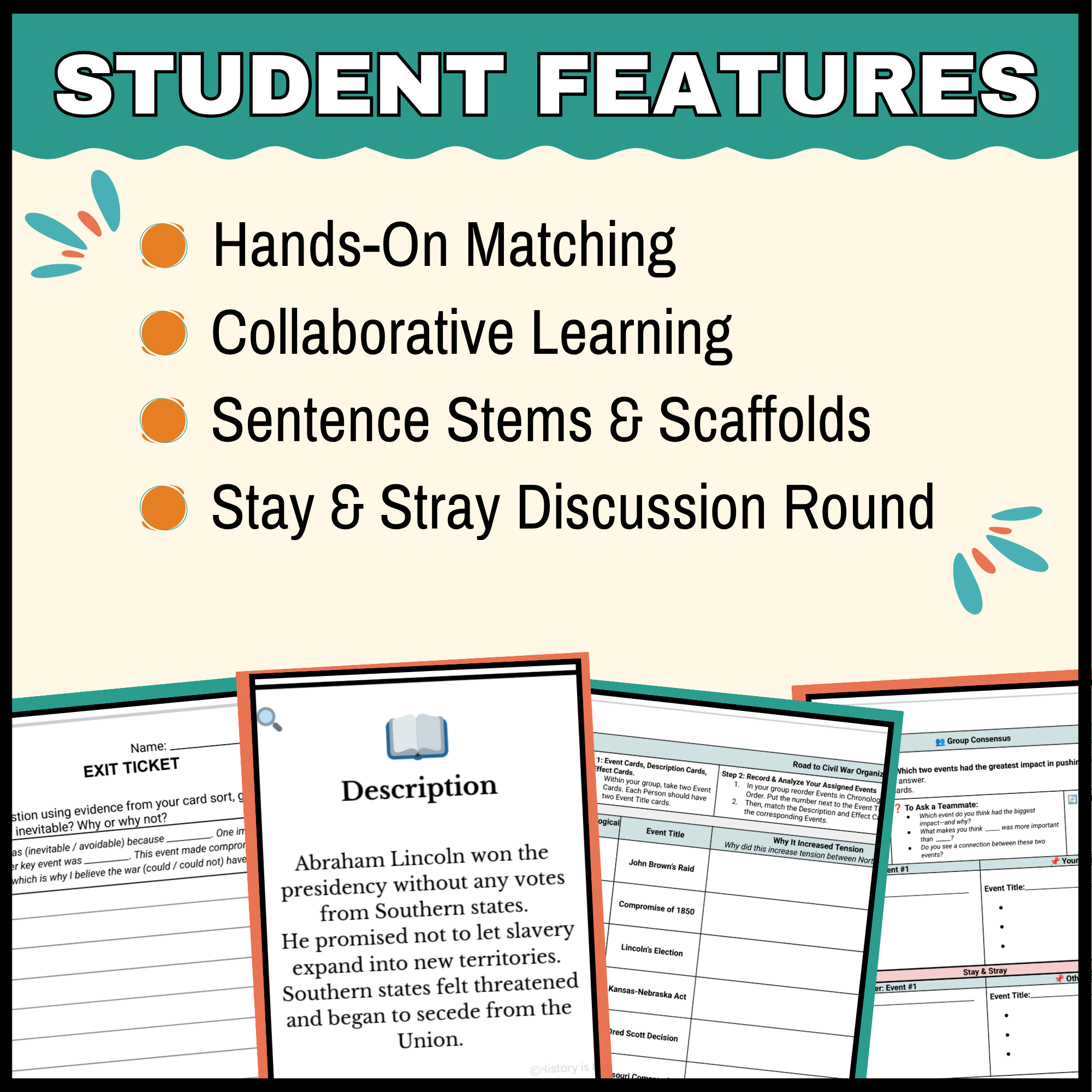
They get to actively participate in a discussion — no more passive learning!
The Stay & Stray structure ensures everyone speaks, even your quietest students.
Hands-on learning helps them connect real-world events to the past.
Why You’ll Love It:
No prep — just print or assign digitally, and you're done.
Perfect for literacy integration and keeping students engaged during these final months.
Sub-friendly, with clear instructions, rubrics, and vocabulary supports.
Flexible for all learners, with different versions for differentiation.
Perfect For:
End-of-year engagement and testing prep.
Formative assessments and critical thinking skills.
Hands-on, interactive learning to break up the end-of-year monotony.
Let’s get students moving, talking, and reflecting while making sure you stay sane during these last few weeks! With the Civil War Card Sort, you'll have an activity that works for both you and your students — no extra prep, just a meaningful way to keep them engaged.
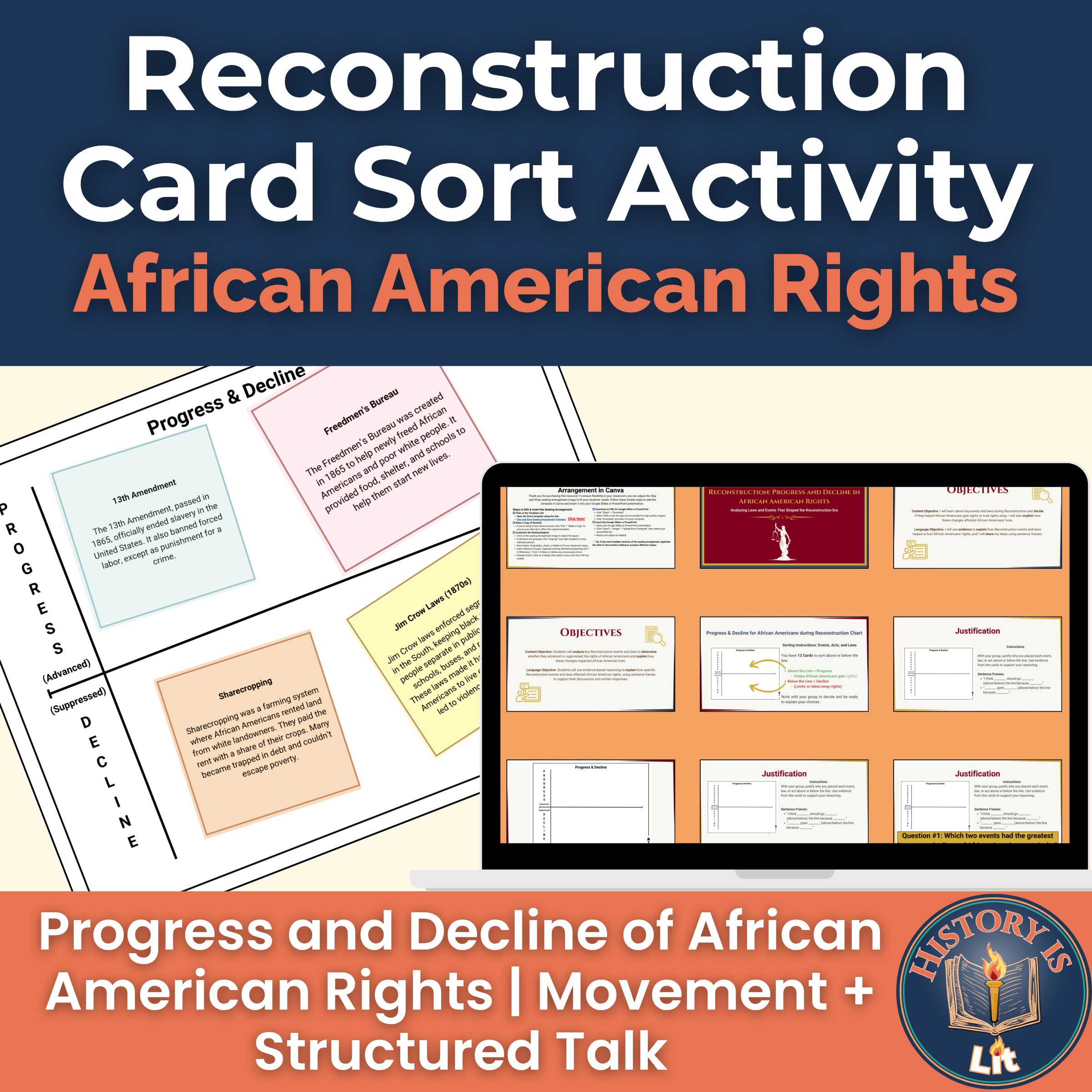
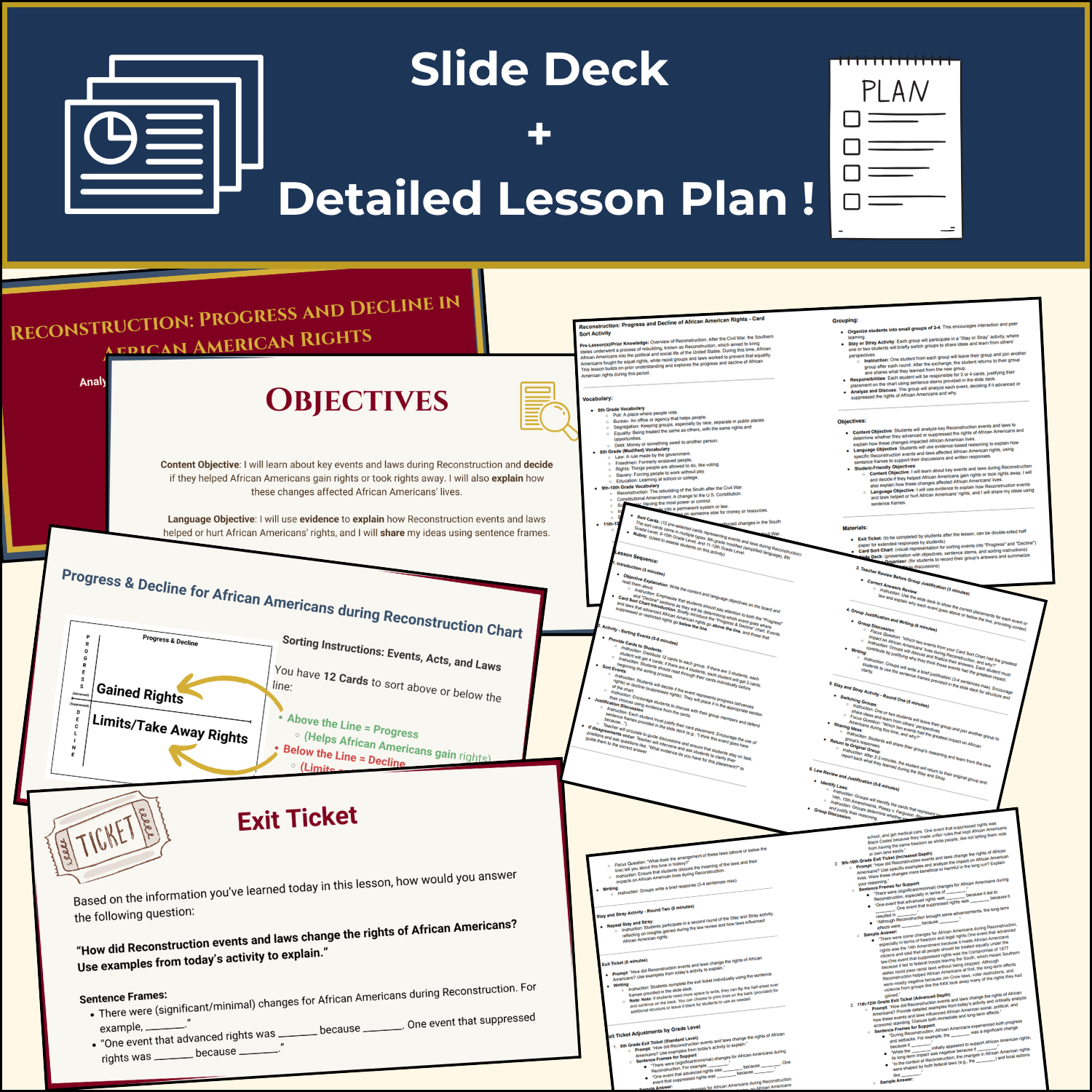
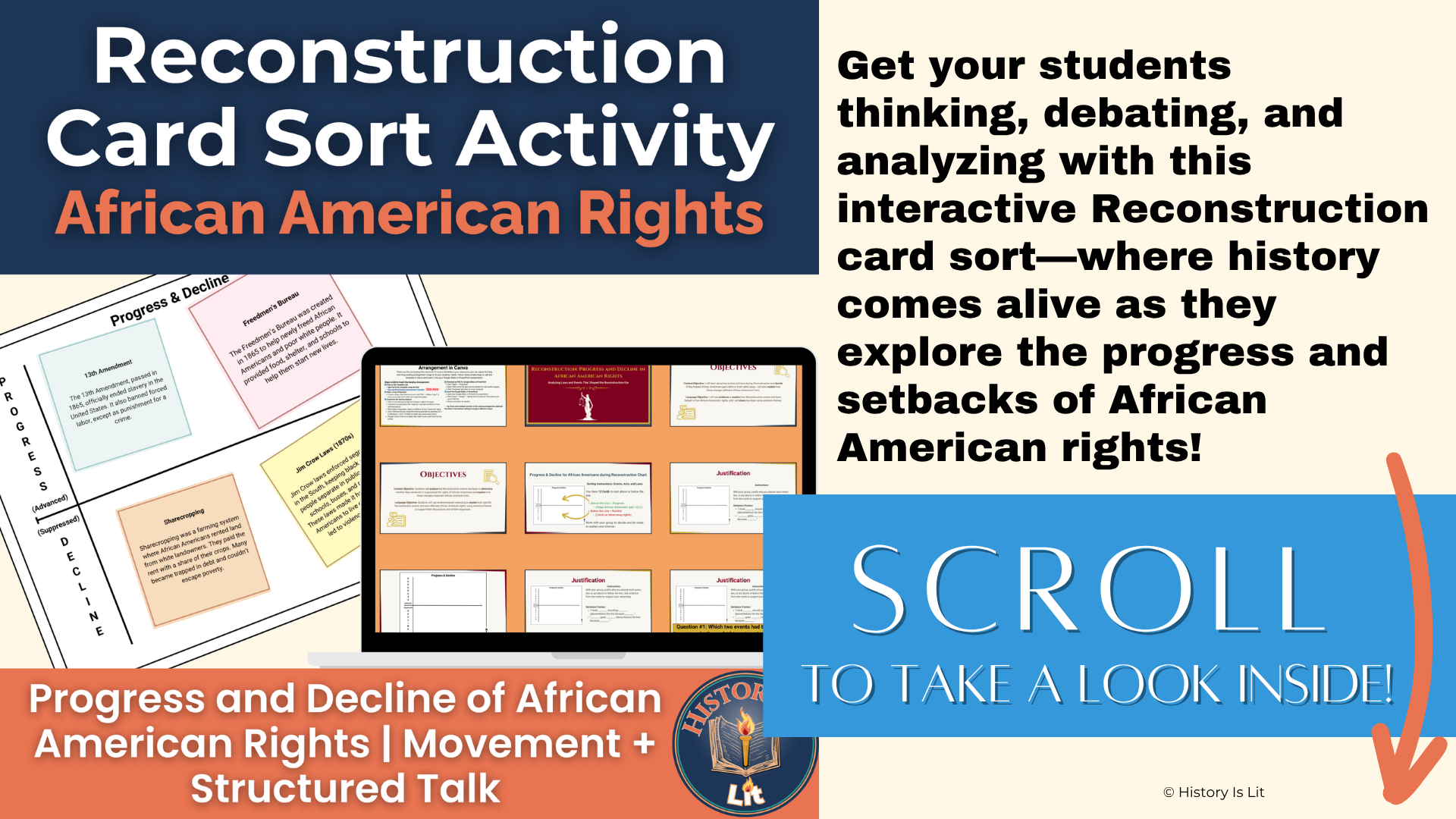
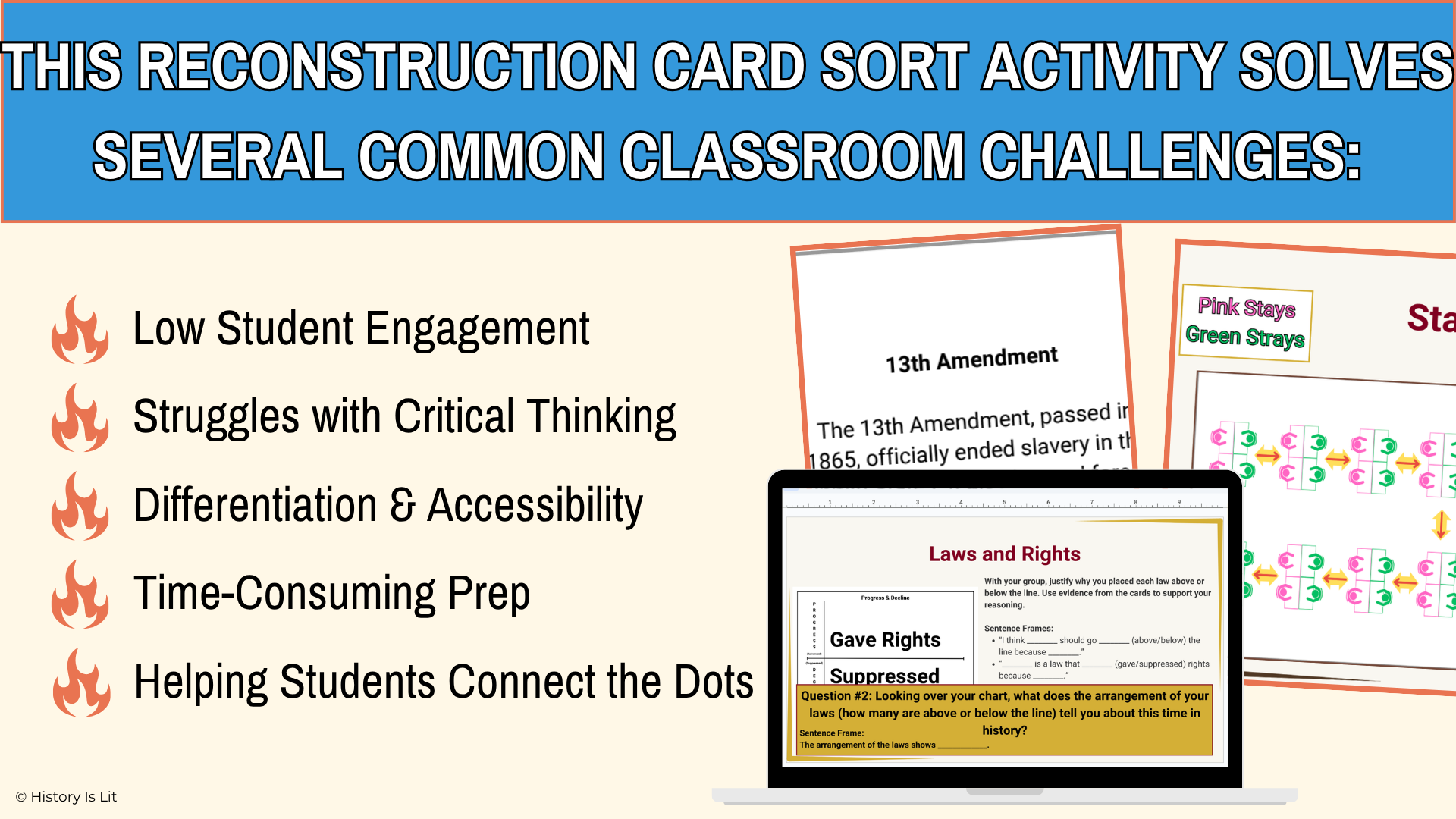
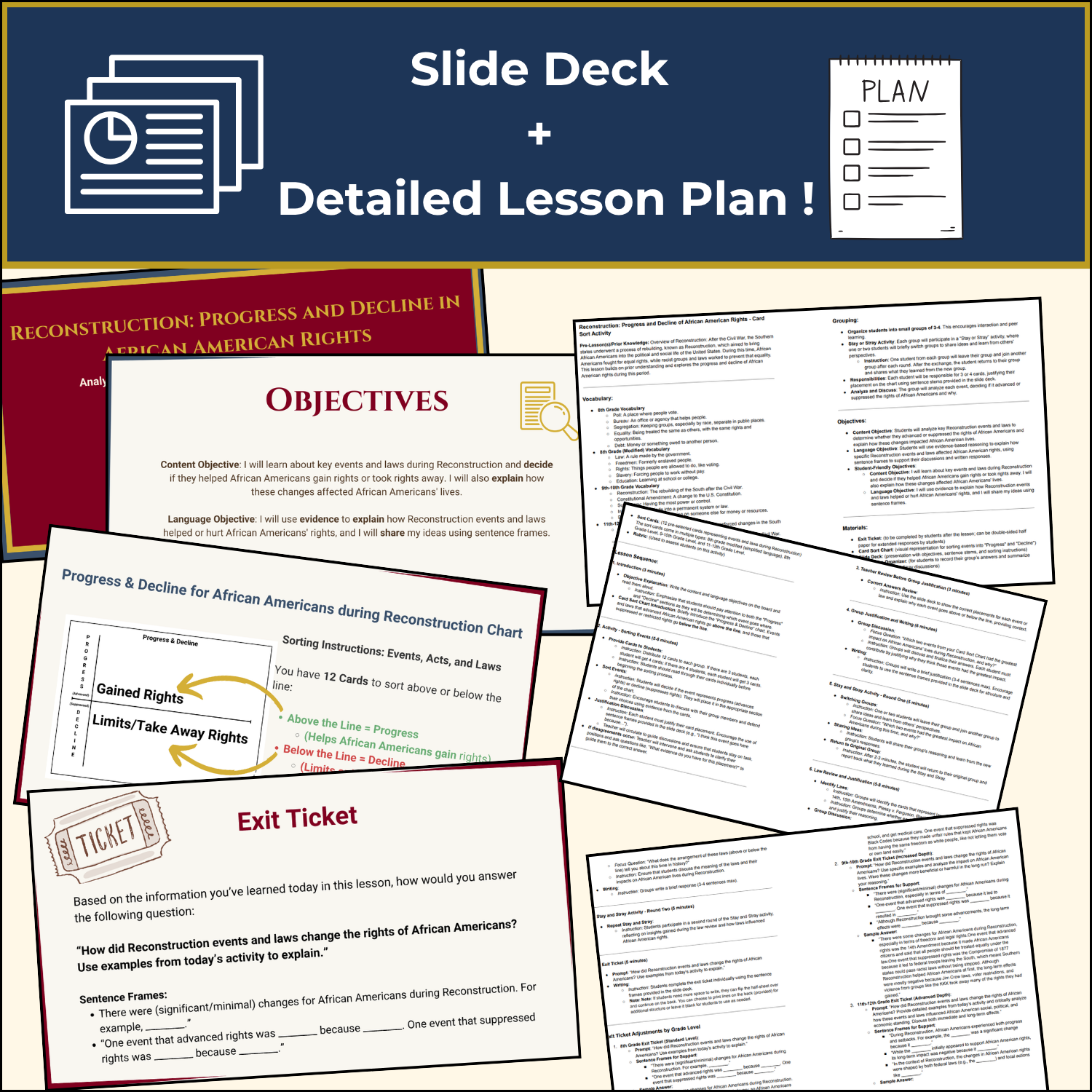
End-of-year fatigue is real. Getting students to care about Reconstruction right now? It feels like a lost cause. They’re burnt out, mentally checked out, and just ready for summer. They need something interactive and engaging that gets them moving and thinking, not another boring reading or lecture. And with everything going on at the end of the year, who has time for a complicated lesson plan?
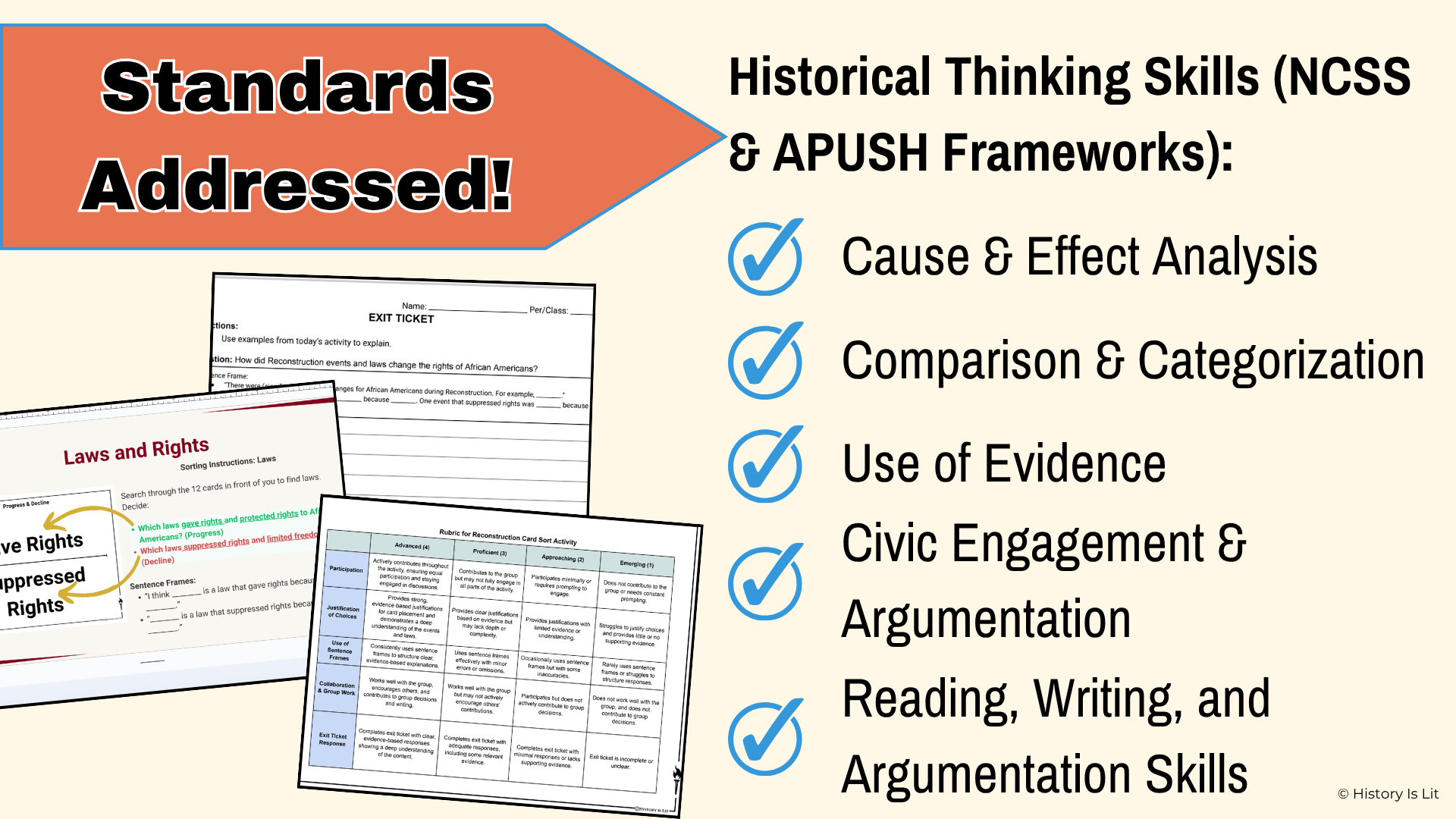
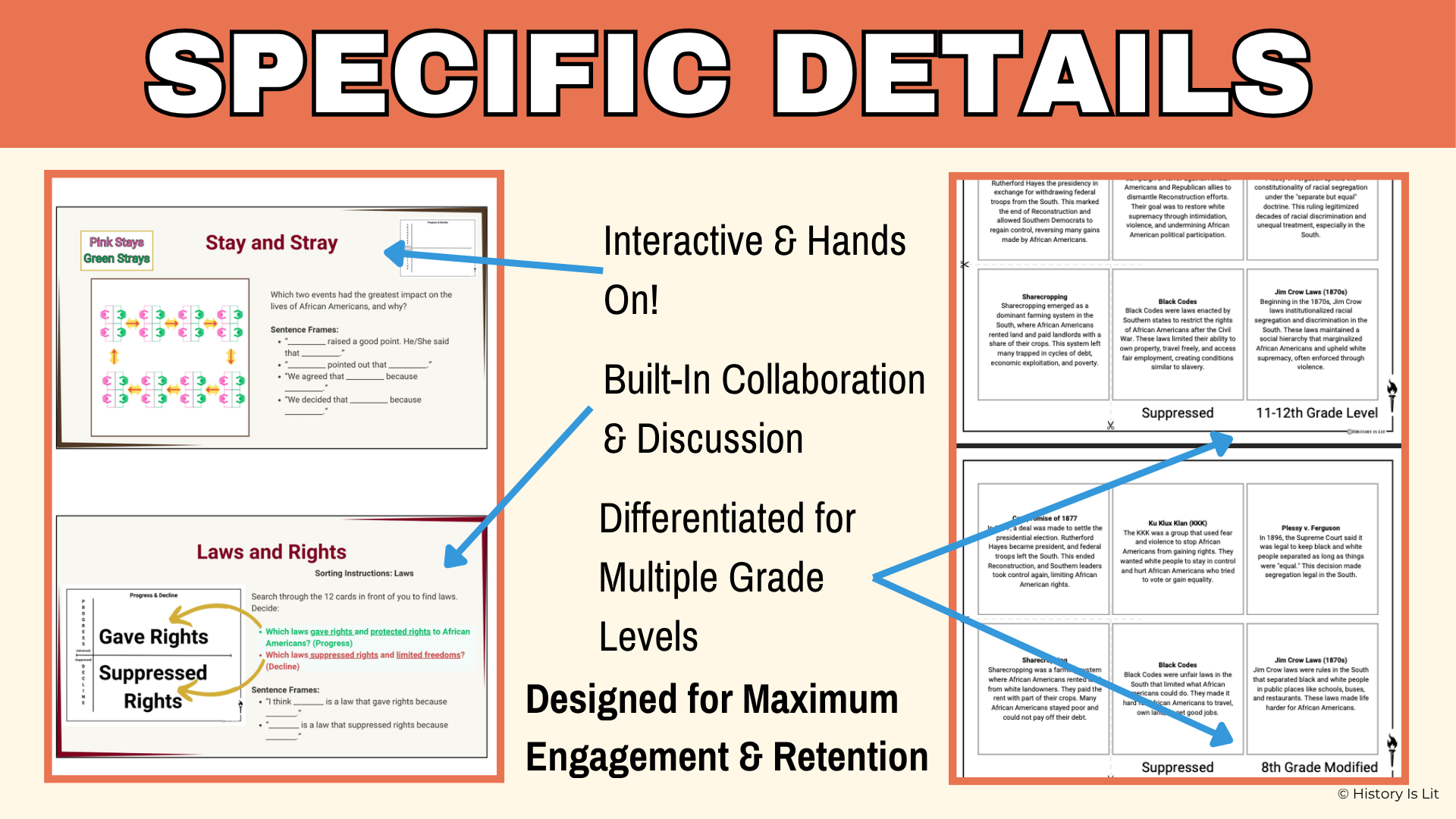
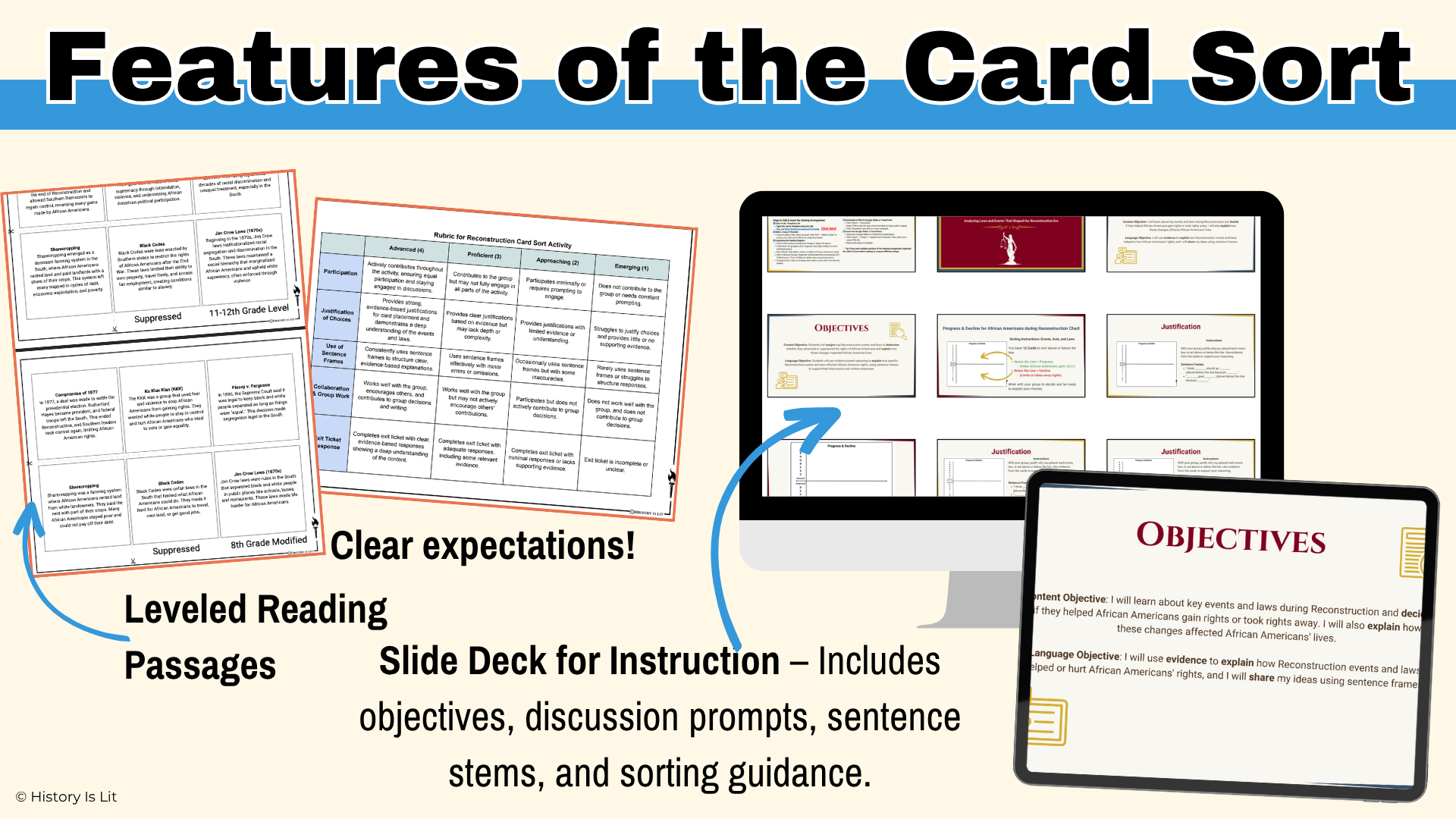
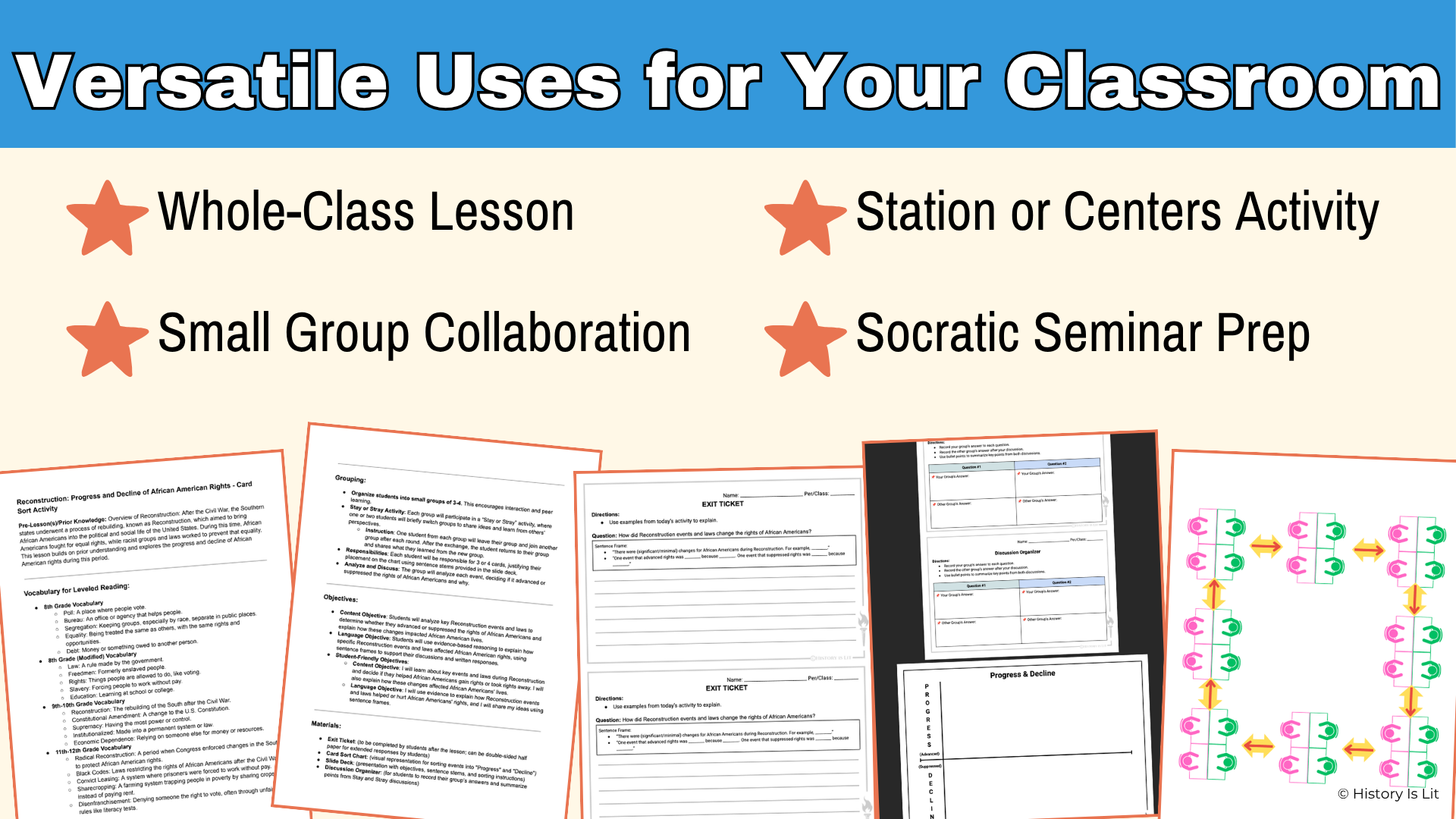
That's why I created the Reconstruction’s Impact – Progress or Setback? card sort. It’s hands-on, interactive, and designed to get students actively analyzing key events of Reconstruction. Through group discussions, Stay & Stray activities, and leveled reading passages, students engage in critical thinking without the heavy lift for you. Just print and go!
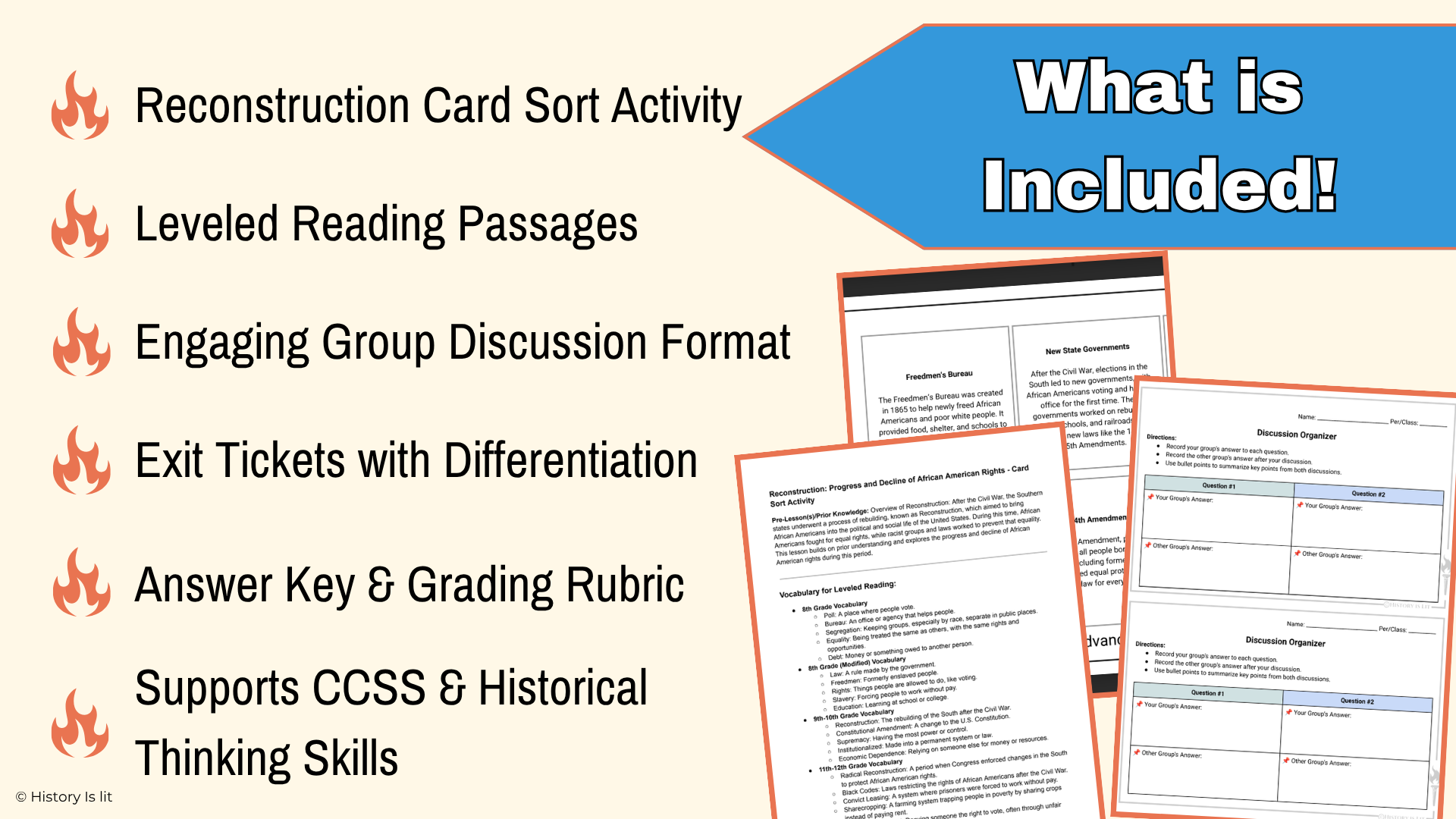
What’s Included:
Reconstruction Card Sort – Categorize events as progress or setback.
Leveled Reading Passages – Differentiated texts for 8th, 9th-10th, and 11th-12th grades.
Engaging Group Discussion – Stay & Stray activity for deeper analysis.
Exit Tickets – Grade-specific writing prompts.
Answer Key & Grading Rubric – Easy-to-follow guidelines for assessment.
Why Teachers Love It:
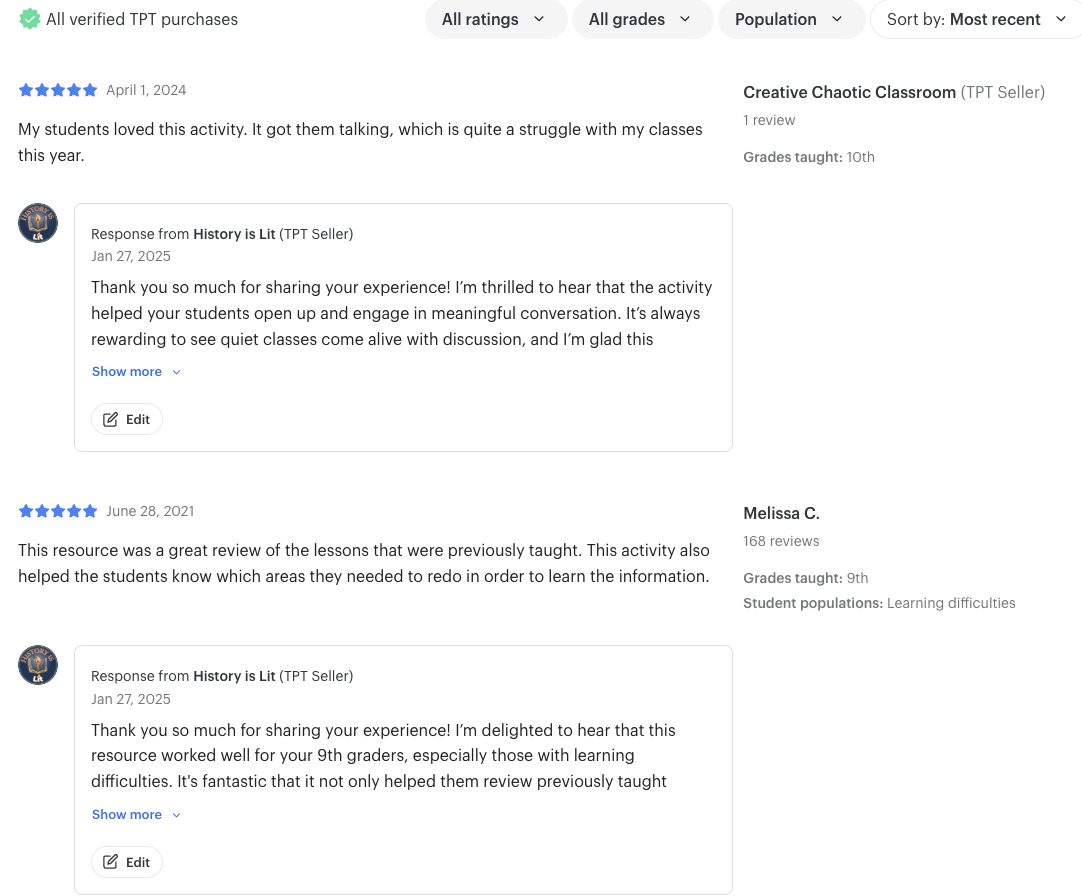
⭐️⭐️⭐️⭐️⭐️ — Melissa C. says, "This resource was a great review of the lessons that were previously taught. This activity also helped the students know which areas they needed to redo in order to learn the information."
9th Grade Class
⭐️⭐️⭐️⭐️⭐️ — Creative Chaotic Classroom (TPT Seller) says, "My students loved this activity. It got them talking, which is quite a struggle with my classes this year." 10th Grade Class.
Why You’ll Love It:
✨ No-Prep, Print & Go! – Perfect for sub plans, stations, or engaging historical analysis.
✨ Interactive & Engaging! – Promotes debate, collaboration, and evidence-based reasoning.
✨ Supports Critical Thinking! – Helps students evaluate Reconstruction’s successes and failures in a meaningful way.
Bring history to life with this easy-to-use Reconstruction activity. Get your students thinking and talking without the stress — just print, assign, and let them dive in!
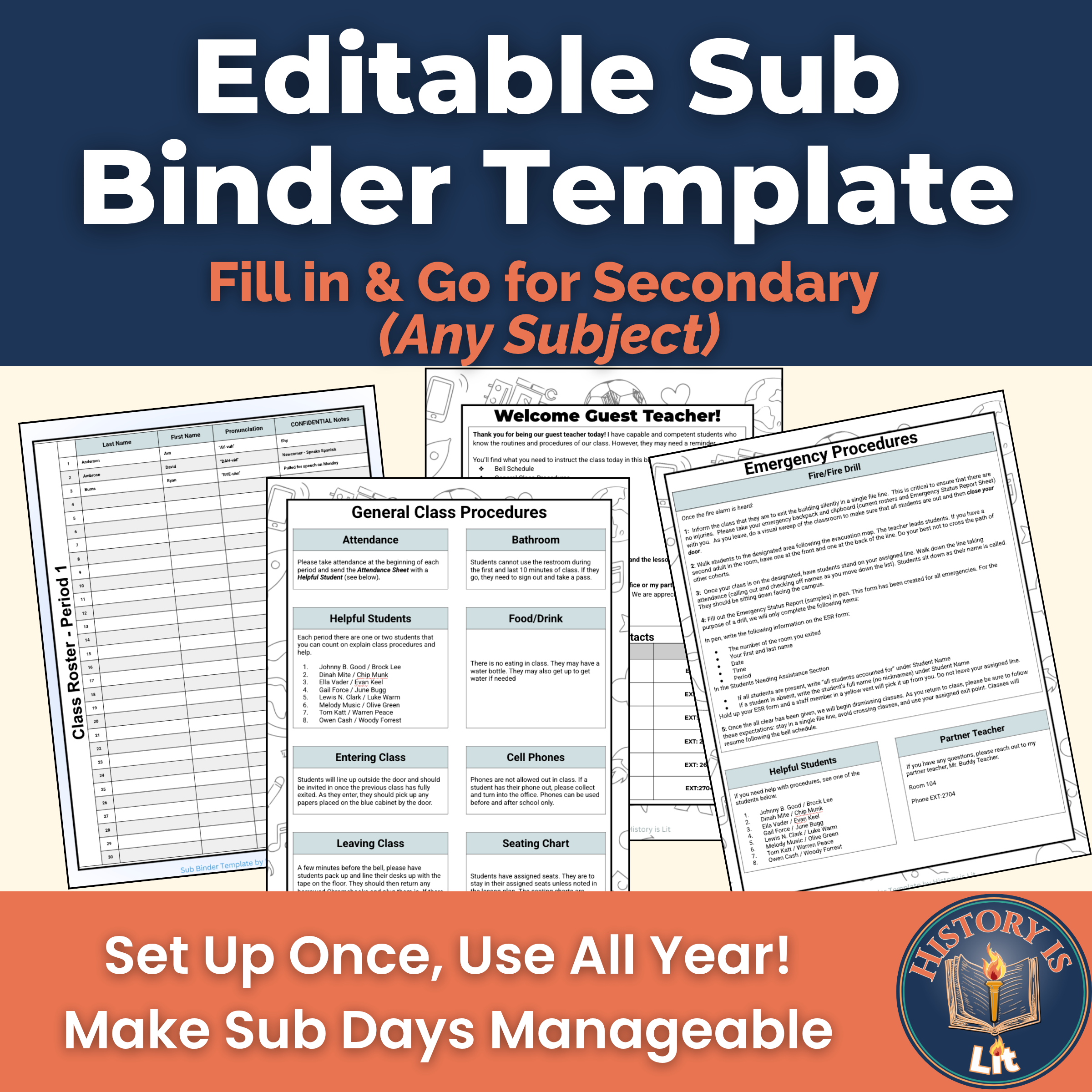
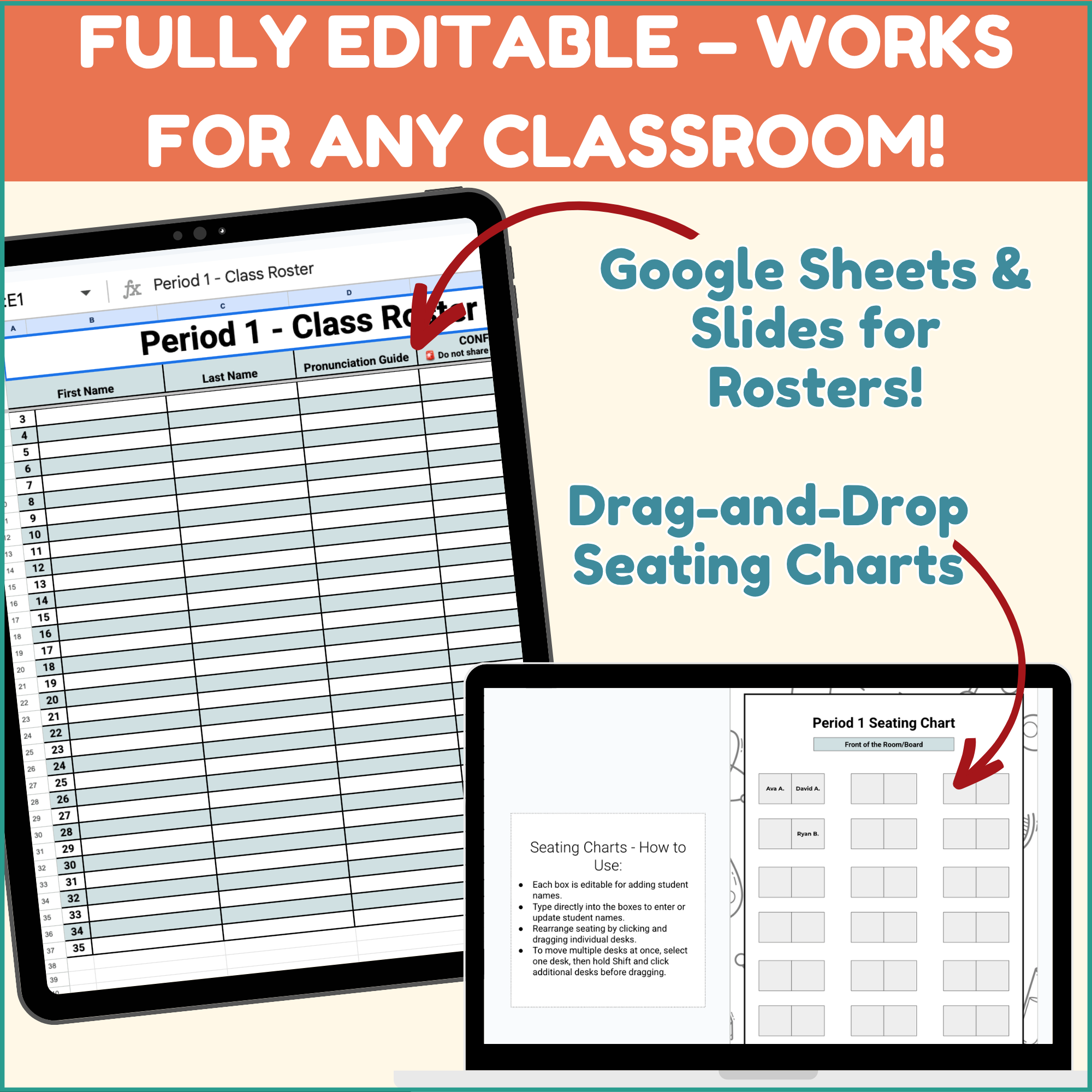
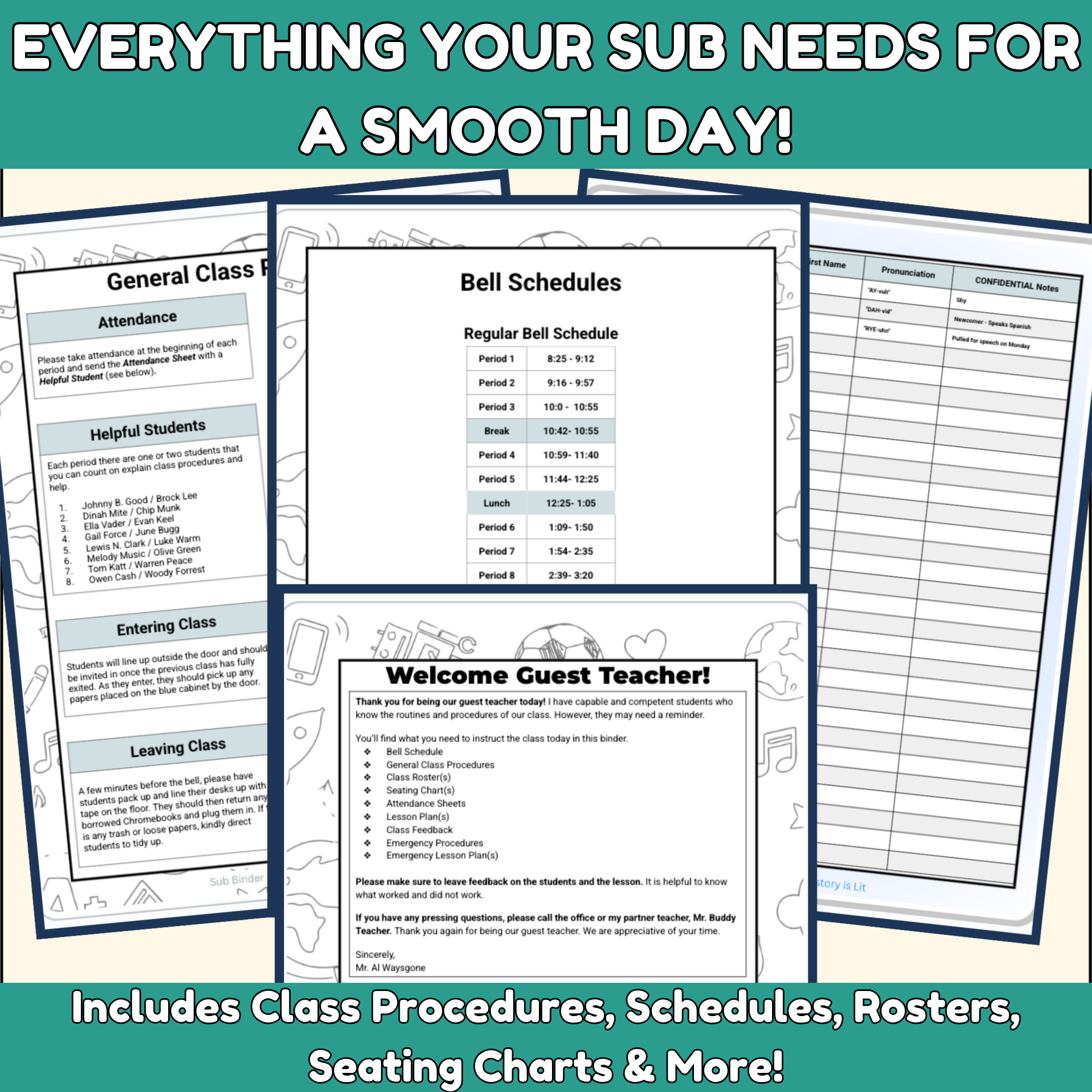
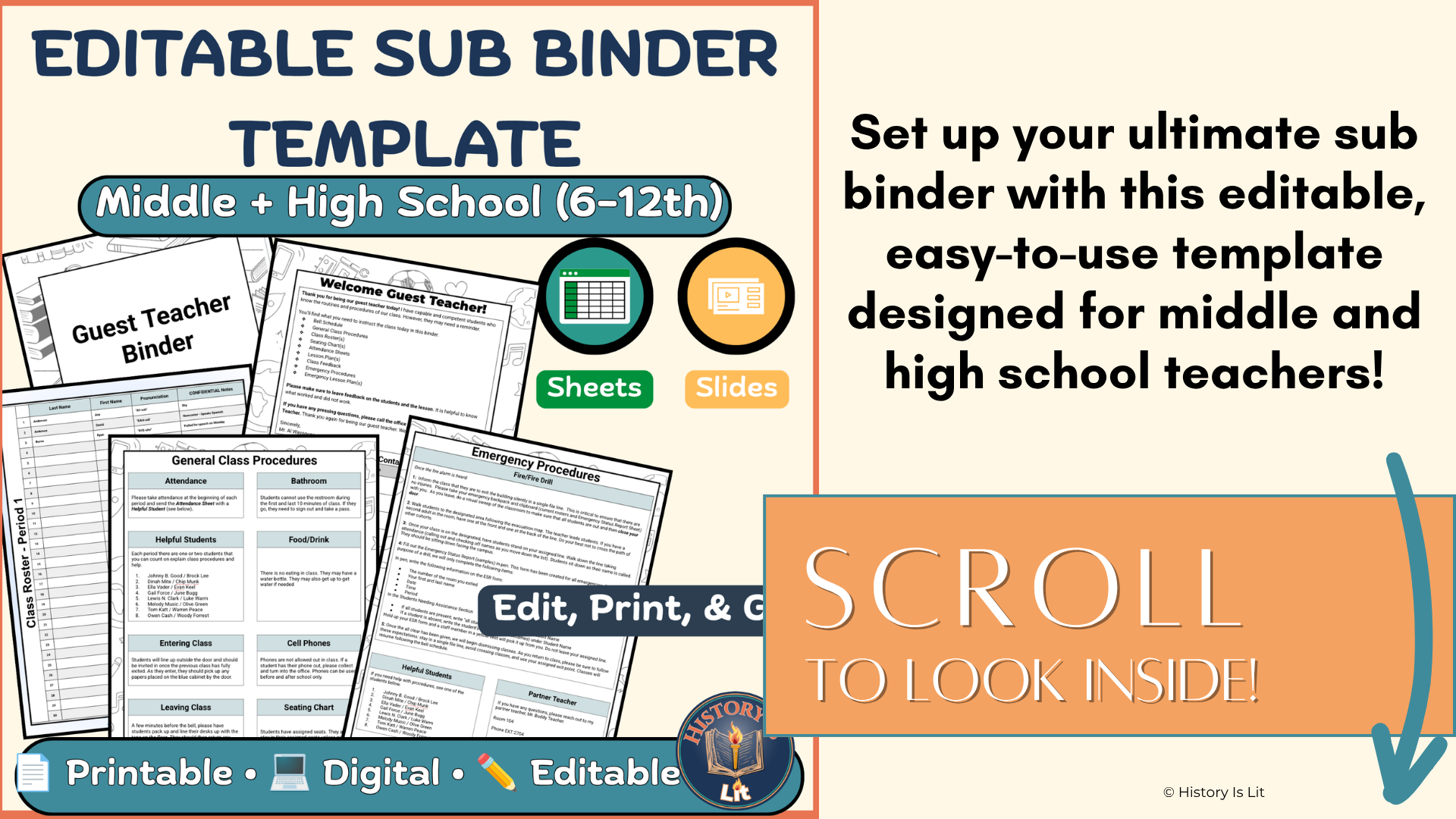
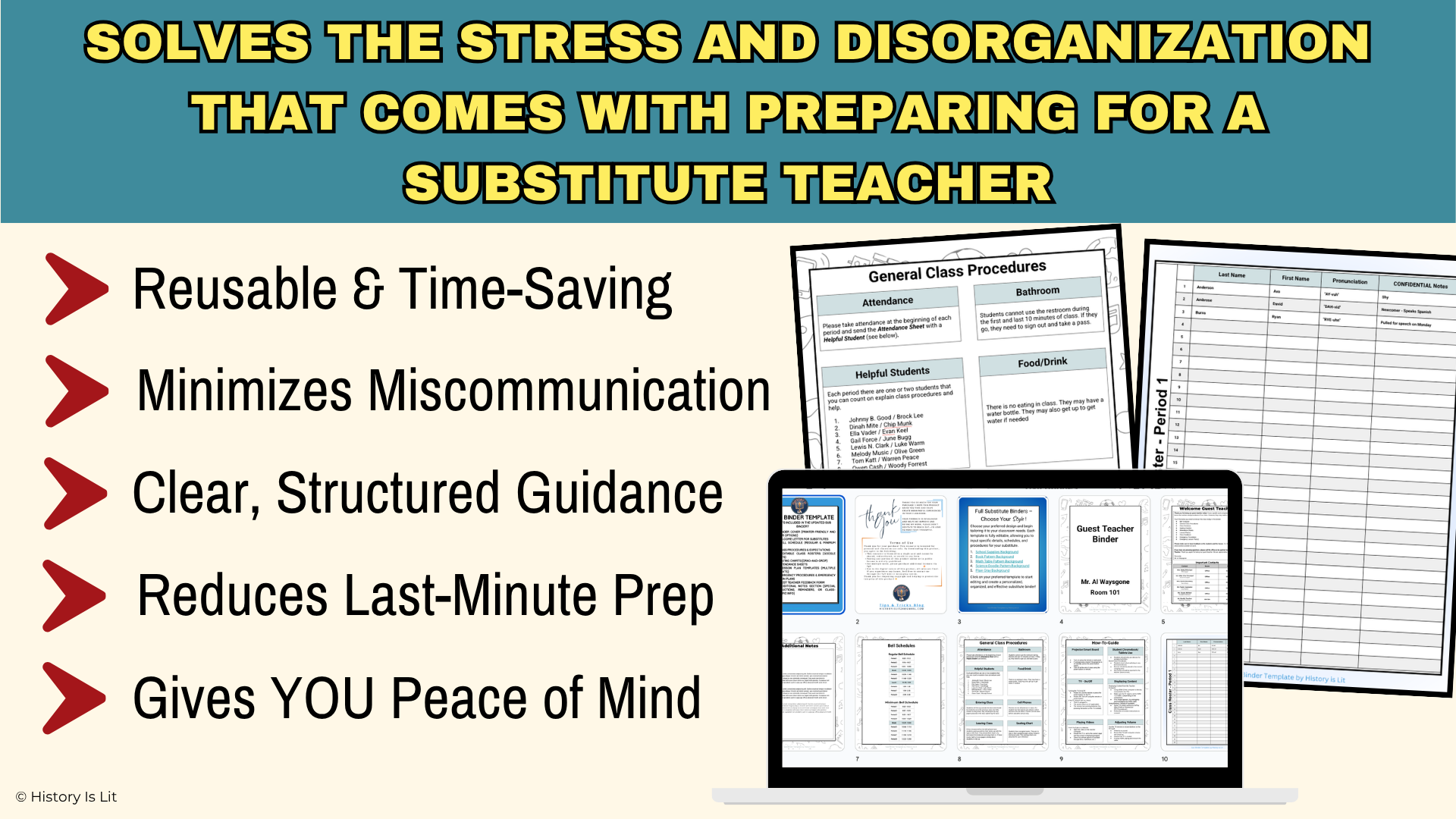
Need an editable sub binder that makes sick days stress-free? This printable & digital toolkit keeps your classroom running even when you’re out.
Let’s be honest: sometimes it’s more work to write sub plans than to just show up sick.
Whether you're out for a training, your own kid’s event, or a surprise sick day, prepping everything from scratch can feel overwhelming—especially when you’re doing it on zero sleep.
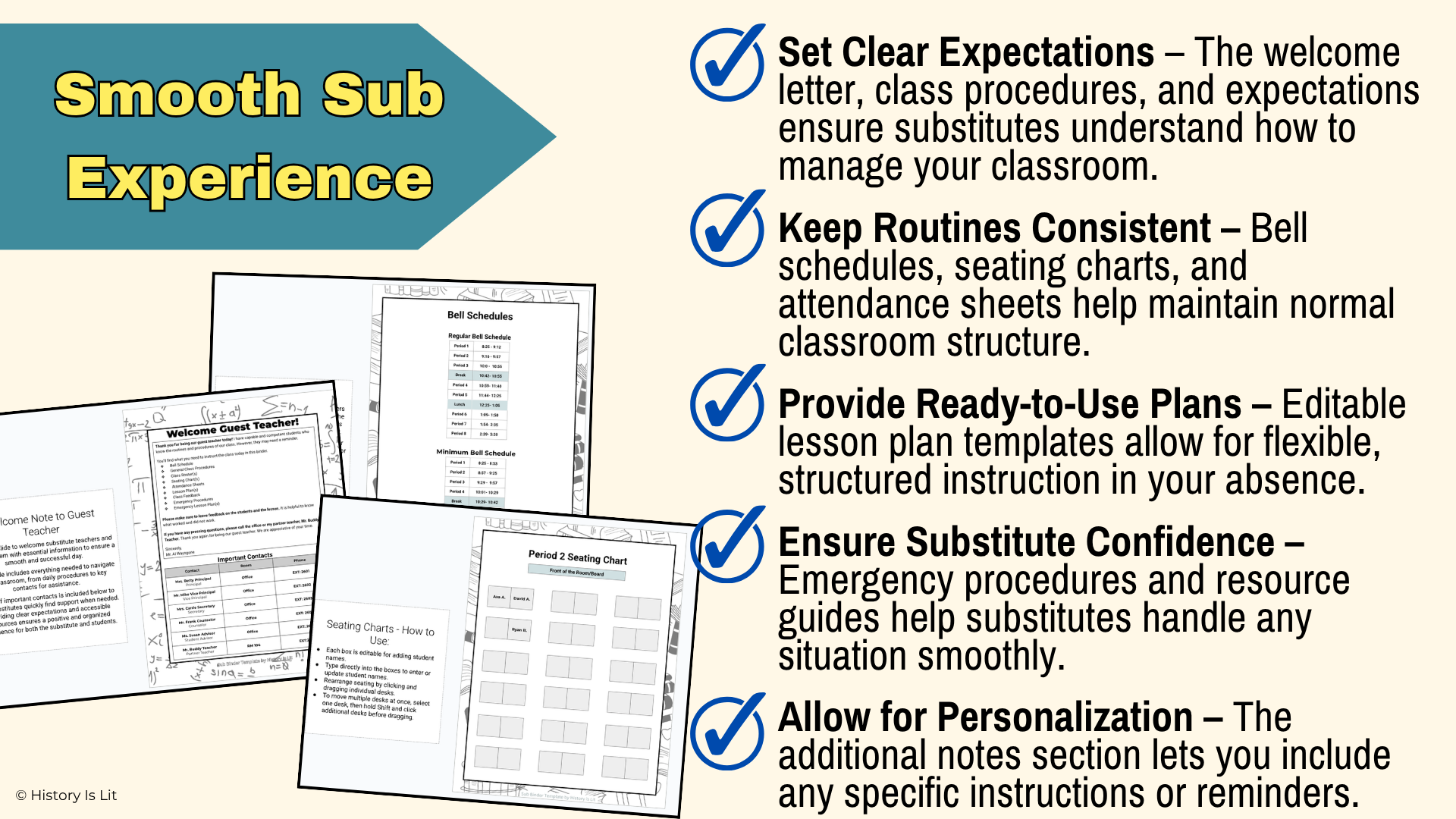
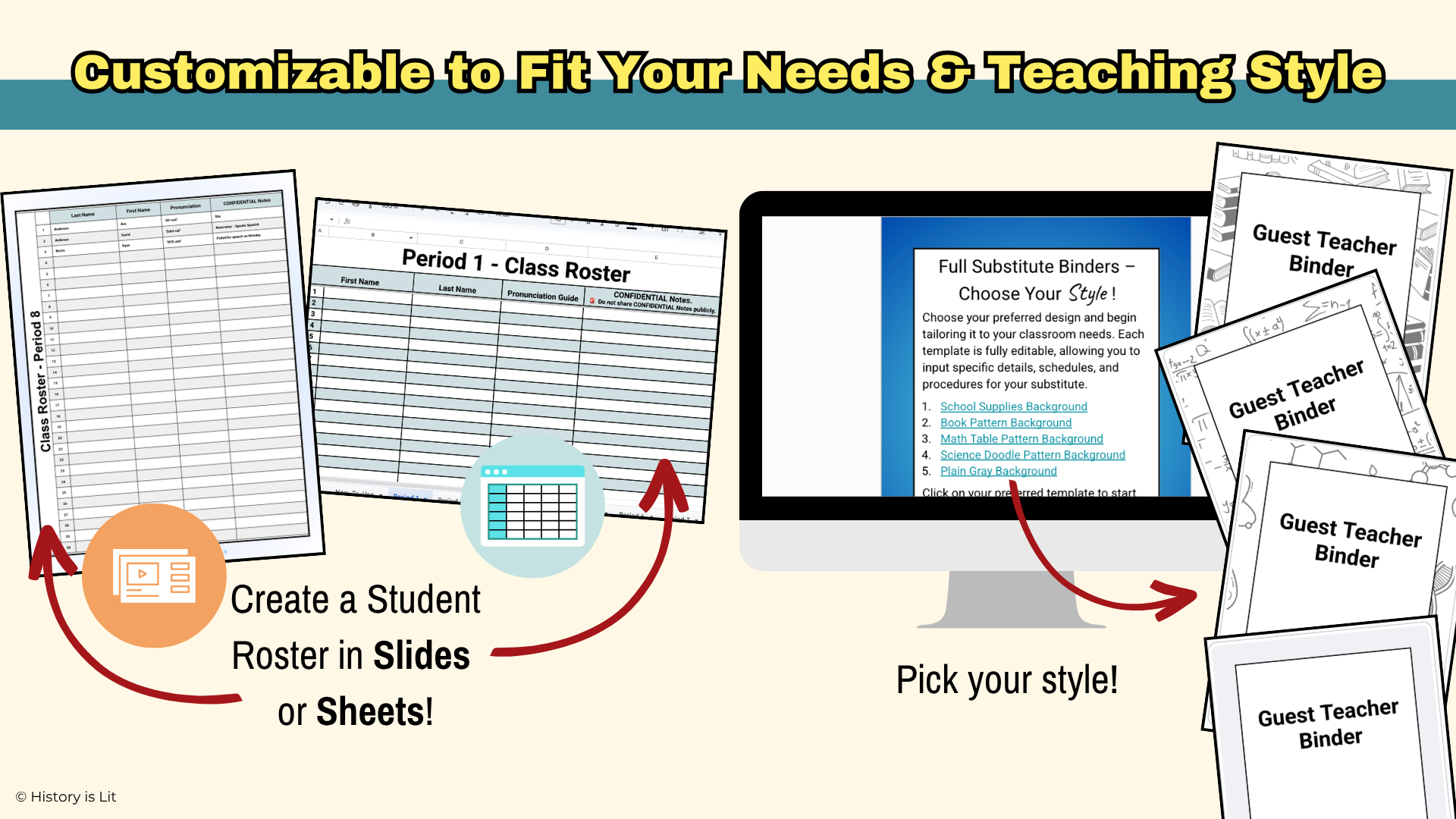
This Editable Sub Binder Toolkit was designed to make sub days manageable. Set it up once at the beginning of the year, and reuse it all year long. Just plug in your lesson and go.
No more rewriting the same notes.
No more scrambling last-minute.
No more choosing between your health and your classroom.
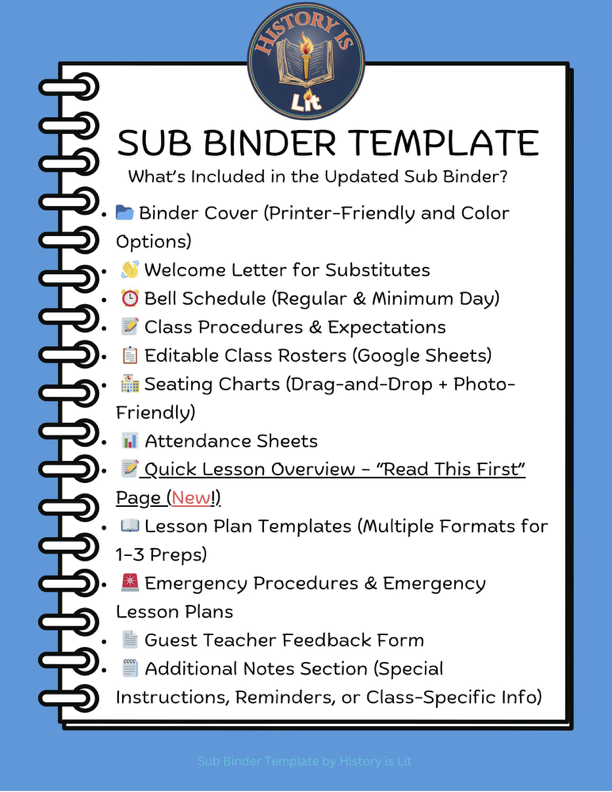
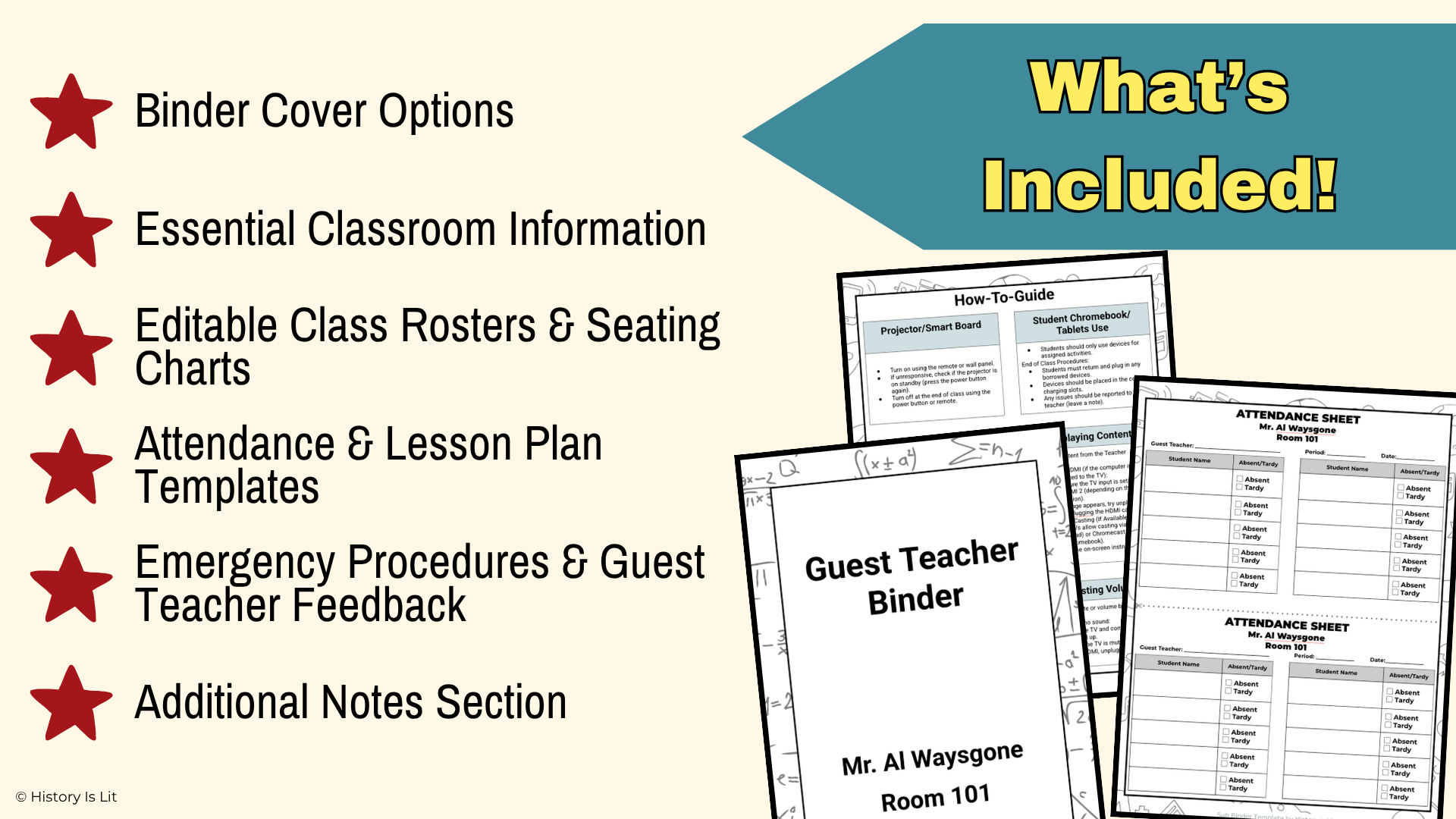
What’s Inside:
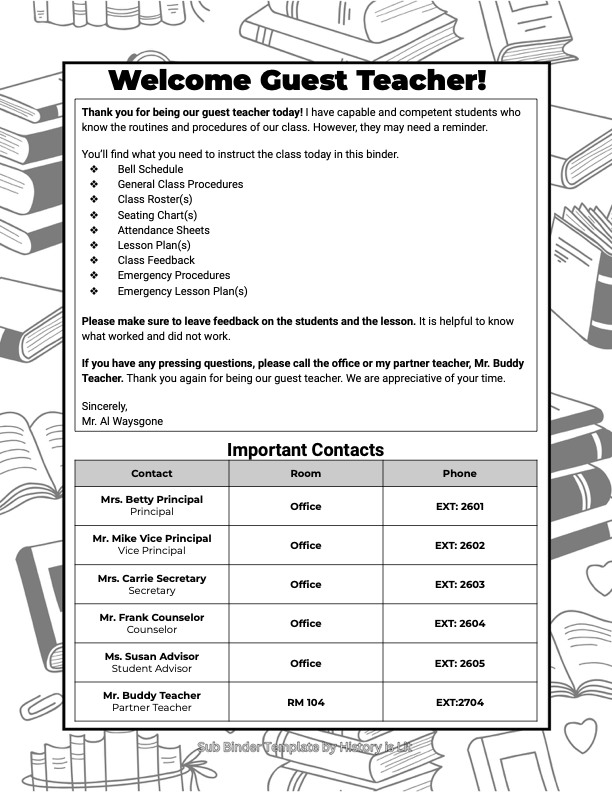
Welcome Letter for Subs
⏰ Bell Schedules (Regular + Minimum Day)
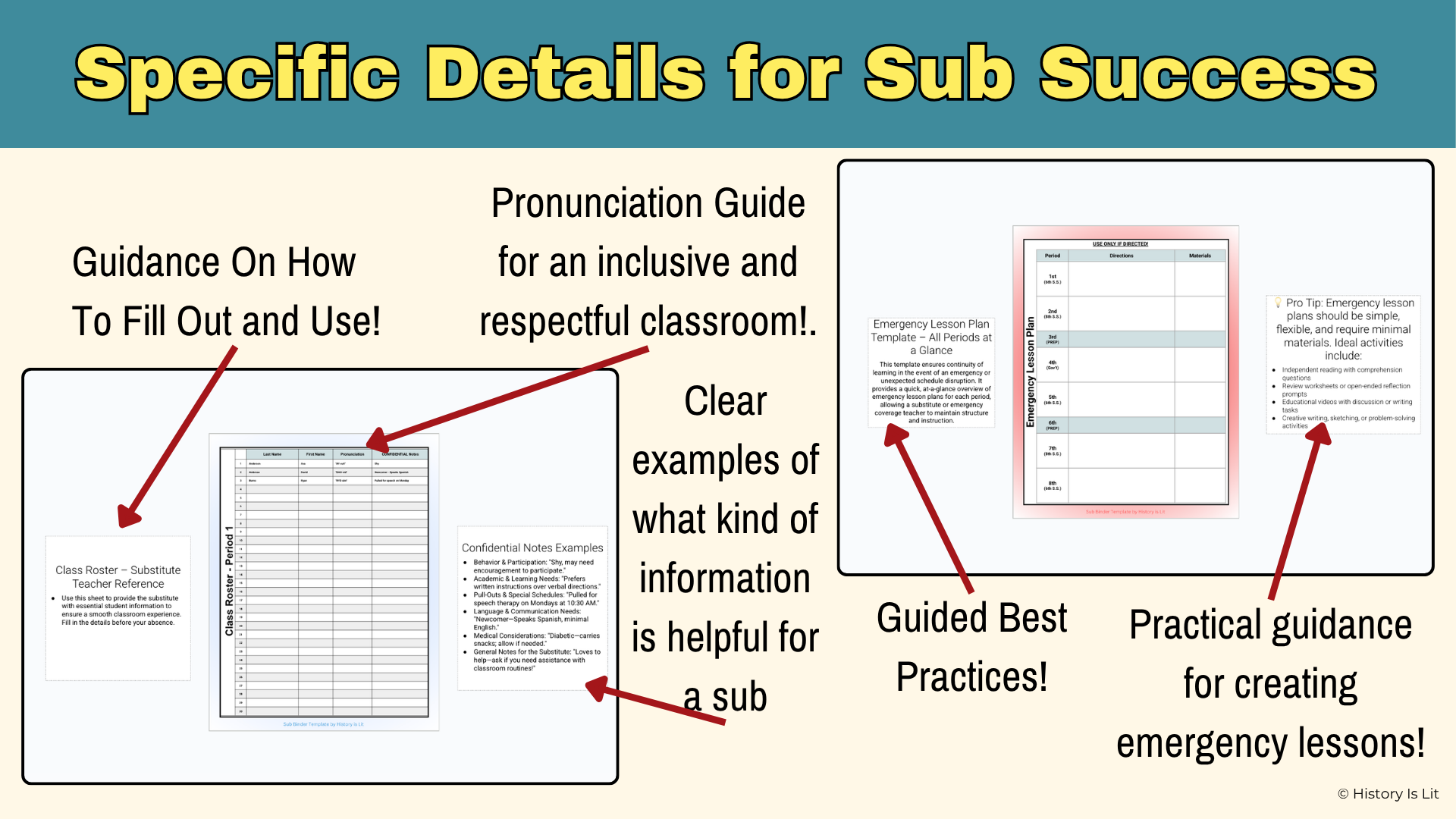
Editable Class Rosters (with helpful notes!)
Drag-and-Drop Seating Charts (photo-friendly!)
NEW: Quick Lesson Overview – Read This First!
Lesson Plan Templates for Multiple Preps
Tech How-To Page (logins, links, and devices)
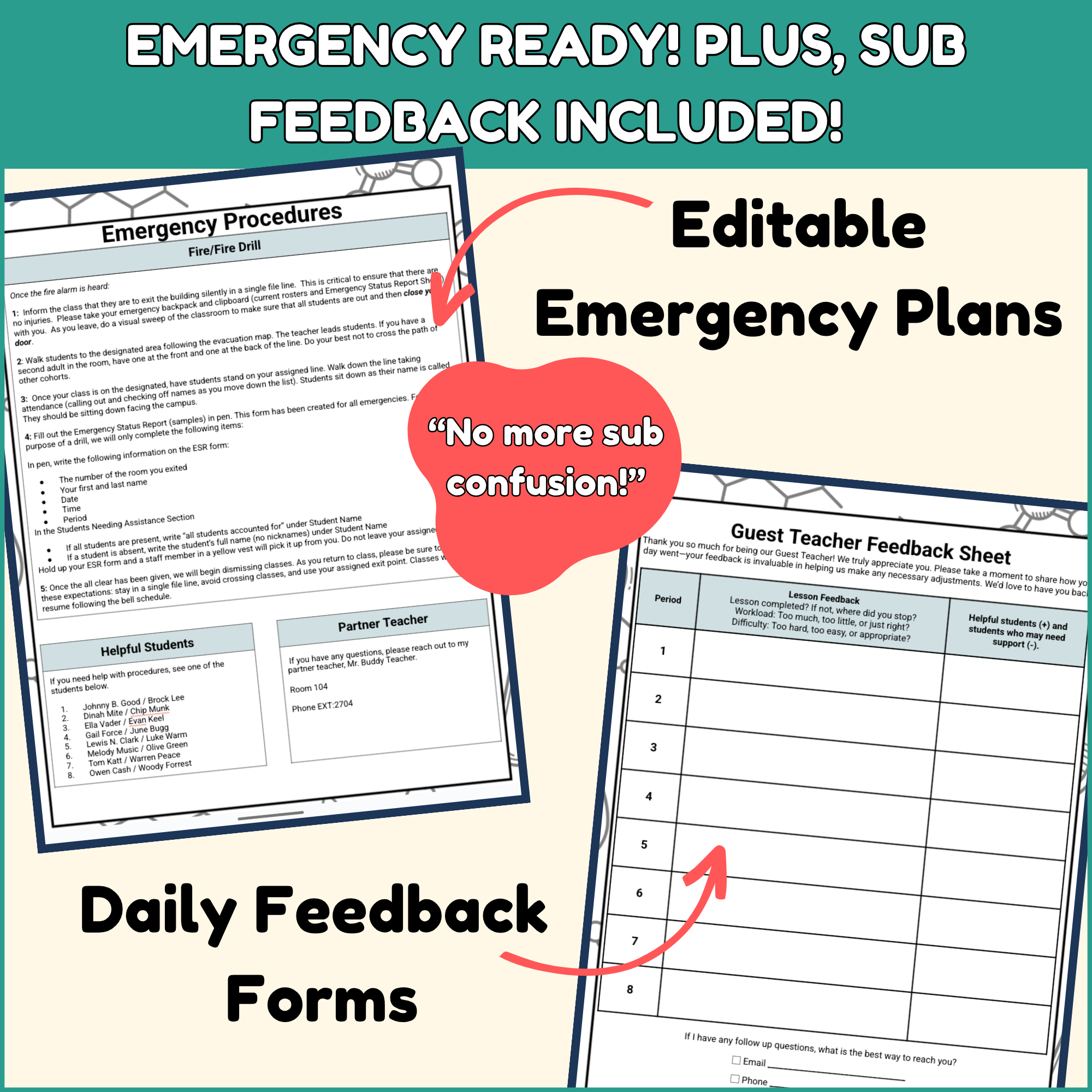
Emergency Procedures + Emergency Sub Plans Templates
Additional Notes Page (for class-specific tips)
Guest Teacher Feedback Form
Print it. Share it. Reuse it.
Set it up once. Use it all year.
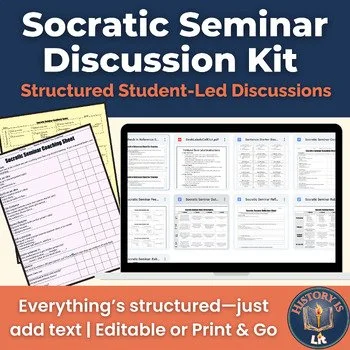
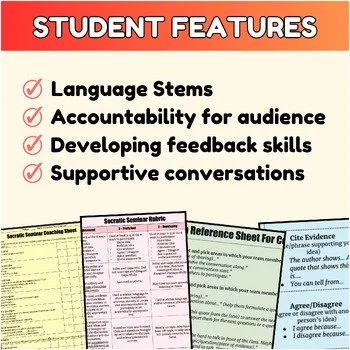
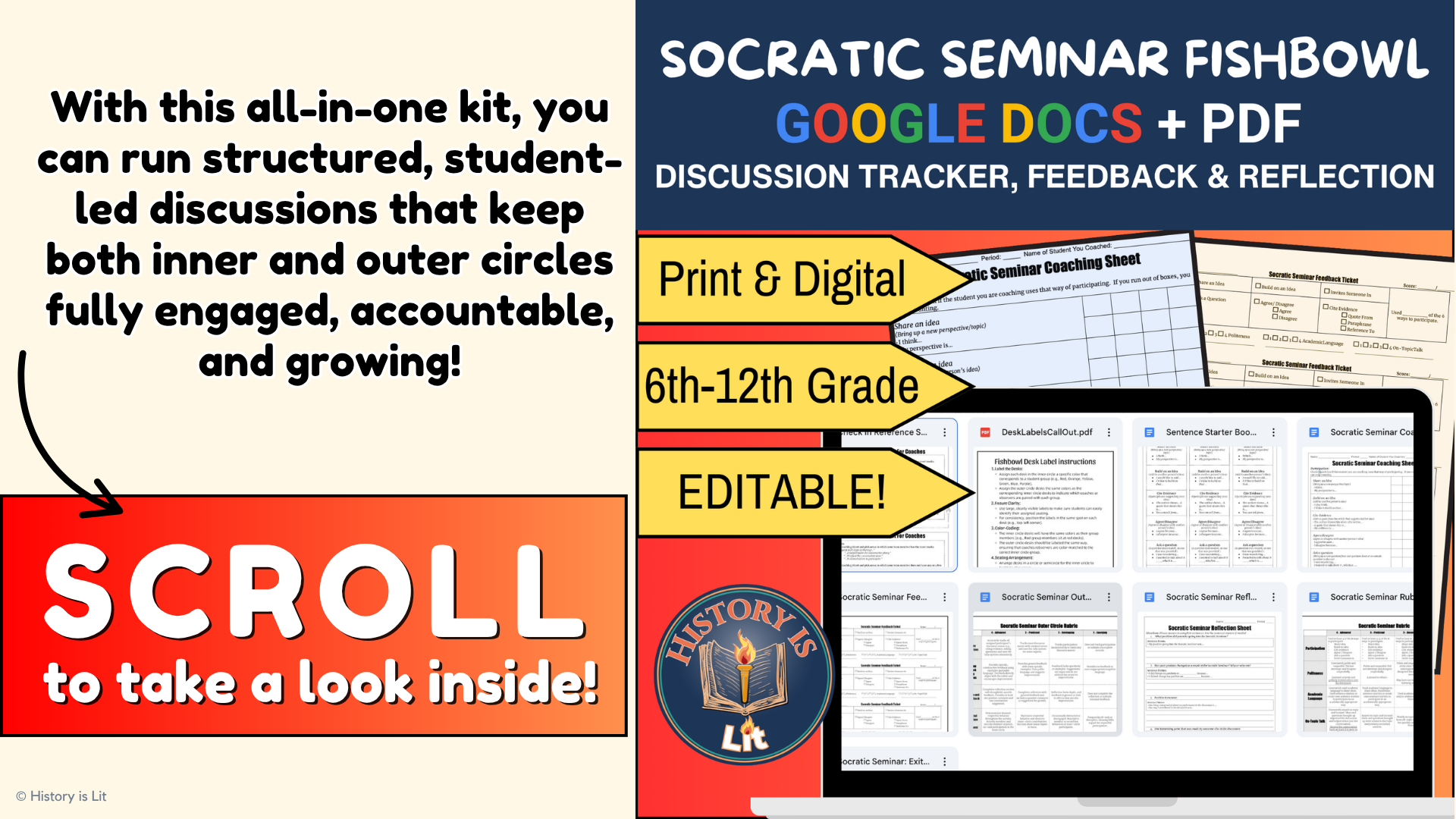
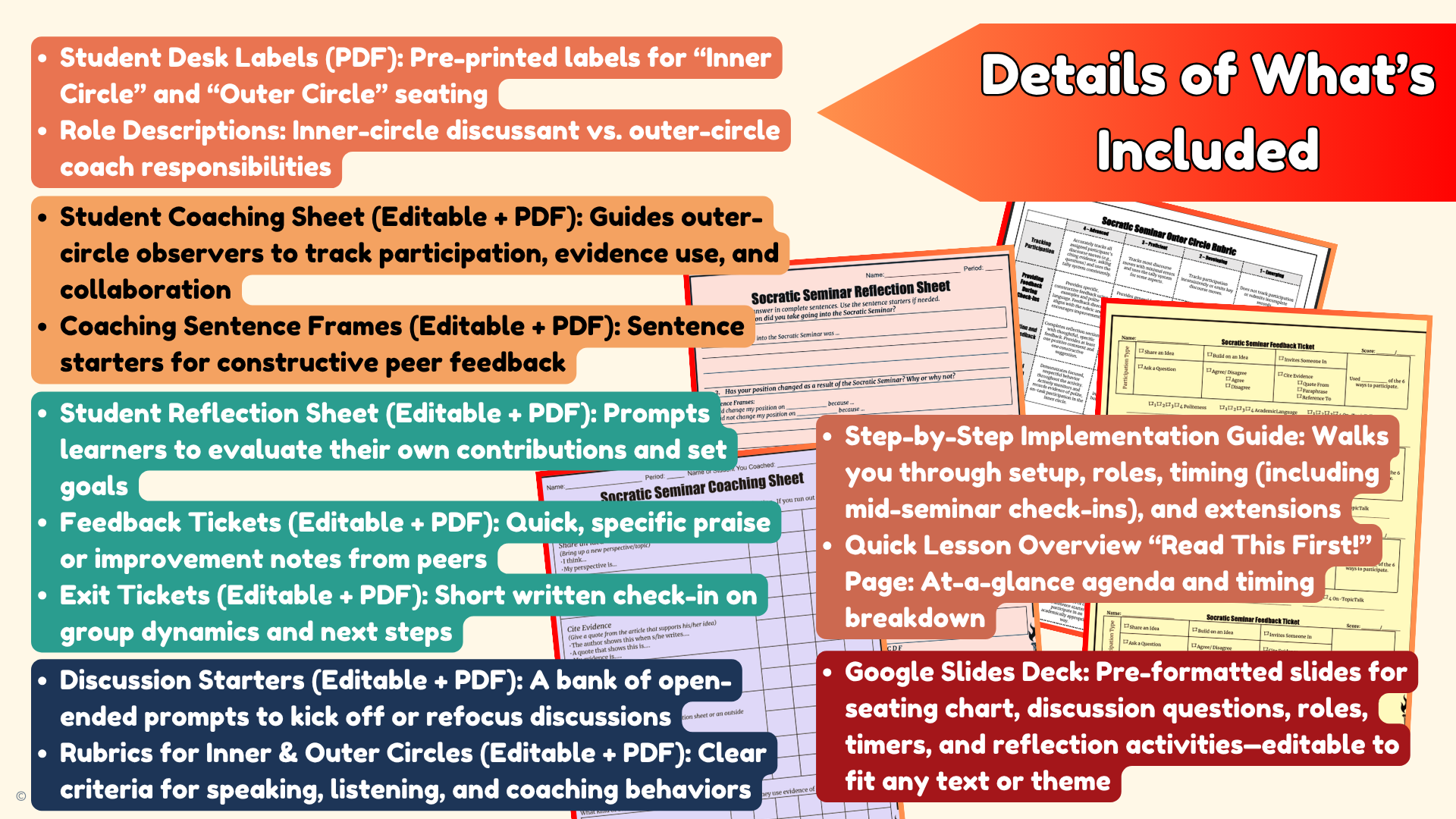
Ever try to run a Socratic Seminar and watch the outside circle drift into side conversations while the inside circle is talking? I’ve been there. It’s frustrating when they’re not engaged, and you’re left thinking, How can they be accountable and help coach each other if they’re not even paying attention?
I know that feeling — trying to keep the outside circle from chatting or zoning out while you’re desperately trying to keep the conversation flowing. It’s exhausting when you’re trying to manage everything, and honestly, it feels like you’re losing the battle to keep them engaged and accountable.
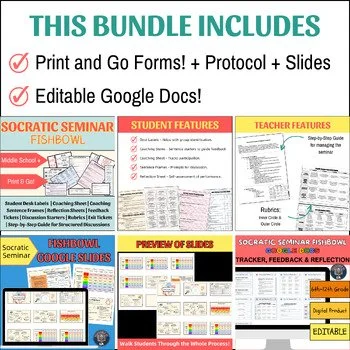
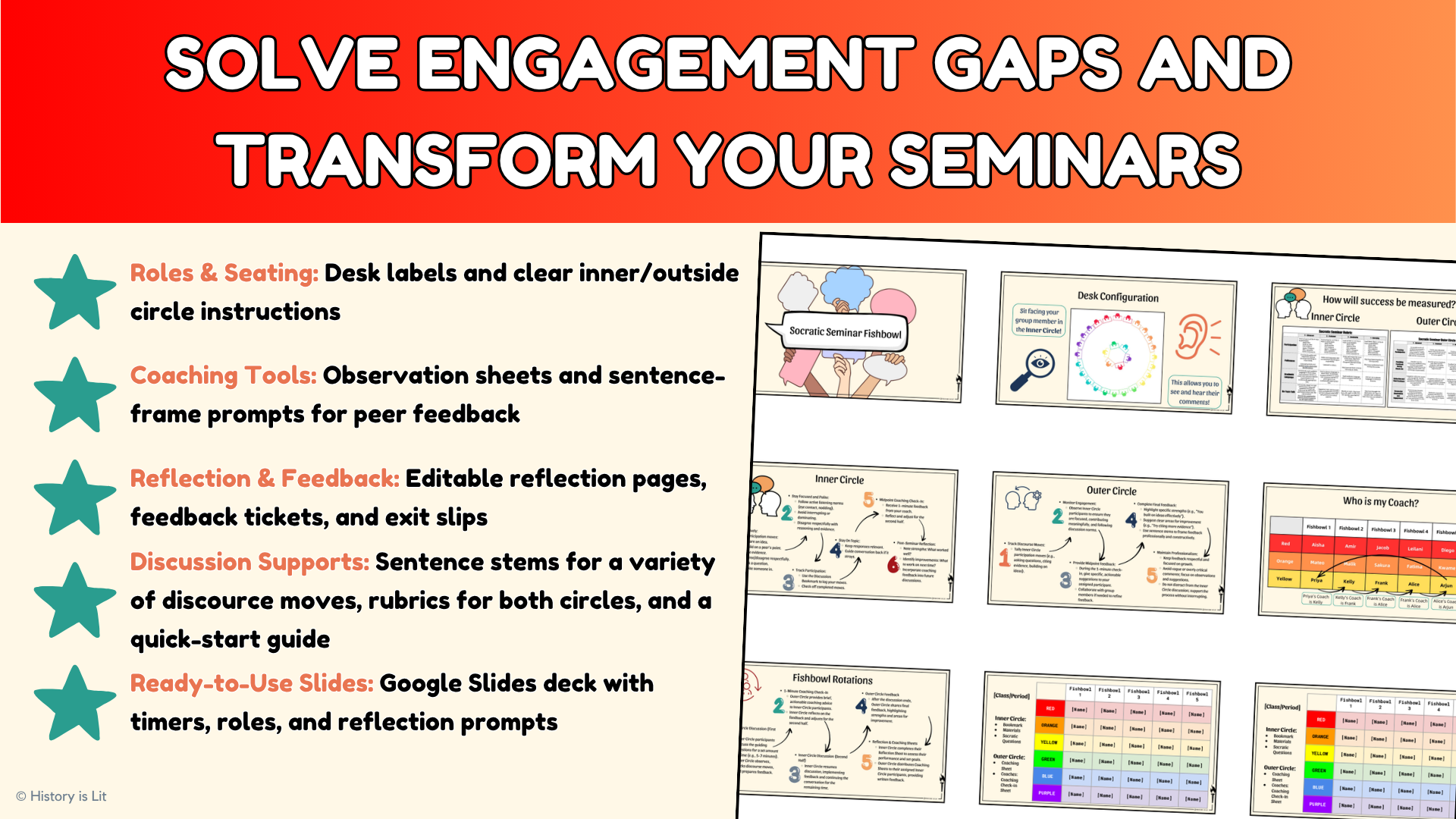
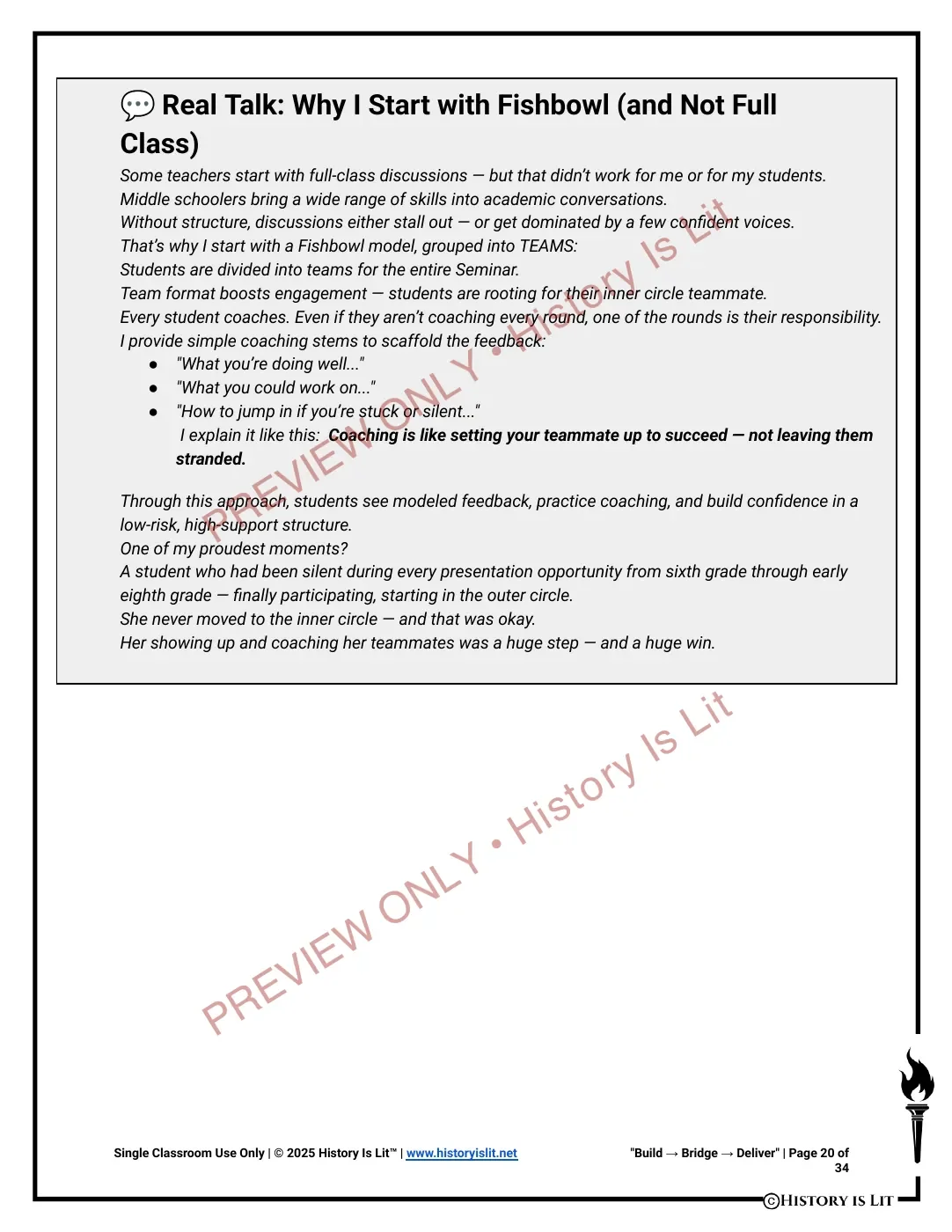
That’s why I created the Editable Socratic Seminar Fishbowl Bundle. It includes coaching sentence frames, reflection sheets, and clear roles for both circles so the outside group stays engaged, actively helping their peers, and staying accountable. It gives everyone something meaningful to do — no more distractions or wasted time.
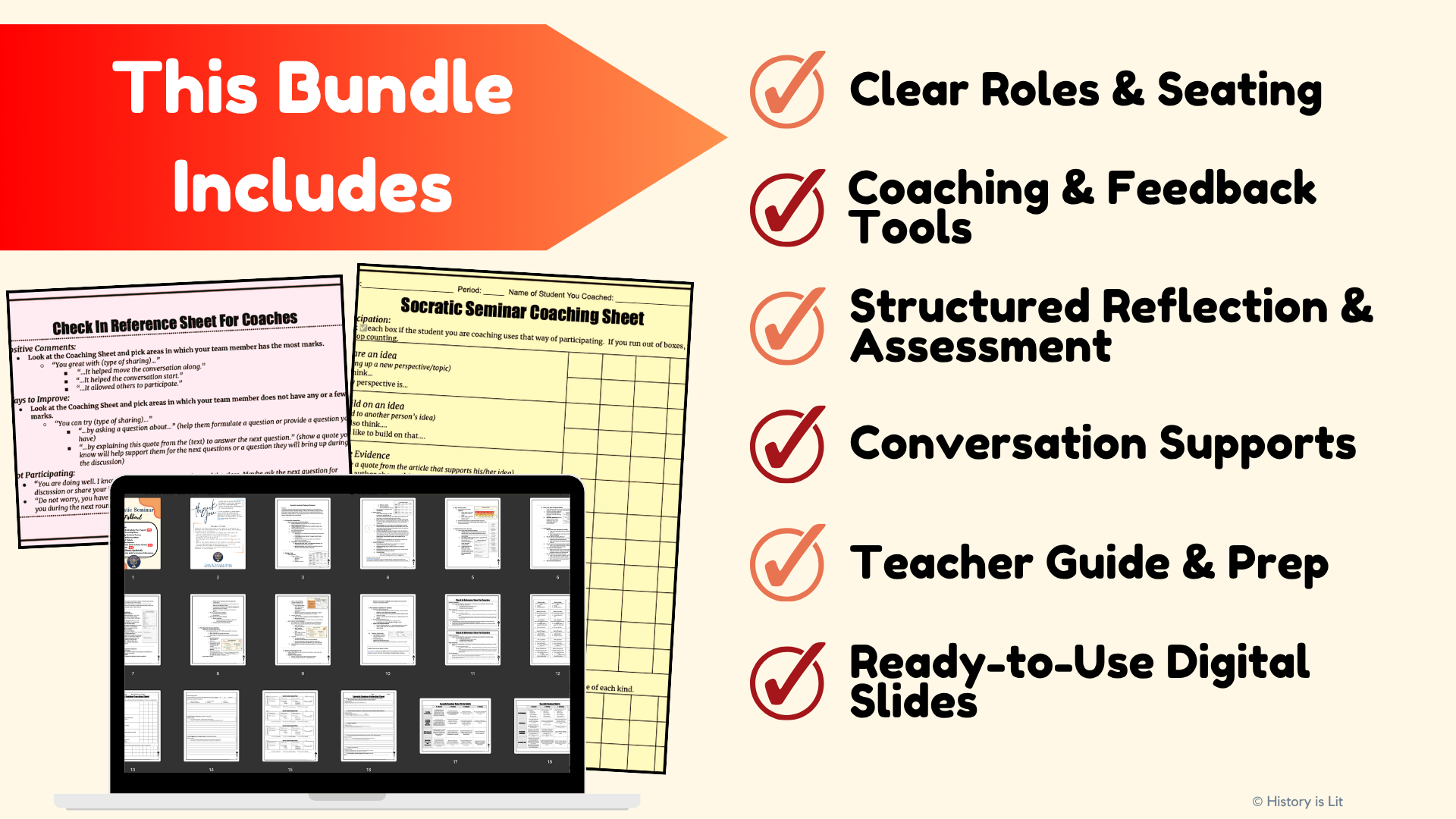
What’s Included:
Student Desk Labels (PDF) – Clear seating for inside and outside circles.
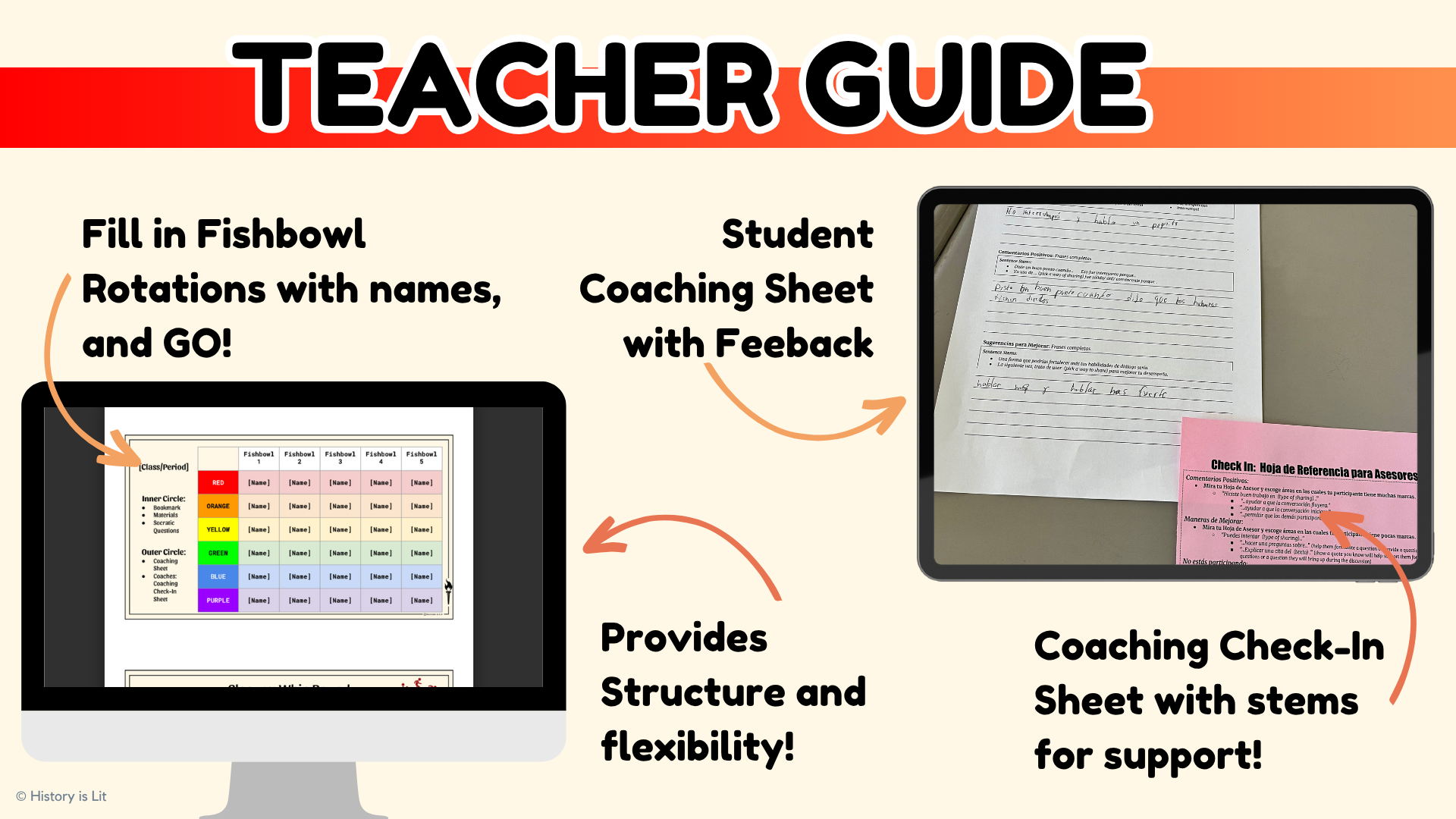
Student Coaching Sheet (Editable + PDF) – Helps students coach each other effectively.
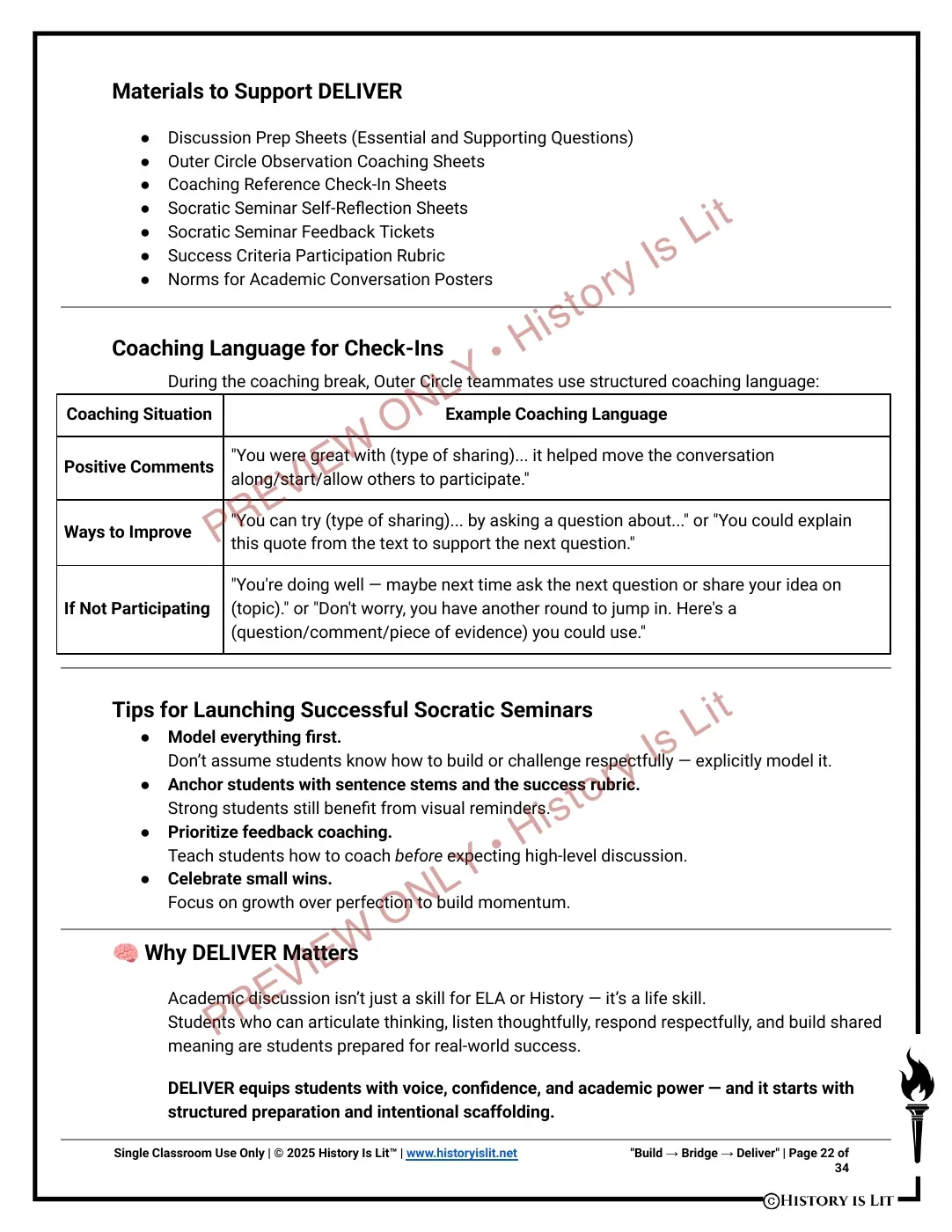
Coaching Sentence Frames (Editable + PDF) – Clear sentence starters to guide peer feedback.
Student Reflection Sheet (Editable + PDF) – Reflect on performance and set goals.
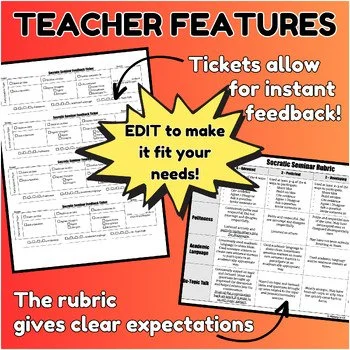
Feedback Tickets (Editable + PDF) – Instant feedback for both circles.
Exit Tickets (Editable + PDF) – Assess group dynamics and suggest improvements.
Discussion Starters (Editable + PDF) – Keeps everyone active with clear prompts.
Rubrics (Outer & Inner Circle – Editable + PDF) – Clear expectations for all students.
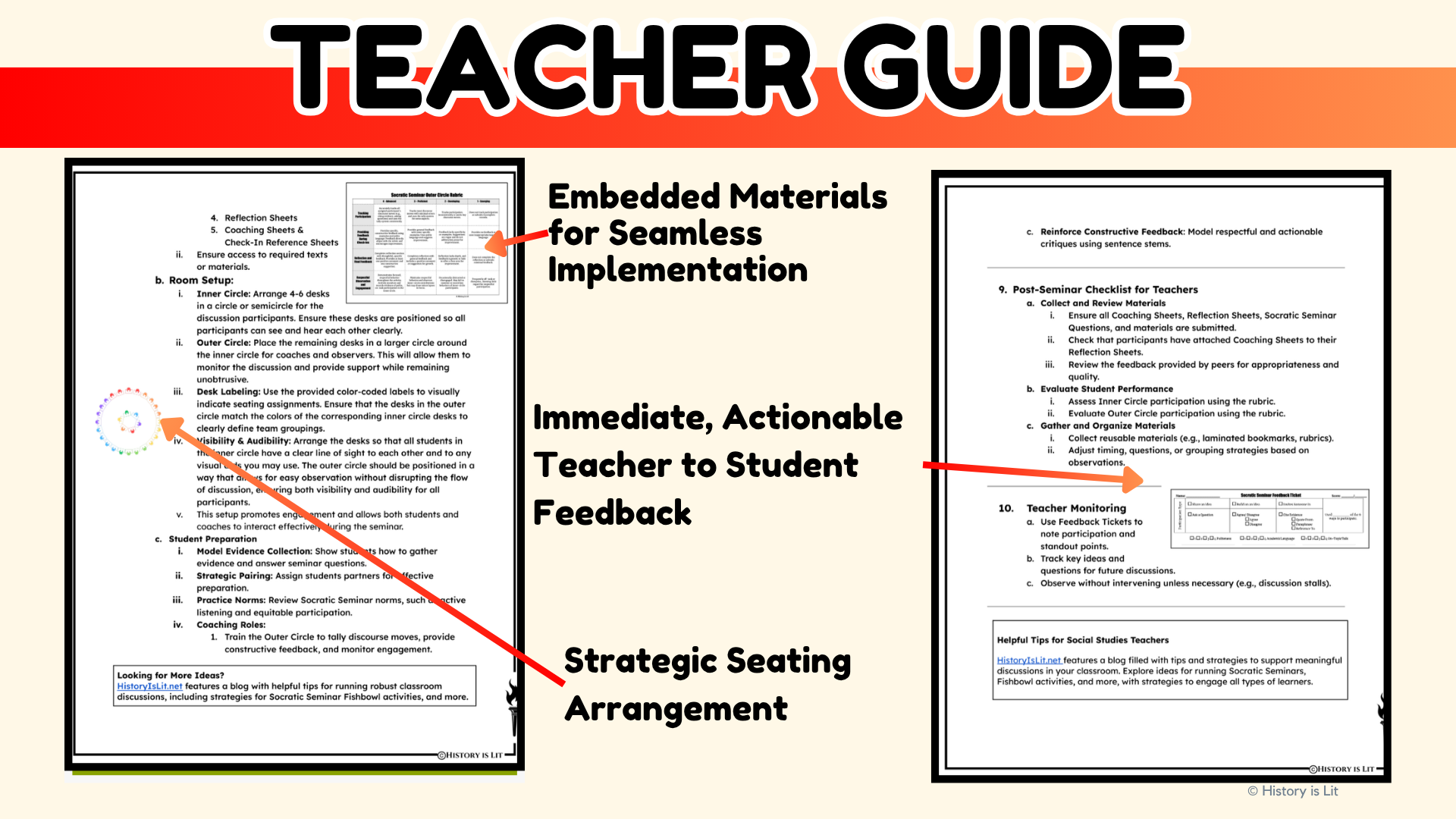
Step-by-Step Guide – Simple instructions to make discussions run smoothly.
Google Slides – A pre-made slide deck to guide the seminar.
Why You’ll Love It:
Clear roles and structure keep both circles engaged and accountable.
Editable materials and sentence frames make coaching easy.
No prep required beyond printing or assigning slides — start quickly!
Perfect For:
Middle & high school classrooms needing clear structure for Socratic Seminars.
Engaging every student in meaningful ways, even when they’re not in the center circle.
Peer coaching that keeps everyone accountable without extra work for you!
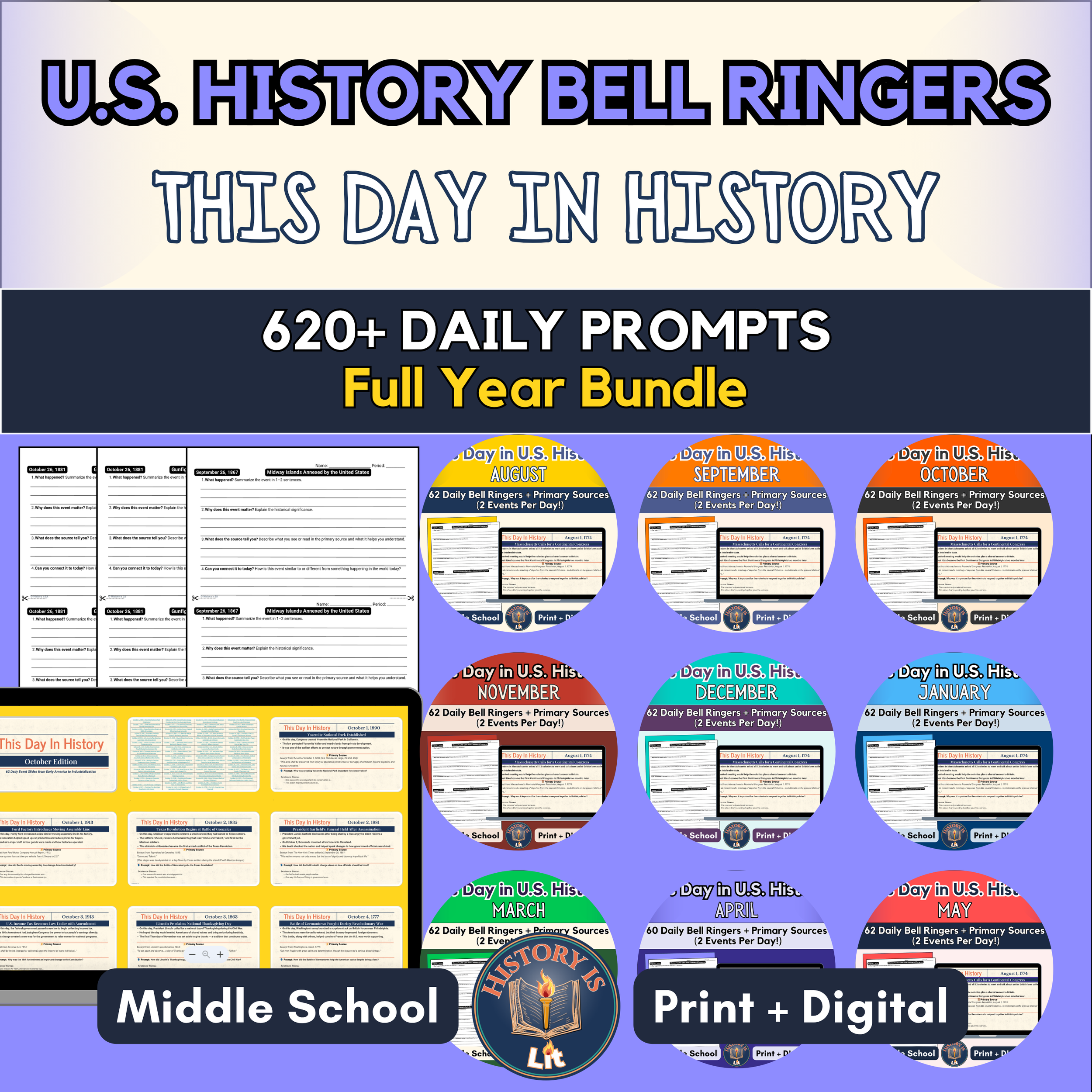
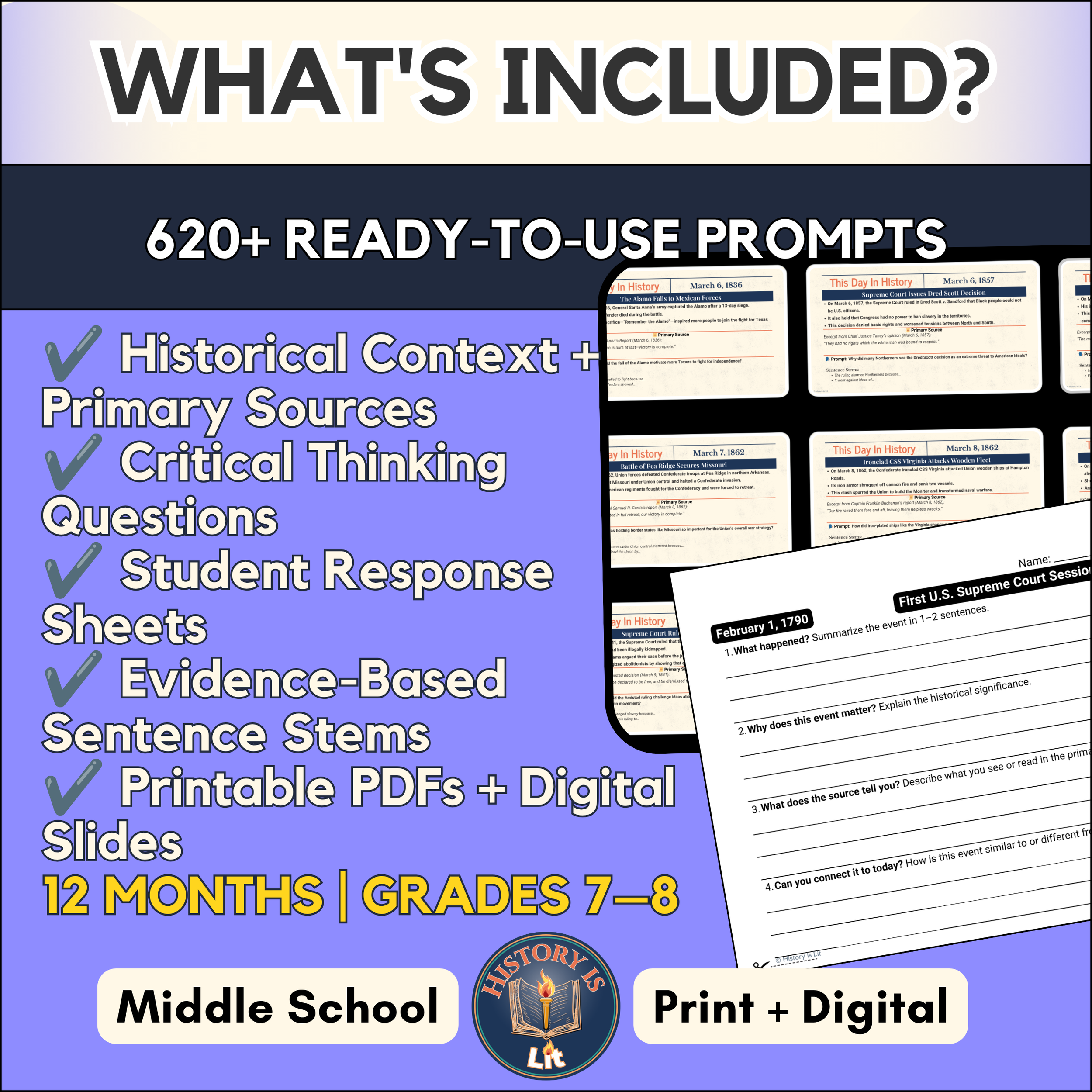
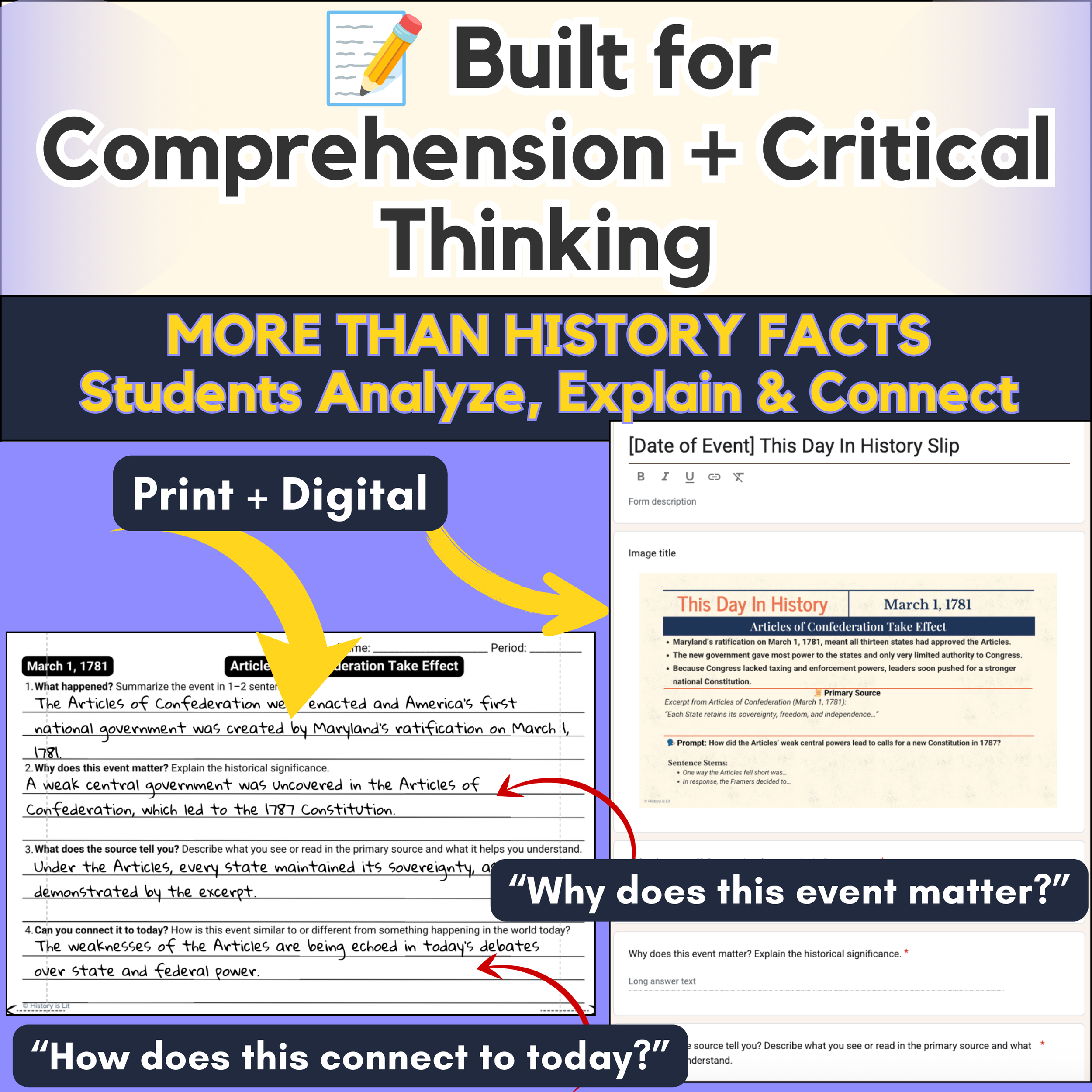
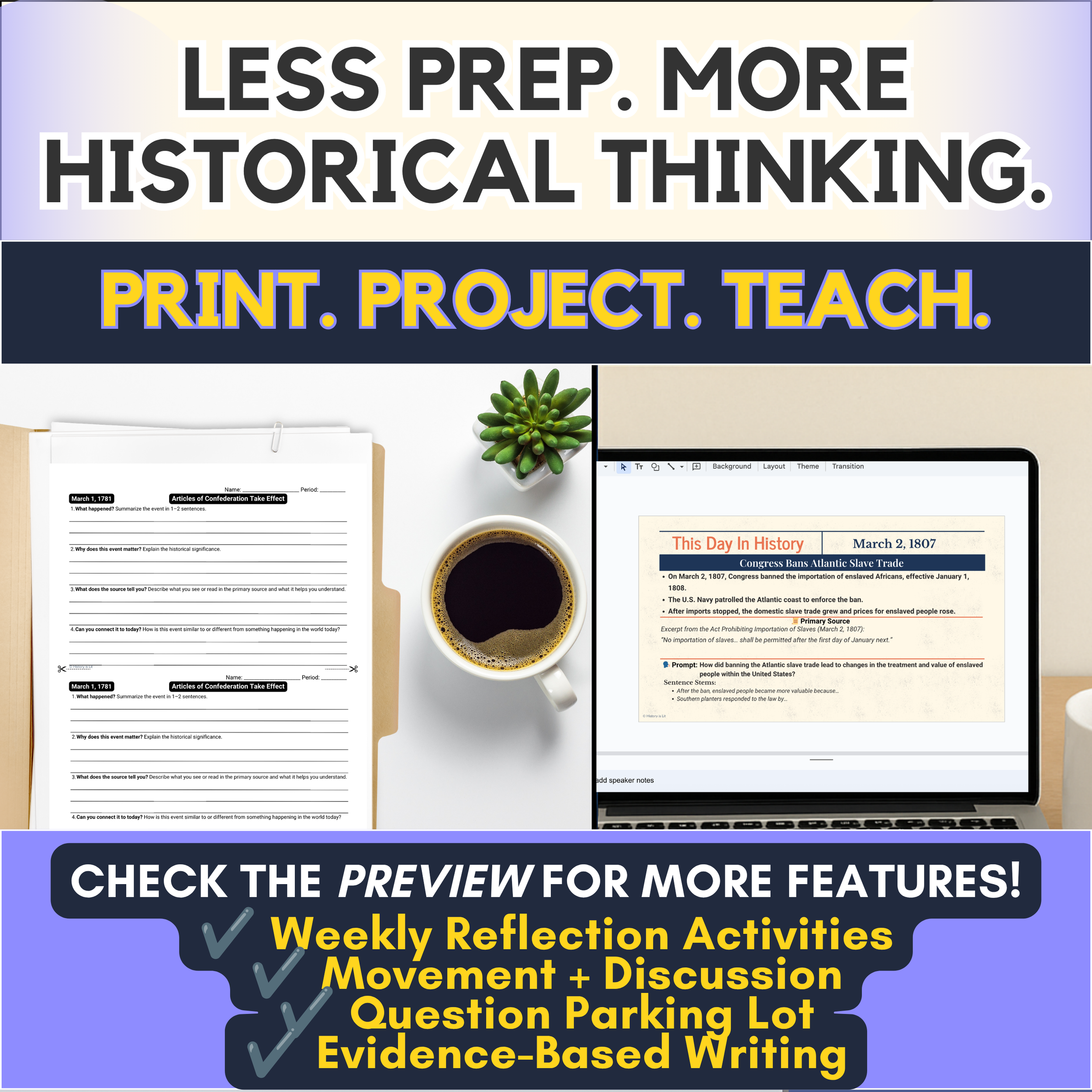
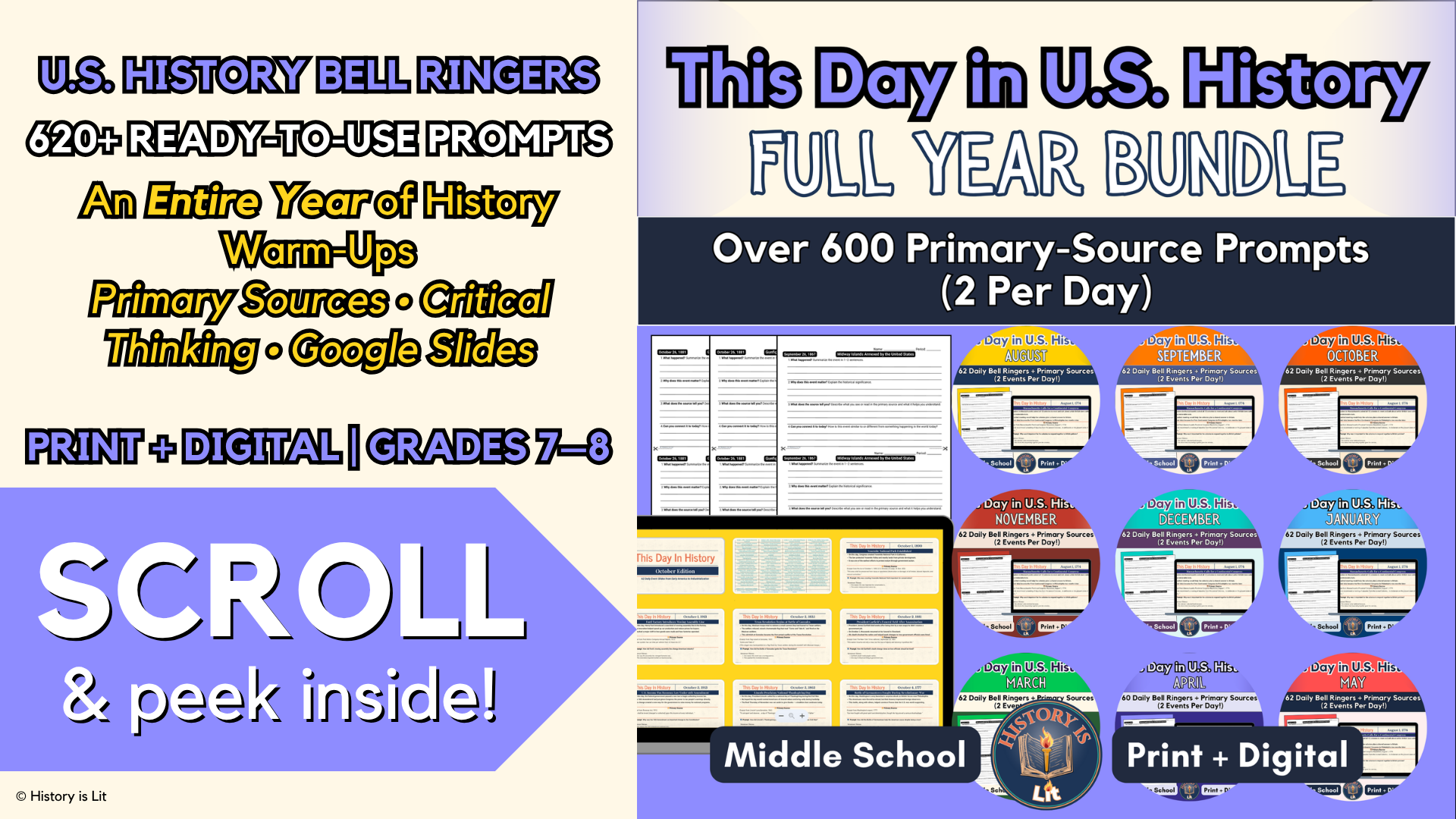
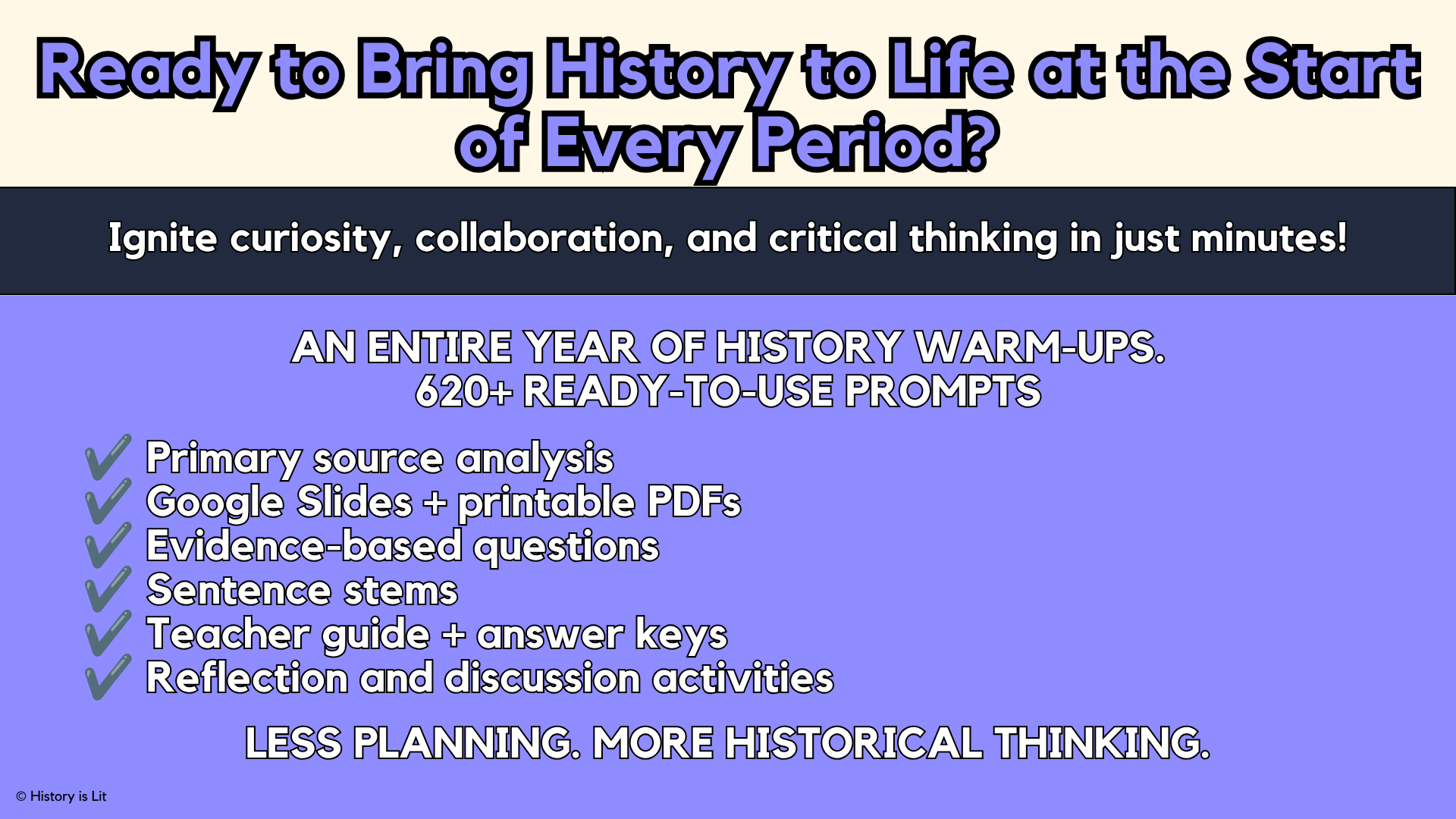
Ring-In Every Day! Year-Long U.S.-History Bell Ringers—620+ Ready-to-Use Prompts
Goodbye single-month scrambling, hello full-year ease. From colonial protests in August to civil-rights milestones next July, this bundle delivers more than 620 standards-aligned bell ringers—two fresh prompts for virtually every teaching day of the entire school year. Print or project and dive straight into discussion, evidence, and critical thinking.
What You Get
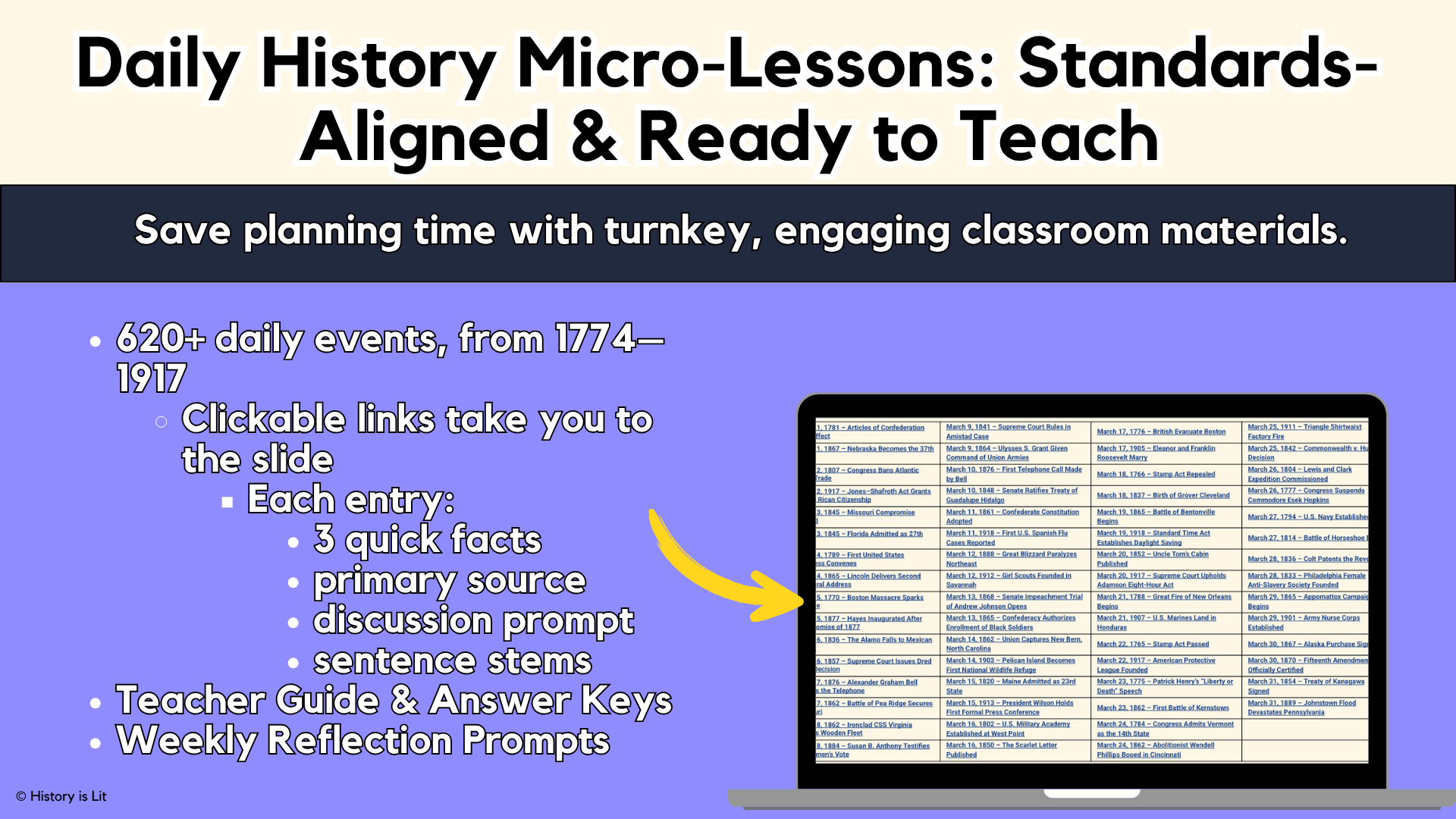
620+ bell-ringer prompts (≈2 per weekday, August through July)
Each prompt includes
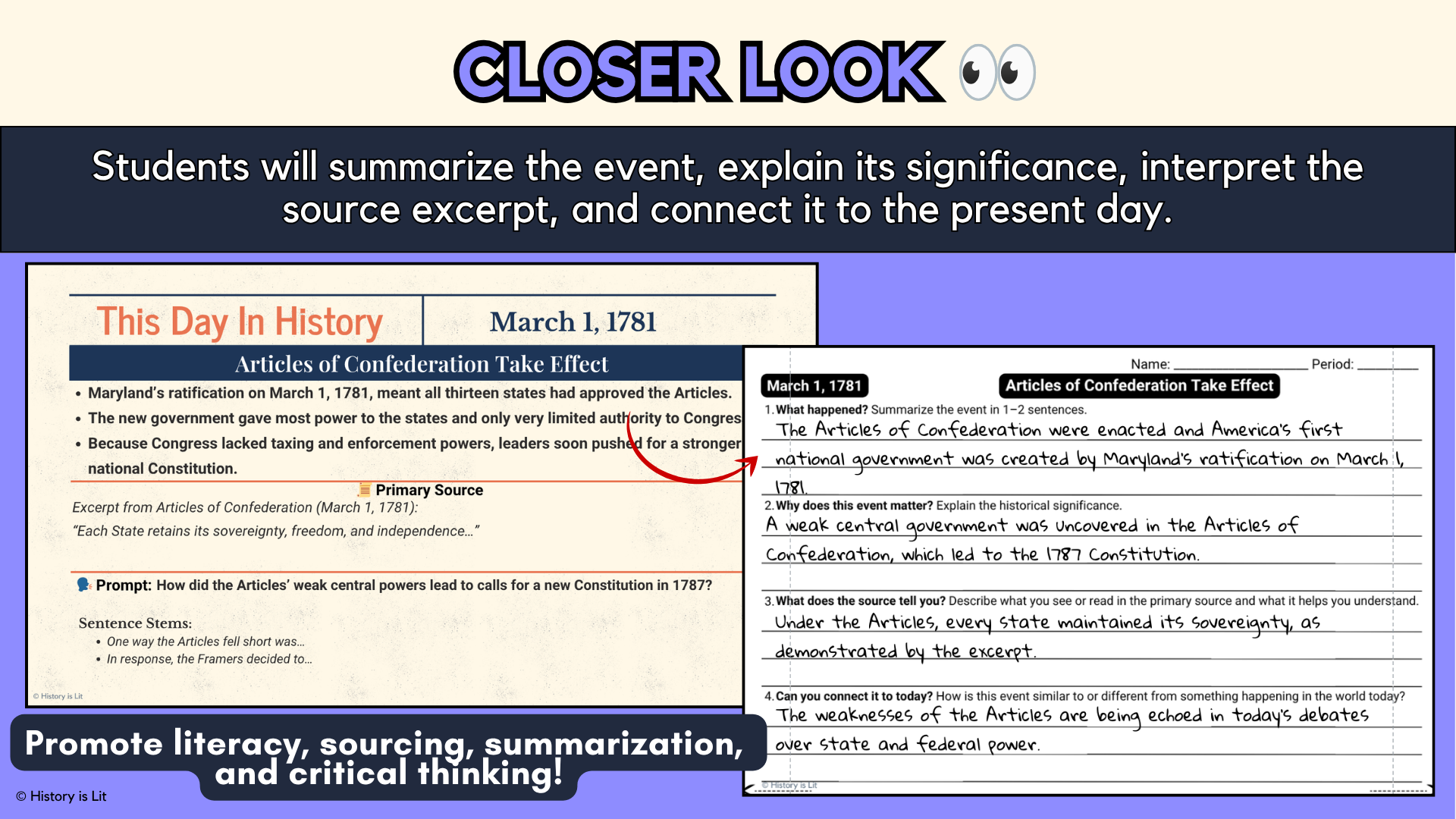
• a 2- to 3-sentence background blurb
• a sharpened primary-source excerpt (quote, map, law, diary line, photo)
• one discussion question plus two sentence stems for evidence-based answers
Student-ready formats
• printable slips (PDF)
• Google Slides deck for projection or digital notebooks
Teacher Guide with easy routines, theme-wall ideas, and extension activities
Answer Key—sample responses for every single event
Why Teachers Love This Bundle
Zero prep—warm-ups, sub plans, exit tickets, odd bell schedules all handled
Keeps momentum during assemblies, testing windows, and holiday weeks
Built-in literacy scaffolds—students cite evidence, write claims, speak with confidence
High engagement, low grading—rich talk without piles of worksheets
Why Students Engage
Bite-sized, vivid stories instead of dry date drills
Primary sources that make them pause and ask questions
Sentence stems that kill the “I don’t know what to say” fear
Easy connections to headlines and issues they already discuss
A Year of Themes at a Glance
Rights & Resistance – Stamp Act Repealed • Fifteenth Amendment Certified • Triangle Shirtwaist Reform
Expansion & Statehood – Alaska Purchase • Articles of Confederation Take Effect • Florida, Nebraska, Maine admissions
Innovation & Firsts – Bell’s Telephone • Colt’s Revolver • Edison’s early patents
Conflict & Compromise – Battle of Pea Ridge • Missouri Compromise • Appomattox Campaign
Power & Protest – Patrick Henry’s “Liberty or Death” • Hayes Compromise Inauguration • American Protective League
Environment & Safety – Great Blizzard of 1888 • Johnstown Flood • Pelican Island Refuge
(…and dozens more themes woven across 12 months.)
Ready to keep bell ringers humming all year long?
Grab the bundle, hit print or present, and watch your students start class curious, focused, and ready to talk history—every single day.
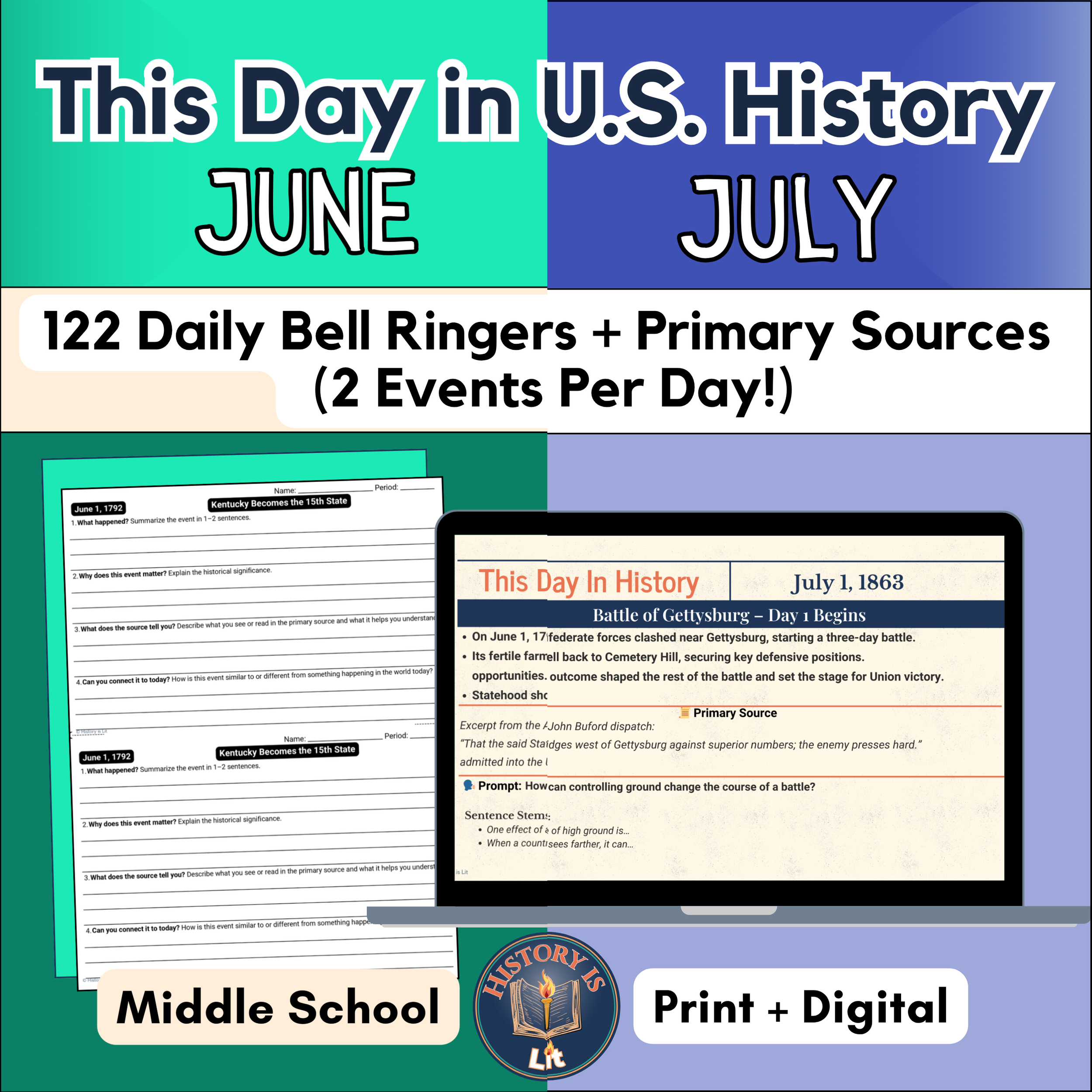
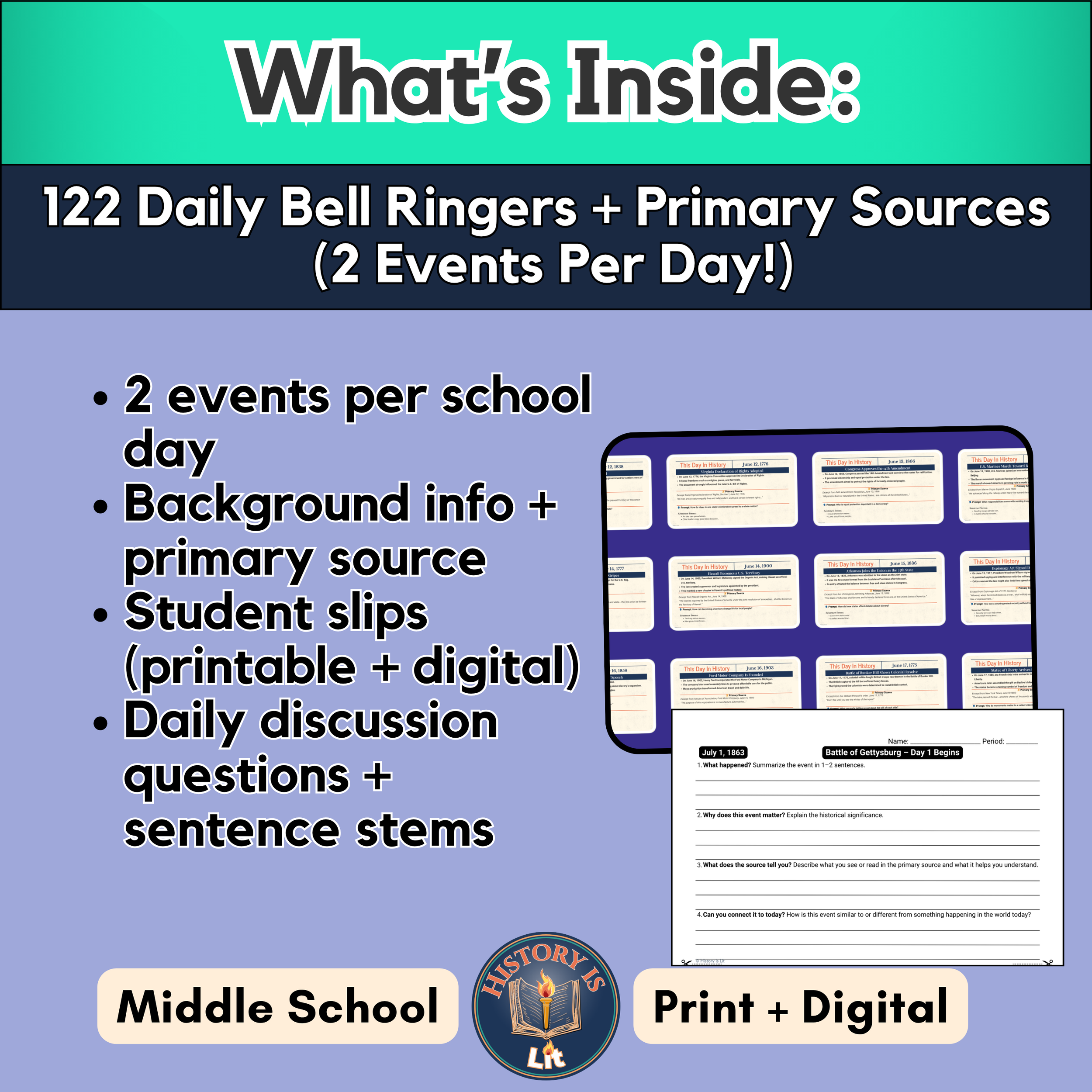
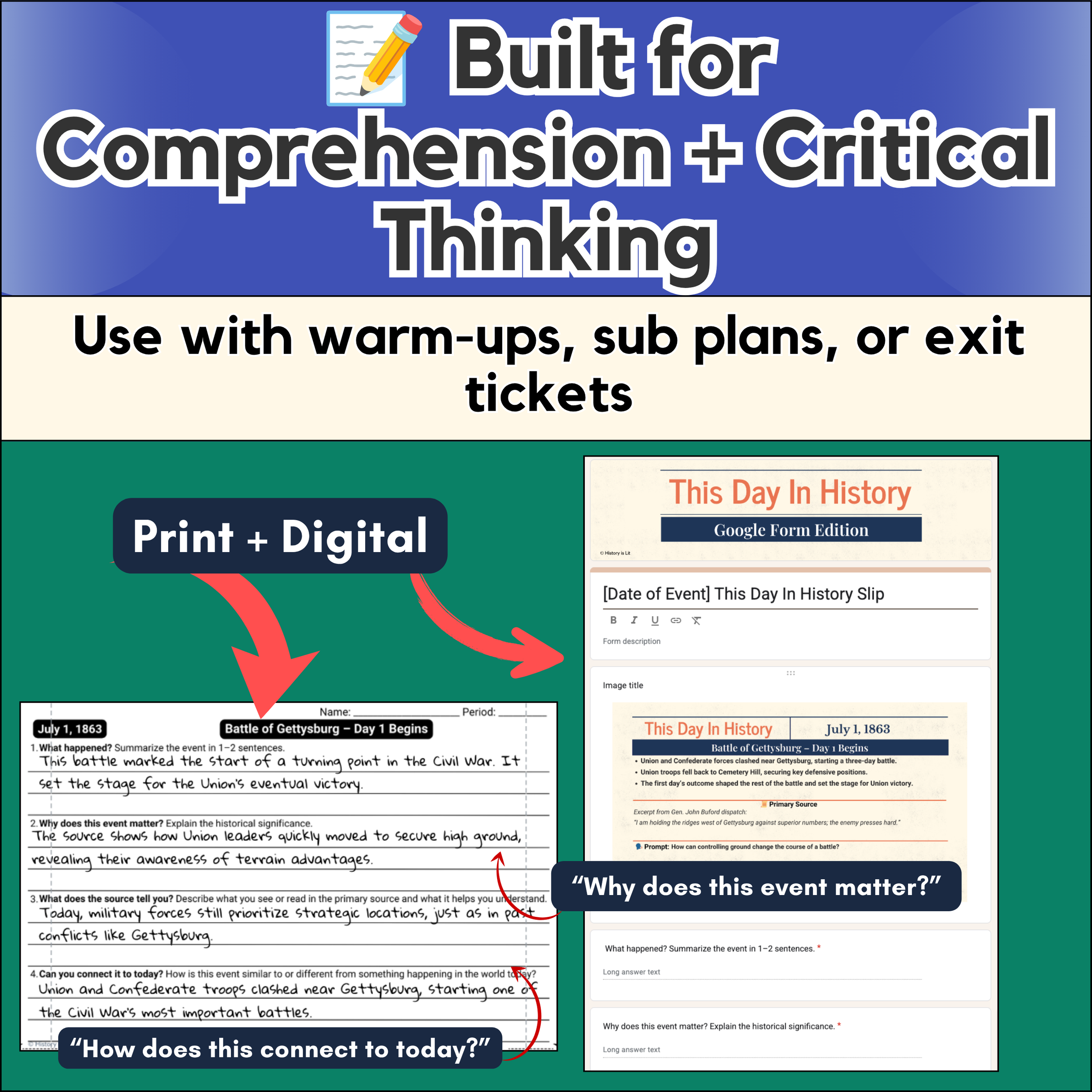
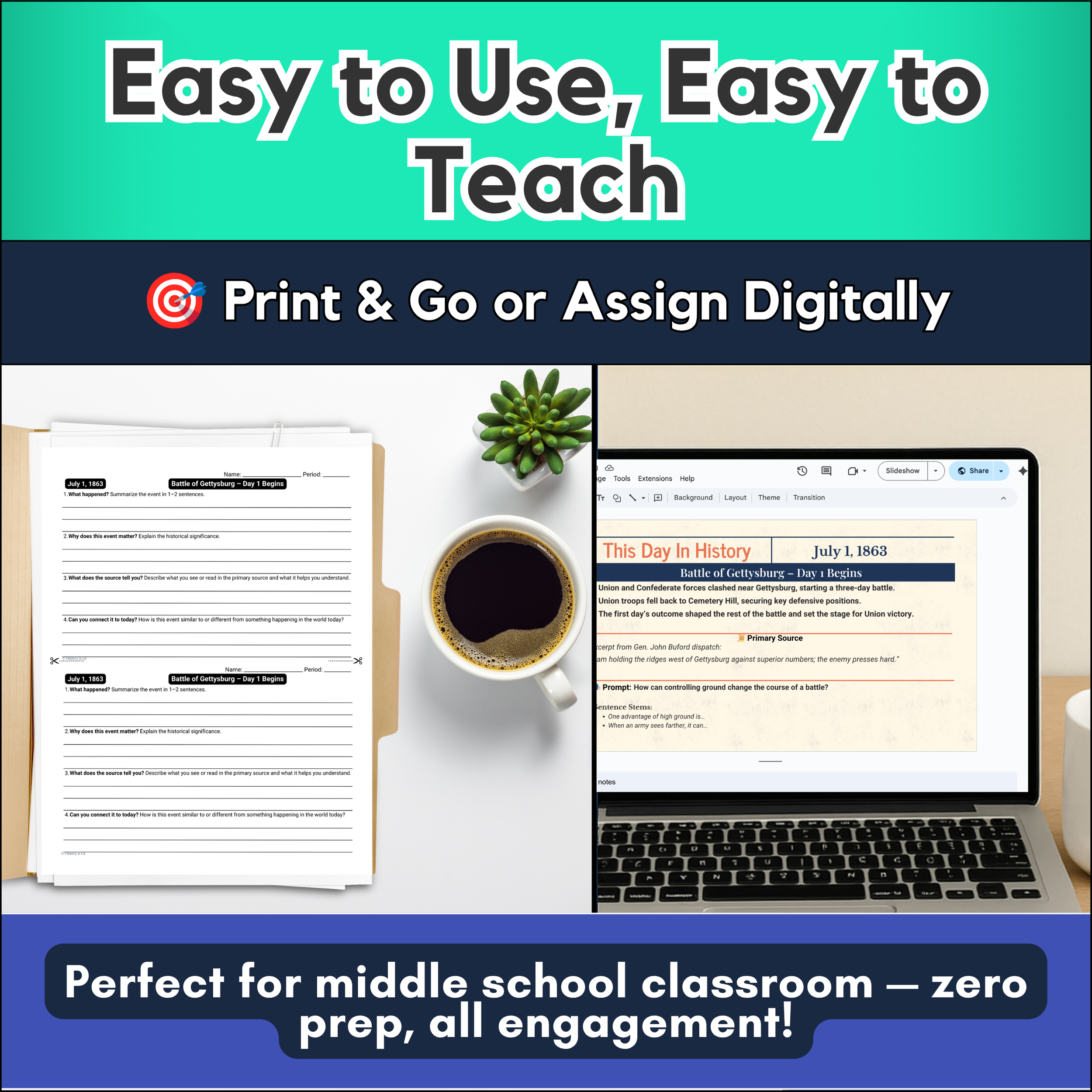
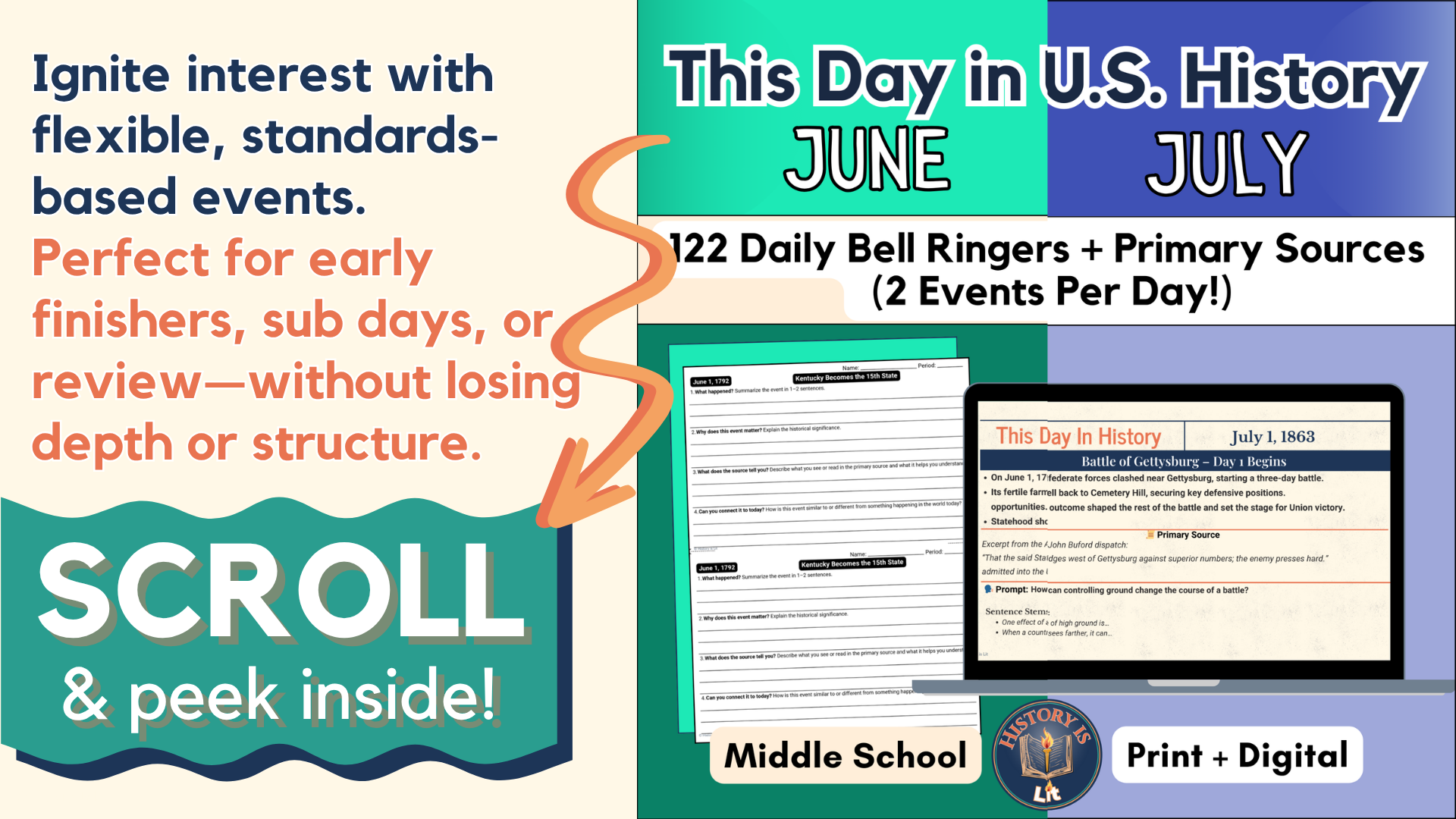
This Day in U.S. History – Bell Ringer Bundle (June + July)
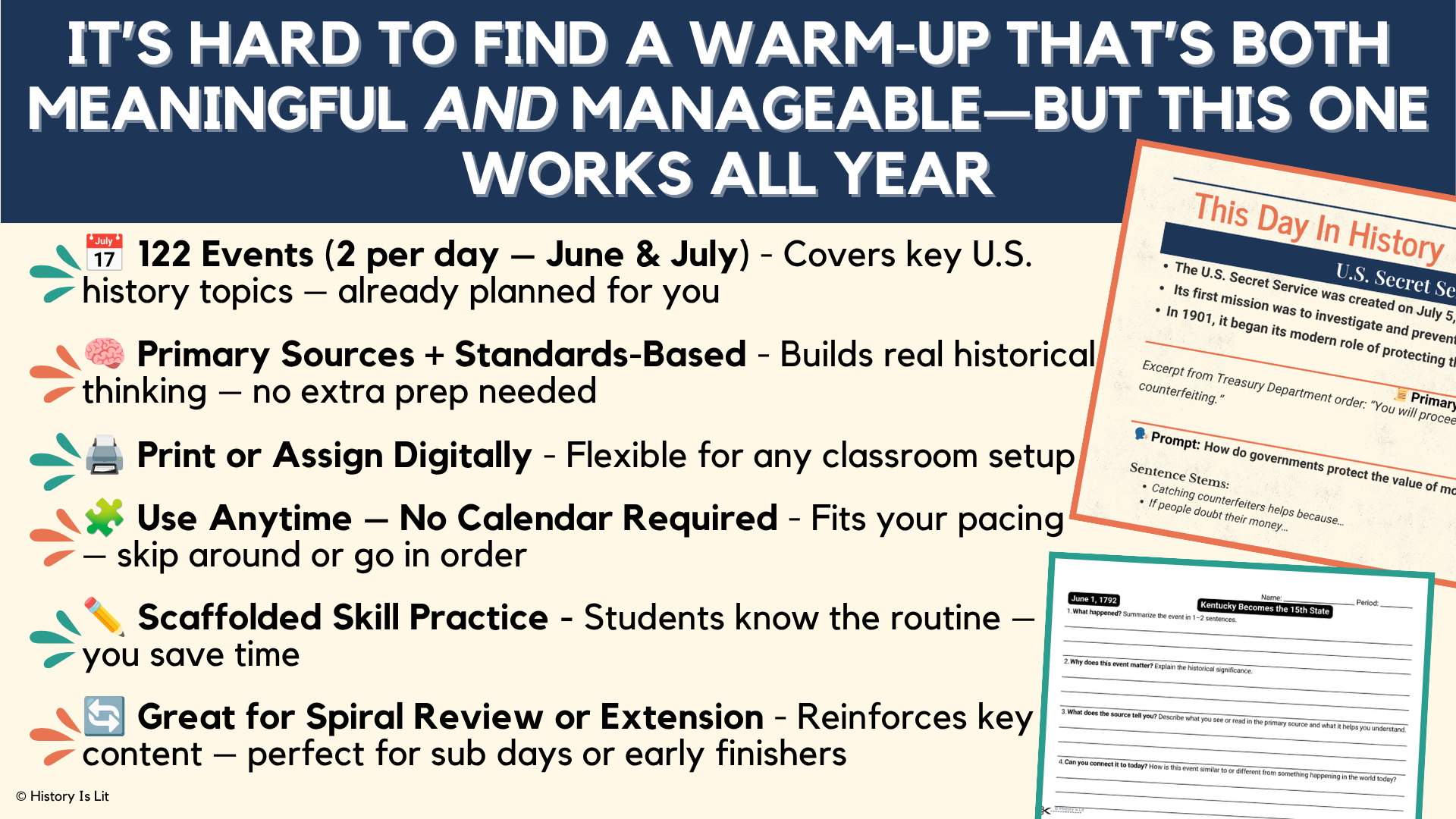
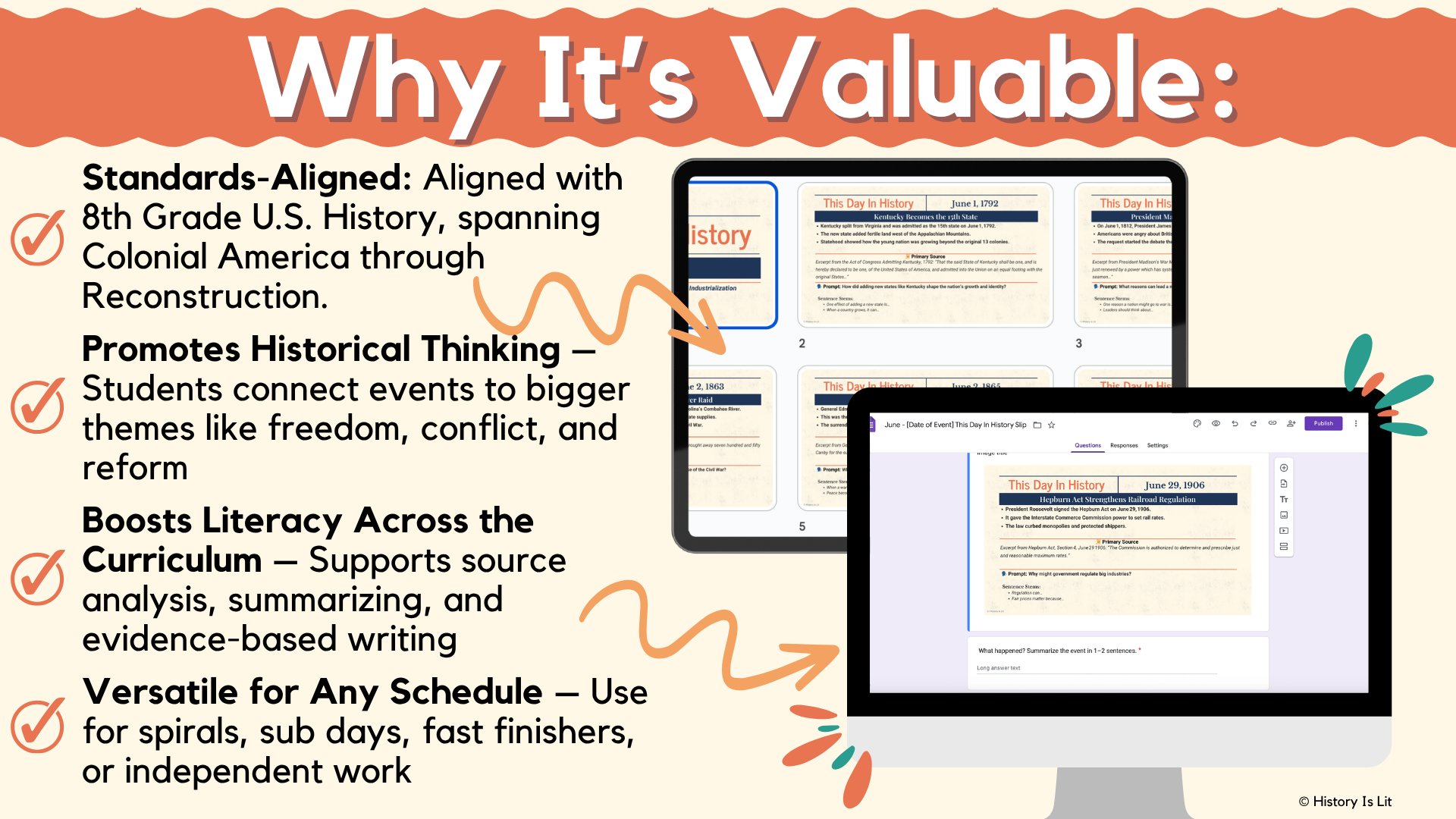
This isn’t just for summer—these 122 events are your secret weapon for flexible, standards-aligned U.S. history routines all year long.
While June and July events fall outside the typical school calendar, you can use them to spiral review past content, enrich early finishers, build sub plans, or explore summer-related moments in U.S. history. They’re perfect for filler days, quiet work, partner stations, or even end-of-year wrap-ups.
From colonial beginnings to post-Civil War reforms, every day includes:
Two engaging U.S. history events
Primary source excerpts
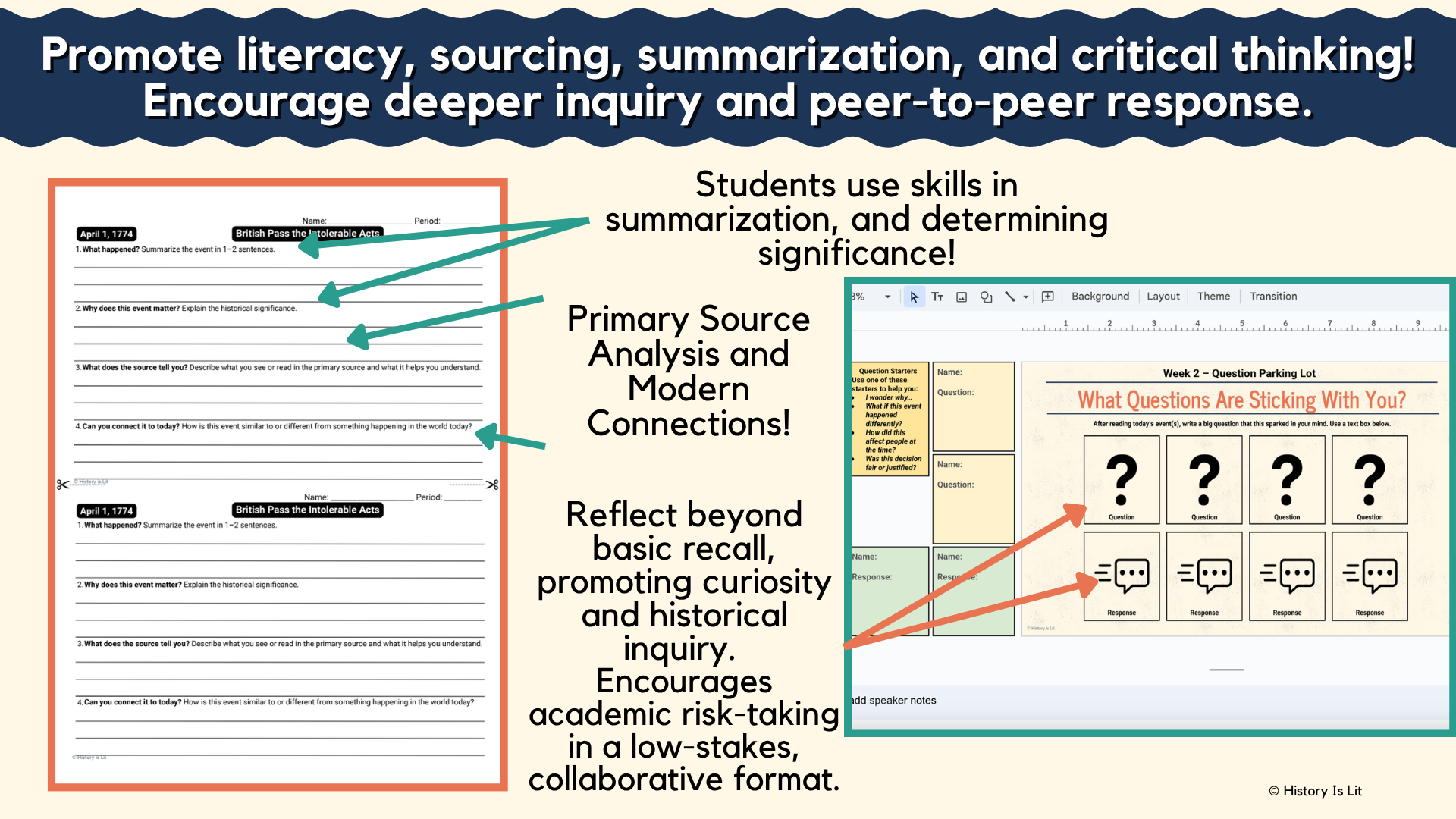
Scaffolded critical thinking questions
Sentence stems for student support
6th-grade reading level, built for 8th-grade depth
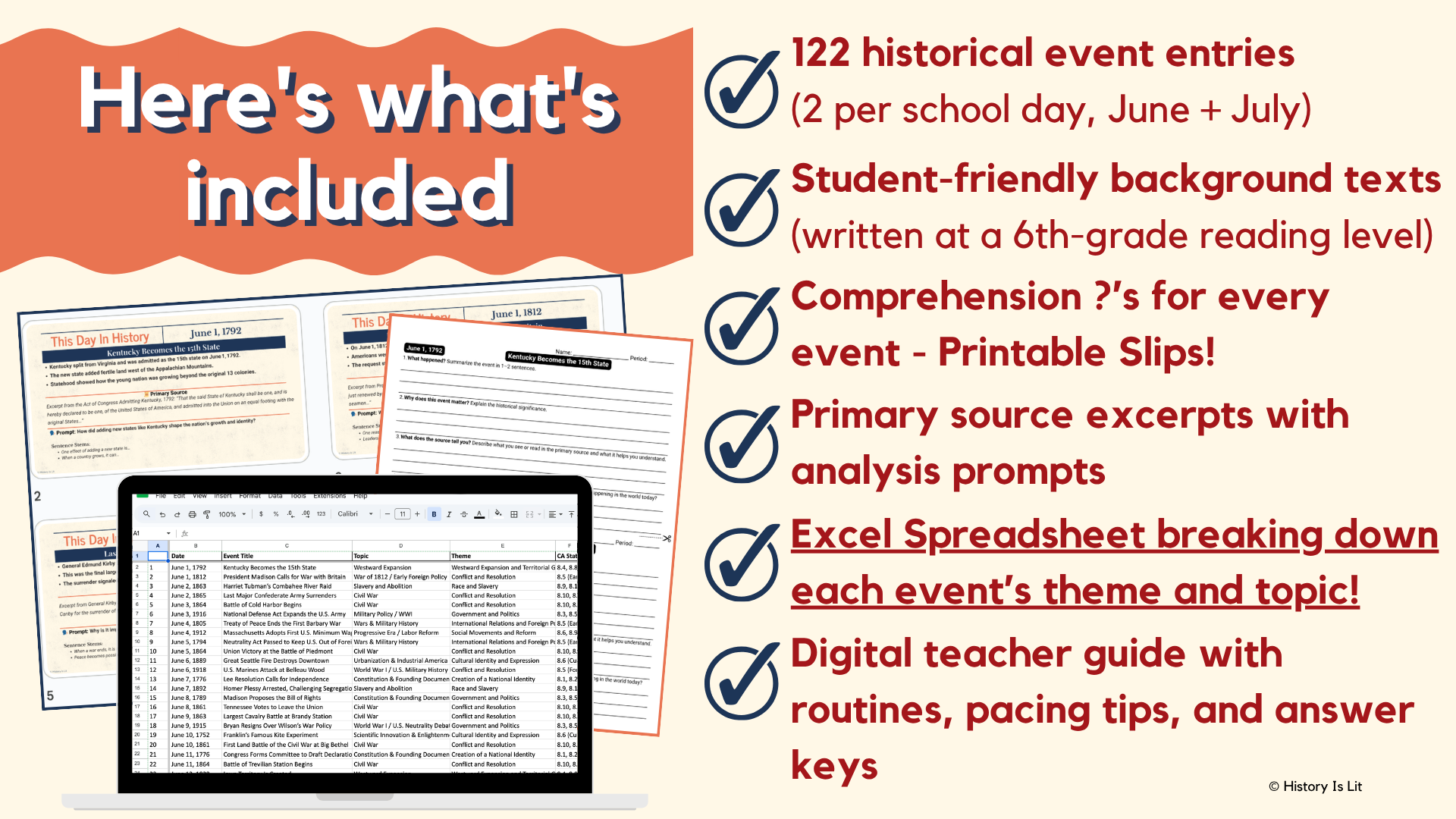
✨ What’s Included:
✔️ No-Prep & California Standards-Aligned
✔️ Two Events Per Day – 122 Total (60 in June, 62 in July)
✔️ Printable Student Slips + Google Slides
✔️ Primary Sources & Structured Questions
✔️ Built-In Critical Thinking Prompts + Sentence Starters
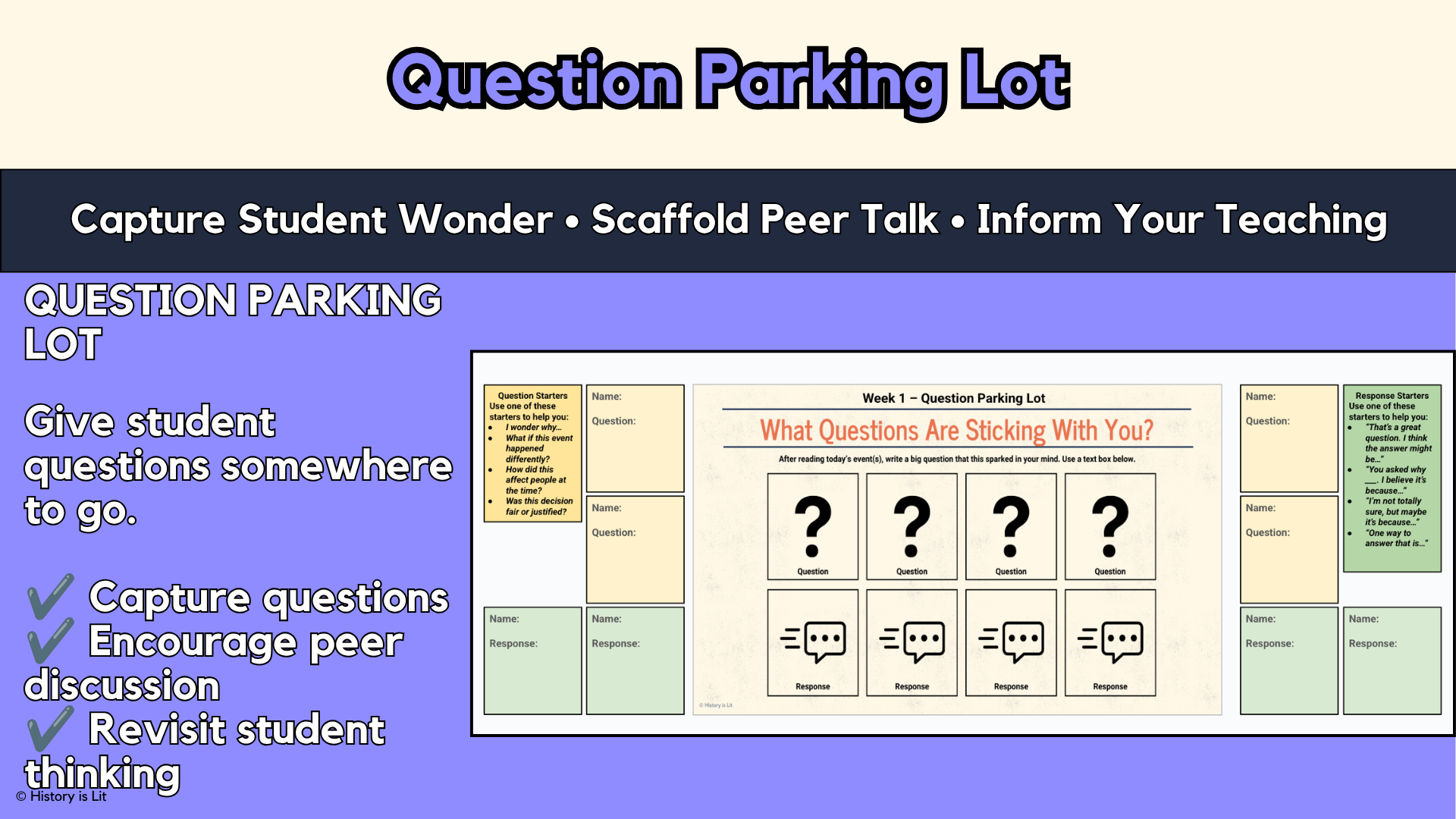
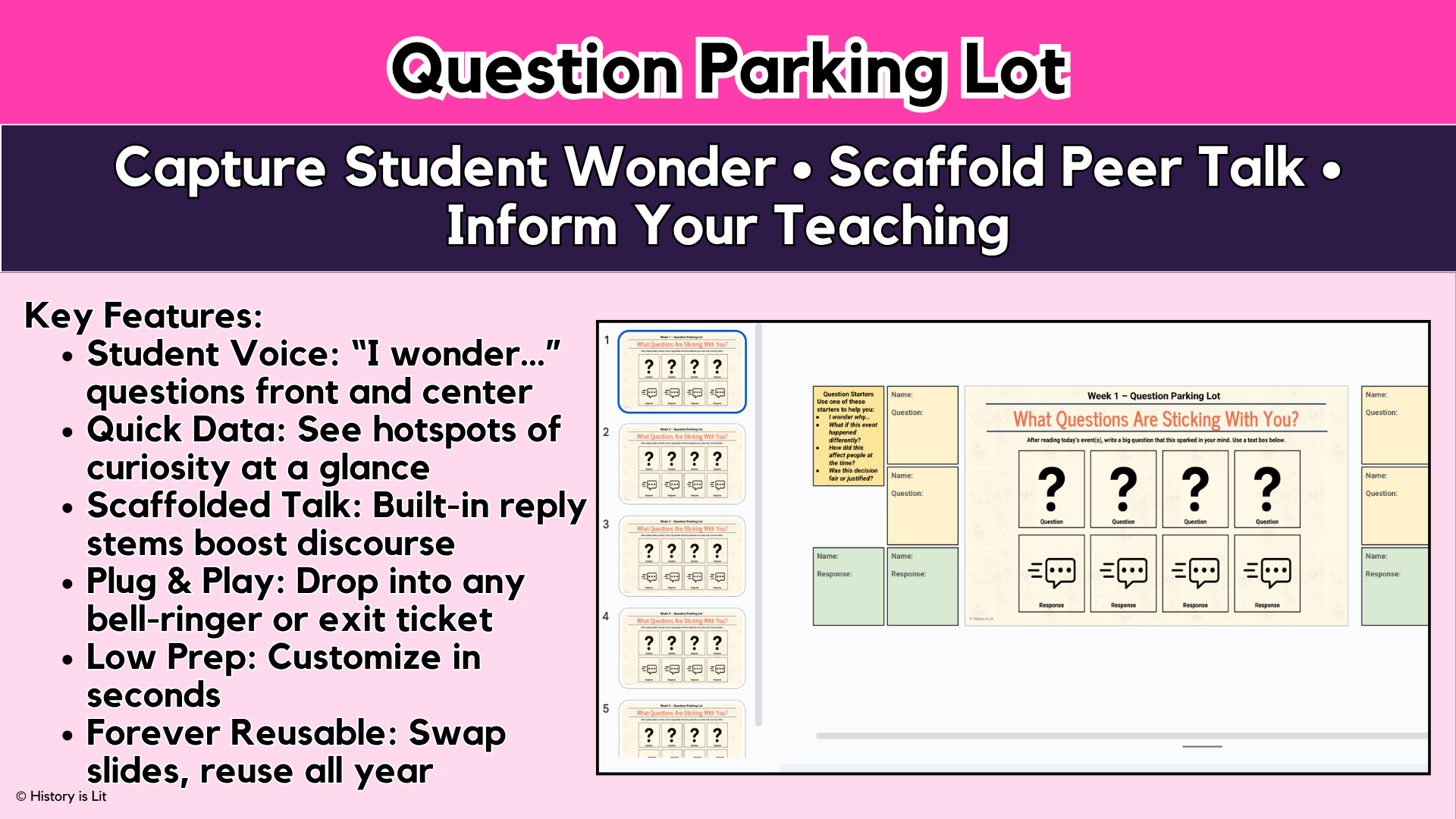
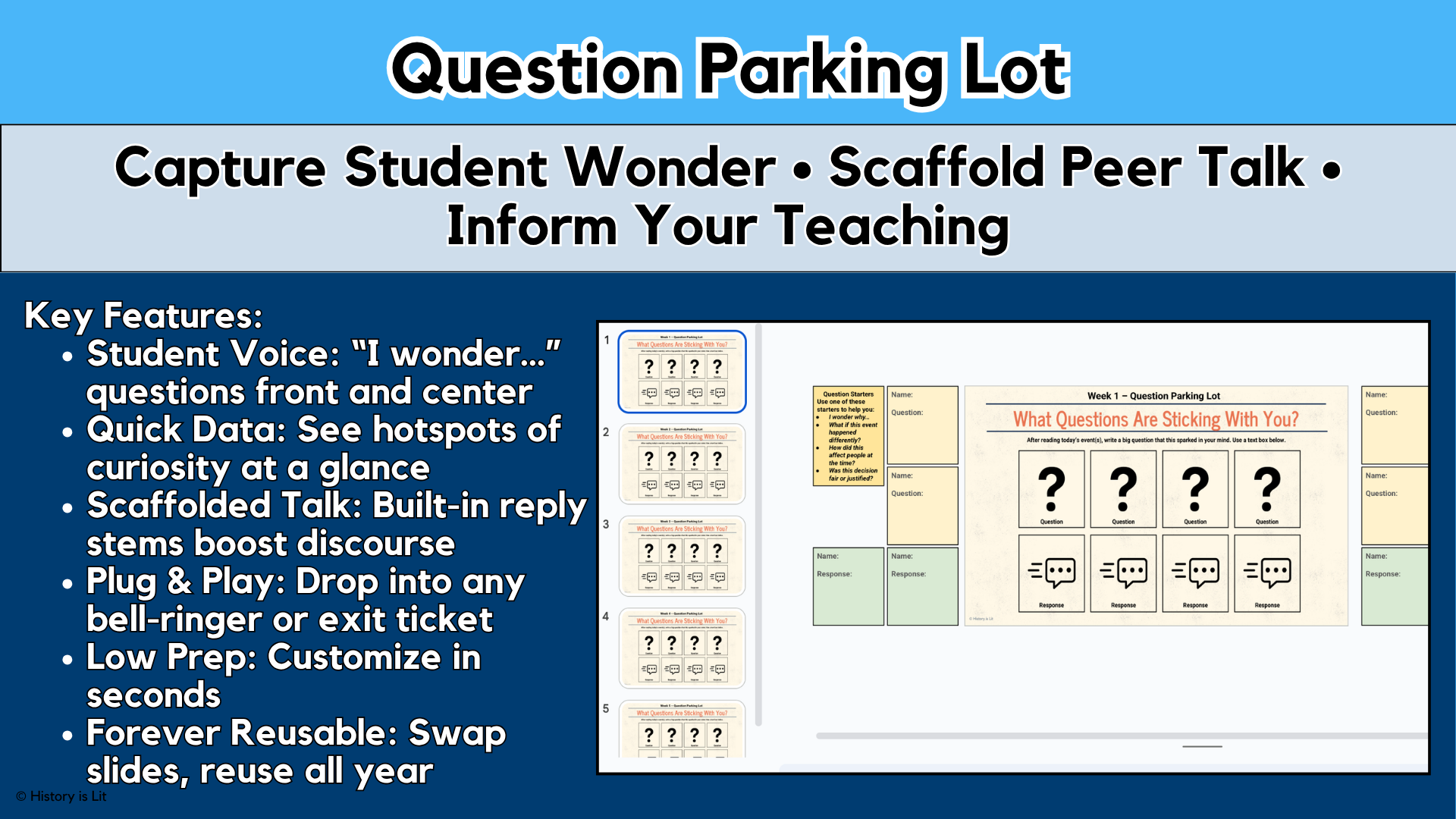
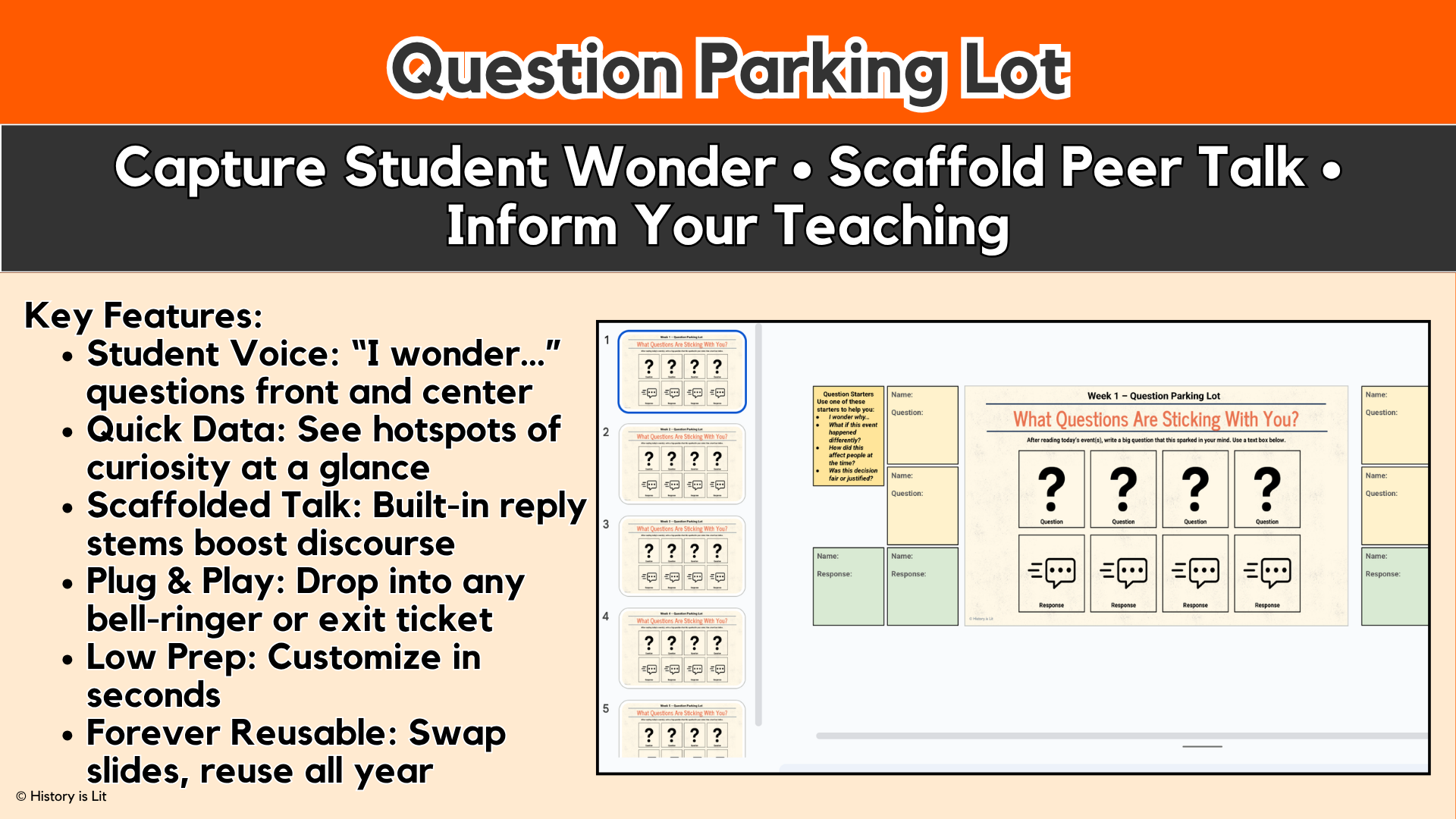
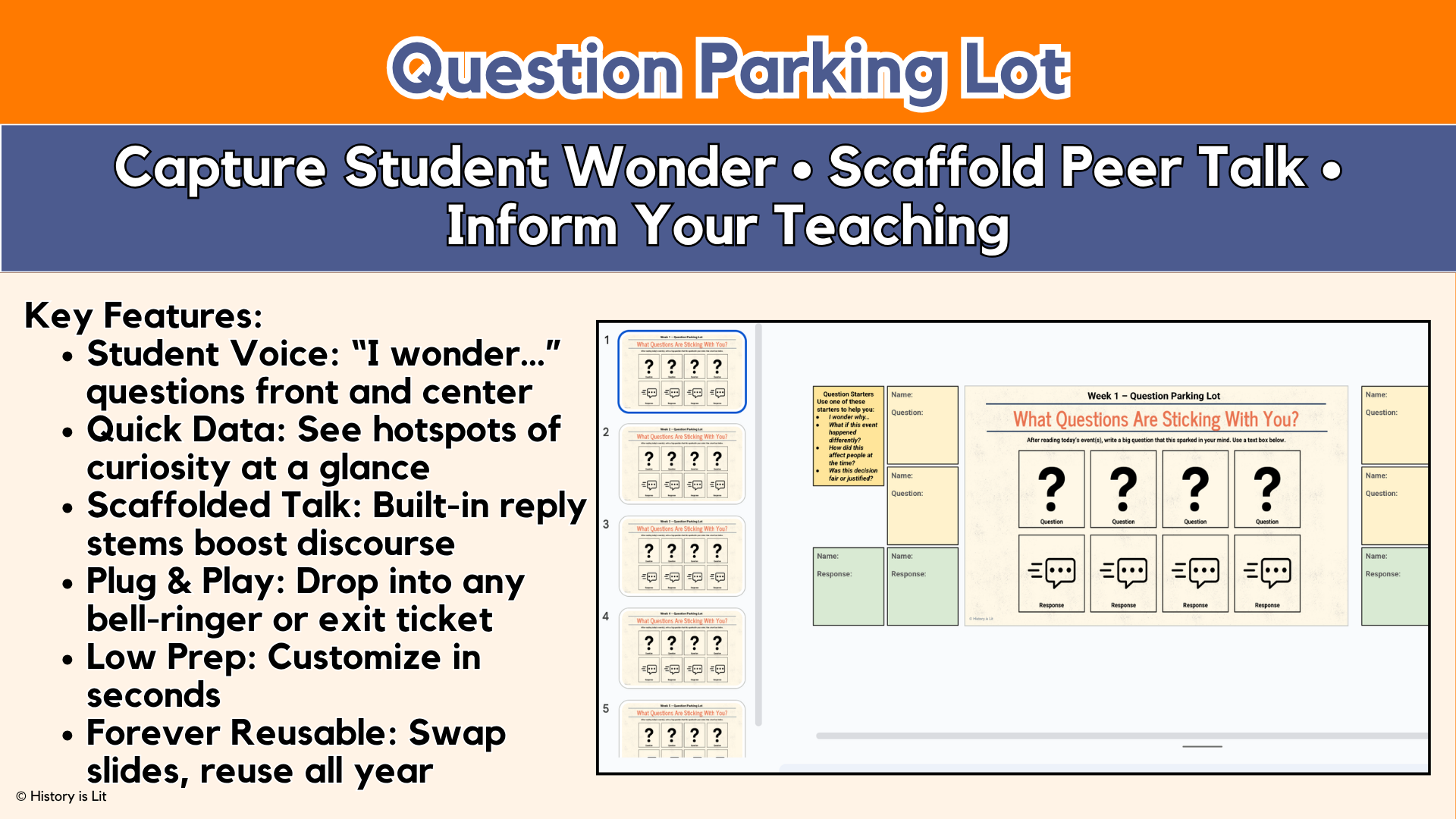
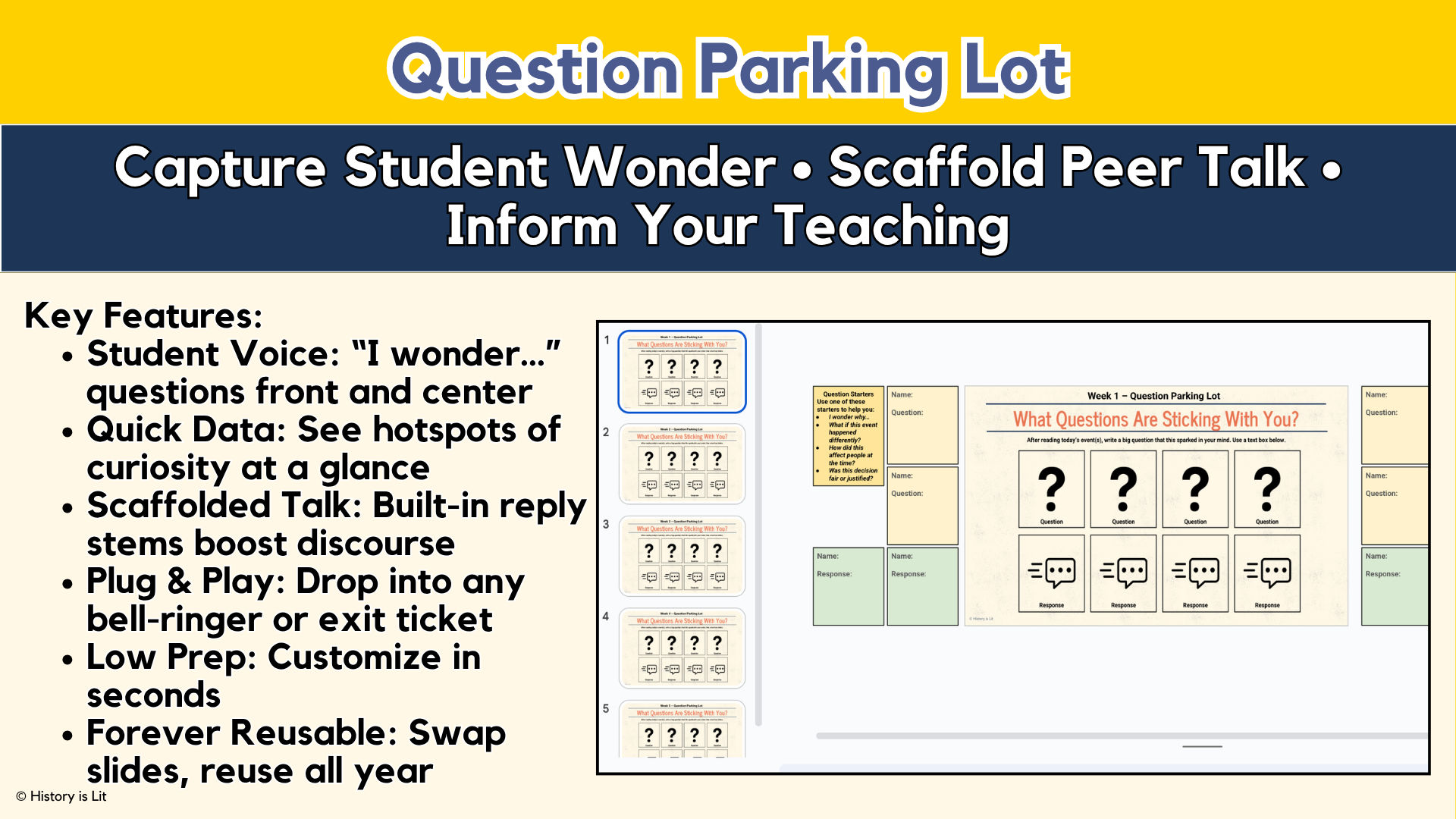
✔️ Digital “Question Parking Lot” Template
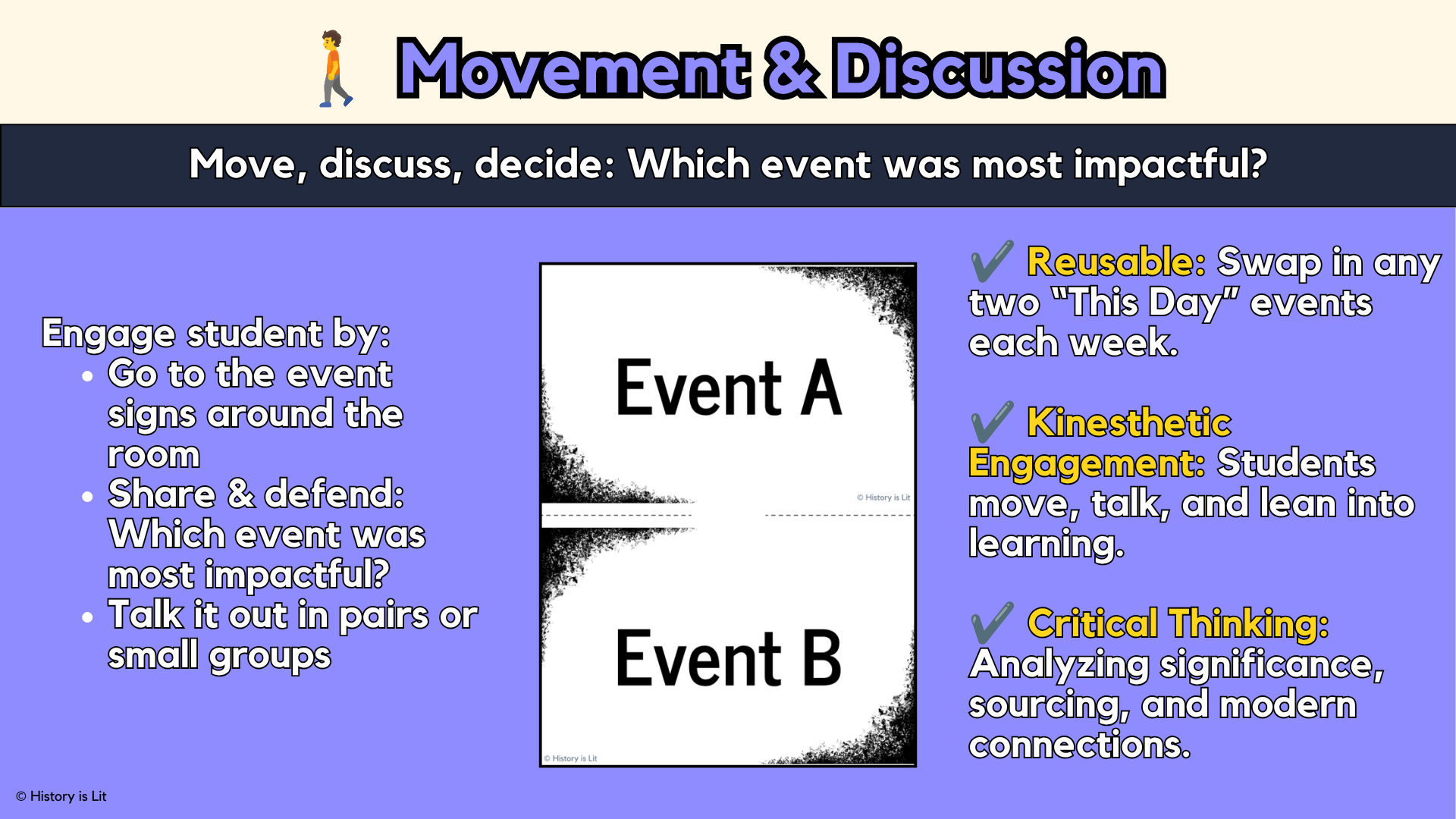
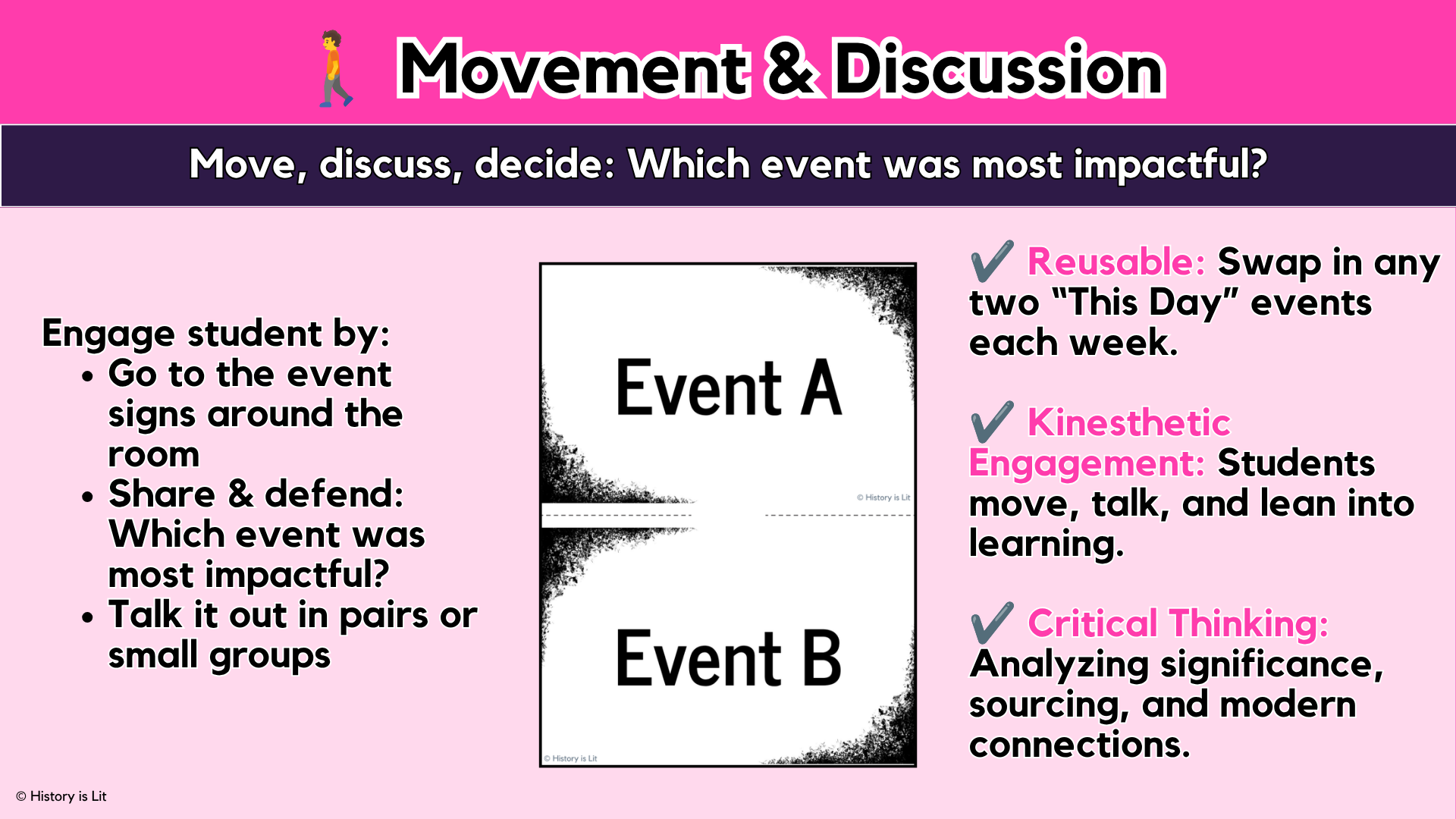
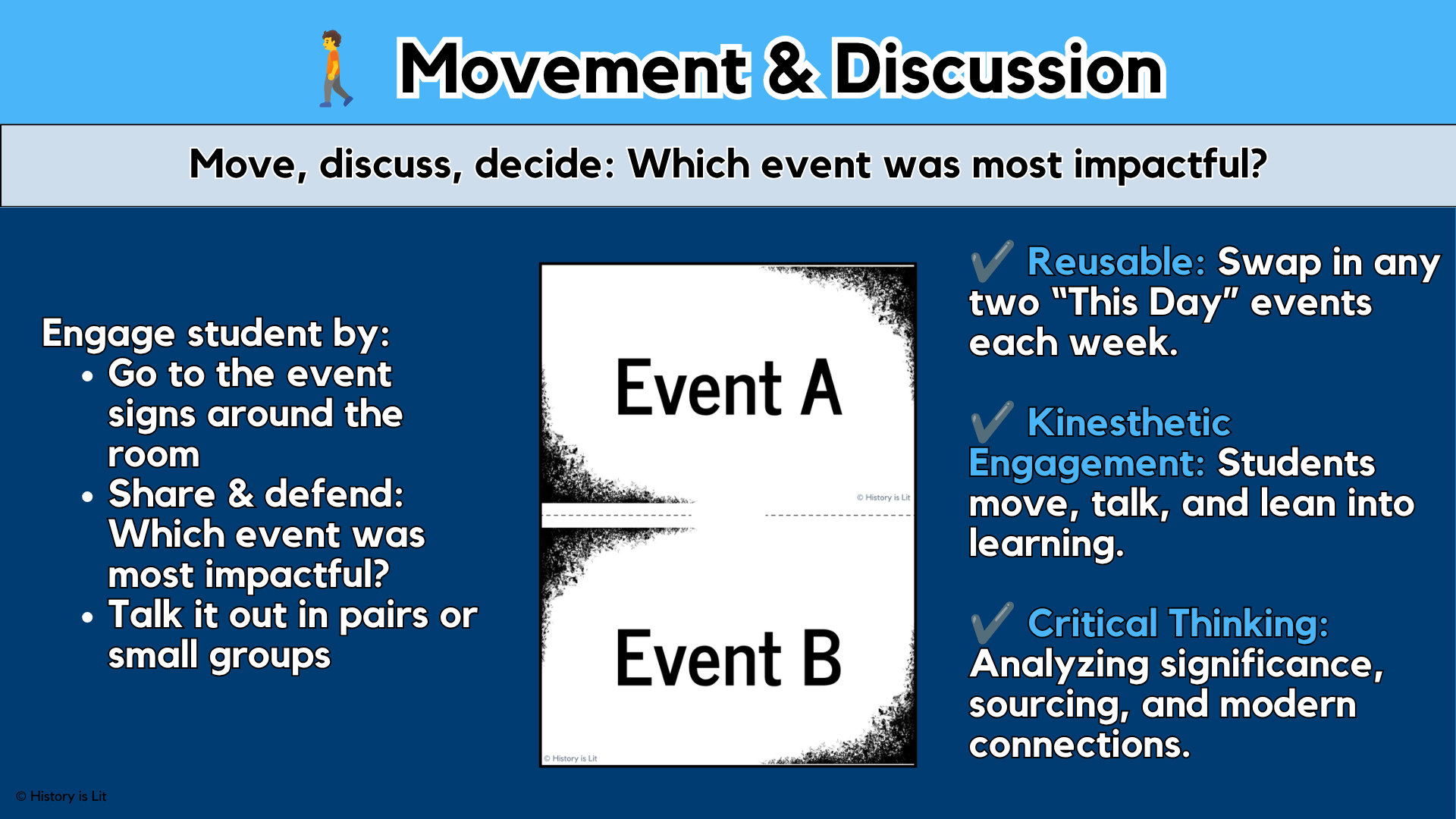
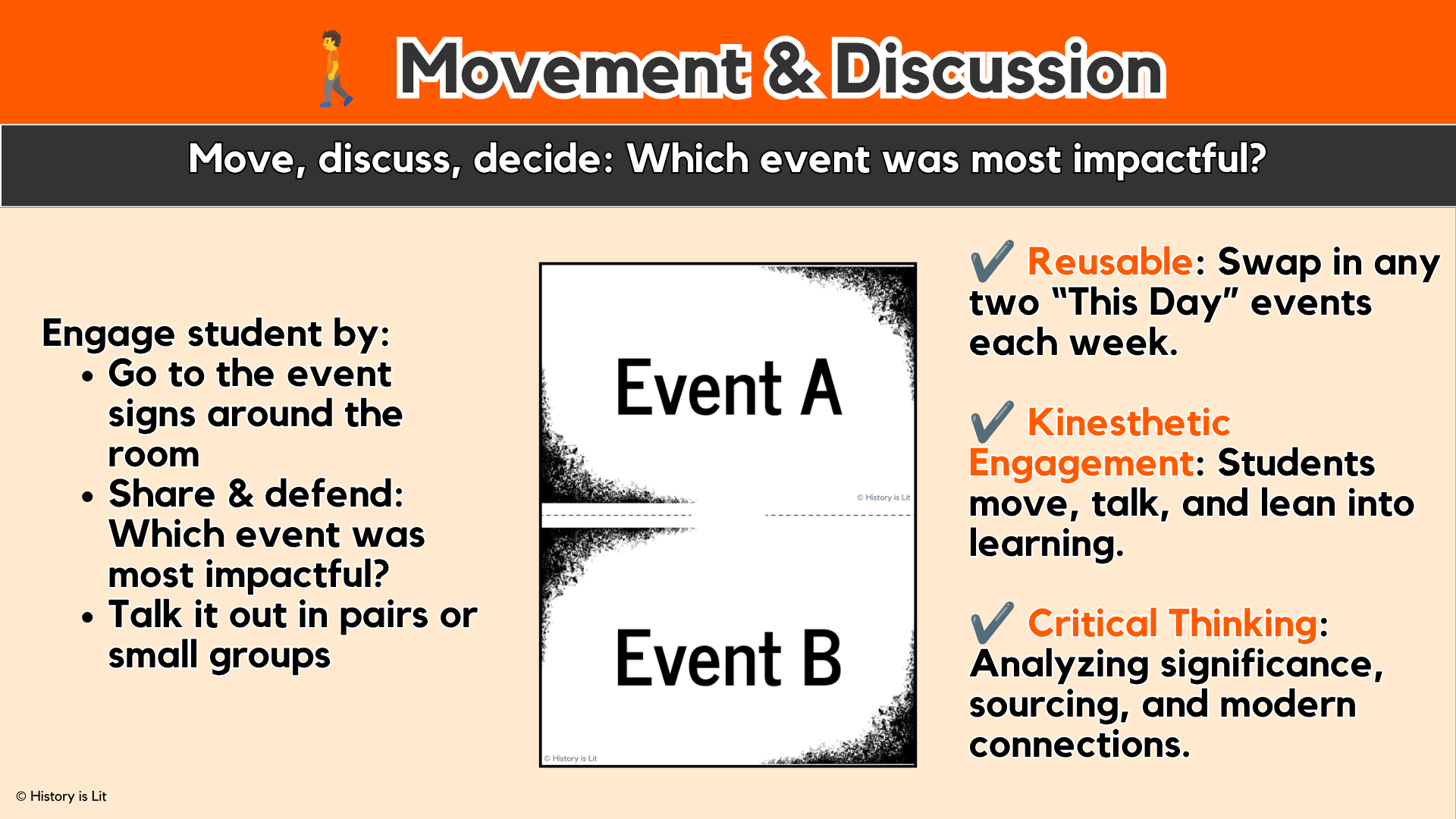
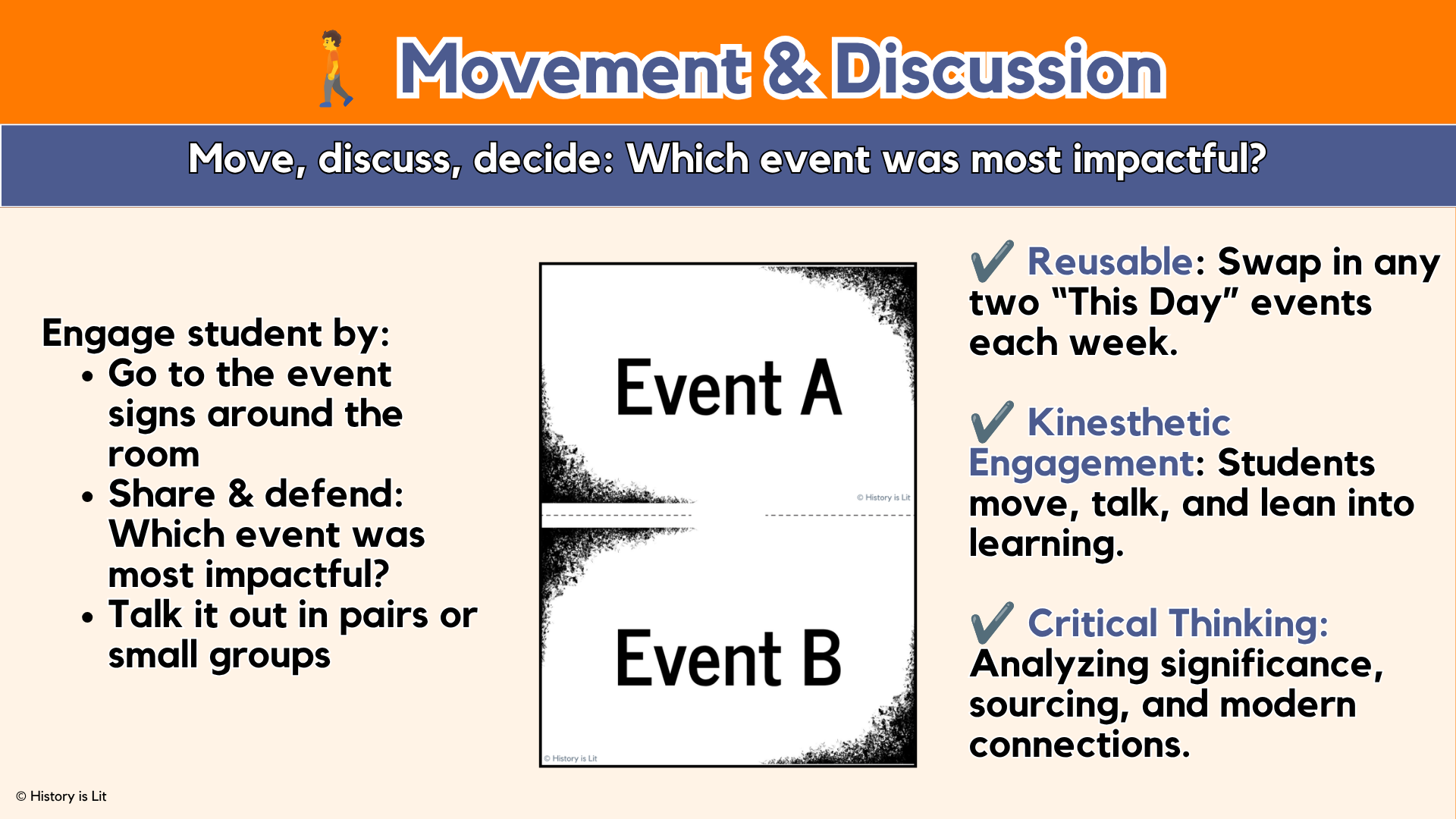
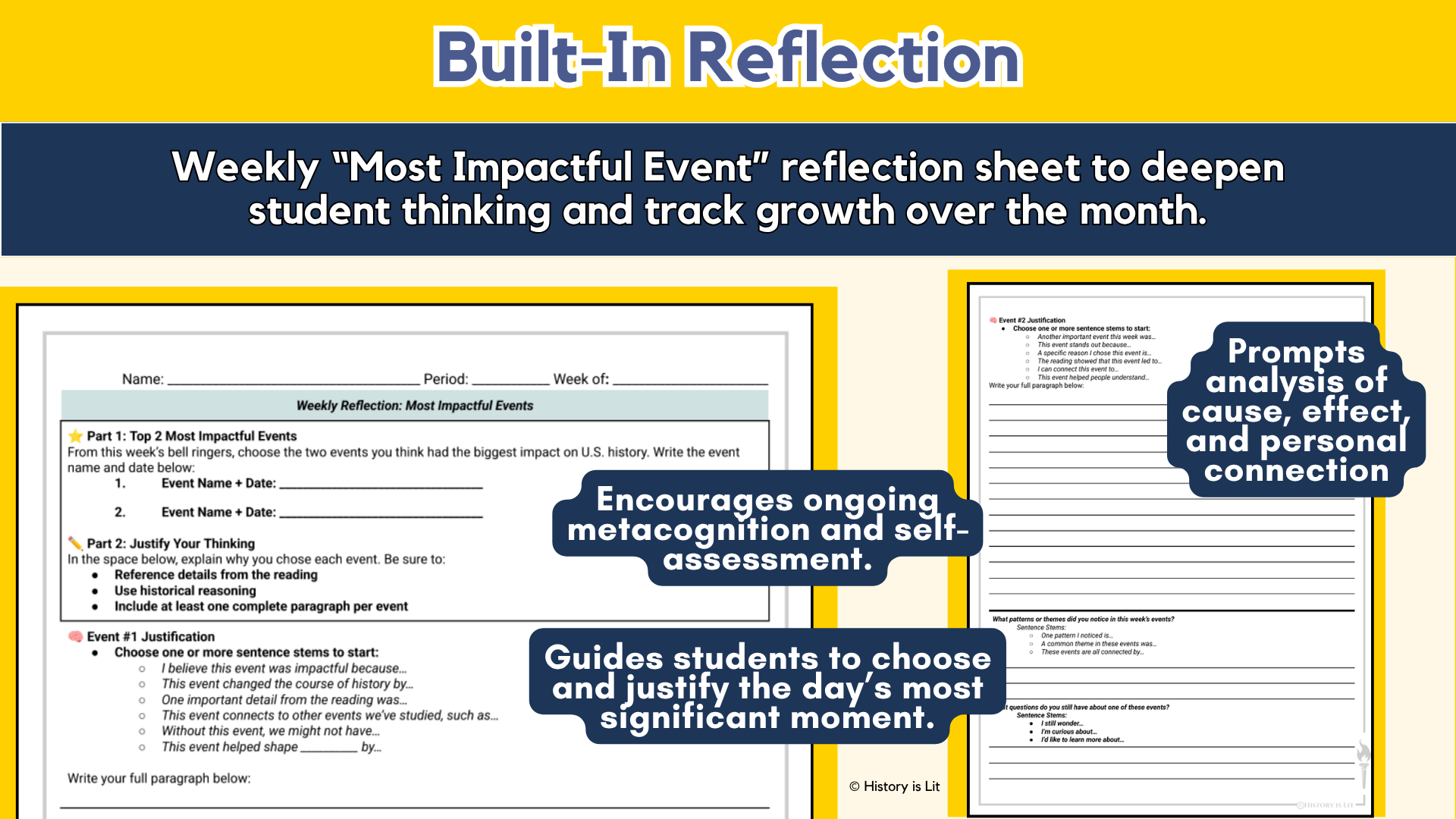
✔️ “Most Impactful Event” Voting Signs (PDF)
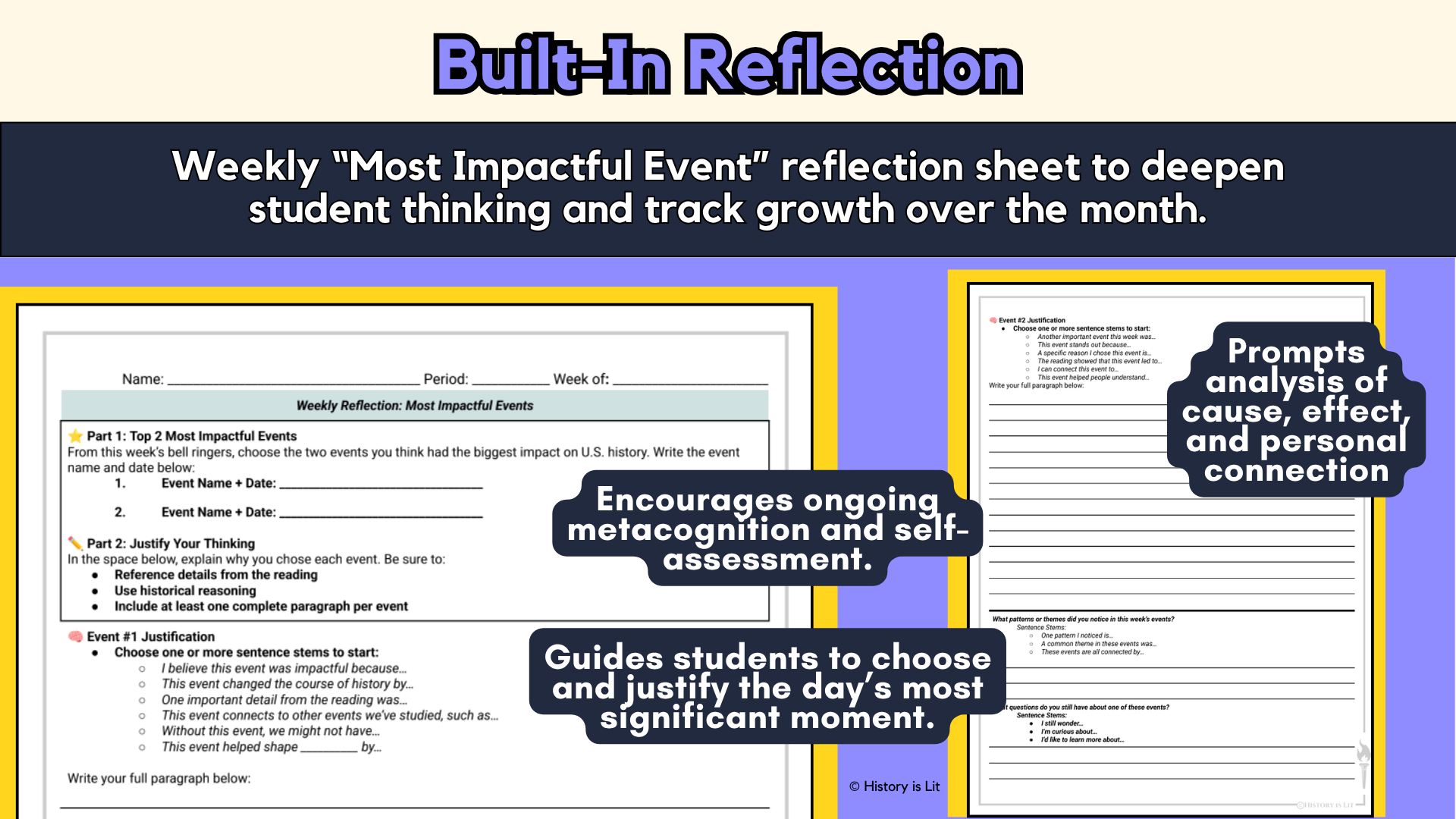
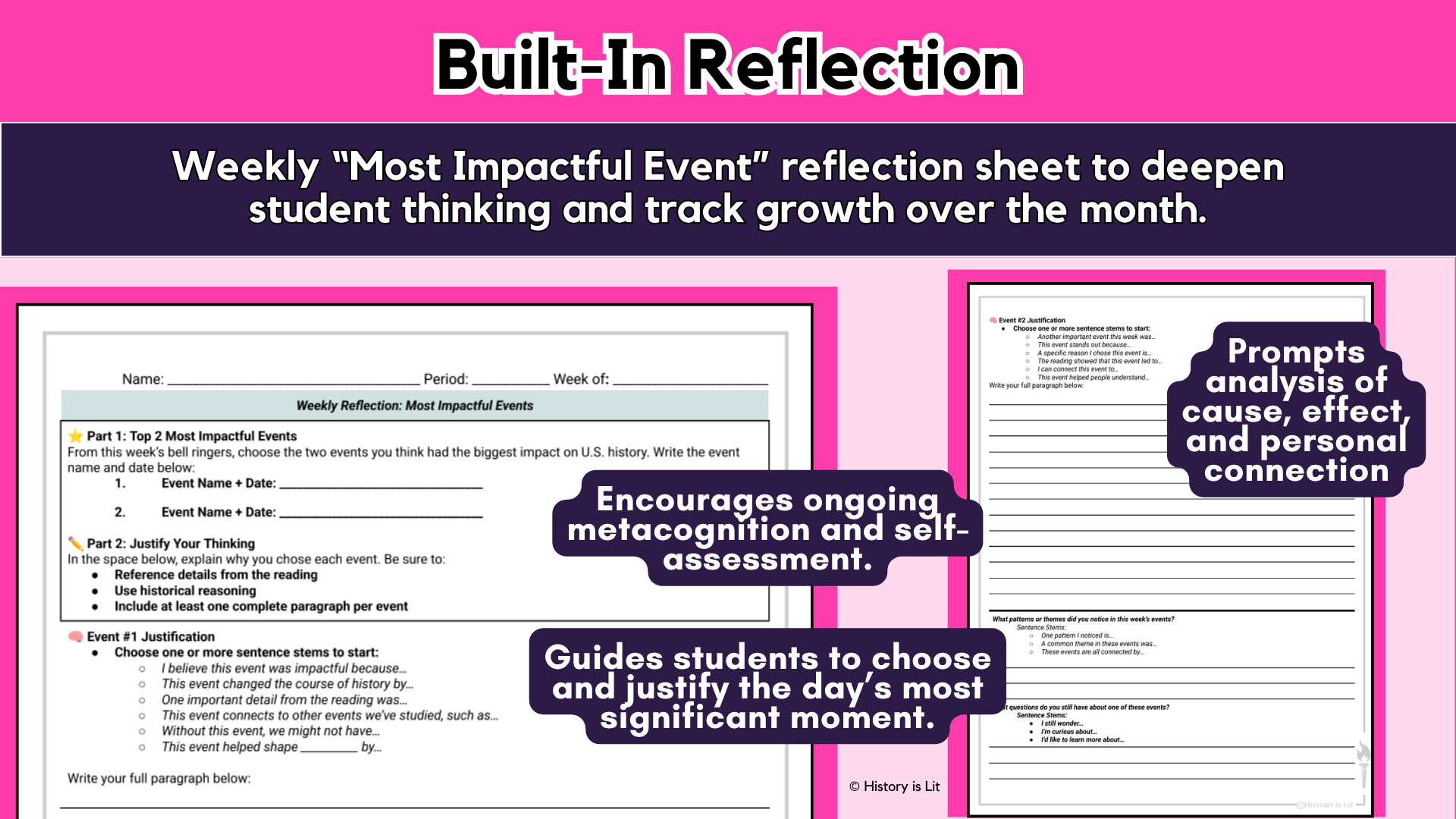
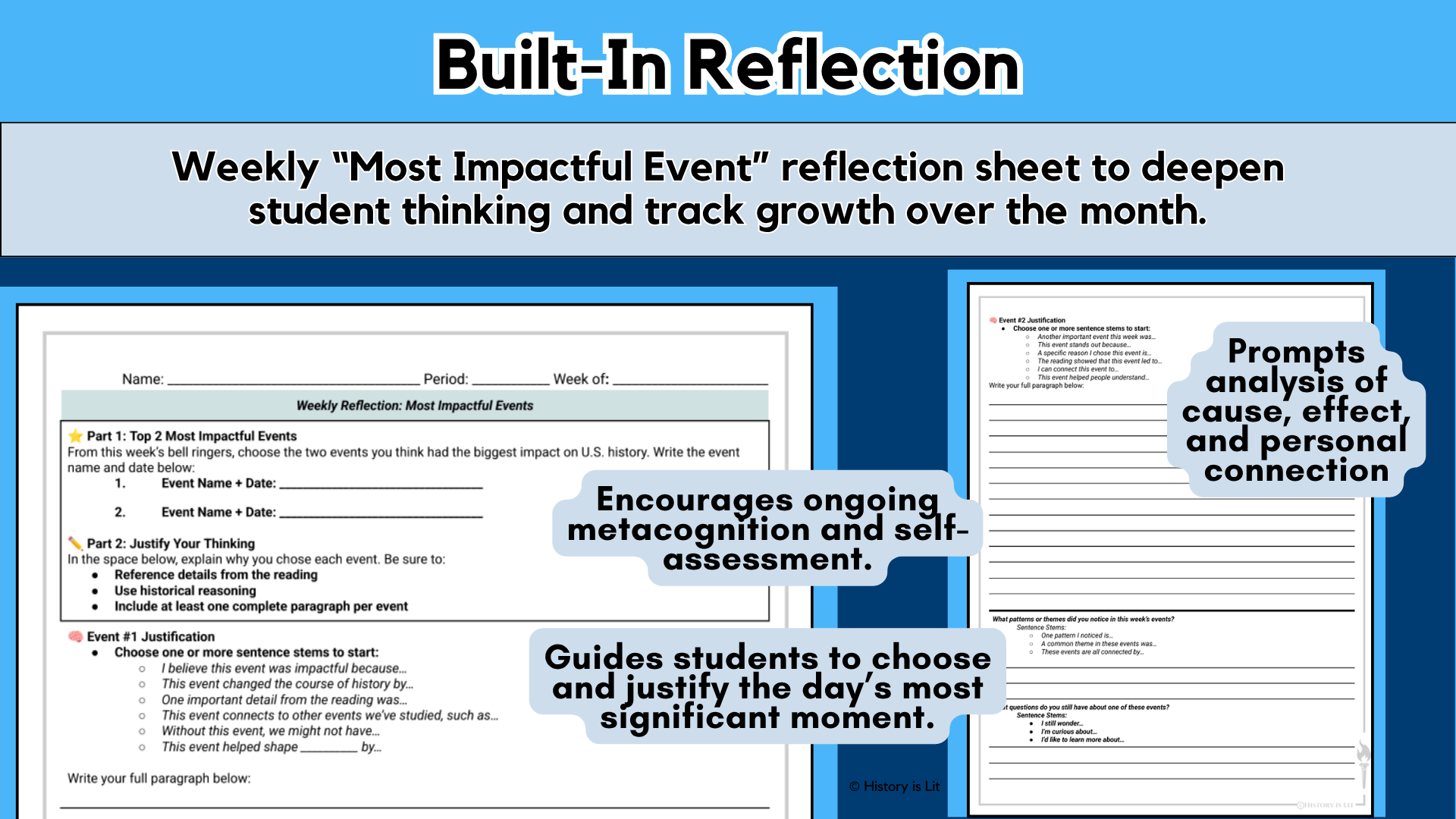
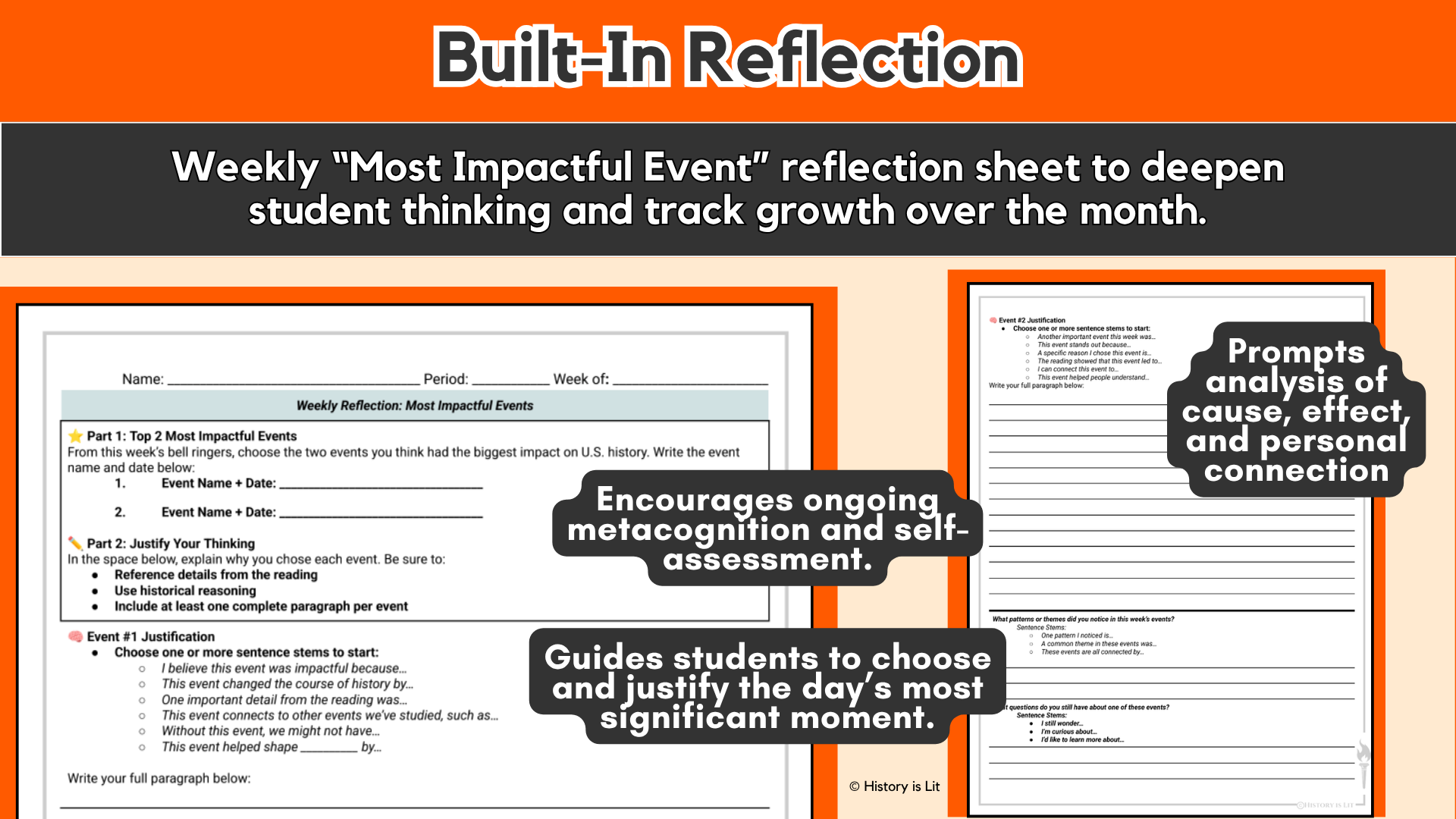
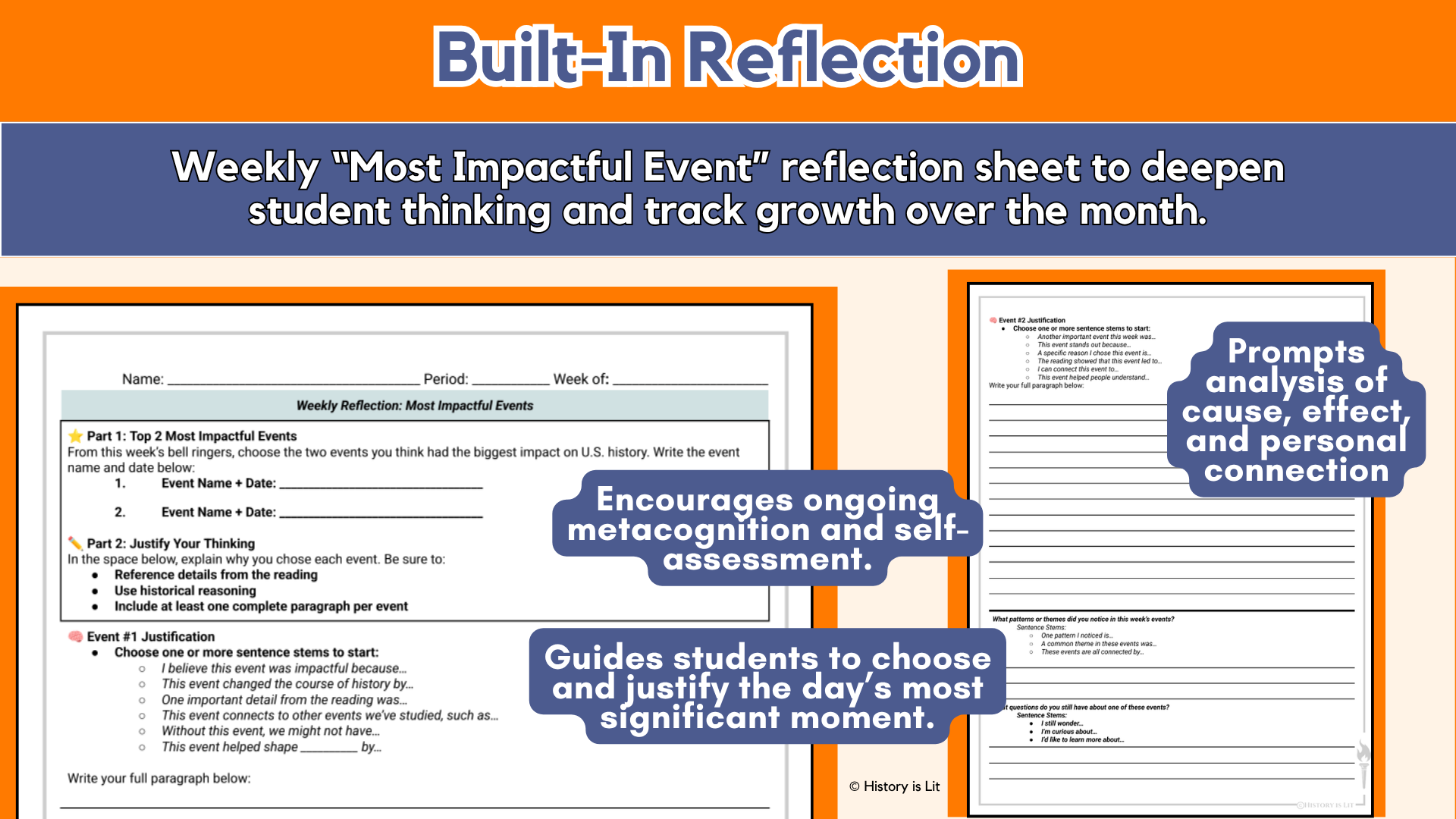
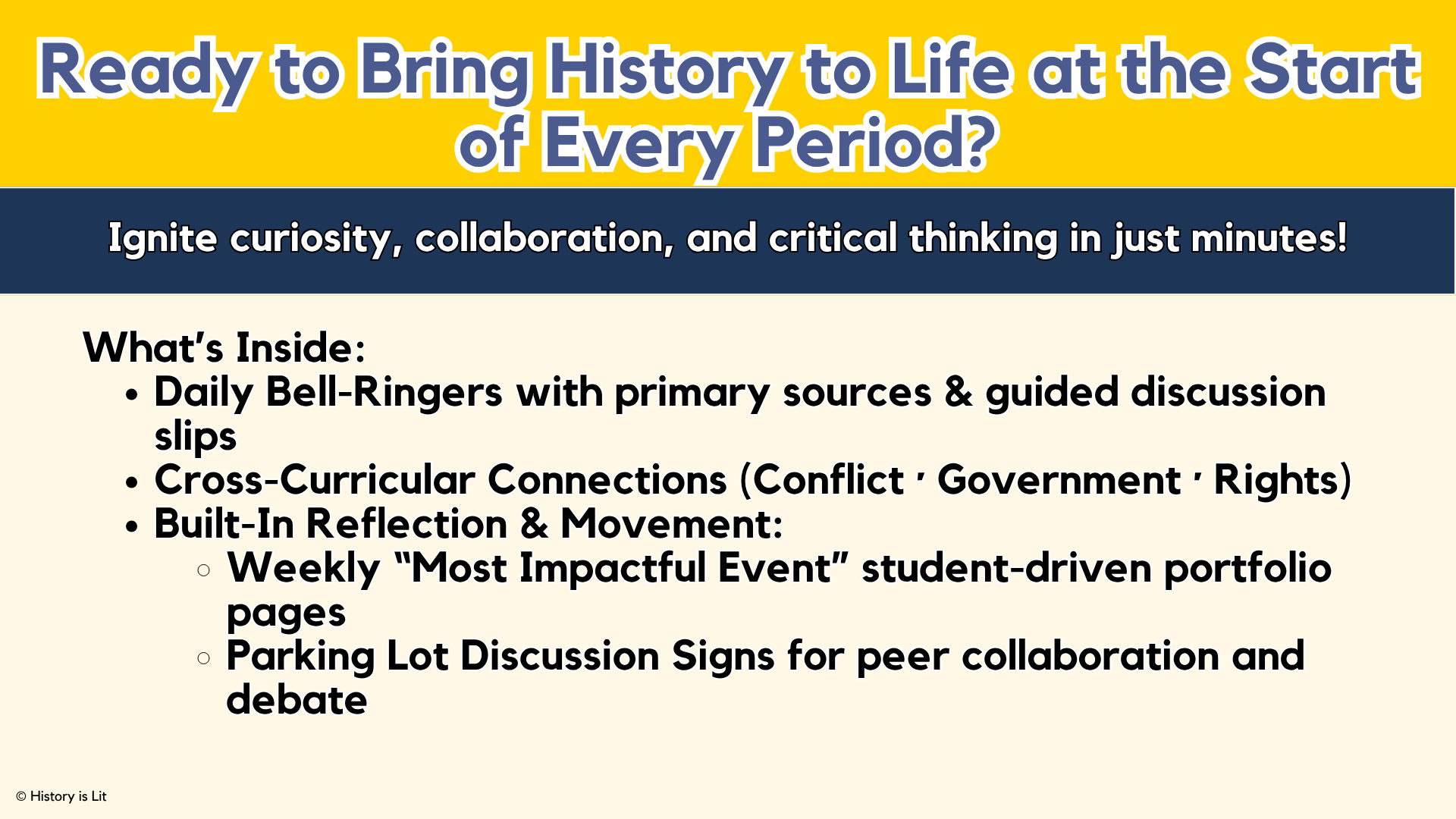
✔️ Weekly Reflection + Student Tracker
✔️ Full Teacher Guides for Both Months
✔️ Complete Answer Keys (Discussion + Slip Questions)
Use These for So Much More Than Bell Ringers:
Because these events fall during summer months, you can use them as:
Emergency Sub Plans
Skill-boosting Spiral Reviews
Station or Center Tasks
✅ Early Finisher Activities
Critical Thinking Practice
Warm-Ups or Exit Tickets (year-round)
BONUS! Now Includes the “History Conversation Game – Scavenger Hunt with Clue Cards: June/July Edition”
Bring the June/July events to life with this movement-based, talk-driven classroom game. Students match clue cards to event slides by asking questions and using historical reasoning—not just memorization. It’s a powerful way to spark engagement and get students using academic language.
Includes a ready-to-use answer key spreadsheet so you can track clues, check answers, or build custom stations around the same summer-themed events in this bell ringer bundle.
Use it for review, enrichment, or as an engaging alternative to a traditional worksheet. Perfect for end-of-year fun with standards still in mind!
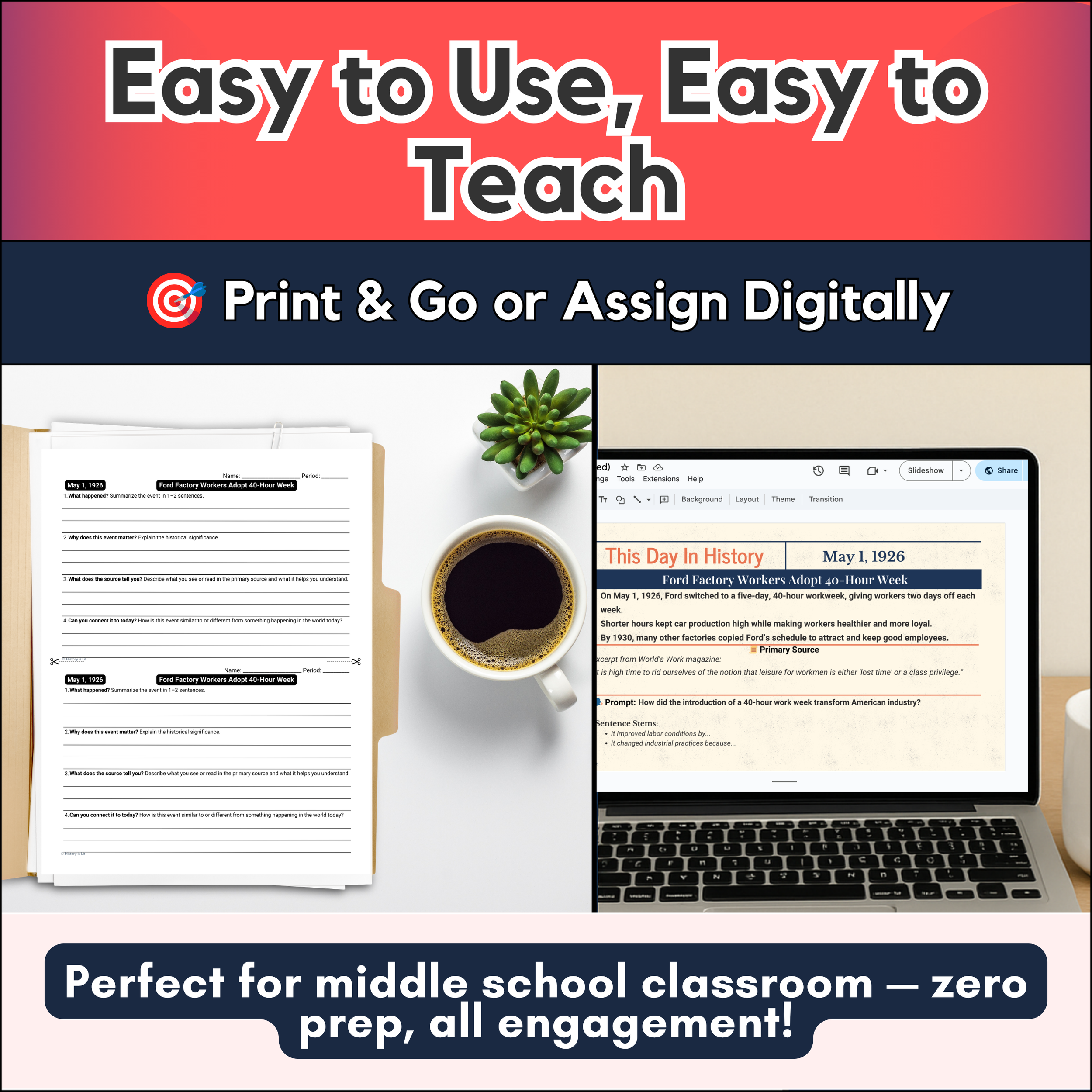
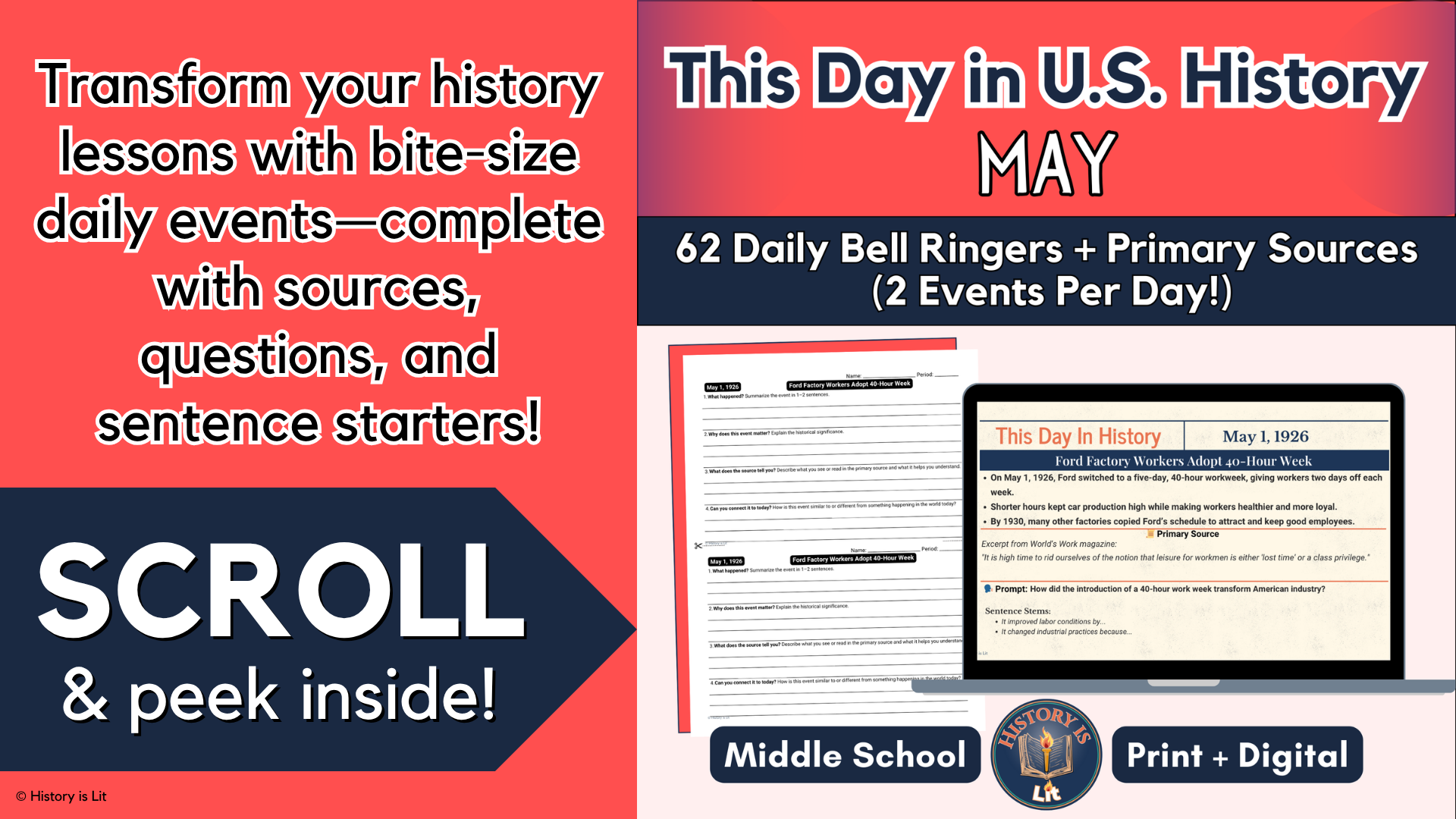
Ever spend the first 10 minutes of class just trying to get your students settled?
You know the drill — managing social-emotional issues, side conversations, and attendance, all while trying to get something meaningful started. It's like herding cats, and by the time the room is settled, the clock is already ticking down.
Starting a lesson shouldn’t feel like an uphill battle. The struggle to focus students, calm the chatter, and handle personal issues before you even begin is exhausting. All you want is a smooth transition into learning, but instead, it’s a race against the clock.
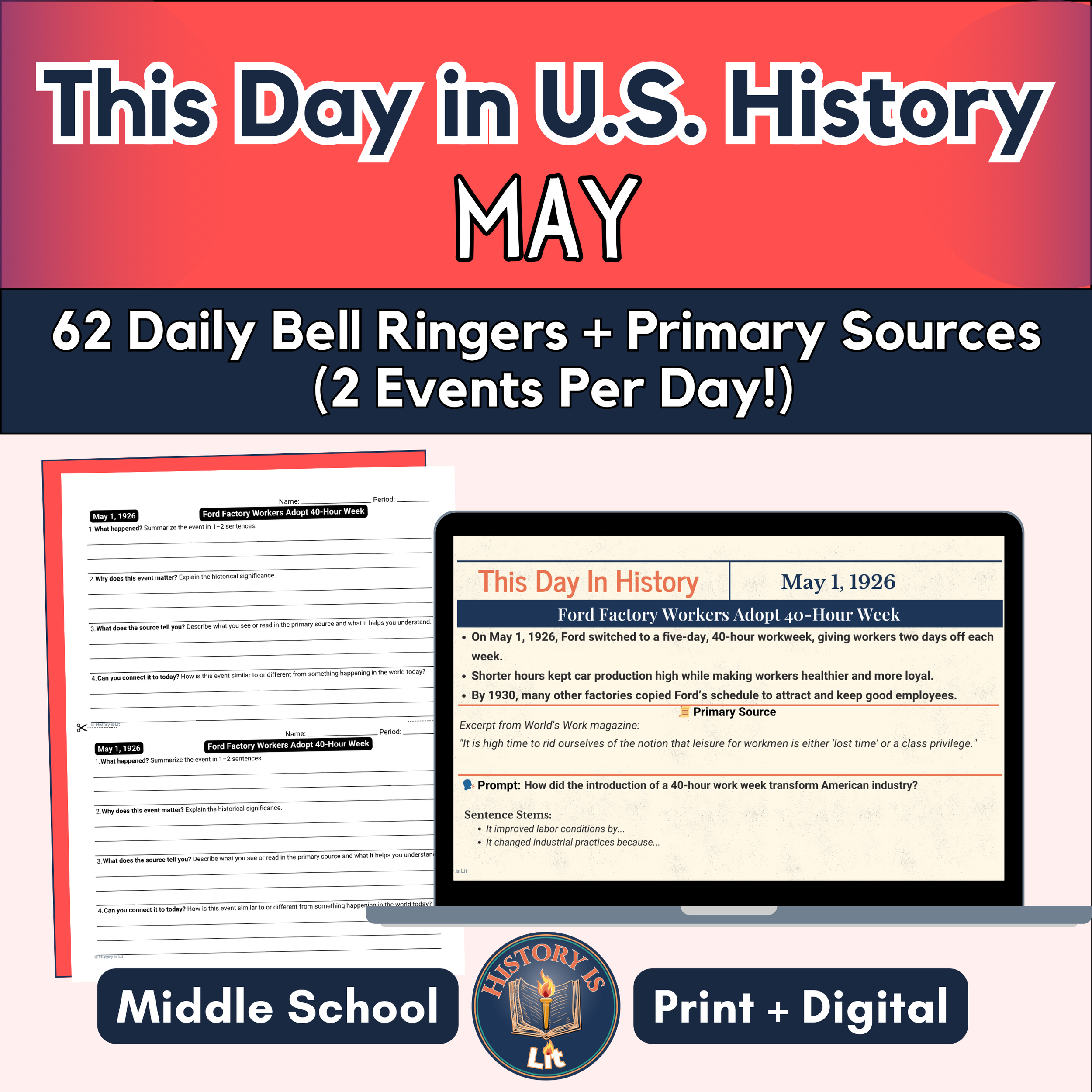
Enter Daily Bell Ringers for May — the easy solution to starting class off right.
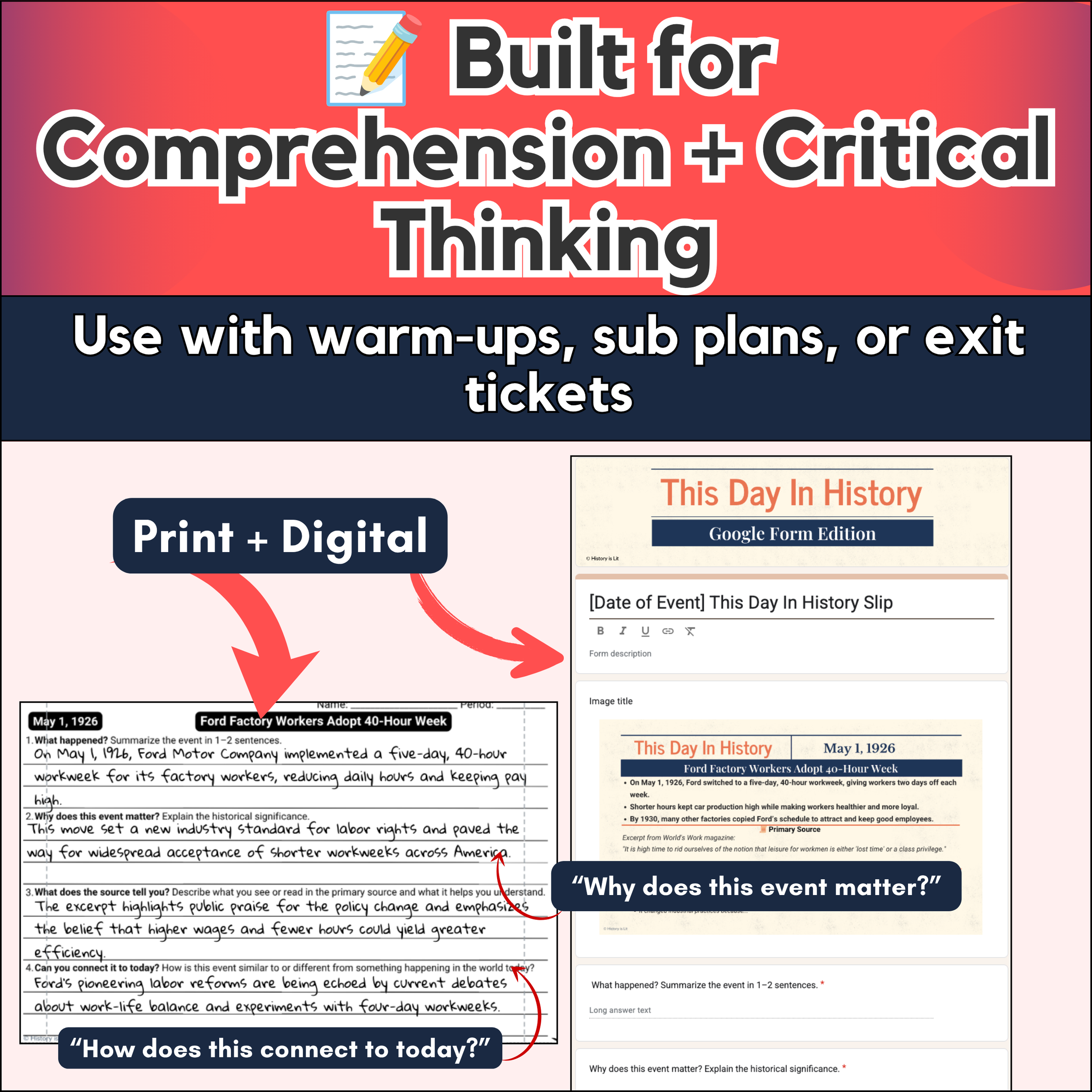
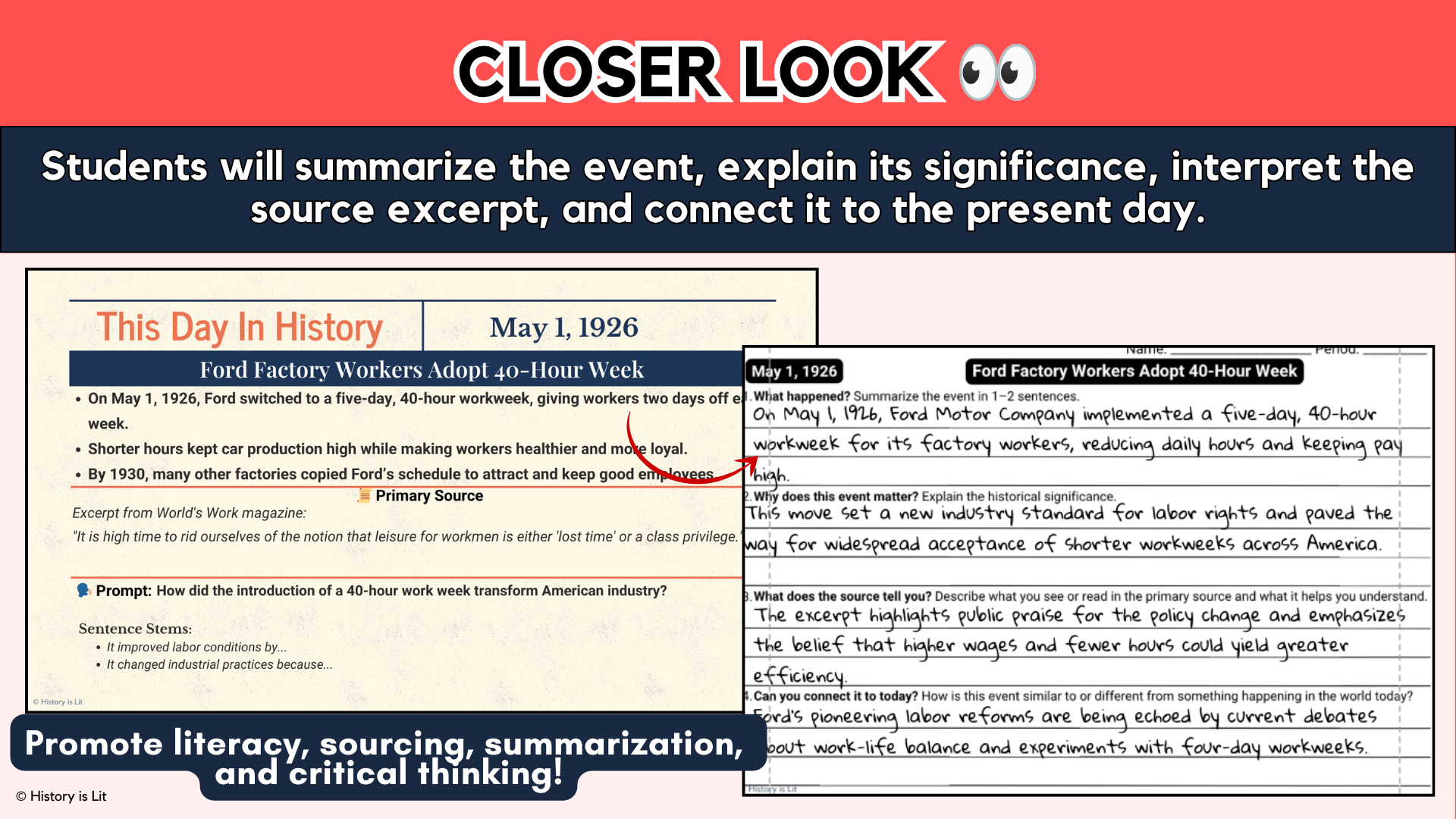
These 62 warm-ups get students settled and into academic mode in just 10 minutes. Each warm-up features a historical event, a primary source quote, and structured prompts to engage students, build critical thinking, and promote literacy — while supporting social-emotional development with scaffolded prompts that encourage reflection and dialogue.
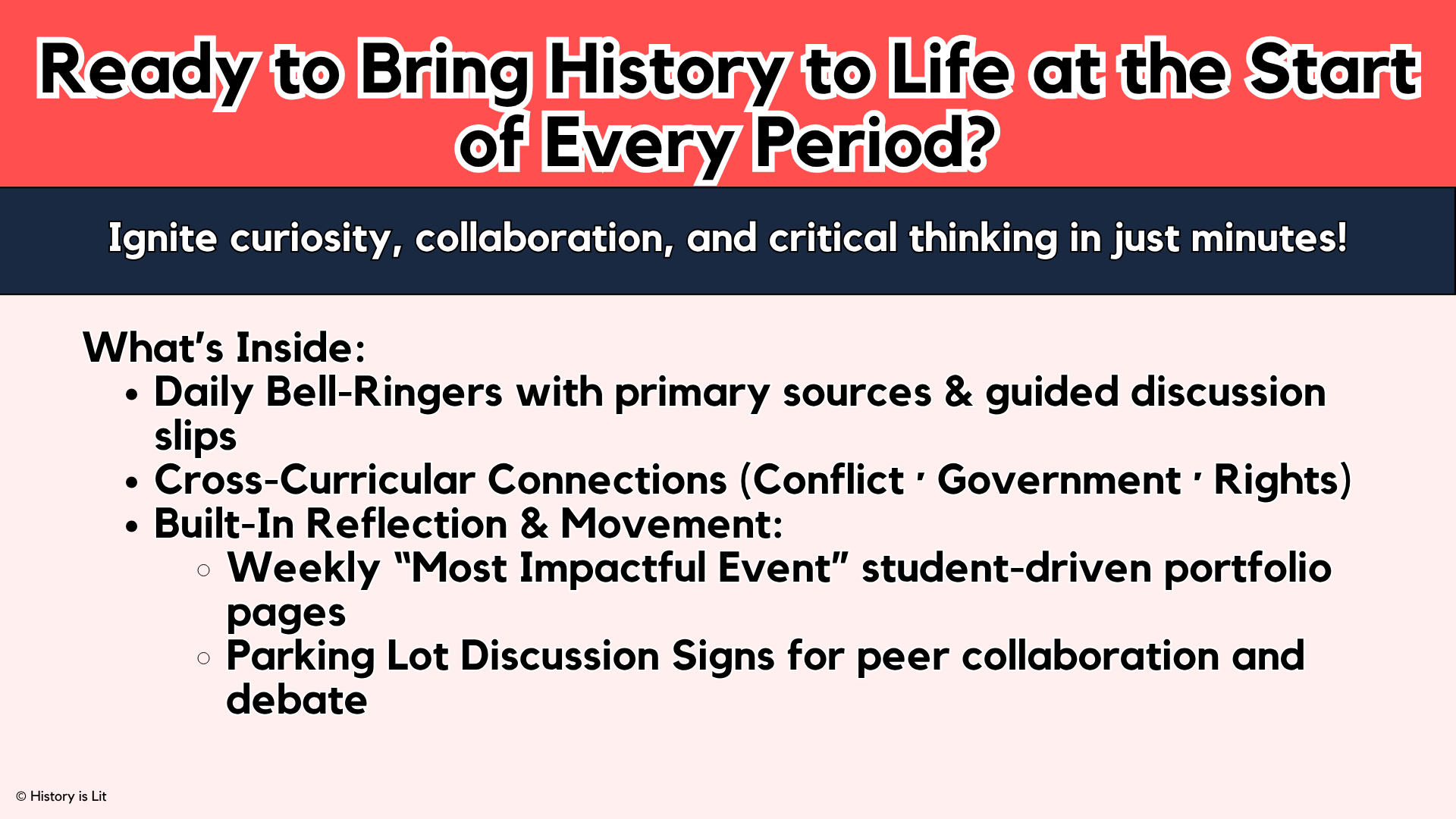
What’s Included:
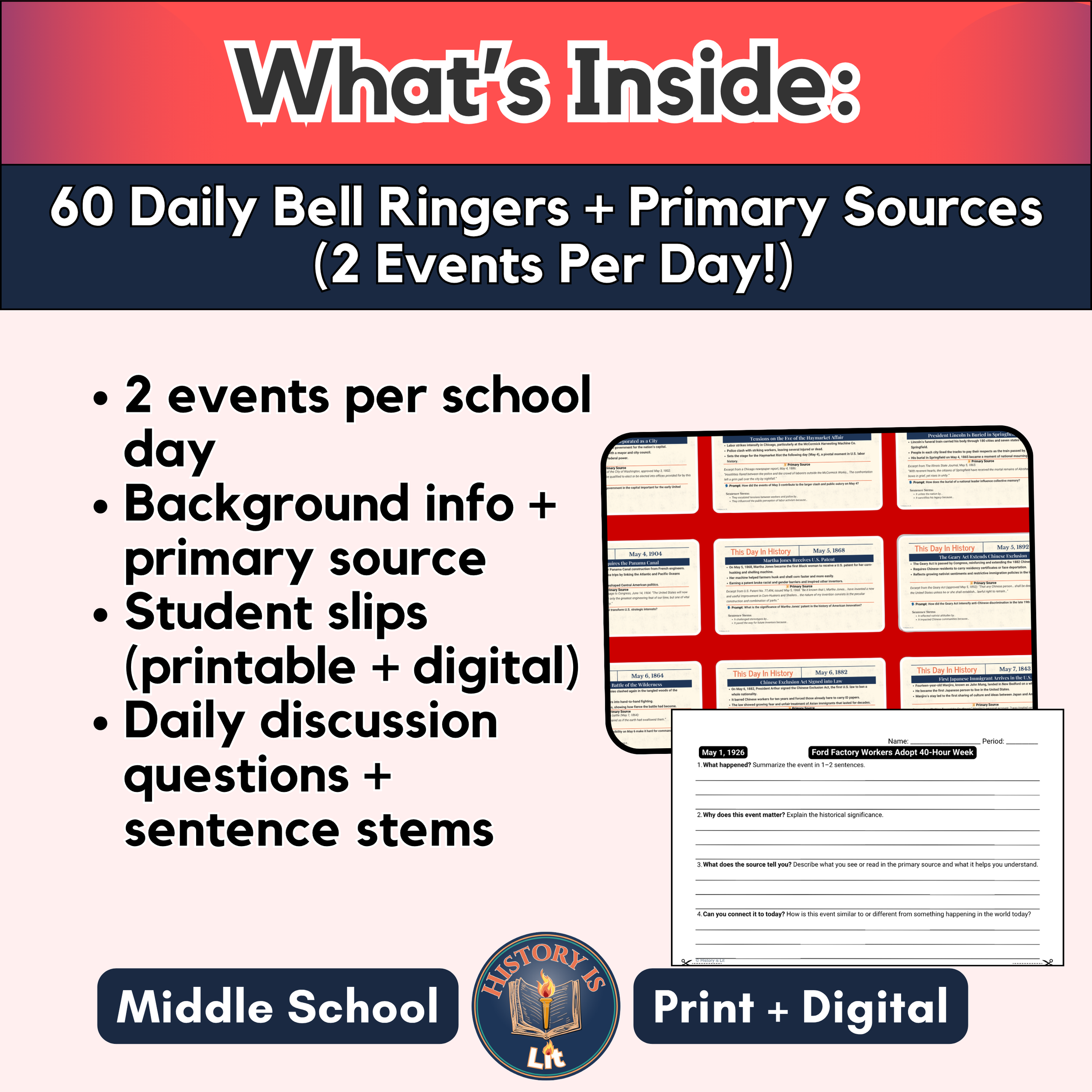
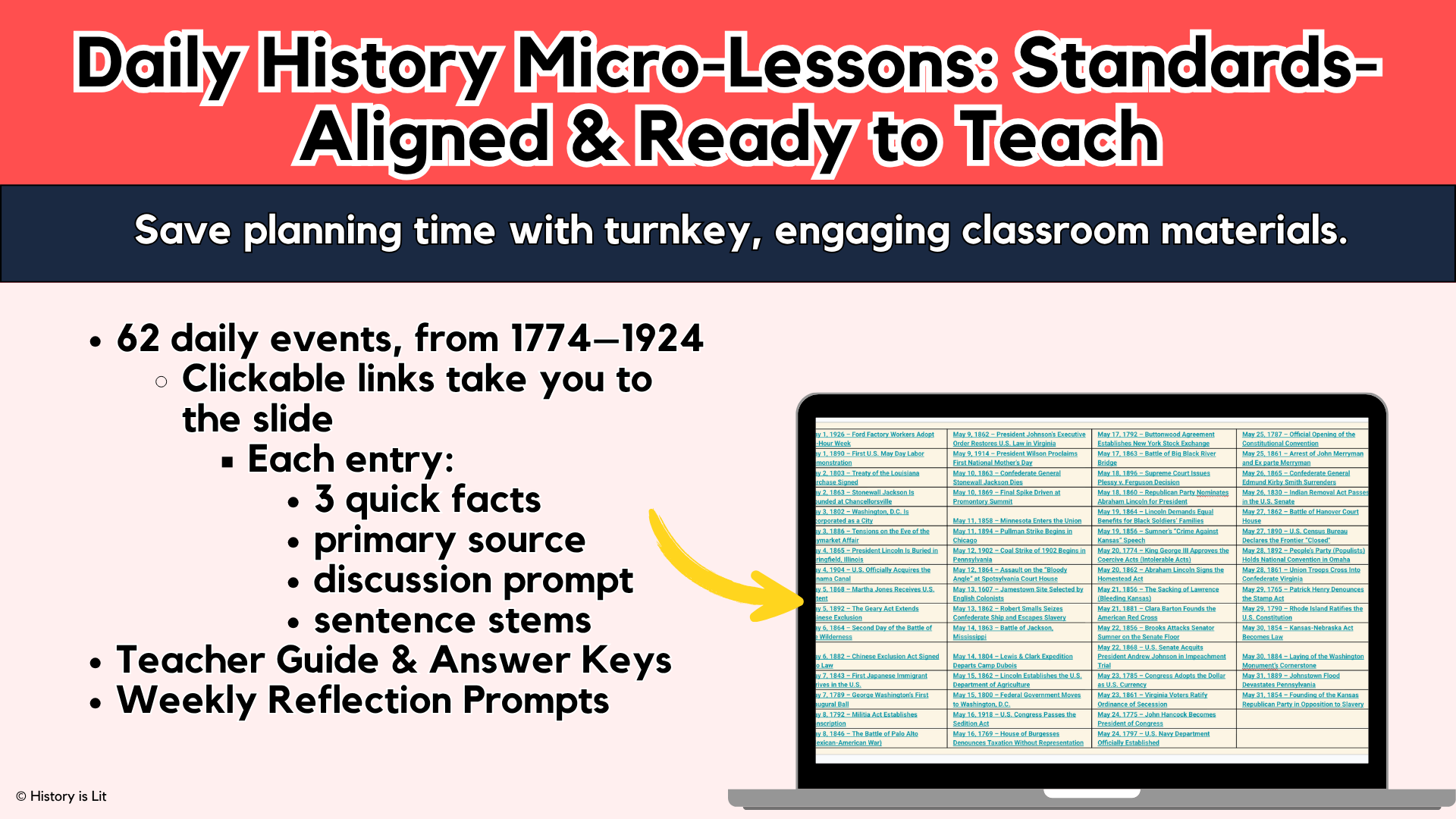
62 daily warm-ups (2 per school day, May 1–31)
Short, bulleted texts at a 6th-grade reading level
Primary source quotes for each event
3-bullet-point summaries for clarity
Printable student slips with 4 scaffolded prompts
Google Slides version for daily projection
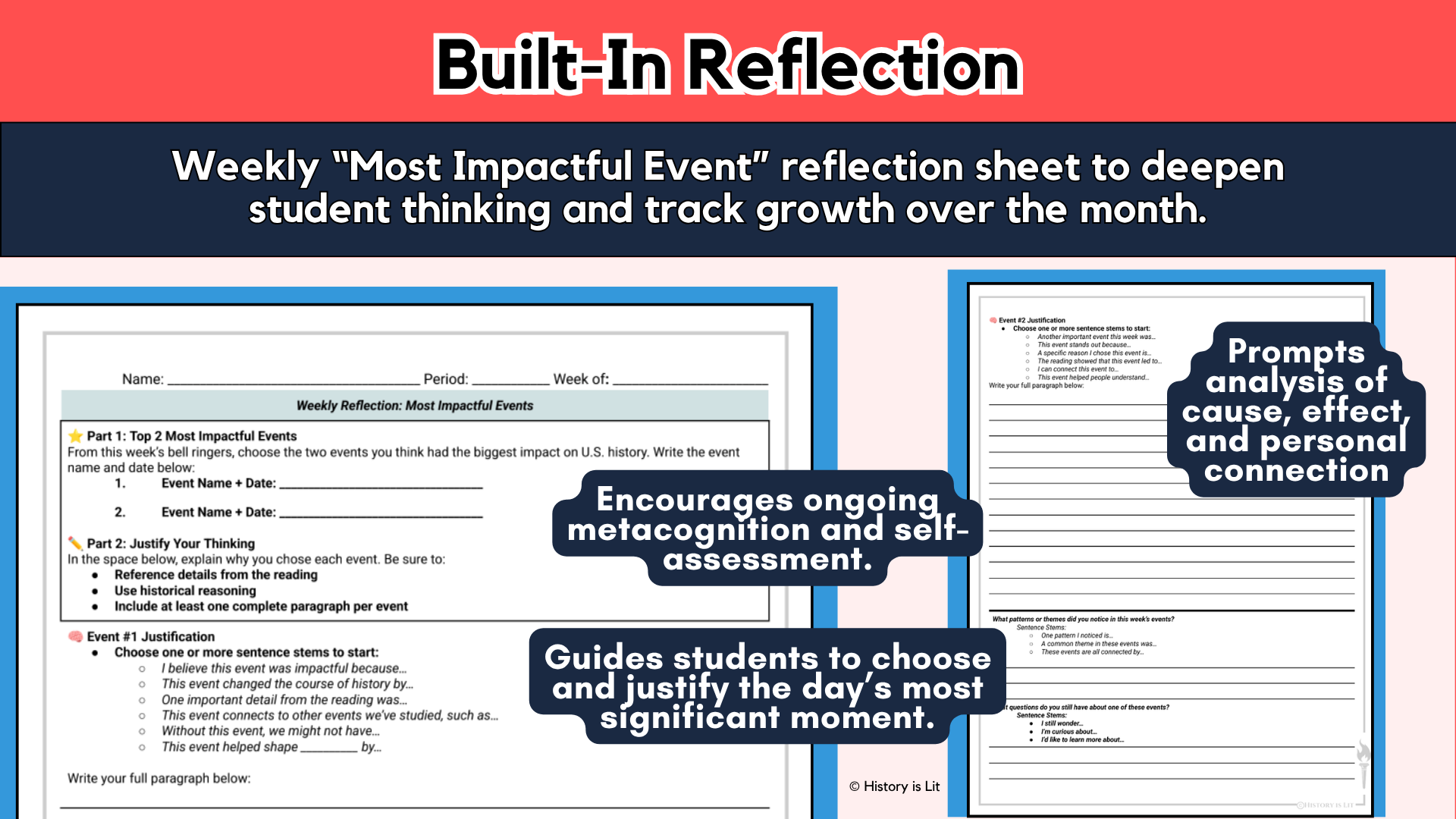
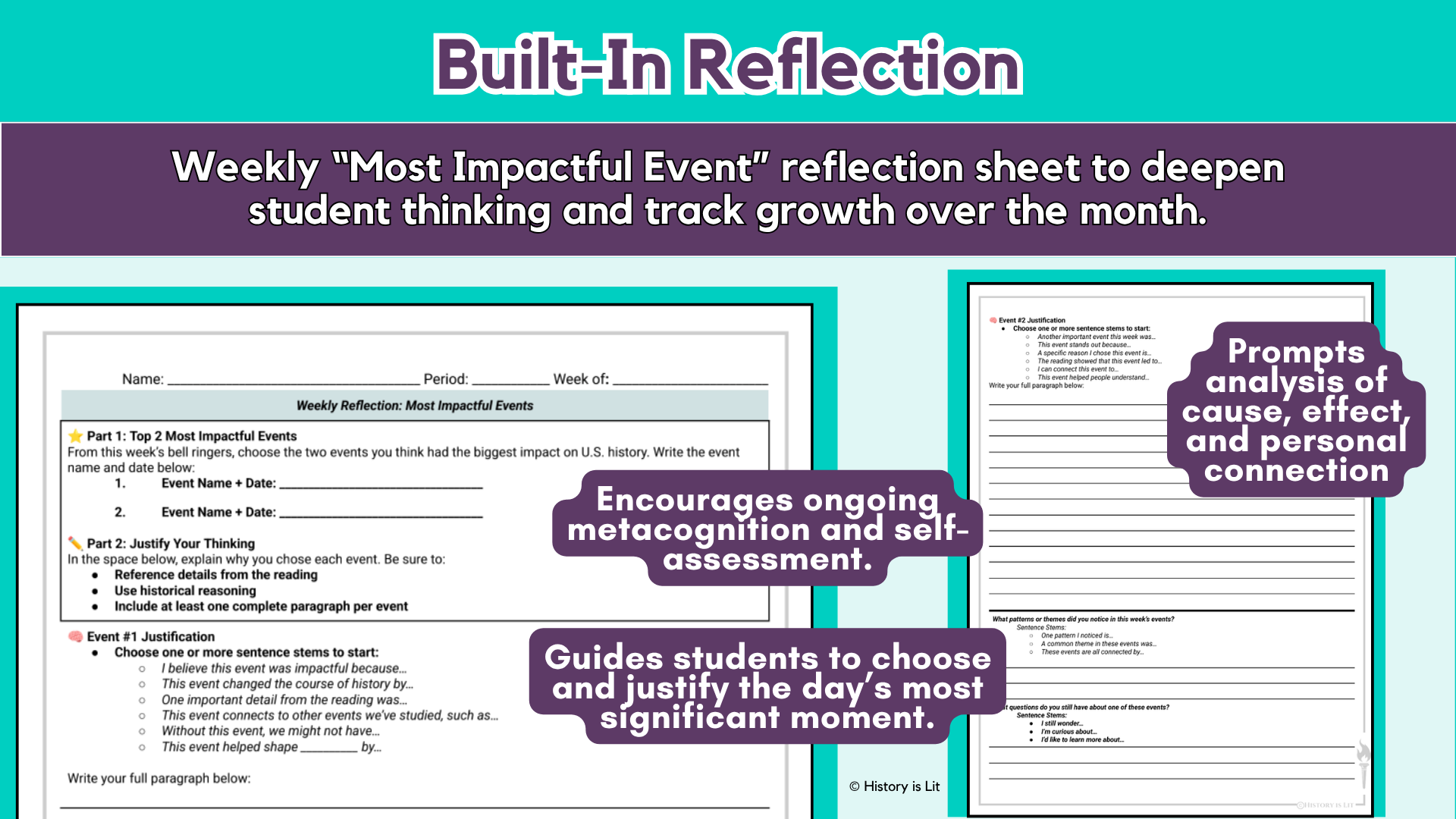
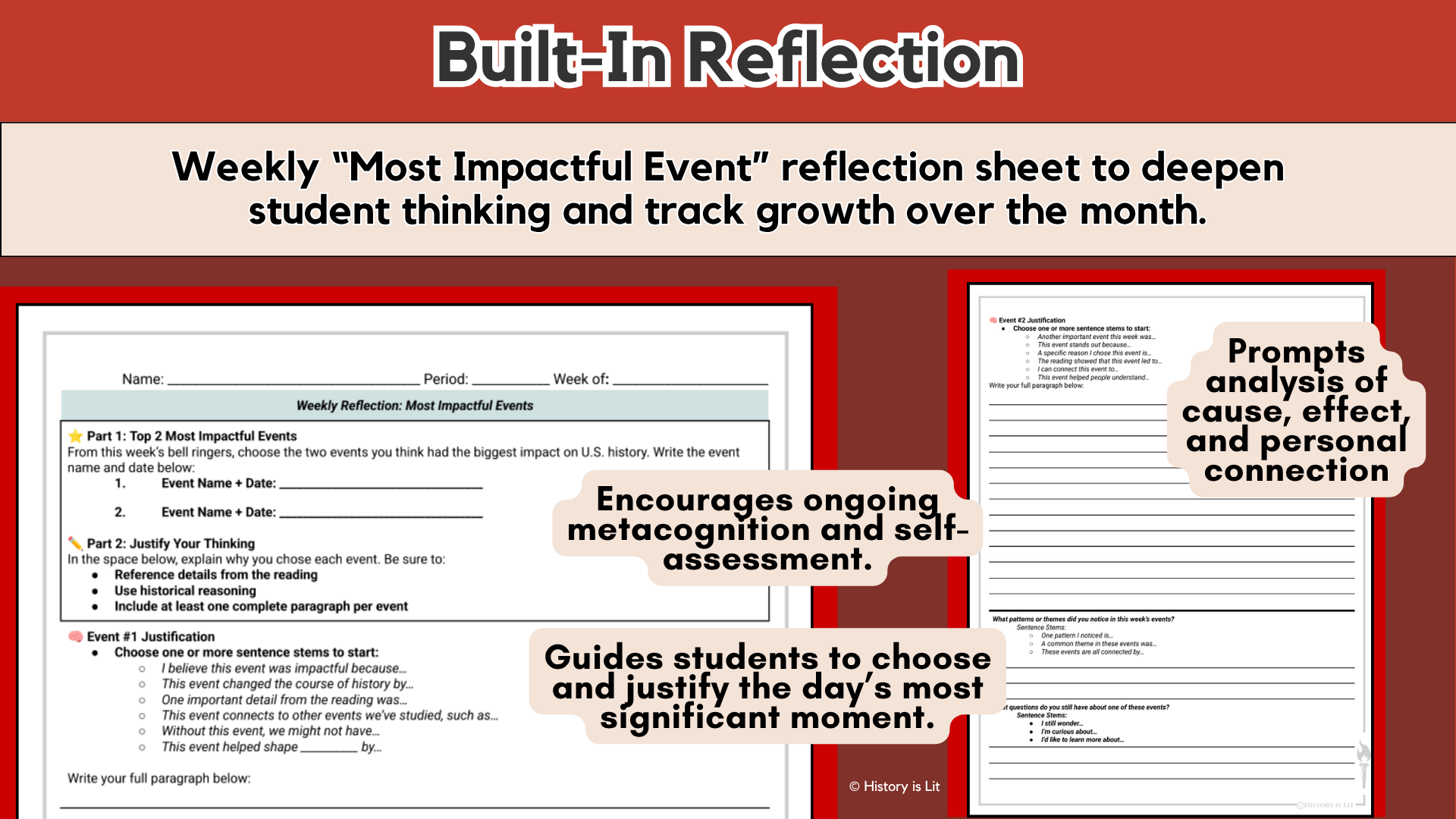
Weekly Reflection worksheet (students pick, justify, and connect events)
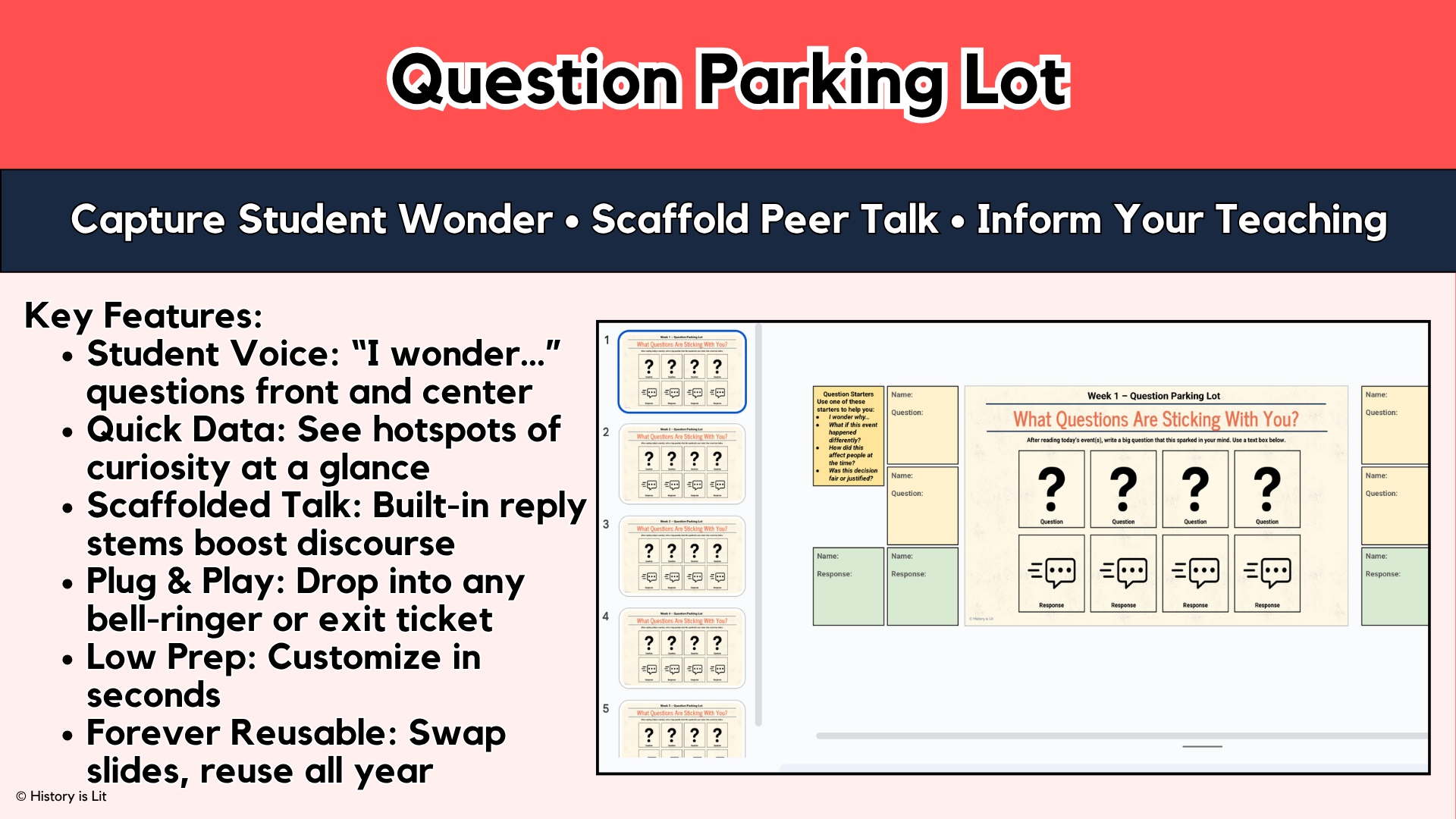
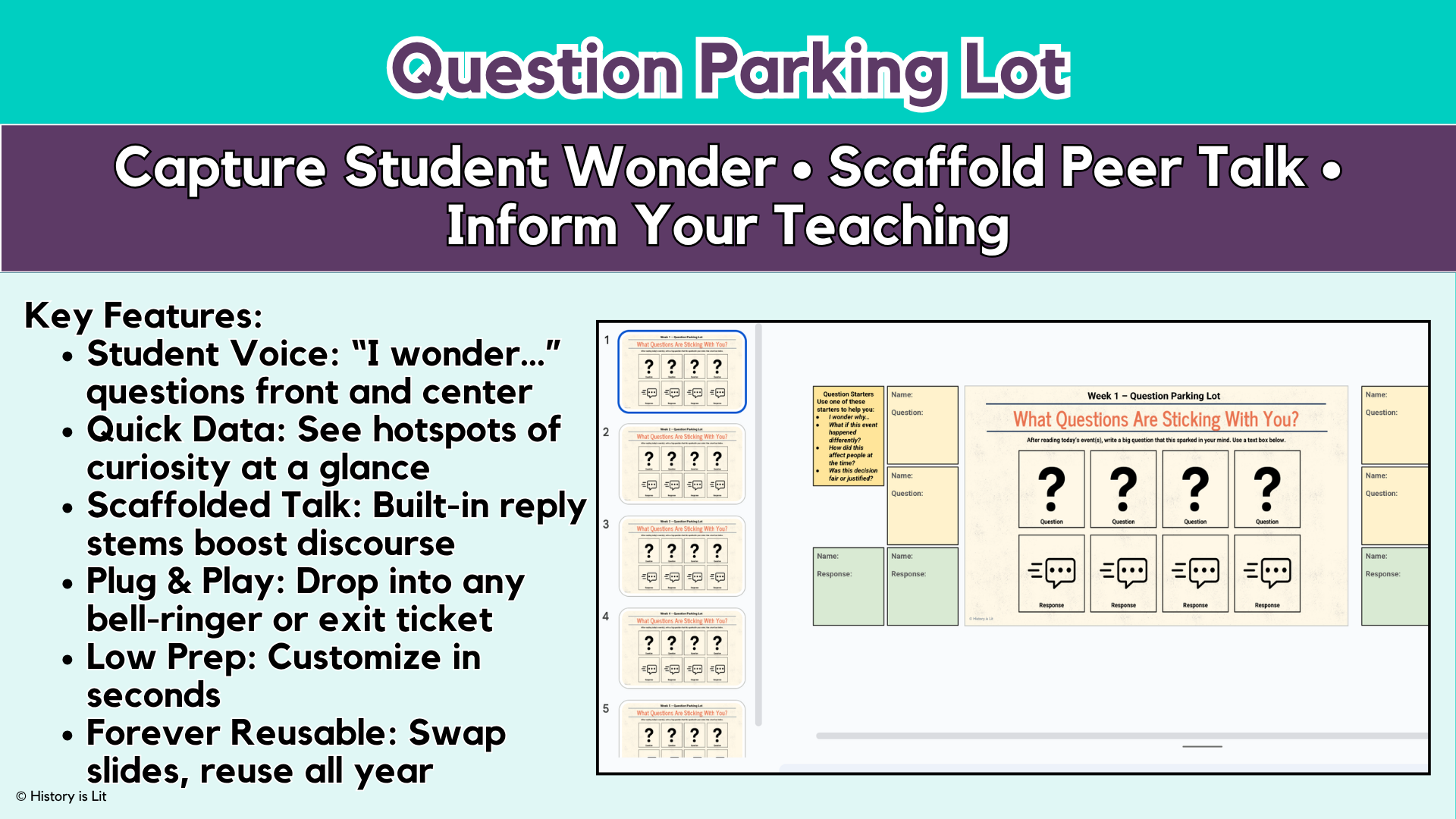
Editable Question Parking Lot slide deck (1 per week)
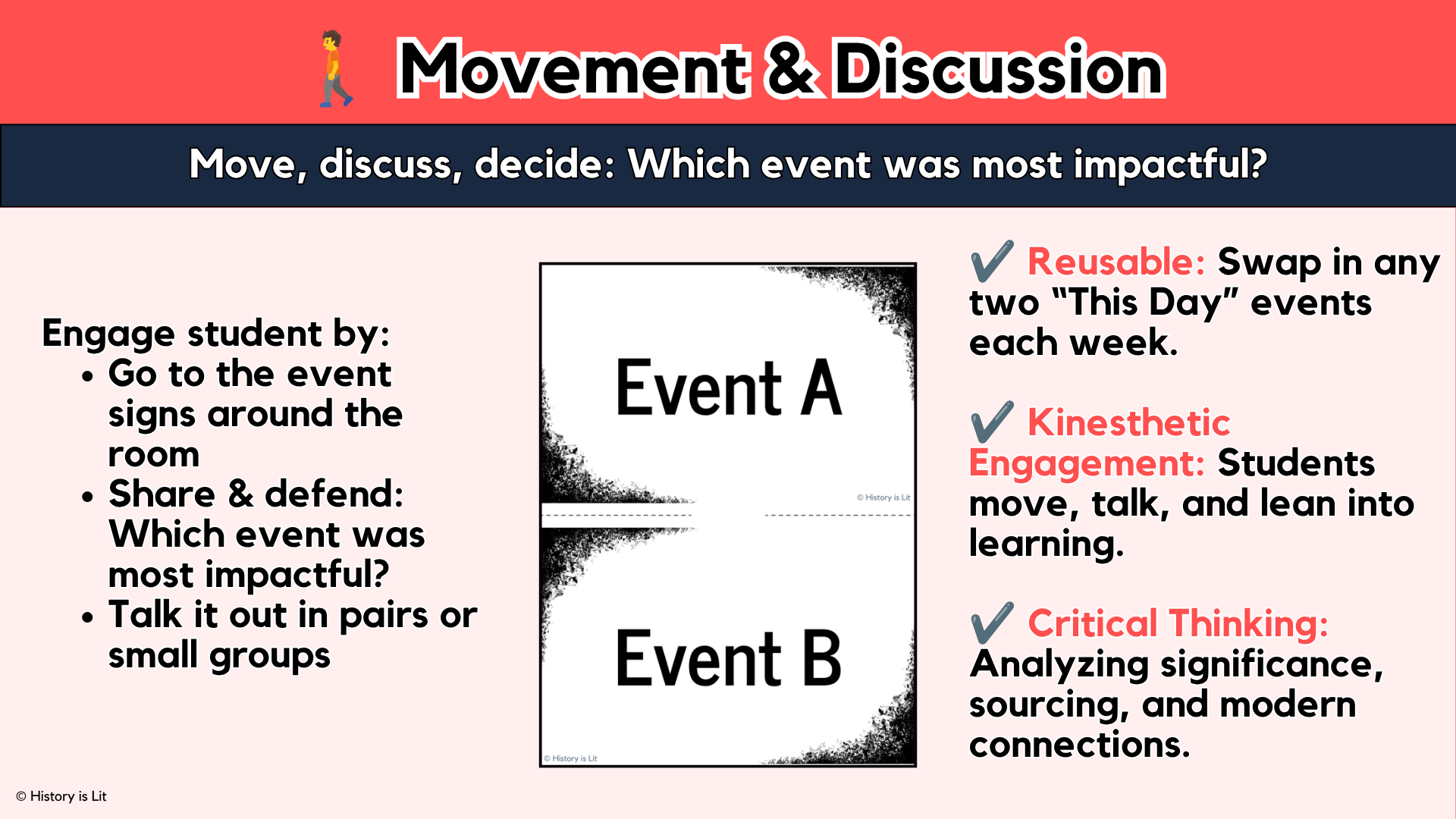
Printable "Event A/B" voting signs
Teacher guide with pacing and setup tips
Answer key with sample responses
Why Students Love It:
Real connections to people and events in U.S. History
Discussing primary source quotes that actually matter
A consistent daily routine that helps students settle quickly
Scaffolds that support all learners, including multilingual and struggling readers
Why You’ll Love It:
Literacy integration that aligns with standards
Weekly reflection writing for historical argumentation and reasoning
No prep beyond printing or assigning slides
Question Parking Lot encourages student-led learning
Perfect for formative assessments or wrap-up Fridays
How It Reinforces Key Skills:
Nonfiction reading
Short written responses
Source analysis
Speaking, listening, and justifying ideas
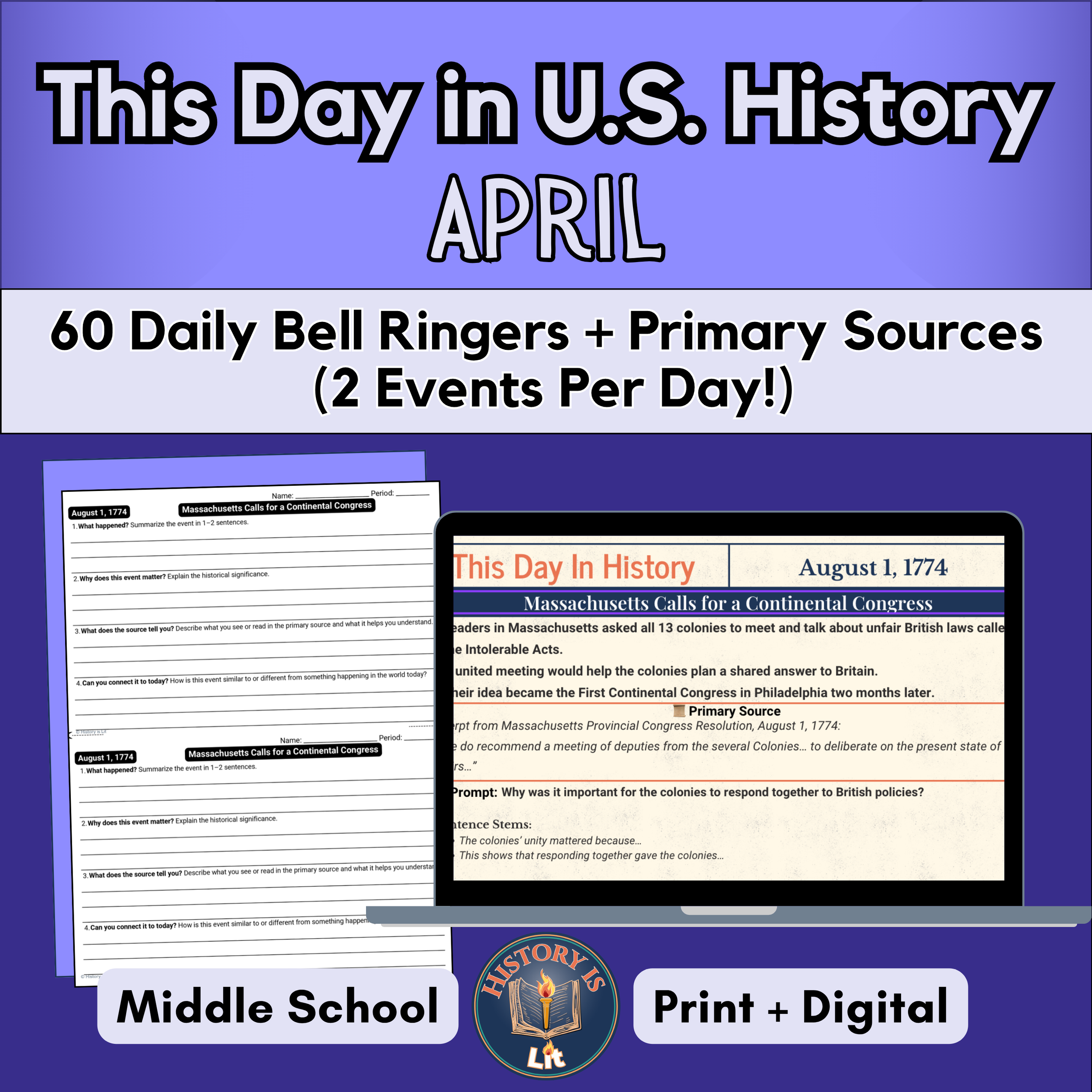
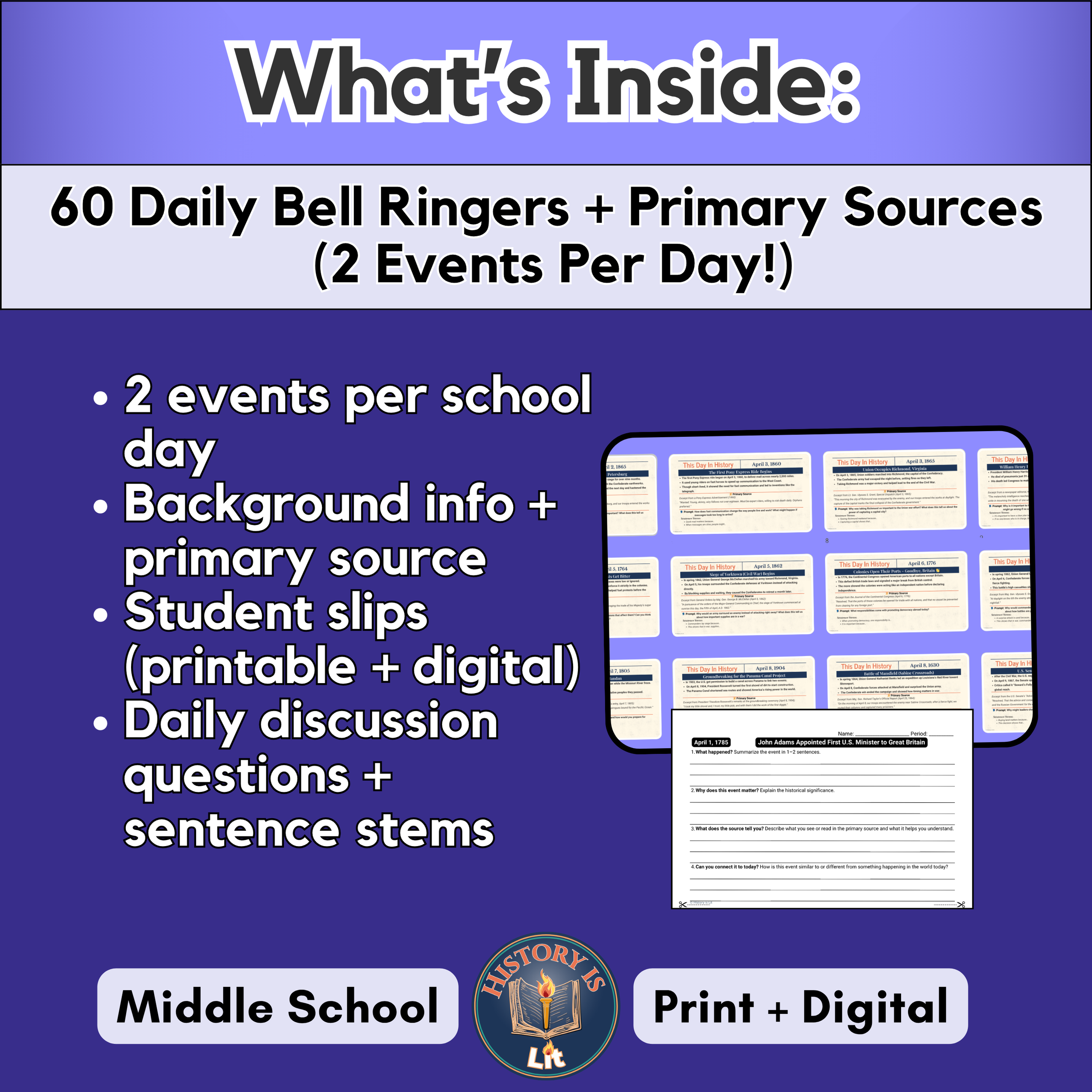
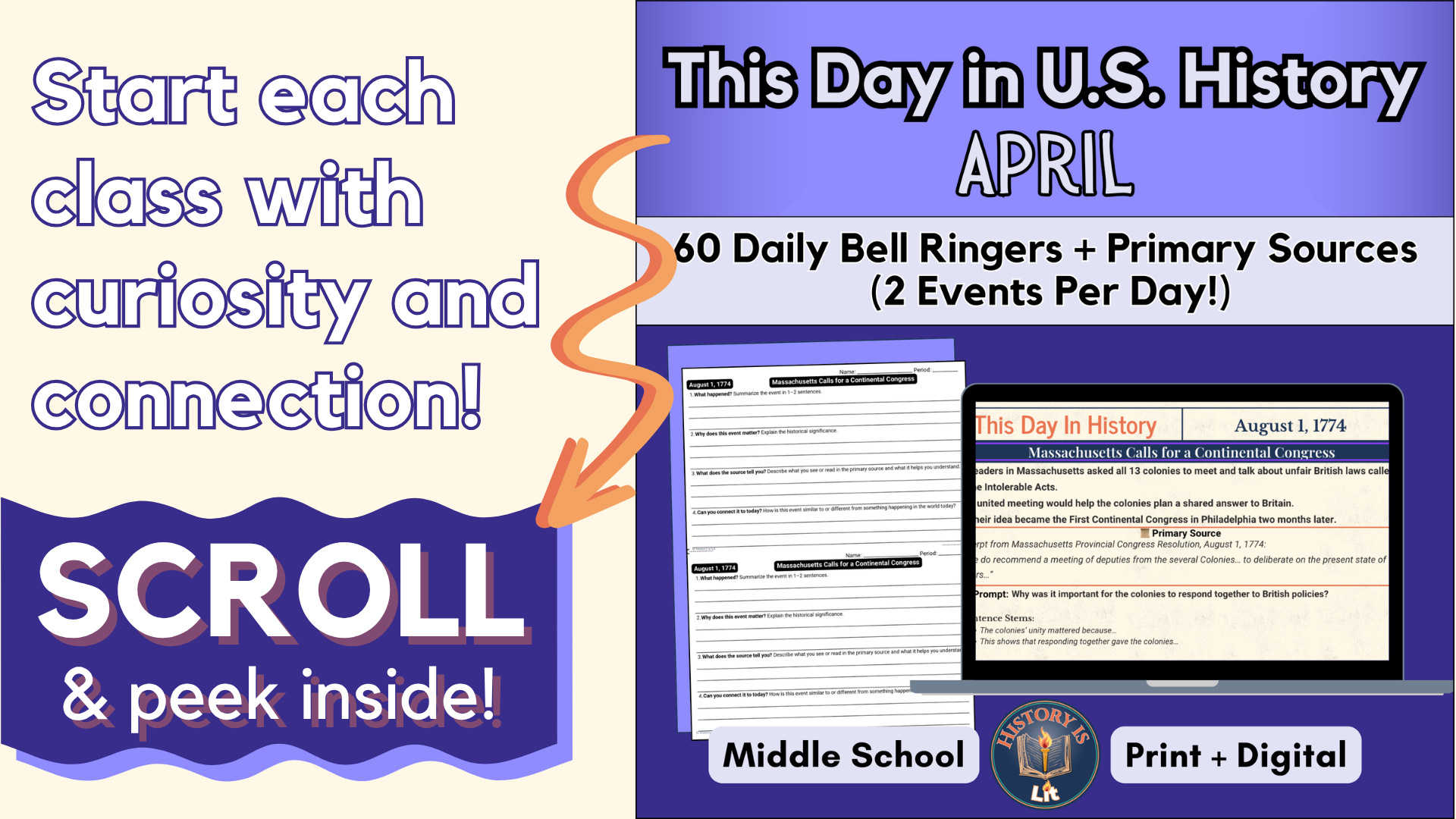
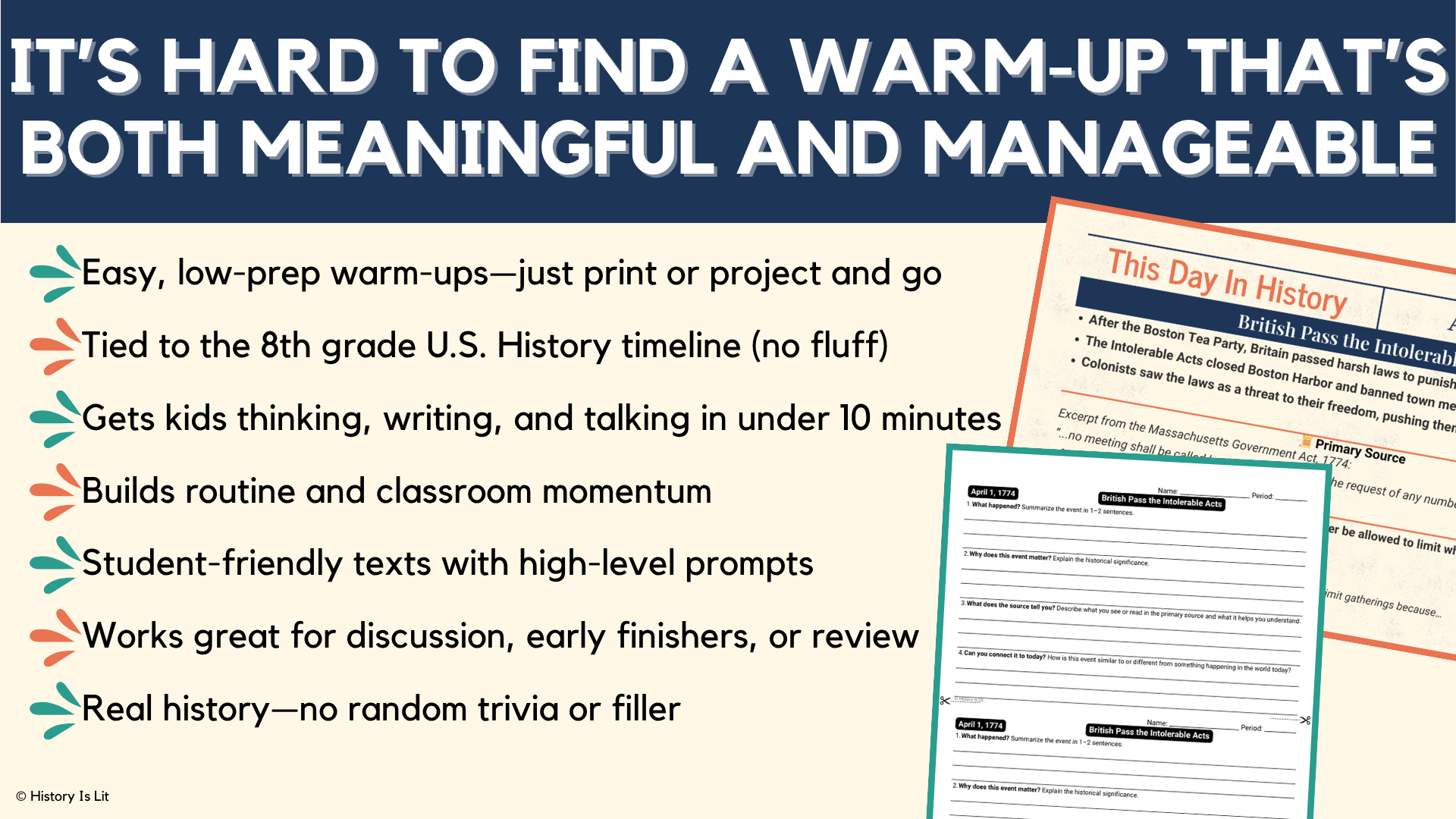
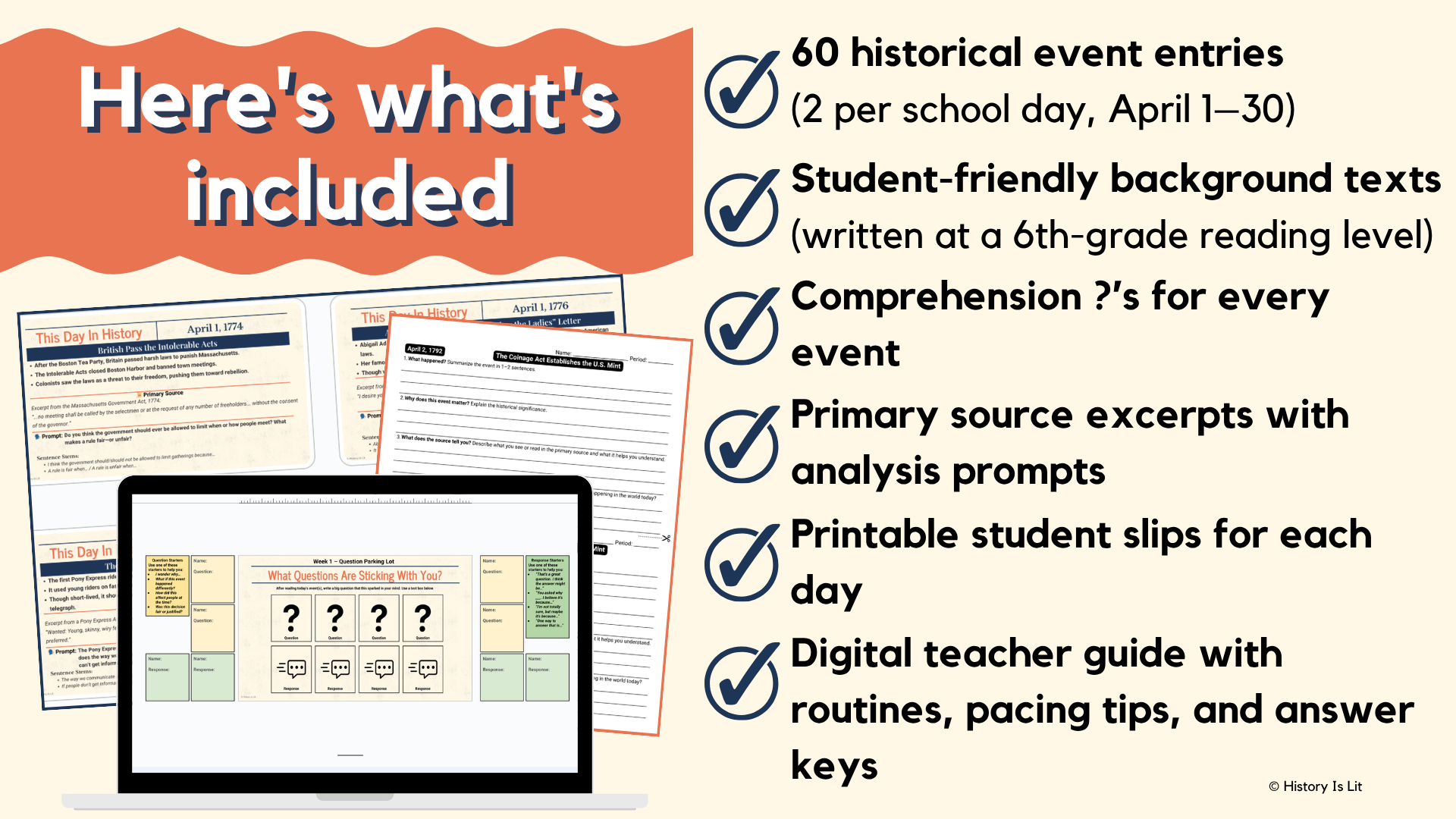
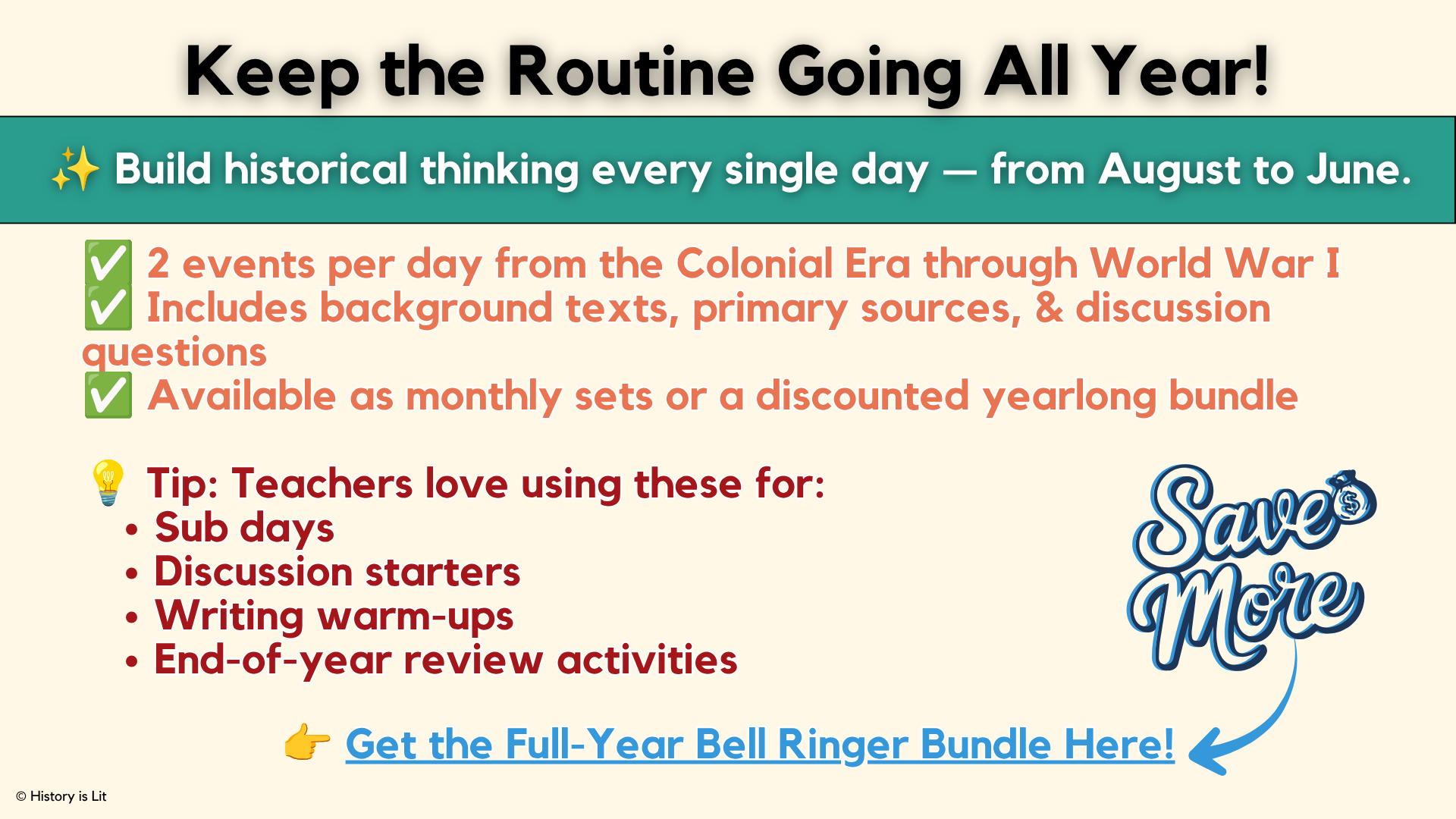
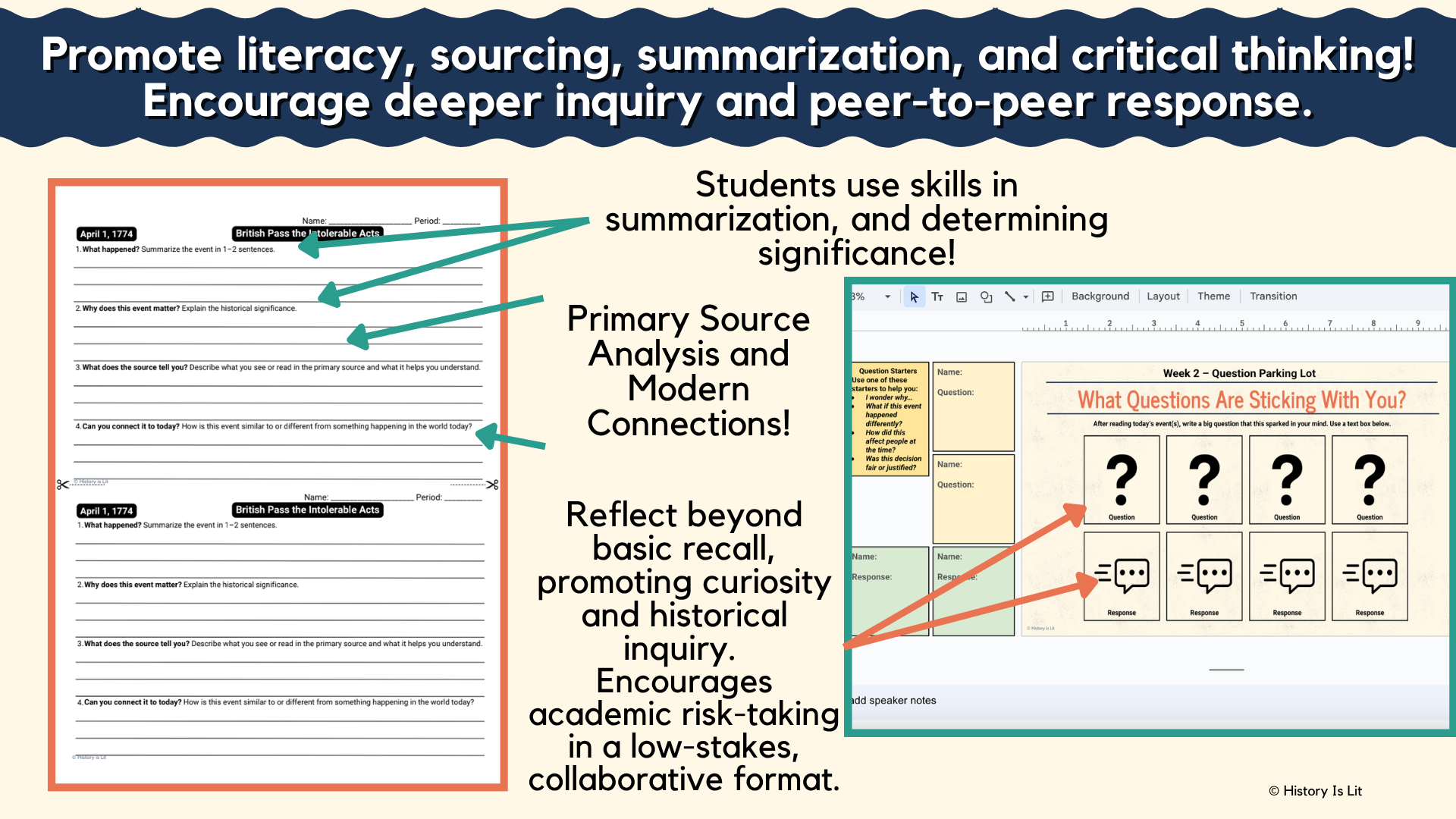
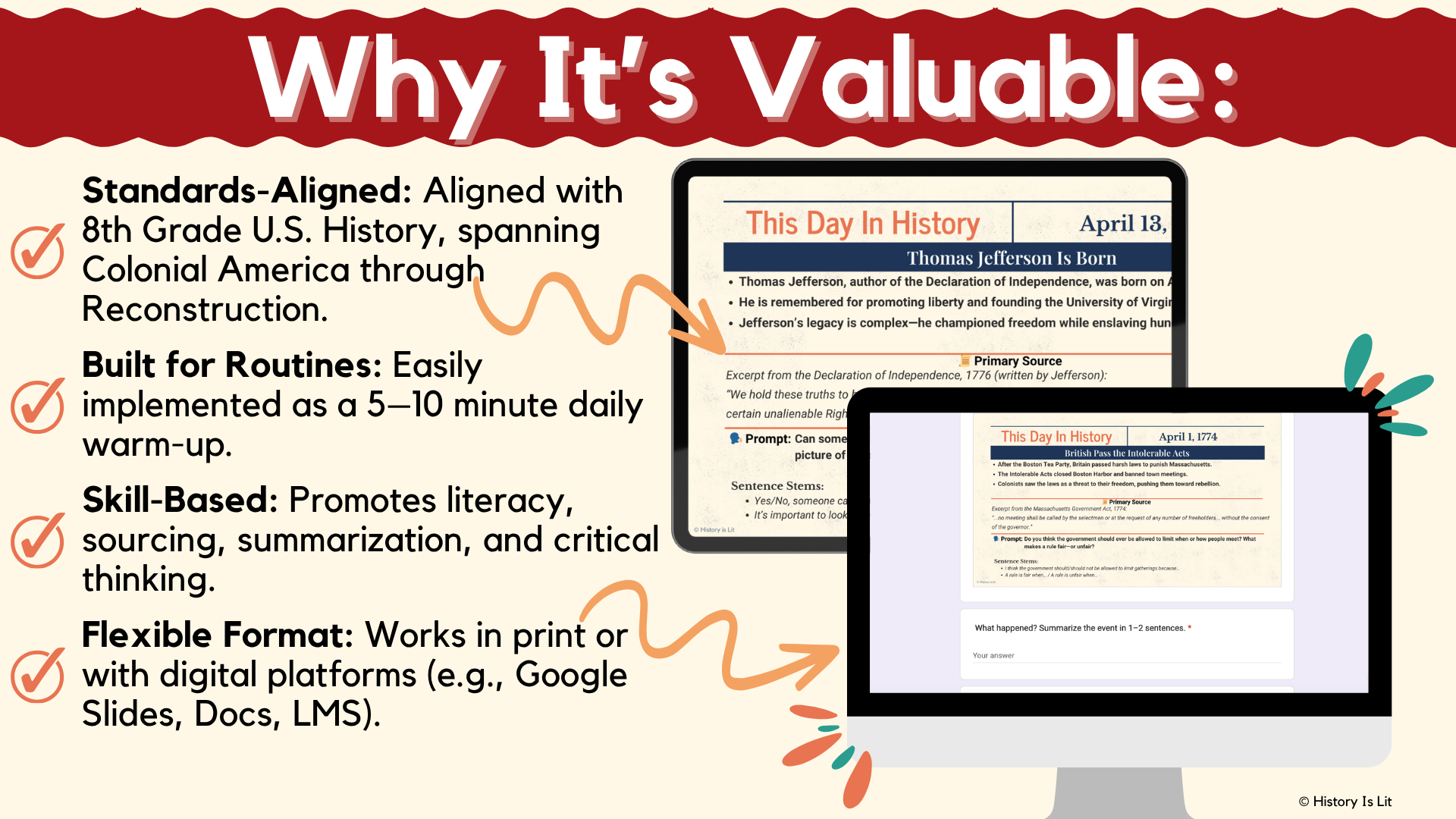
April rolls out from colonial crisis to industrial ingenuity. With 60 daily prompts (two per day), you’ll have fresh, standards-aligned bell ringers for every school day in April. Just print or project—and your warm-up is done.
What You Get
60 total prompts (2 prompts for each April 1–30)
Each bell ringer includes:
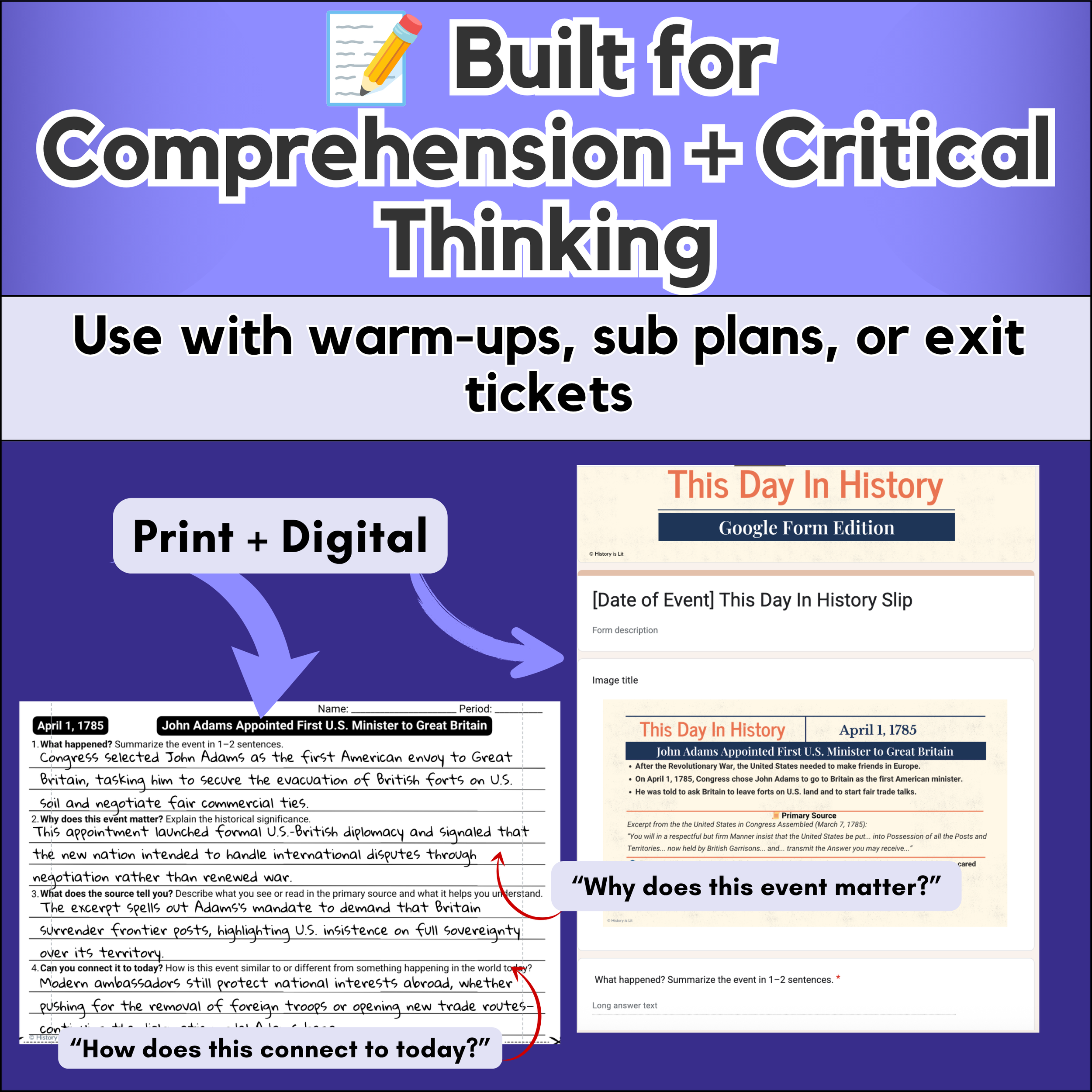
A 2- to 3-sentence background blurb
A primary-source excerpt (quote, law, newspaper, or diary)
One discussion question + two sentence stems
Student-ready formats:
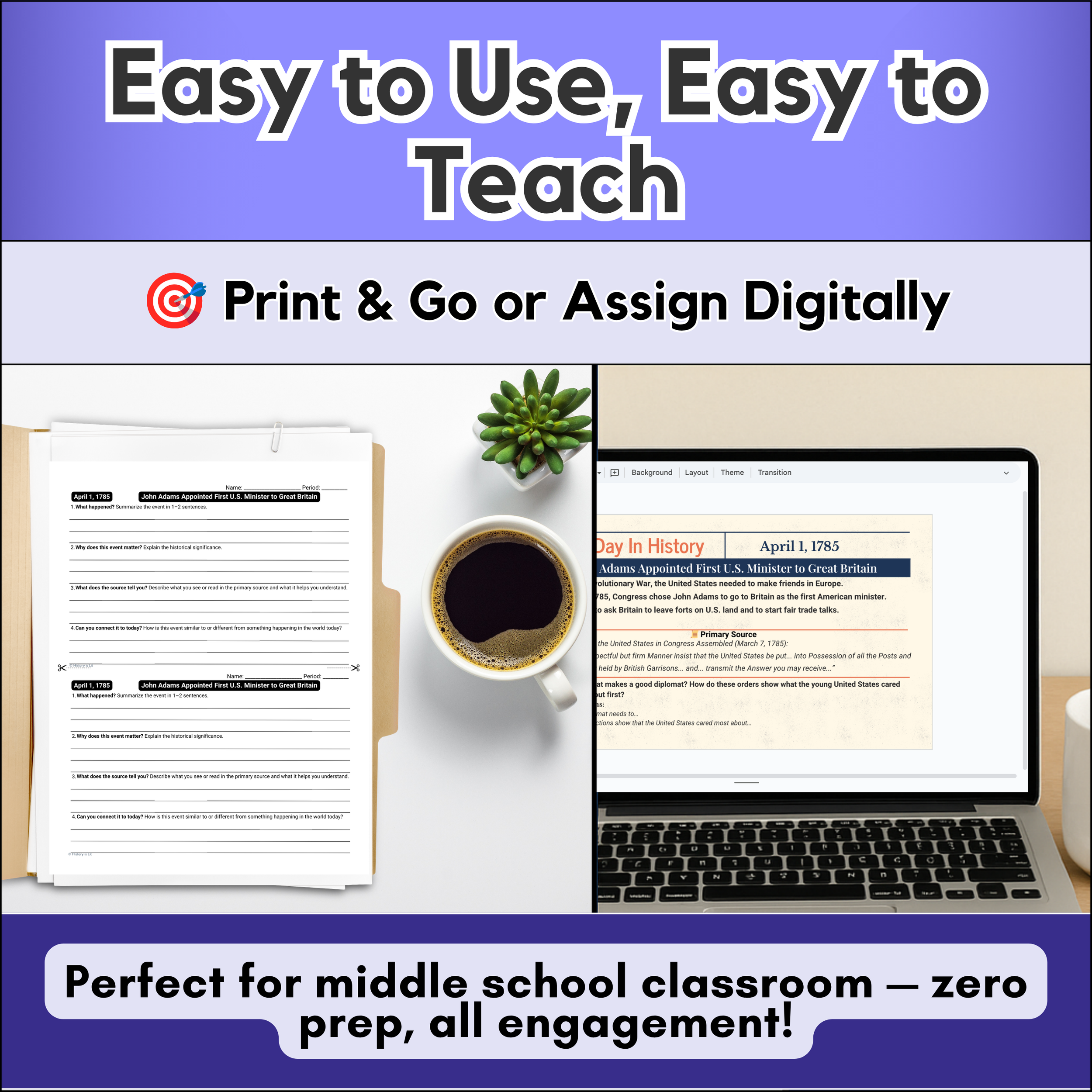
Printable slips (PDF)
Google Slides deck for projection or digital notebooks
Teacher Guide with routines, and quick extensions
Answer Key featuring sample responses and theme tags for every event
Why Teachers Love This Set
Zero prep—perfect for warm-ups, sub plans, odd bell schedules, and exit tickets
Keeps learning on track during testing windows and spring-break jitters
Built-in literacy scaffolds: students cite evidence, craft arguments, and speak with confidence
Lively discussion, minimal grading
Why Students Engage
Short, vivid stories instead of dry date lists
Fascinating primary sources that spark real curiosity
Sentence stems reduce anxiety about writing or speaking
Easy links to headlines they hear today
Sample April Events & Themes
Colonial Resistance April 1, 1774 • British Pass Intolerable Acts April 3, 1774 • Gaspée Affair’s Aftermath
Revolutionary Beginnings April 19, 1775 • Battles of Lexington & Concord April 18, 1783 • Preliminary Peace Negotiations Begin
Young Republic April 1, 1785 • John Adams Appointed Minister to Britain April 20, 1803 • Louisiana Purchase “Rubber Stamp”
Innovation & Industry April 10, 1866 • ASPCA Founded April 27, 1791 • Bank of the United States Chartered
Civil War & Conflict April 9, 1865 • Lee Surrenders at Appomattox April 14, 1865 • Lincoln Shot at Ford’s Theatre
Expansion & Reform April 30, 1803 • Jefferson Sends Lewis & Clark April 22, 1889 • Land Rush Opens Oklahoma Territory
(Each of the 60 entries follows this model: background + source + question + stems.)
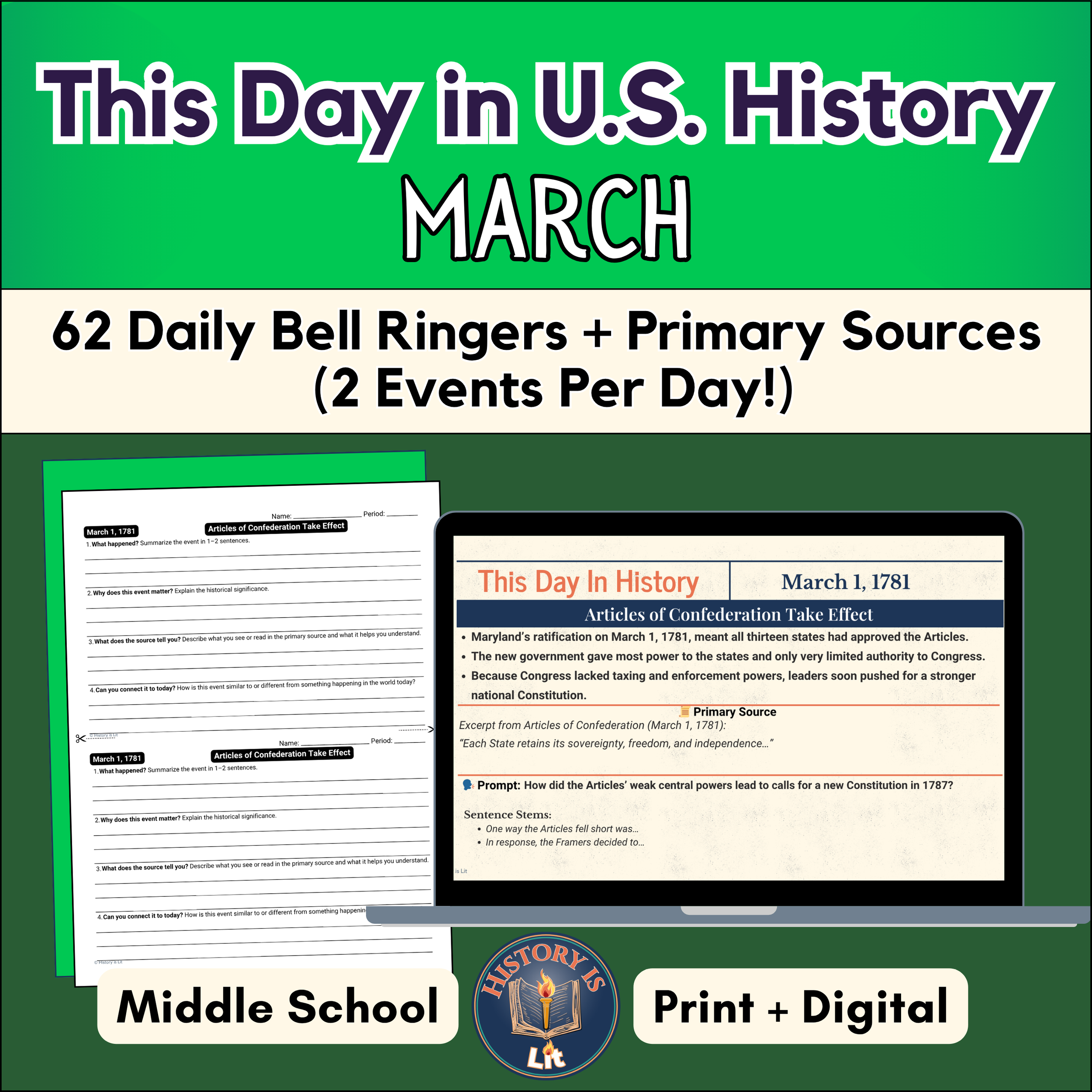
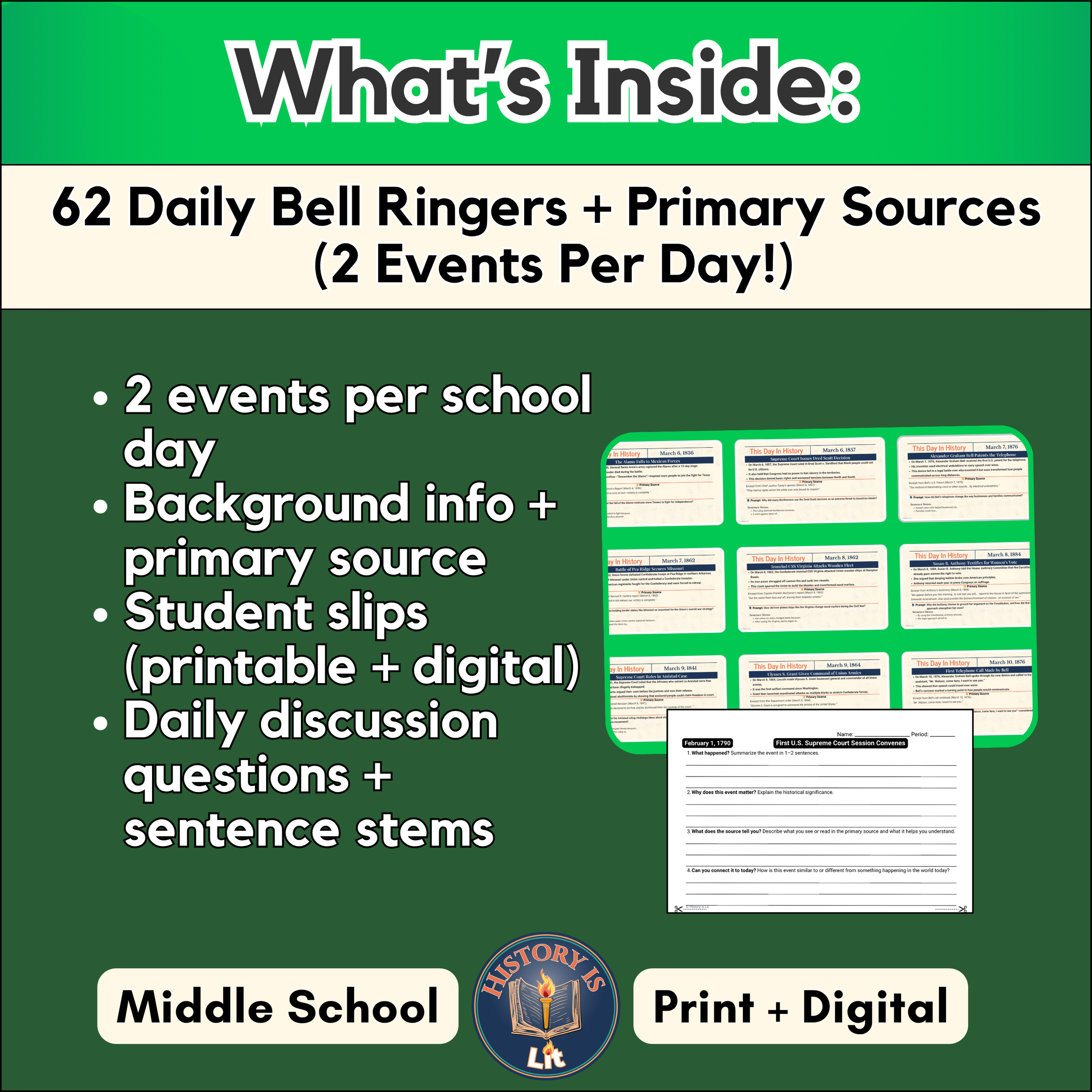
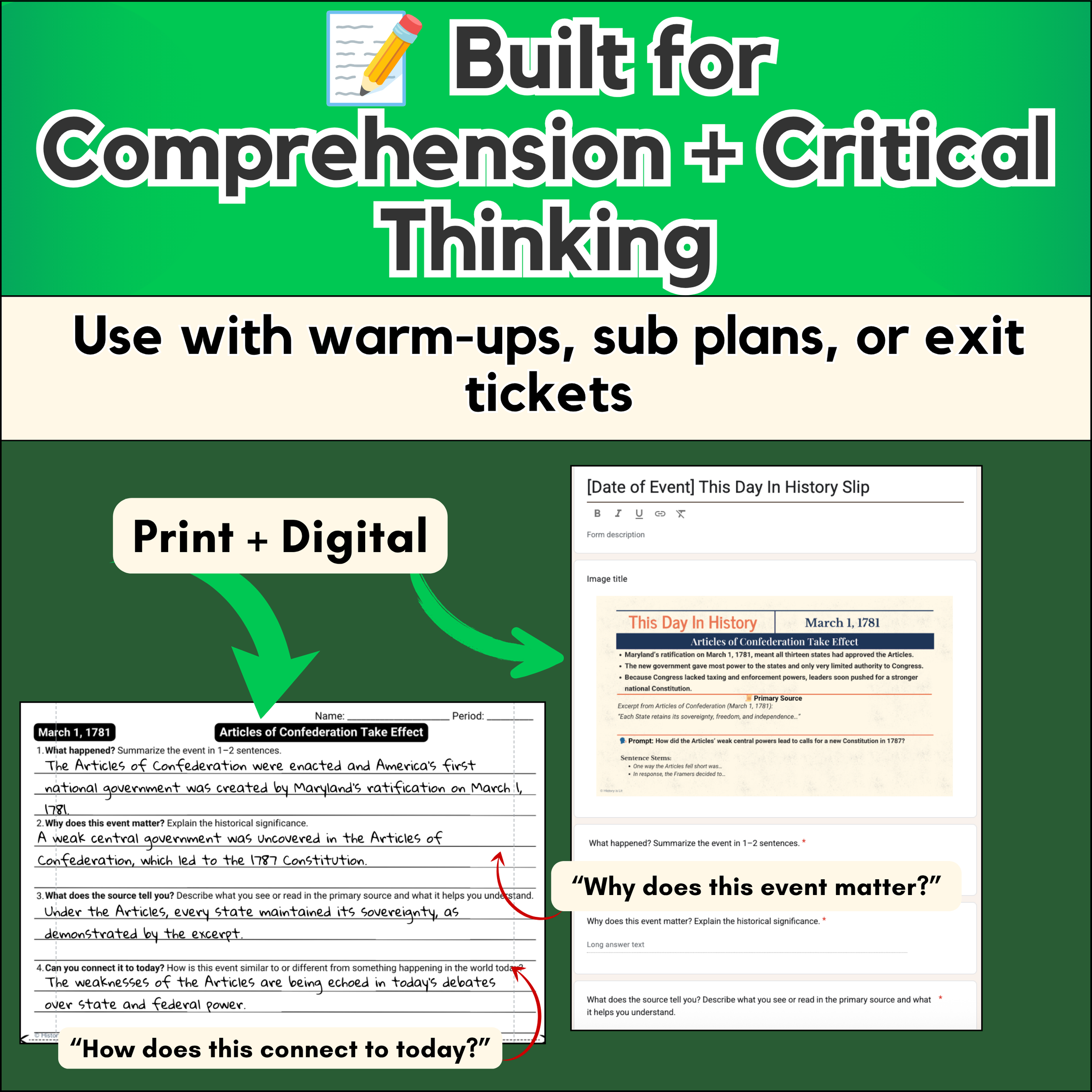
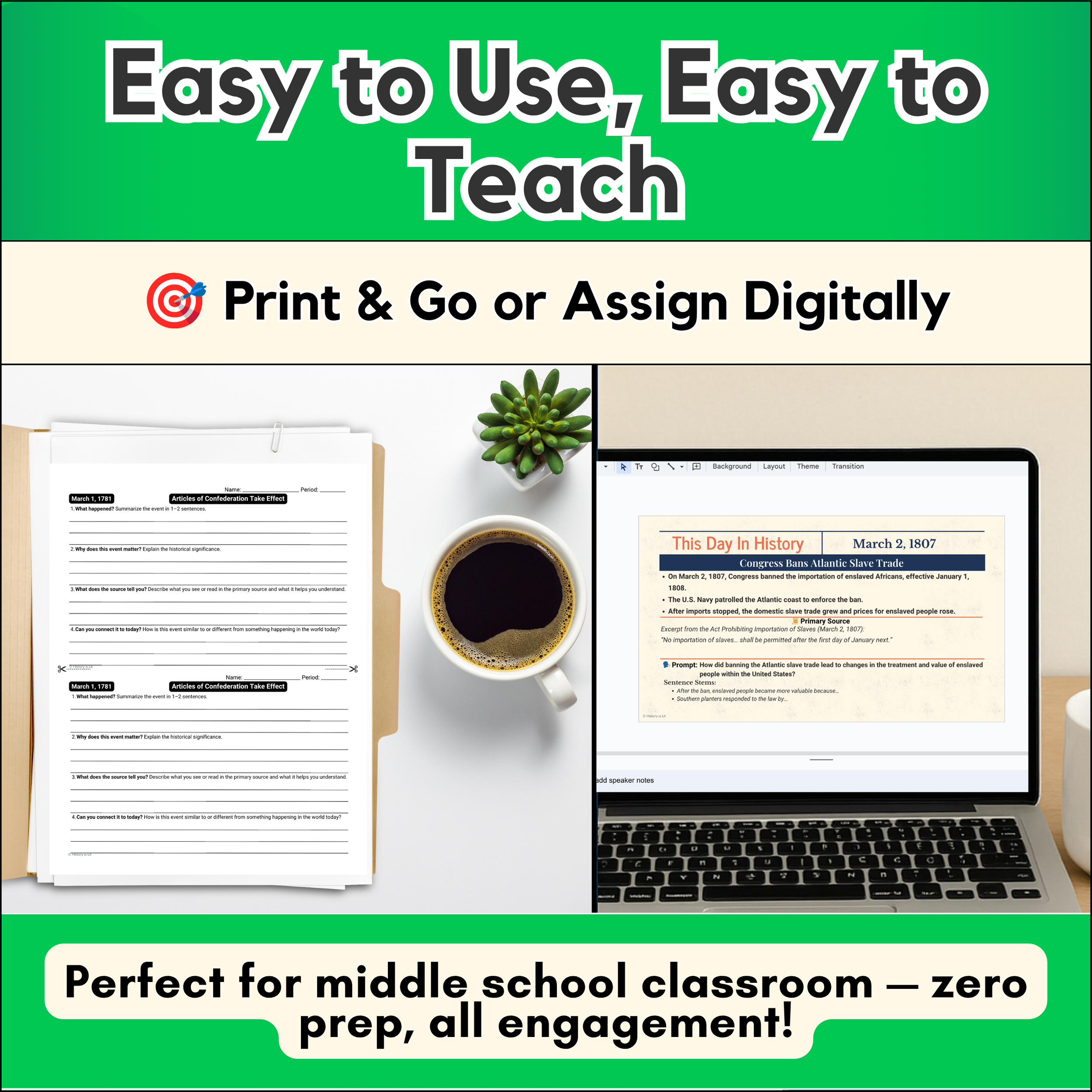
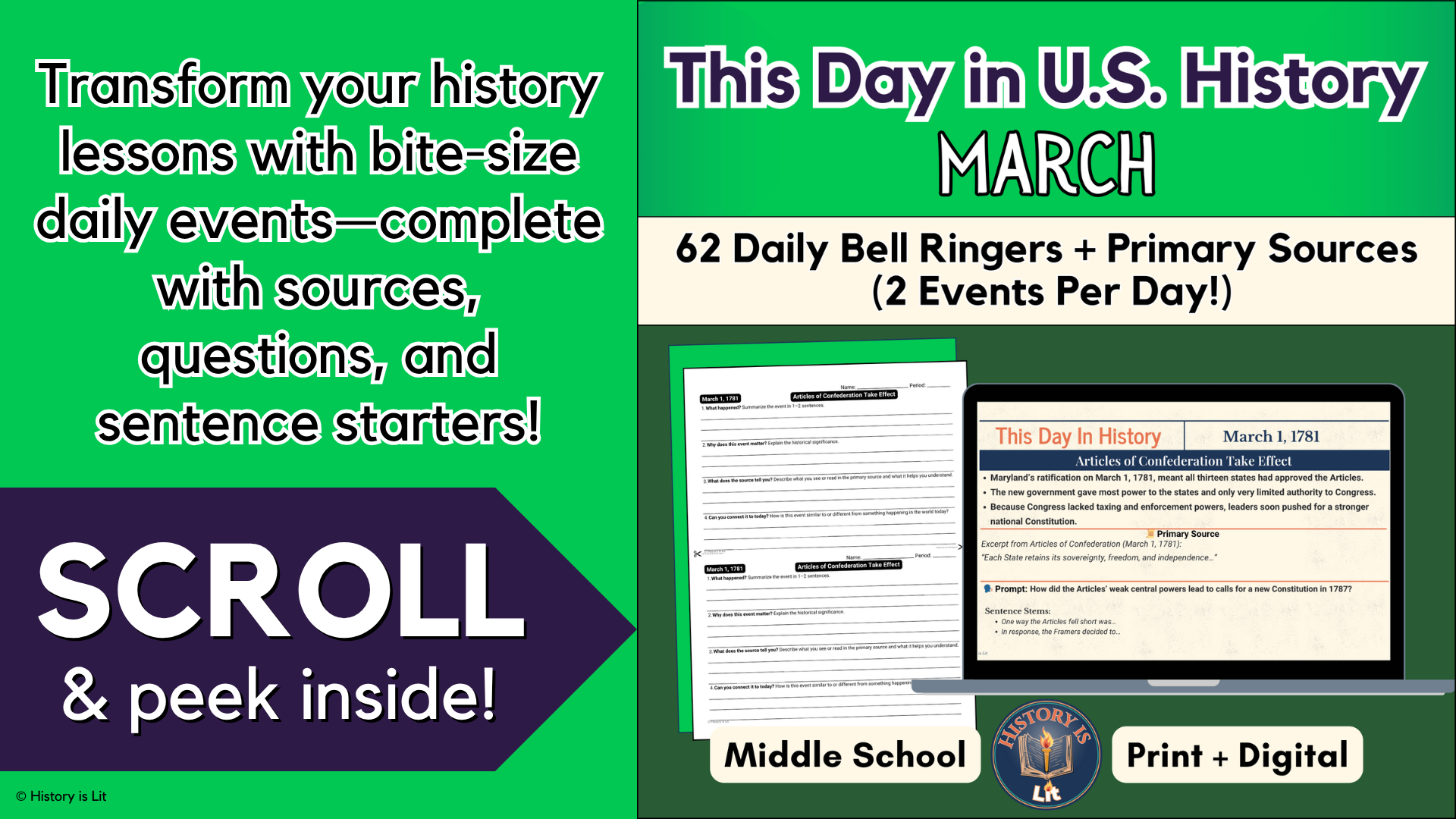
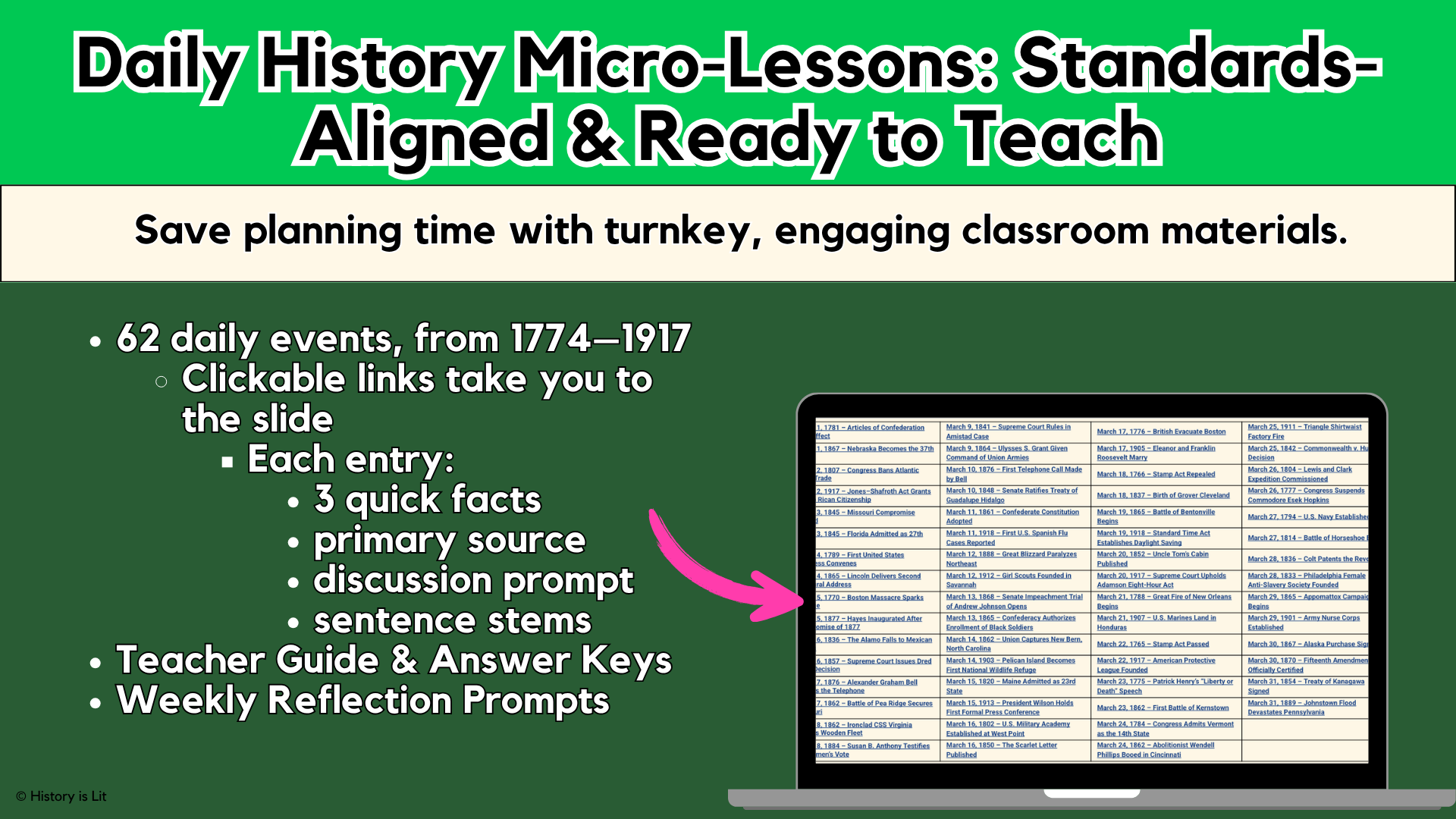
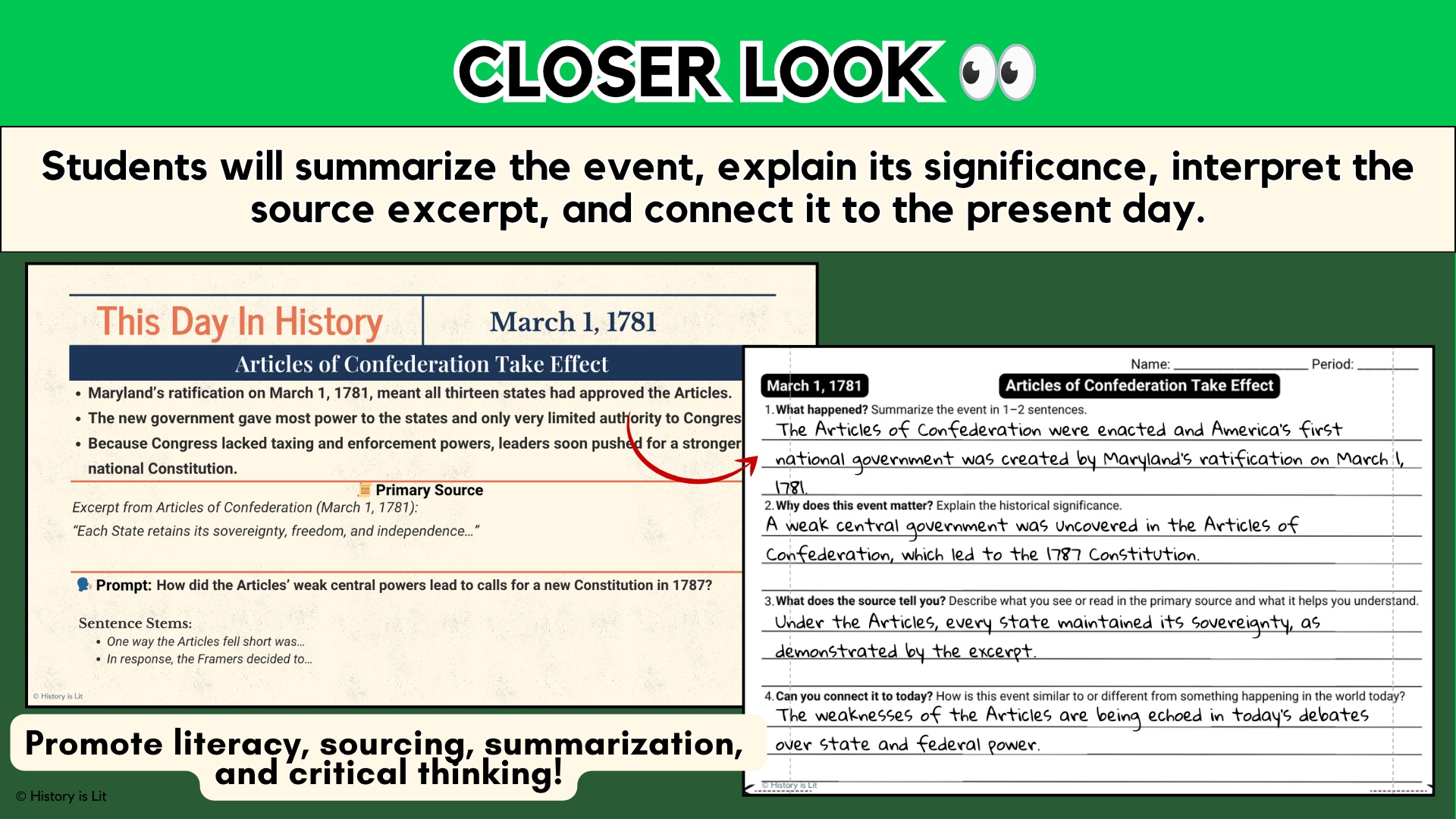
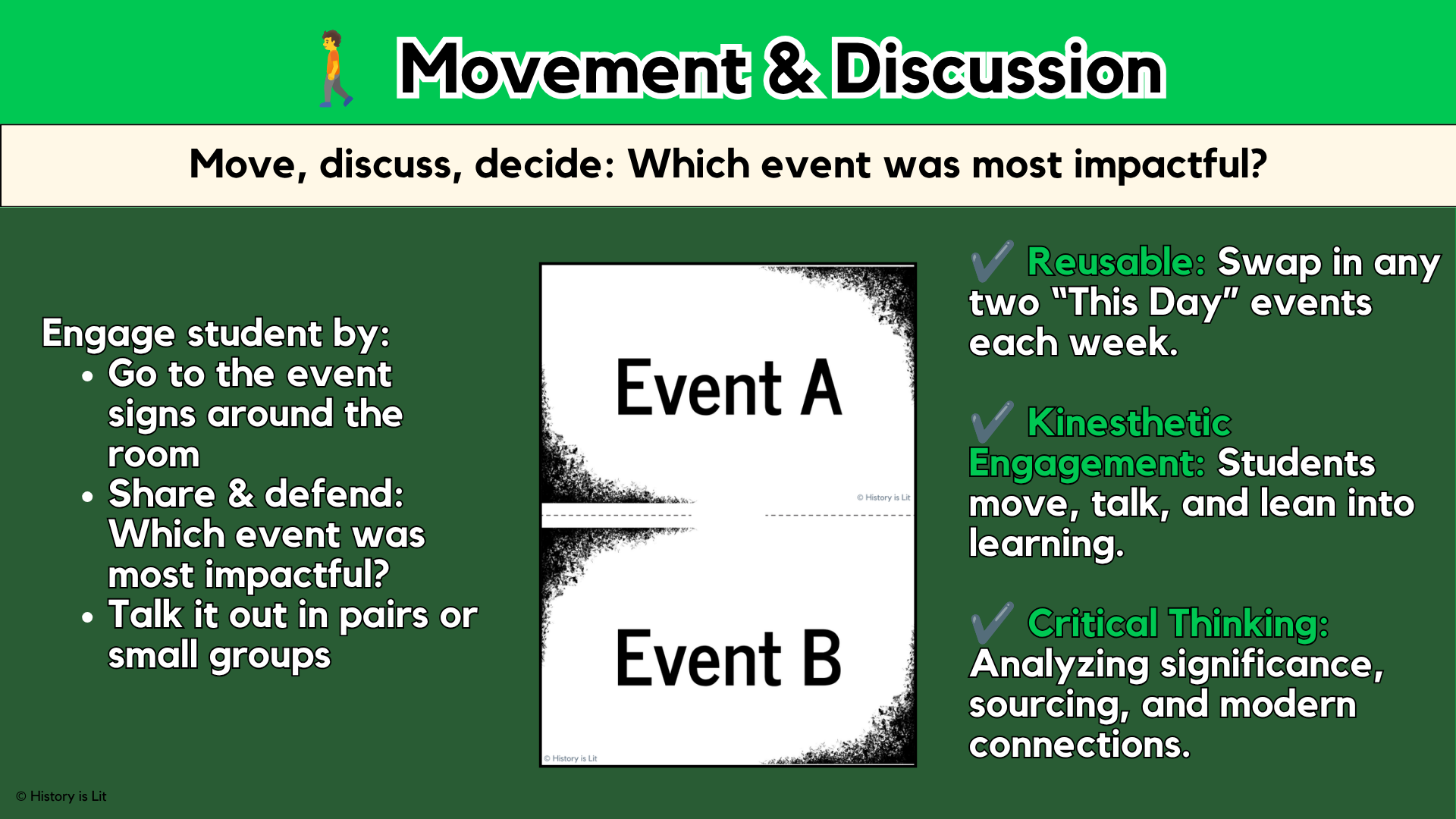
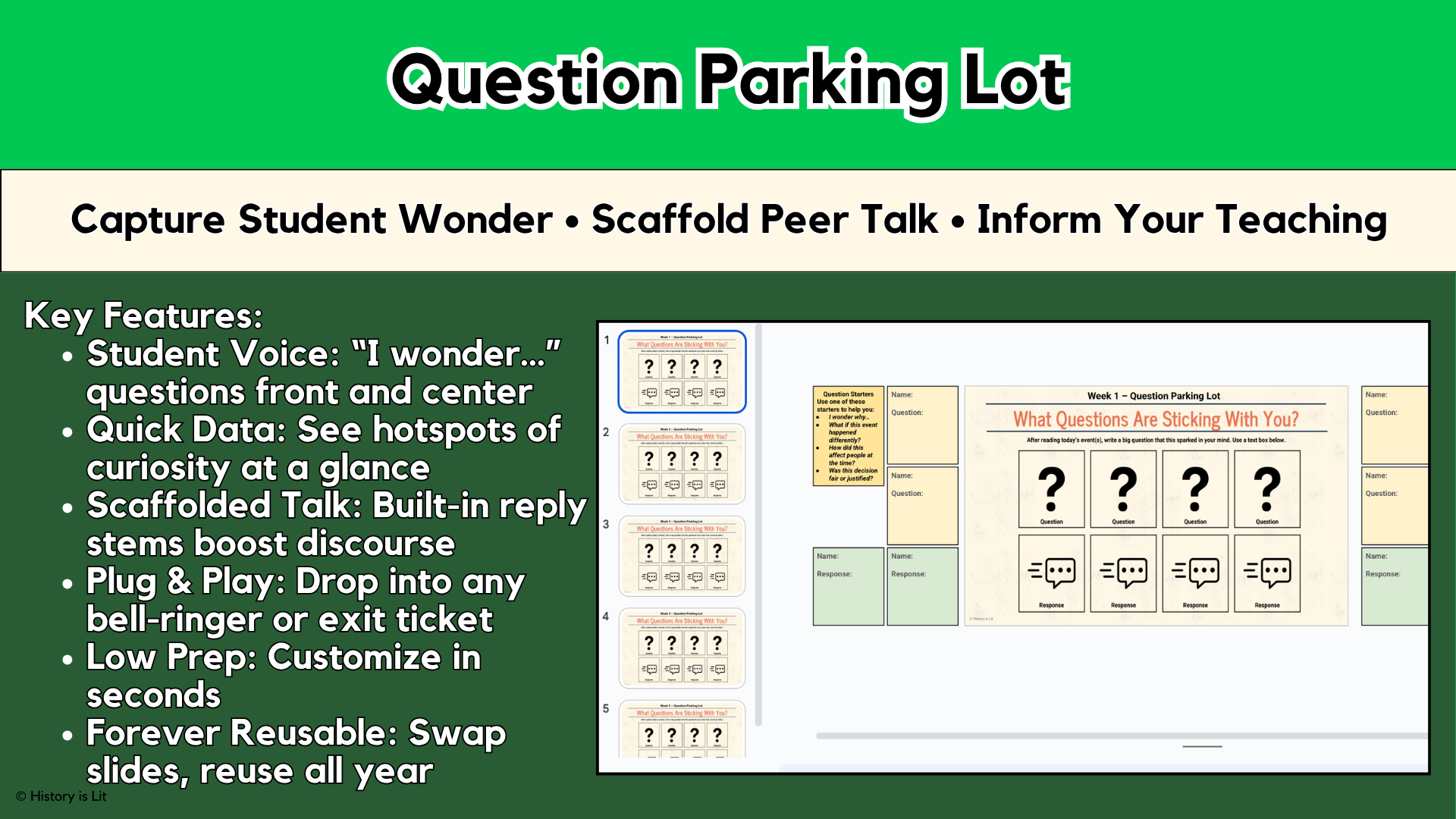
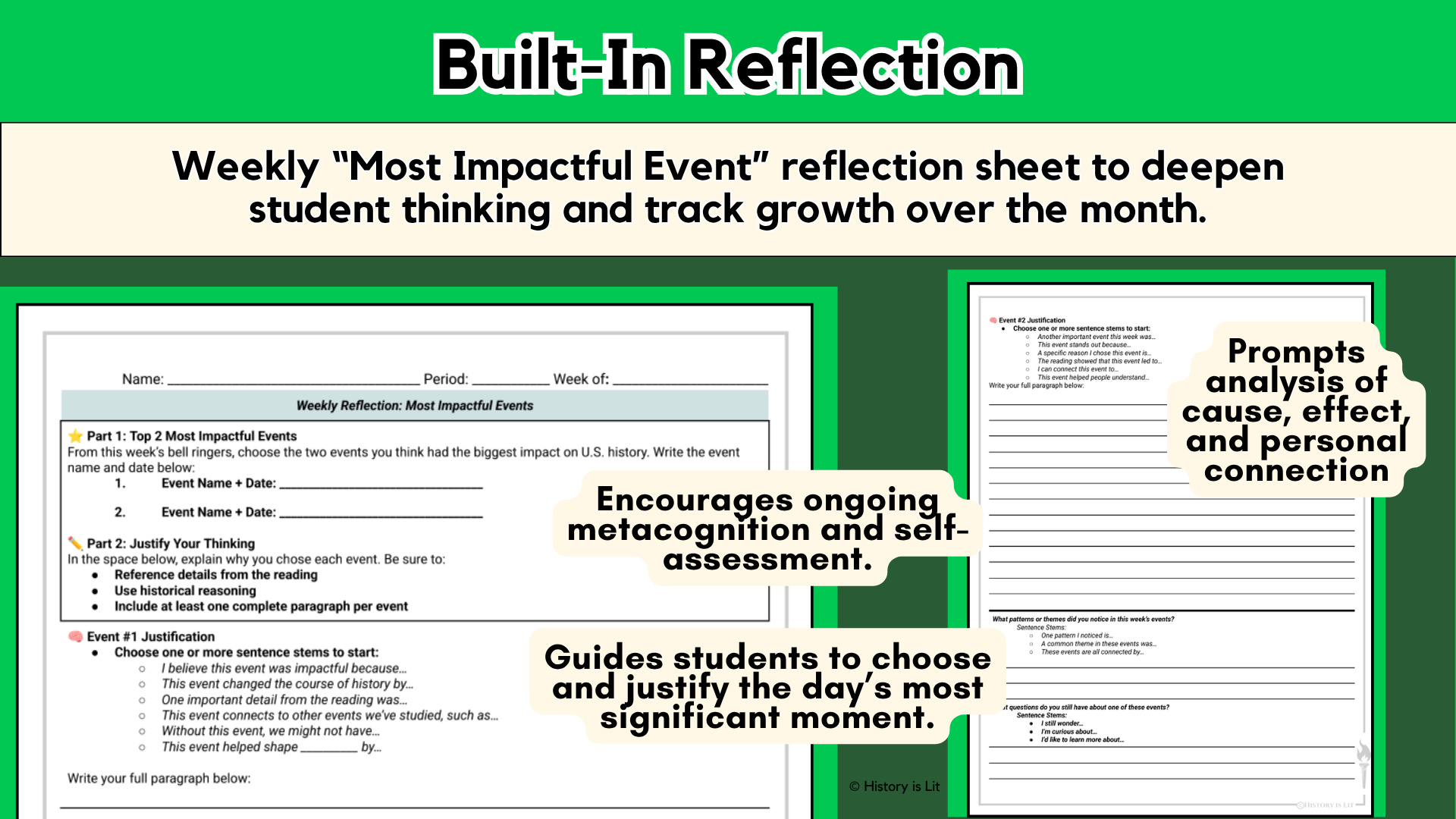
March Bell Ringers | U.S. History Warm-Ups (1765–1918)
Bring the story of America to life—from the Stamp Act to the Spanish Flu—with these no-prep, standards-aligned bell ringers that make history discussion-ready every day of March.
What’s Included
✅ 62 Daily Prompts (about two per weekday)
Each bell ringer features:
A 2–3 sentence historical background written at a student-friendly level
A primary source excerpt (speech, law, diary entry, or newspaper quote)
One discussion question + two sentence stems for evidence-based responses
Formats:
Printable PDF slips
Google Slides™ deck for projection or digital notebooks
Teacher Guide with pacing routines, discussion strategies, and quick extensions
Answer Key with sample responses and theme tags
Why Teachers Love It
Zero prep—perfect for warm-ups, sub days, testing windows, and odd schedules
Built-in literacy scaffolds help students cite evidence and speak with confidence
Keeps engagement high during spring fatigue with short, powerful stories
Easy to differentiate and use across grades 6–8
Why Students Engage
Real people, real moments—not dry timelines
Primary sources that make history come alive
Sentence stems lower anxiety and spark stronger discussion
Quick, meaningful connections to current issues
March Events & Themes
Revolution & Rights: Stamp Act Repealed (1766) • Patrick Henry’s “Liberty or Death” Speech (1775) • Fifteenth Amendment Certified (1870)
Expansion & Compromise: Missouri Compromise (1820) • Treaty of Guadalupe Hidalgo (1848) • Alaska Purchase (1867)
Innovation & Industry: Bell Patents the Telephone (1876) • Triangle Shirtwaist Factory Fire (1911) • Pelican Island Refuge (1903)
Leadership & Change: Lincoln’s Second Inaugural Address (1865) • Grant Takes Command (1864) • Wilson’s First Press Conference (1913)
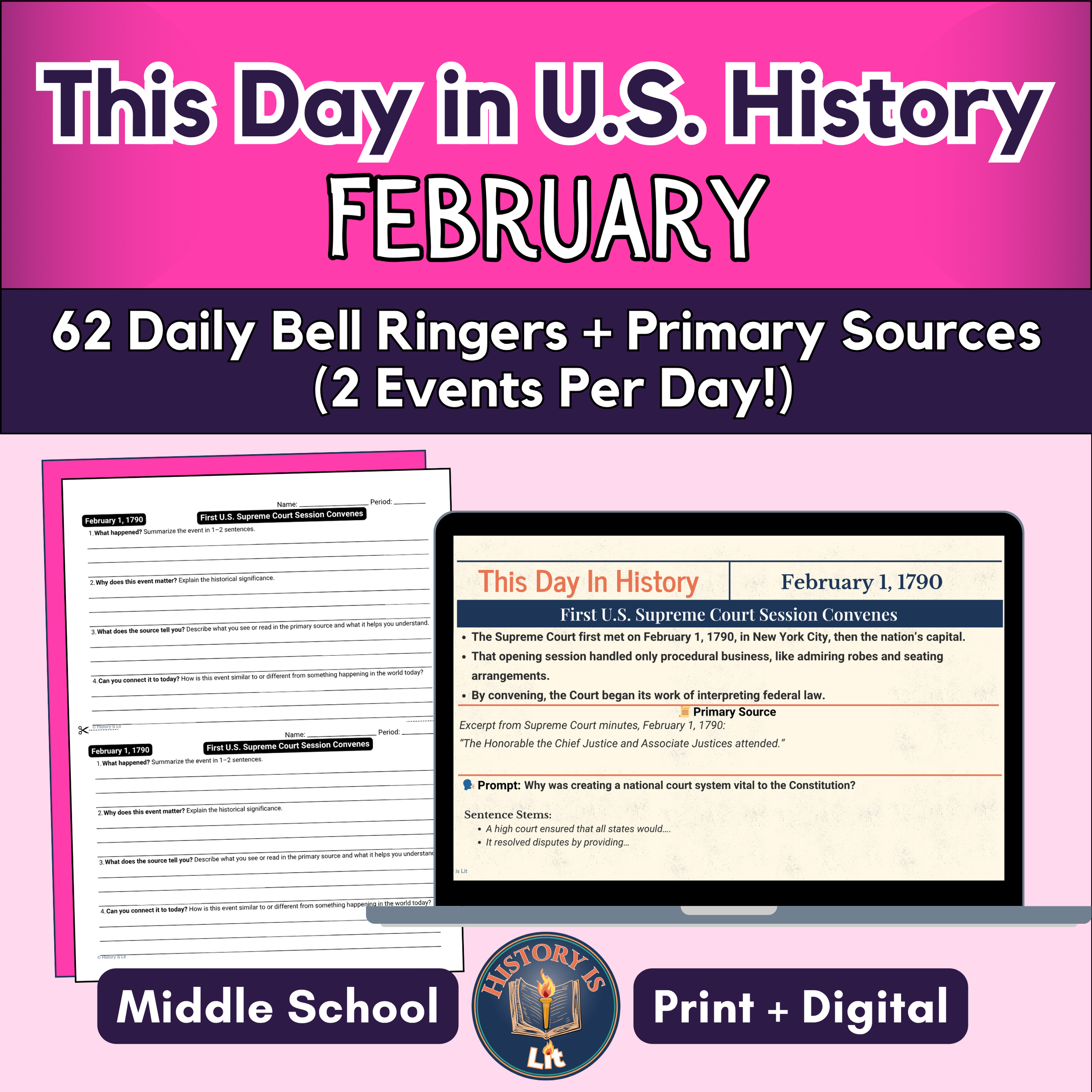
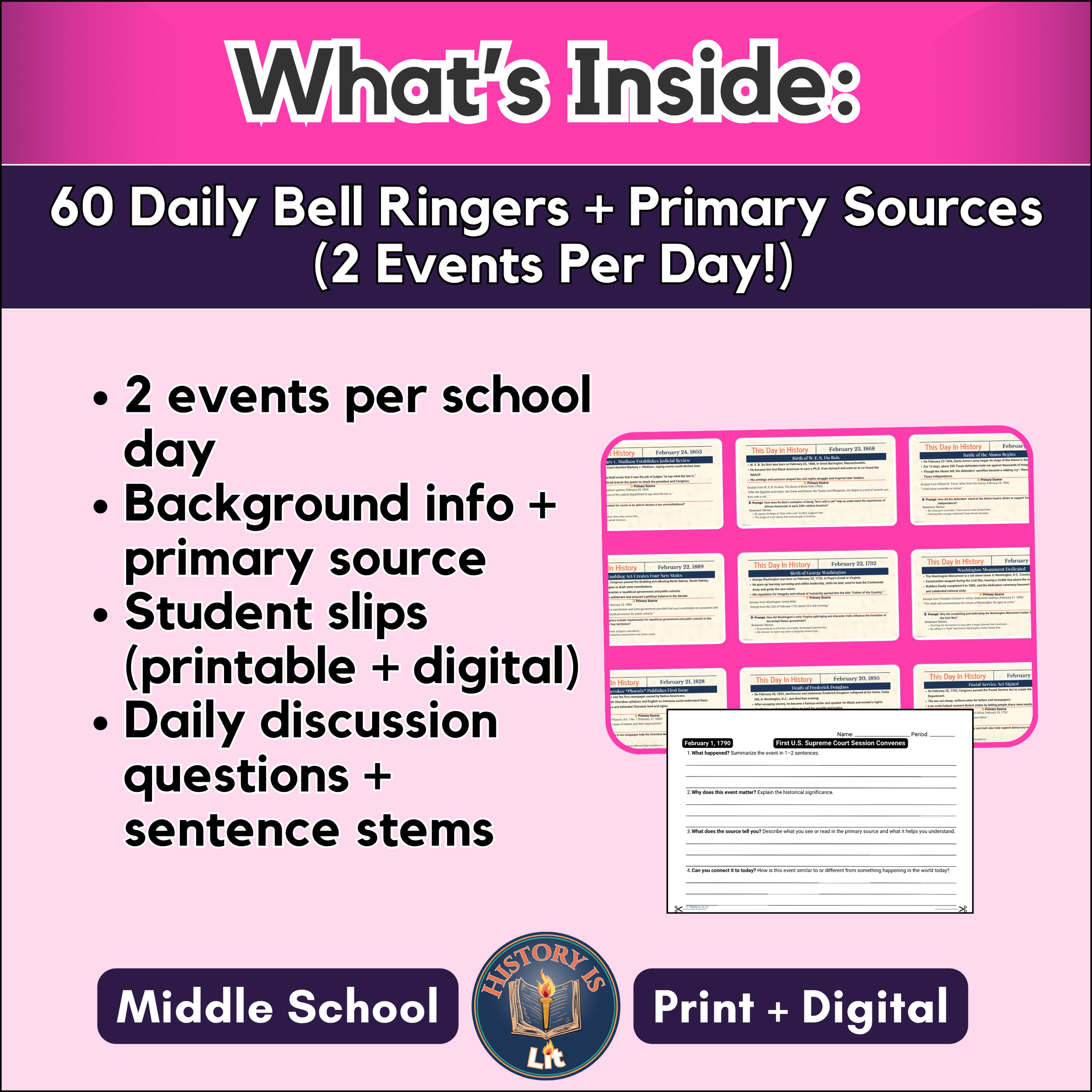
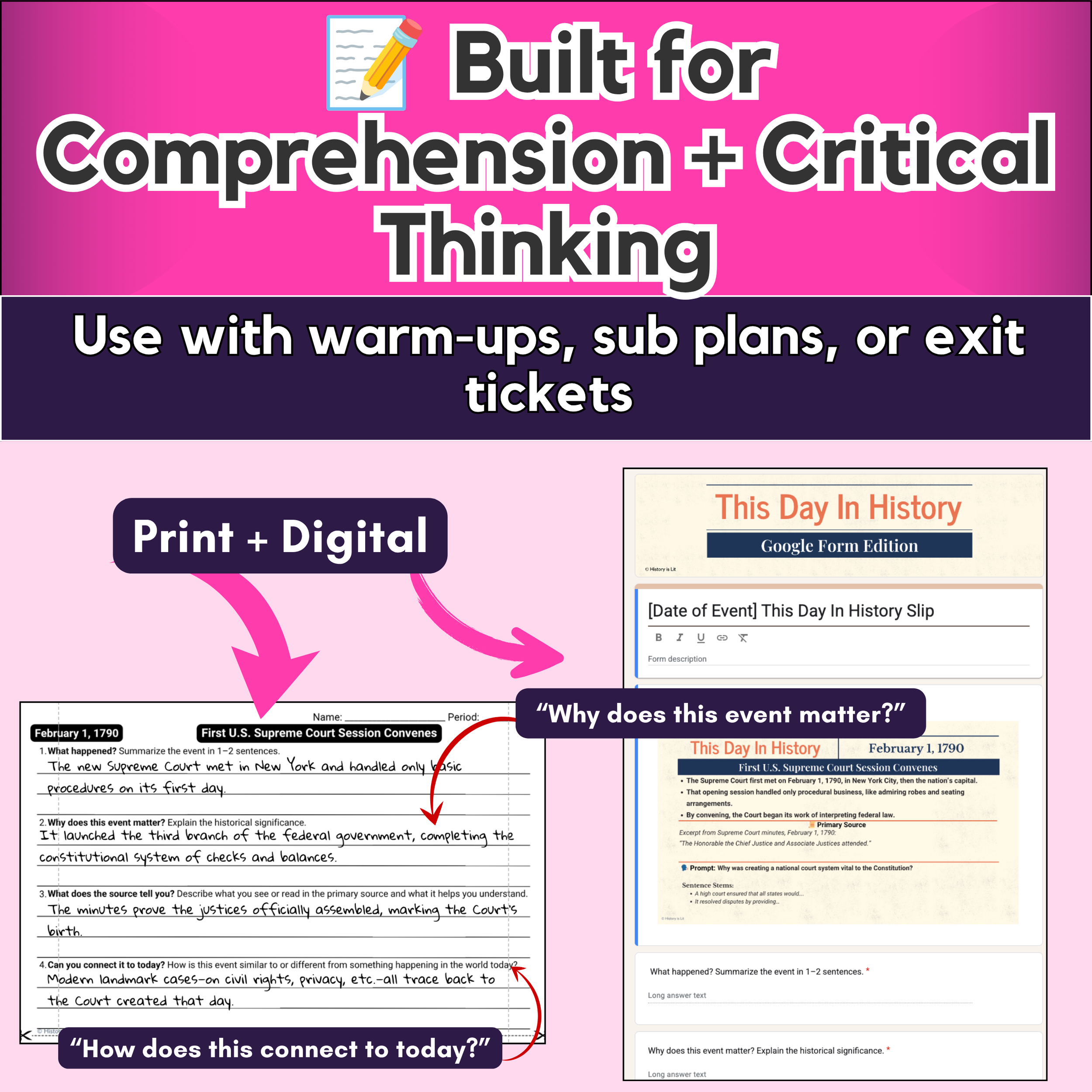
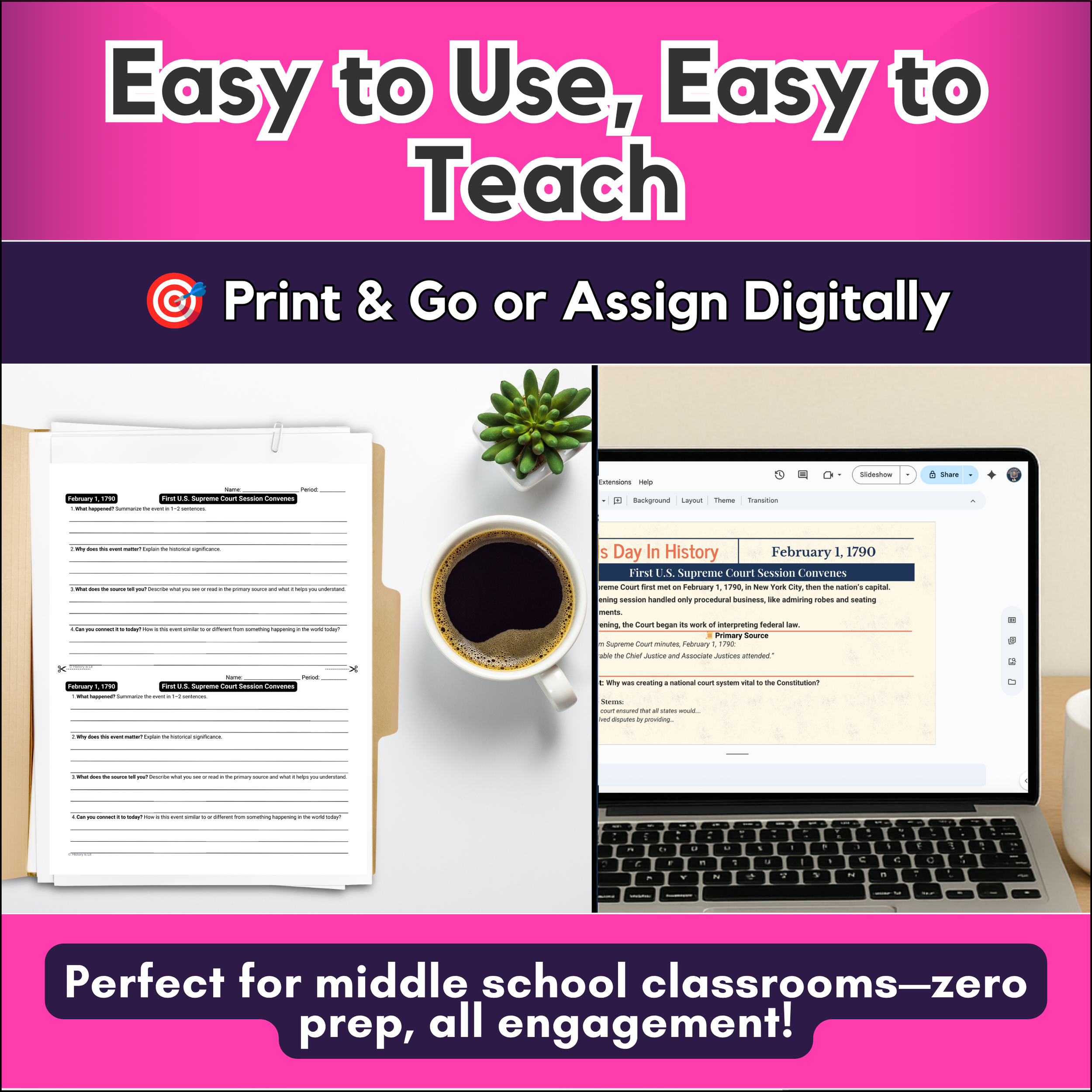
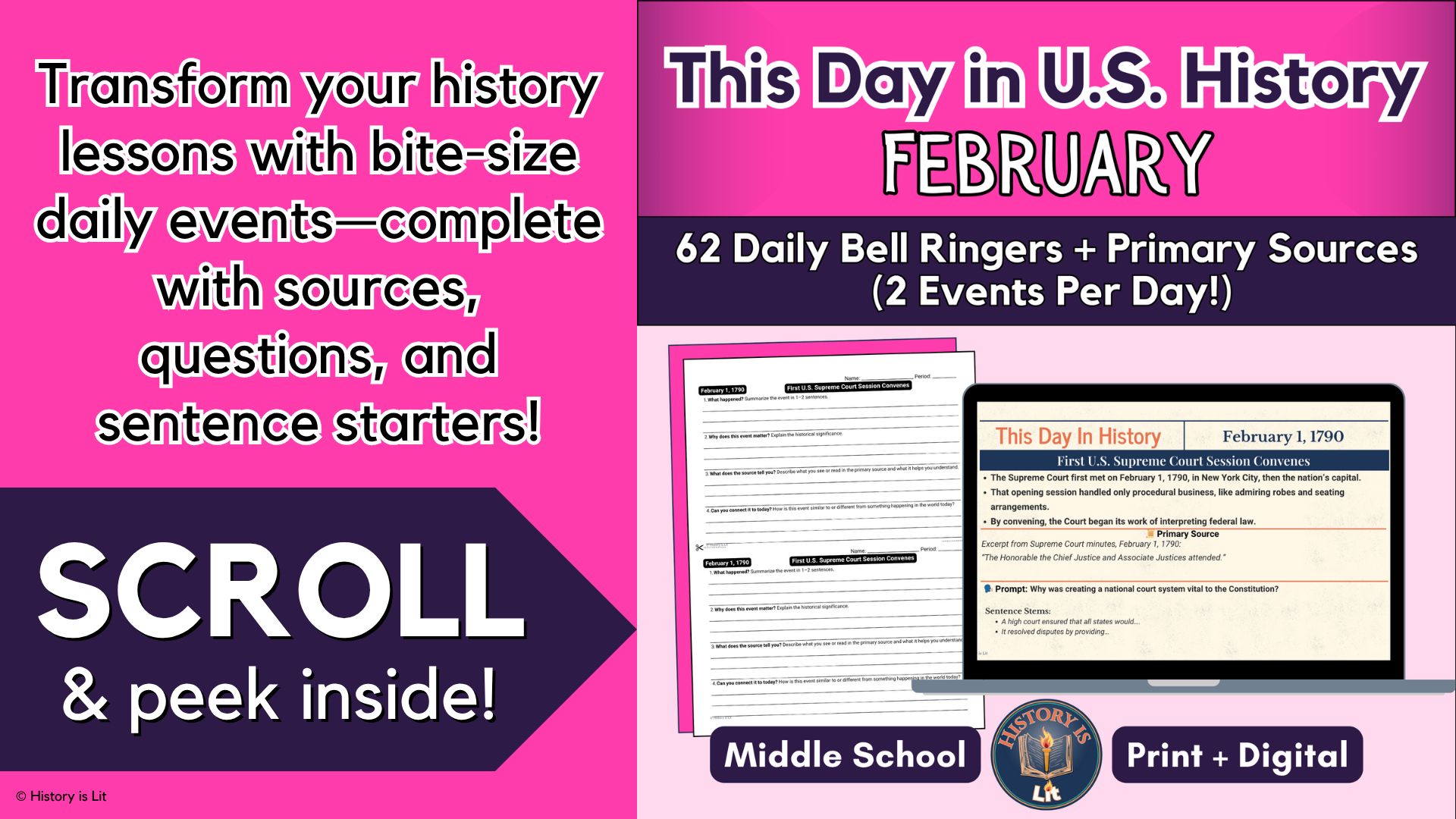
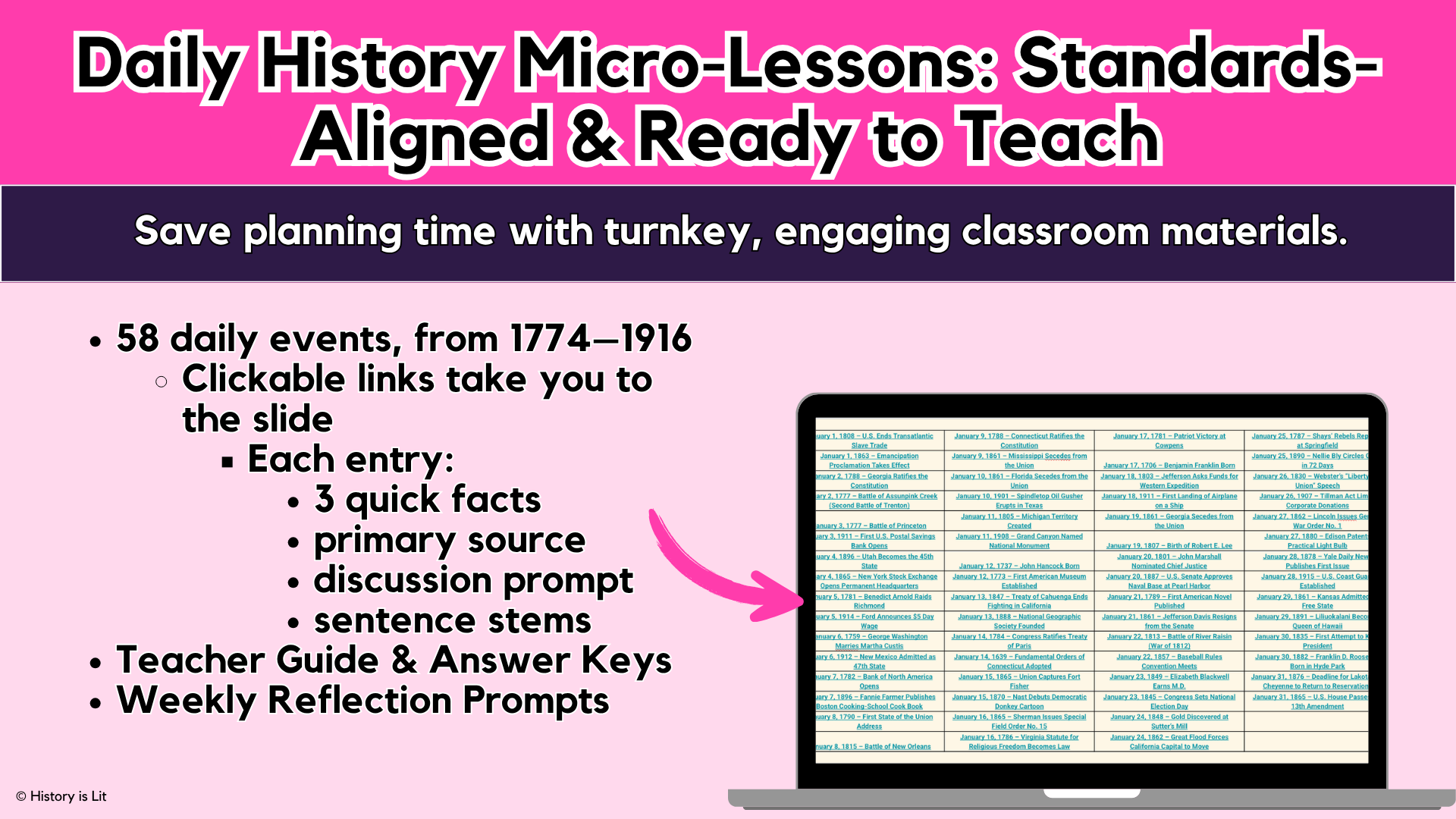
February may be the shortest month, but it’s packed with ground-breaking moments—from constitutional milestones to frontier firsts. These 58 February Bell Ringers keep middle-school U.S.-History classes energized and on-task. You get two fresh prompts for nearly every school day (and a few extras for subs or stations) that blend literacy, discussion, and historical-thinking skills.
Whether you’re bridging snow days, steering Black-History-Month conversations, or filling odd periods, just print or project and go.
✅ What’s Included
58 total prompts - Two events for most weekdays in February
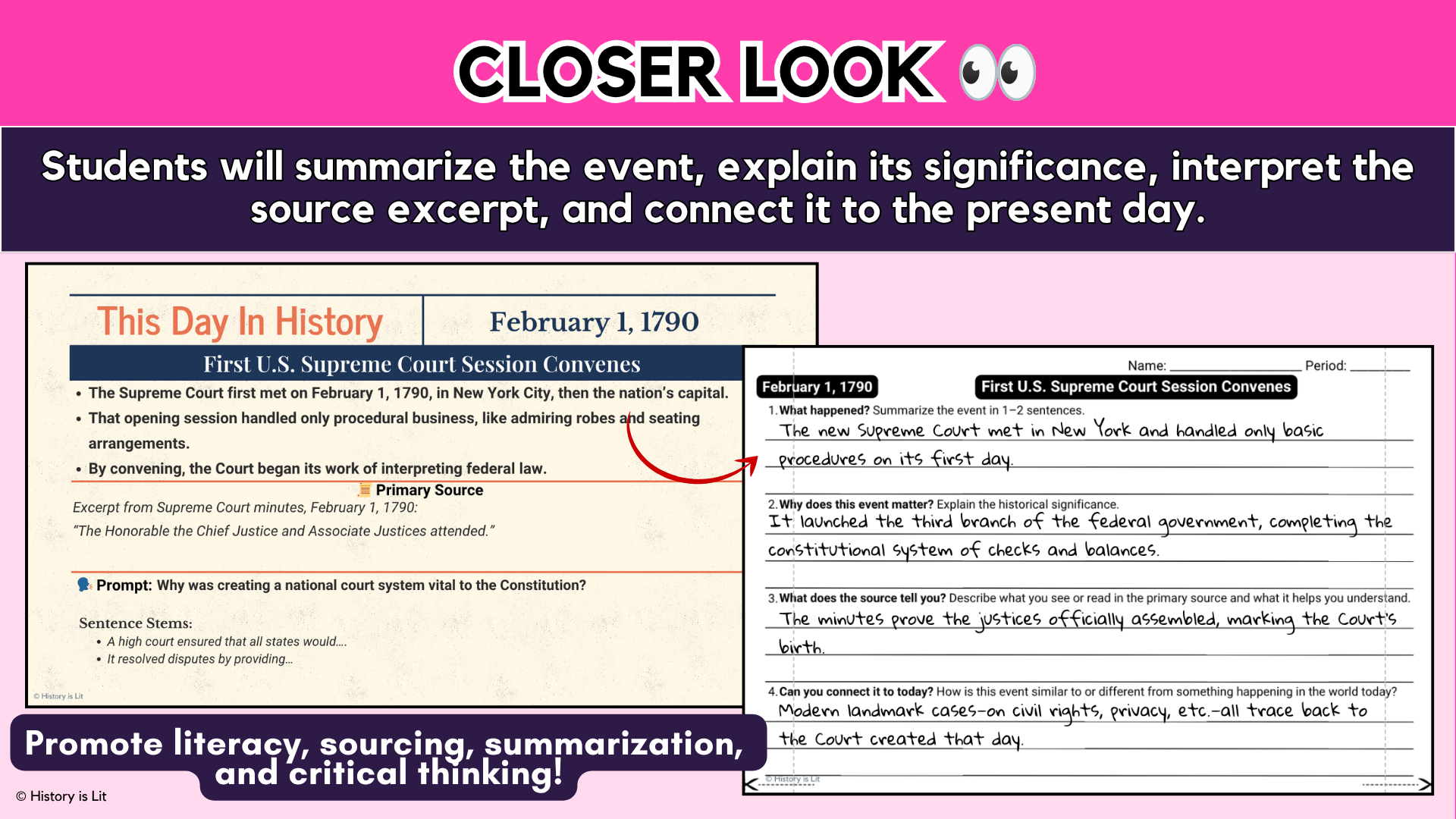
Each bell ringer provides
2- to 3-sentence background blurb
Primary-source excerpt (quote, image, or document)
One discussion question + 2 sentence stems
Student-ready formats
Printable slips (PDF)
Google Slides version for projection or digital notebooks
Teacher Guide - Routines, theme-wall tips, & easy extensions
Answer Key - Sample responses for every event
⭐ Why Teachers Love It
Zero prep—perfect for warm-ups, subs, homework, or exit tickets
Keeps learning on track during assemblies, testing windows, and snow delays
Built-in literacy scaffolds: cite evidence, craft arguments, speak with confidence
Rich discussion with minimal grading
Why Students Engage
Real stories—not just names & dates
Primary sources that spark curiosity
Sentence stems that lower the fear of speaking or writing
Easy connections to today’s headlines
Sample February Topics
Rights & Amendments: Georgia ratifies the 15th (1870) · Lincoln signs the 13th (1865) · 11th Amendment certified (1795)
Expansion & Statehood: Treaty of Guadalupe Hidalgo (1848) · Oregon (1859) & Arizona (1912) join the Union
Innovation & Firsts: Fulton’s steamboat patent (1809) · Edison’s phonograph (1878) · First public “moving pictures” show (1870)
Conflict & Compromise: Fort Donelson falls (1862) · Cooper Union Address (1860) · Dawes Act (1887)
Power & Protest: House chooses Adams over Jackson in the “Corrupt Bargain” (1825) · Flour Riot in NYC (1837)
Legacy & Memory: Washington Monument dedicated (1885) · Battle of the Alamo begins (1836)
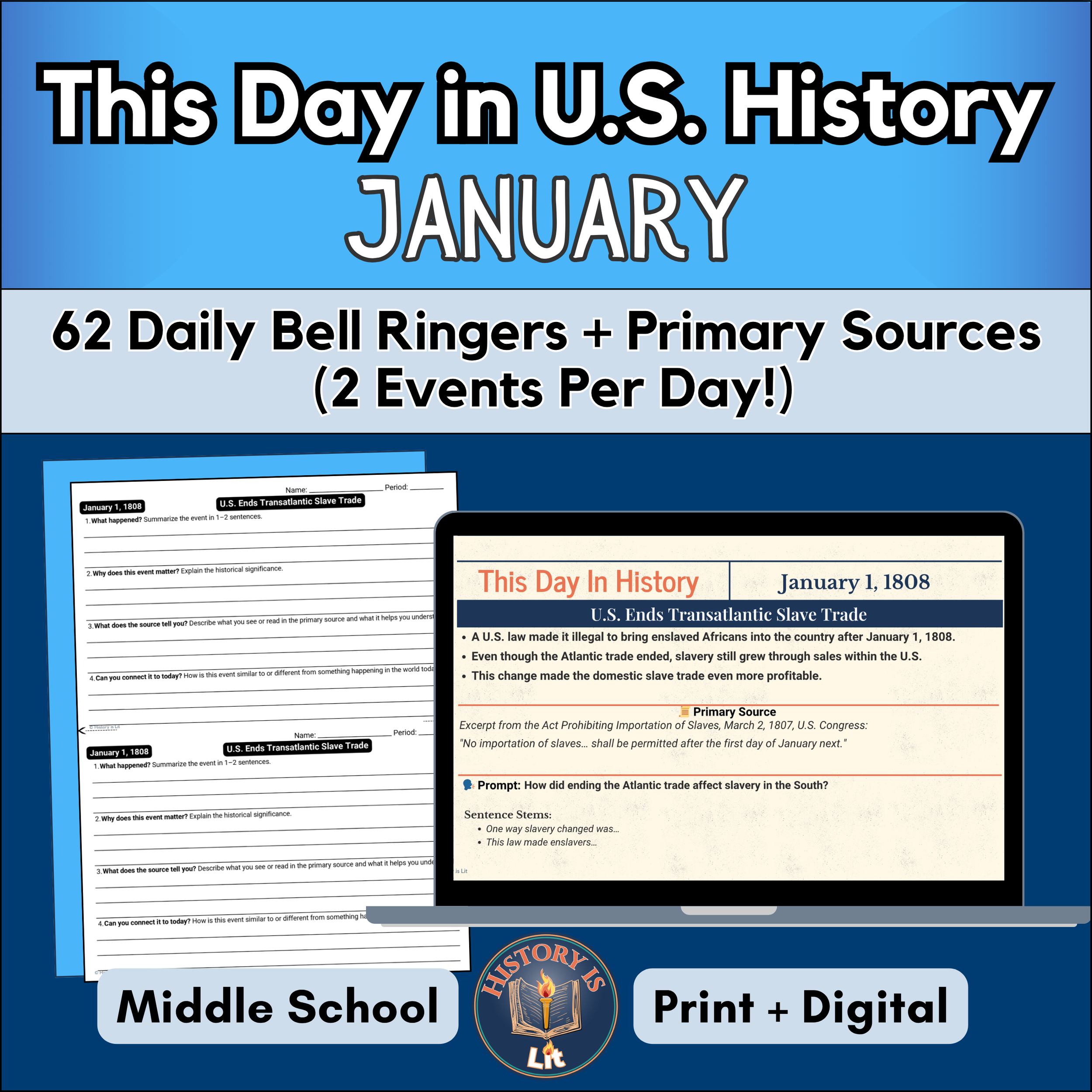
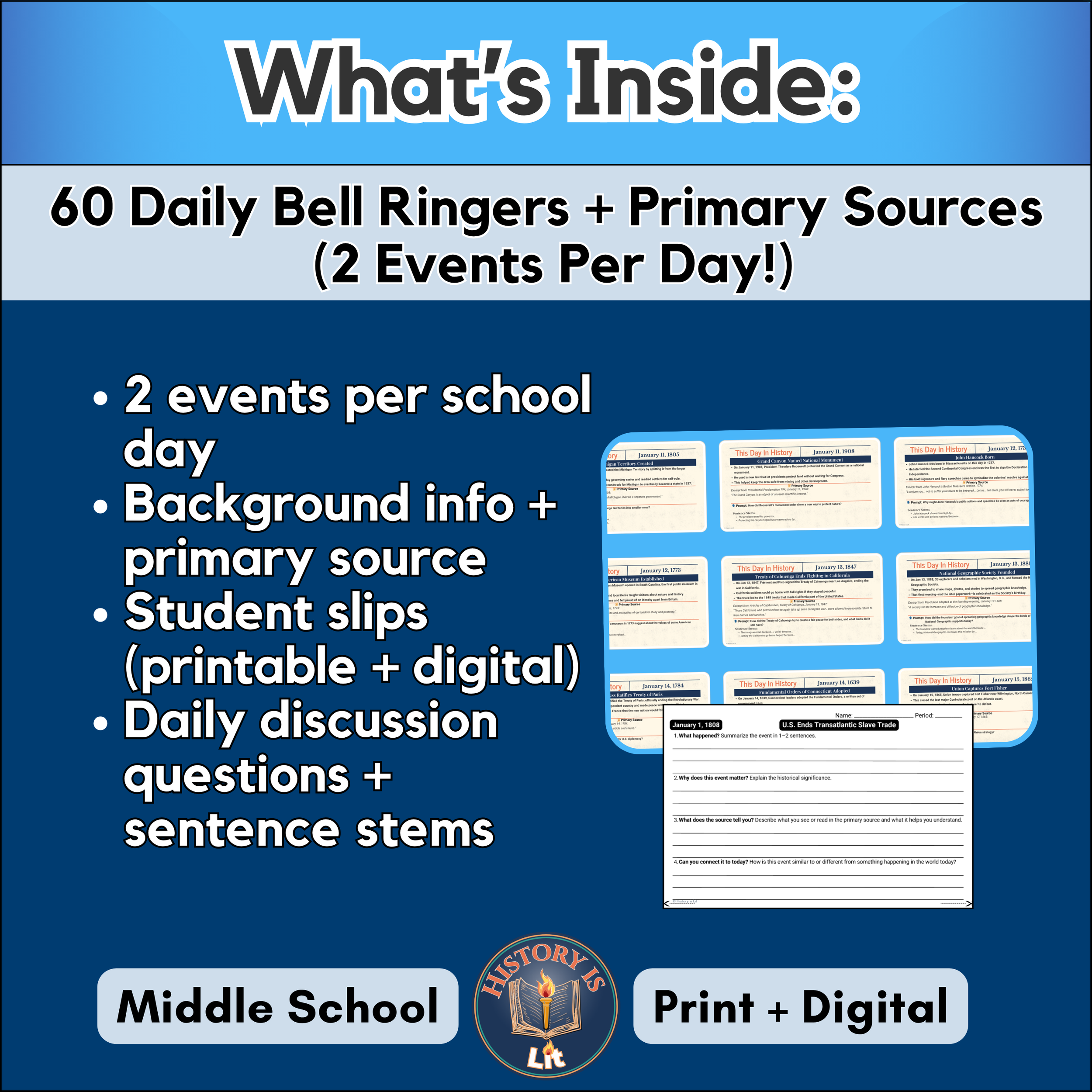
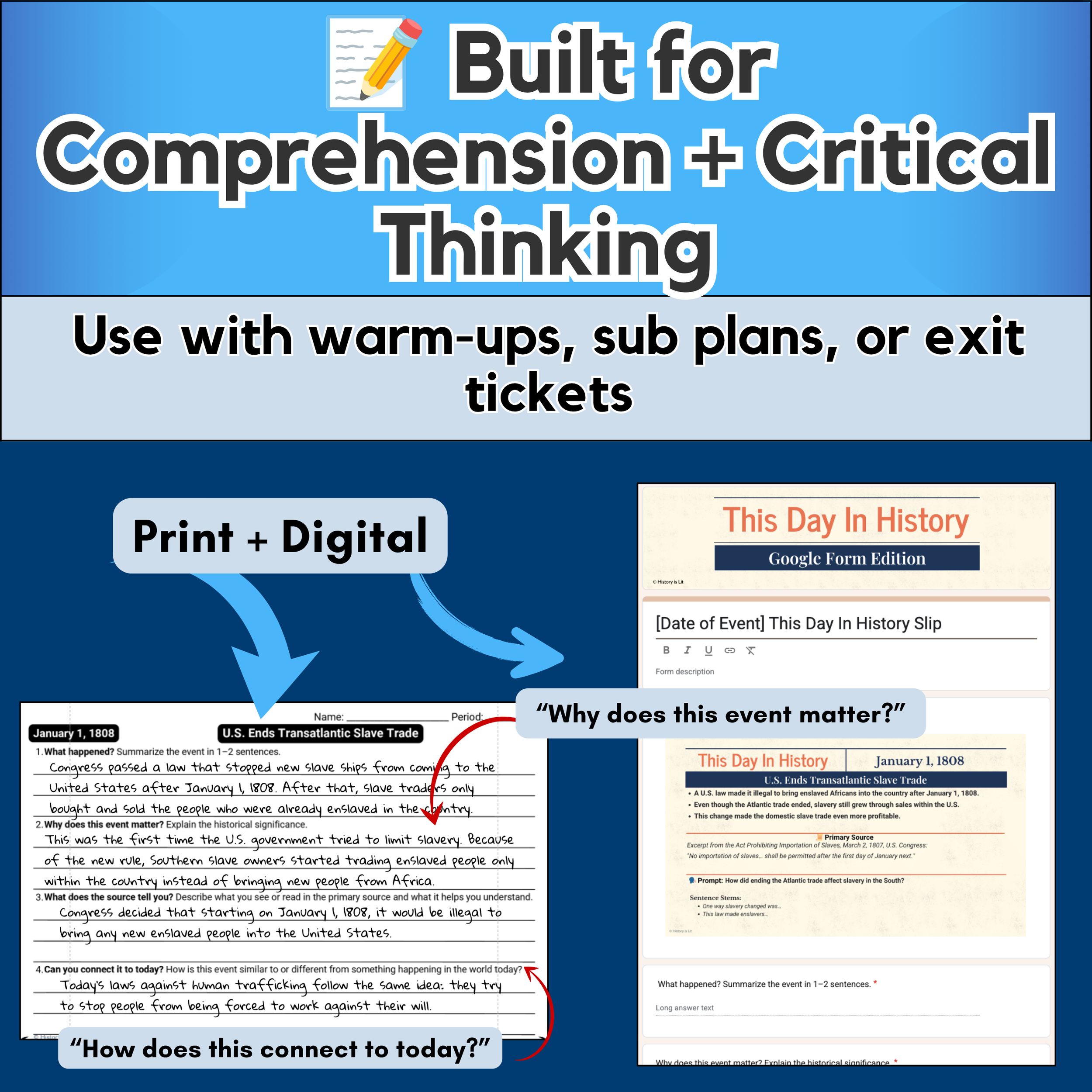
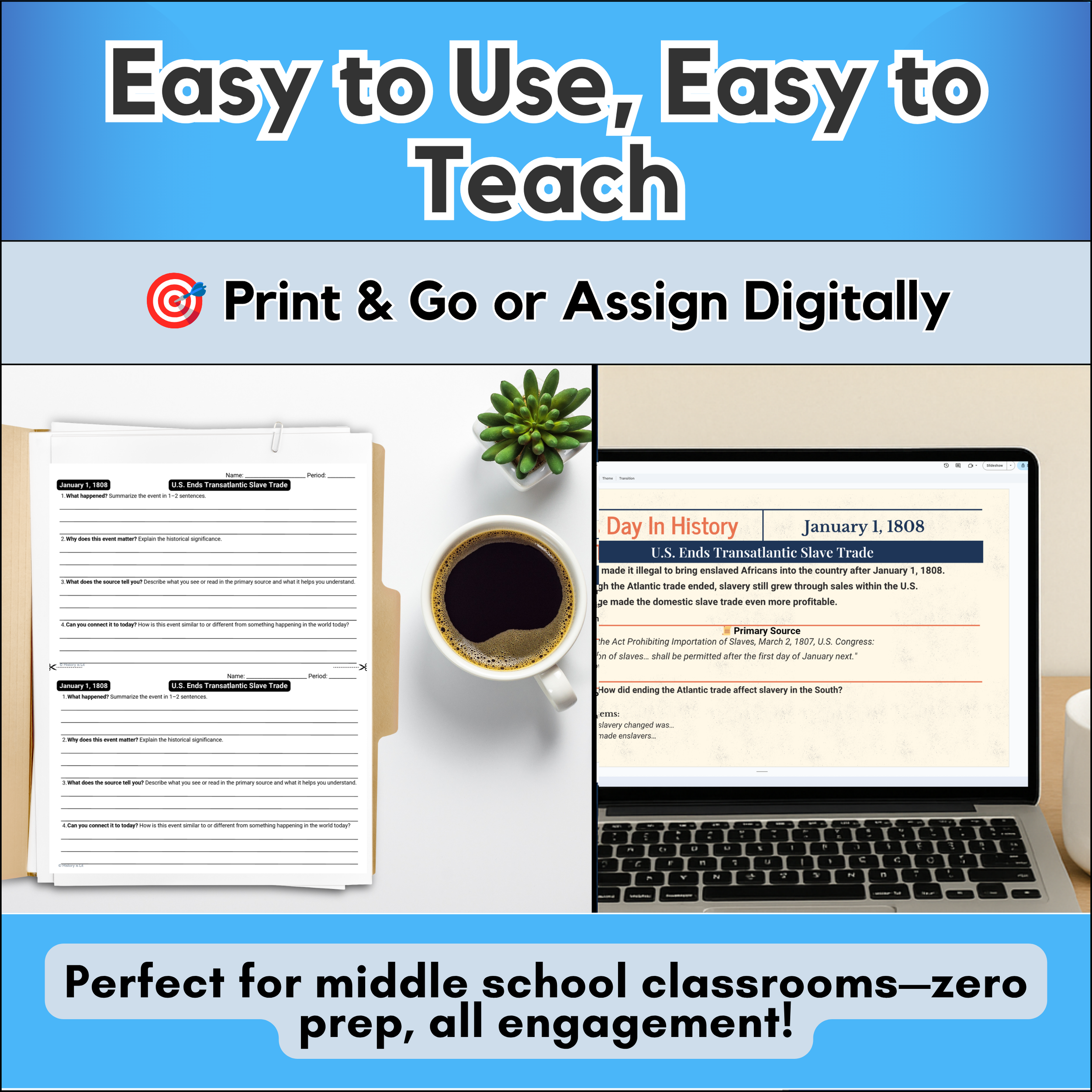
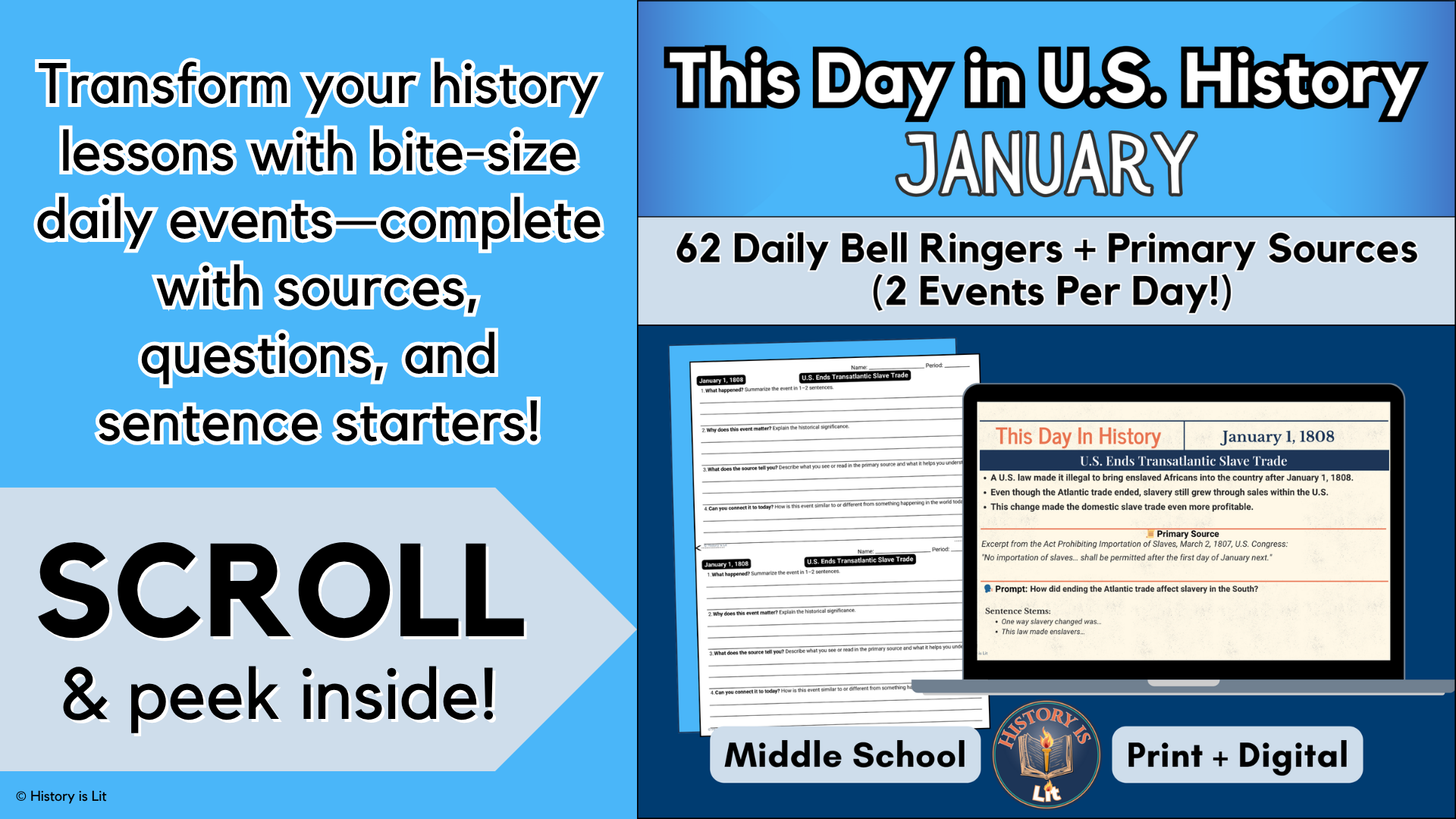
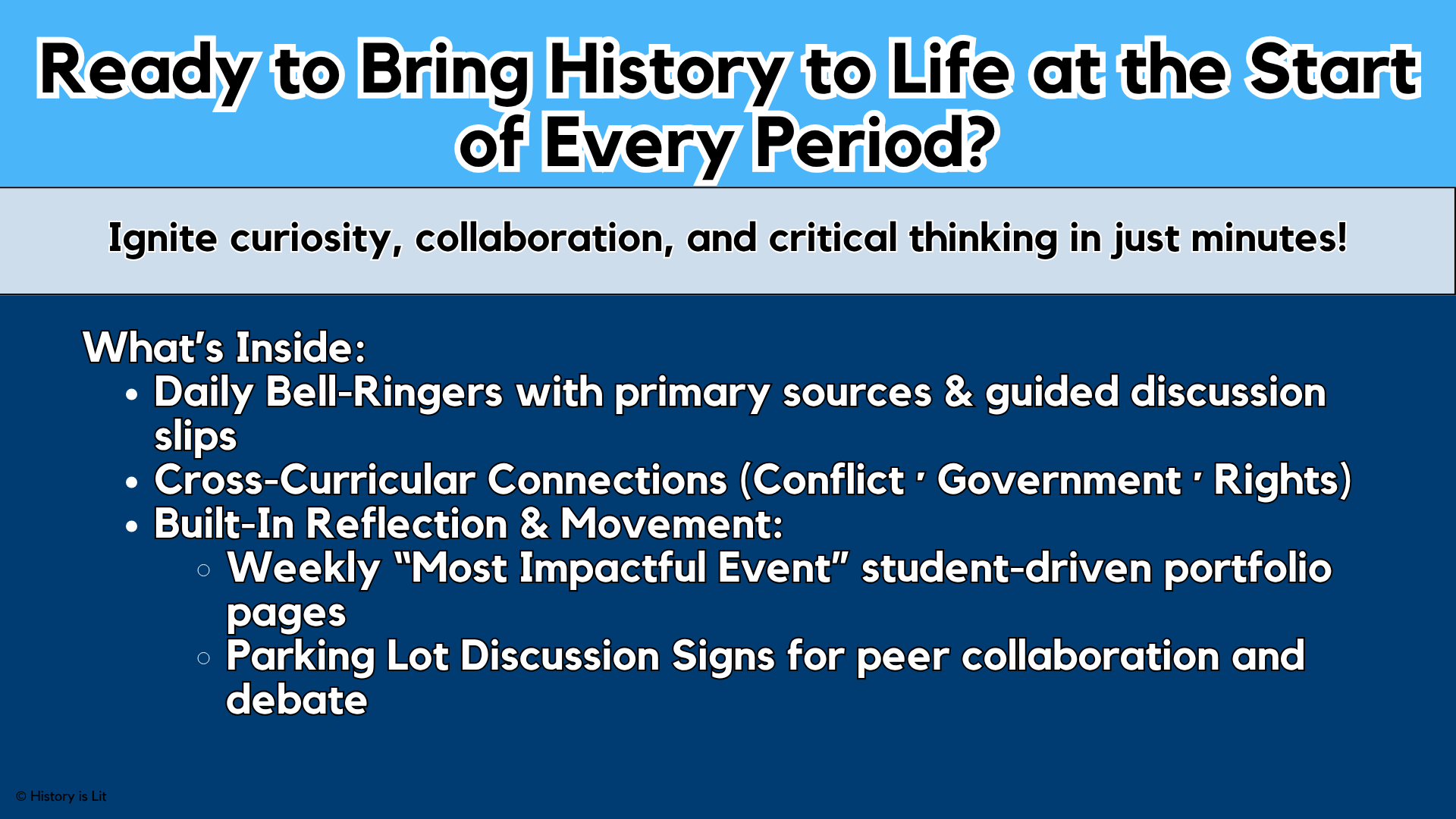
January can feel long, cold, and choppy with holiday returns, assemblies, and semester shifts. These January Bell Ringers keep middle-school U.S.-History classes on track and talking. You get 62 ready-to-use prompts, two for every weekday in January, that blend literacy, discussion, and historical-thinking skills.
Whether you’re re-establishing routines, leaving plans for a sub, or filling odd periods with meaningful work, simply print or project and go.
✅ What’s Included
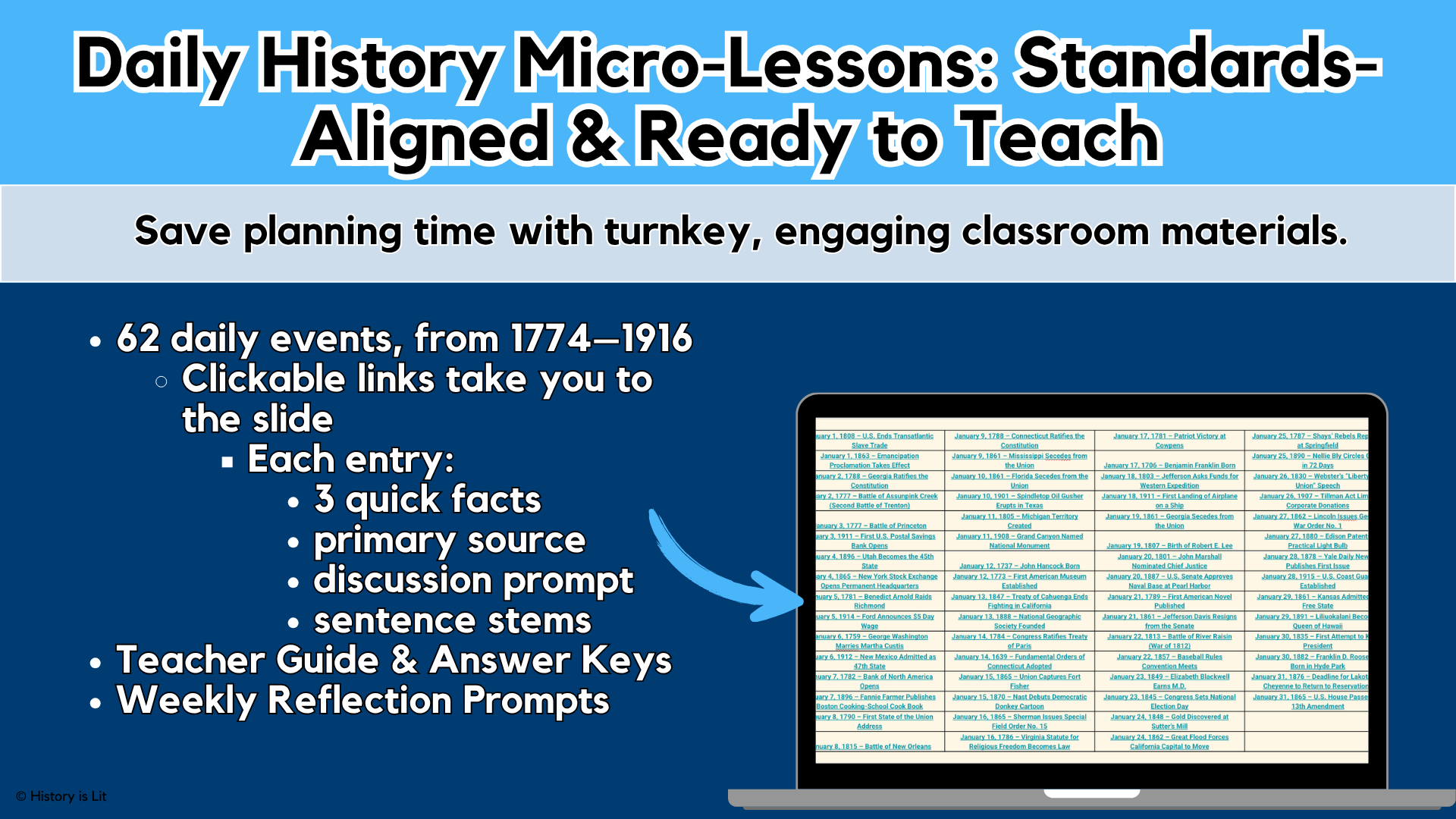
62 total prompts (2 events per weekday for January)
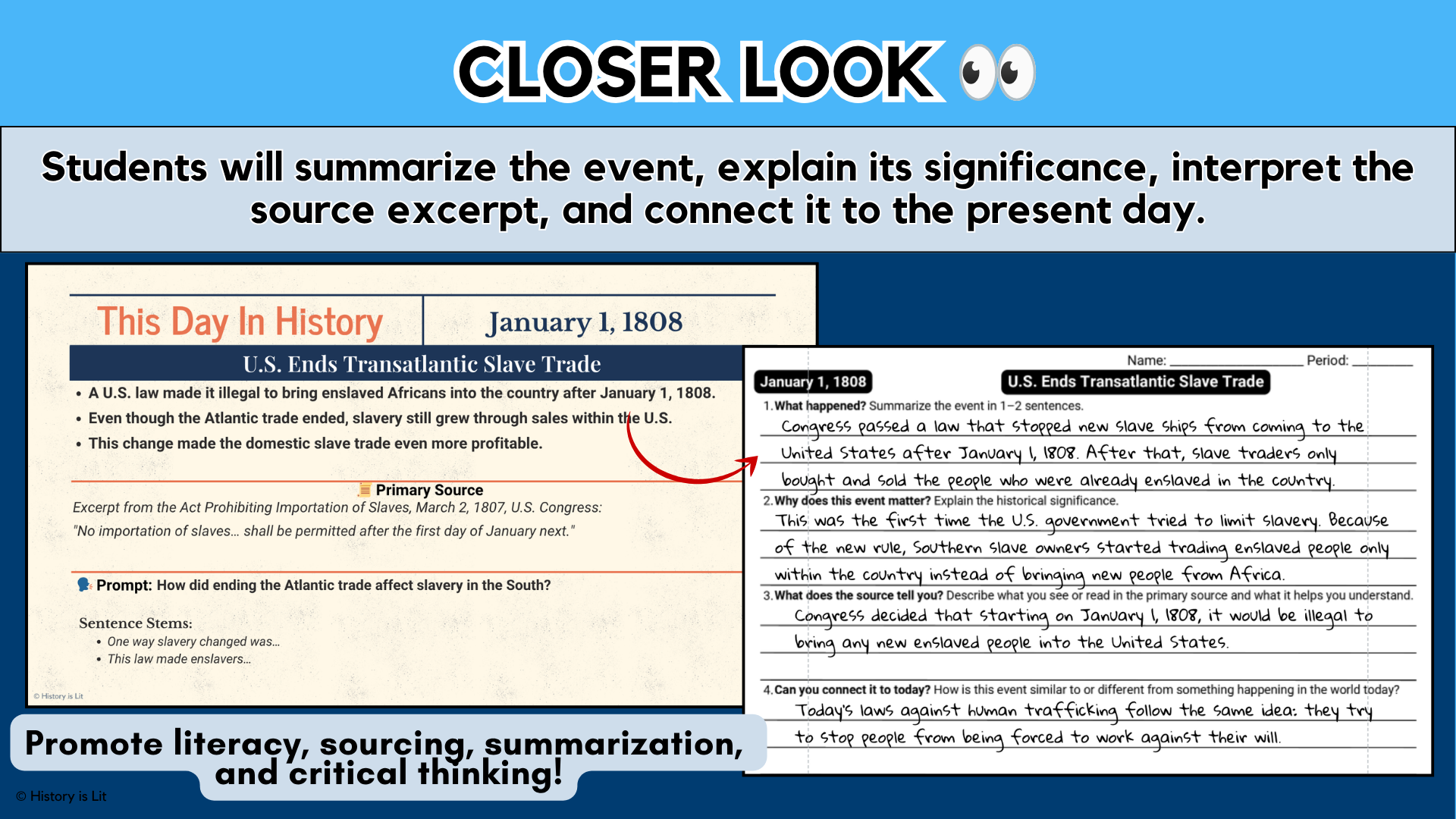
Each bell ringer provides:
A two- to three-sentence background blurb
A primary-source excerpt (quote, image, or document)
One discussion question plus two sentence stems
Printable student slips (PDF)
Google Slides version for projection or digital notebooks
Teacher Guide with routines, extension ideas, and theme wall suggestions
Answer Key featuring sample responses for every event
Why Teachers Love It
No prep—just print or project
Works as warm-ups, stations, homework, or exit tickets
Keeps momentum during a month of schedule changes
Sparks rich conversation without heavy grading
Built-in literacy scaffolds for citing evidence & crafting arguments
Why Students Engage
Real stories, not just names and dates
Primary sources that make the past feel present
Sentence stems boost writing and speaking confidence
Prompts invite links to today’s issues and enduring themes
January Topics
New Year, New Laws: U.S. bans the trans-Atlantic slave trade (1808) · Emancipation Proclamation takes effect (1863)
Revolutionary Highs: Battles of Trenton’s Assunpink Creek & Princeton (1777)
Expansion & Statehood: Utah, New Mexico, and Kansas enter the Union · Georgia and Connecticut ratify the Constitution
Civil War Turning Points: Mississippi & Florida secede · House passes the 13ᵗʰ Amendment
Rights & Resistance: Sherman’s “40 acres and a mule” order · Treaty of Cahuenga in California · Lakota & Cheyenne deadline
Innovation & Industry: Spindletop oil gusher · Ford’s $5 workday · Edison’s light-bulb patent
Politics & Power: John Marshall nominated Chief Justice · Tillman Act curbs corporate donations
Firsts & Frontiers: First airplane landing on a ship · National Geographic Society founded · Coast Guard established
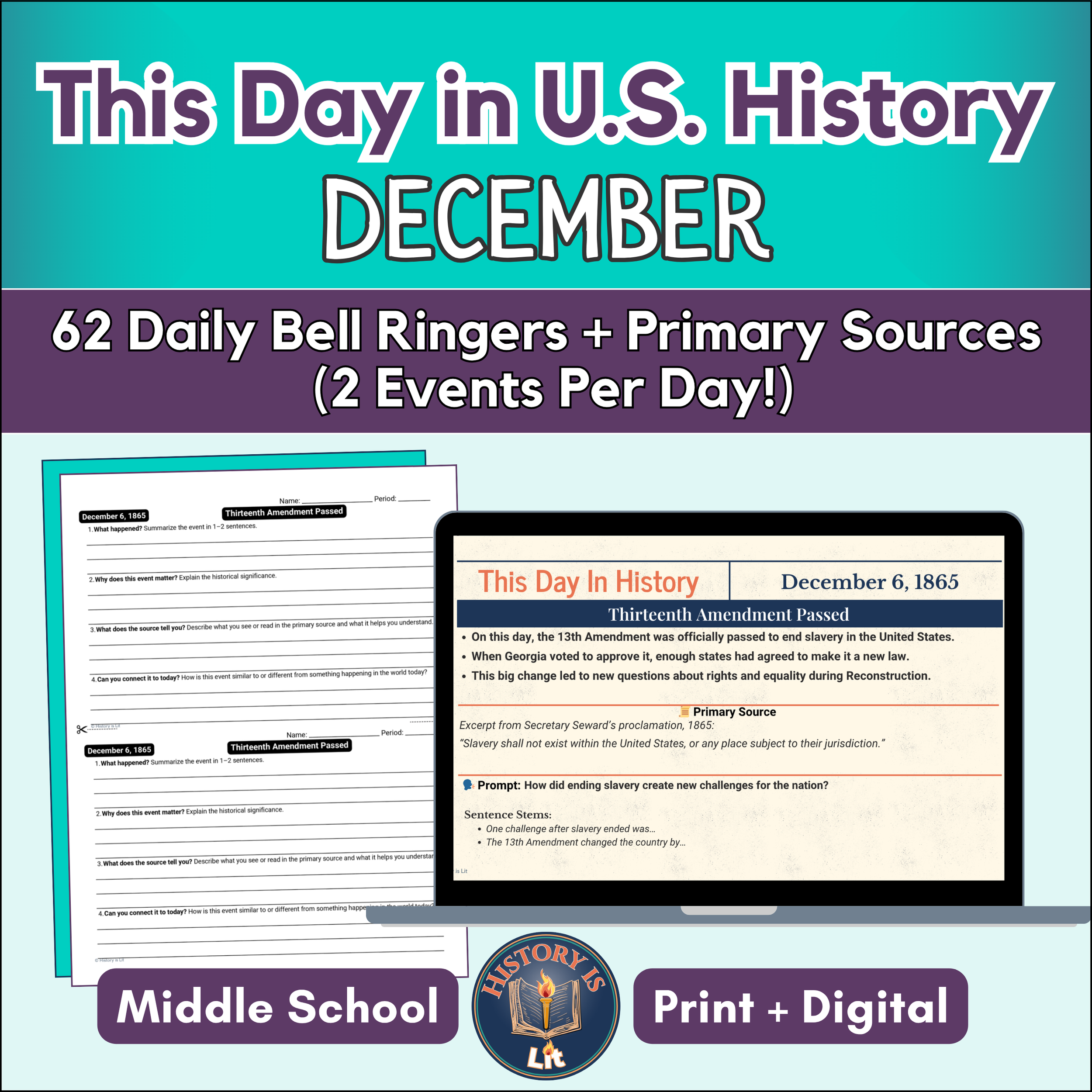
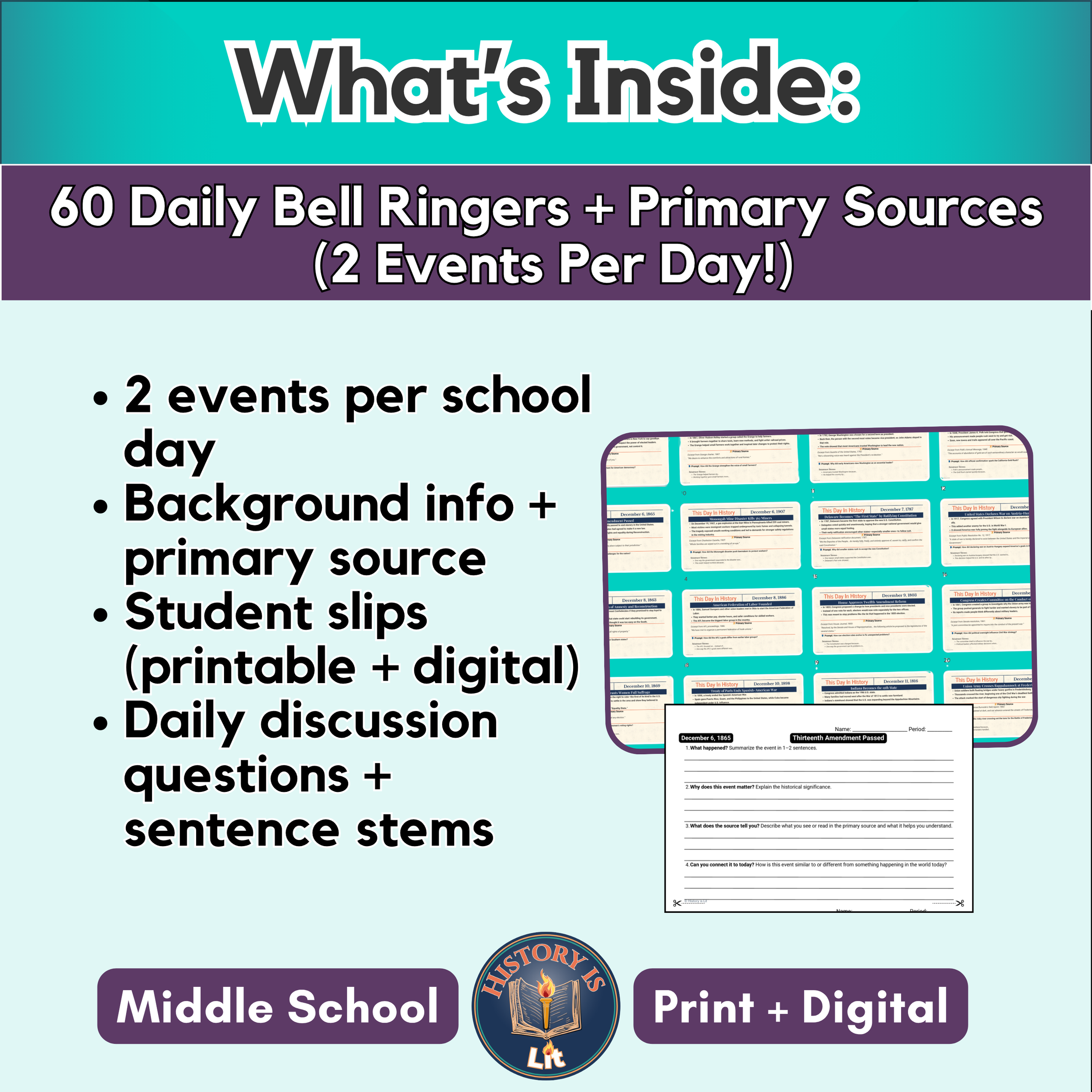
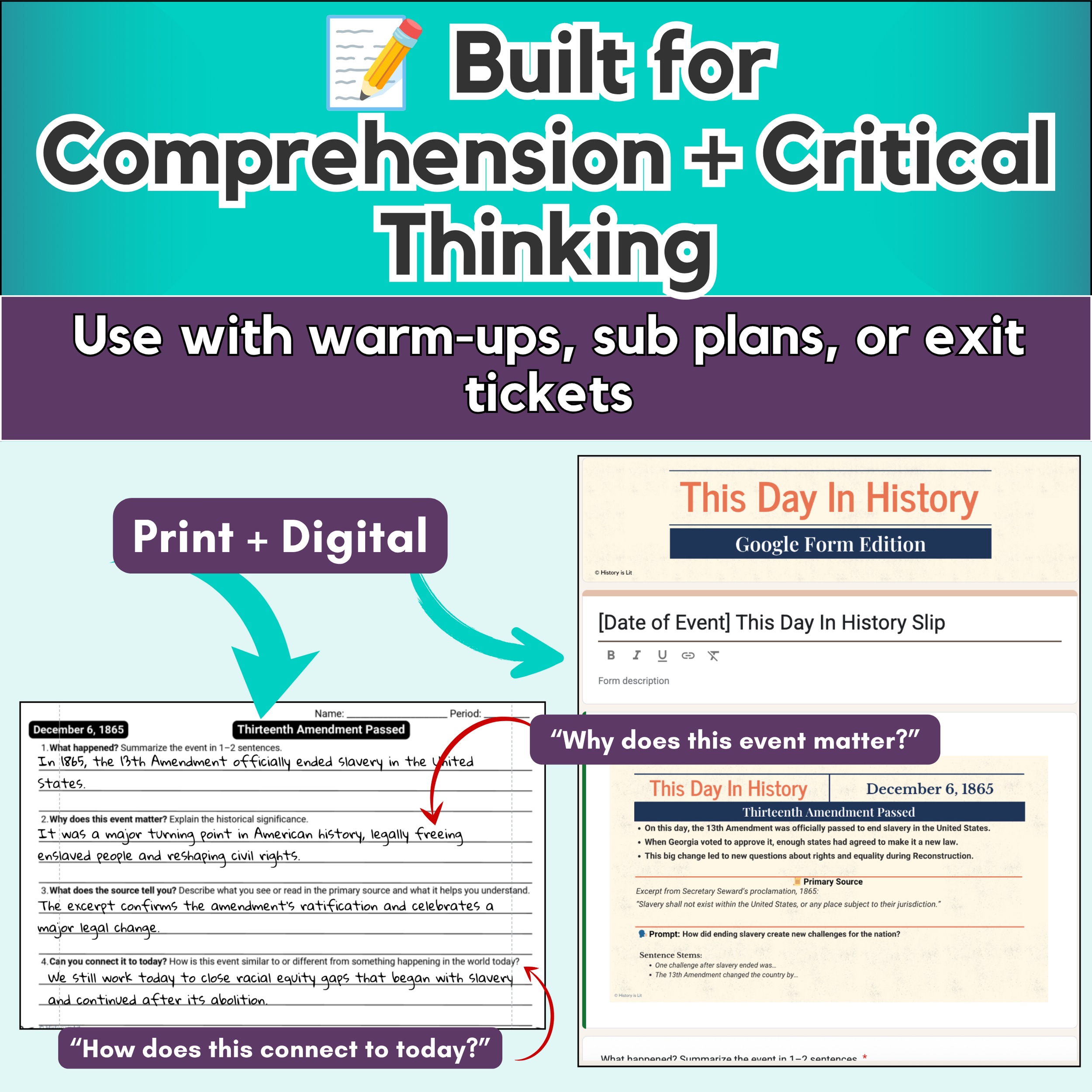
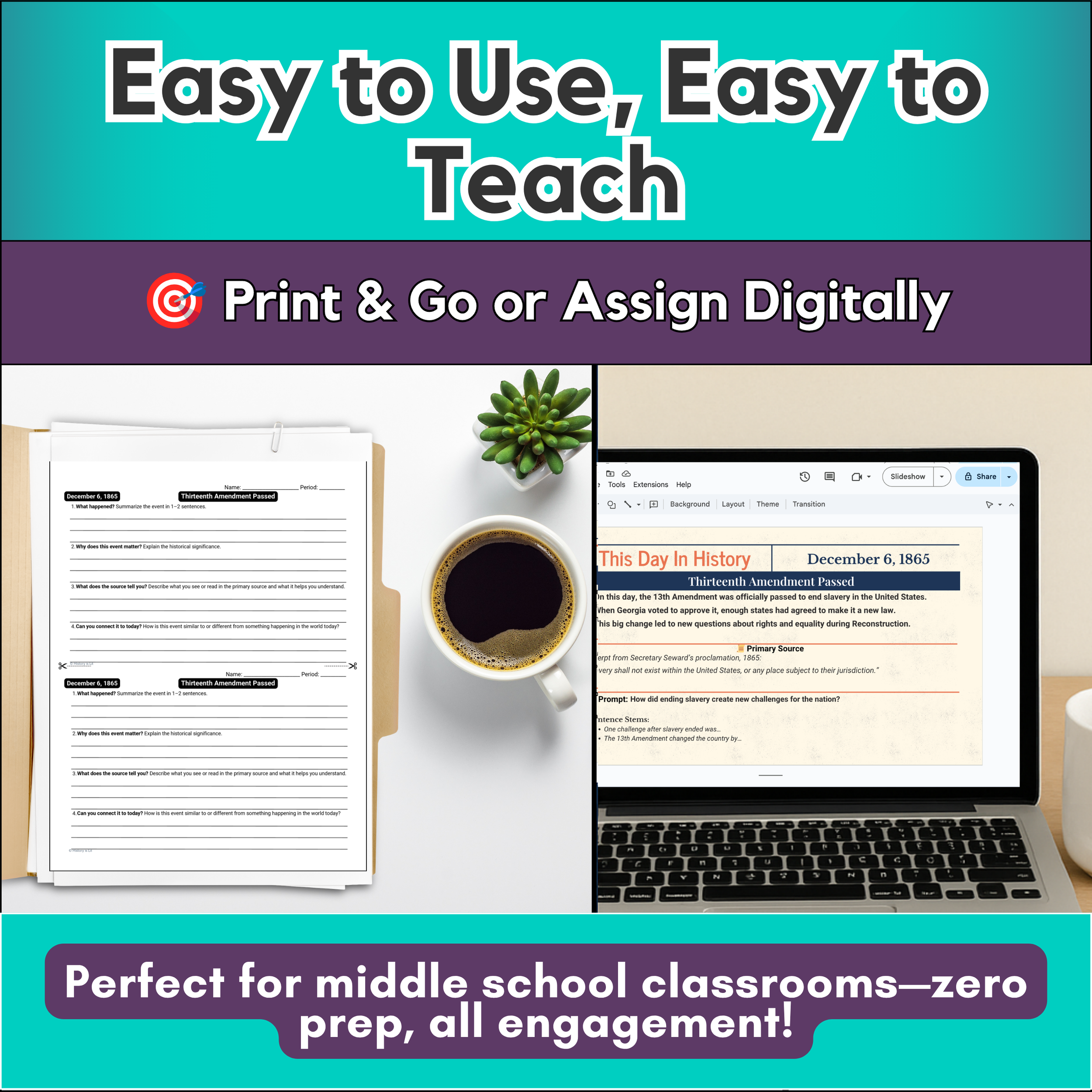
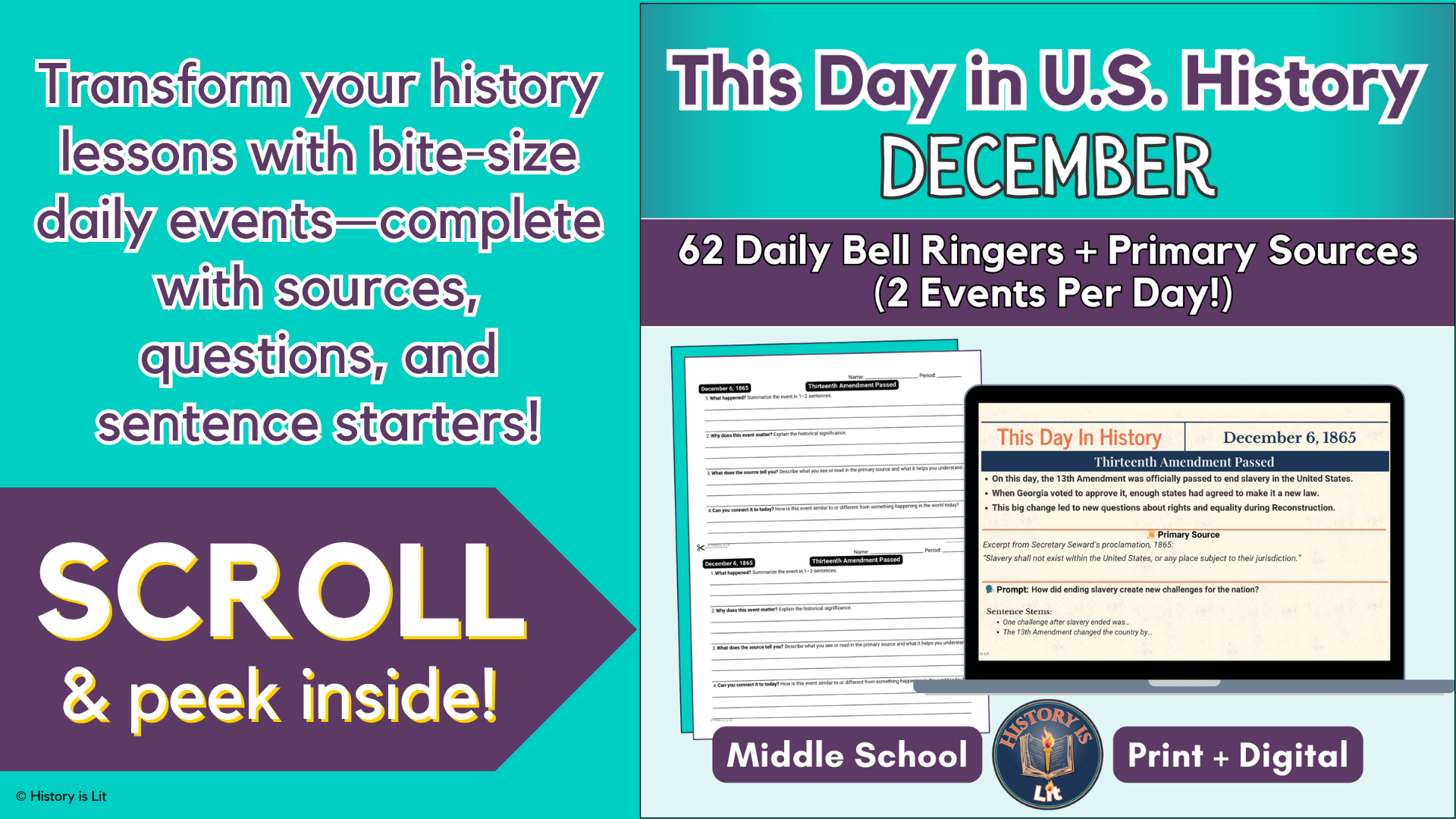
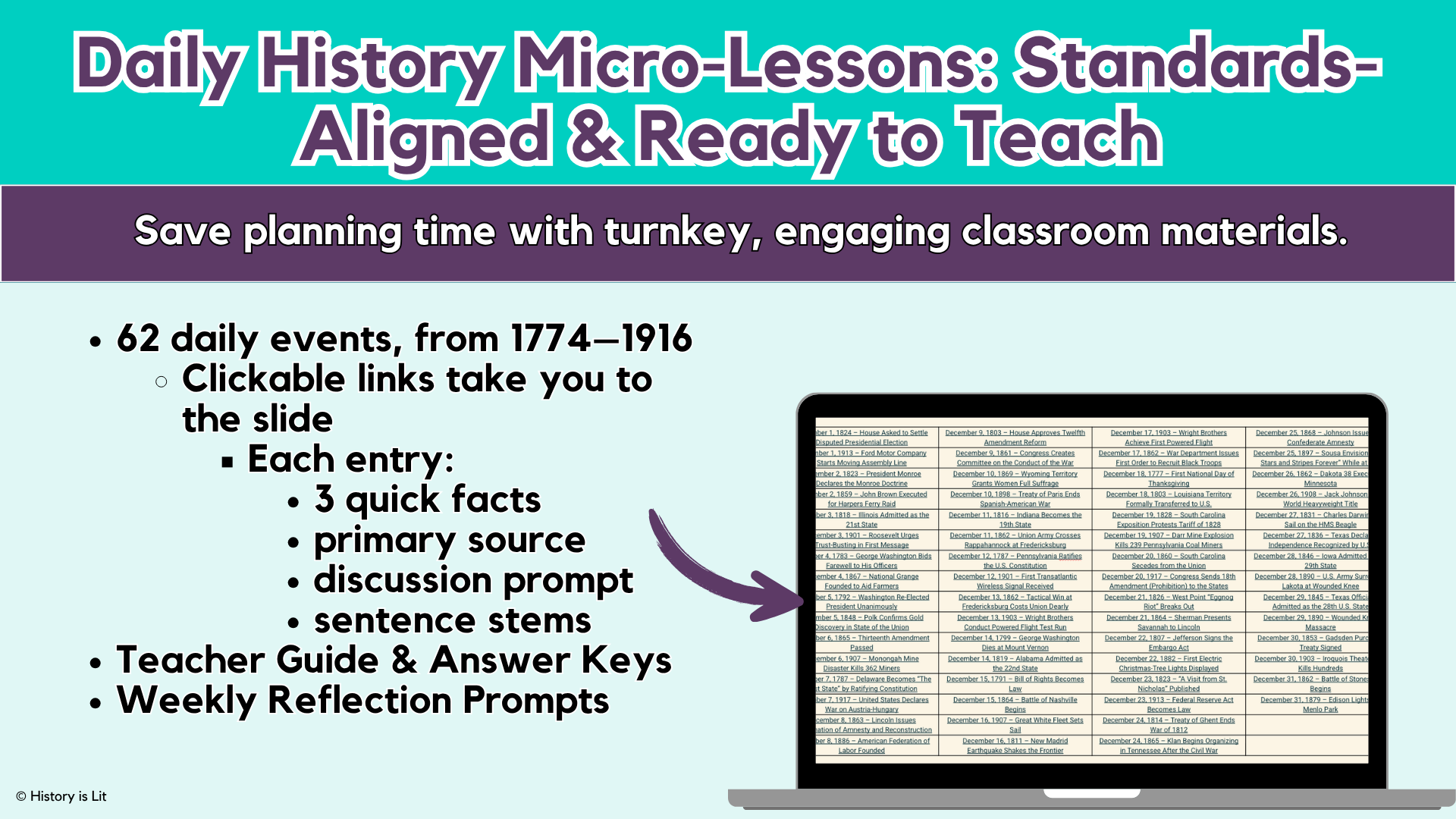
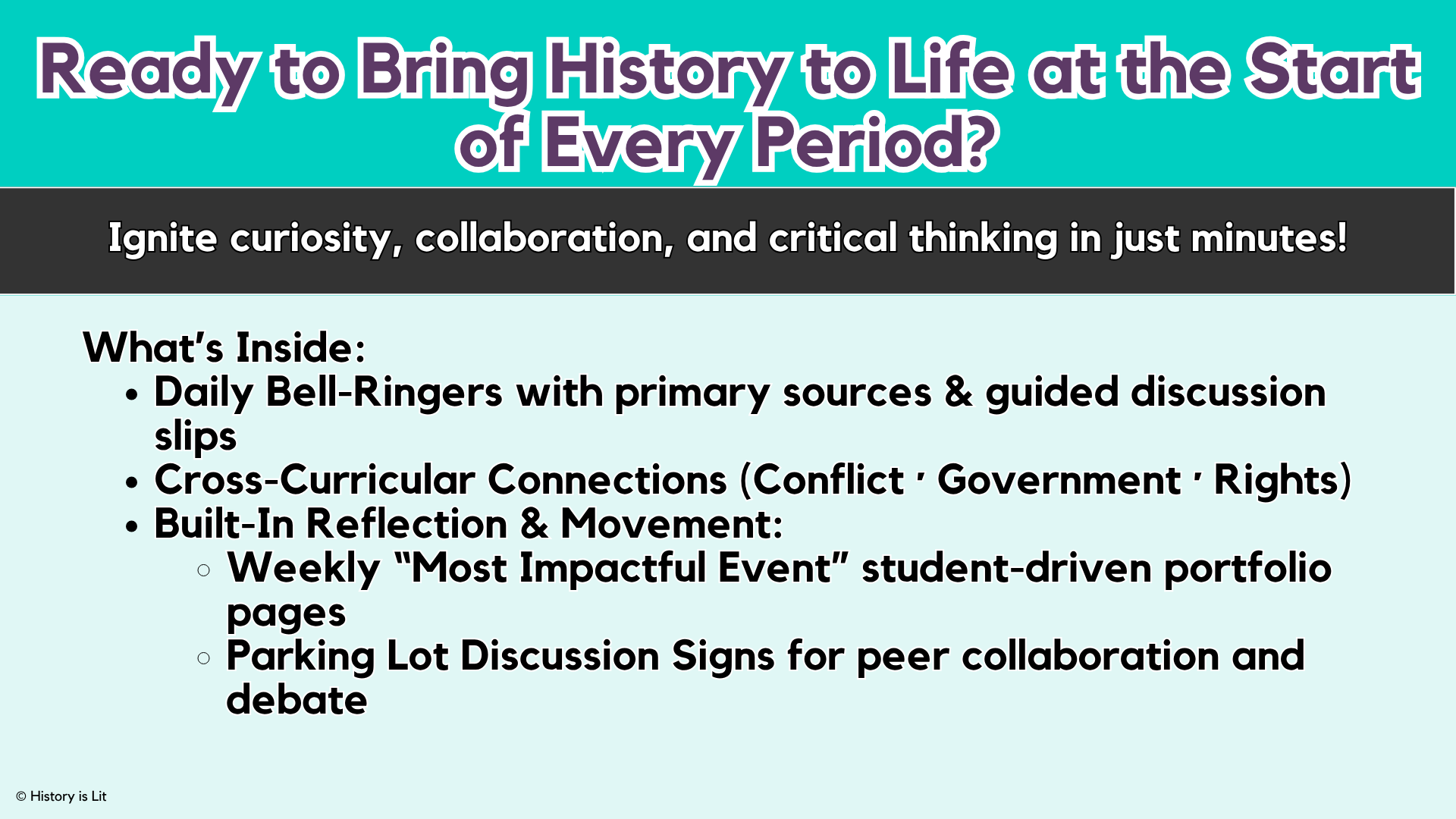
These December Bell Ringers help you maintain momentum during a busy month filled with interruptions, holidays, and schedule changes. Designed for middle school U.S. History, this resource includes 62 engaging prompts—two for every weekday in December—with built-in literacy, discussion, and historical thinking skills.
Whether you’re keeping routines consistent, planning for a sub, or filling odd class periods with meaningful work, these bell ringers are ready to go.
✅ What’s Included:
62 total prompts (2 events per weekday for December)
Each bell ringer includes:
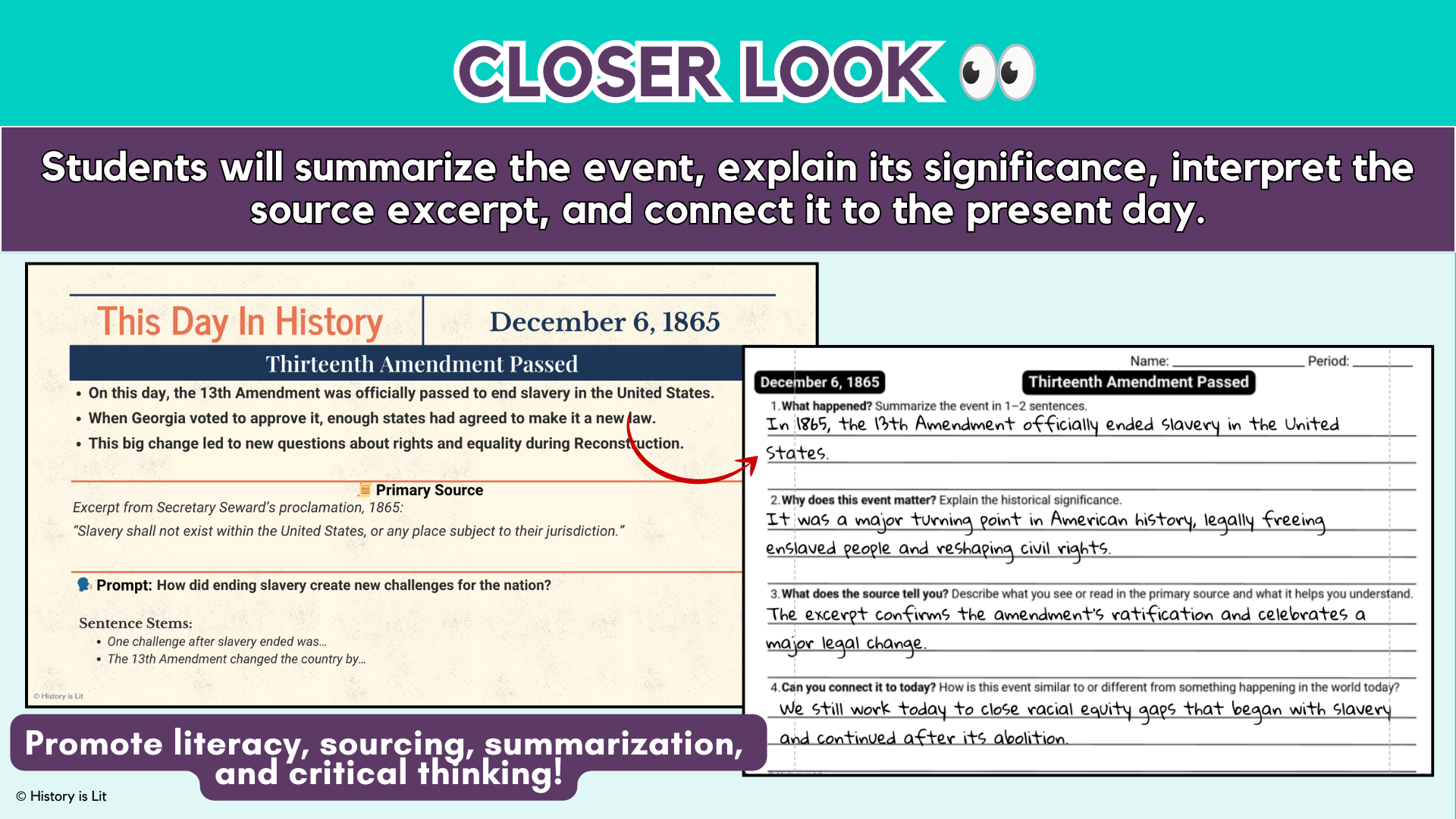
A short background summary (2–3 sentences)
Primary source excerpt (quote, image, or document)
1 discussion question + 2 sentence stems
Printable student slips (PDF)
Google Slides version for projection or digital use
Teacher Guide with suggested routines + extension ideas
Answer Key with sample responses for all events
Why Teachers Love It:
No prep—just print or project
Perfect for warm-ups, stations, homework, or exit tickets
Keeps students engaged during an often-disrupted month
Encourages meaningful conversations without grading overload
Built-in literacy support for citing evidence and building arguments
Why Students Engage:
Real stories from U.S. history—not just dates and names
Primary sources that bring the past to life
Sentence stems boost writing and speaking confidence
Encourages connections to modern issues and enduring themes
Topics Covered Include:
Presidential elections and democratic tensions (Jackson vs. Adams, Polk’s State of the Union, Roosevelt’s trust-busting)
Expansion, statehood, and shifting national identity (Illinois, Alabama, Indiana, Texas, Iowa, and more)
Civil War milestones and consequences (Thirteenth Amendment, Battle of Nashville, Sherman’s March, Confederate amnesty)
Struggles for rights and justice (Wyoming grants women’s suffrage, Bill of Rights, Prohibition amendment, labor disasters)
Native resistance and U.S. military conflict (Dakota 38, Wounded Knee, U.S. Army actions in the West)
Invention, progress, and cultural milestones (First powered flight, transatlantic wireless signal, Federal Reserve Act, Edison’s Menlo Park)
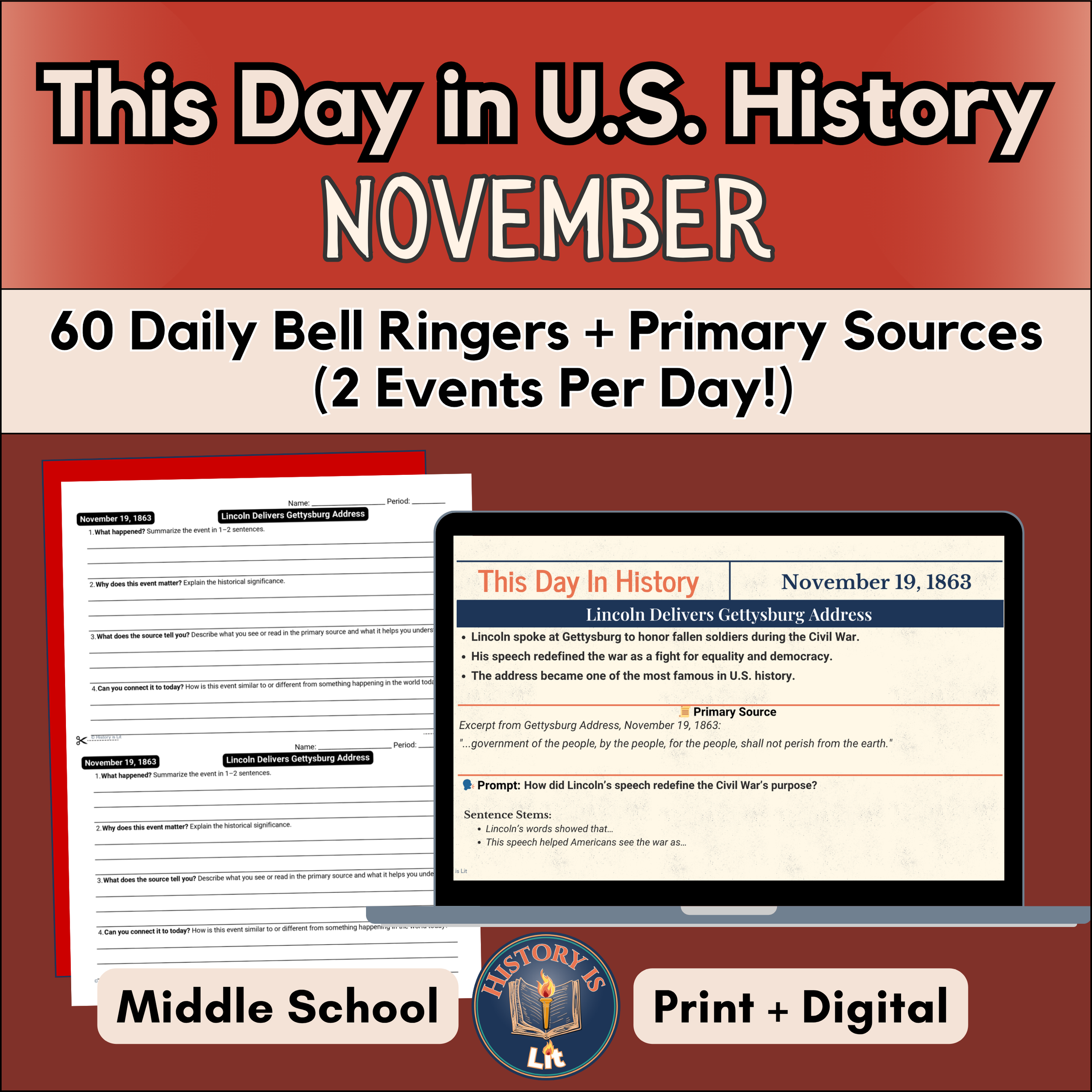
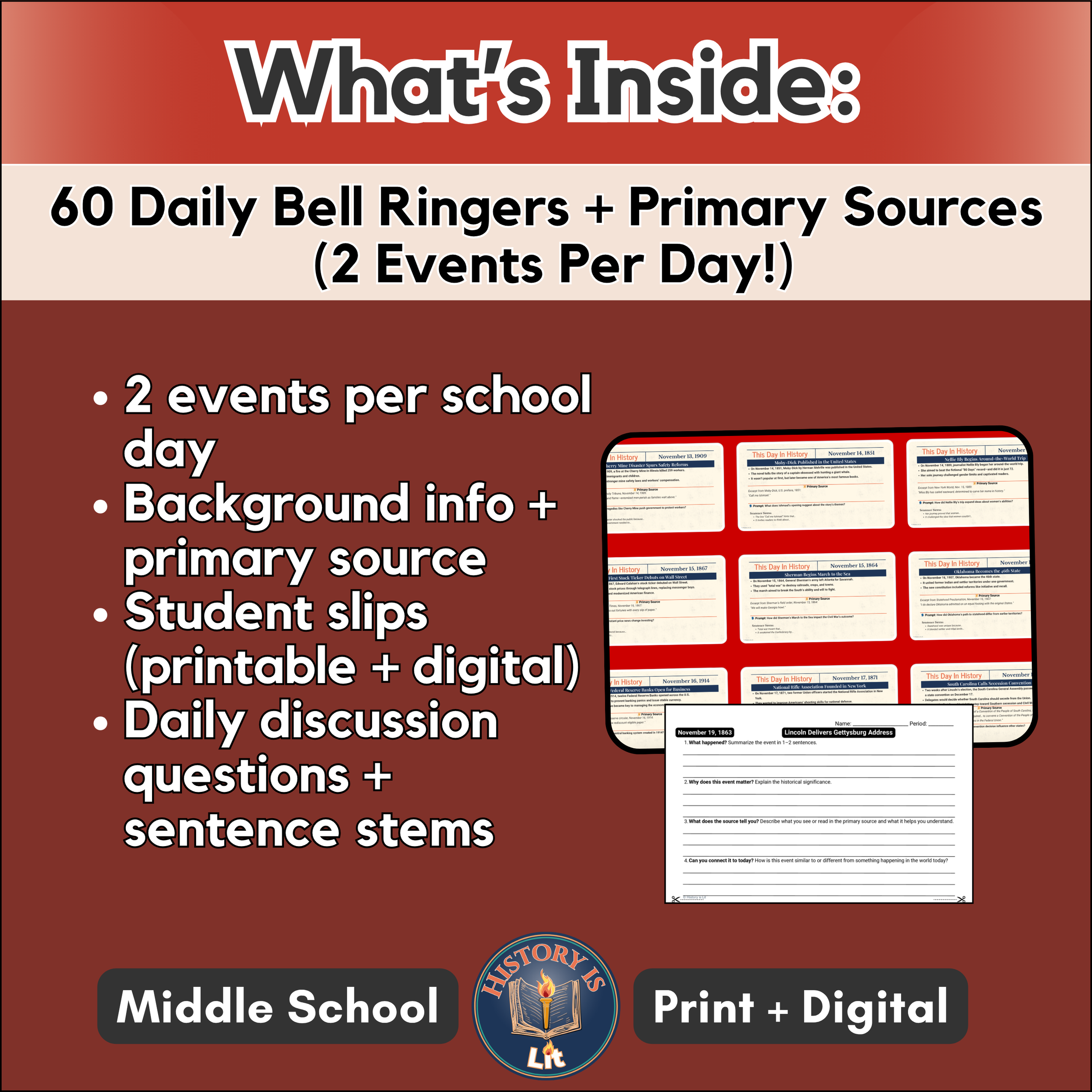
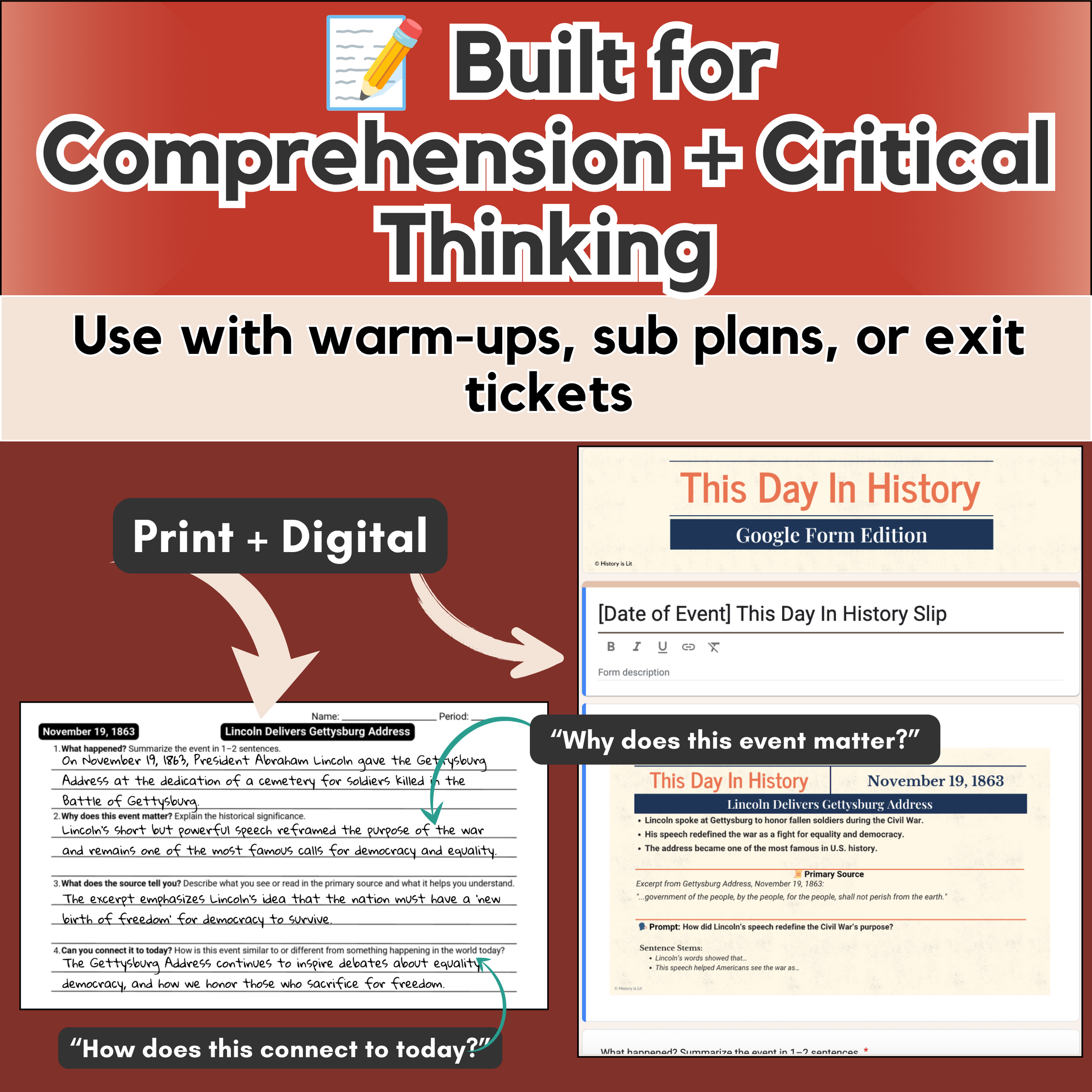
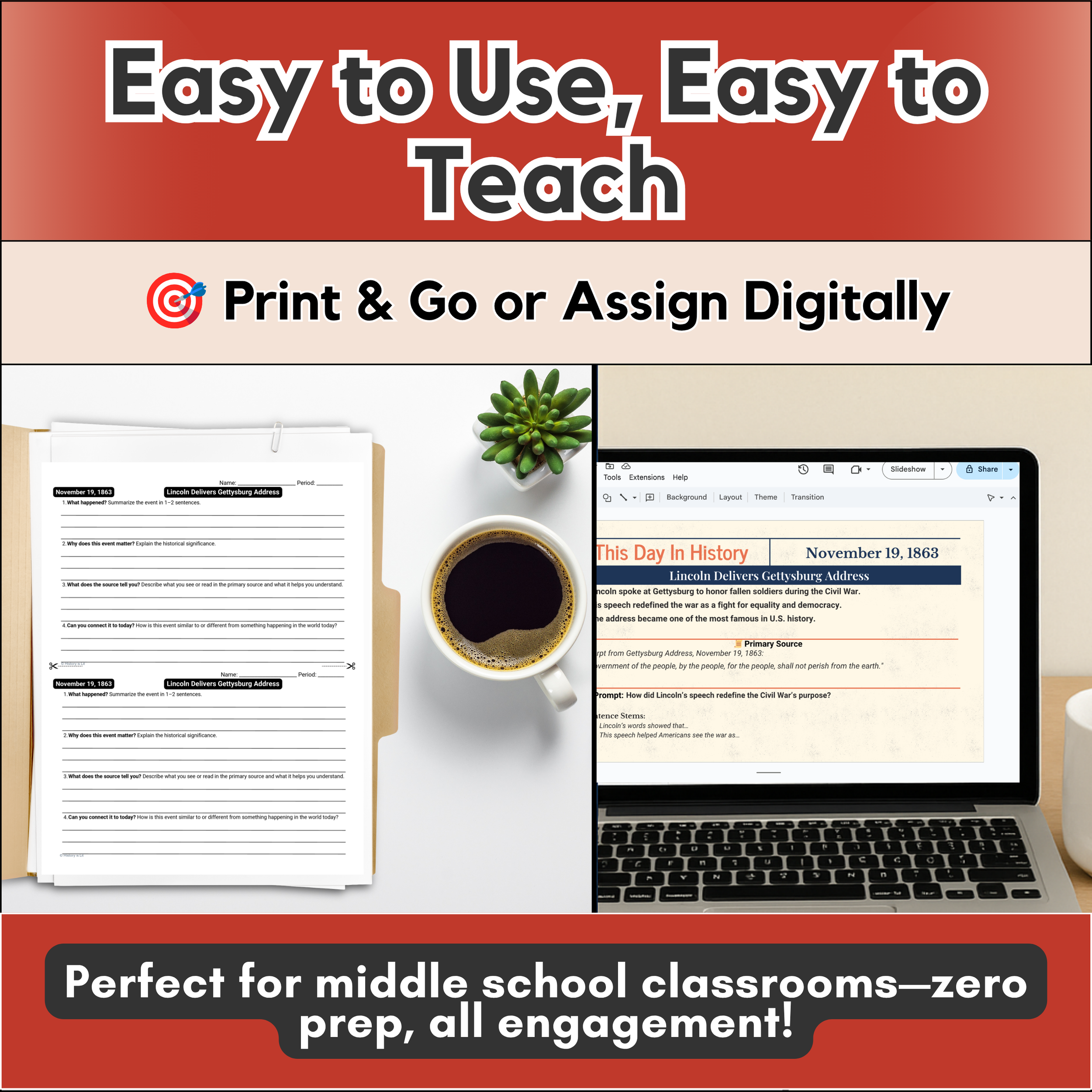
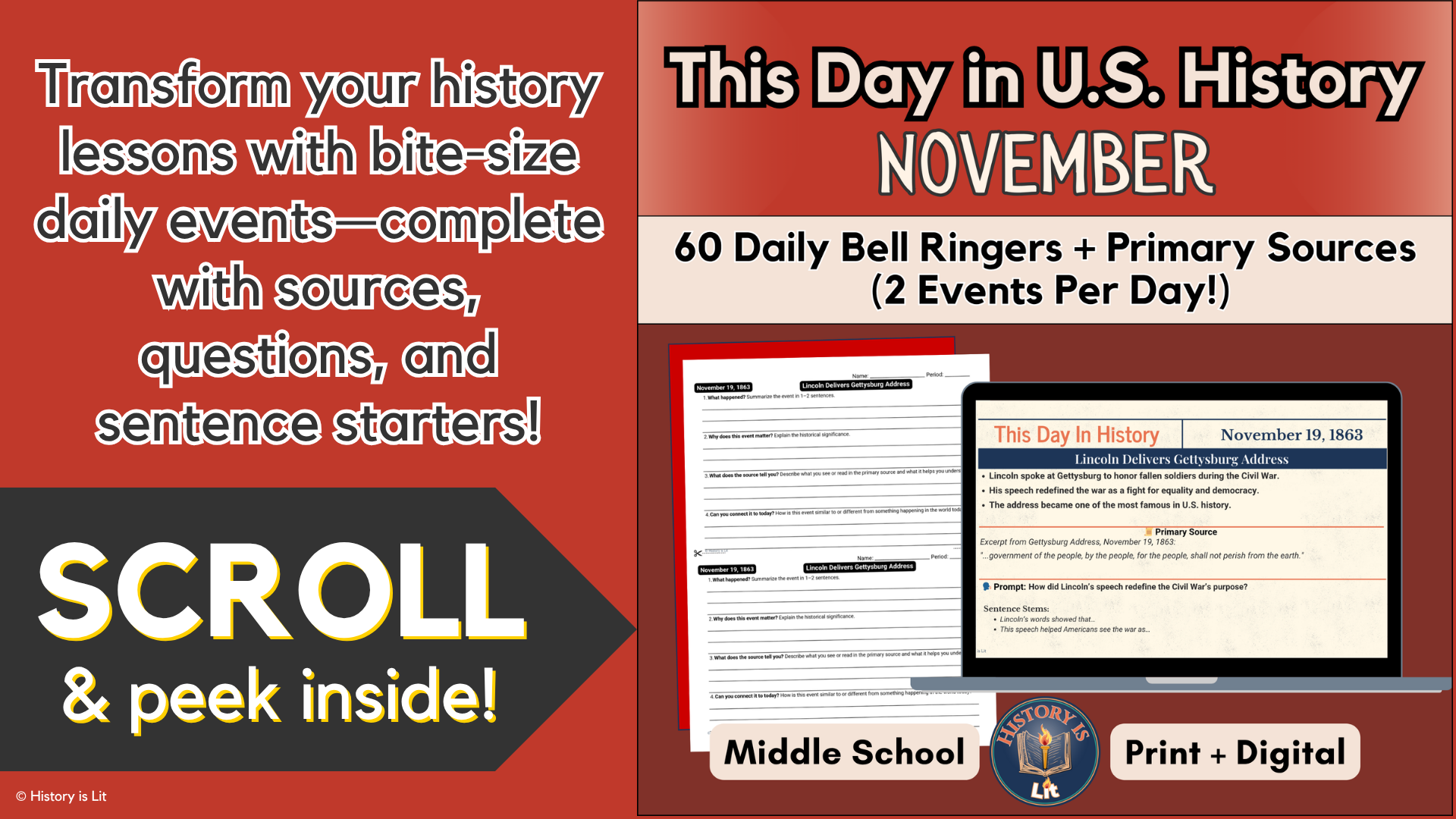
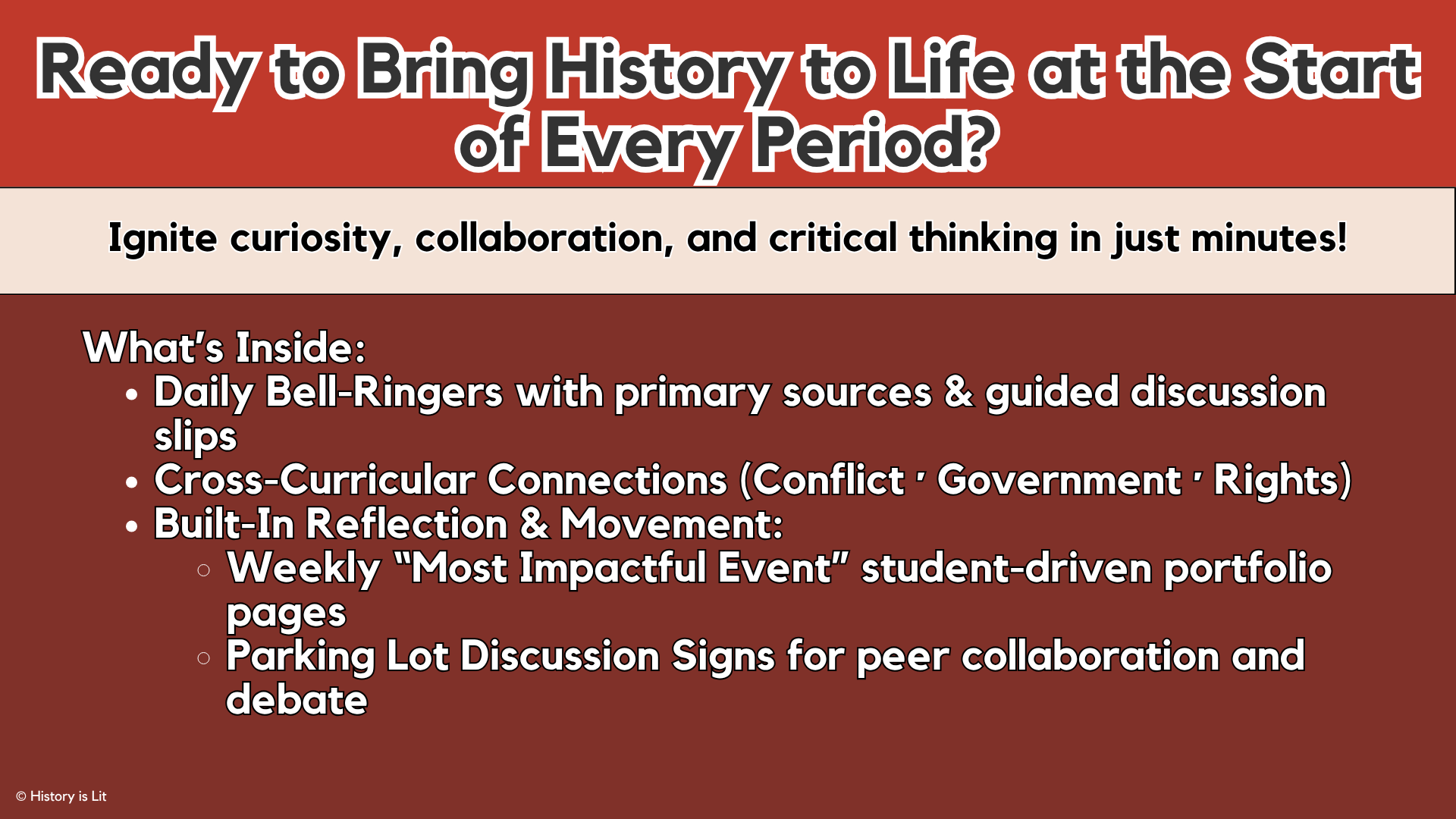
Spark November Engagement—No Prep Required!
These November Bell Ringers make it easy to start each class with meaningful history, literacy, and discussion—all in under 10 minutes a day.
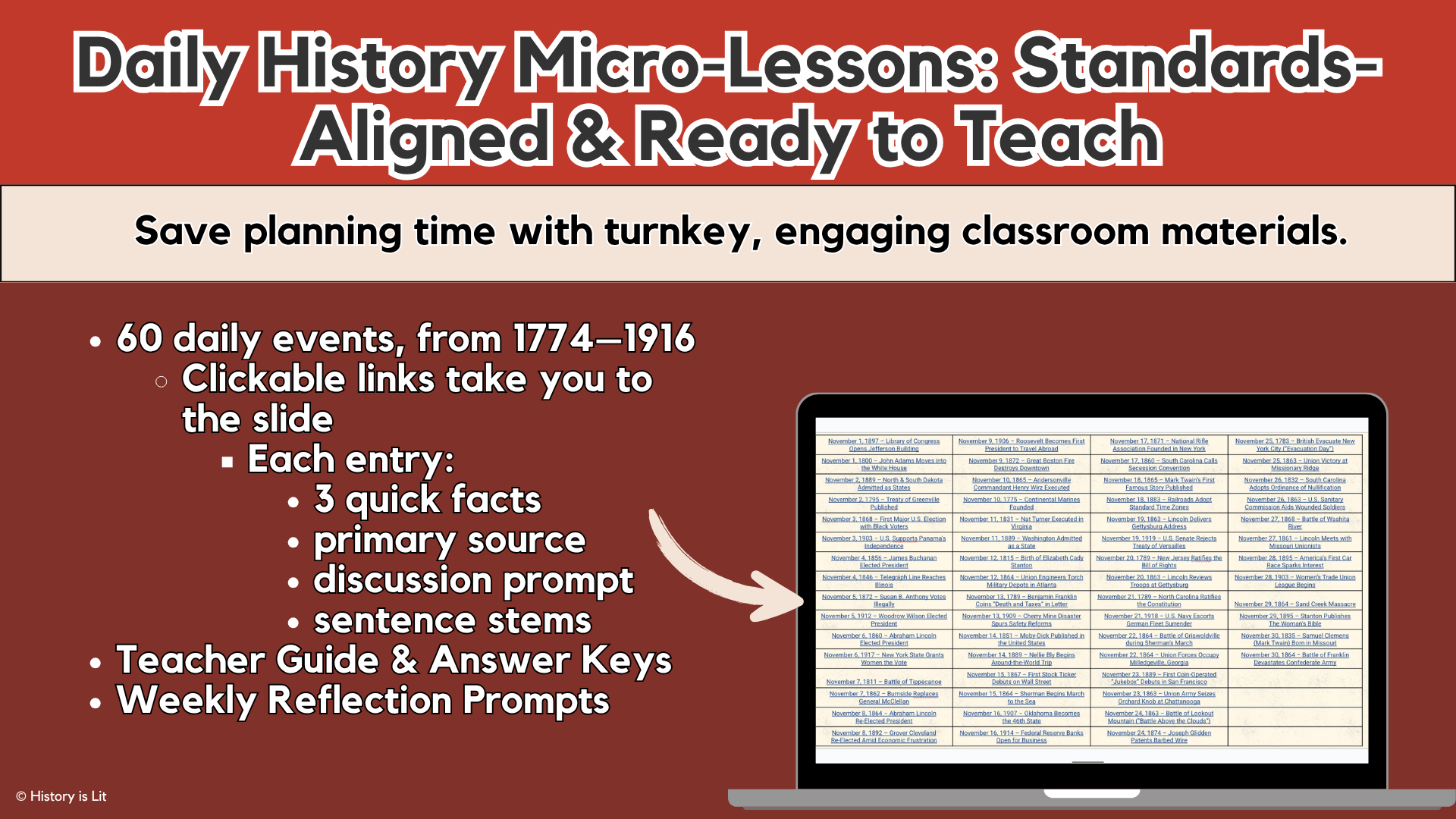
Perfect for warm-ups, sub plans, stations, or sparking classroom conversation, this set includes 60 engaging prompts (2 per weekday) aligned to middle school U.S. History standards from the Founding Era through Reconstruction.
✅ What’s Included:
60 total prompts (2 for every weekday in November)
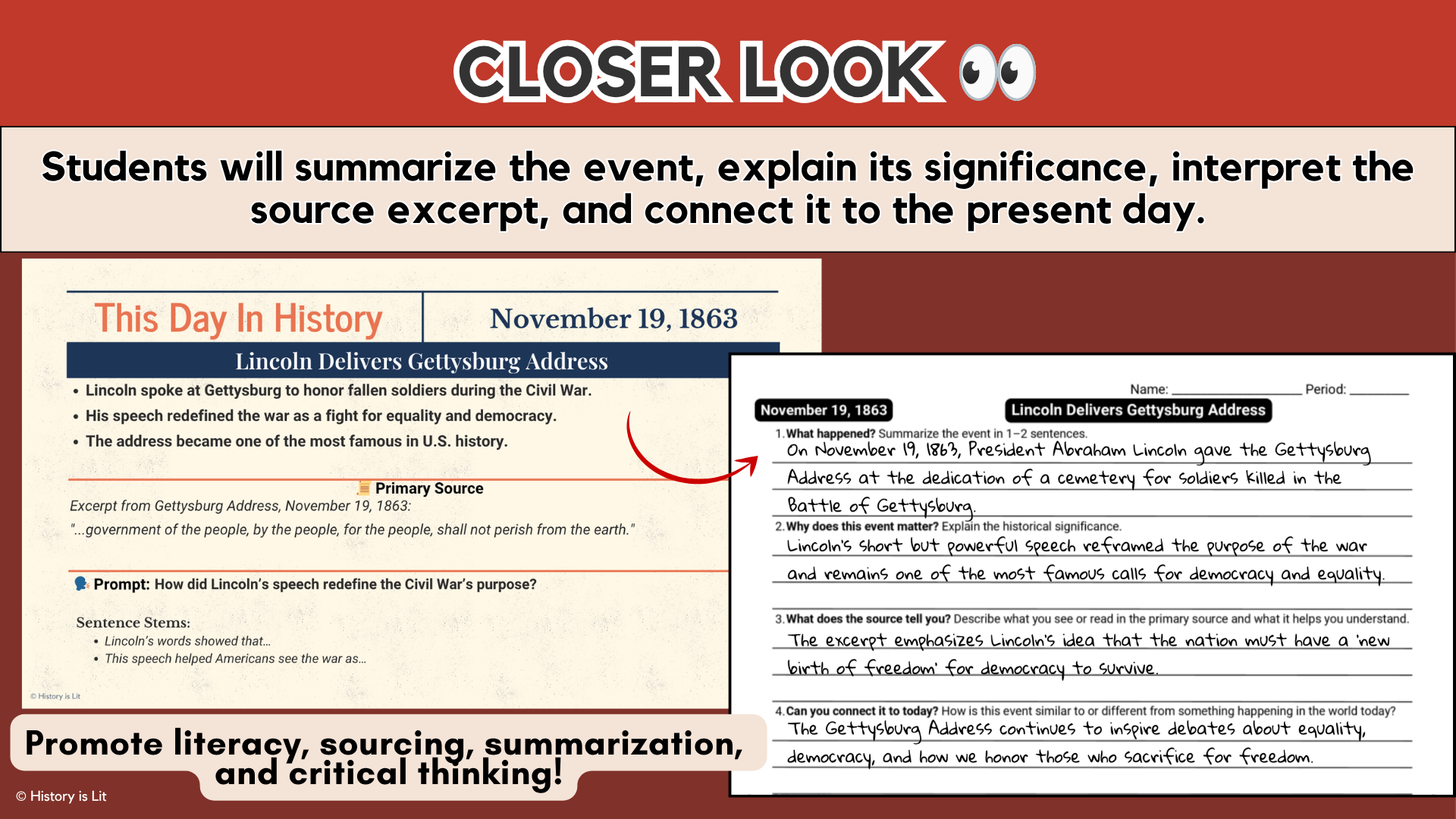
Each bell ringer features:
A short historical background (2–3 sentences)
A primary source excerpt (quote, image, or document)
1 discussion question + 2 sentence stems
Printable PDF slips for student responses
Digital Slides version for class display or Google Classroom
Teacher Guide with routines, extensions, and management tips
Answer Key with sample responses for every event
Why Teachers Love It:
Zero prep—just print or project
Built-in primary sources and sentence stems
Flexible for bell ringers, exit tickets, homework, or stations
Encourages academic discussion without extra grading
Aligned to California U.S. History Standards (8.1–8.12)
Why Students Engage:
Real stories—not just names and dates
Quick but deep prompts with built-in support
Encourages connections to modern-day issues
Builds confidence in writing, speaking, and historical thinking
Topics Covered Include:
Presidential elections and democracy in action (Lincoln, Wilson, Buchanan, Grant)
Expansion, statehood, and shifting power (Washington, North & South Dakota, Oklahoma)
Civil War turning points and consequences (Gettysburg Address, Sherman’s March, Andersonville)
Rights, reform, and activism (Susan B. Anthony votes, Women’s Bible, Labor Unions)
Native resistance and injustice (Sand Creek Massacre, Battle of Tippecanoe, Treaty of Greenville)
Innovation and cultural shifts (First Car Race, Jukebox, Stock Ticker, Twain’s first story)
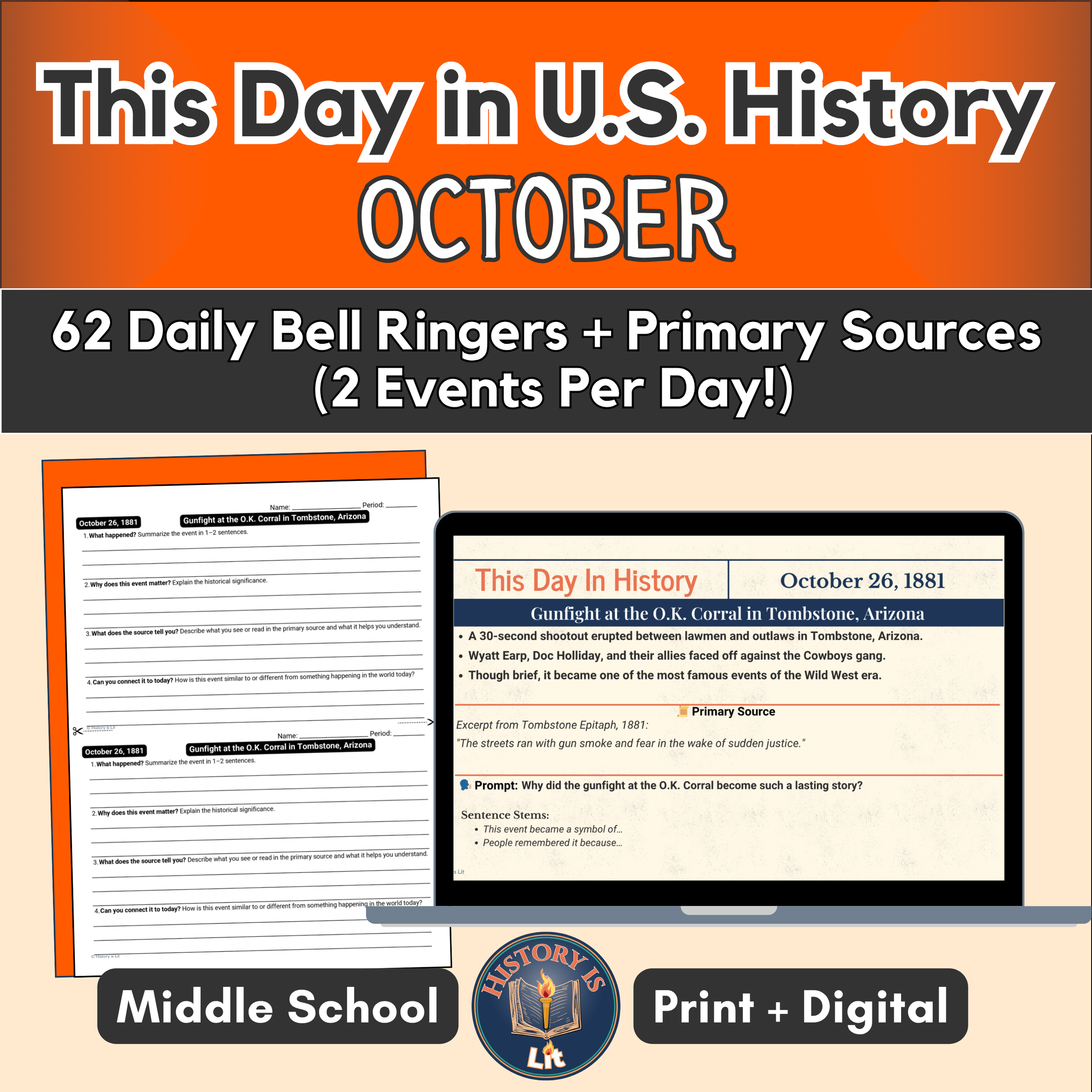
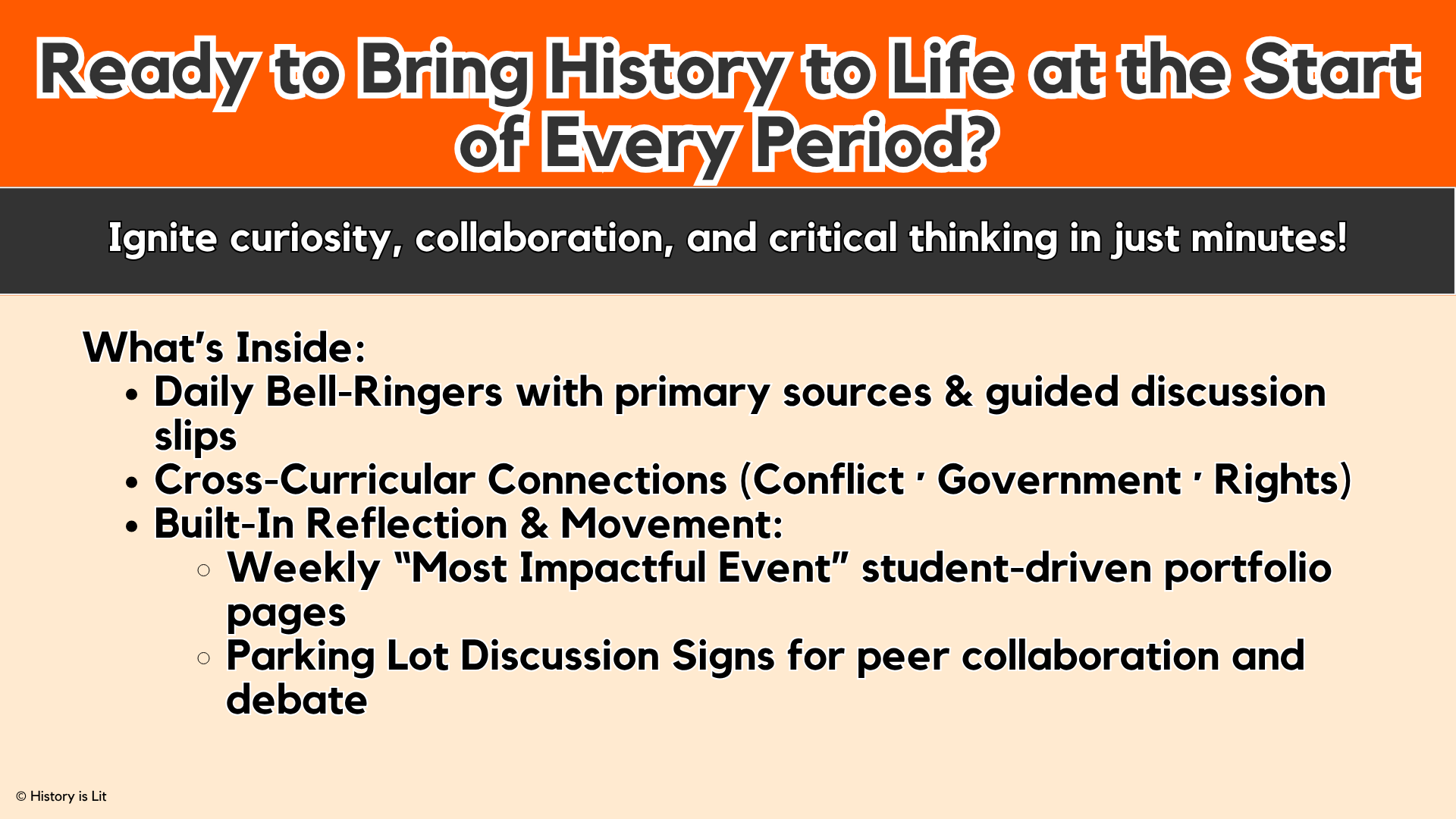
Spark October Engagement—No Prep Required!
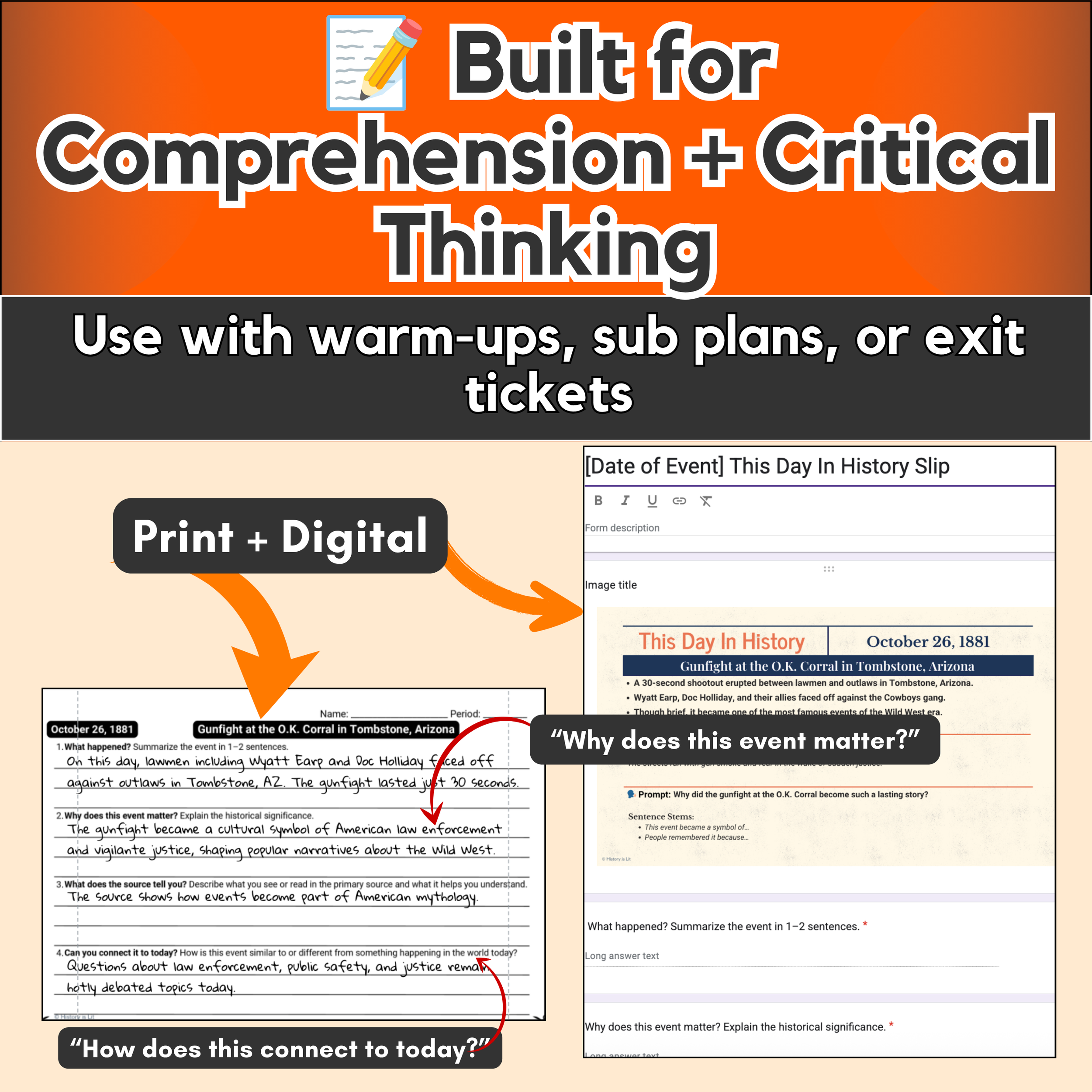
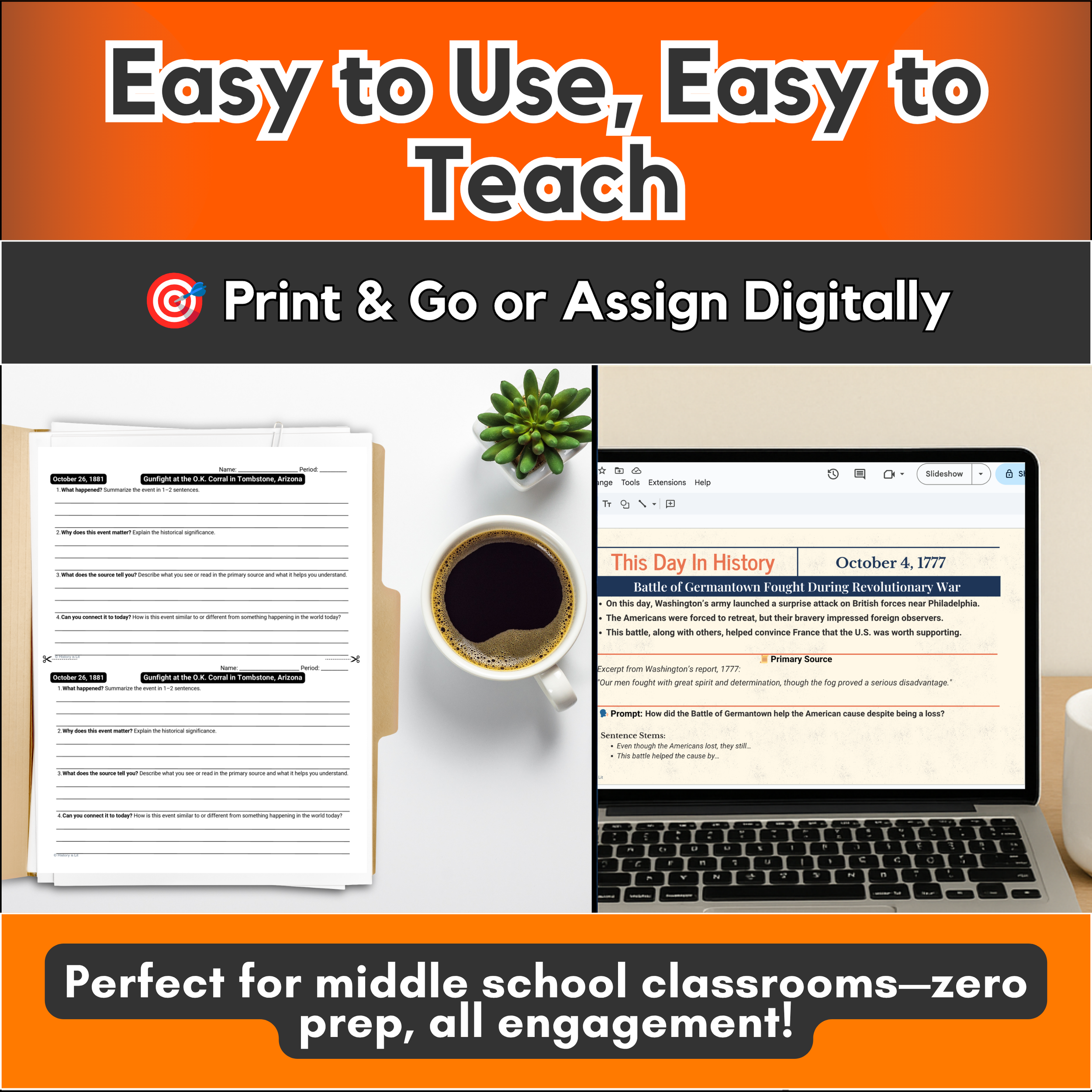
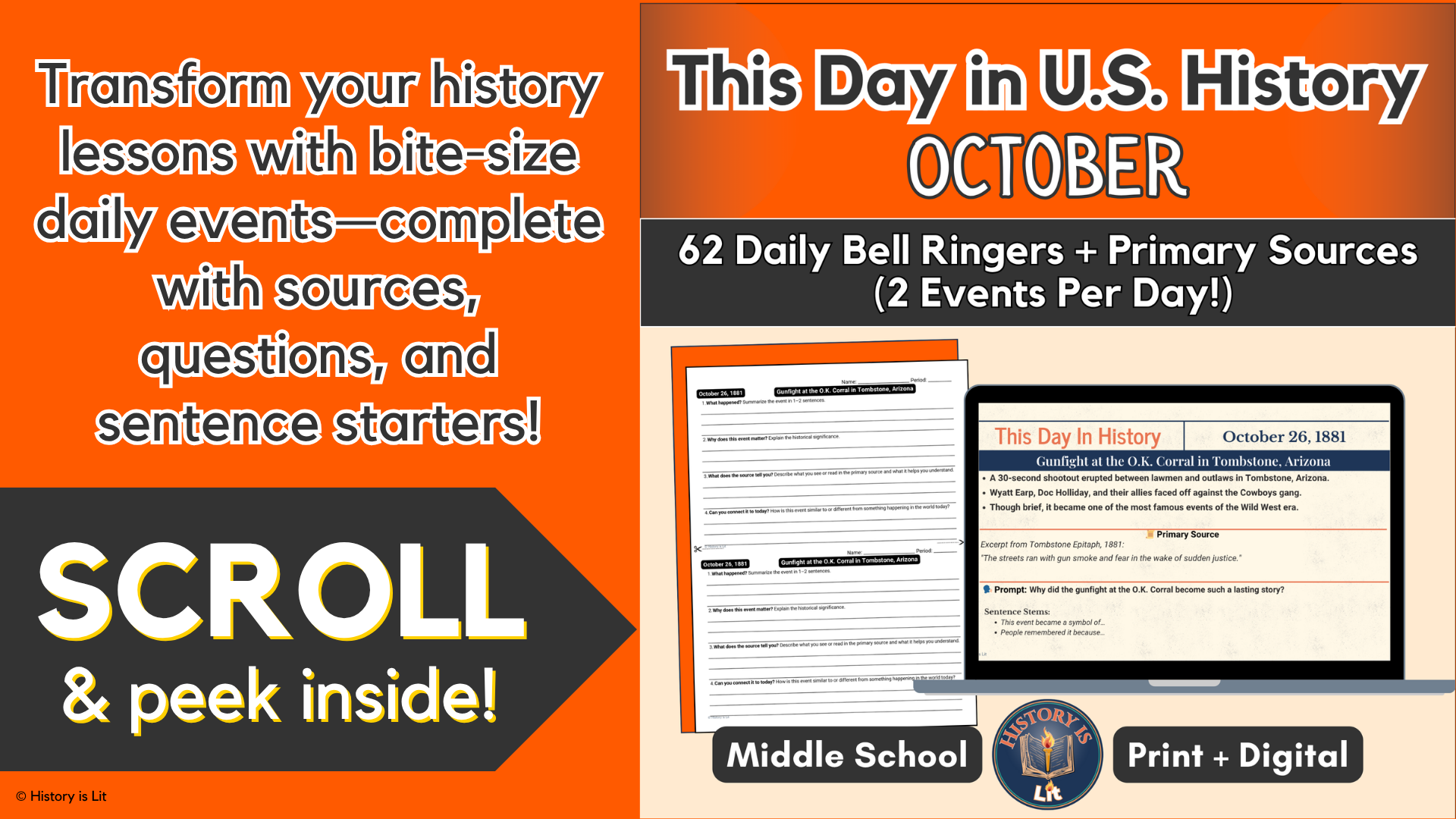
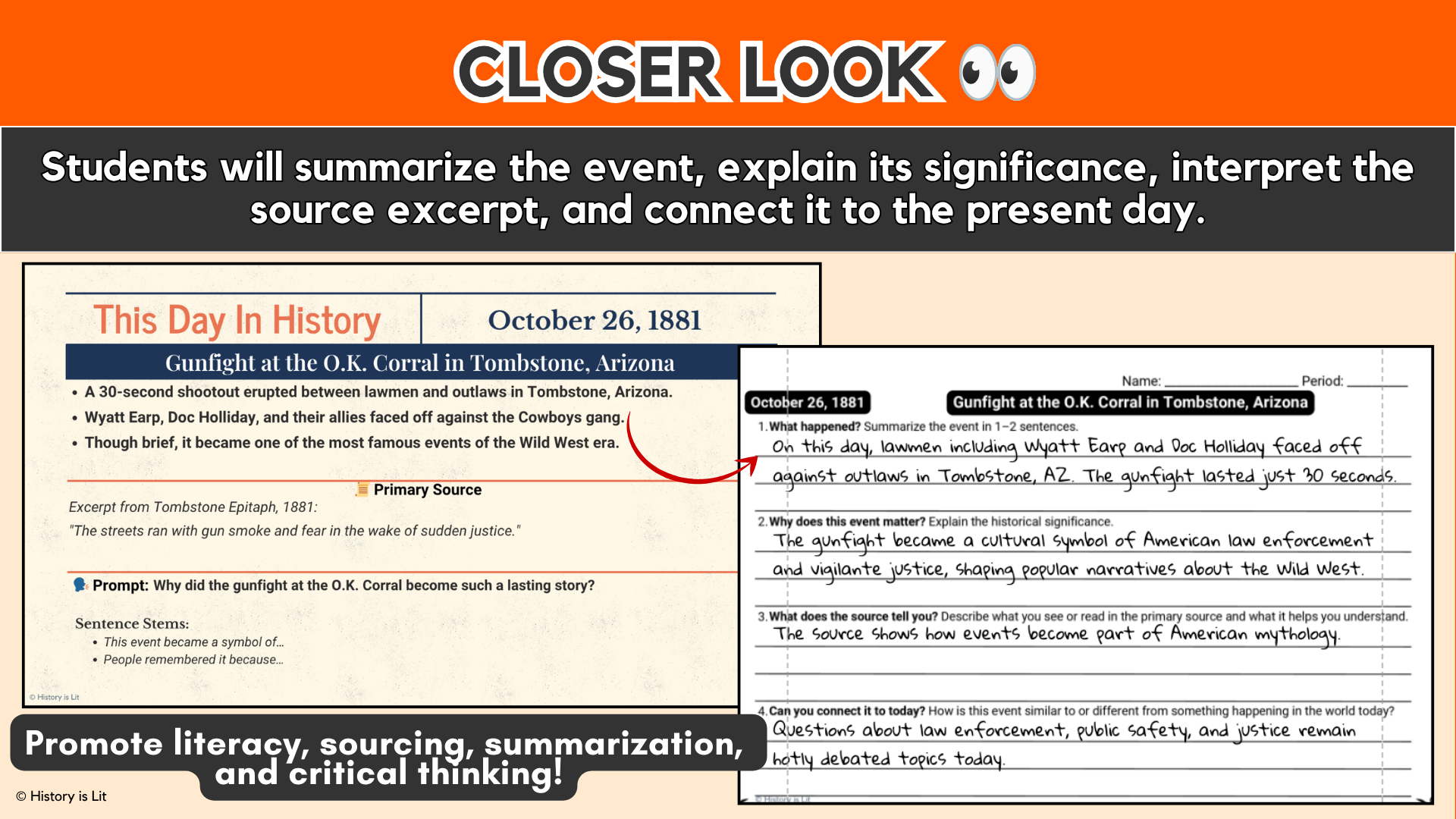
These October Bell Ringers make it easy to start each class with meaningful history, literacy, and discussion—all in under 10 minutes a day.
Perfect for warm-ups, sub plans, stations, or sparking classroom conversation, this set includes 62 engaging prompts (2 per day) aligned to middle school U.S. History standards from the Colonial Era through Reconstruction.
✅ What’s Included:
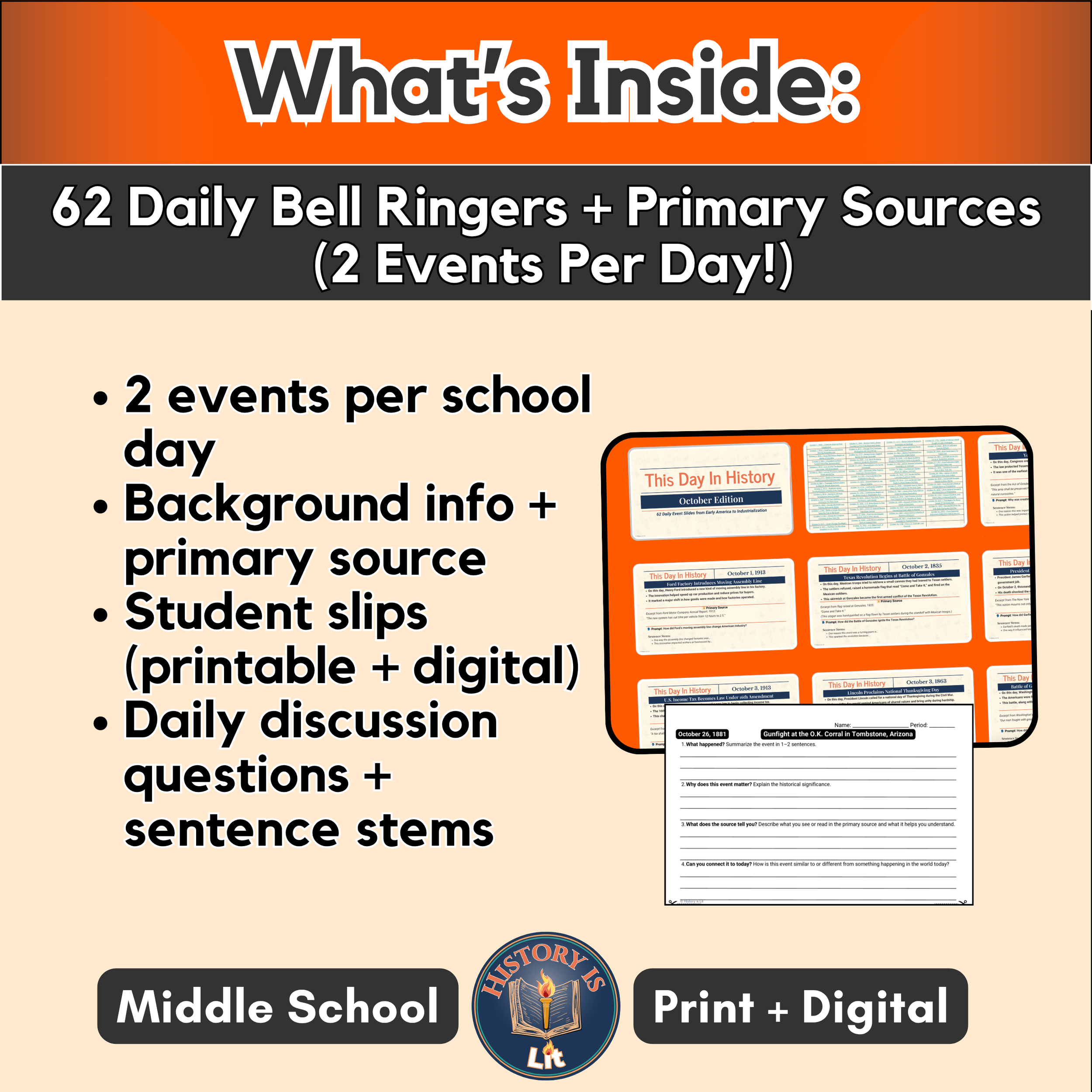
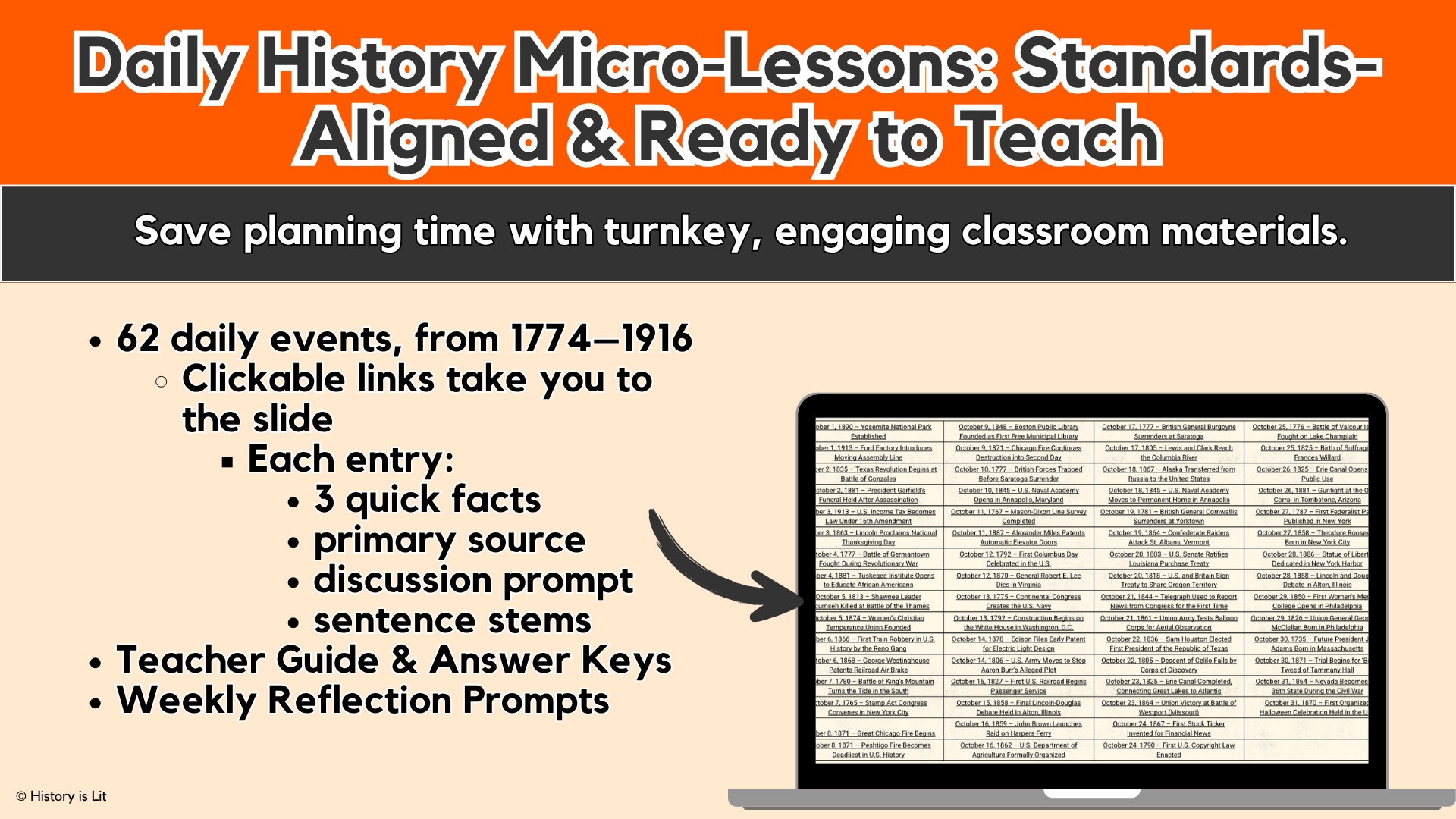
62 total prompts (2 for every weekday in October)
Each bell ringer features:
A short historical background (2–3 sentences)
A primary source excerpt
1 discussion question + 2 sentence stems
Printable PDF slips for student responses
Digital Slides version for class display or Google Classroom
Teacher Guide with routines, extensions, and management tips
Answer Key with sample responses for every event
Why Teachers Love It:
Zero prep—just print or project
Built-in primary sources and sentence stems
Flexible for bell ringers, exit tickets, homework, or stations
Makes space for academic conversation without adding to your grading pile
Aligned to key California U.S. History standards (8.1–8.12)
Why Students Engage:
Real stories from U.S. History—not just dates and names
Short and accessible with built-in support
Encourages connections to modern issues
Builds confidence in writing, discussion, and using evidence
Topics Covered Include:
Founding debates and early U.S. government (Federalist Papers, John Adams)
Slavery, abolition, and Civil War politics (Lincoln–Douglas Debates, Nevada statehood)
Westward expansion and frontier life (Erie Canal, O.K. Corral)
Immigration, reform, and public activism (Statue of Liberty, Frances Willard)
Events that shaped American culture and identity (Halloween, Boss Tweed, Women’s Medical College)
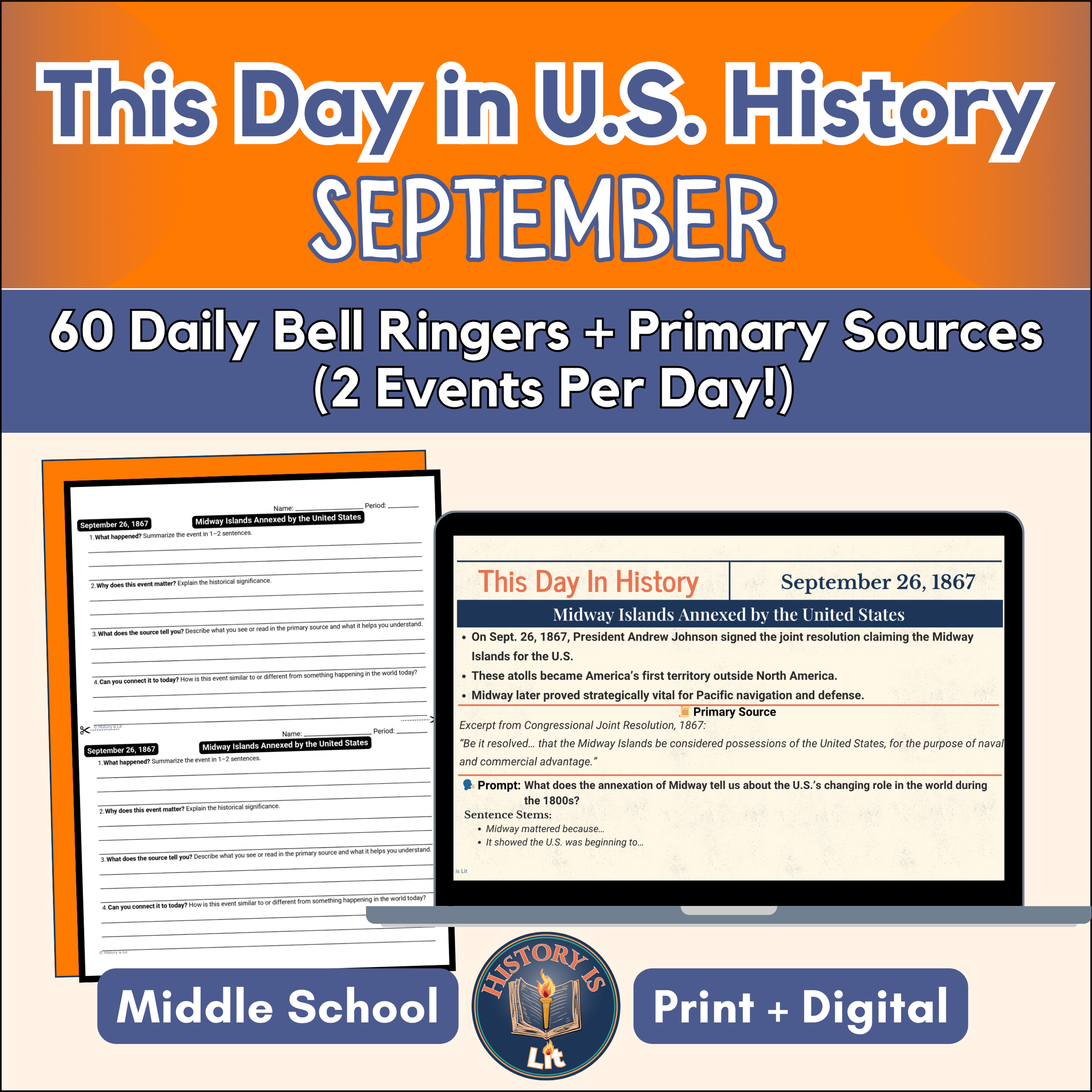
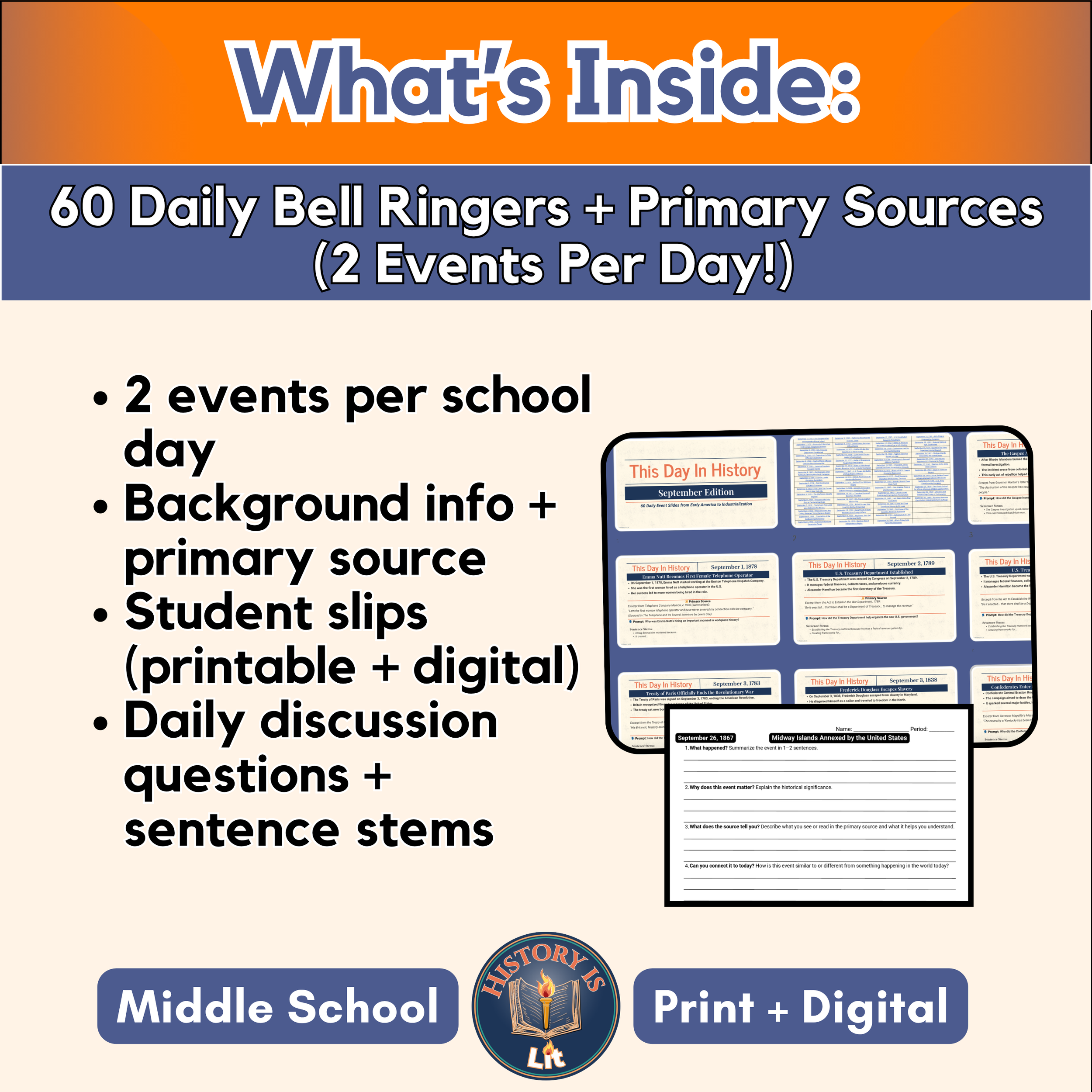
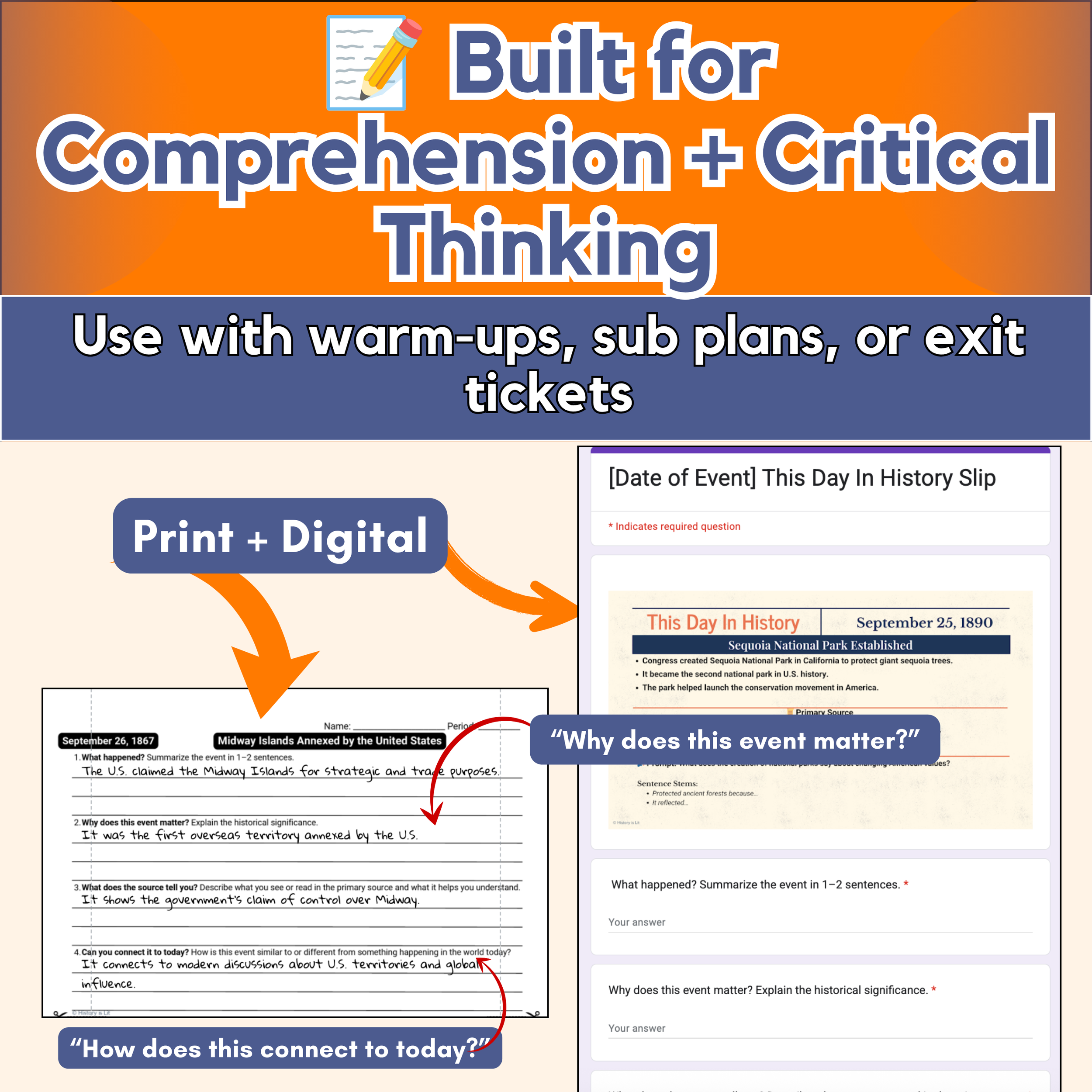
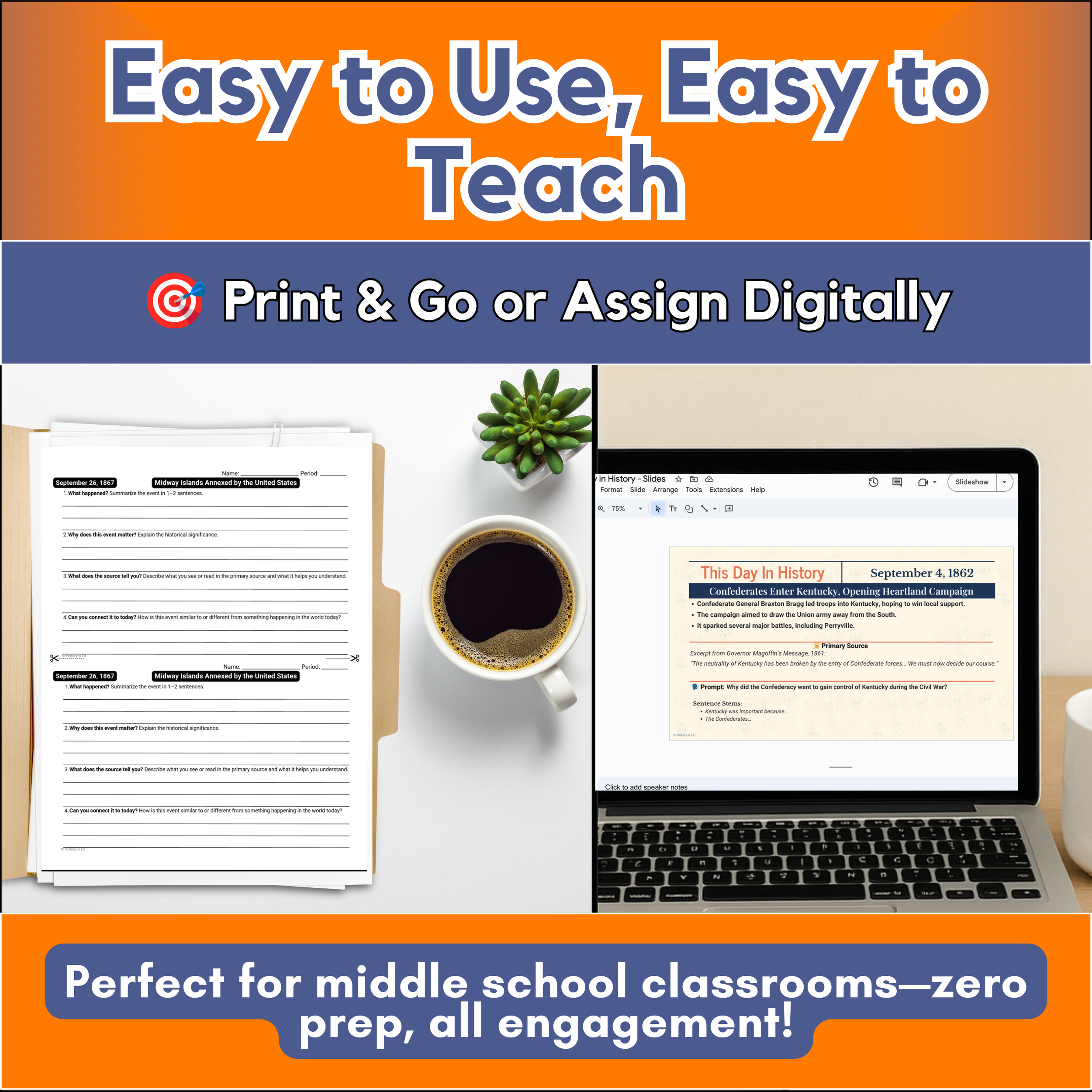
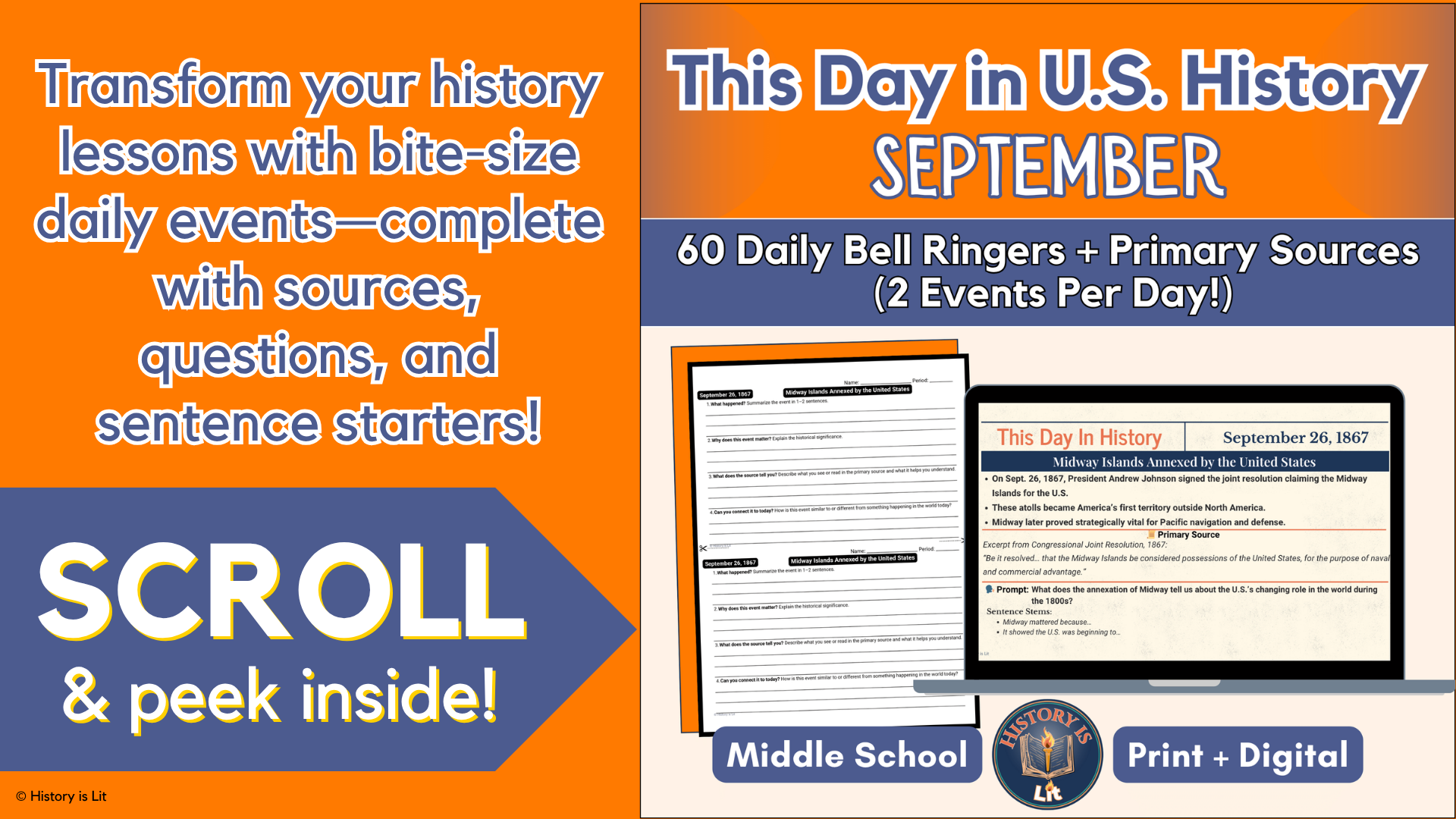
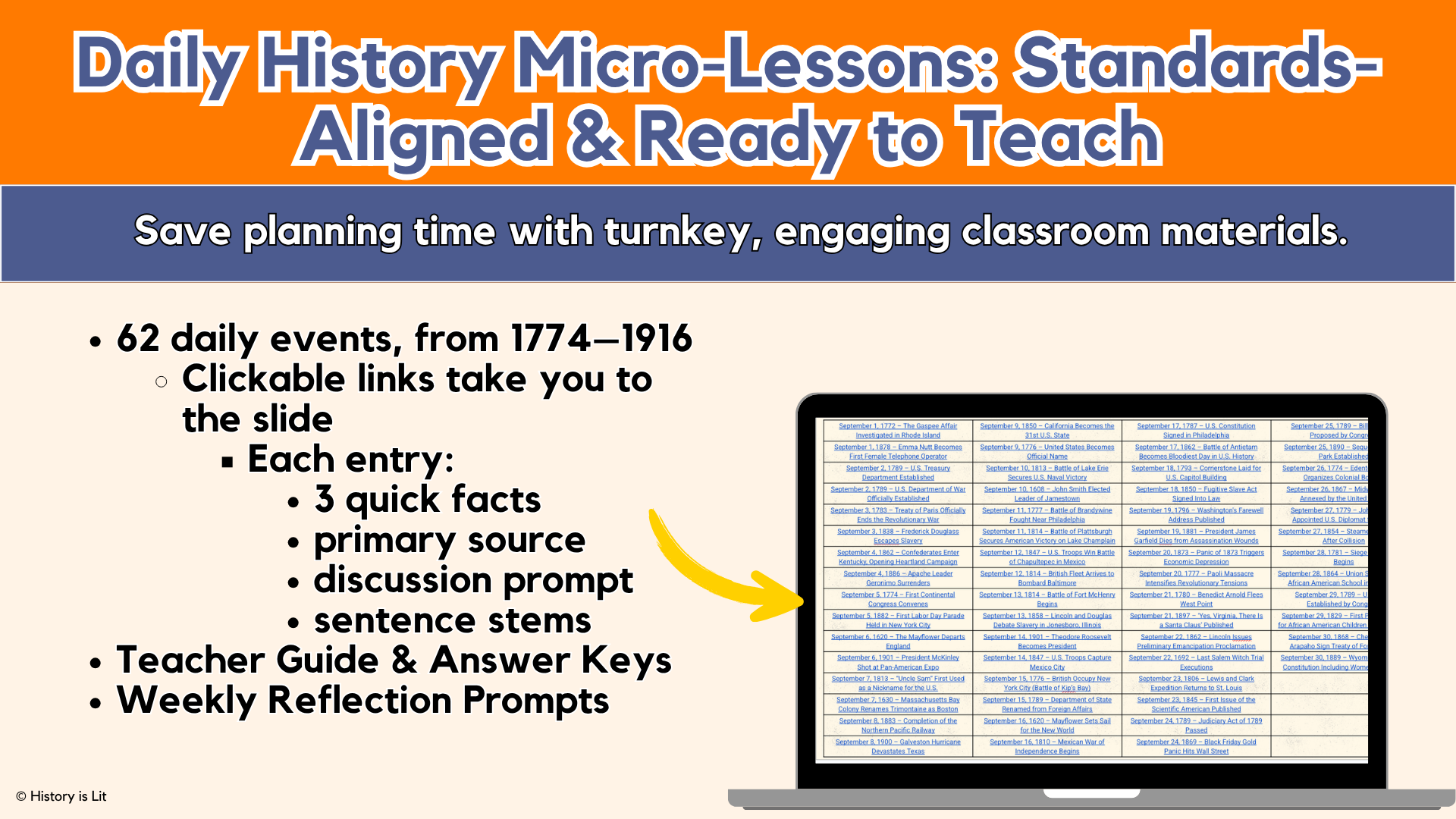
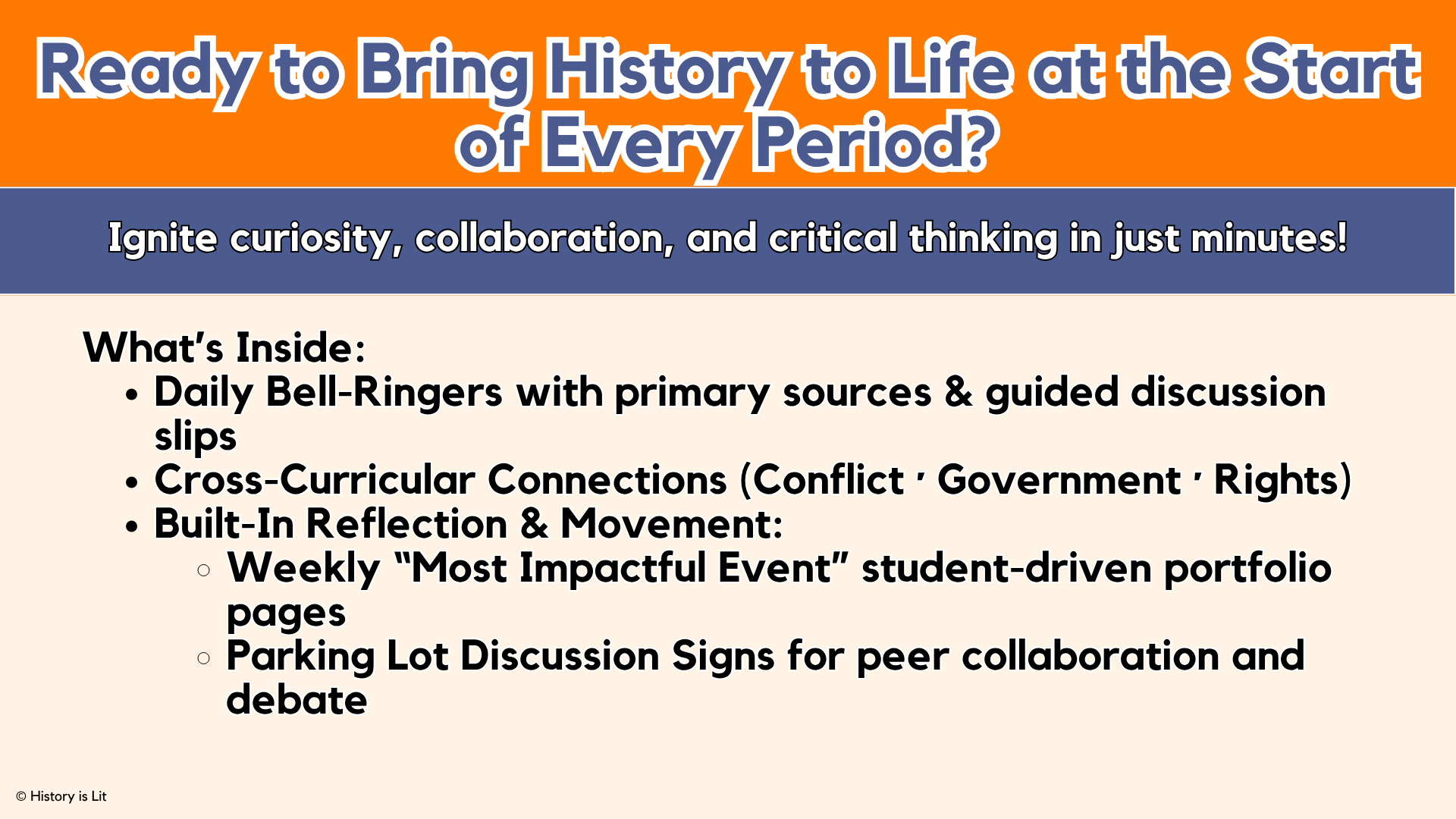
These September Bell Ringers make it easy to start each class with meaningful history, literacy, and discussion—all in under 10 minutes a day.
Perfect for warm-ups, sub plans, stations, or sparking classroom conversation, this set includes 60 engaging prompts (2 per day) aligned to middle school U.S. History standards from the Colonial Era through Reconstruction.
✅ What’s Included:
60 total prompts (2 for every weekday in September)
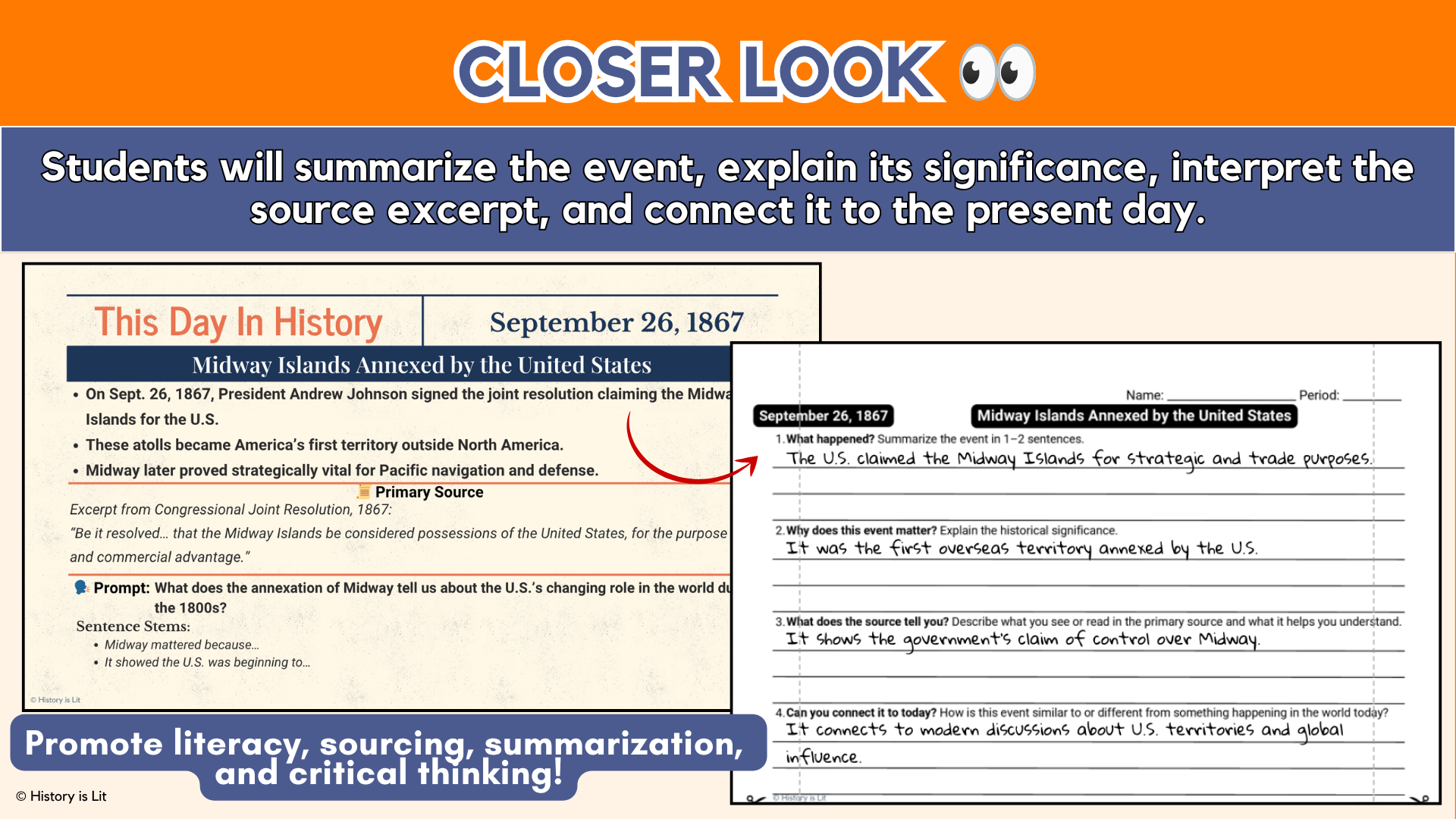
Each bell ringer features:
A short historical background (2–3 sentences)
A primary source excerpt
1 discussion question + 2 sentence stems
Printable PDF slips for student responses
Digital Slides version for class display or Google Classroom
Teacher Guide with routines, extensions, and management tips
Answer Key with sample responses for every event
Why Teachers Love It:
Zero prep—just print or project
Built-in primary sources and sentence stems
Flexible for bell ringers, exit tickets, homework, or stations
Makes space for academic conversation without adding to your grading pile
Aligned to key U.S. History standards (8.1–8.12)
Why Students Engage:
Real stories from U.S. History—not just dates and names
Short and accessible with built-in support
Encourages connections to modern issues
Builds confidence in writing, discussion, and using evidence
Topics Covered Include:
Founding of the Constitution and U.S. government
Slavery, abolition, and Civil War turning points
Native resistance and Westward expansion
Inventions, disasters, diplomacy, and reform
Key moments in U.S. identity and power-building
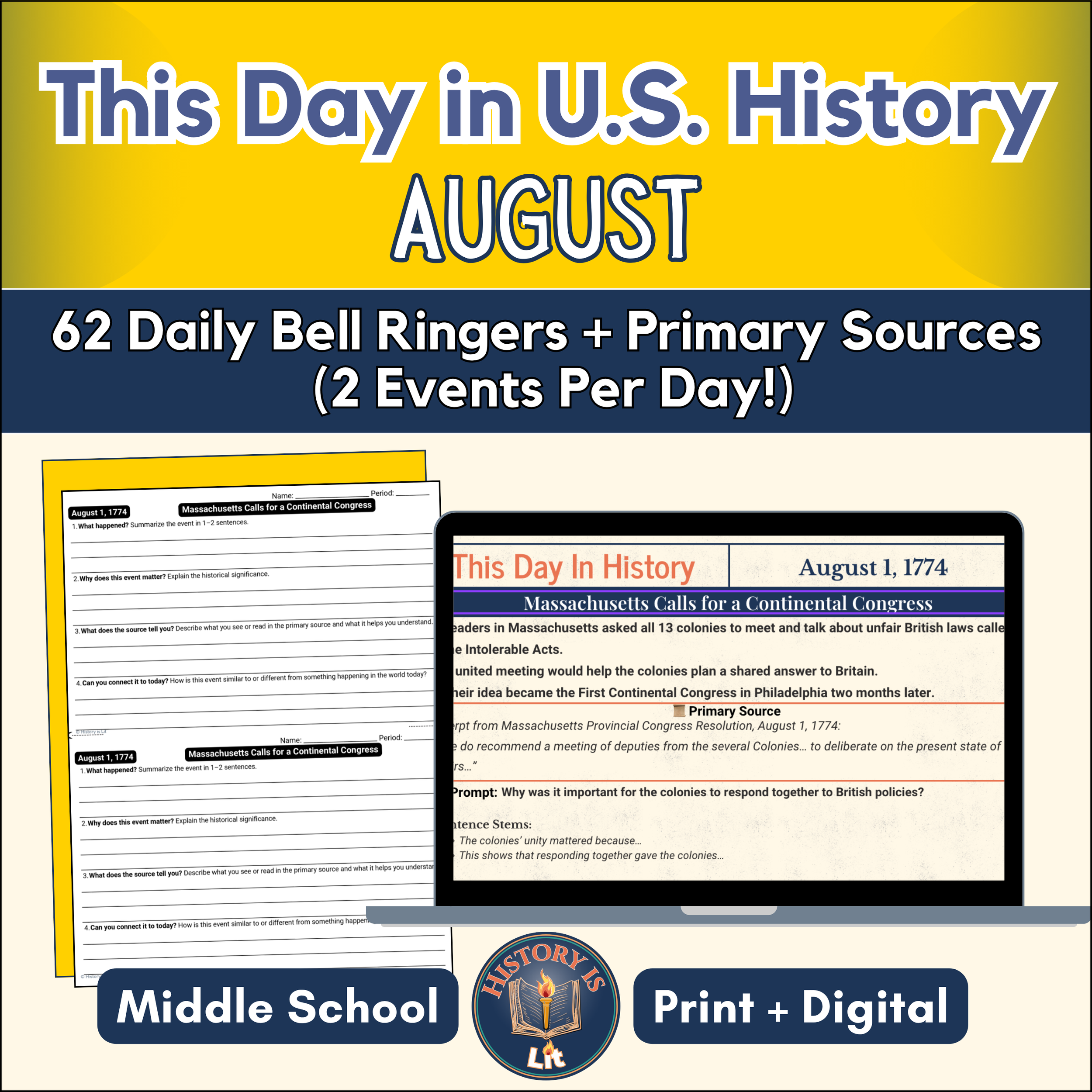
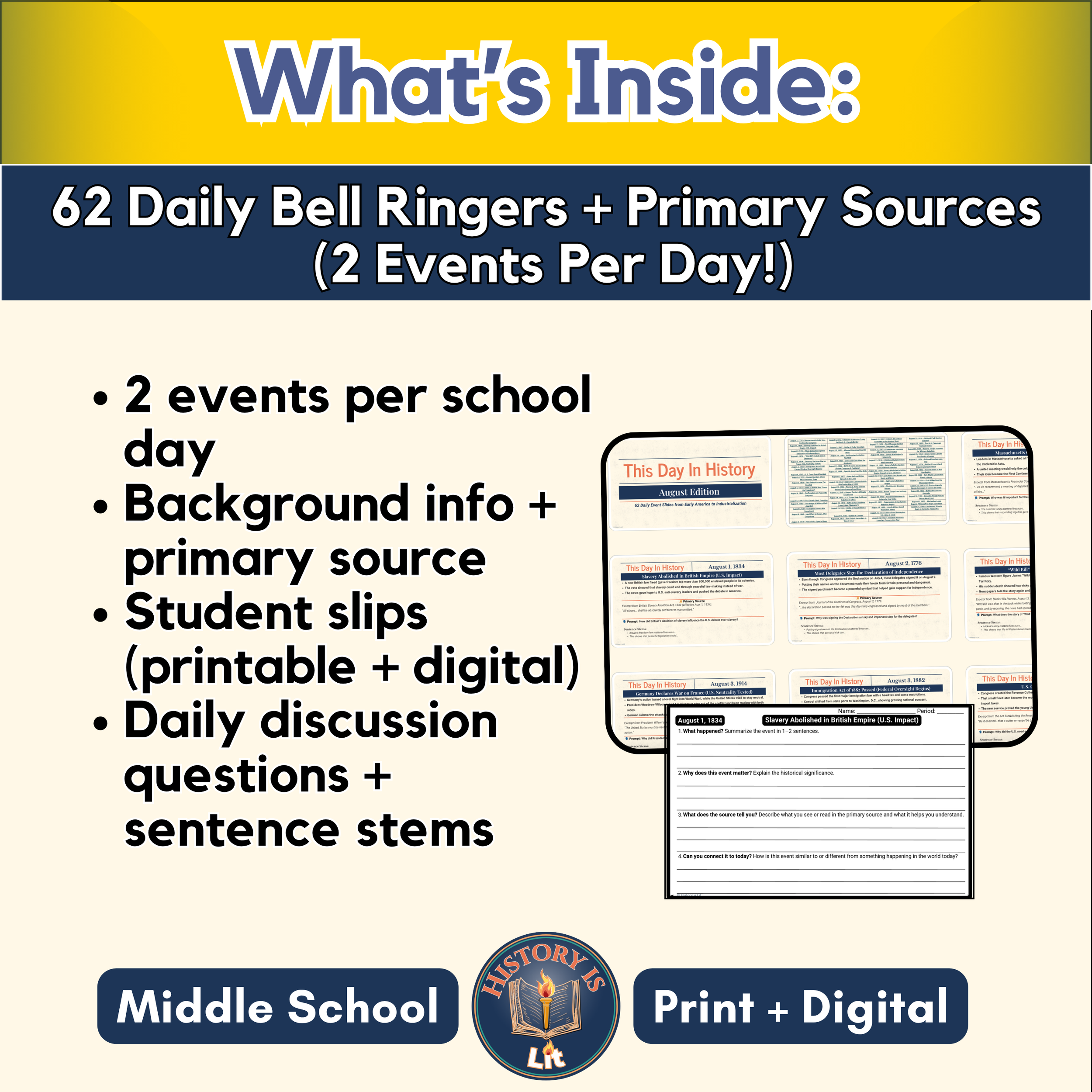
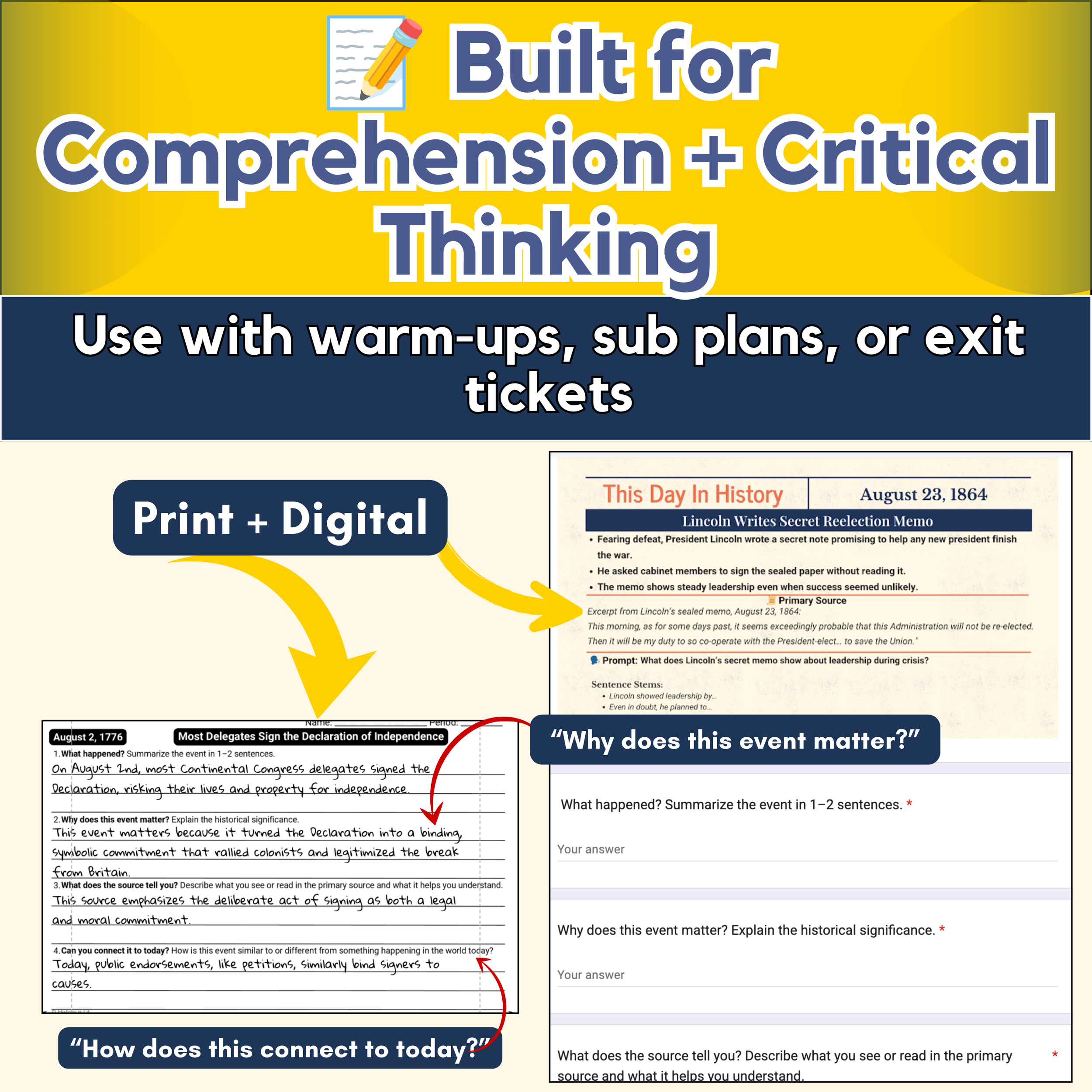
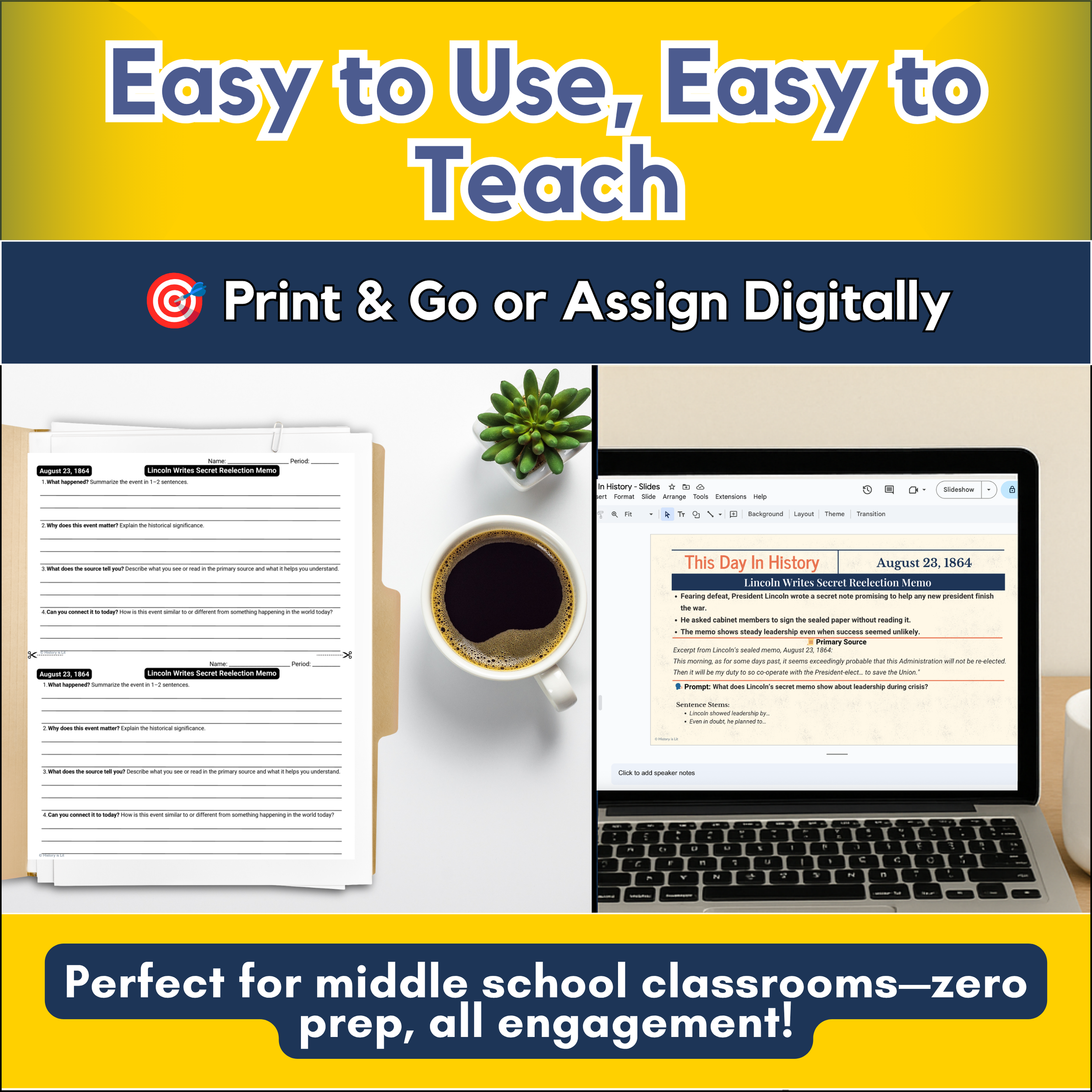
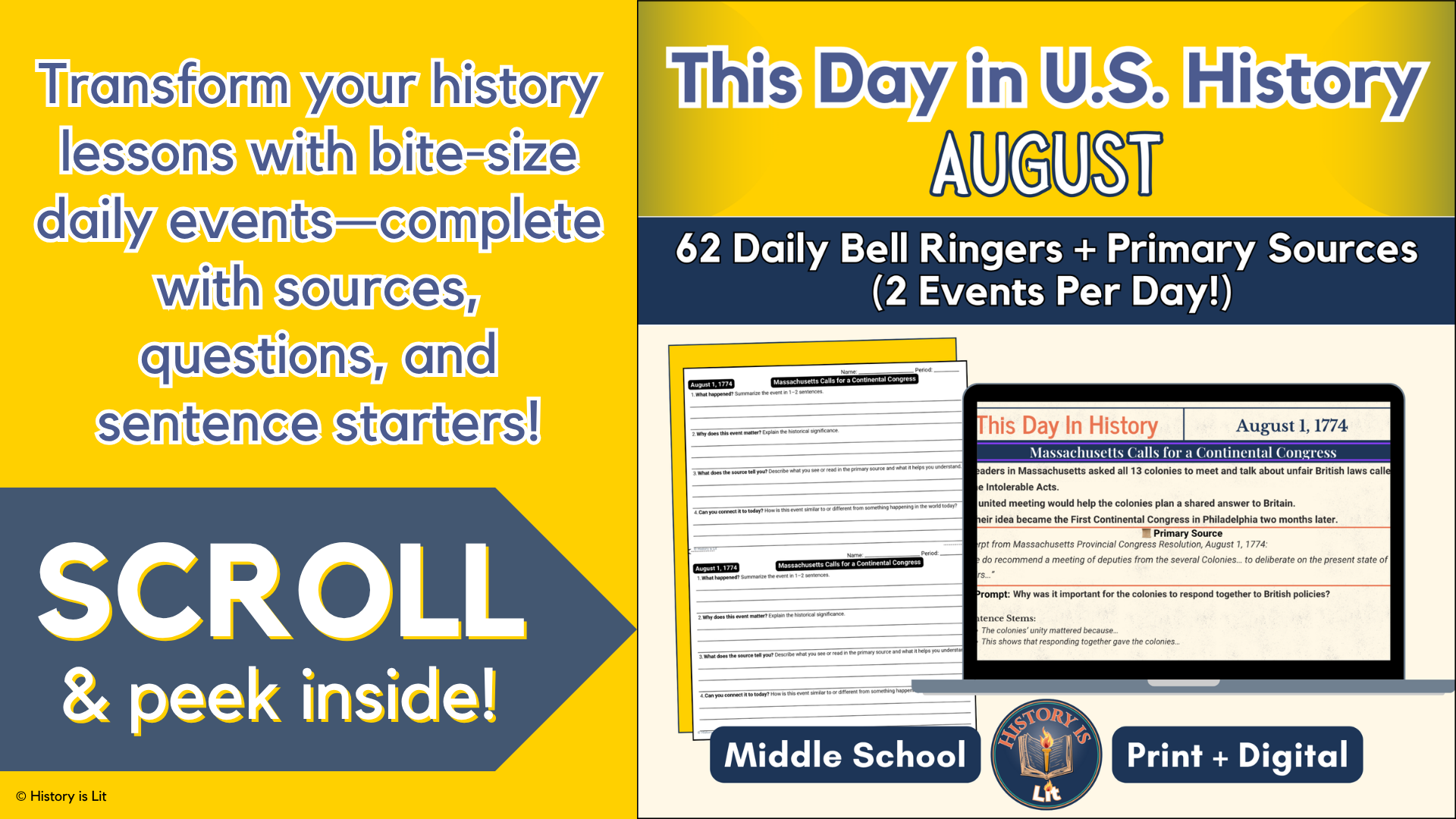
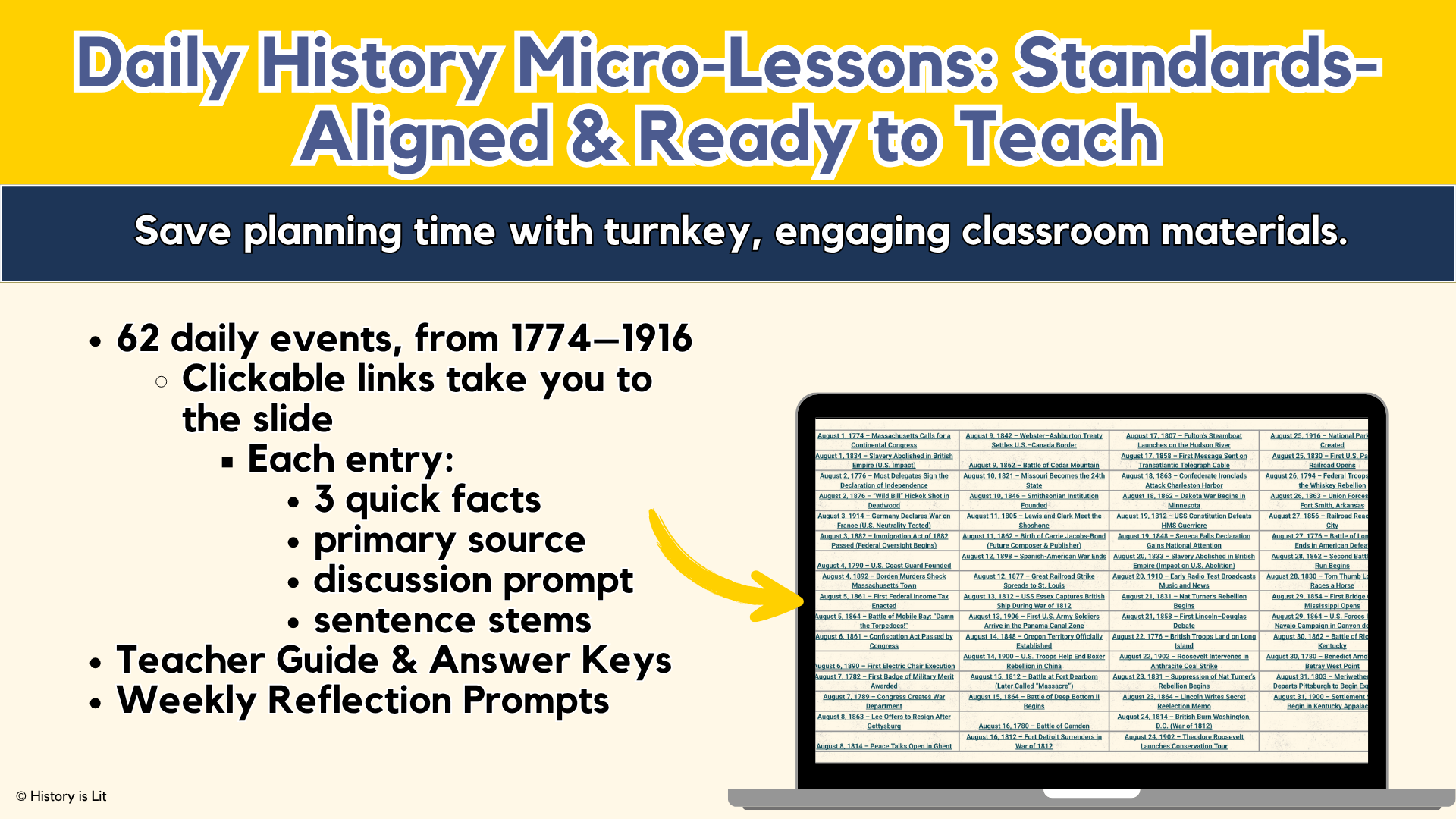
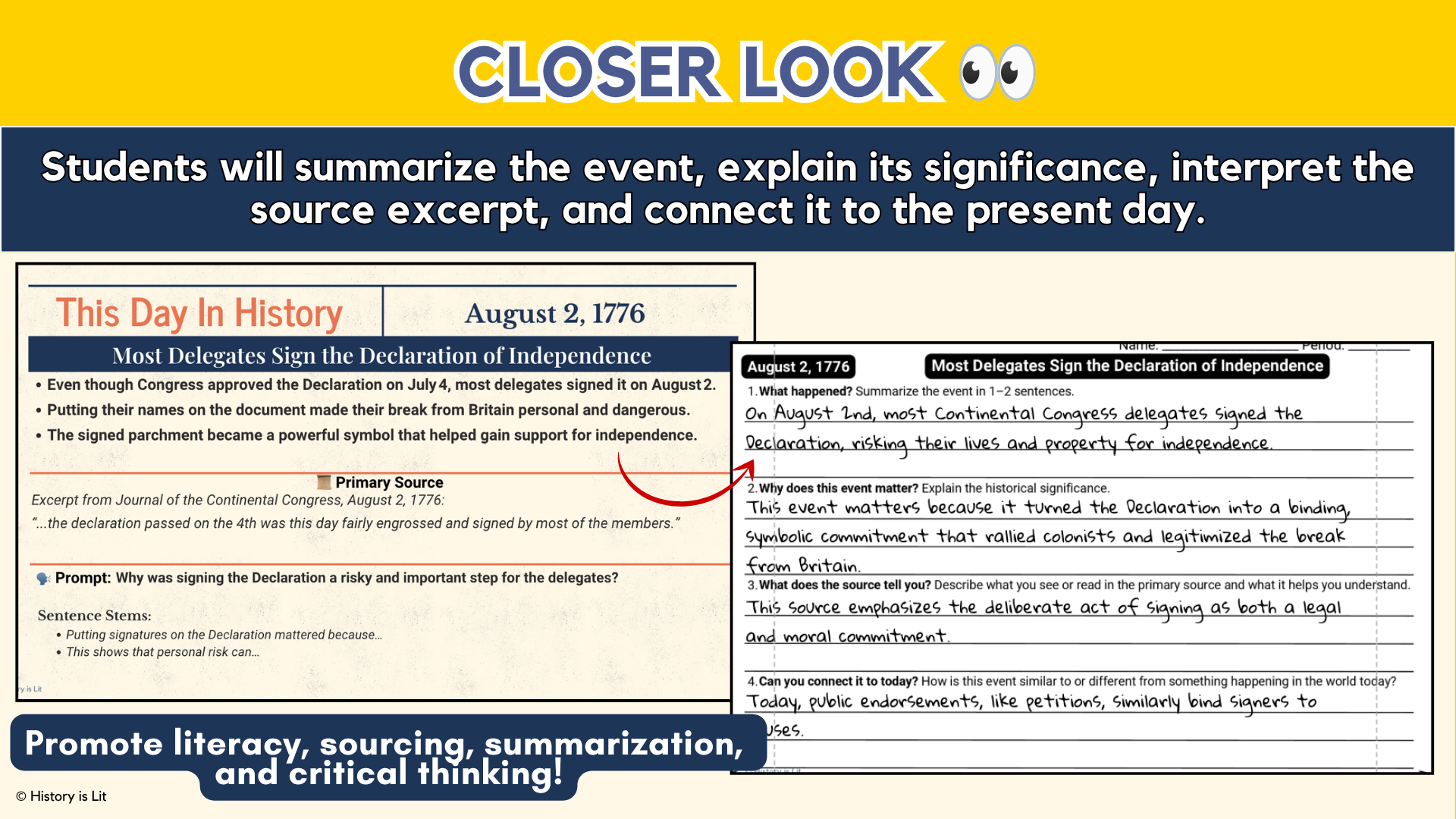
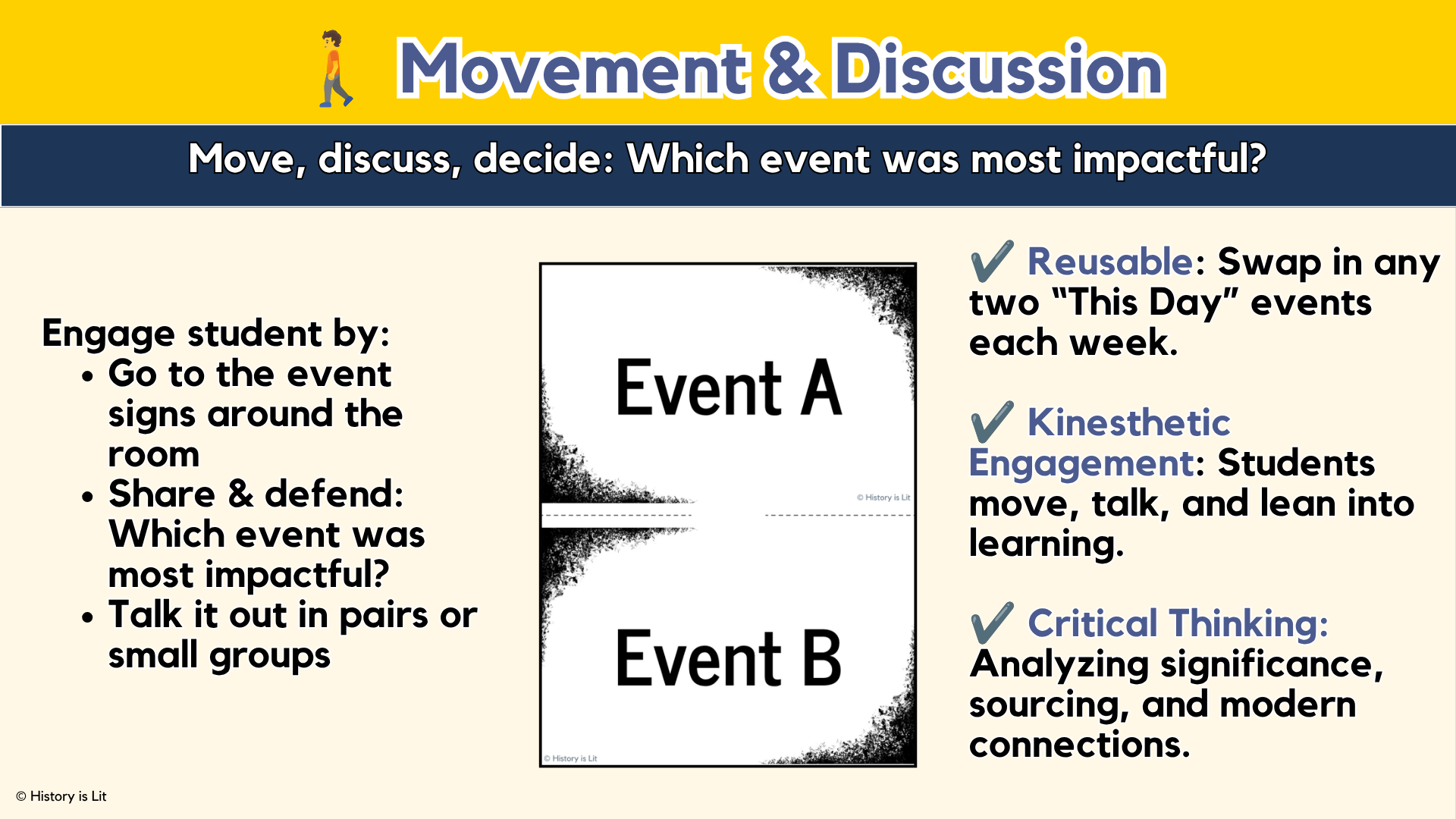
These August Bell Ringers make it easy to kick off class with meaningful discussion and literacy every day. Designed specifically for middle school U.S. History, this resource includes 62 engaging prompts—two for every weekday in August—with built-in historical thinking, reading, and writing skills.
Whether you’re setting classroom routines, planning for a sub, or adding a spark to your lessons, these bell ringers are ready to go.
What’s Included:
✅ 62 total prompts (2 events per day for August)
Each bell ringer includes:
2–3 sentence background summary
Primary source excerpt (quote, image, or document)
1 discussion question + 2 sentence stems
Printable response slip (PDF) + Google Slides version
Teacher Guide + Suggested Routines
Answer Key with sample responses
Why Teachers Love It:
Easy to implement with zero prep
Flexible for warm-ups, homework, stations, or exit tickets
Makes space for reflection and academic conversation
Builds historical thinking without adding grading overload
Why Students Engage:
Bite-sized but meaningful history moments
Primary sources make the past feel real
Sentence stems boost confidence in writing and discussion
Helps students practice citing evidence and making connections
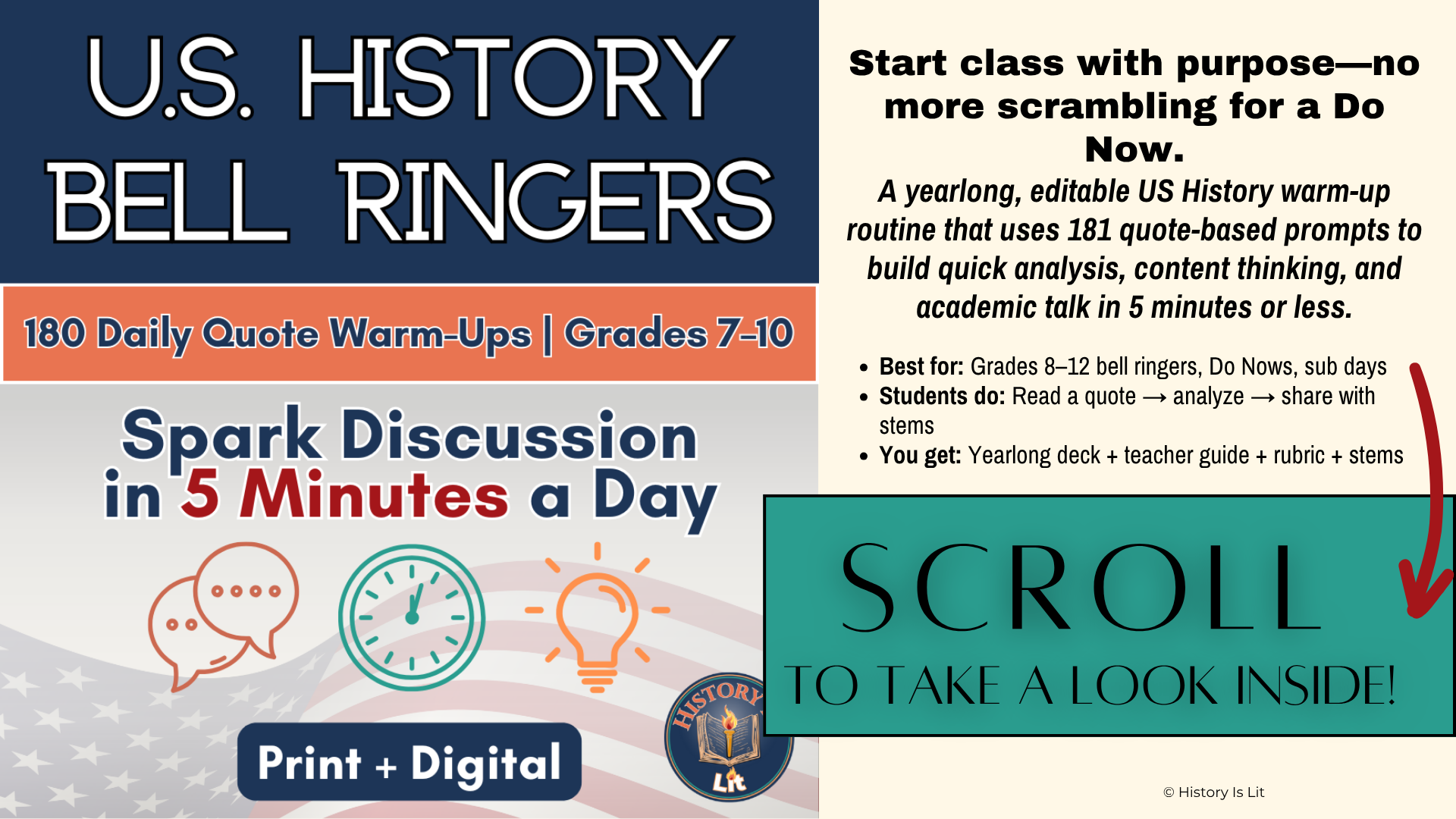
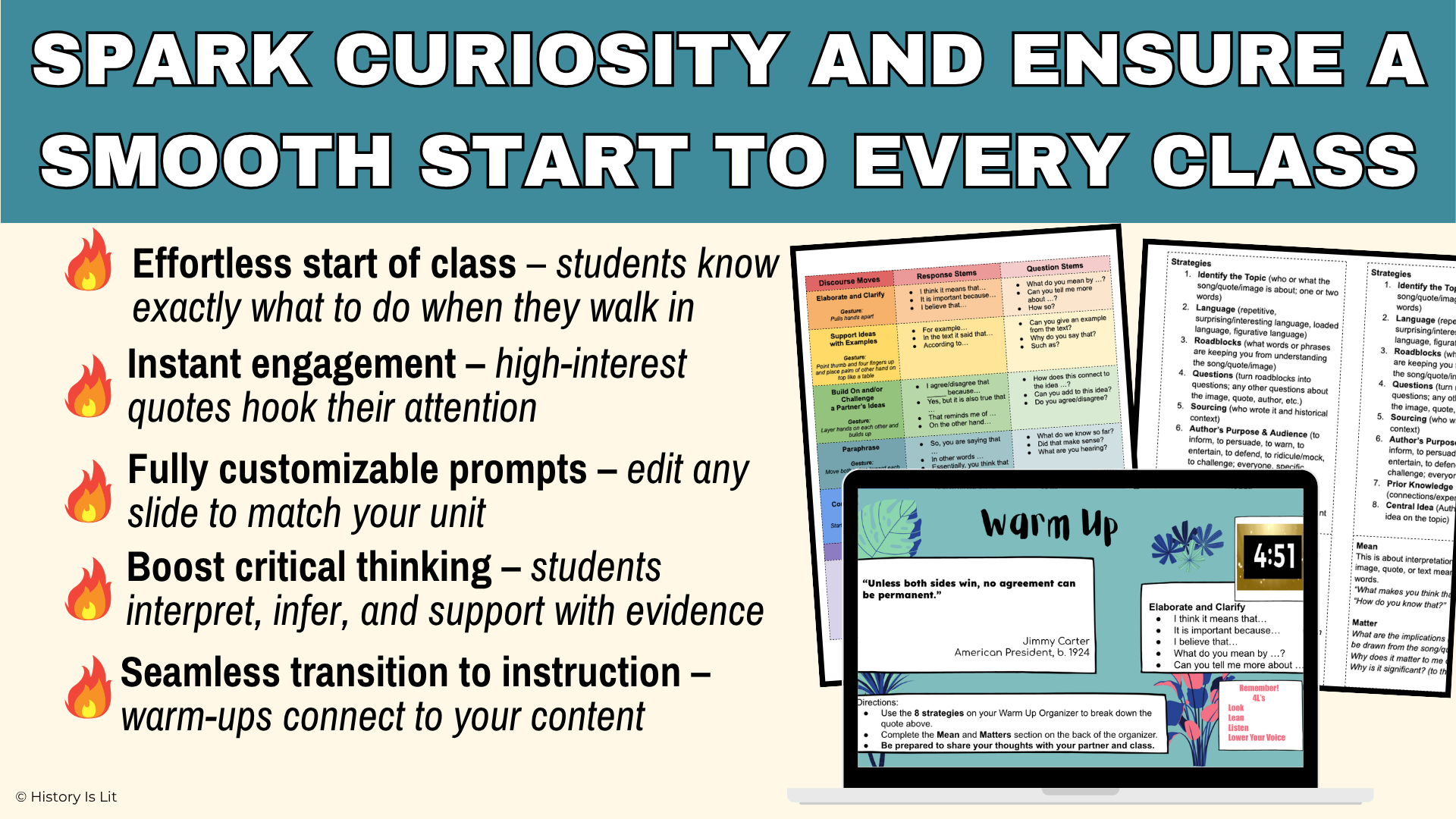
Start class with purpose.
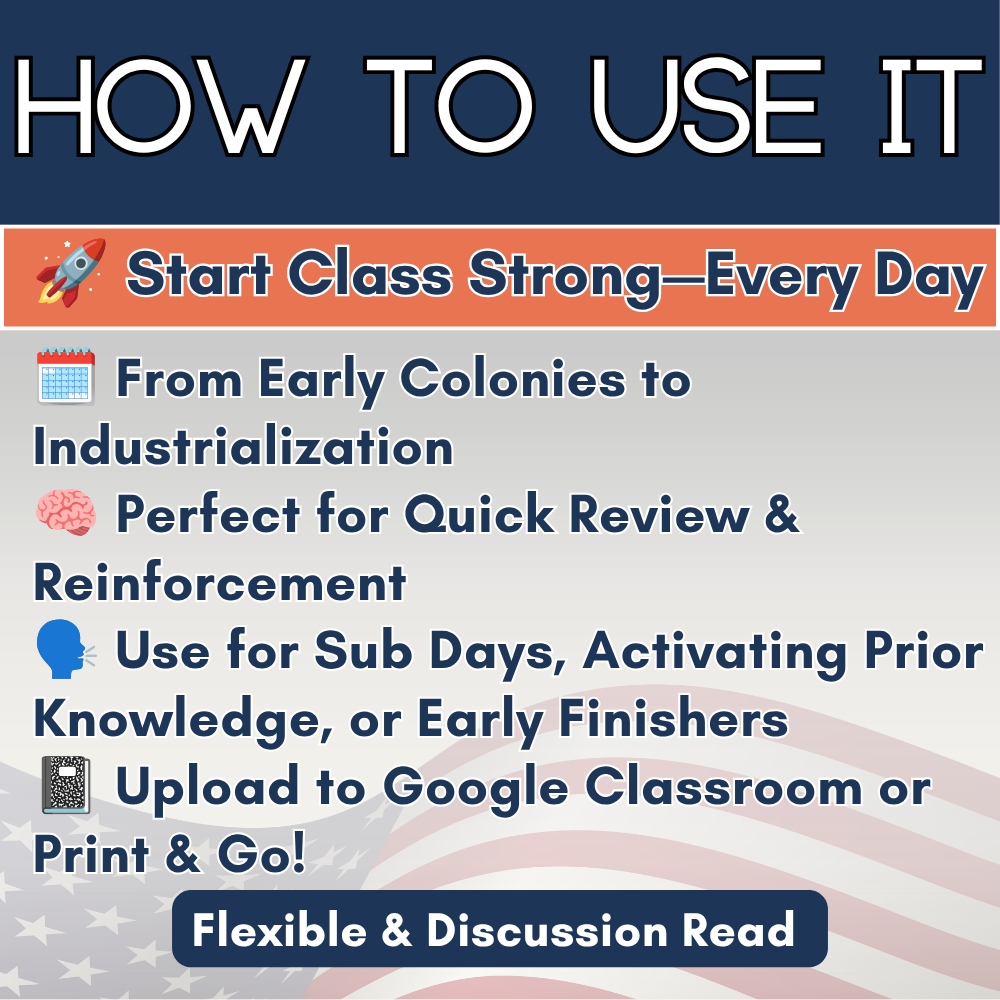
Instead of chaos, give your students a predictable, engaging routine that sparks curiosity and gets them thinking deeply—every single day.
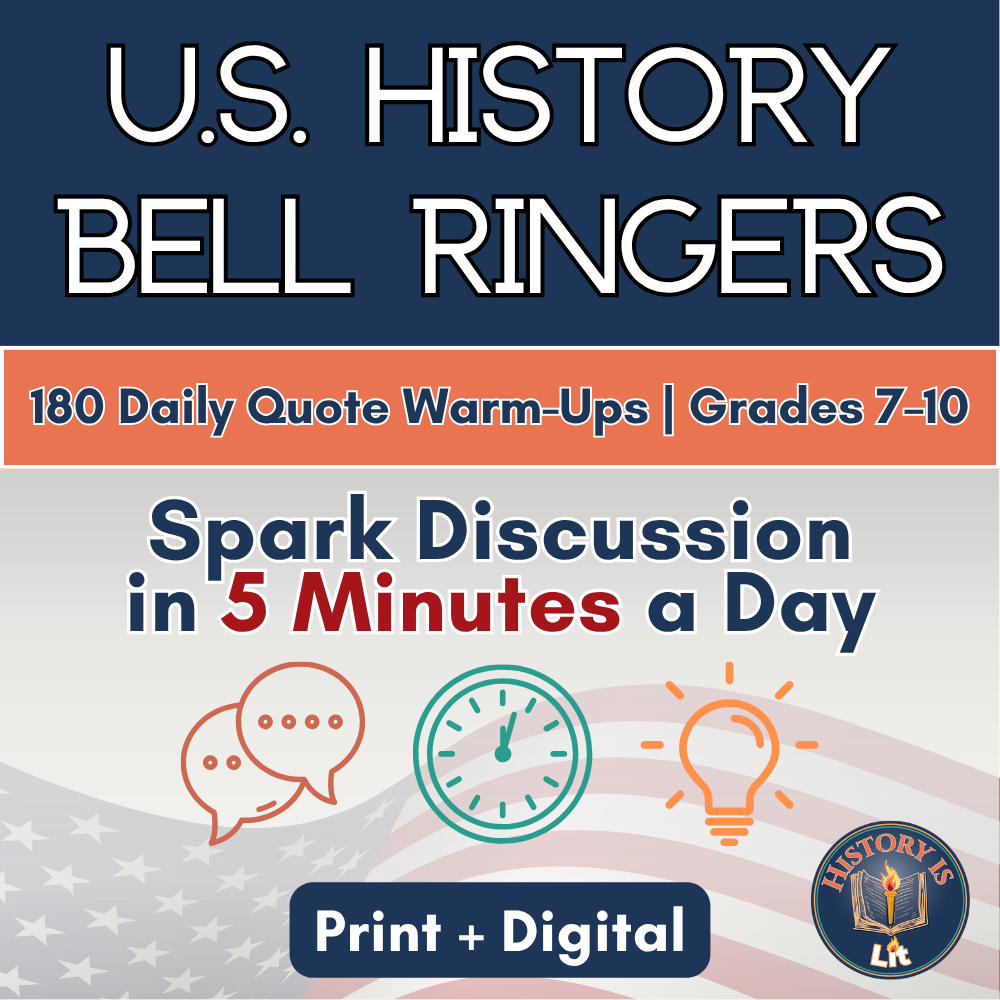
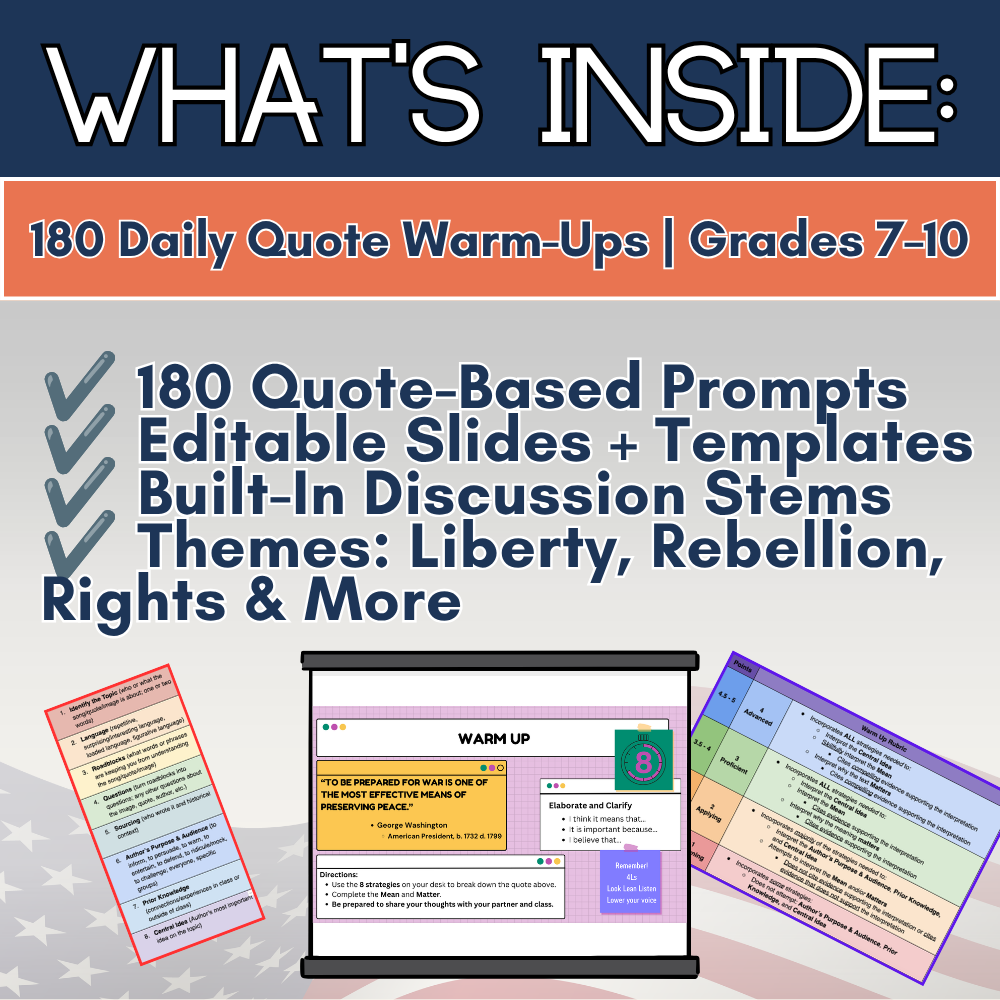
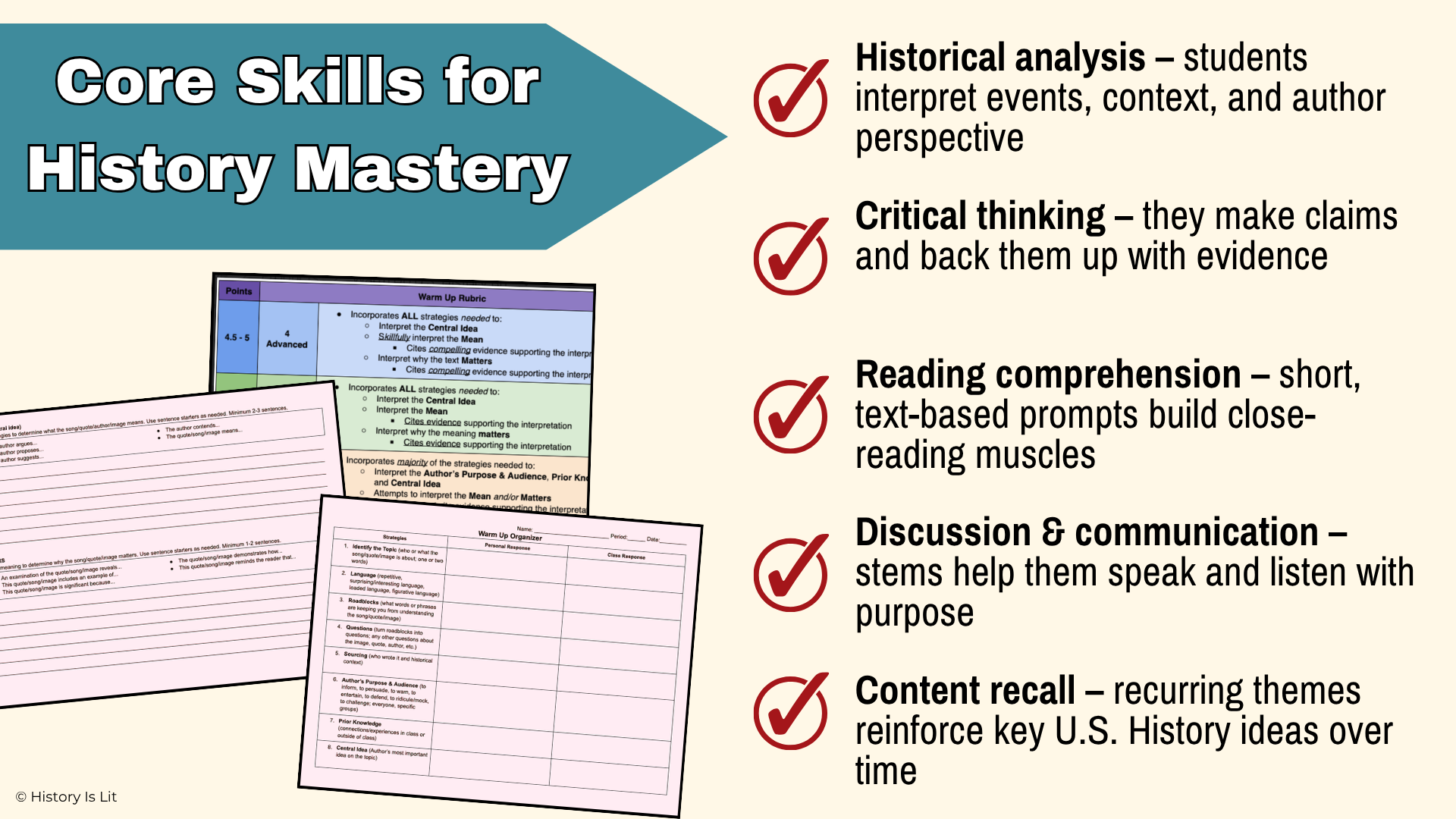
These 180 quote-based warm-ups blend critical thinking, content review, and academic talk—all in under 5 minutes.
180+ ready-to-use warm-ups.
Built for real classrooms. Designed to spark thinking. A small shift that makes a big difference.
Fully customizable and digital-friendly, these warm-ups save you precious planning time while keeping students actively involved—whether in-person or online.
What Teachers Are Saying
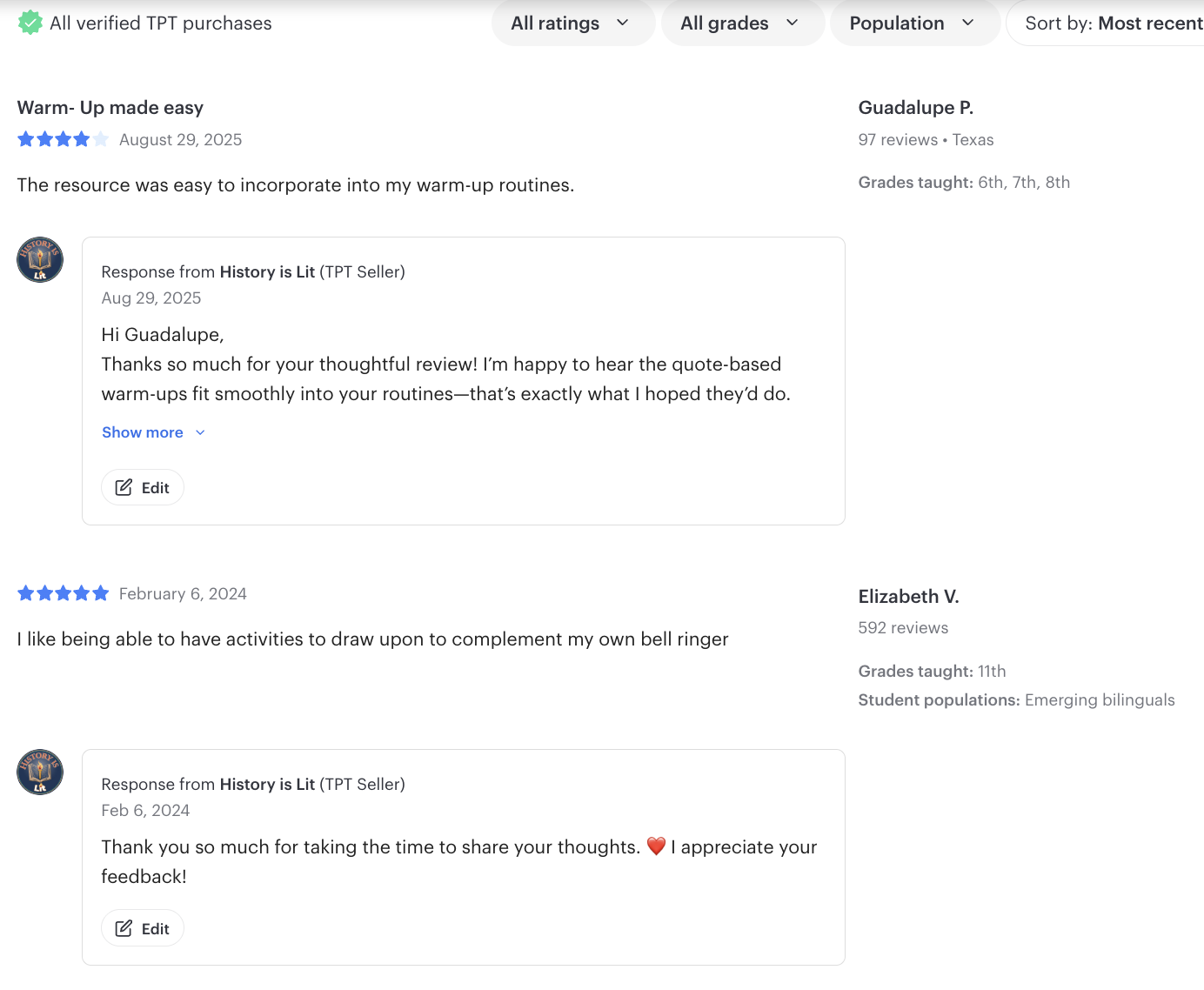
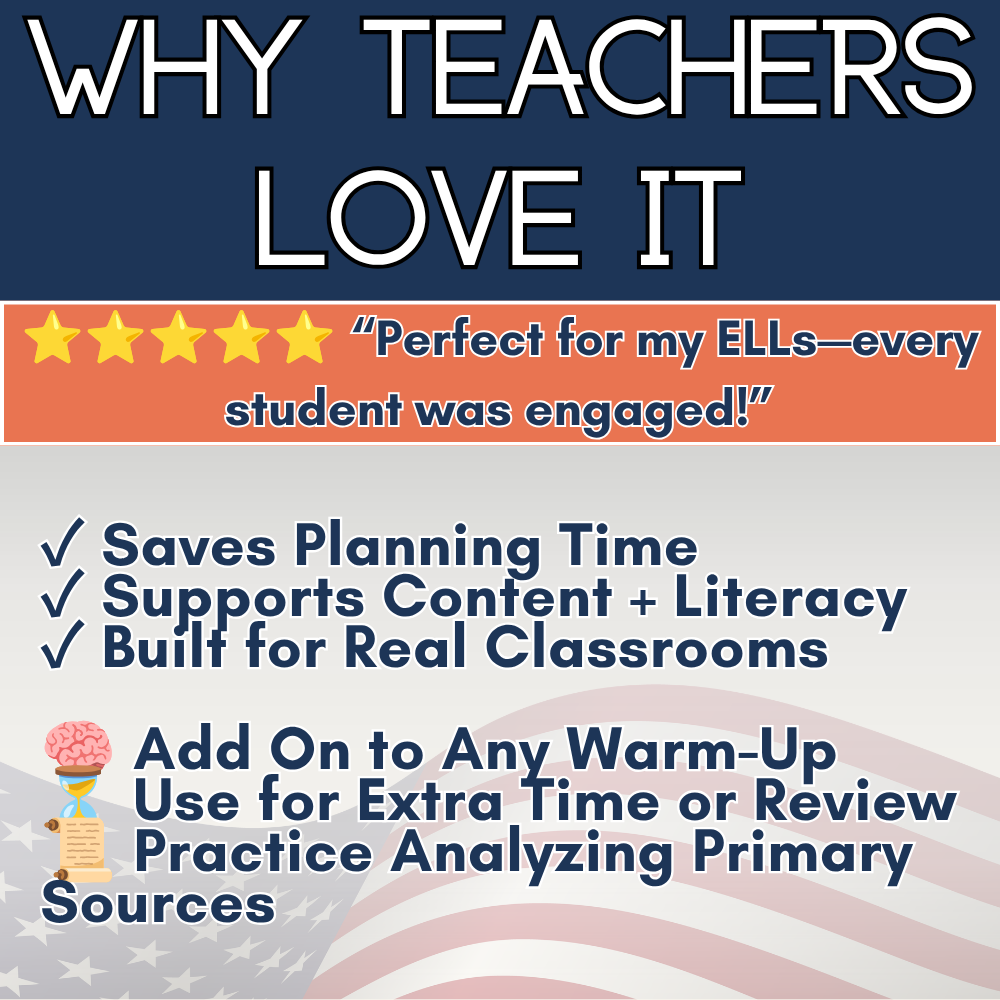
⭐️⭐️⭐️⭐️⭐️ “I like being able to have activities to draw upon to complement my own bell ringer. My students were engaged—especially my English learners!”
— Elizabeth V., 11th Grade U.S. History
What You Get:
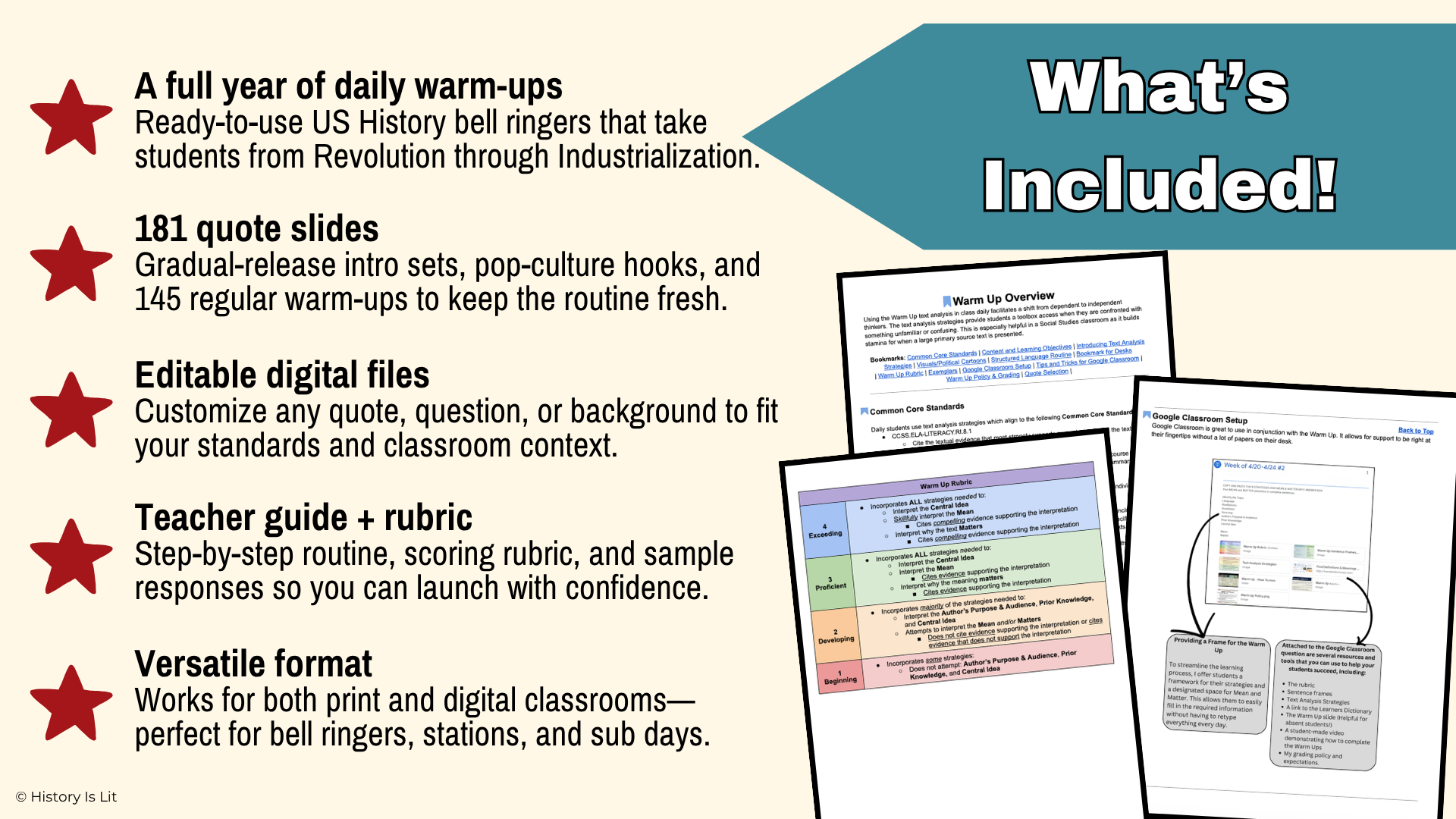
A Full Year of Warm-Ups: Seamlessly kickstart your lessons each day with engaging historical prompts.
Editable Templates: Easily customize every activity to match your lesson plans and classroom needs.
Dynamic Content: Designed to spark discussion, boost content recall, and enhance critical thinking.
Inclusive Design: Tailored for diverse learners, ensuring all students—especially emerging bilinguals—are actively engaged.
The Google Slide deck includes:
181 total quotes
Gradual Release Historical: 18
Gradual Release Pop Culture: 18
Regular Warm Ups: 145
Discussion Stems for multiple types of discourse
5 different Warm Up backgrounds
Topics: revolution, compromise, freedom, Constitution, hope, rebelling, division, liberty, failure, and many more.
Transform your class beginnings into a launchpad for deep learning and interactive discussion with this comprehensive US History warm-up bundle!
This is a .zip file. Open and upload to Google Drive. To make sure it converts properly, check your Google Drive settings.
Go to Drive --> Settings (Gear) --> Uploads (click the box that says Converts uploads to Google Doc editor format).
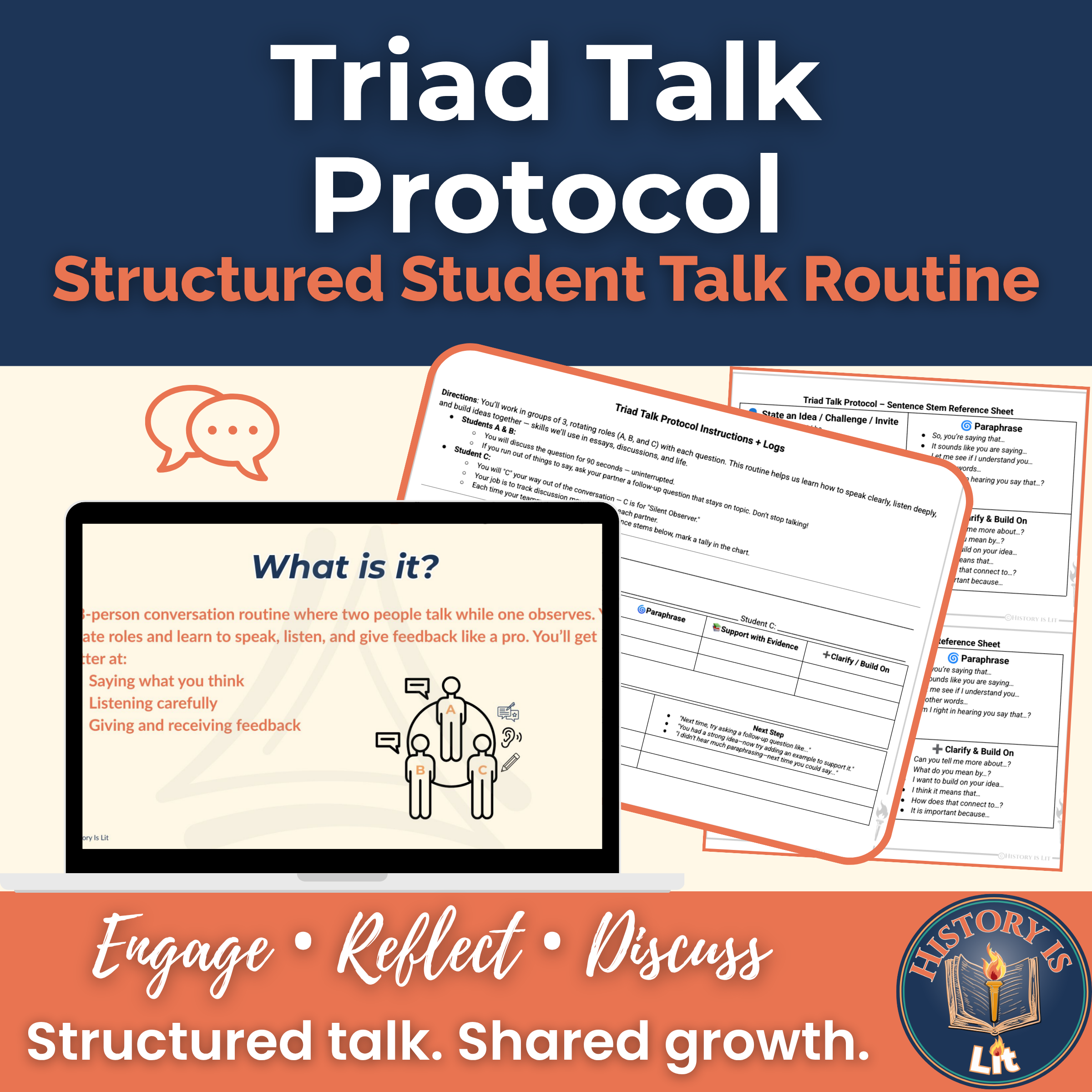
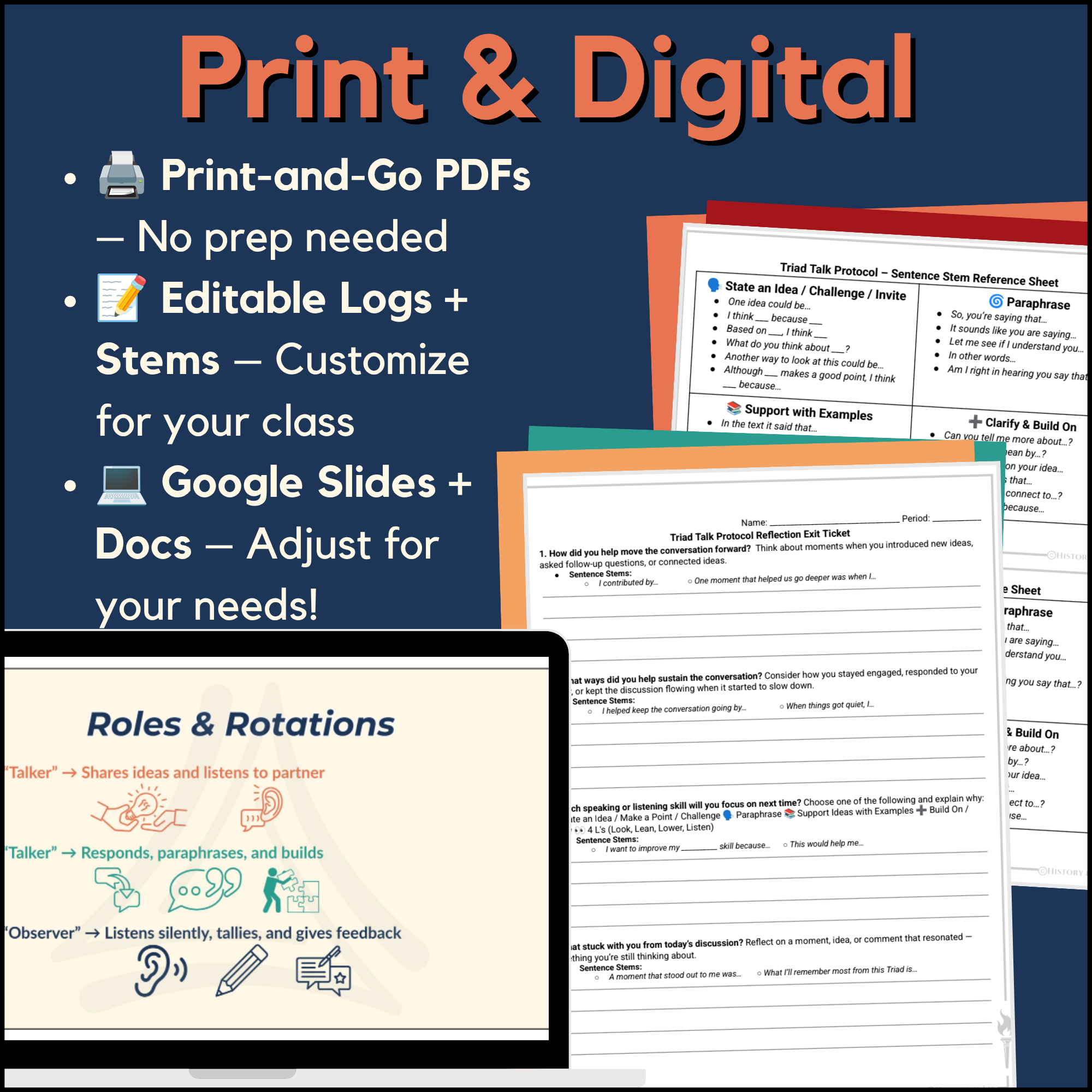
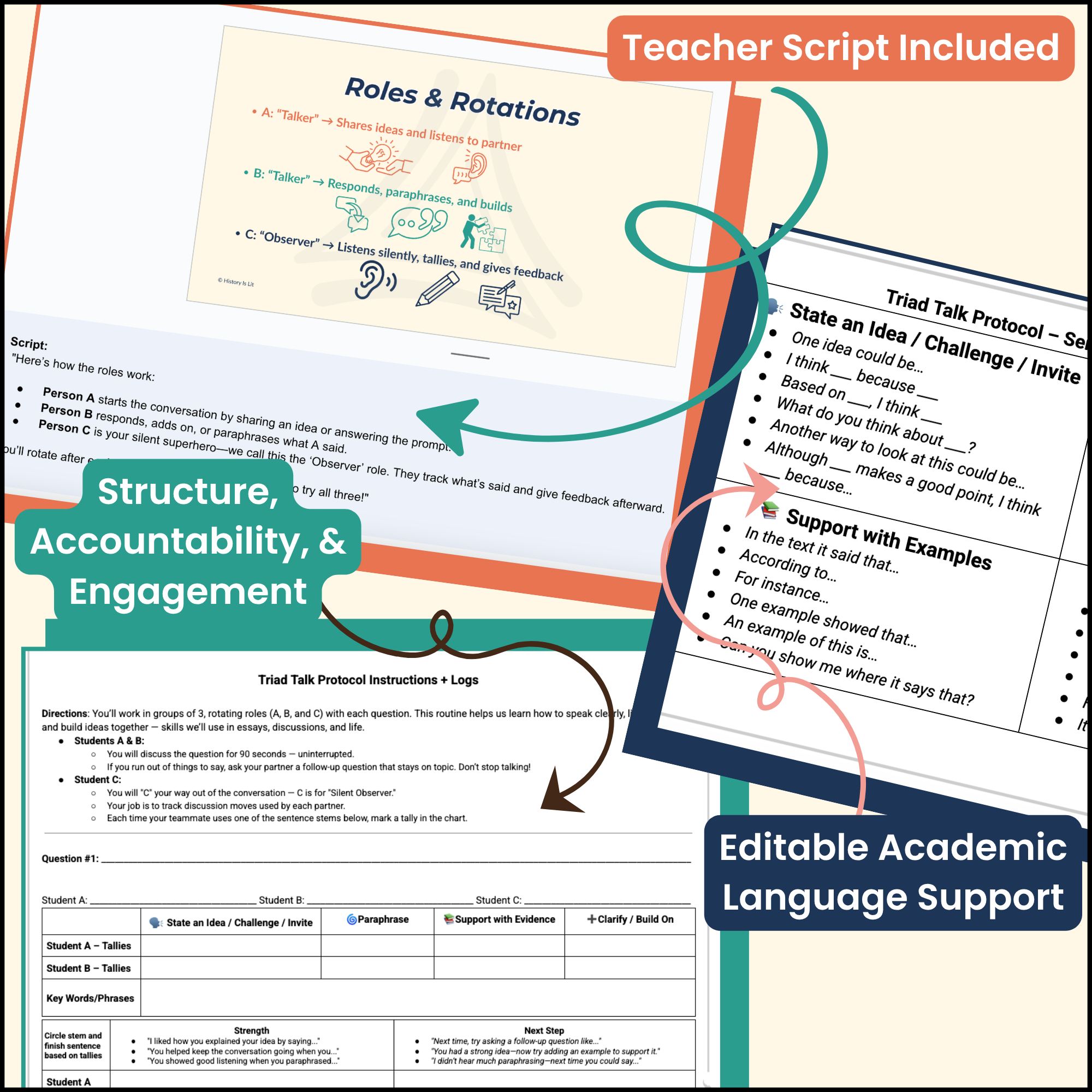
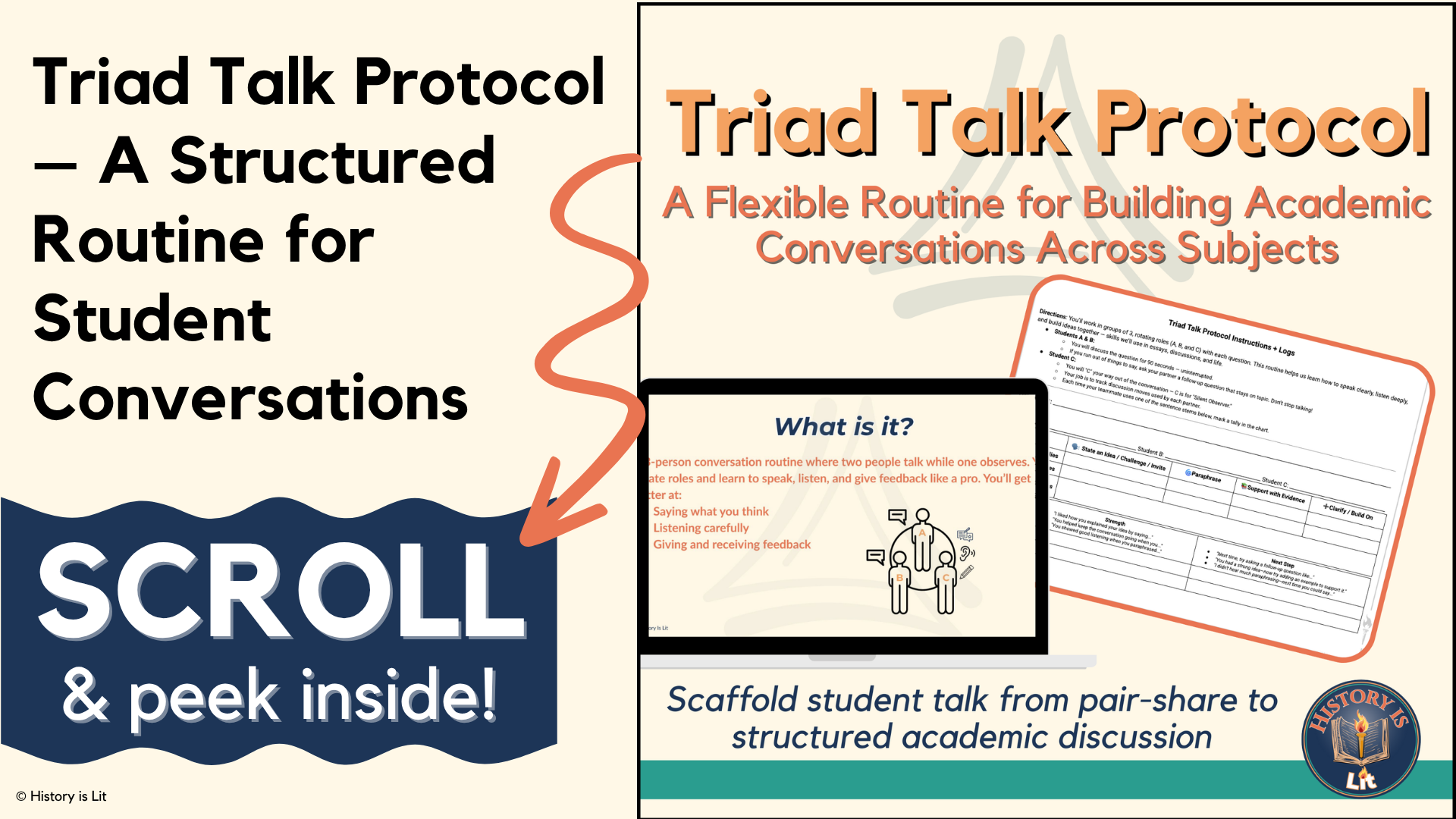
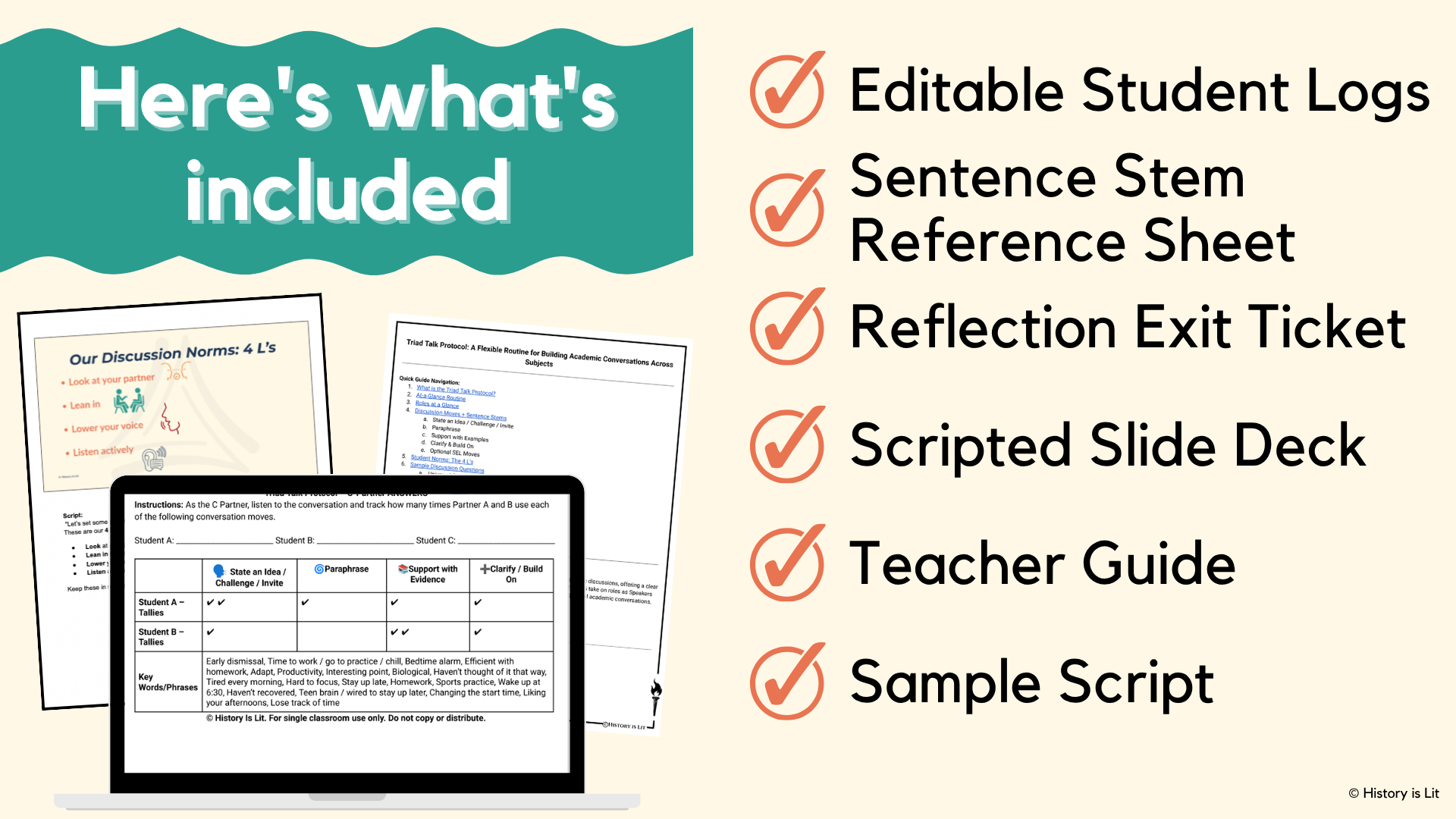
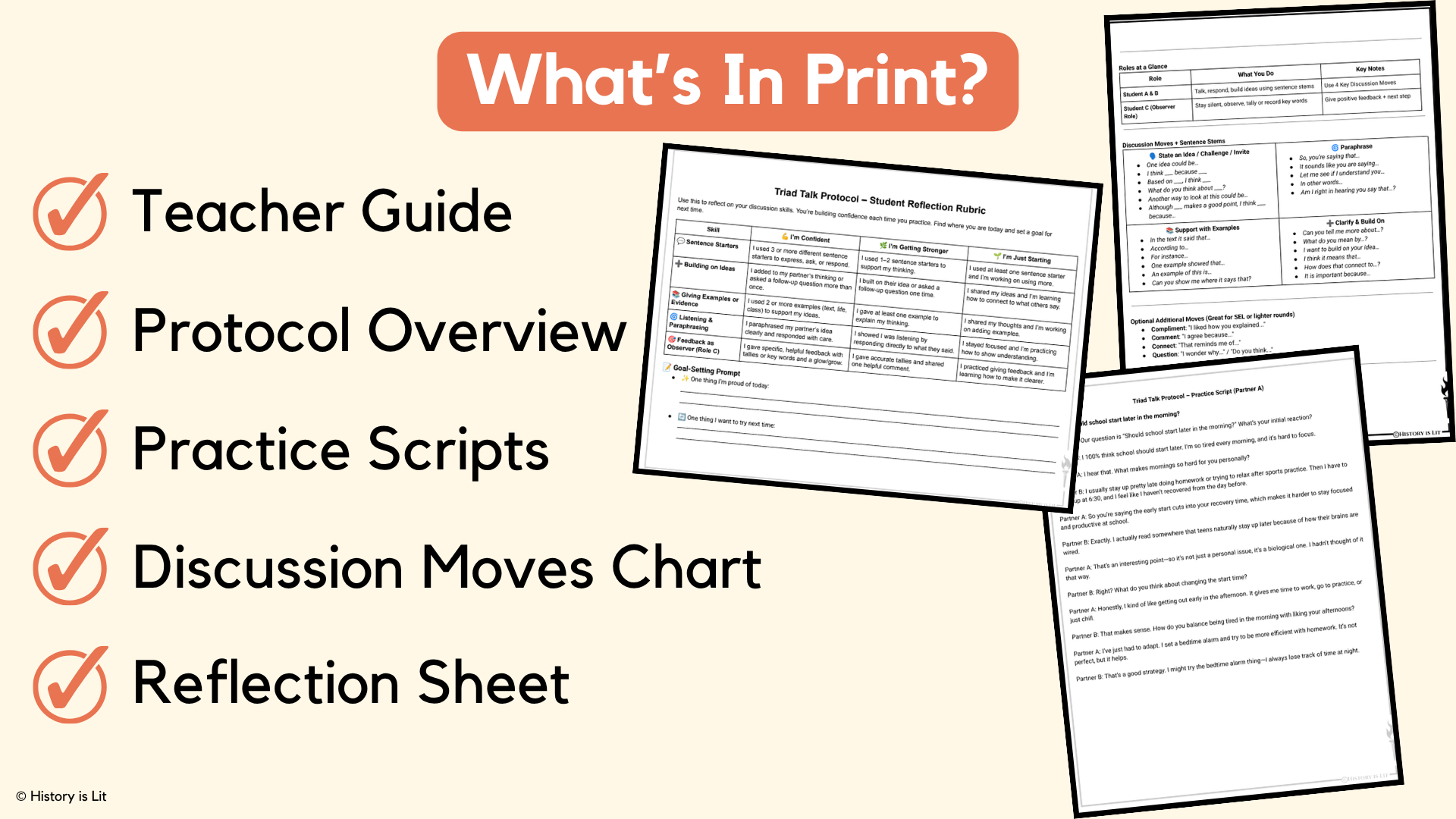
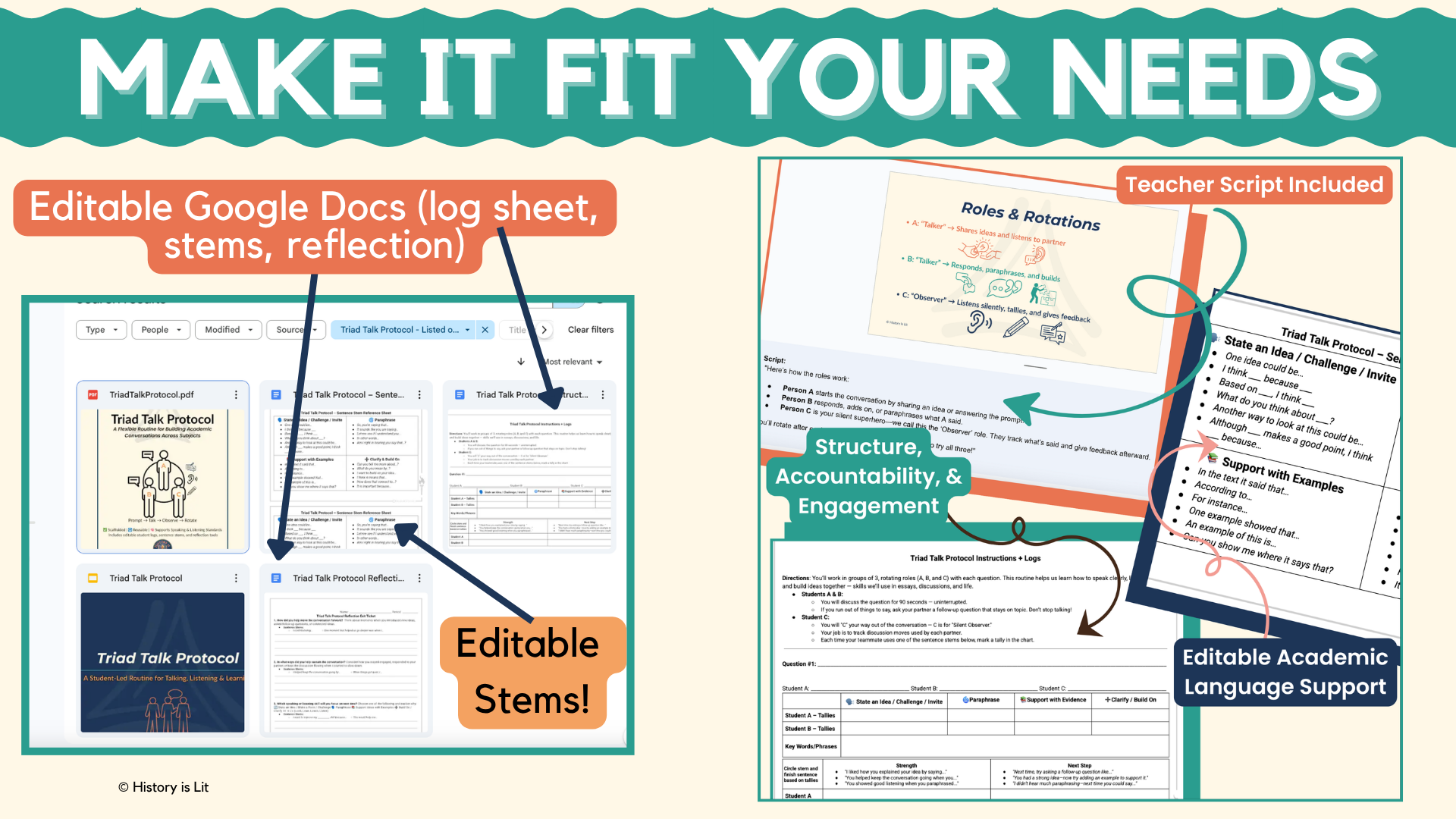
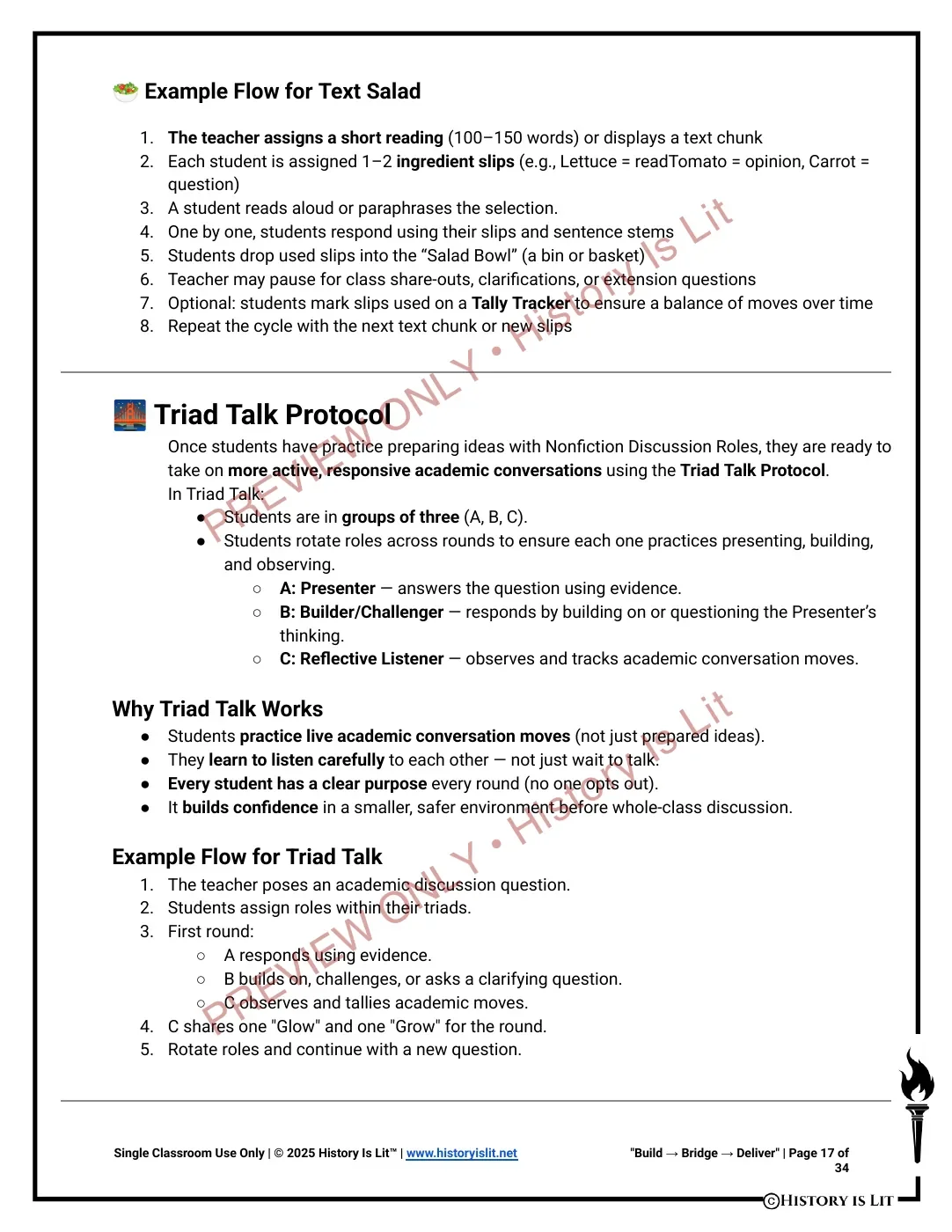
Student-Led Discussions |Triad Talk Protocol | Middle School | Accountable Talk
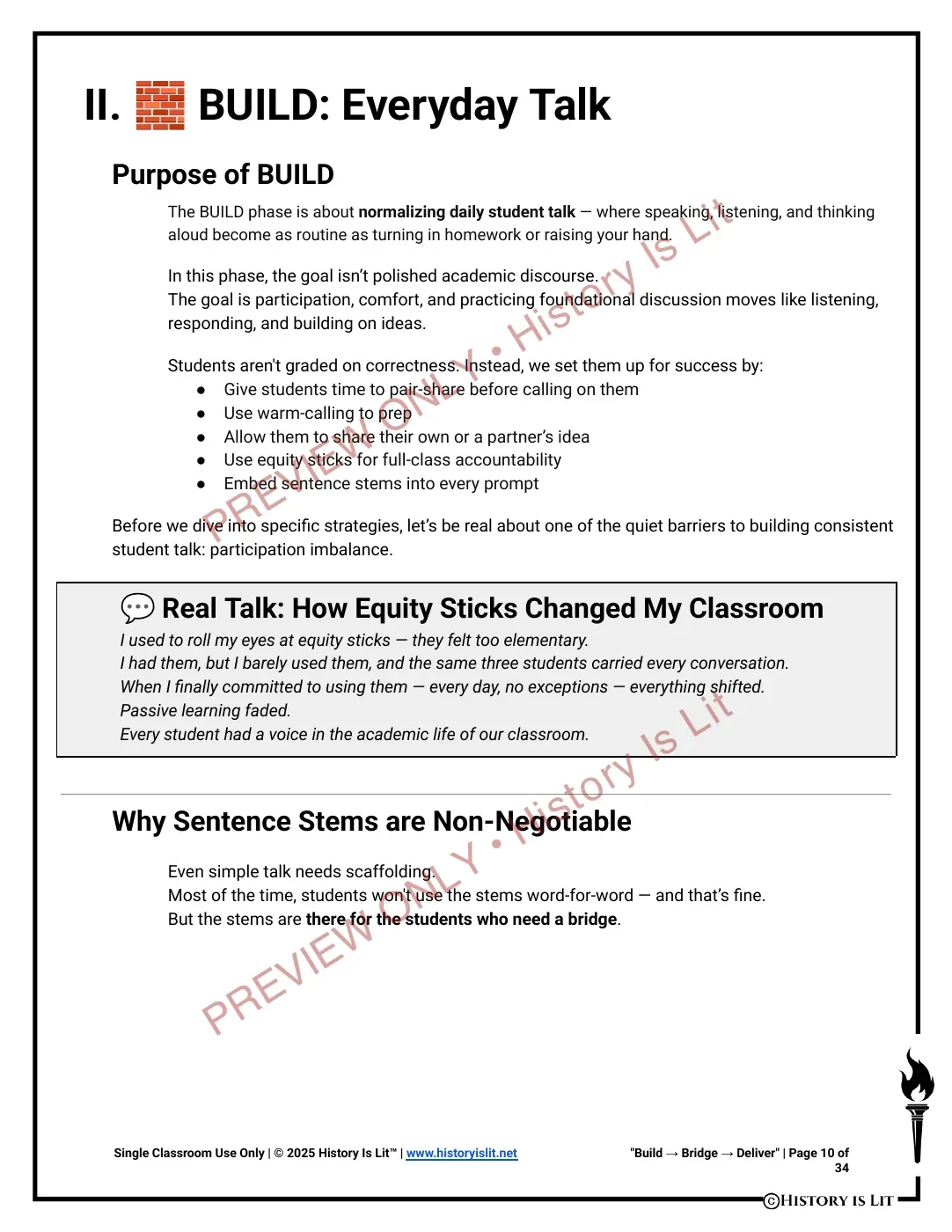
The Triad Talk Protocol transforms silence into structured, real discussion—without you doing all the work.
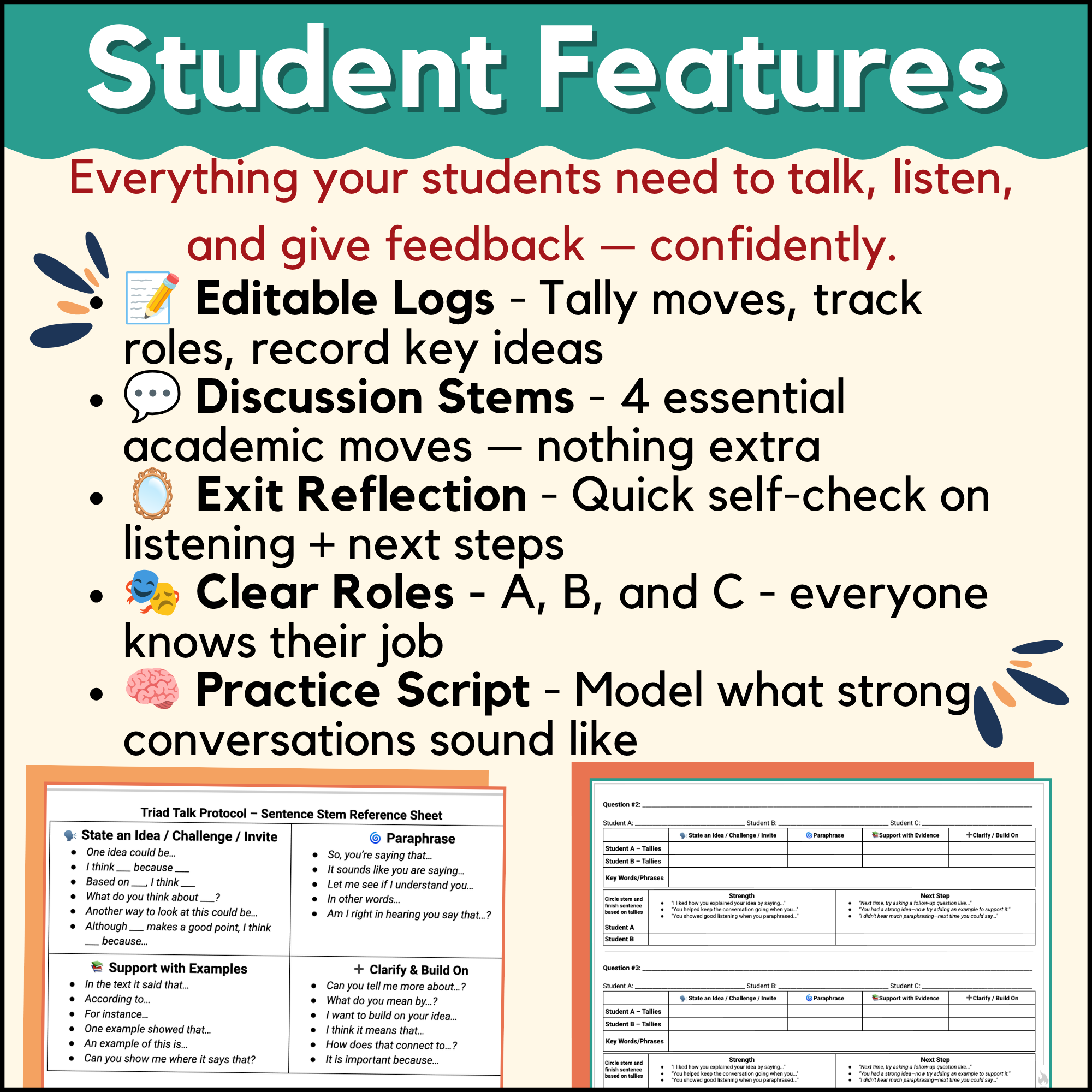
✅ Every student has a role
✅ Editable logs + sentence stems
✅ Built-in structure—no awkward silences
Unlike typical talk stems, this routine actively builds peer feedback, listening, and academic vocabulary—with rotating roles that keep students engaged.
What’s Included:
• Editable Logs & Reflection Sheets (customize them to fit your needs)
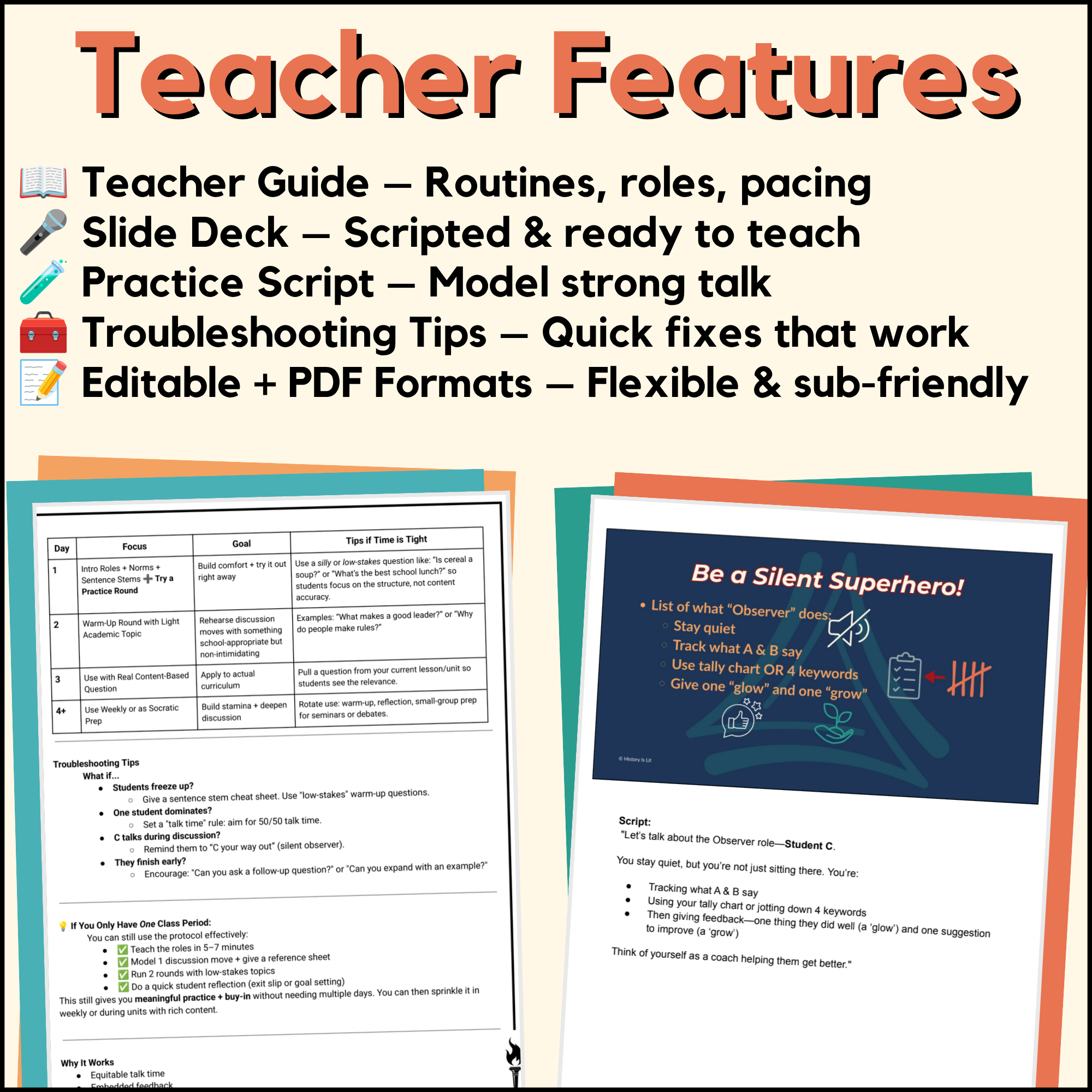
• Slide Deck with Speaker Notes (for easy, guided implementation)
• Teacher Guide & Rubrics (no-fuss, ready-to-use)
Perfect For:
• Socratic Seminars and DBQs
• Literature, science labs, SEL circles
• Primary sources or novel chapters—students analyze and discuss!
Why You’ll Love It:
Triad Talk removes the pressure of managing discussions. Students know exactly what to say, when to listen, and how to respond—no awkward silences or endless prompting. Plus, you can use any questions you like—like “What makes a good leader?” or “Should the voting age be 16?” Just give them prep time to think and ink, then go!
Ready to boost your classroom conversations? Get started with Triad Talk!
Terms of Use
© History Is Lit. Licensed for single classroom use only. Please purchase additional licenses if sharing with a team or school.
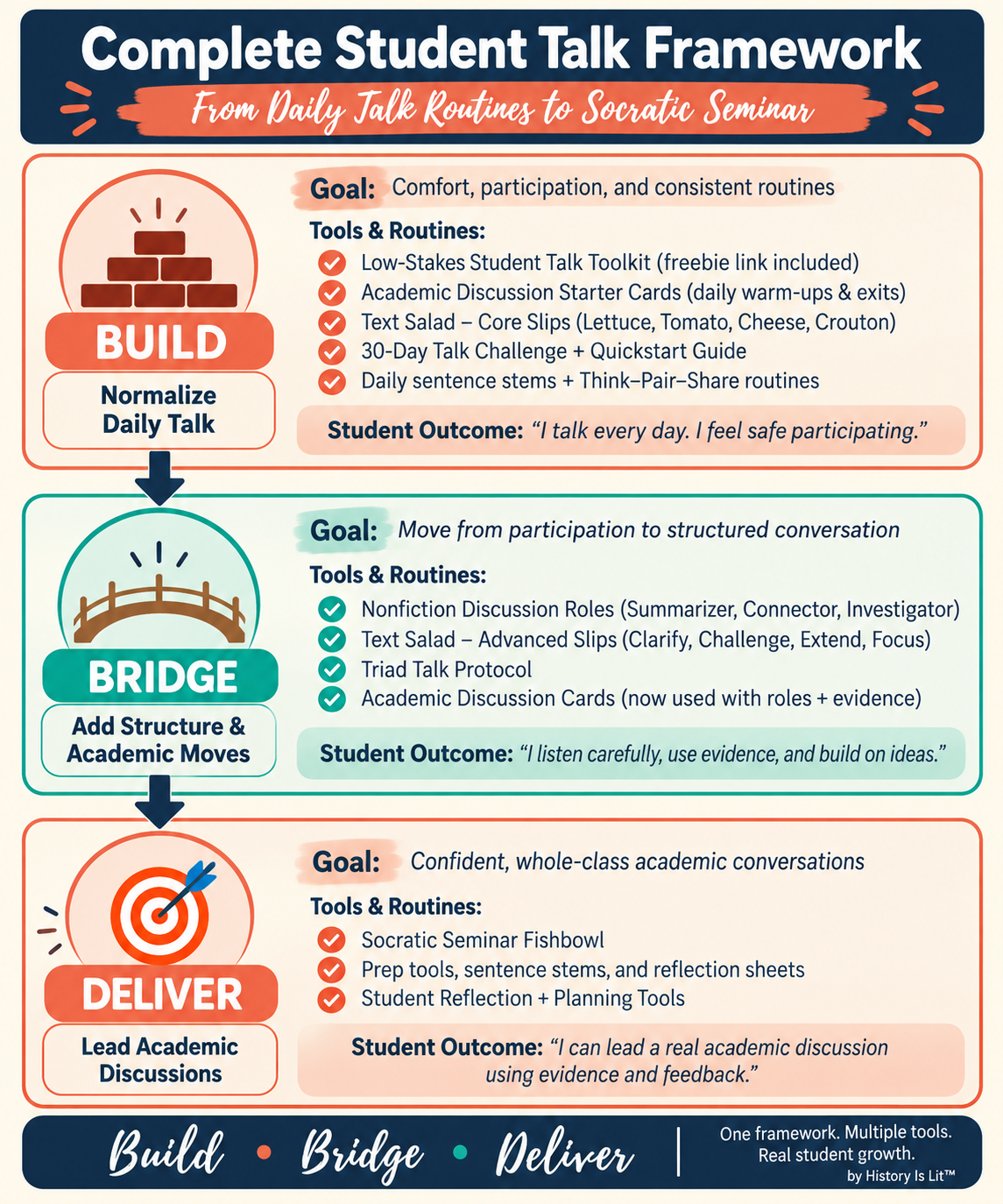
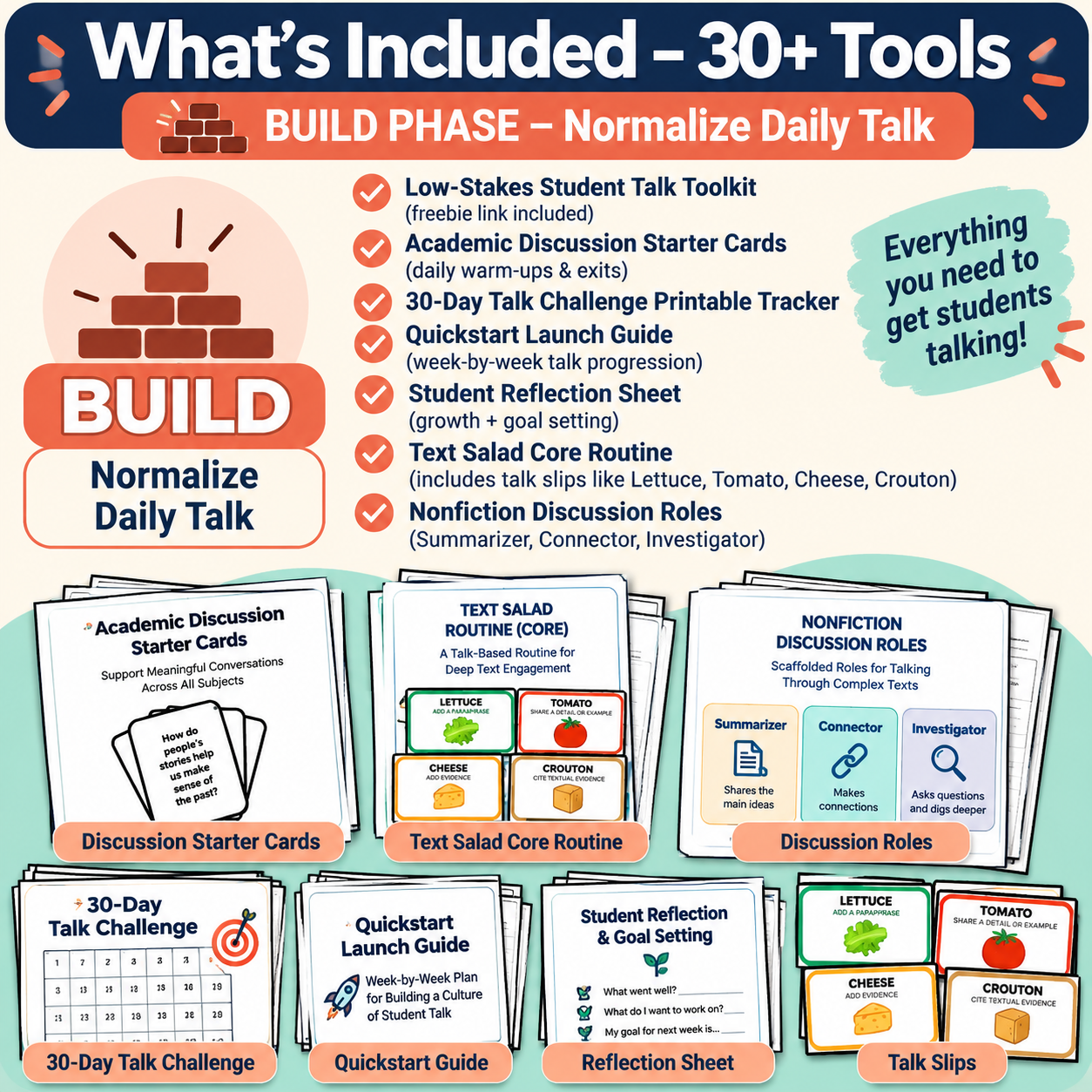
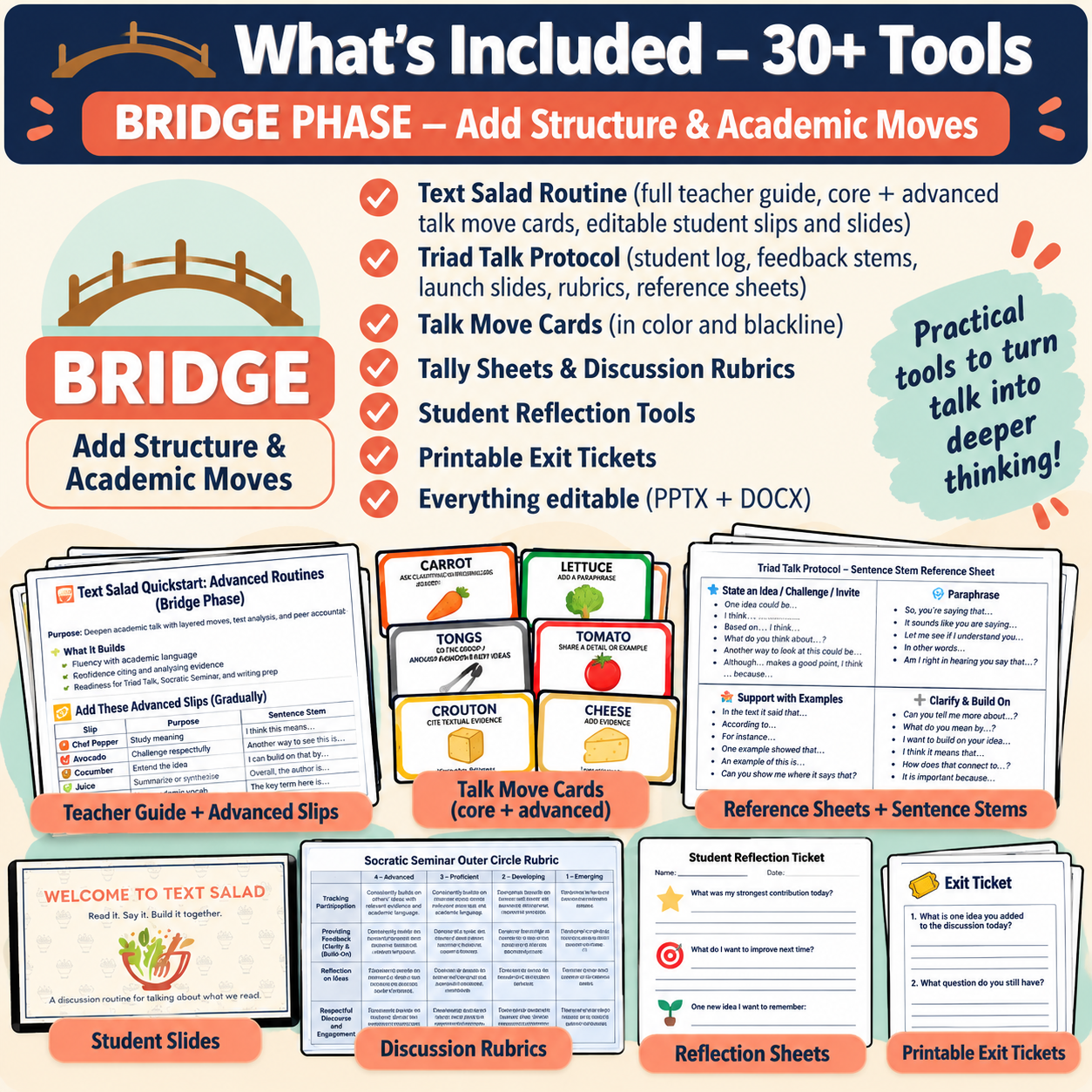
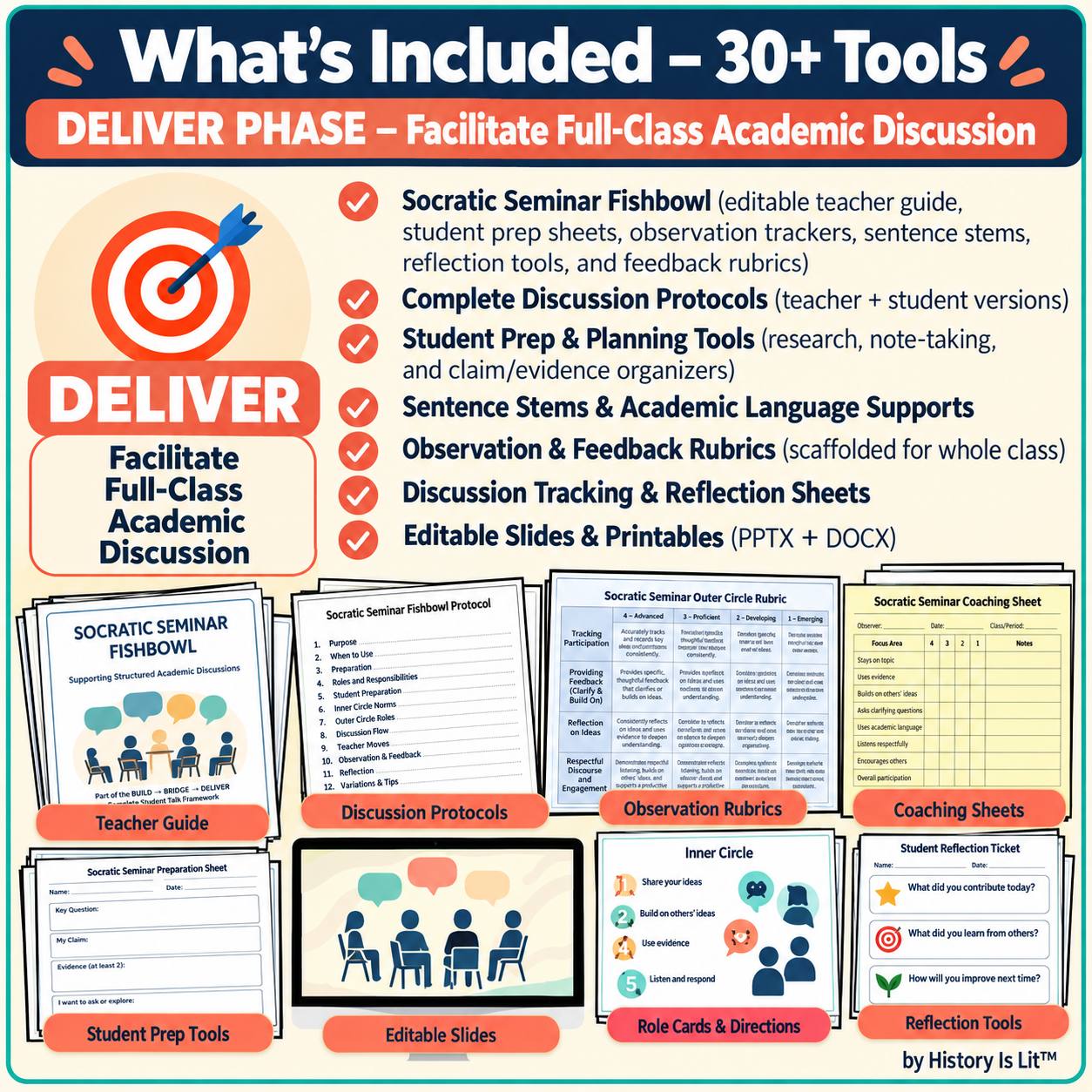
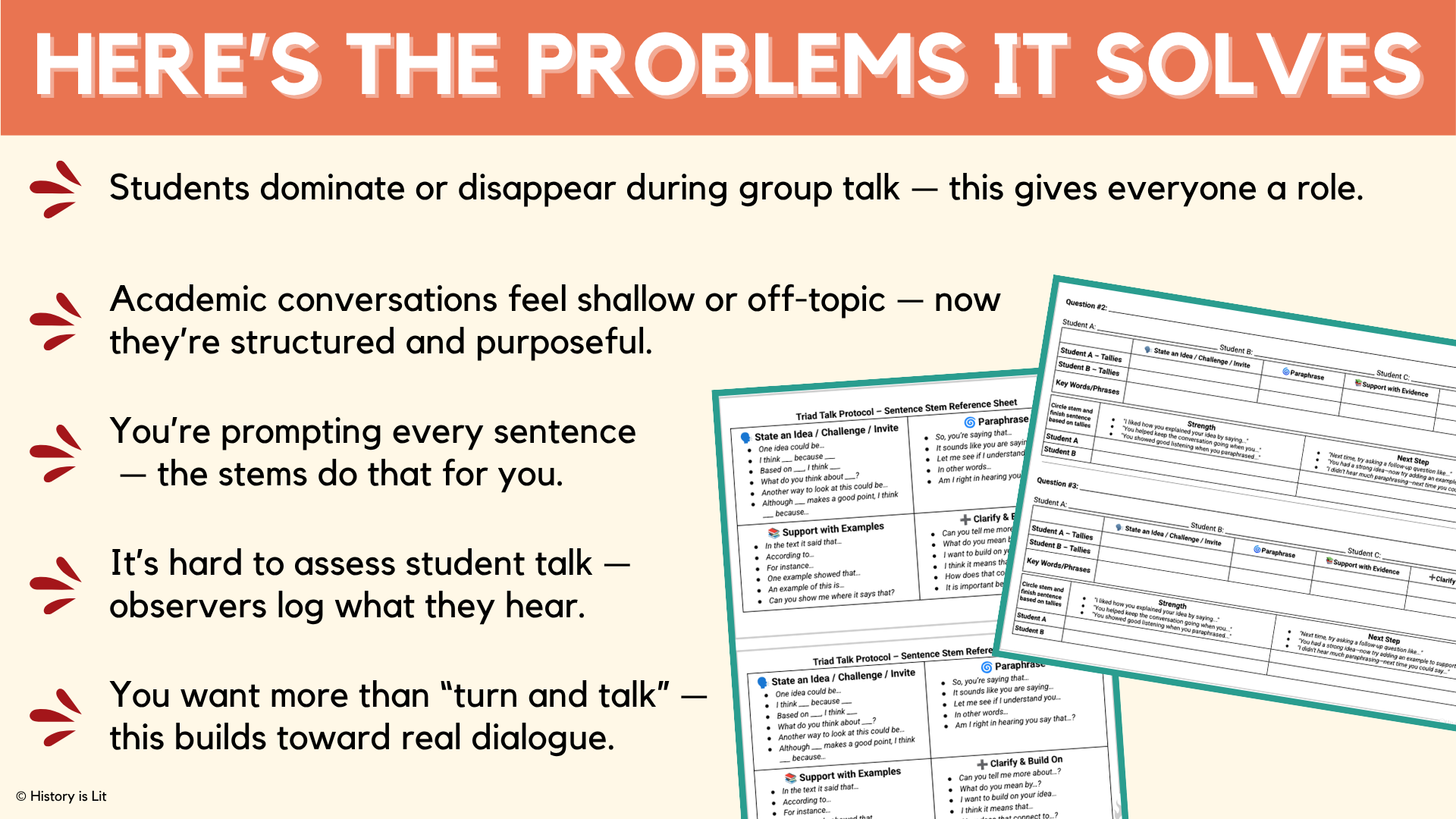
Your students “talk,” but stay shallow or off-topic
You’ve tried sentence stems… and still get crickets
You want evidence-based discussion—not just answer trading
You know they’re capable of more… they just need the right supports
This framework gives you the full progression to get them there.
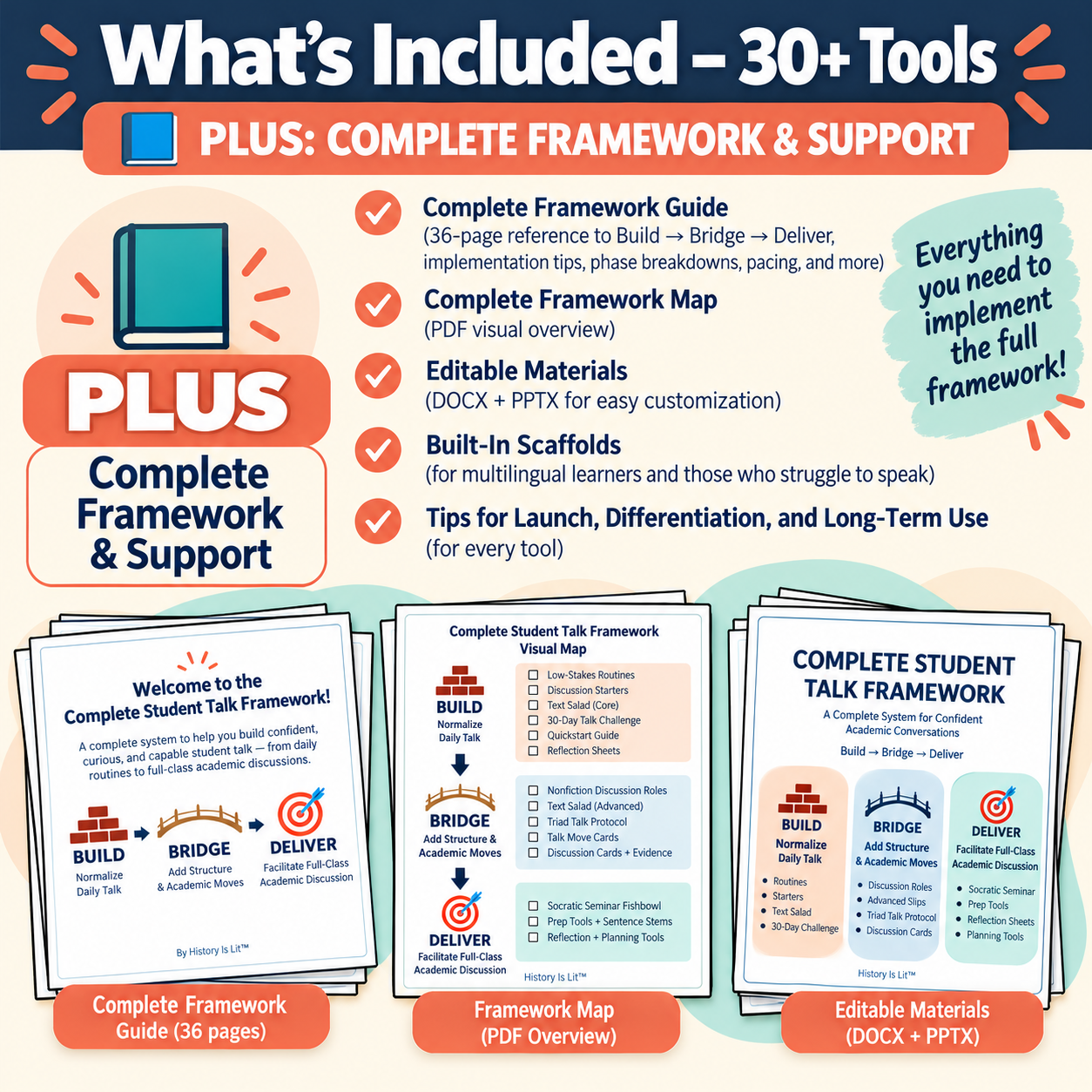
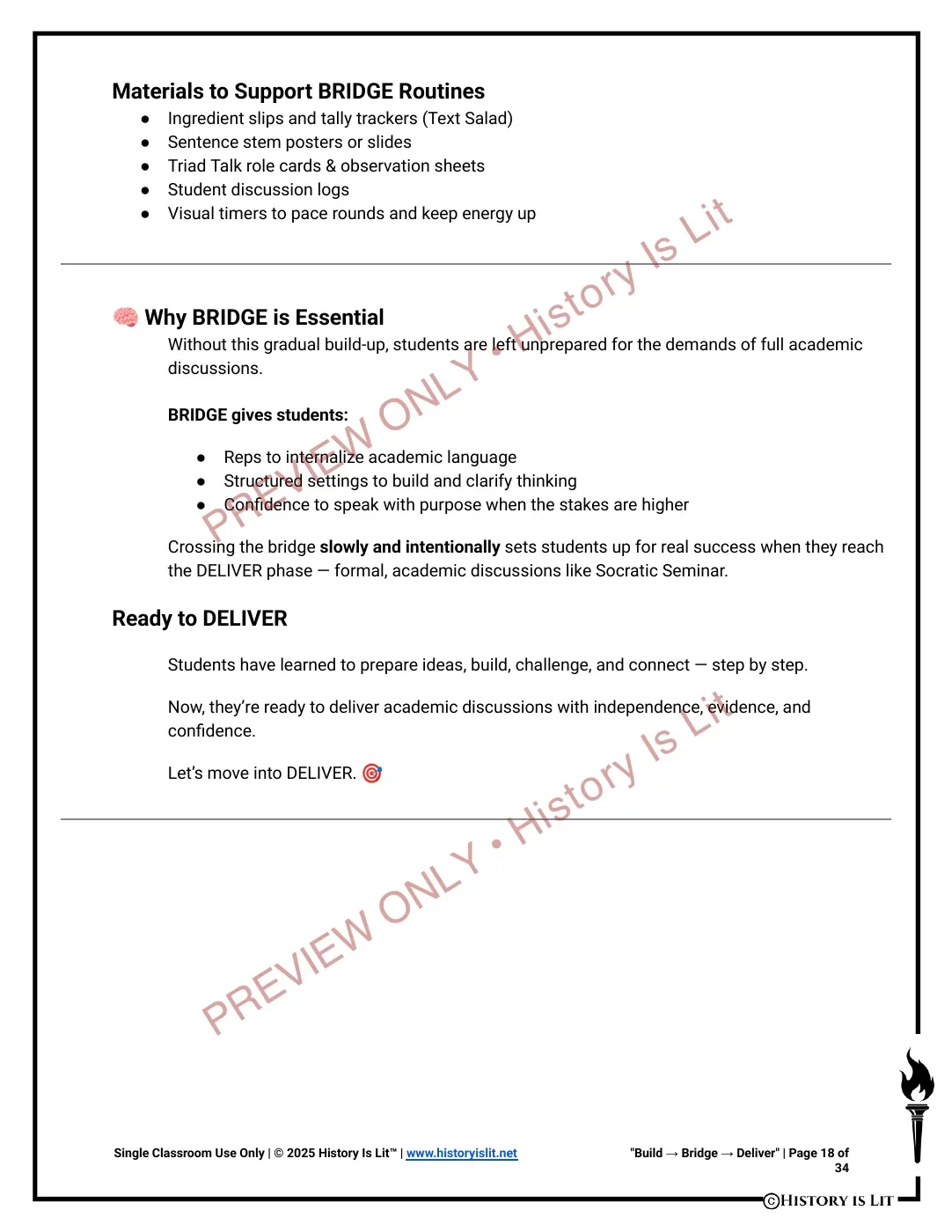
30+ classroom-ready tools to move students from silence to structured academic discussion
Includes print + digital versions for flexible classroom use.
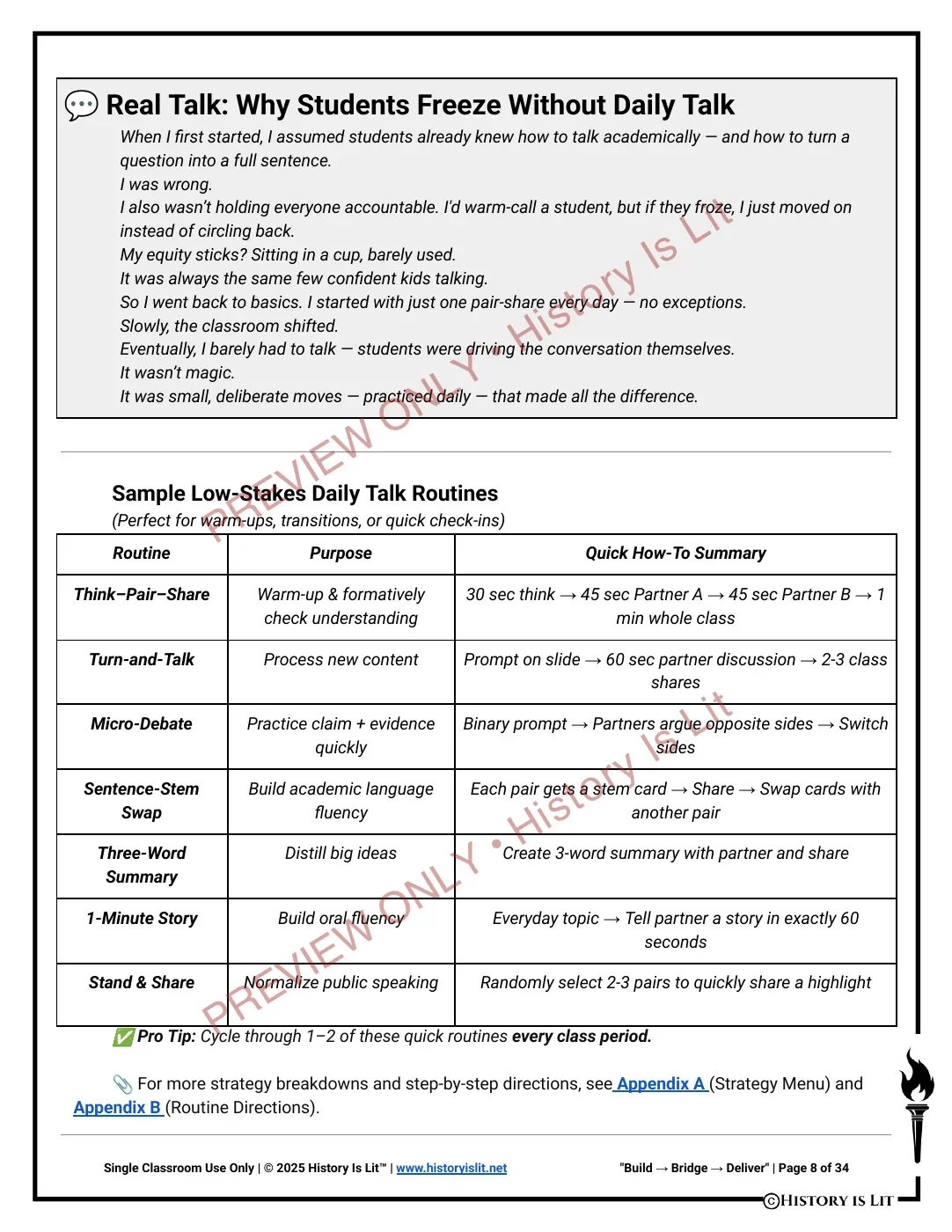
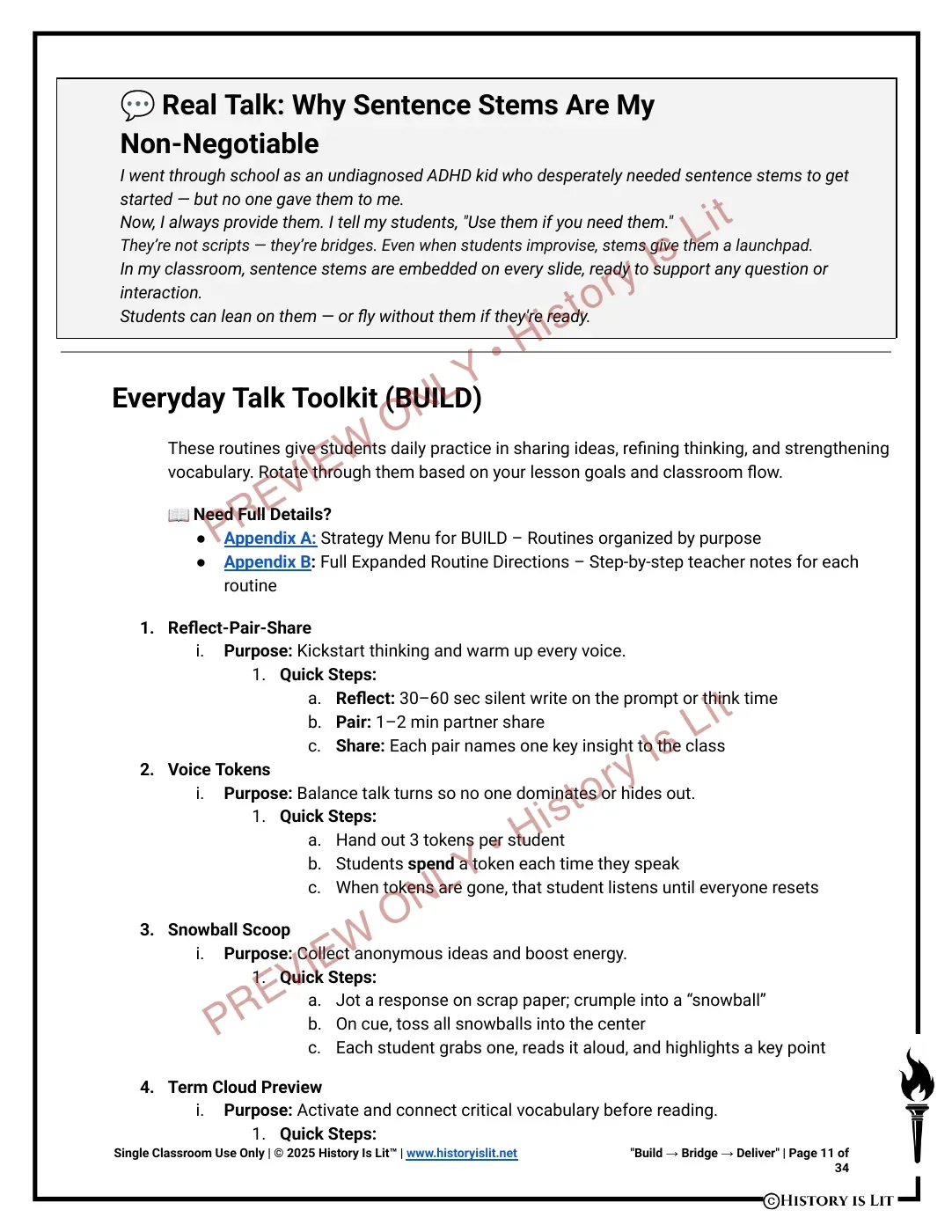
✔️ Low-Stakes Daily Talk Routines
→ Build student confidence with no-prep, repeatable routines that normalize academic conversation
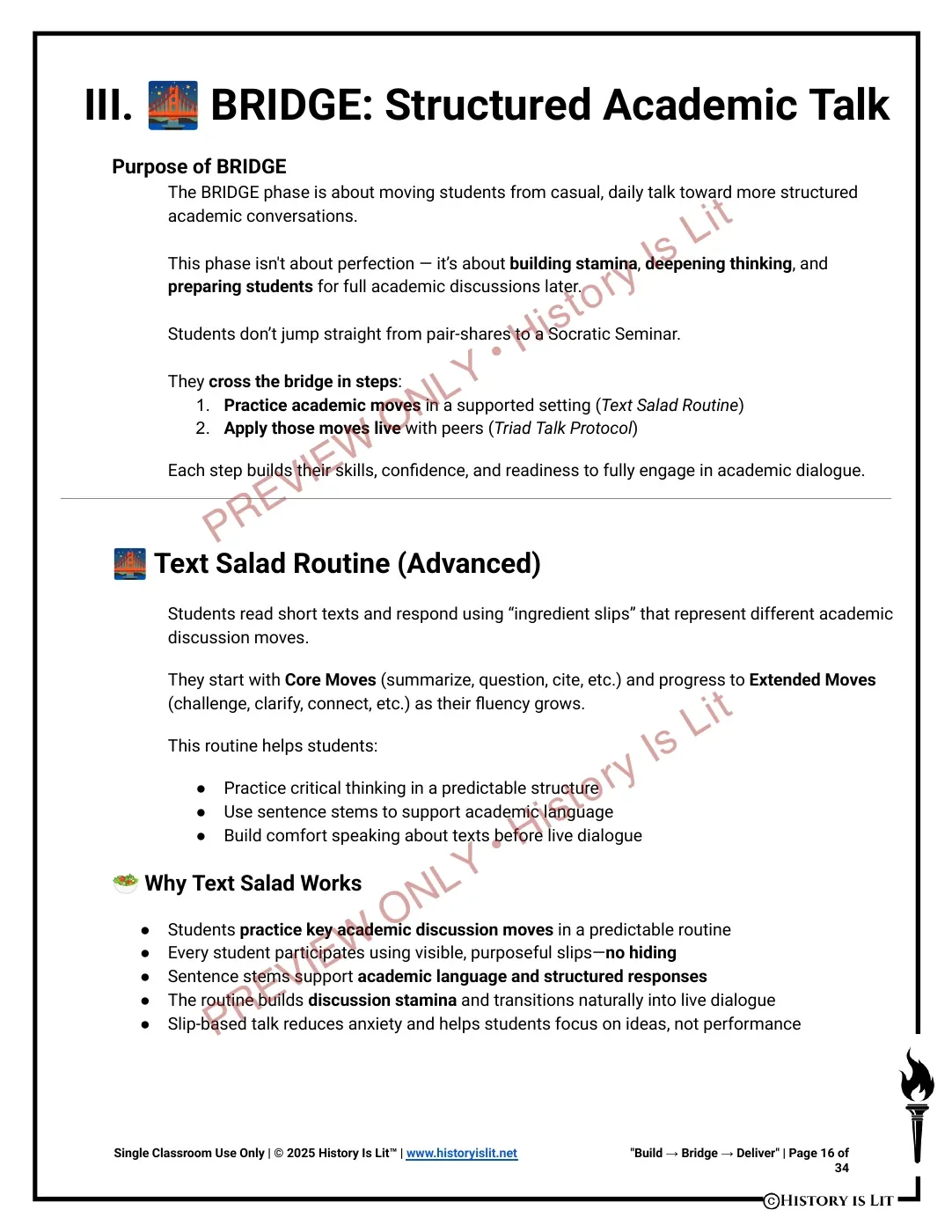
✔️ The Text Salad Routine
→ Transform independent reading into purposeful talk with fun, slip-based discussion starters
✔️ Triad Talk Protocol
→ Foster deeper, student-led conversations in small groups before jumping into whole-class discussion
✔️ Editable Socratic Seminar Fishbowl Packet
→ Guide students through formal discussions with scaffolds that reduce stress and increase equity
✔️ Visual Student Trackers, Sentence Stems, and Rubrics
→ Support all learners with tools that make expectations visible and success feel achievable
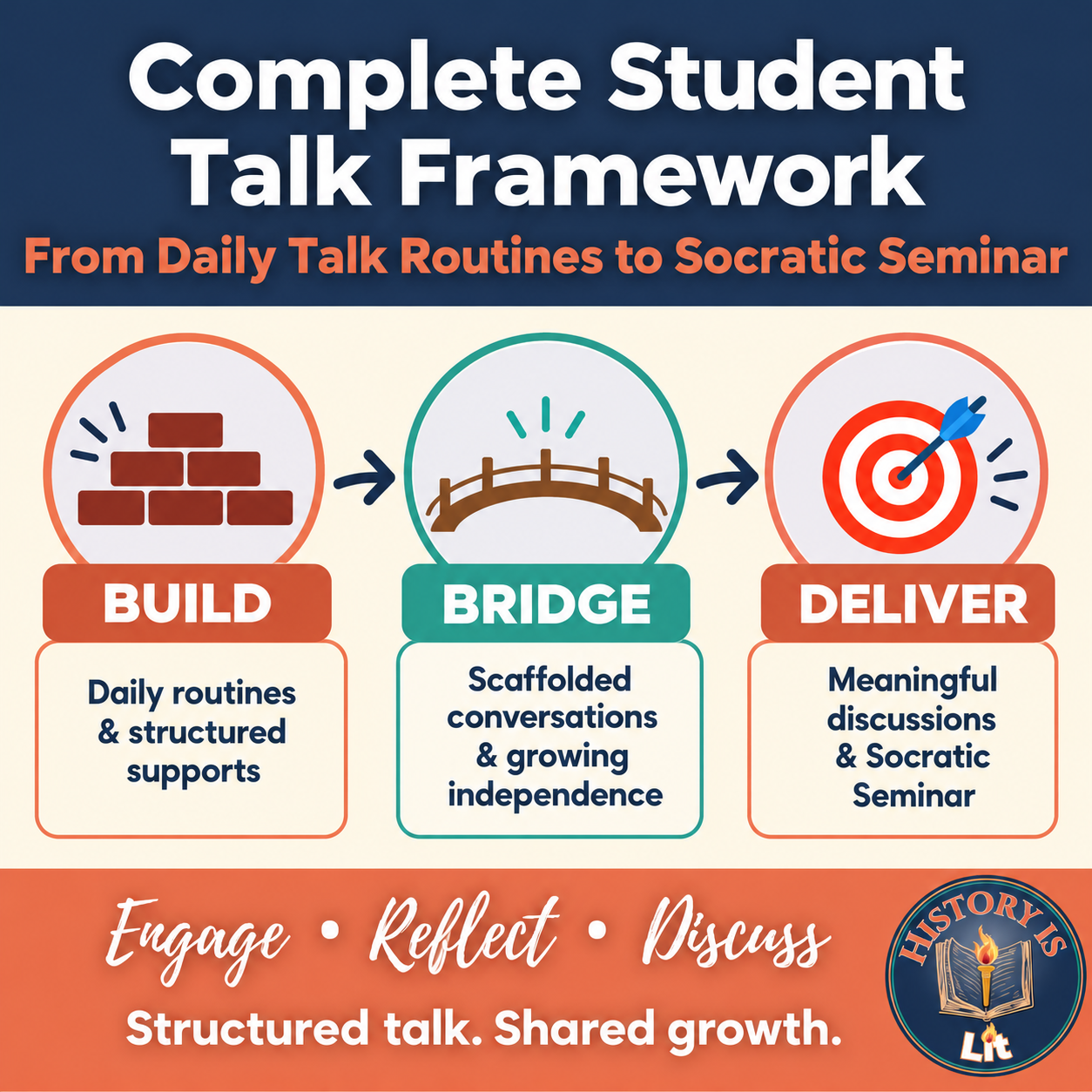
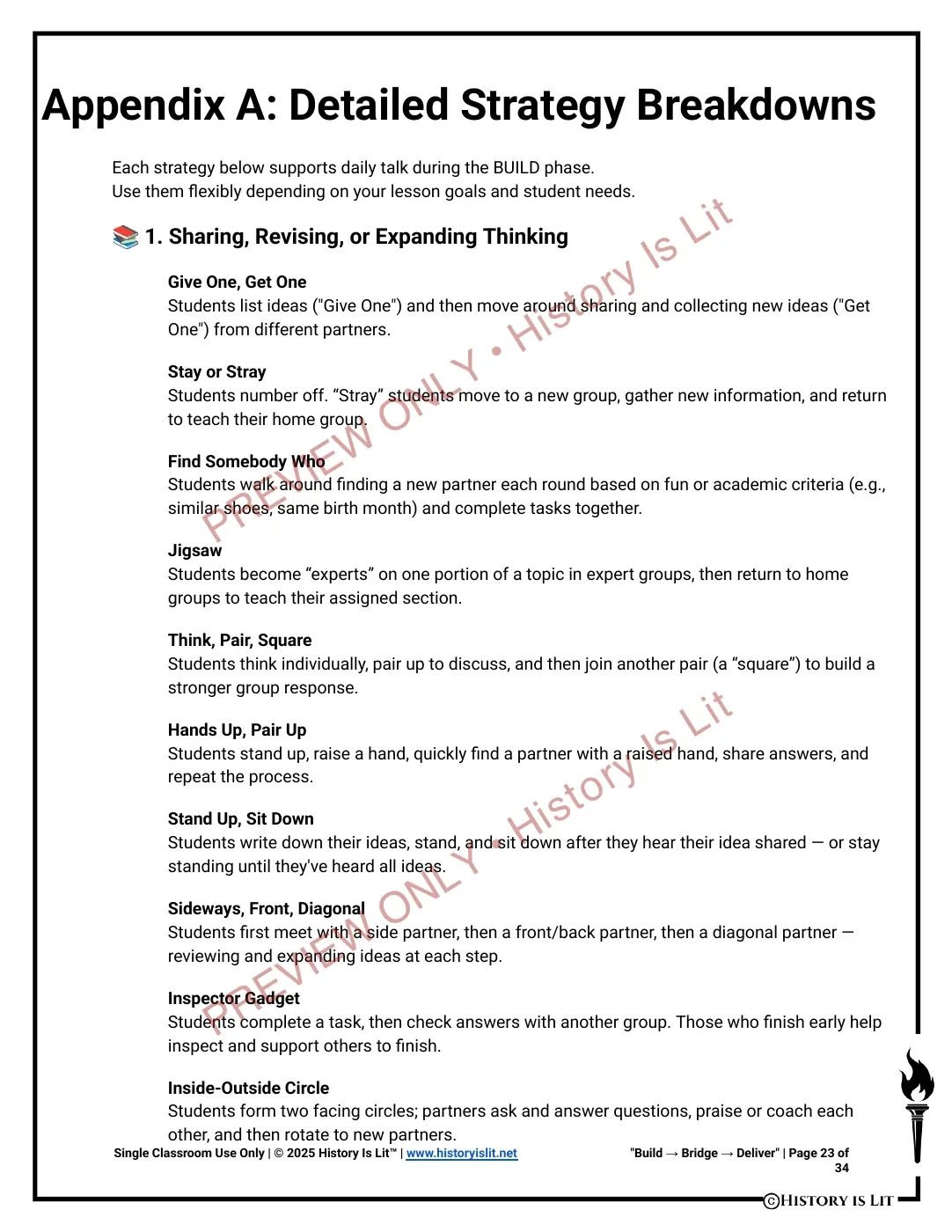
✔️ The Full Build → Bridge → Deliver Framework Guide
→ Follow a clear, flexible progression that fits into your schedule—whether you’ve got 5 minutes or 50
✔️ Multilingual + Struggling Learner Scaffolds
→ Engage every voice with language-accessible supports built right in—no extra planning required
Only available in this complete system (not sold on TpT):
🥗 Text Salad Routine
→ Help students connect reading to real discussion with playful, low-stakes slips that build critical thinking
📘 Nonfiction Discussion Roles
→ Bridge the gap from casual chat to academic habits by assigning purposeful talk roles during nonfiction work
🧠 Academic Conversation Cards
→ Give students specific sentence stems and thinking moves to extend, challenge, and build on ideas during discussion
✅ You might find some individual pieces like the Triad Talk Protocol on TpT…
…but only this bundle brings all three phases together into one cohesive, student-ready system—with the scaffolds that make it work.
Students don’t leap into Socratic Seminar. They need a bridge.
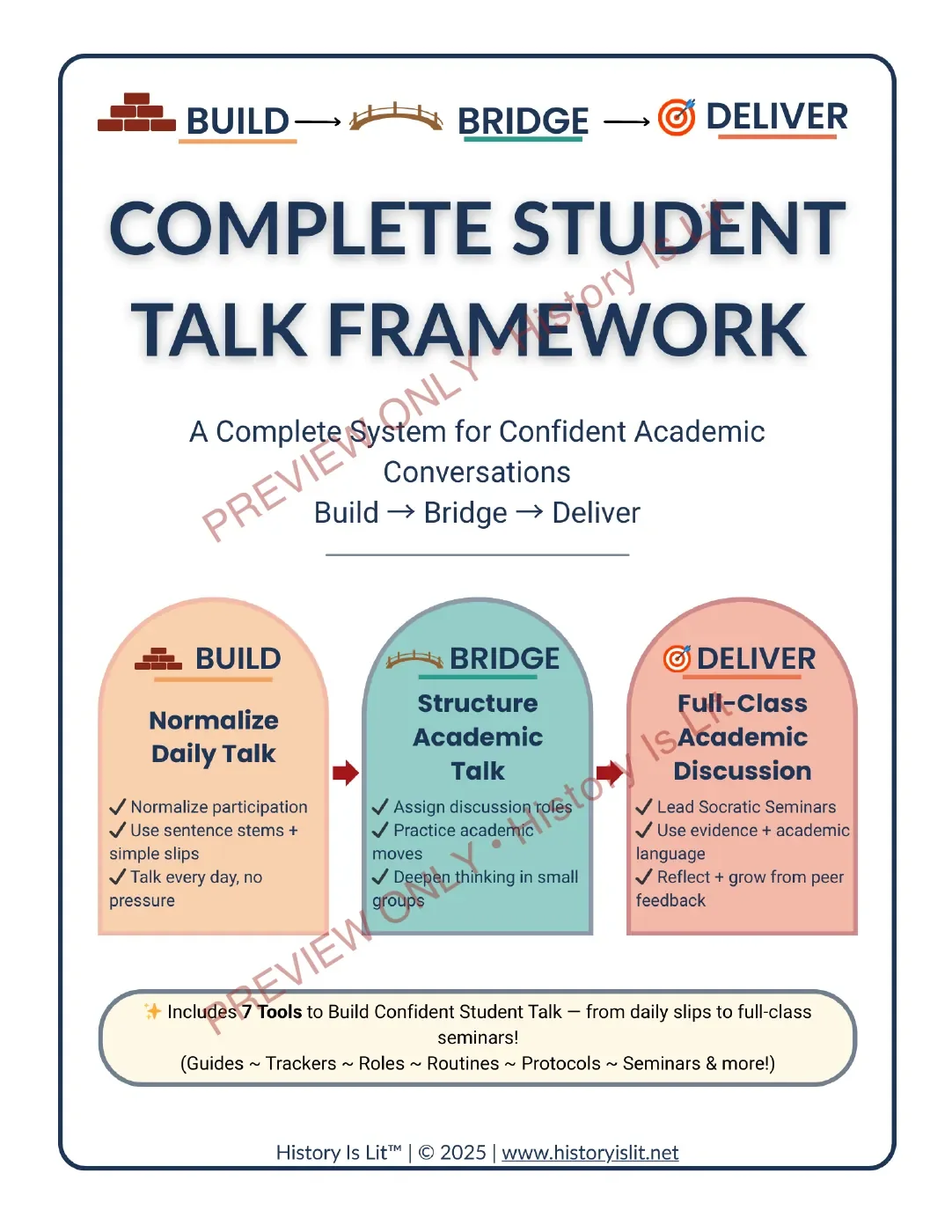
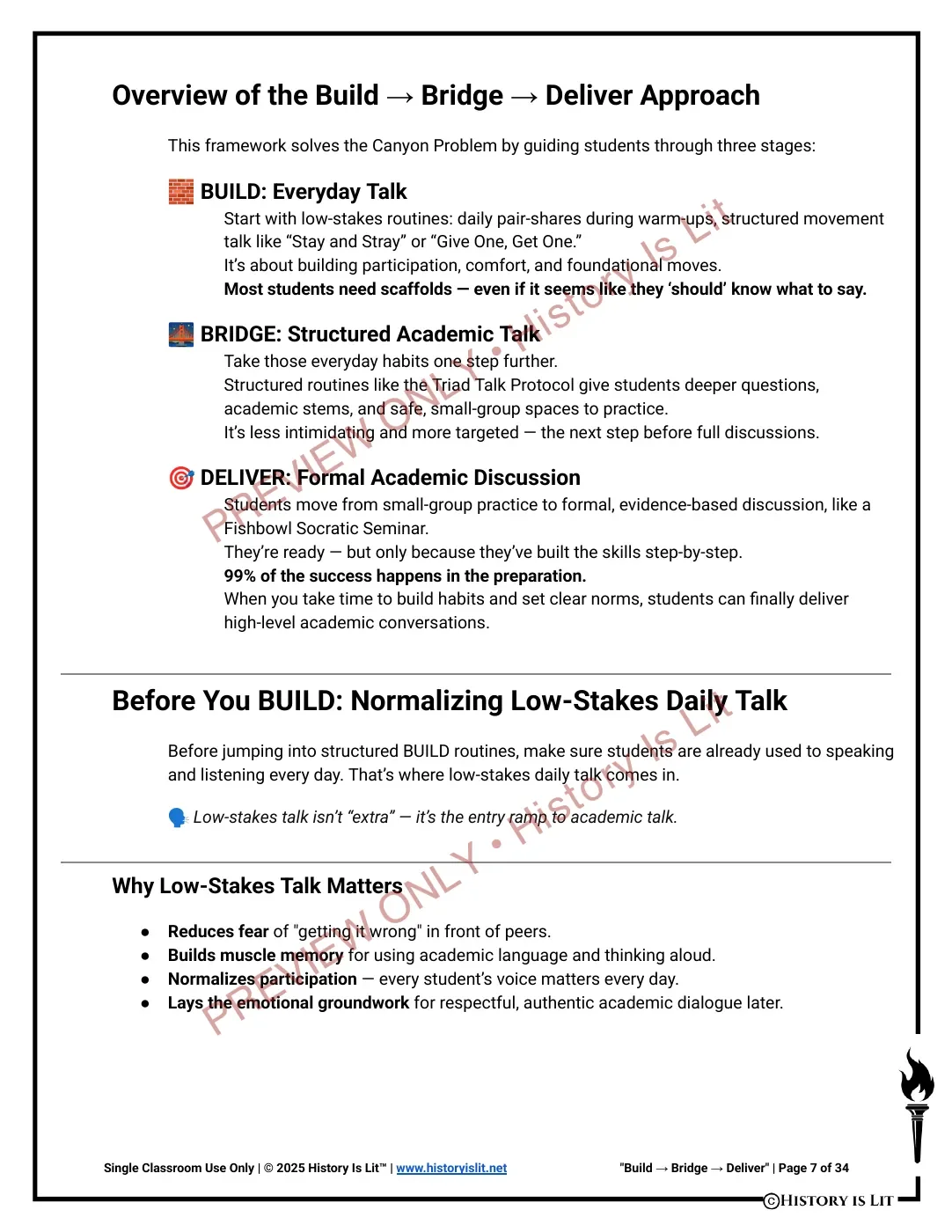
This framework builds academic conversation step-by-step, starting with low-stakes routines and ending with full-class, evidence-based discussion. It’s not just a toolkit — it’s a system that grows with your students.
Here’s how it works:
🔹 BUILD daily talk habits with short, no-prep routines
🔹 BRIDGE into academic language using nonfiction roles and small-group protocols
🔹 DELIVER whole-class discussions with confidence using the Socratic Seminar Fishbowl
And to make it actually doable in real classrooms…
Please see our full Terms & Disclaimers for details.
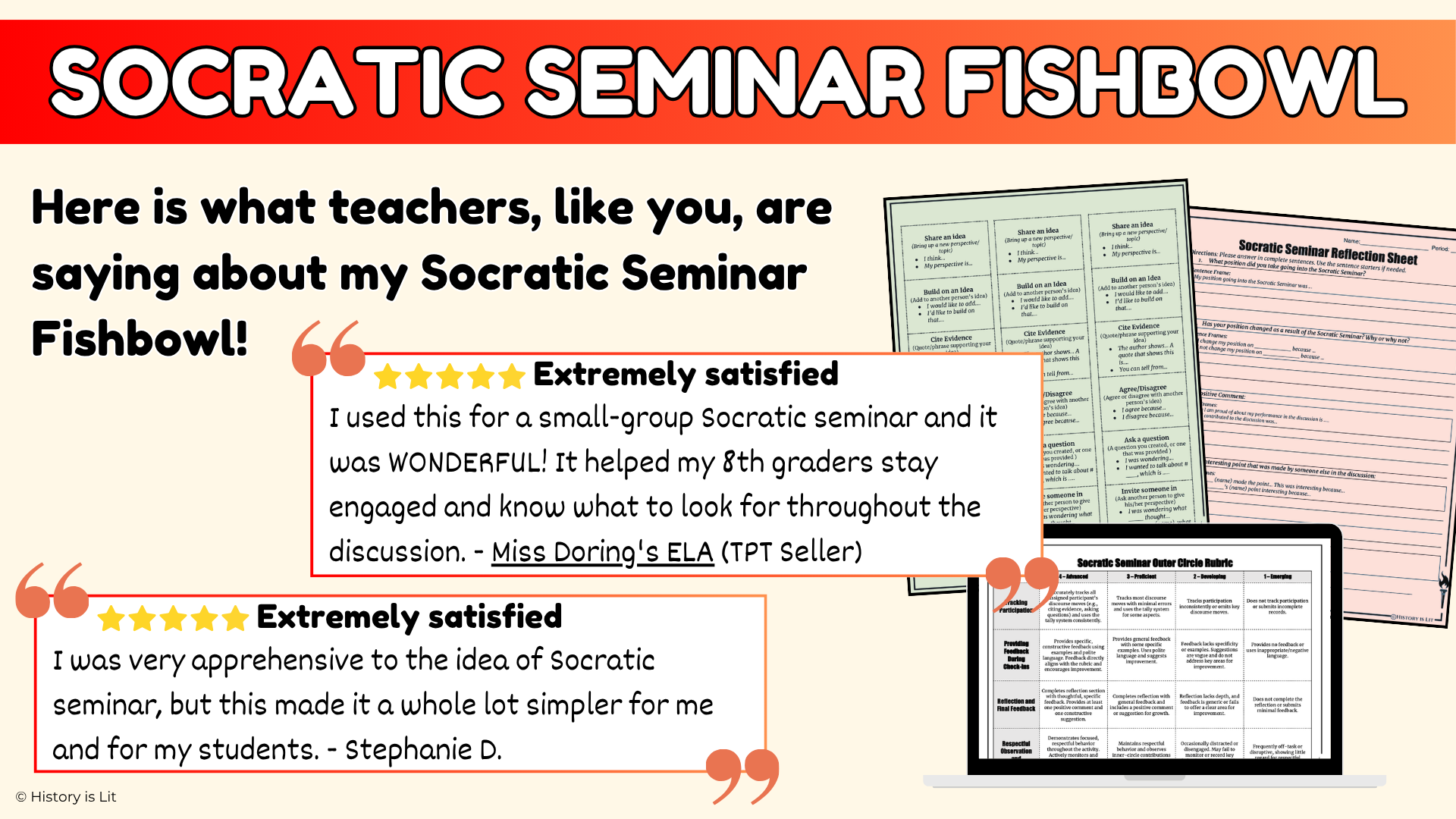
“This is exactly what I was missing. My students actually talk now.”
“It’s structured, practical, and it works. My classroom feels alive again.”
Perfect for middle or high school teachers who:
Want more student voice—without the chaos
Believe academic talk should be taught, not assumed
Need a realistic system that fits into a packed week
Before: “I don’t know what to say.”
After: “I think ___ because the author said…”
Before: Dominant voices or silence
After: Equitable, student-led discussion
Even with a Master’s in Literacy, I struggled when students hit a wall in discussion.
So I built the system I wish I’d had—one that bridges the gap between talking and thinking.
It’s not fluff. It’s the real scaffolding that finally worked.
Let me help you do the same.
Refund Policy
All sales of digital products from History Is Lit are final. Due to the instant delivery and reproducible nature of digital files, we do not offer refunds or exchanges, except in the following circumstance:
Technical Failure: If you experience a genuine issue that prevents you from accessing or downloading your purchase, please contact support at hello@historyislit.net within 7 days of your order. We will work with you to resolve the issue or provide an alternative download link.
By completing your purchase, you acknowledge and agree that (a) you have reviewed the product details and sample previews before buying, and (b) all sales are final unless a valid technical failure claim is made within the 7-day window.
No results match your search. Try removing a few filters.
