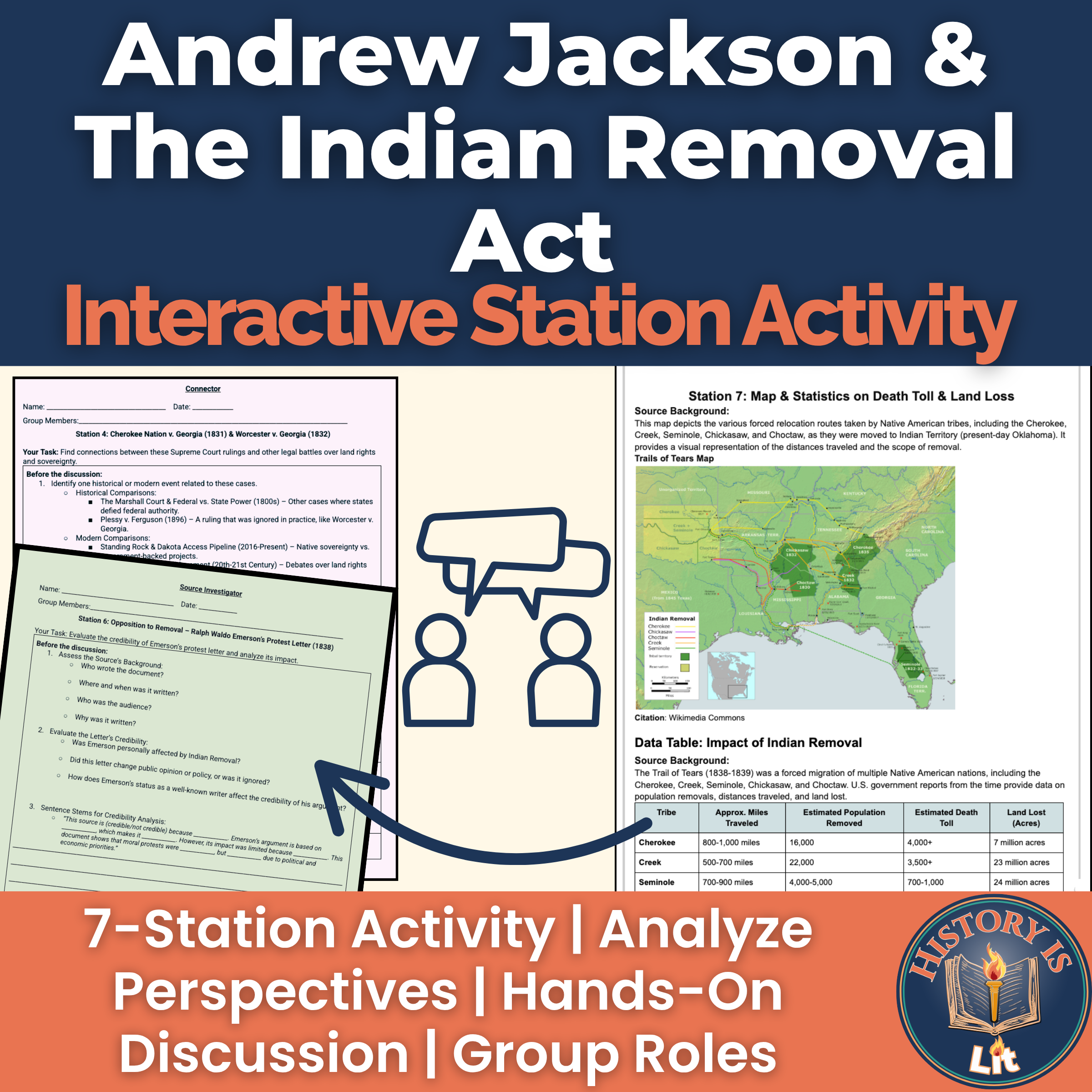
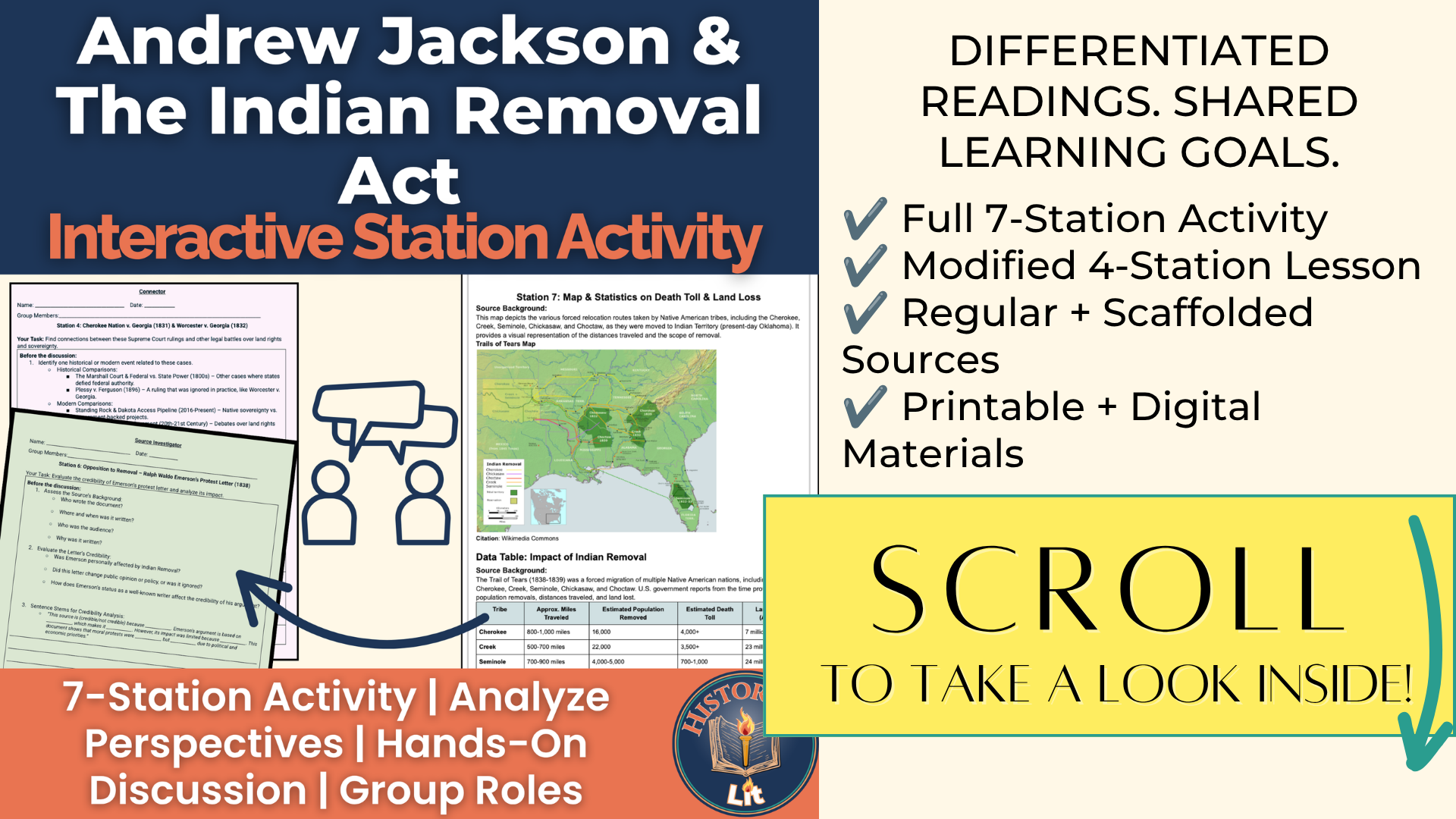
Looking for an engaging Indian Removal Act lesson that gets students analyzing primary sources and thinking critically about Andrew Jackson's presidency? This 6th–8th grade U.S. History station activity includes differentiated primary and secondary sources, historical analysis questions, and editable Google Slides to help students examine the Indian Removal Act, its consequences, and the perspectives surrounding Indian removal.
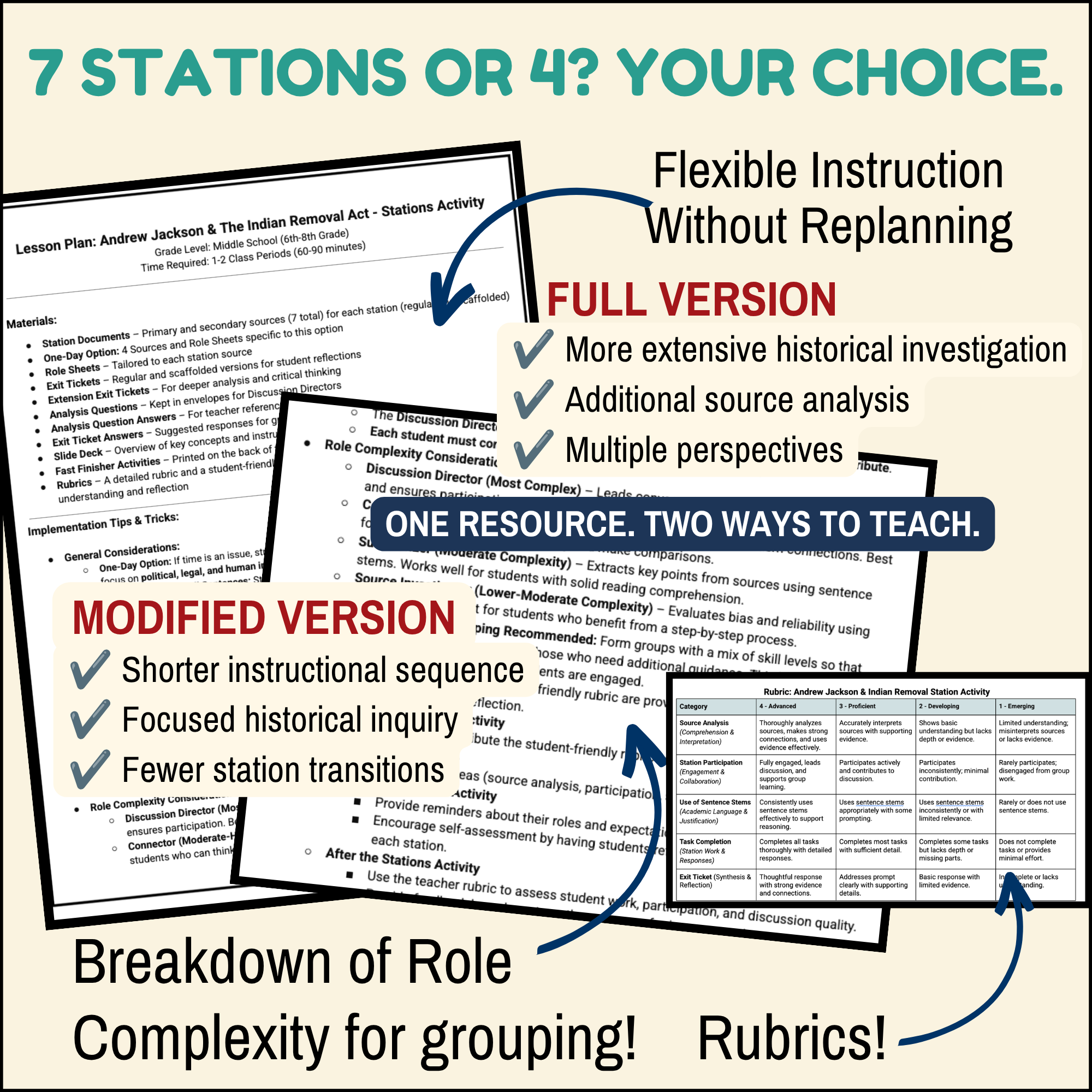
With 7 ready-to-use stations or a modified 4-station version, you can adapt the lesson to your students' needs without spending hours preparing materials.
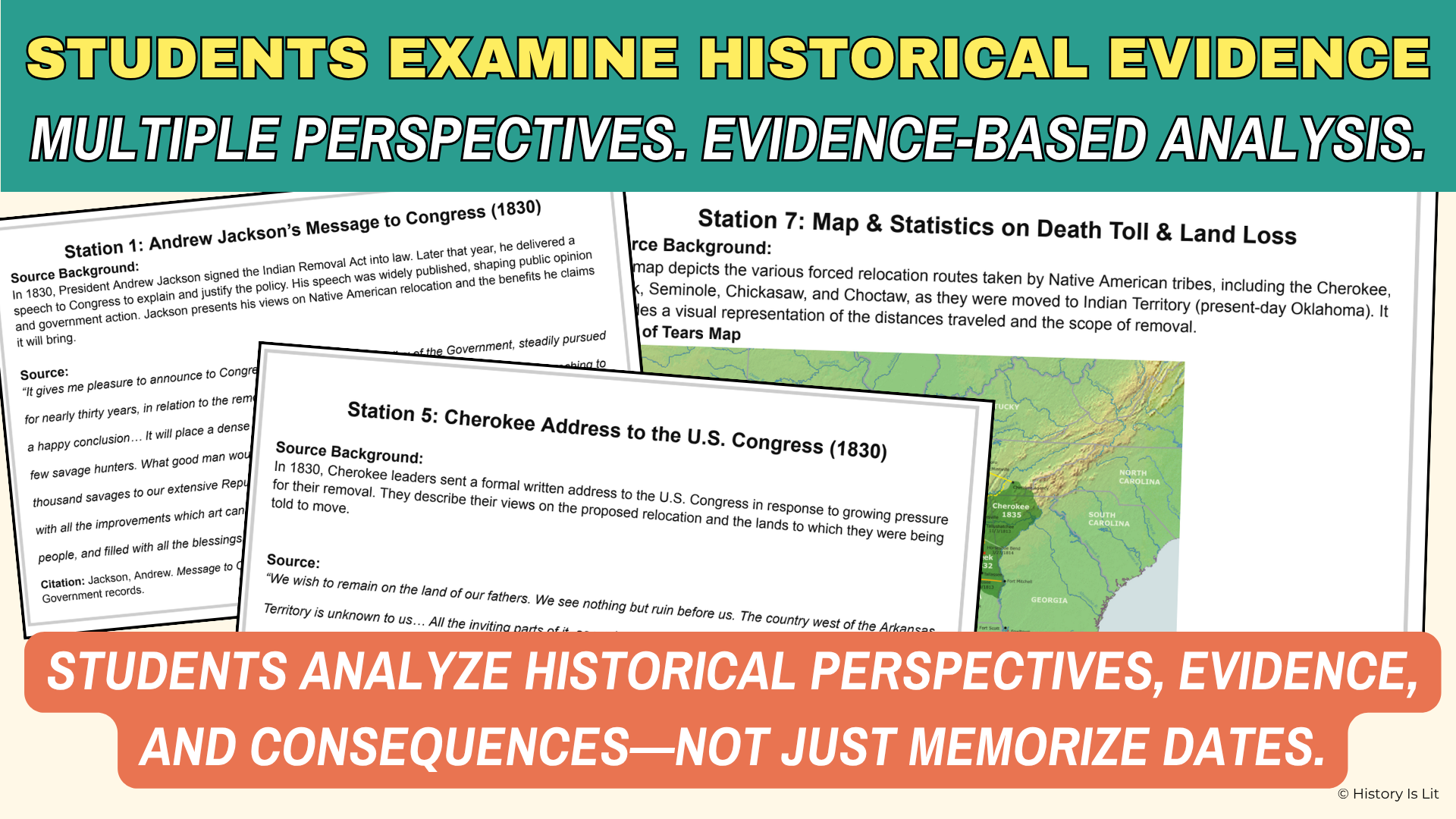
Students examine historical evidence, consider different perspectives, and develop evidence-based conclusions about this significant chapter in American history.
Indian Removal Act Station Activity
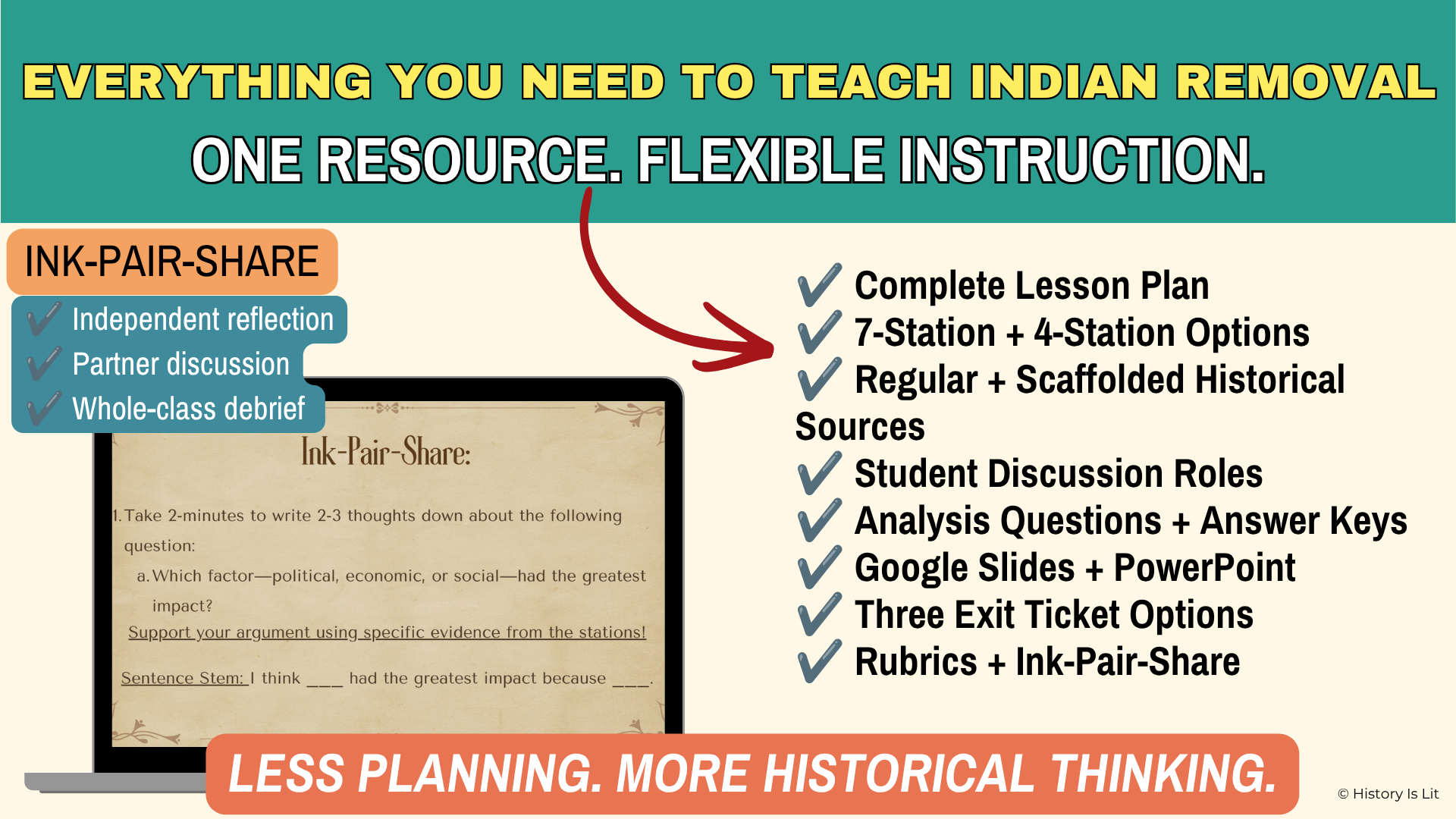
Detailed Lesson Plan: Choose between a full 7-station activity or a modified 4-station version.
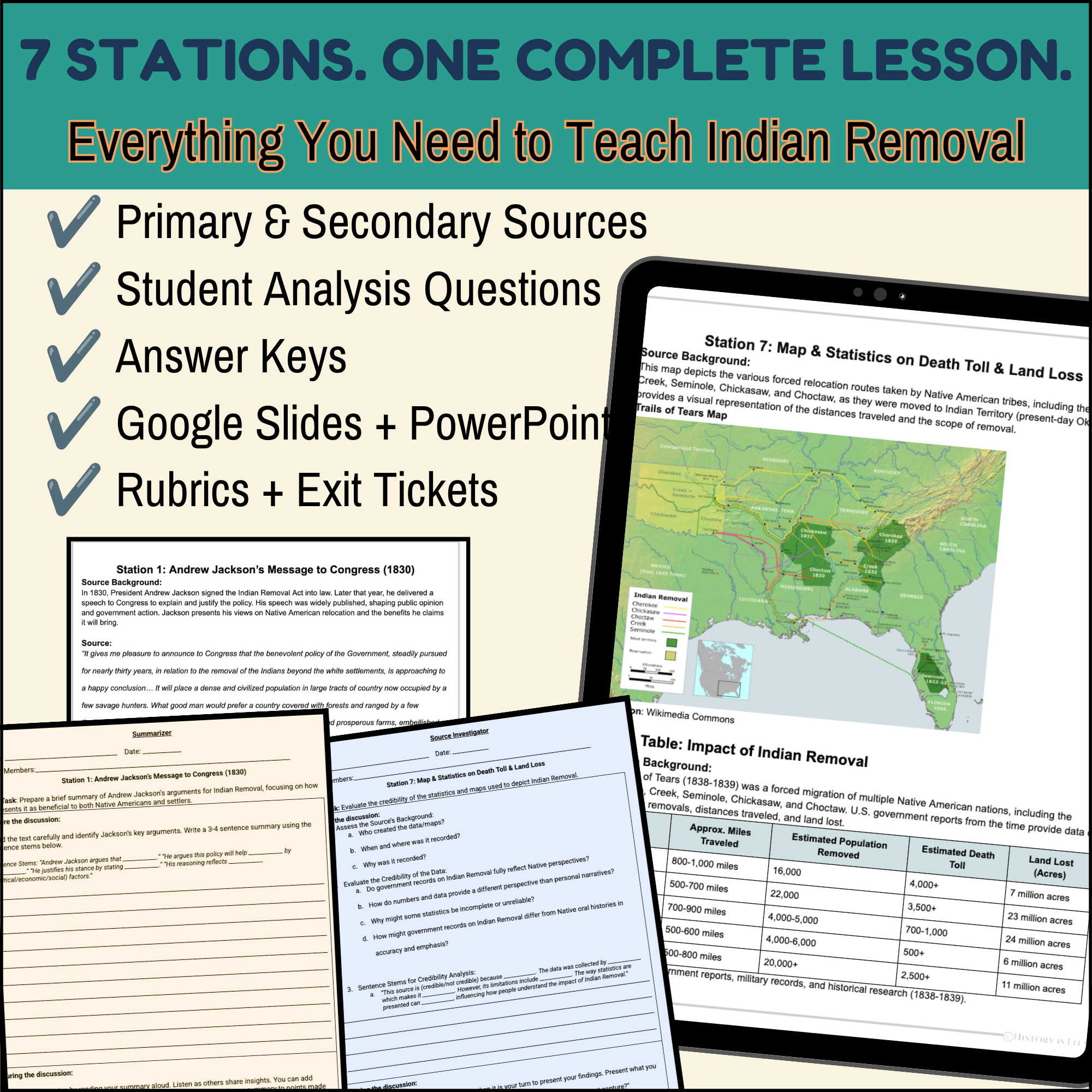
Primary & Secondary Sources: Historical documents and informational texts for source analysis.
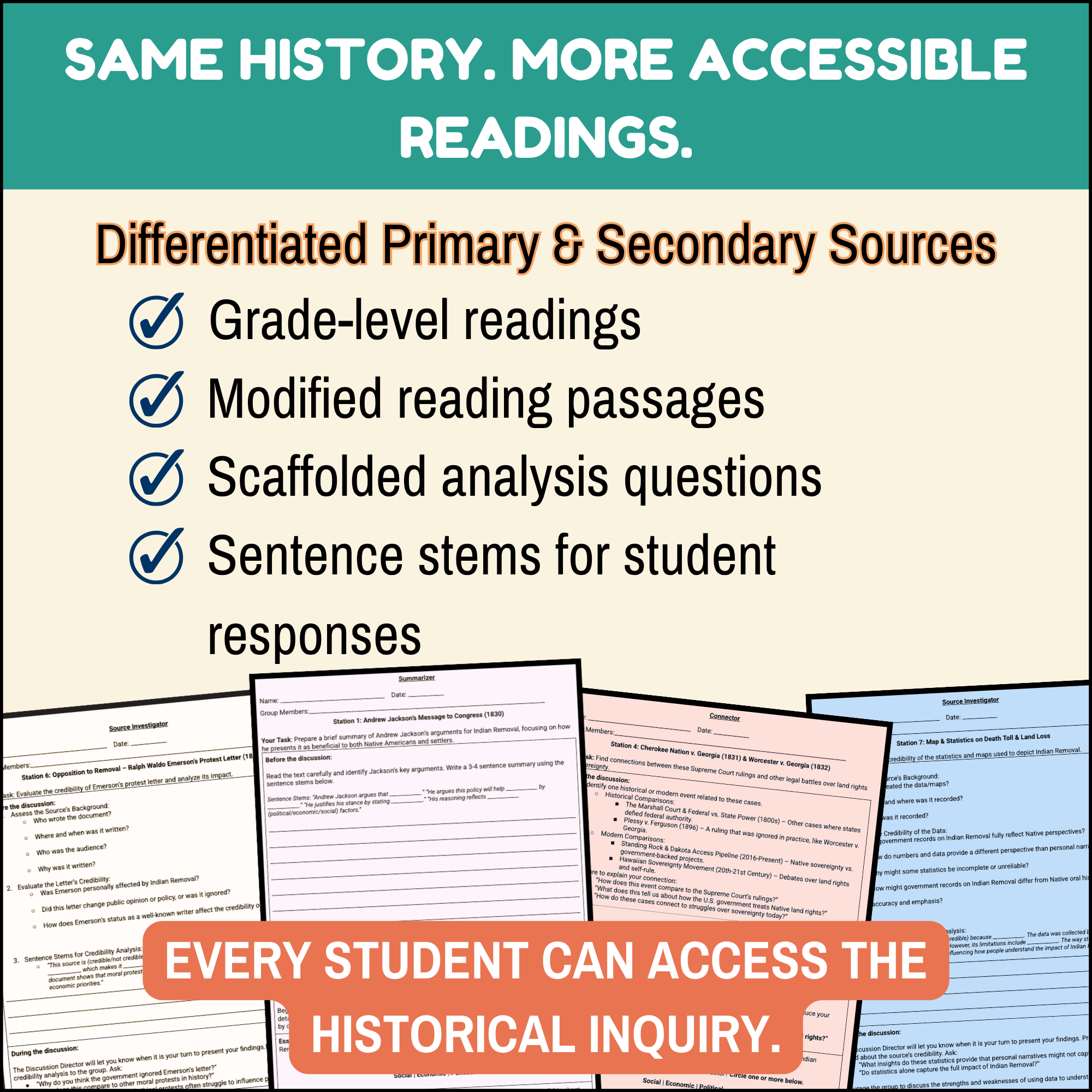
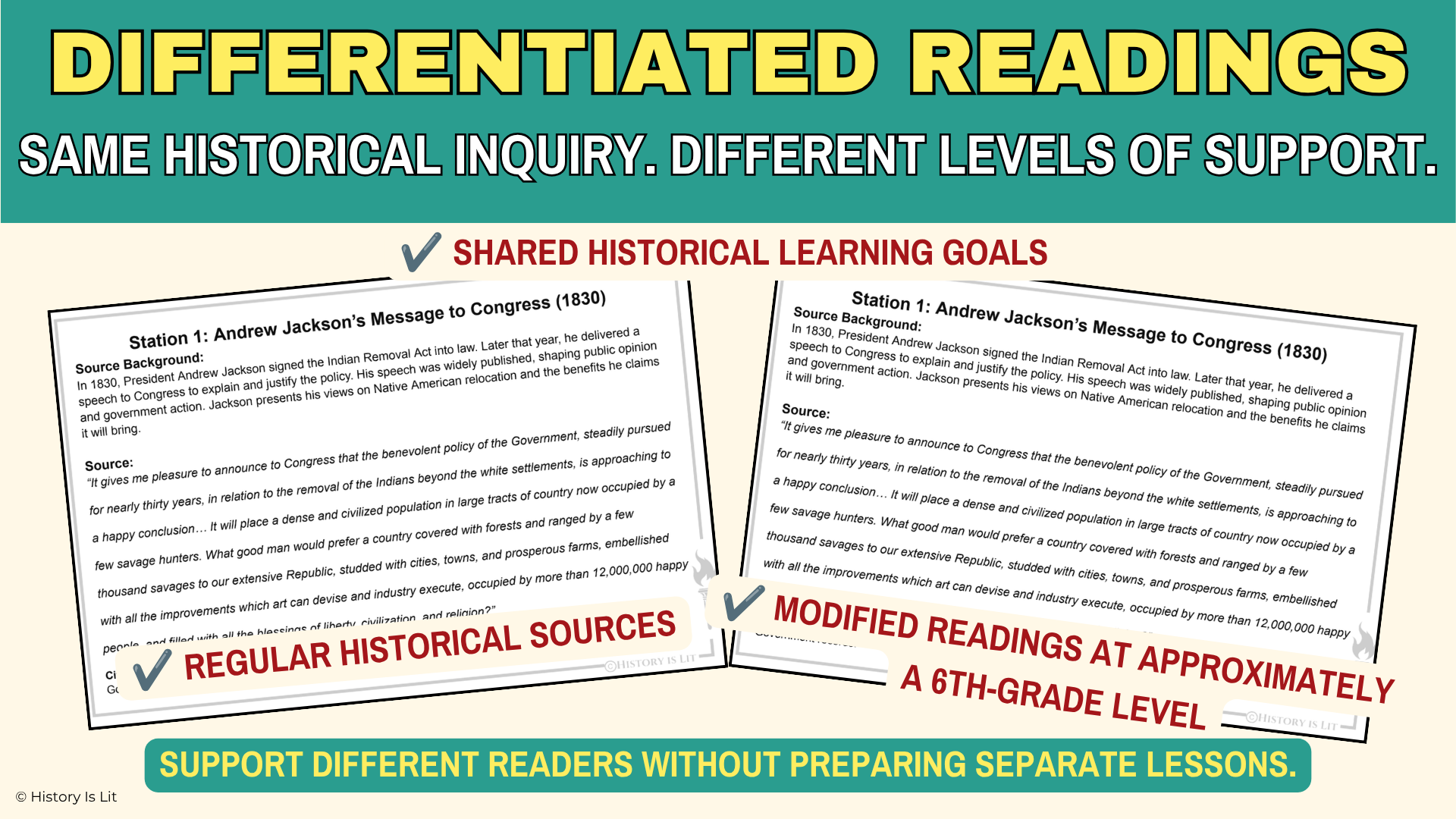
Modified Reading Passages: Scaffolded versions designed to support approximately 6th-grade reading levels.
Analysis Questions & Answer Keys: Guide students through historical inquiry and evidence-based responses.
Printable & Digital Materials
Google Slides & PowerPoint: Customize the presentation by adding slides. Core slide content is locked to preserve the original structure.
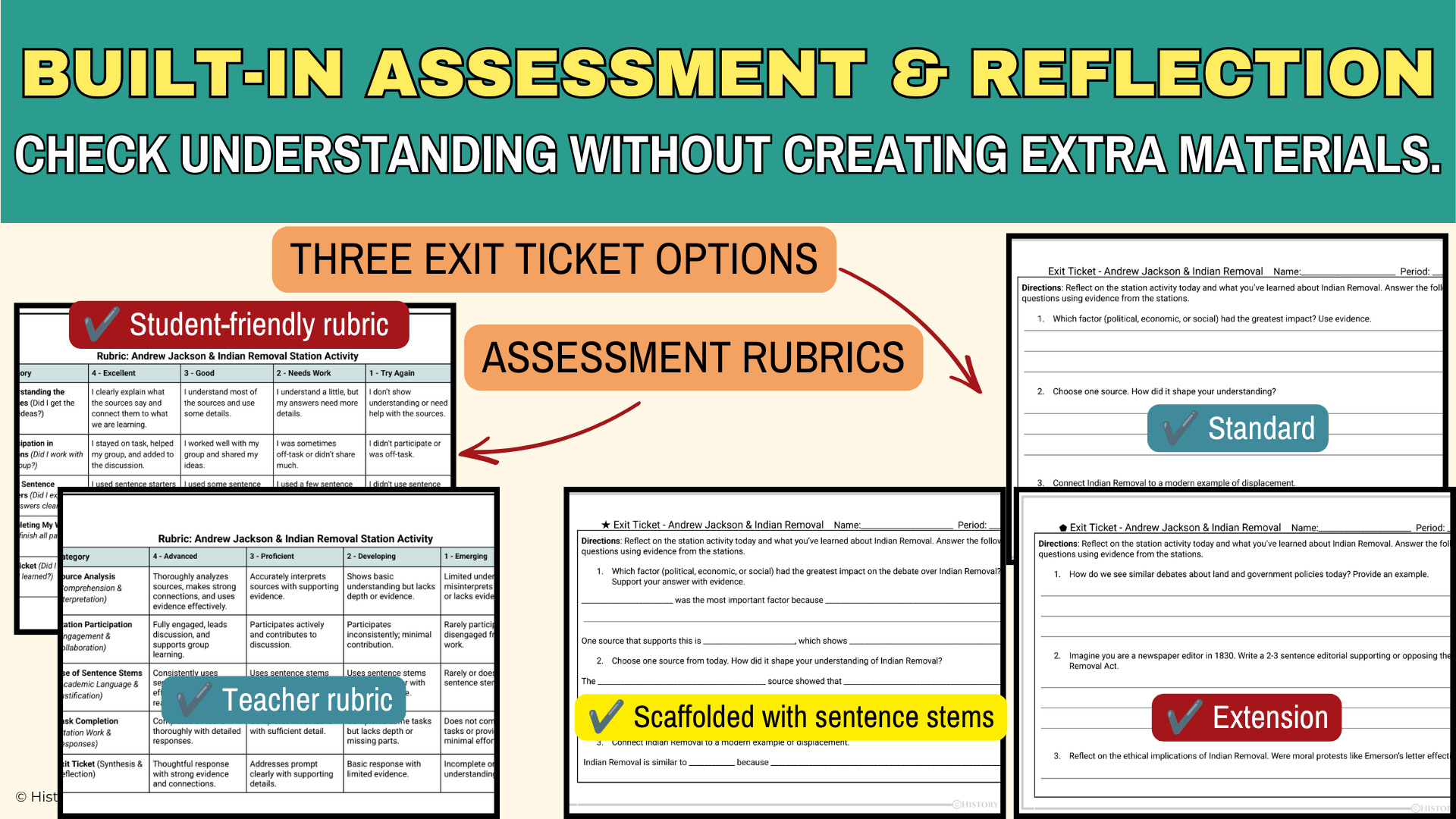
Student-Friendly Rubrics: Printable and digital versions for assessment and reflection.
Three Exit Ticket Options: Standard, scaffolded with sentence stems, and extension.
Ink-Pair-Share Activity: Helps students process their thinking before the whole-class discussion.
✔ Save Planning Time: Ready-to-use station activities, sources, questions, and answer keys make lesson preparation easier.
✔ Differentiate With Ease: Modified readings, sentence stems, and multiple exit ticket options help support students with different learning needs.
✔ Build Primary Source Analysis Skills: Students examine historical evidence, consider different perspectives, and support their conclusions.
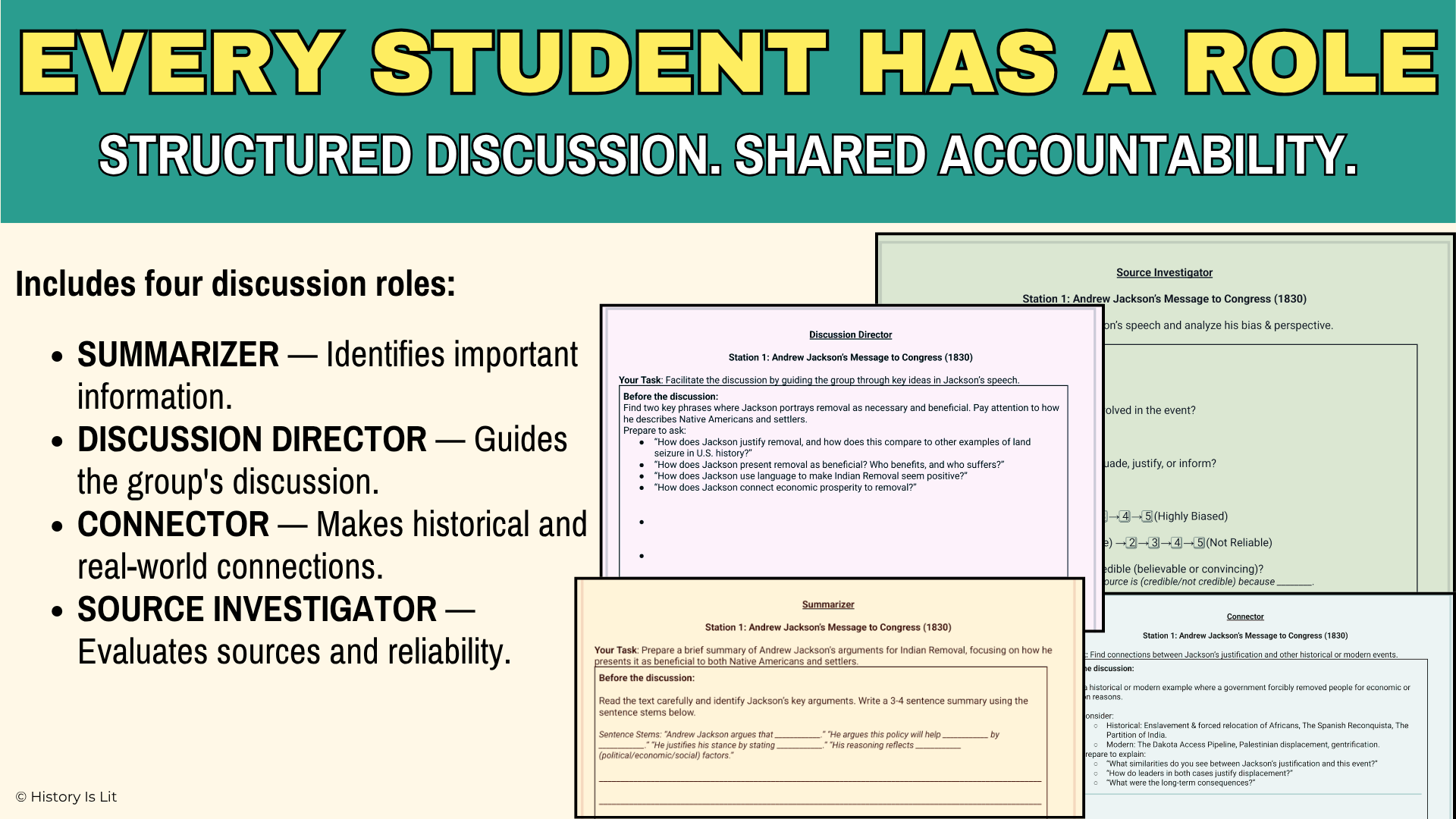
✔ Encourage Meaningful Discussions: Station rotations and Ink-Pair-Share give students opportunities to collaborate and explain their thinking.
✔ Flexible Instruction: Choose seven stations for a more extensive lesson or four stations when instructional time is limited.
6th–8th Grade U.S. History
Andrew Jackson's Presidency
Indian Removal Act Lessons
Trail of Tears & Westward Expansion Units
Primary & Secondary Source Analysis
Historical Inquiry & Evidence-Based Writing
Differentiated Social Studies Instruction
History Stations & Collaborative Learning
This activity provides opportunities for students to practice:
Analyzing primary and secondary sources.
Identifying historical perspectives.
Citing textual evidence.
Examining historical causes and consequences.
Evaluating arguments using historical evidence.
Discussing the consequences of federal Indian removal policies for Native American nations.
Help students move beyond memorizing historical events and examine the policies, perspectives, and consequences of Indian removal through historical evidence.
Grab this Indian Removal Act station activity and get students reading, analyzing, and discussing history—with the lesson materials ready to go!
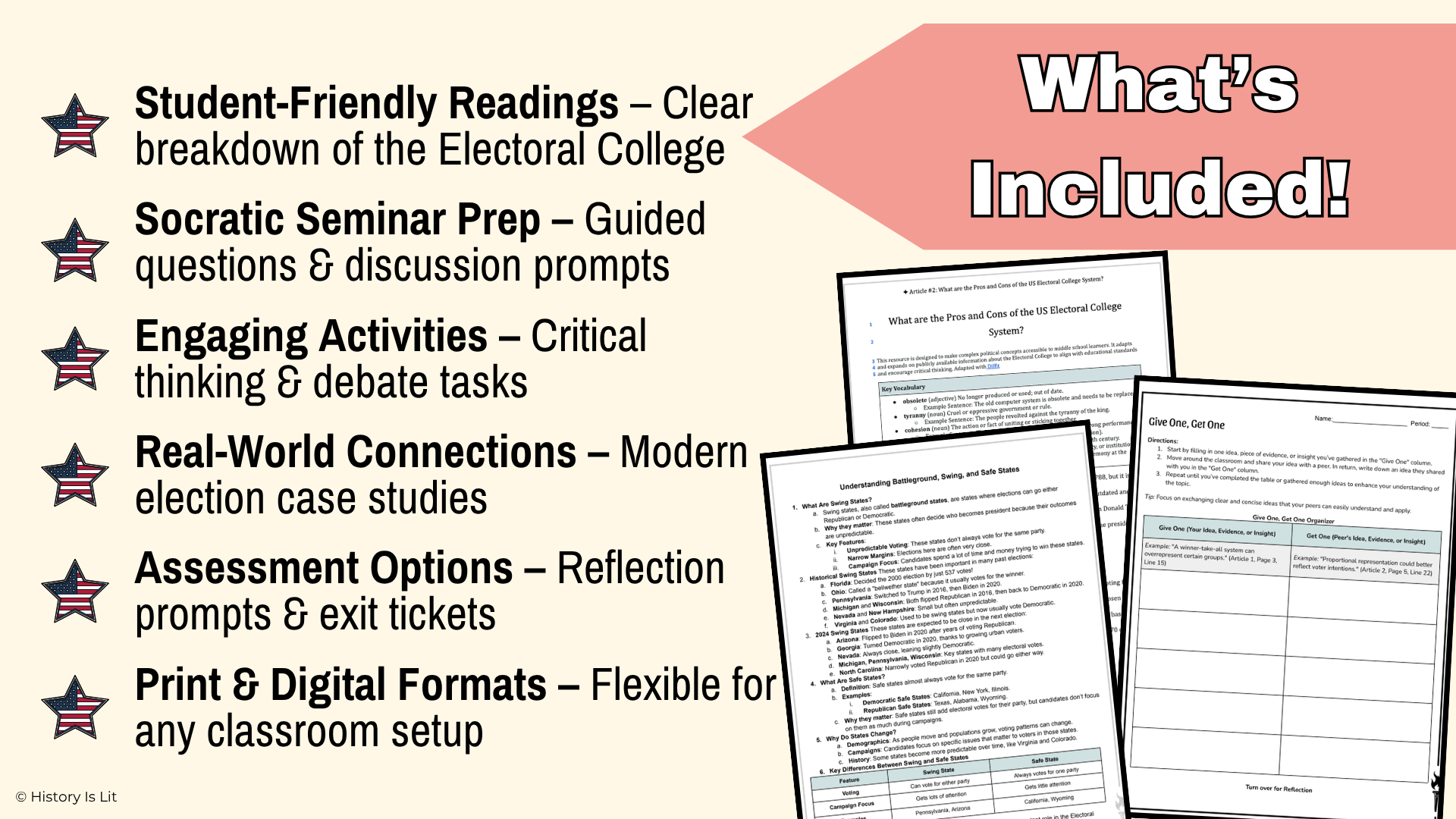
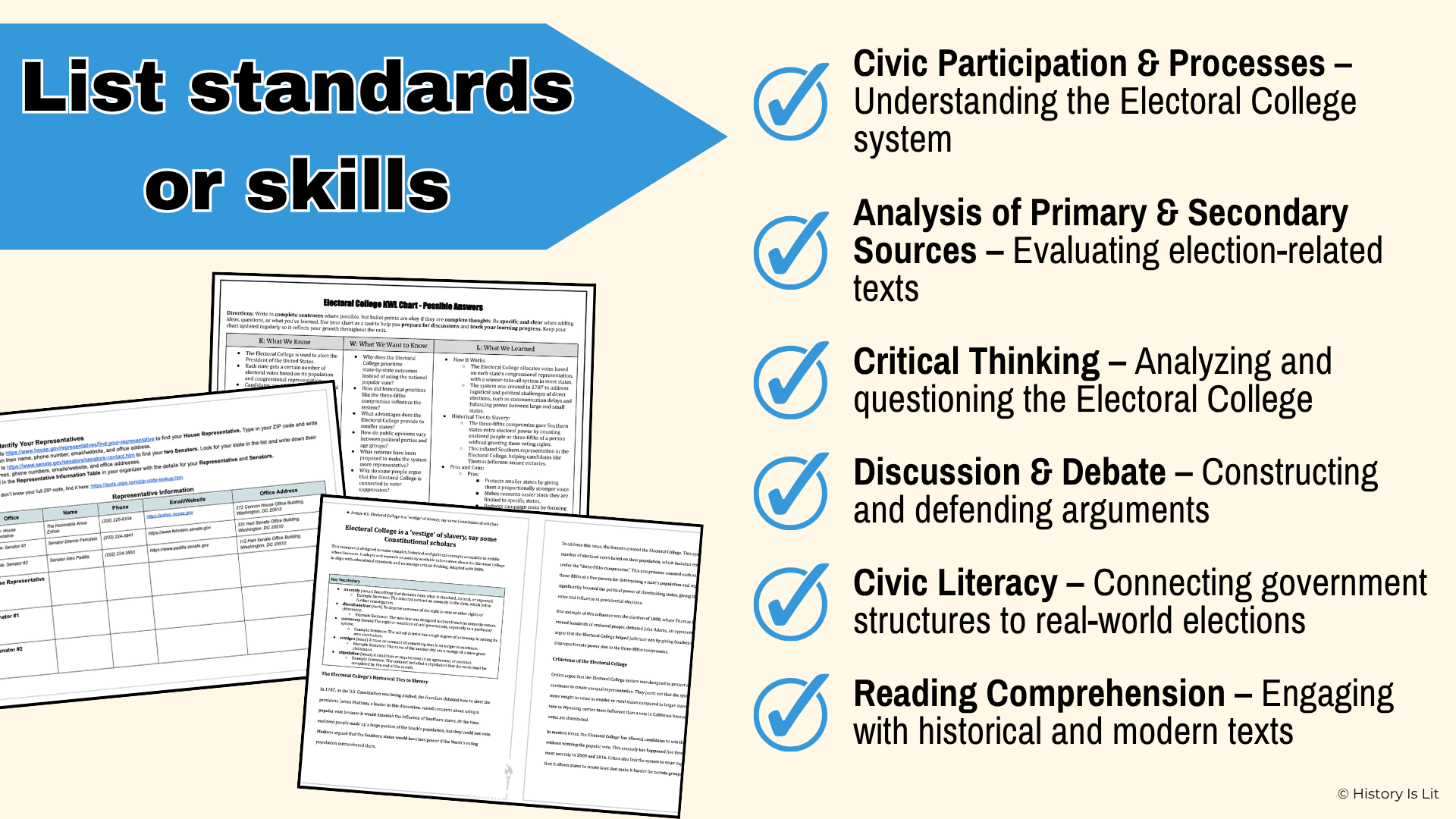
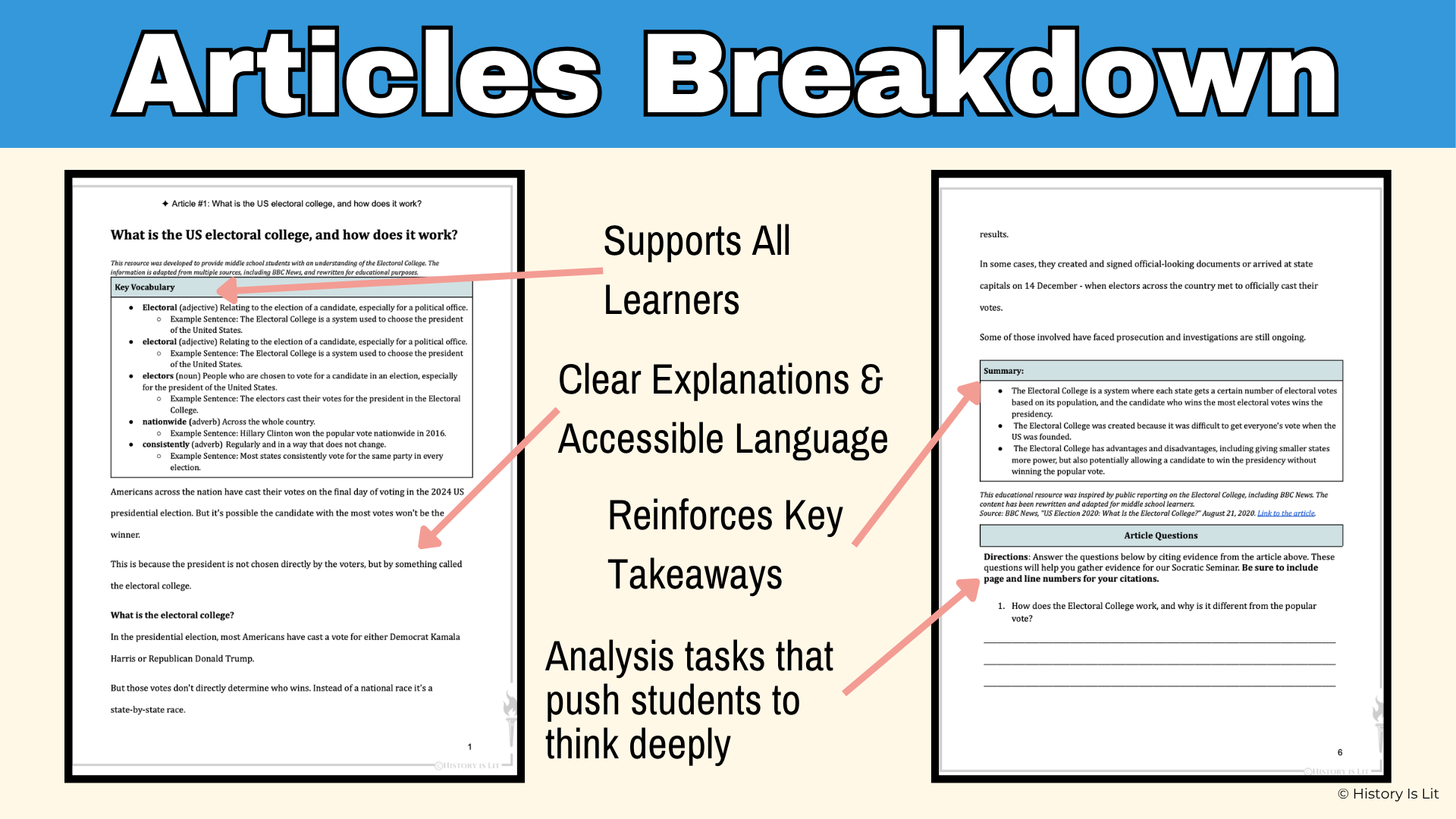
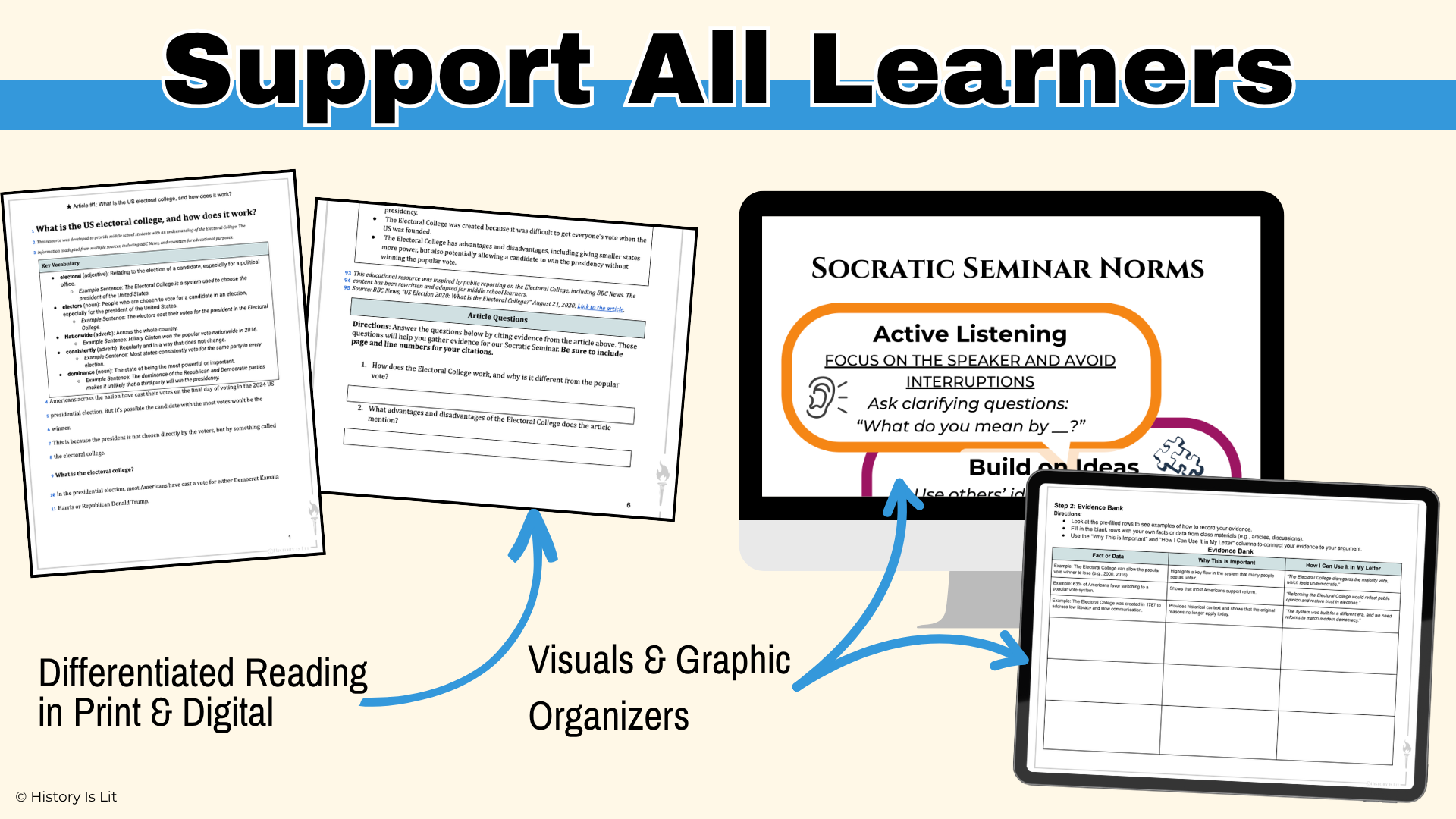
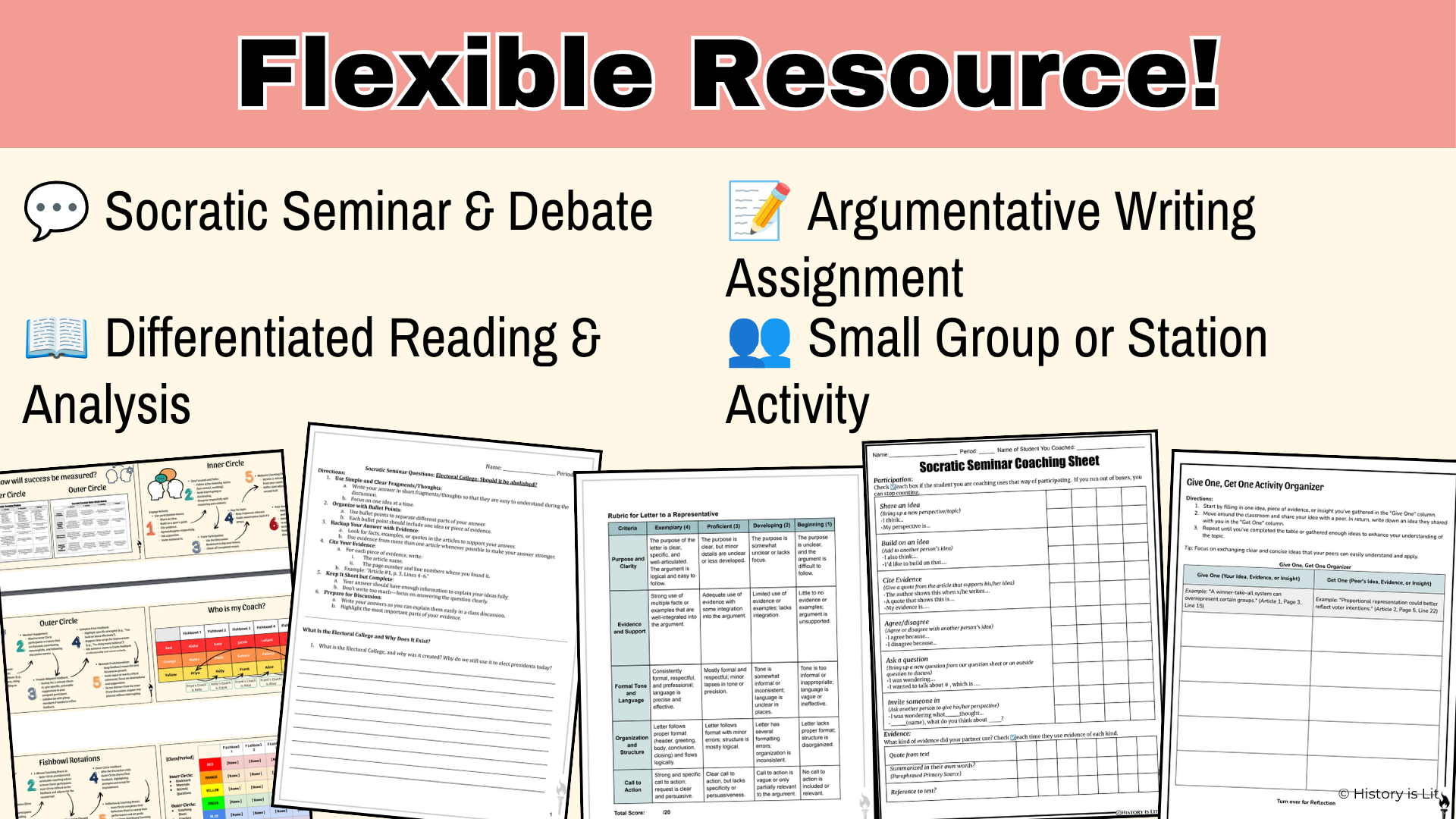
Teaching the Electoral College can be challenging, especially when students are trying to understand how presidential elections work, why the Electoral College exists, and whether it fairly represents voters.
You want students to do more than memorize electoral votes. You want them to examine different perspectives, evaluate evidence, and develop their own informed opinions about the American electoral system.
But finding accessible readings, creating meaningful discussion questions, and planning engaging civics activities takes time.
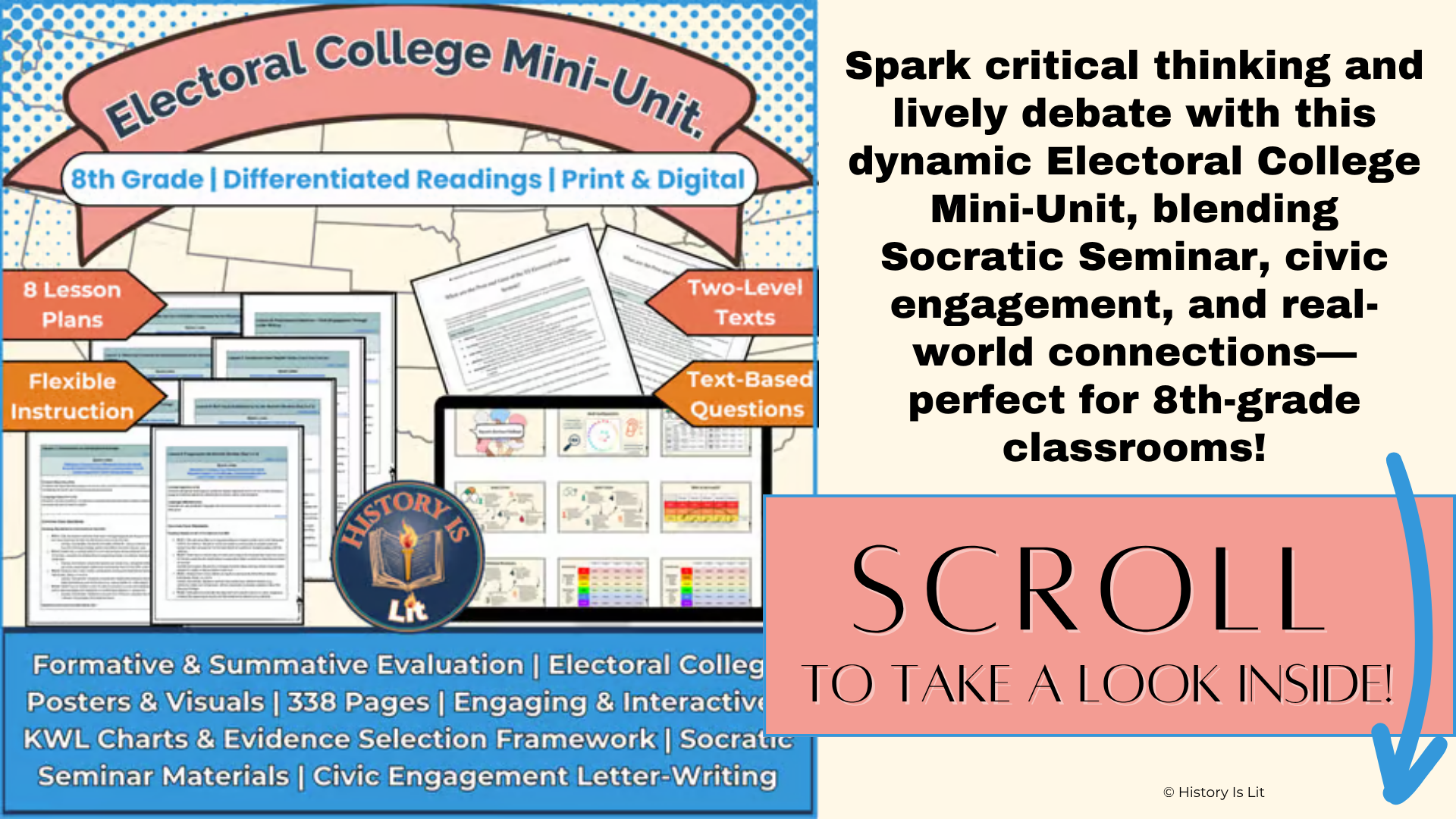
That's why I created this 8-Lesson Electoral College Mini-Unit for Middle School U.S. History and Civics.
This comprehensive unit includes differentiated informational texts, graphic organizers, interactive activities, Socratic Seminar materials, and an argumentative letter-writing activity to help students explore how the Electoral College works and evaluate its role in American democracy.
Instead of simply telling students whether the Electoral College is fair, this unit encourages them to investigate the issue, consider multiple perspectives, and support their conclusions with evidence.
Eight structured lessons. Differentiated readings. Meaningful discussions. One complete Electoral College unit.
This 8-lesson Electoral College unit provides the instructional materials, activities, and assessments you need to teach students about presidential elections, representation, and civic participation.
Lesson Plans & Teacher Resources
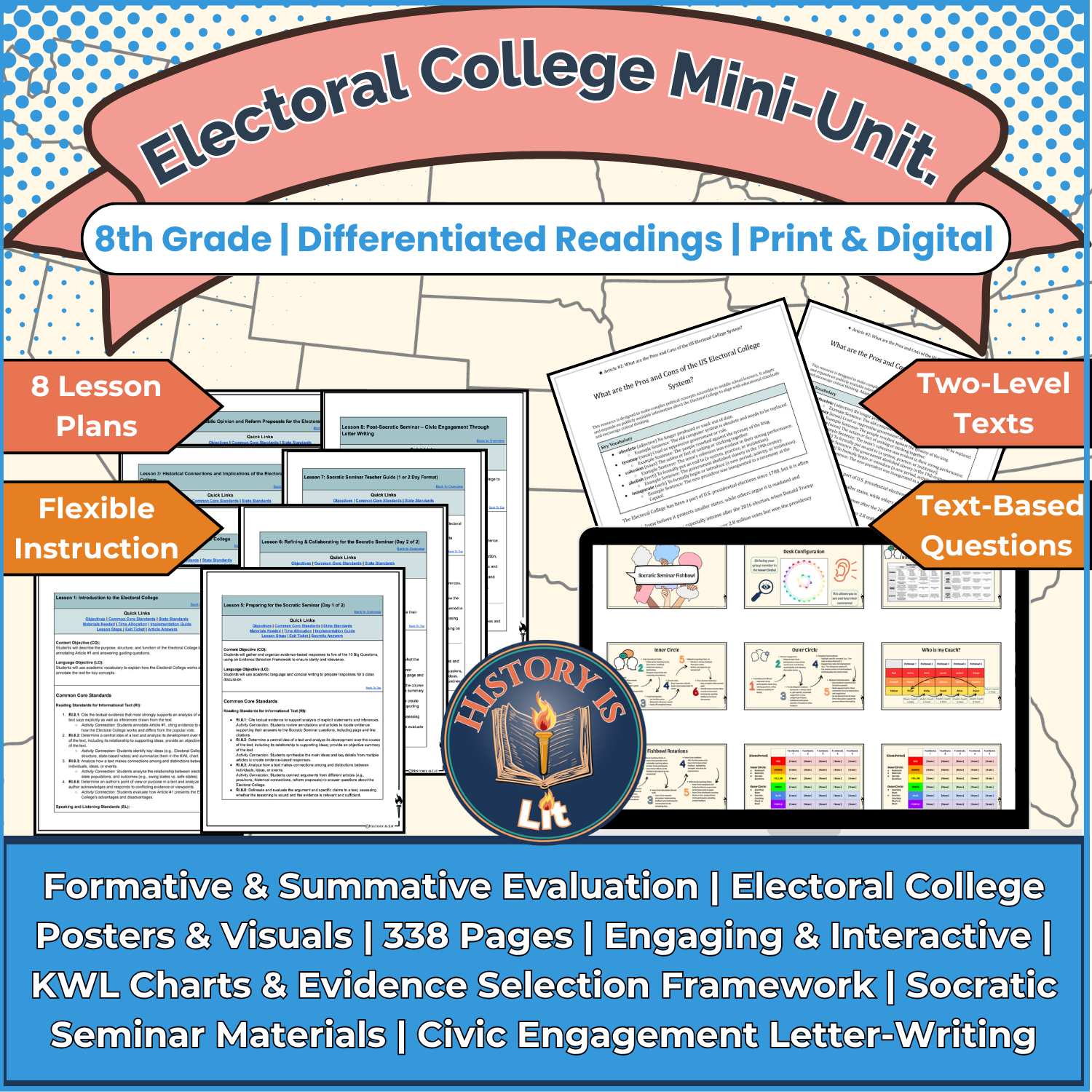
8 Complete Lessons: Structured lessons that guide students through learning about the Electoral College.
Teacher Pacing Guide: Helps you organize instruction and manage your unit.
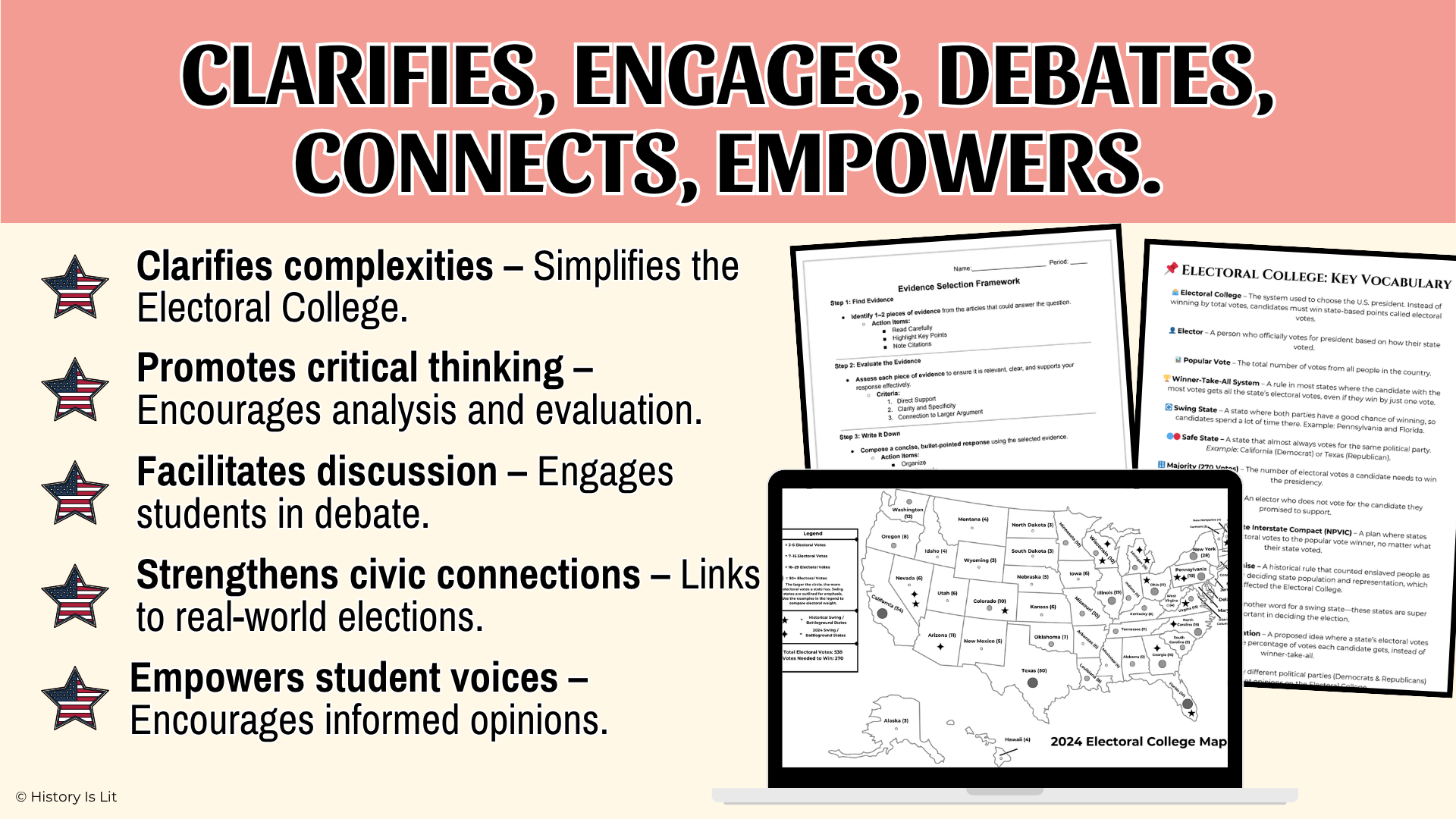
Electoral College Posters & Visuals: Support student understanding of important concepts and vocabulary.
Printable & Digital Materials: Ready-to-use PDFs and editable Google Docs/Slides.
Differentiated Electoral College Readings
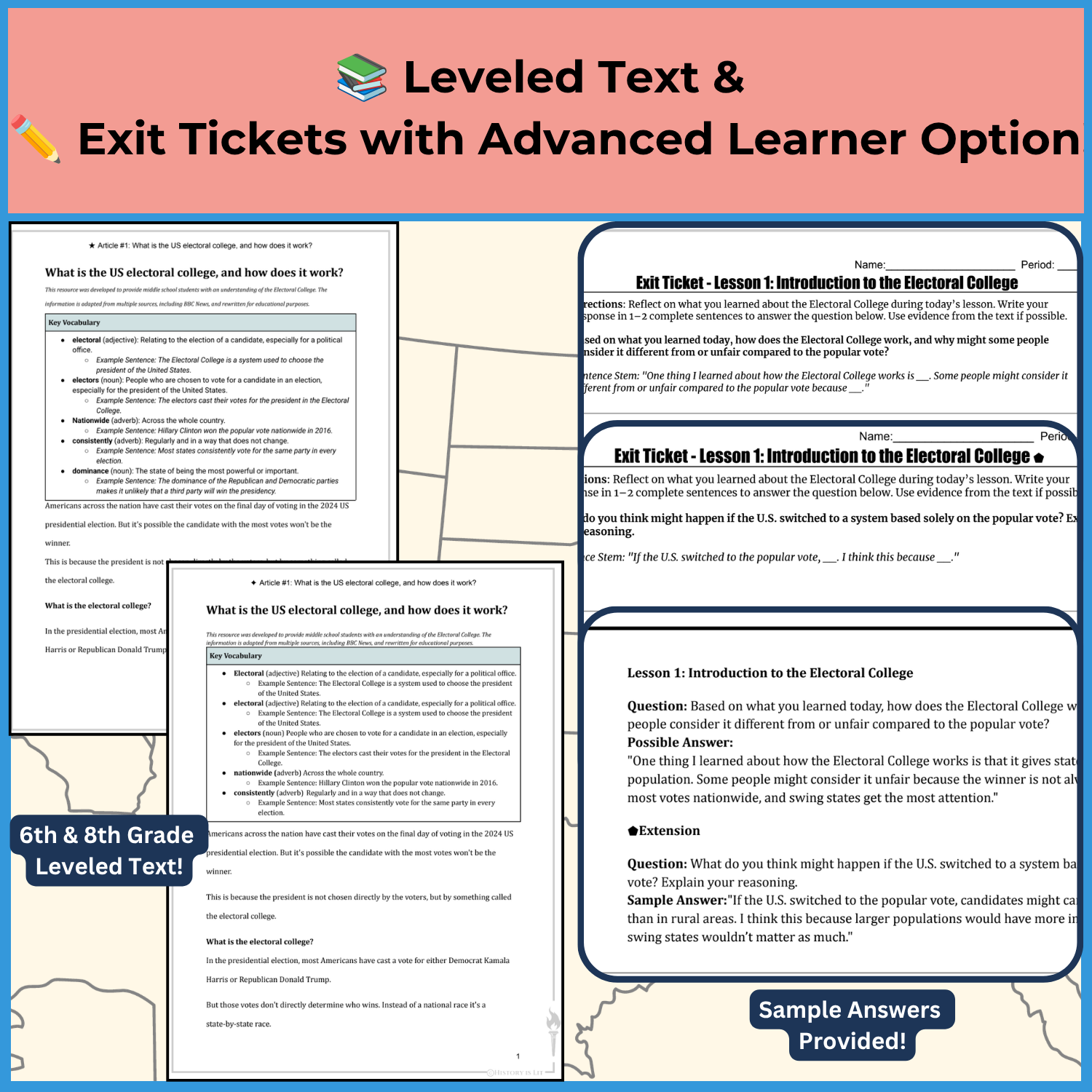
Grade-Level Informational Articles: Introduce students to Electoral College concepts and different perspectives.
Modified Reading Passages: Provide accessible versions for students who need additional reading support.
KWL Charts: Activate prior knowledge, guide inquiry, and encourage reflection.
Evidence Selection Graphic Organizers: Help students identify relevant information and support their arguments.
Interactive Learning Activities
Give One, Get One Activity: Students exchange ideas and gather evidence from classmates.
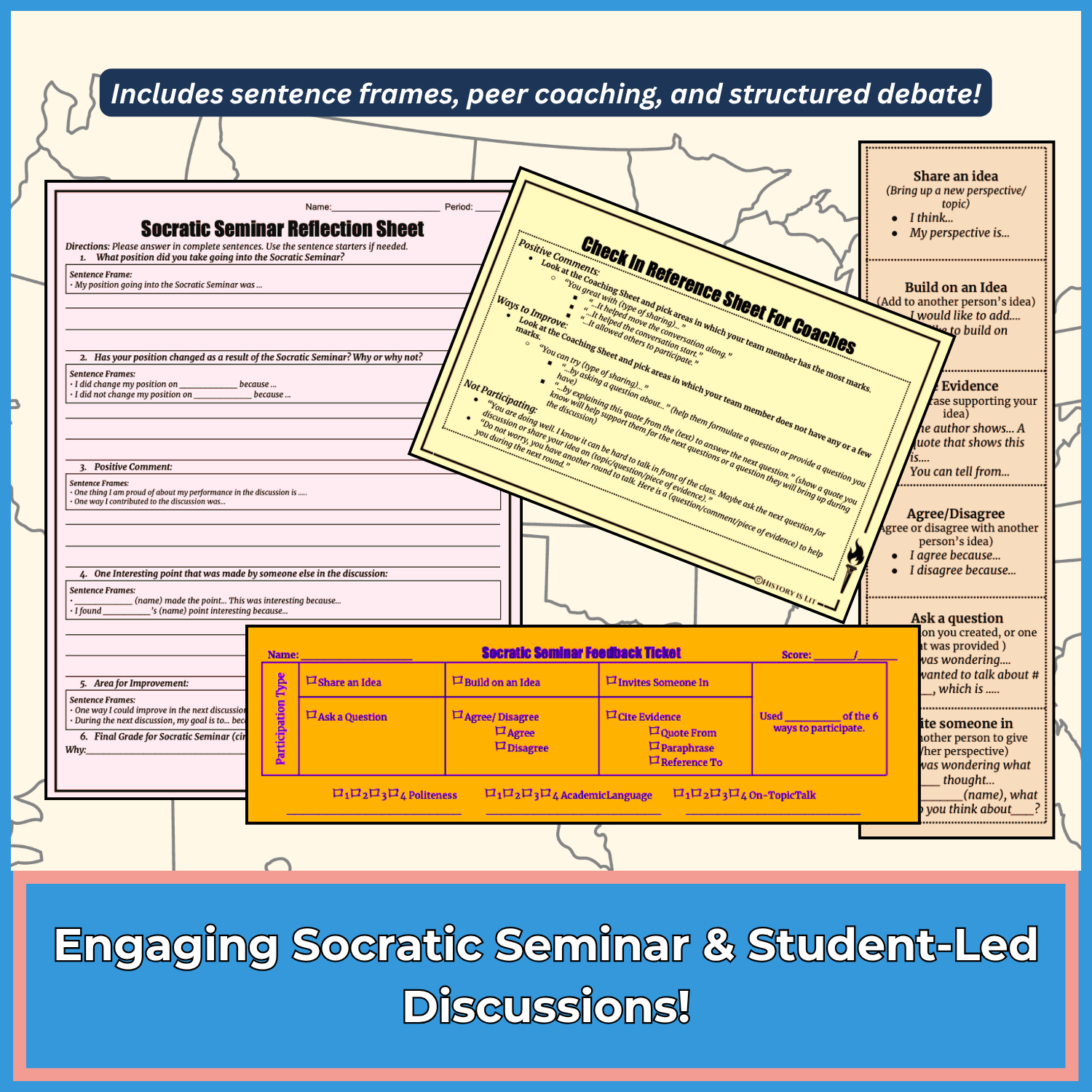
Socratic Seminar Fishbowl Discussion: Encourages students to examine different perspectives through structured academic discussion.
Discussion Sentence Frames: Support students in expressing opinions, asking questions, and responding to classmates.
Student Coaching Sheets: Keep students actively engaged while observing and evaluating discussions.
Feedback Tickets: Encourage constructive peer feedback and reflection.
Assessment & Civic Engagement
Exit Tickets: Check student understanding throughout the unit.
Reflection Sheets: Encourage students to evaluate their learning and consider different perspectives.
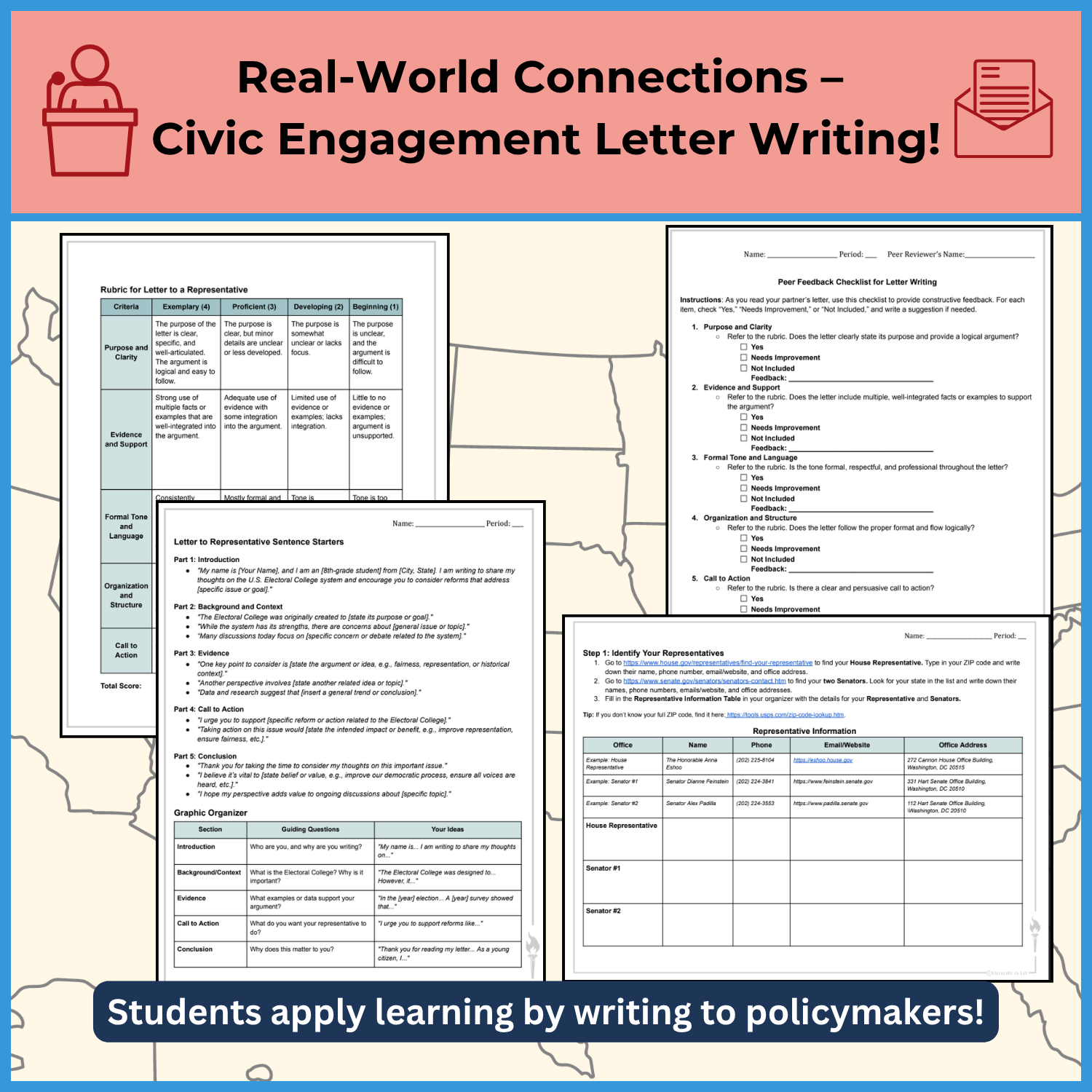
Civic Engagement Letter-Writing Activity: Students develop an evidence-based argument and communicate their position through a letter.
Argument-Building Tools: Help students select evidence and organize their reasoning.
Teach a Complex Topic With Clear, Structured Lessons
The Electoral College can be confusing for middle school students. This mini-unit breaks the topic into manageable lessons that build understanding and encourage students to think critically about presidential elections.
Differentiate Without Creating Multiple Lessons
Grade-level and modified readings allow students with different reading needs to explore the same essential concepts and participate in shared classroom discussions.
Encourage Evidence-Based Arguments
Students examine different perspectives on the Electoral College and use evidence to develop, explain, and defend their positions.
Make Student Discussions More Meaningful
The included Socratic Seminar Fishbowl materials provide structure for classroom conversations. Discussion starters, sentence frames, and coaching sheets help students participate thoughtfully while keeping both circles accountable.
Connect Civics to Real-World Participation
The letter-writing activity gives students an opportunity to apply their learning by developing and communicating an informed position on a civic issue.
Save Valuable Planning Time
With lesson plans, differentiated readings, graphic organizers, discussion materials, and assessments included, you won't need to build an Electoral College unit from scratch.
Throughout this Electoral College lesson plan unit, students explore questions about presidential elections and American democracy.
Students develop an understanding of:
How the Electoral College works in presidential elections.
Why the Electoral College was established.
How electoral votes relate to presidential election outcomes.
Different perspectives on the Electoral College.
Arguments for maintaining or reforming the Electoral College.
The relationship between voting, representation, and democracy.
How citizens can participate in civic discussions and communicate their views.
Rather than focusing only on how the system works, students consider important questions about fairness, representation, and civic responsibility.
One of the key components of this unit is the Electoral College Socratic Seminar Fishbowl Discussion.
Students use evidence from their readings and activities to discuss different perspectives on the Electoral College.
Inner Circle Students:
Participate in evidence-based academic discussions.
Ask thoughtful questions about the Electoral College.
Evaluate arguments and consider opposing perspectives.
Build on classmates' ideas.
Outer Circle Students:
Actively listen and observe the discussion.
Use coaching sheets to evaluate discussion skills.
Provide constructive peer feedback.
Reflect on evidence and arguments presented.
This structured approach gives students opportunities to practice critical thinking, respectful disagreement, and collaborative discussion skills.
Students take their learning beyond the classroom through a civic engagement letter-writing activity.
Using evidence gathered throughout the unit, students develop an argument about the Electoral College and communicate their position in writing.
This activity encourages students to:
Develop a clear claim.
Select relevant supporting evidence.
Explain their reasoning.
Consider alternative perspectives.
Communicate their ideas in an organized, persuasive letter.
It's a meaningful way to connect middle school civics, argumentative writing, and real-world civic participation.
This Electoral College mini-unit is designed for 8th-grade U.S. History and middle school civics classrooms.
Use it for:
Electoral College lessons.
Presidential election units.
U.S. Constitution and government instruction.
Civics and citizenship activities.
Argumentative writing practice.
Socratic Seminars and classroom debates.
Primary and secondary source analysis.
Critical thinking and evidence-based discussions.
The materials can also be used when studying presidential elections, democratic institutions, or the role of citizens in government.
This unit provides opportunities to practice Common Core literacy and speaking and listening skills, including:
CCSS RH.6-8.1: Cite textual evidence to support analysis of primary and secondary sources.
CCSS RH.6-8.2: Determine the central ideas or information of historical sources.
CCSS WHST.6-8.1: Write arguments focused on discipline-specific content.
CCSS SL.8.1: Engage effectively in collaborative discussions, building on others' ideas and expressing their own clearly.
CCSS SL.8.4: Present claims and findings using relevant evidence and appropriate organization.
Specific standards addressed depend on the lesson and activity.
Understanding the Electoral College requires more than learning how electoral votes are counted.
Students need opportunities to investigate why the system was created, consider how it affects presidential elections, and evaluate competing arguments about its role in American democracy.
This Electoral College mini-unit uses differentiated readings, evidence-based activities, structured discussion, and argumentative writing to help students form informed conclusions.
Students aren't simply learning about the Electoral College. They're learning how to evaluate a complex civic issue using evidence and reasoning.
The Electoral College Mini-Unit: Lesson Plans & Pacing Guide is a 143-page PDF with bookmarks for easy navigation.
To access the bookmarks, download the PDF and open it in a desktop PDF reader, such as Adobe Acrobat or Preview.
Please note: Bookmarks are not supported in Google Drive's PDF viewer.
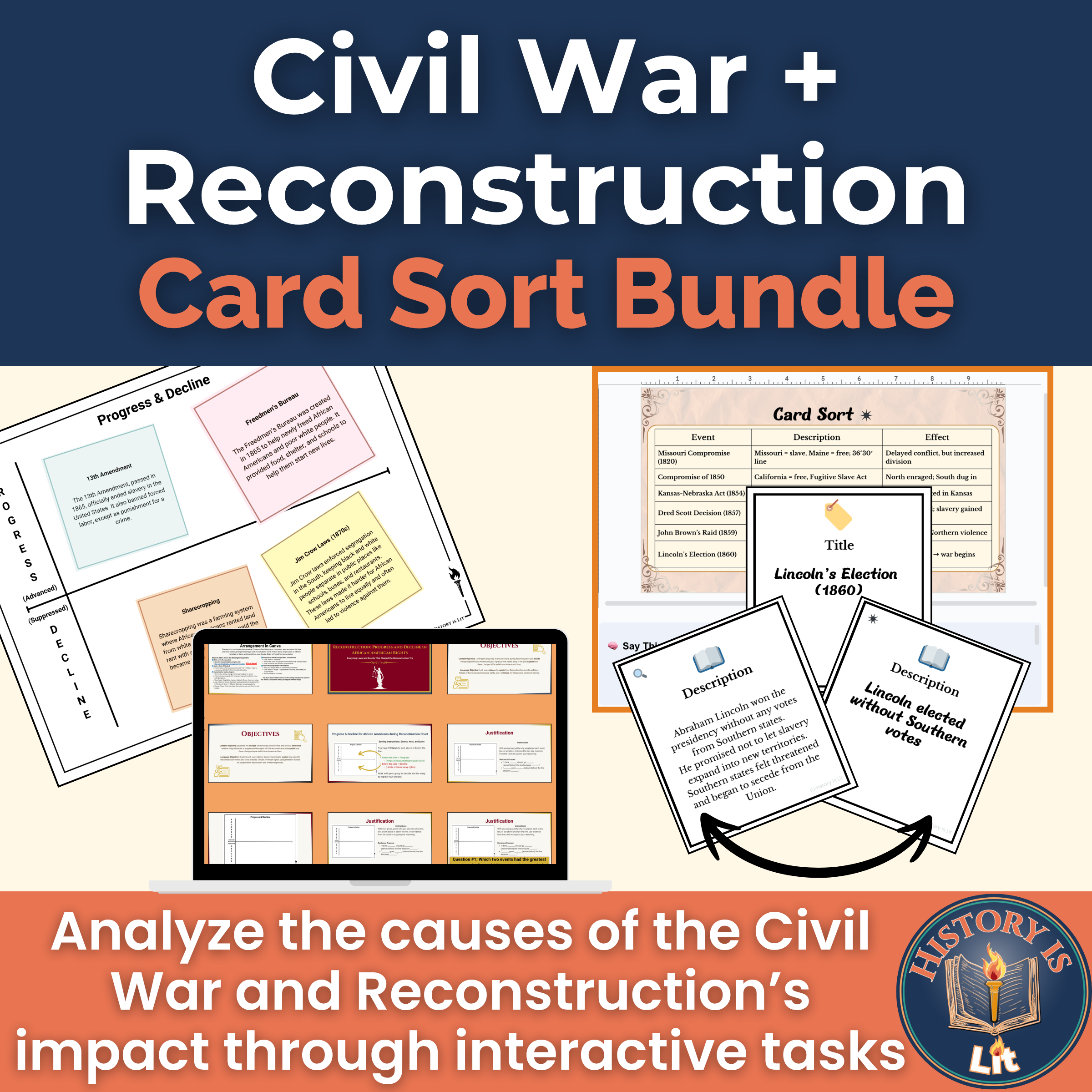
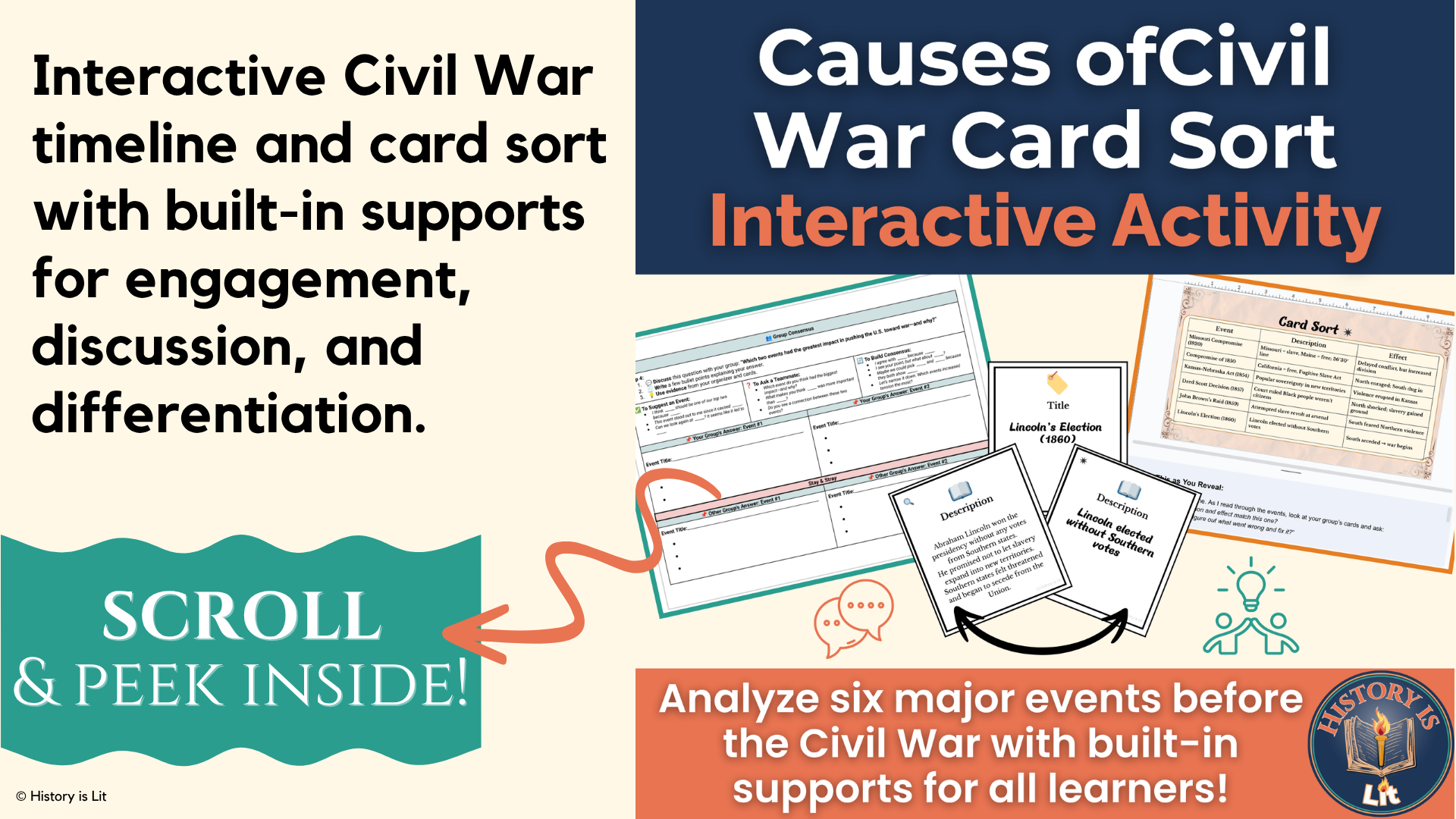
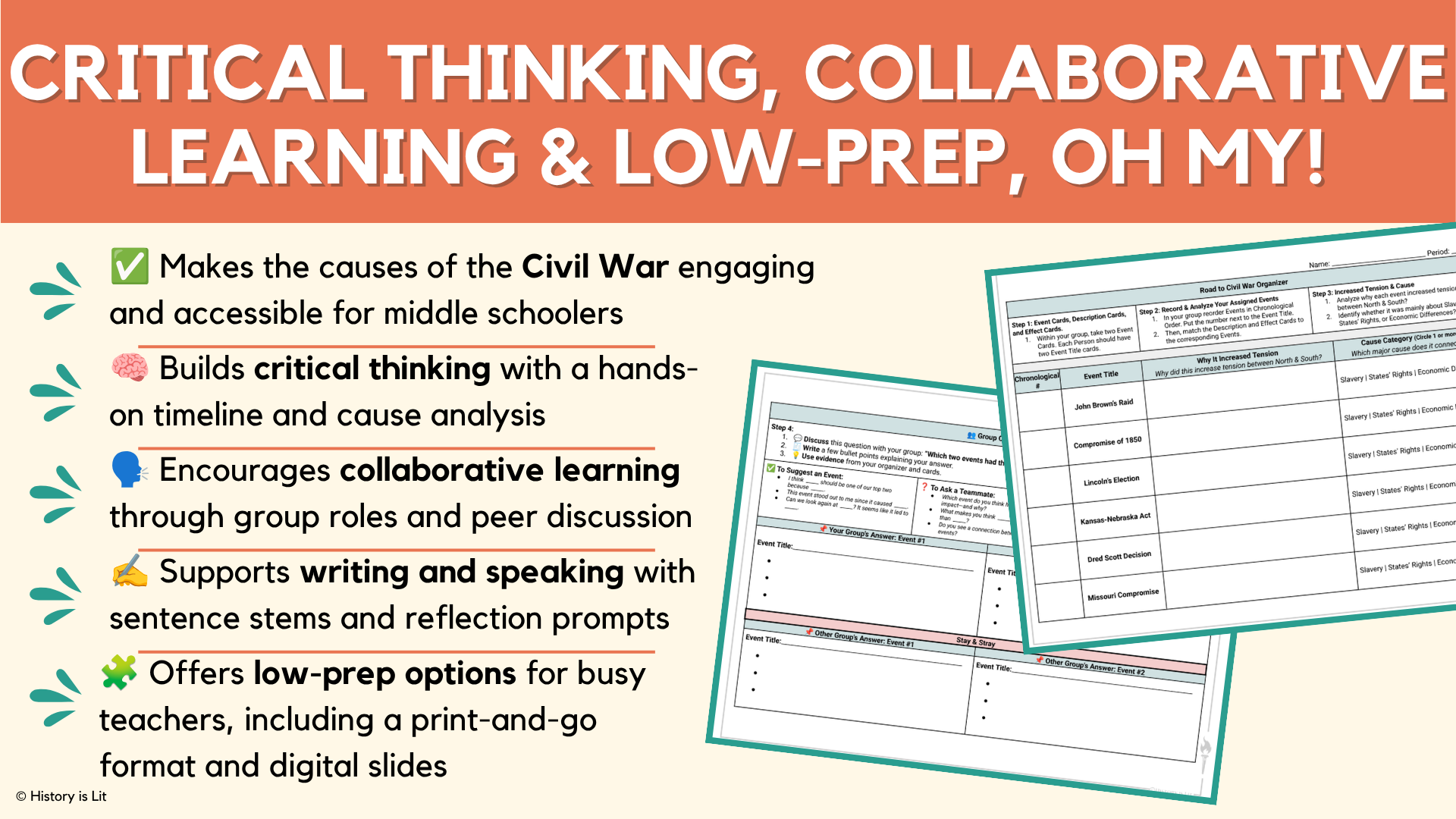
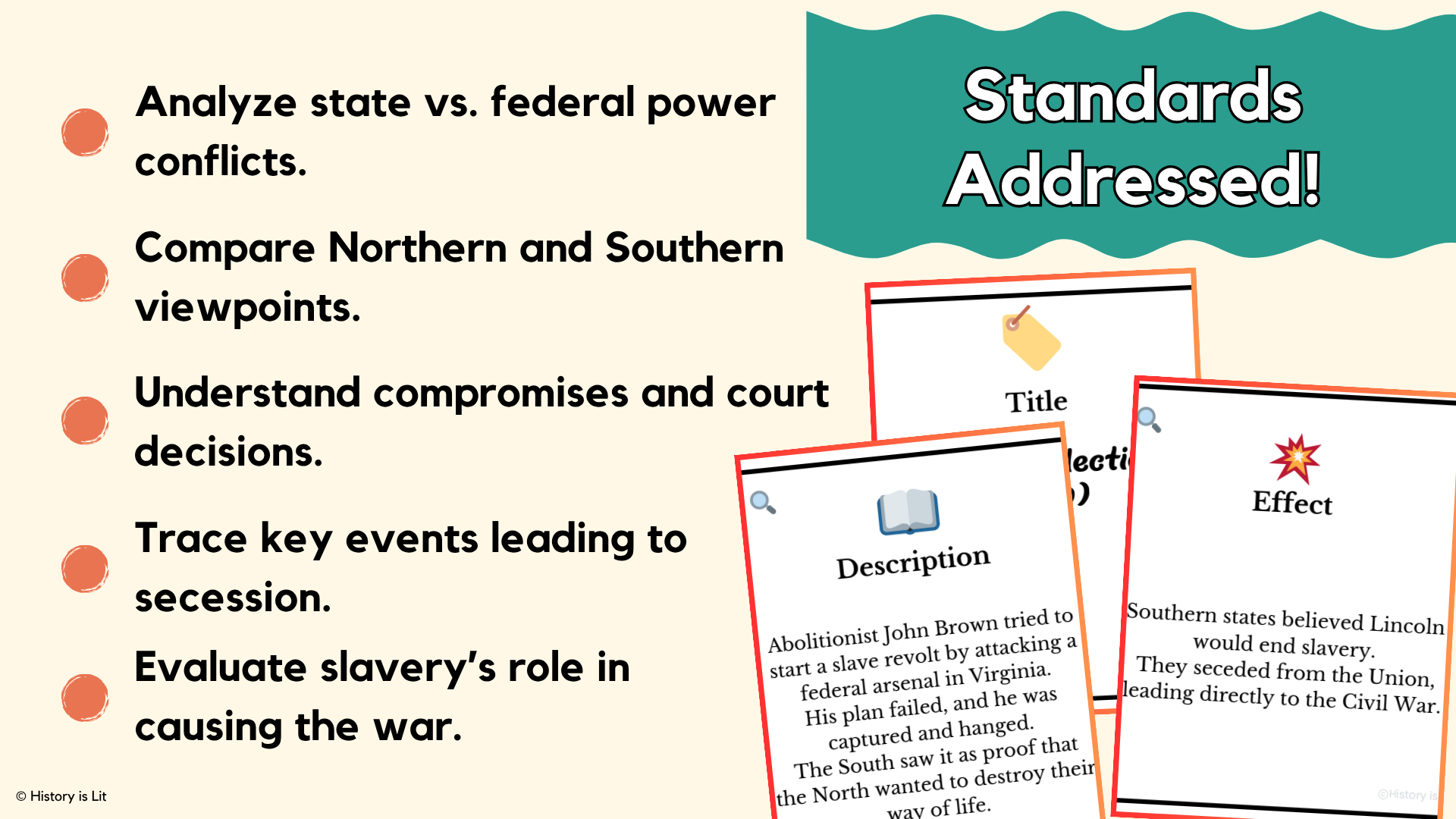
Struggling to keep students engaged while teaching the Civil War and Reconstruction?
You know the feeling. Students are tired of worksheets, discussions fall flat, and getting everyone to participate feels like an uphill battle. You need something that gets students thinking, talking, and working together—without spending hours preparing another lesson.
That's why I created this Civil War & Reconstruction Activity Bundle.
These two interactive U.S. History card sort activities help students explore the causes of the Civil War and evaluate the successes and setbacks of Reconstruction through hands-on learning, historical analysis, and structured academic discussions.
Instead of passively reading about historical events, students work together to sequence events, analyze cause-and-effect relationships, evaluate historical outcomes, and defend their thinking.
And with differentiated materials, vocabulary supports, and ready-to-use activities, you can spend less time preparing and more time supporting student learning.
Help students understand how key events and growing sectional tensions contributed to the Civil War.
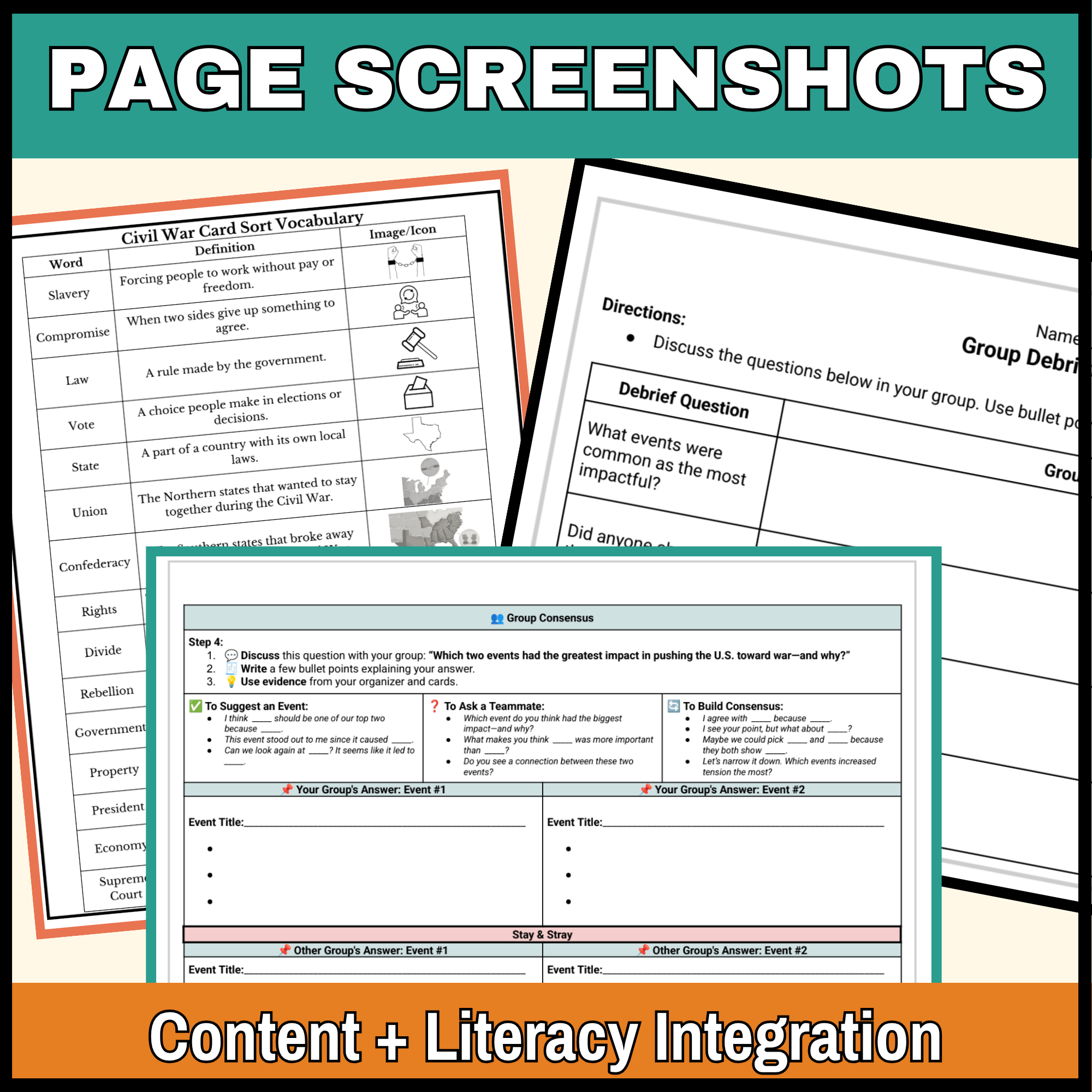
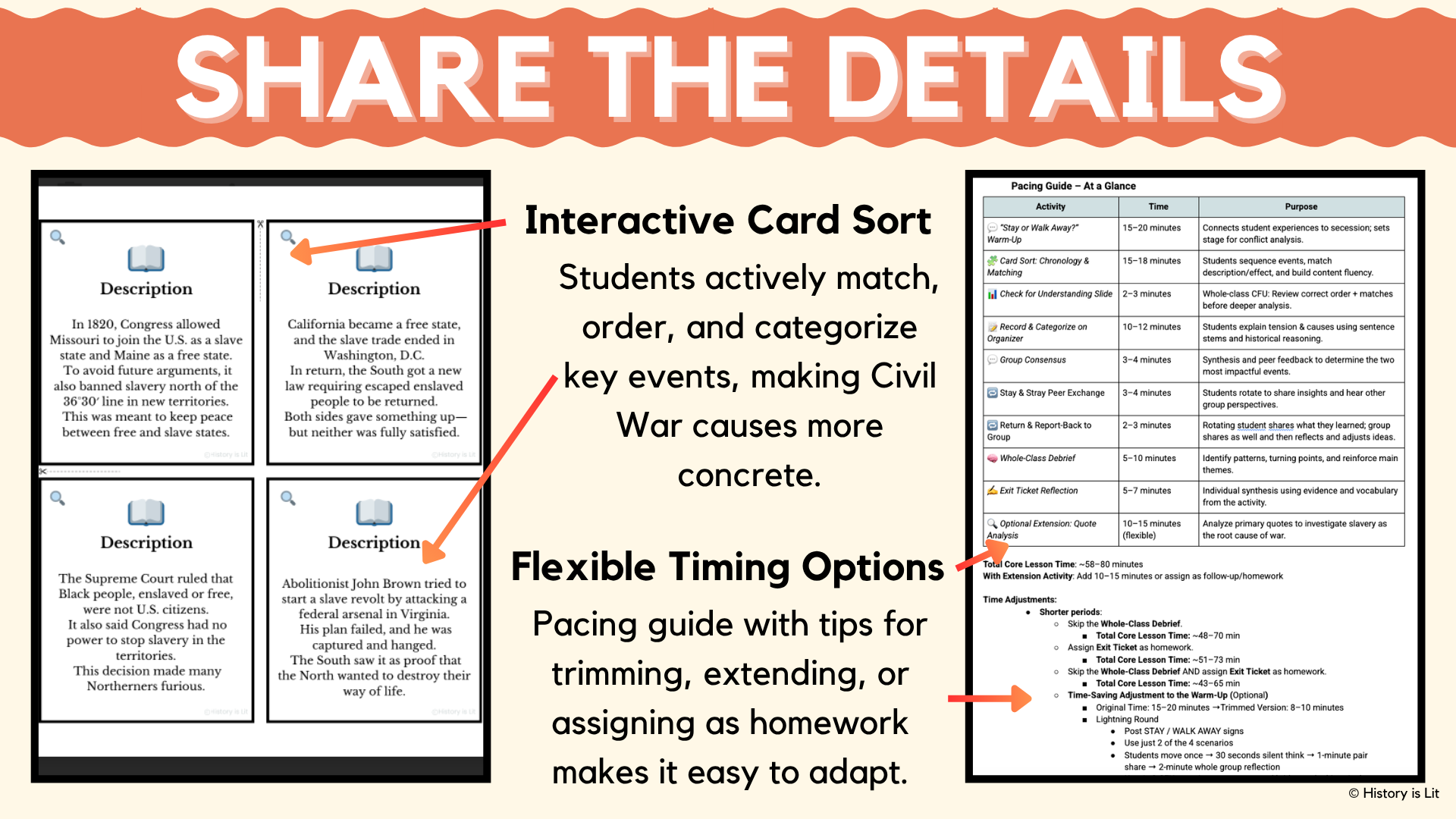
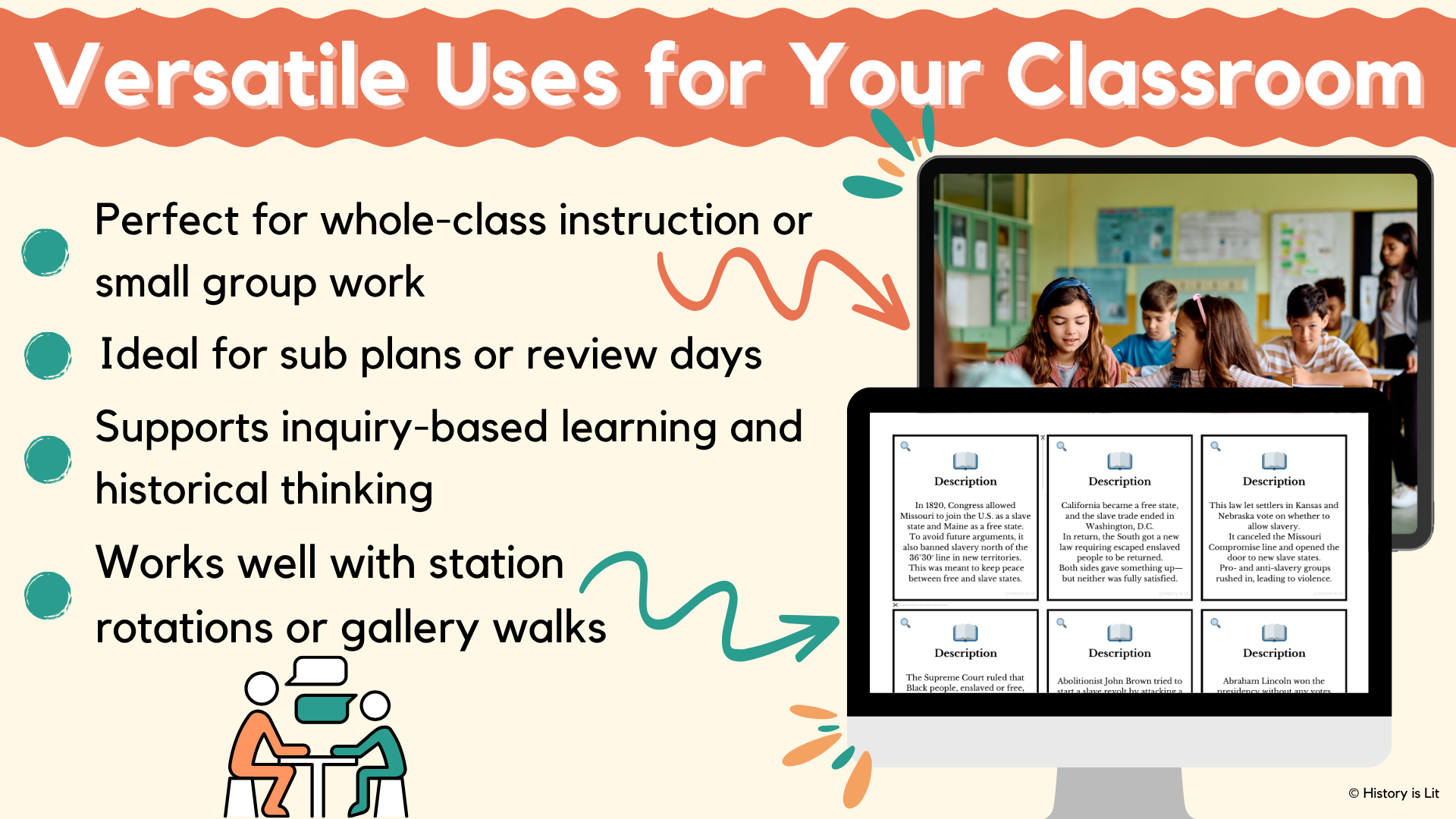
18 interactive cards – Match six historical events with their descriptions and effects.
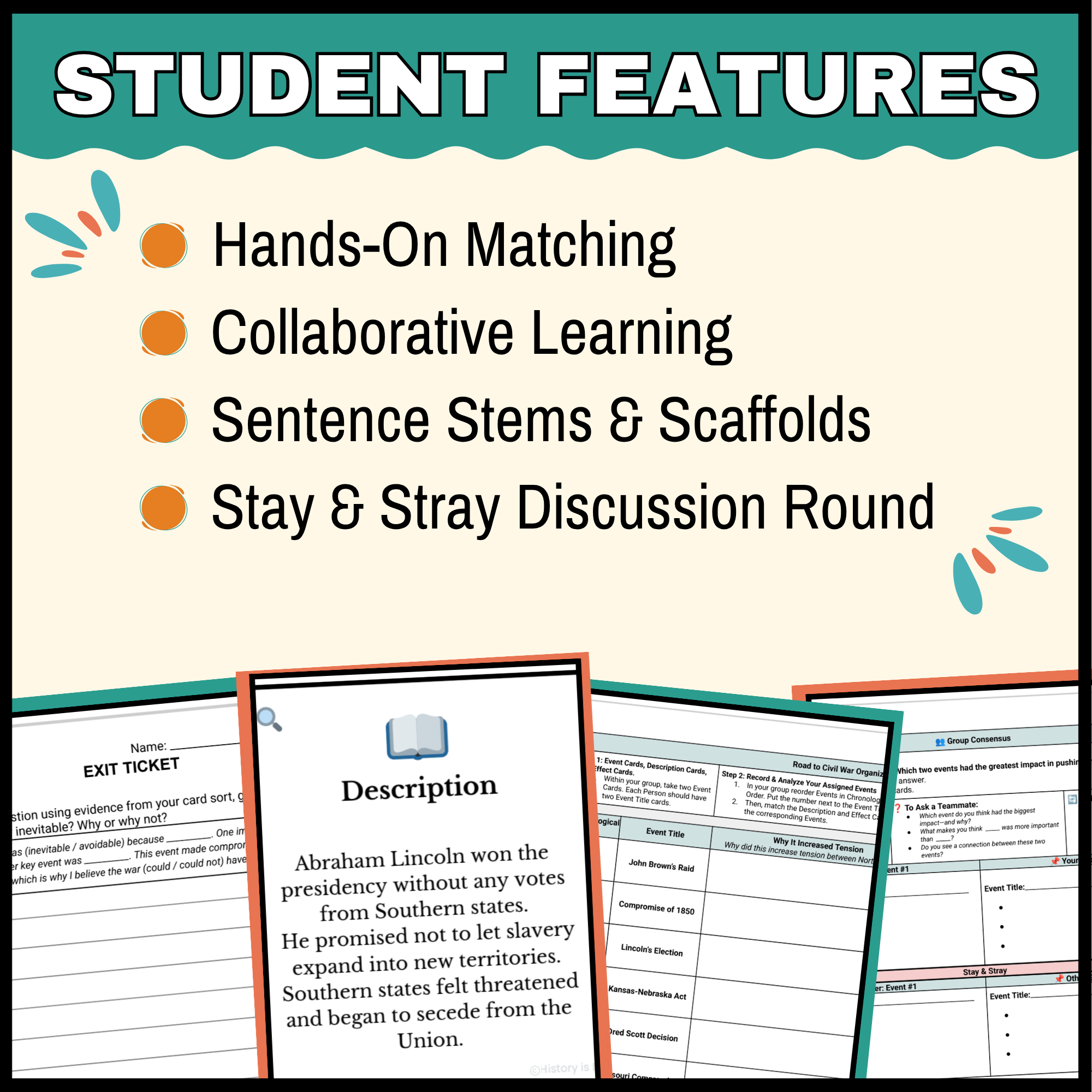
Differentiated versions – Full-text and limited-text options to support different reading needs.
Road to Civil War Organizer – Sequence events and analyze cause-and-effect relationships.
Group Debrief & Exit Ticket – Encourage discussion and check understanding.
Optional Extension – Was It Really About Slavery? primary source quote analysis.
Vocabulary Supports – Accessible language to support comprehension.
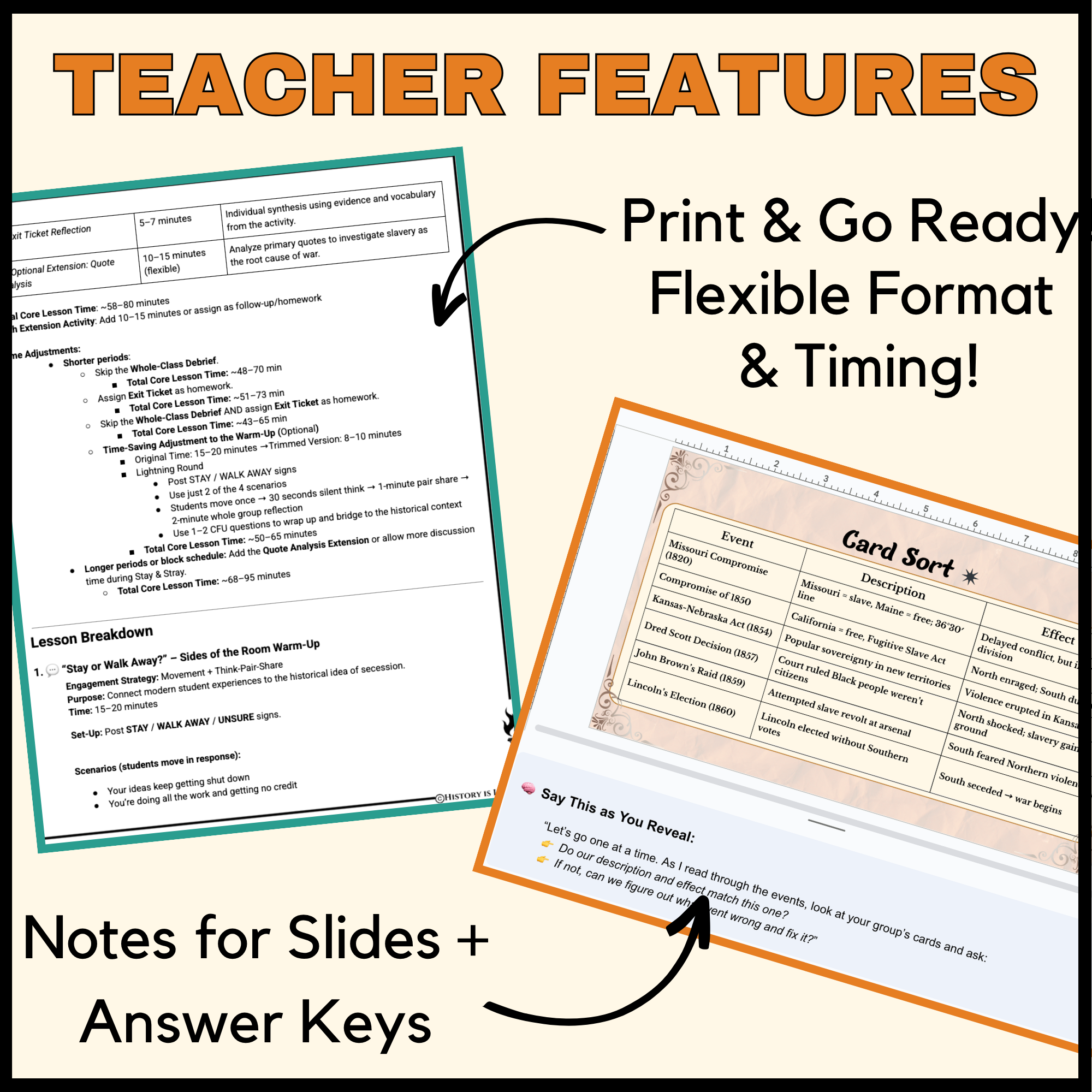
Teacher Guide, Rubric & Answer Keys – Simplify implementation and assessment.
Move beyond memorizing amendments and laws by having students evaluate the impact of Reconstruction.
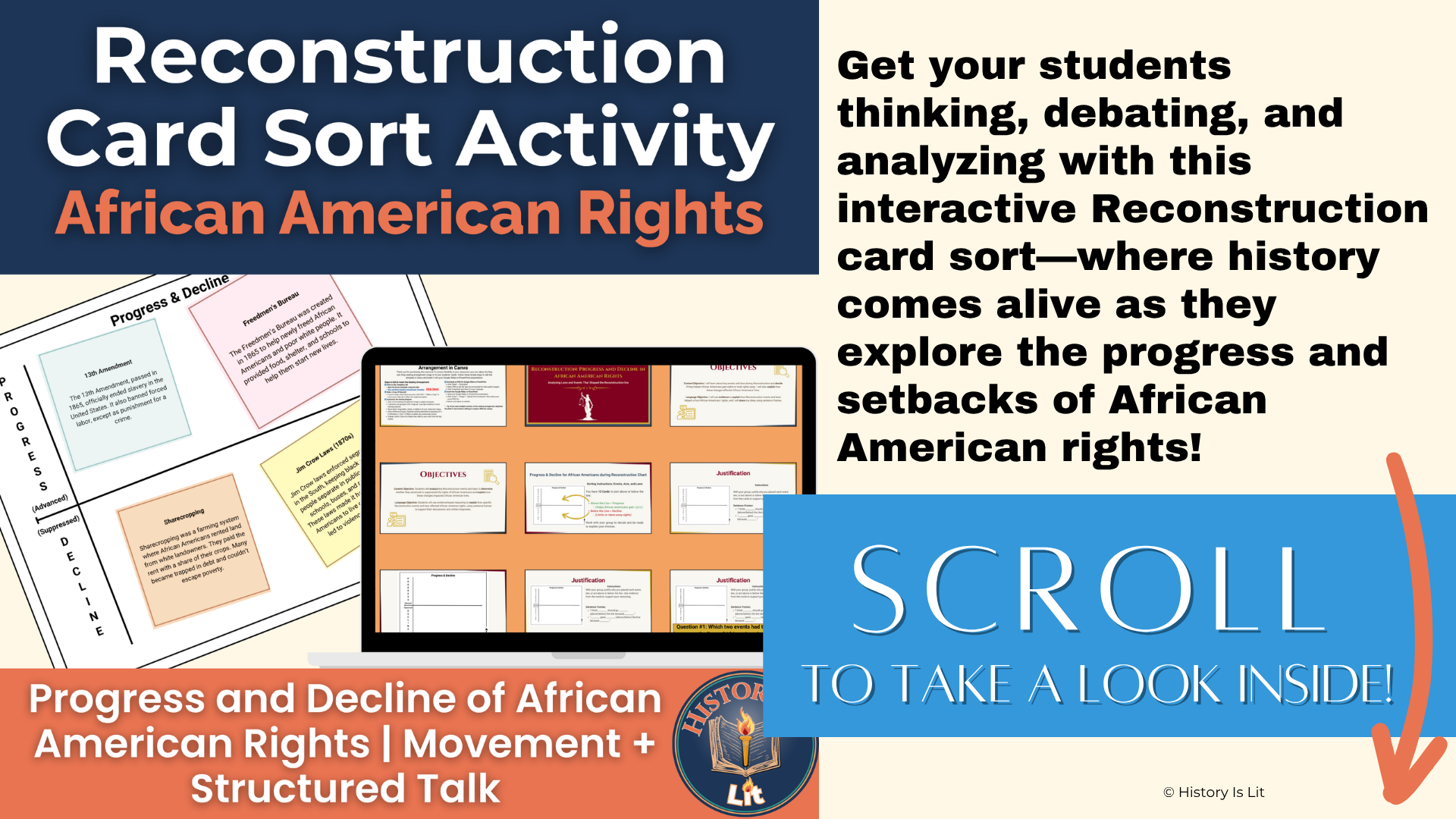
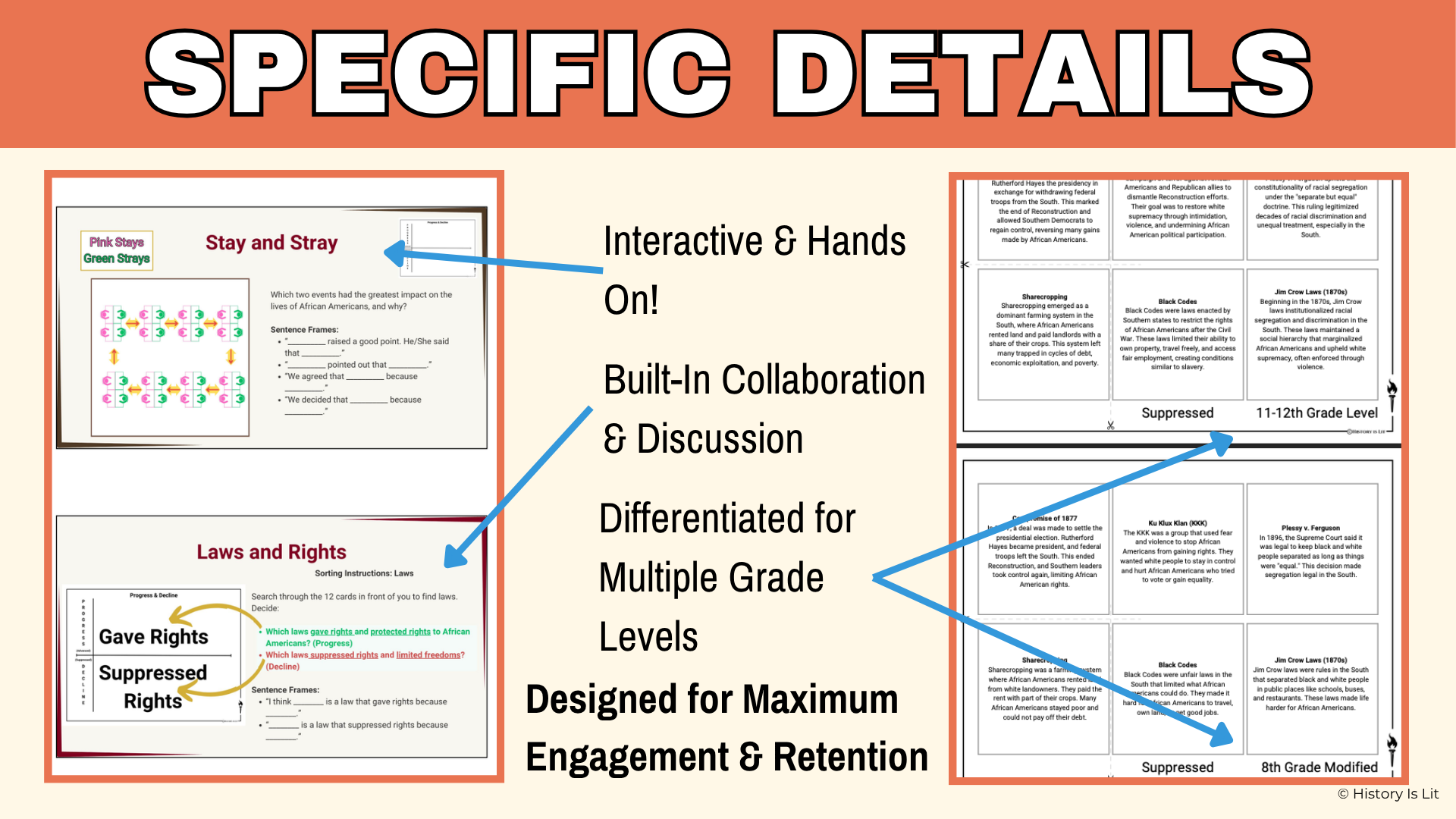
Interactive Card Sort – Categorize key Reconstruction events as progress or setbacks.
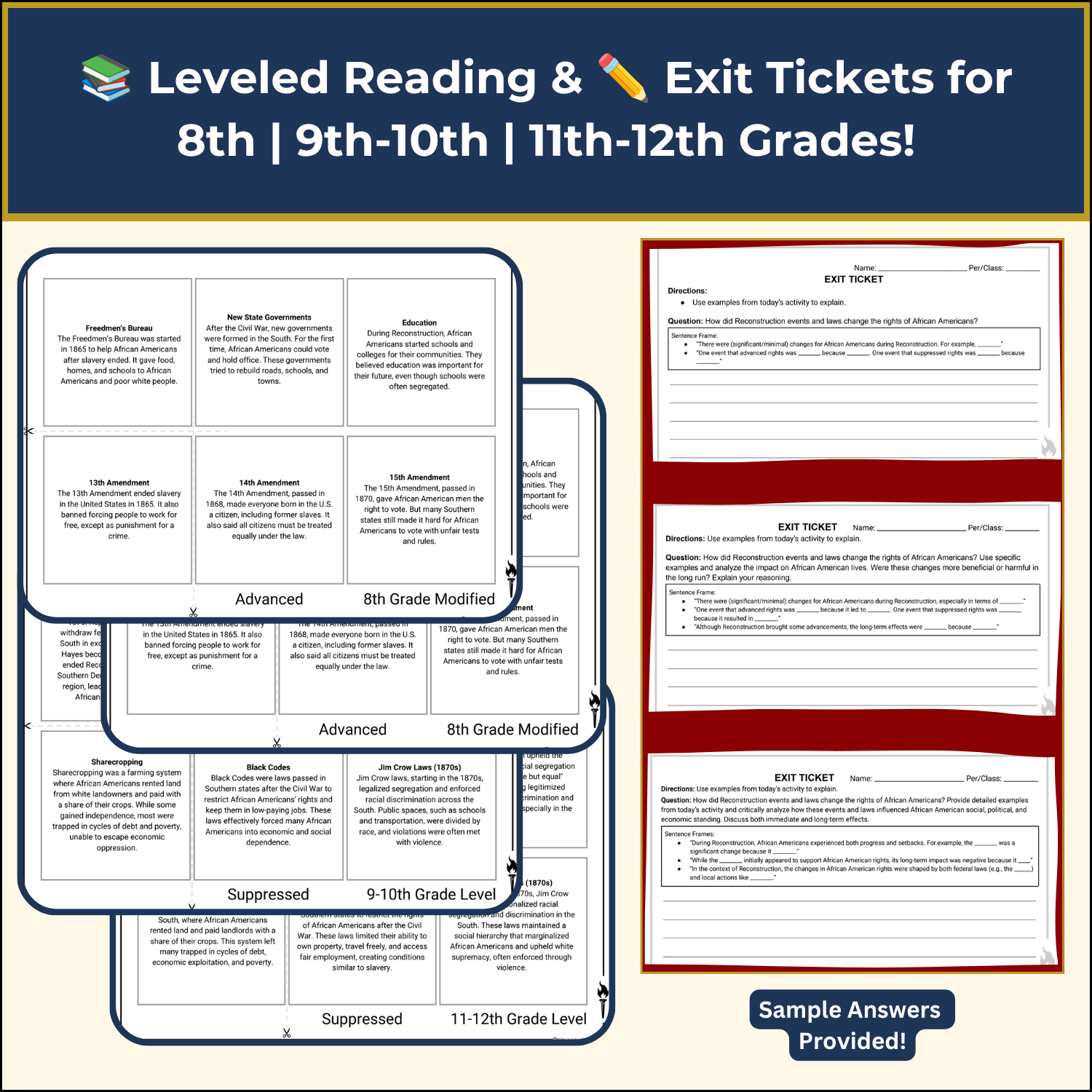
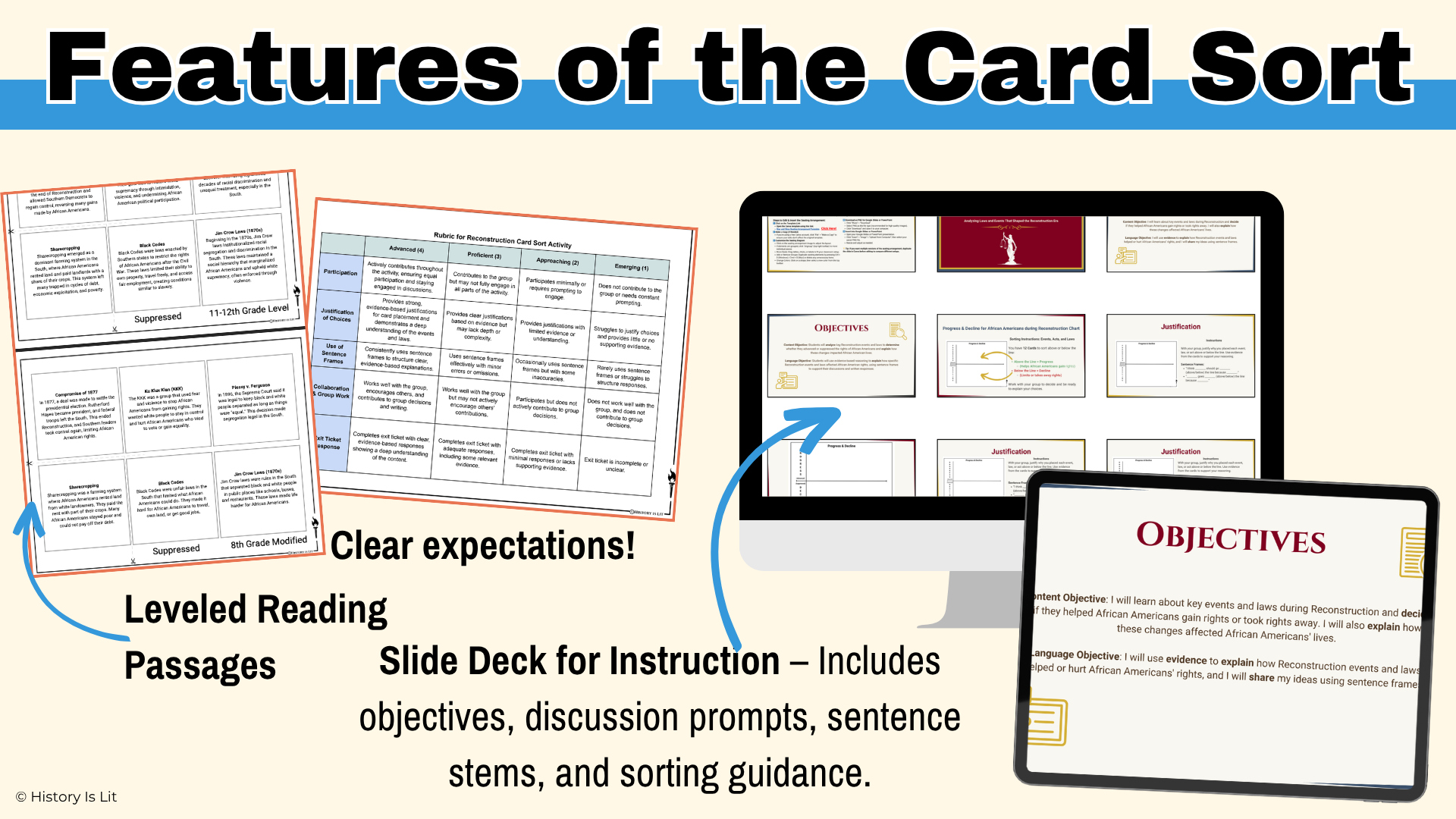
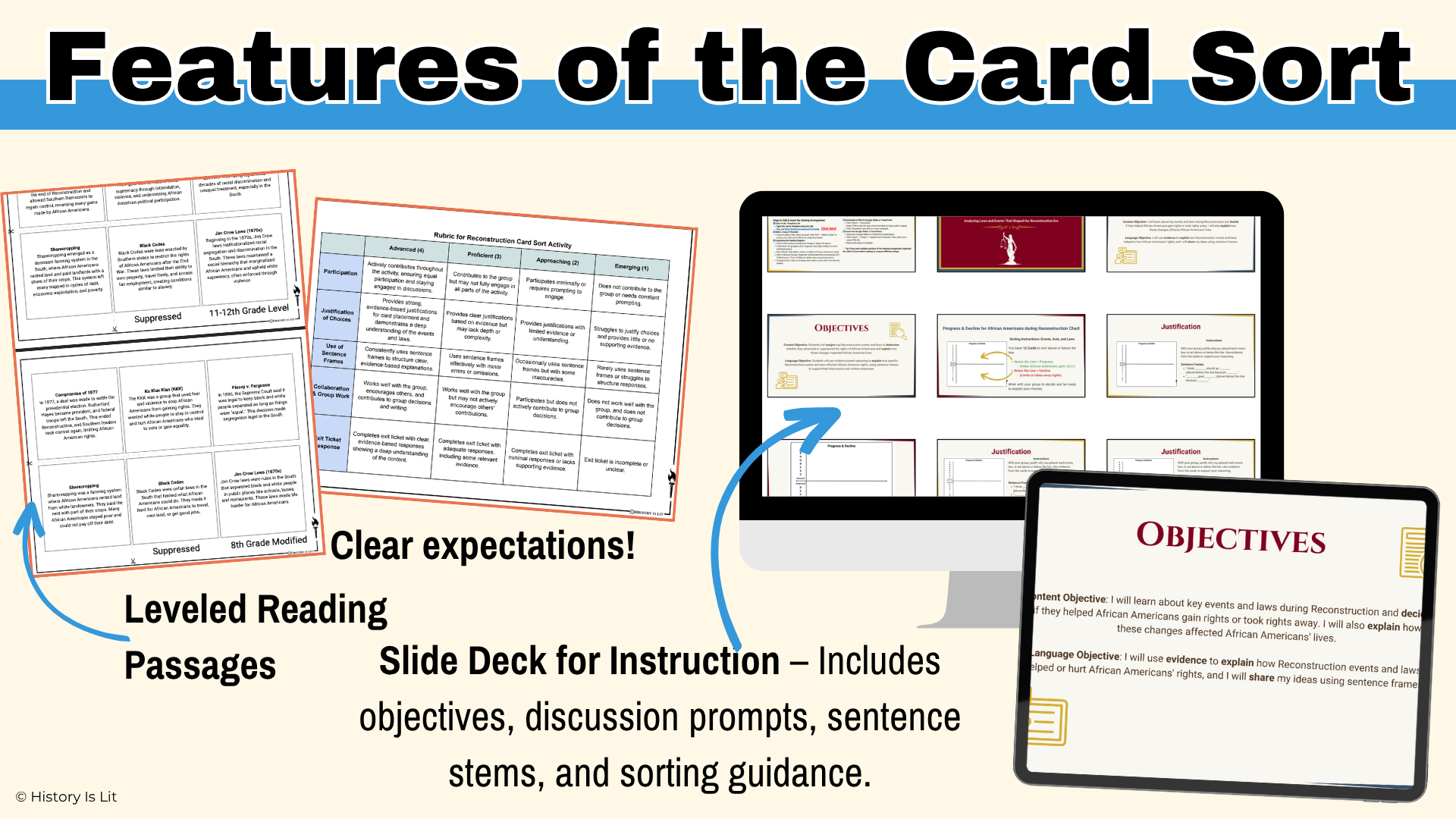
Leveled Reading Passages – Differentiated texts for grades 8–12.
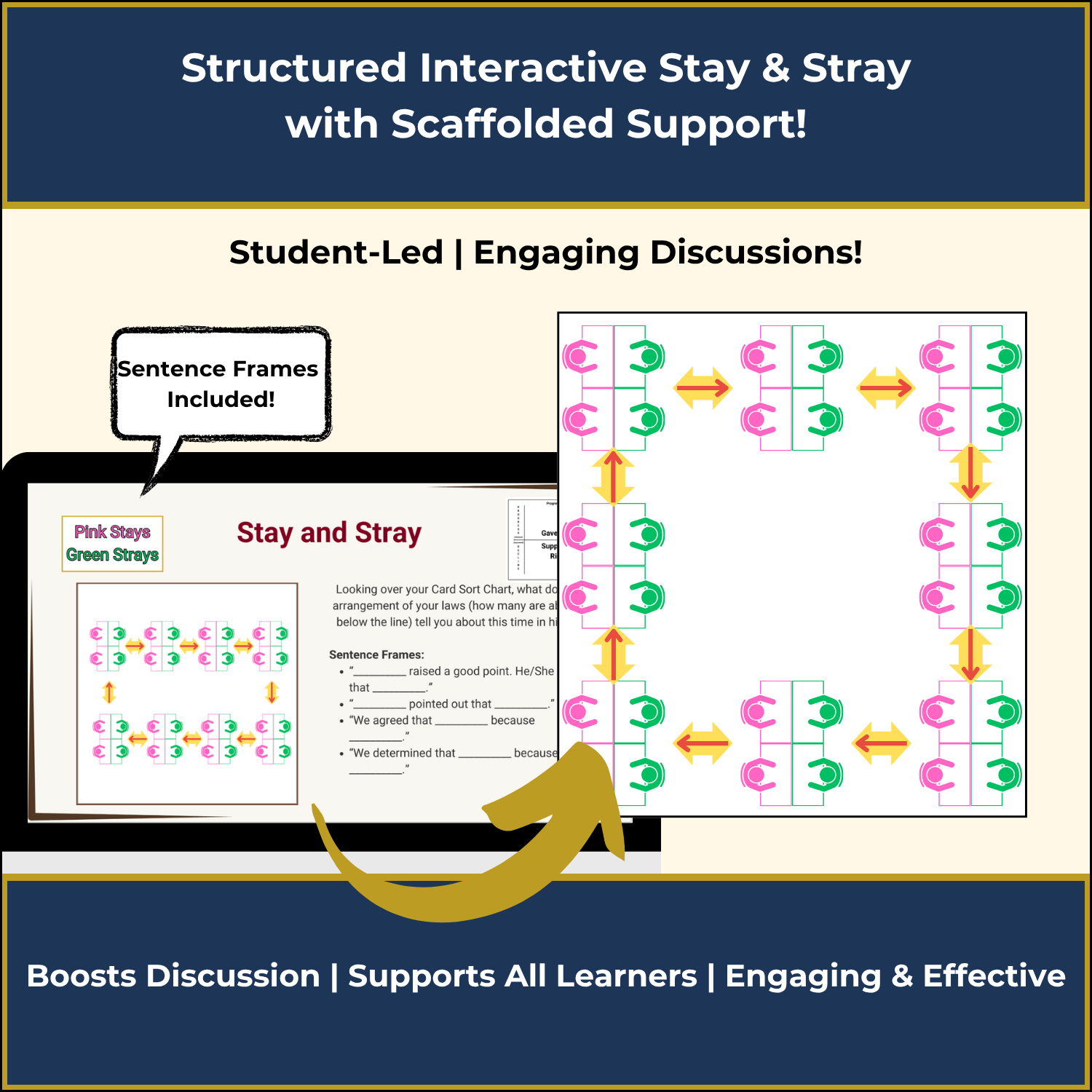
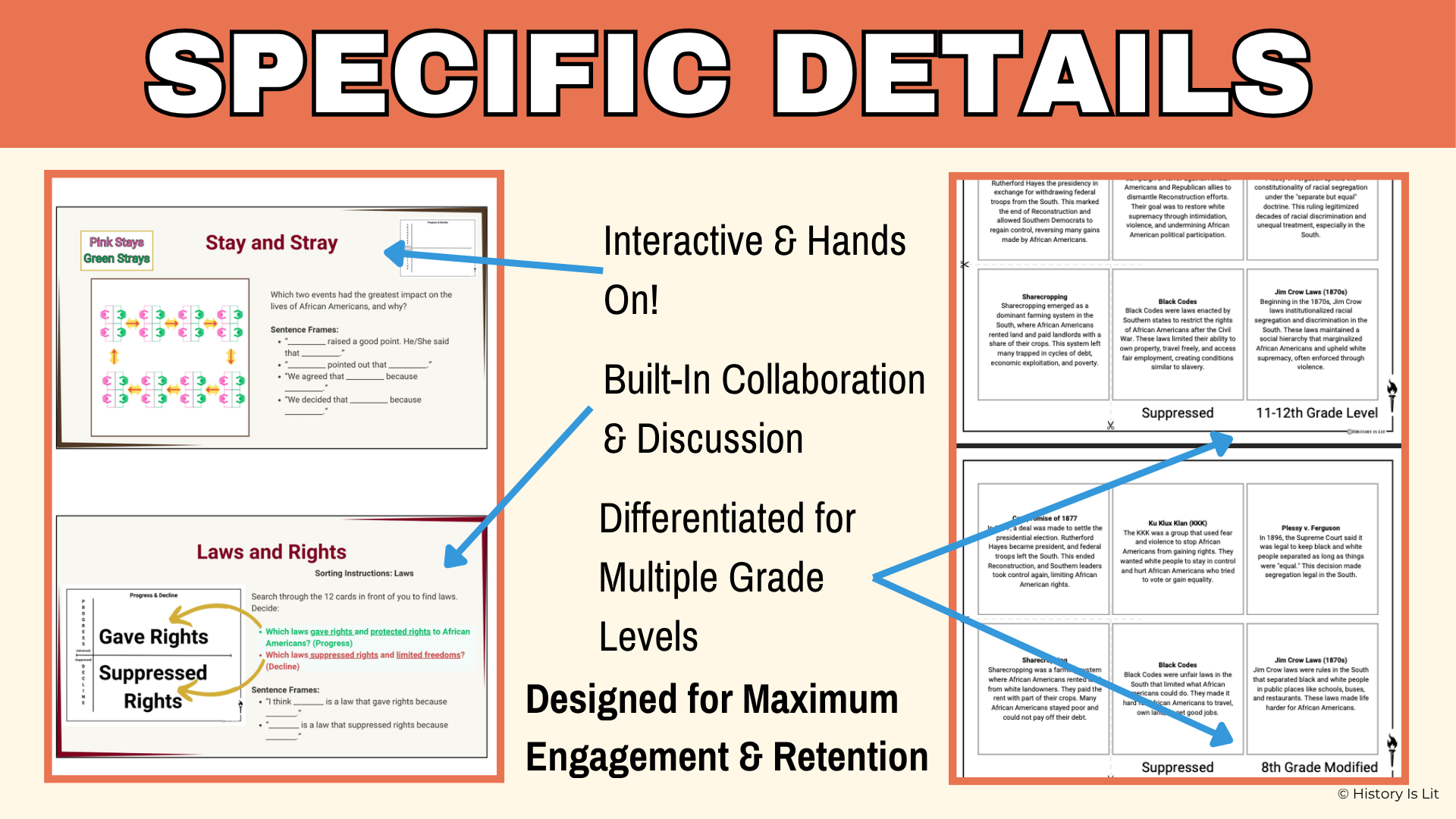
Stay & Stray Discussion Protocol – Get students moving, sharing ideas, and defending their reasoning.
Differentiated Exit Tickets – Assess students' understanding and historical thinking.
Answer Key & Grading Rubric – Make assessment manageable.
✅ Minimal Prep, Maximum Engagement – Print, organize, and get students working.
✅ Built-In Differentiation – Multiple reading levels and vocabulary supports help make historical content accessible.
✅ Purposeful Academic Discussion – Structured activities encourage students to explain their thinking, support their claims, and respond to classmates.
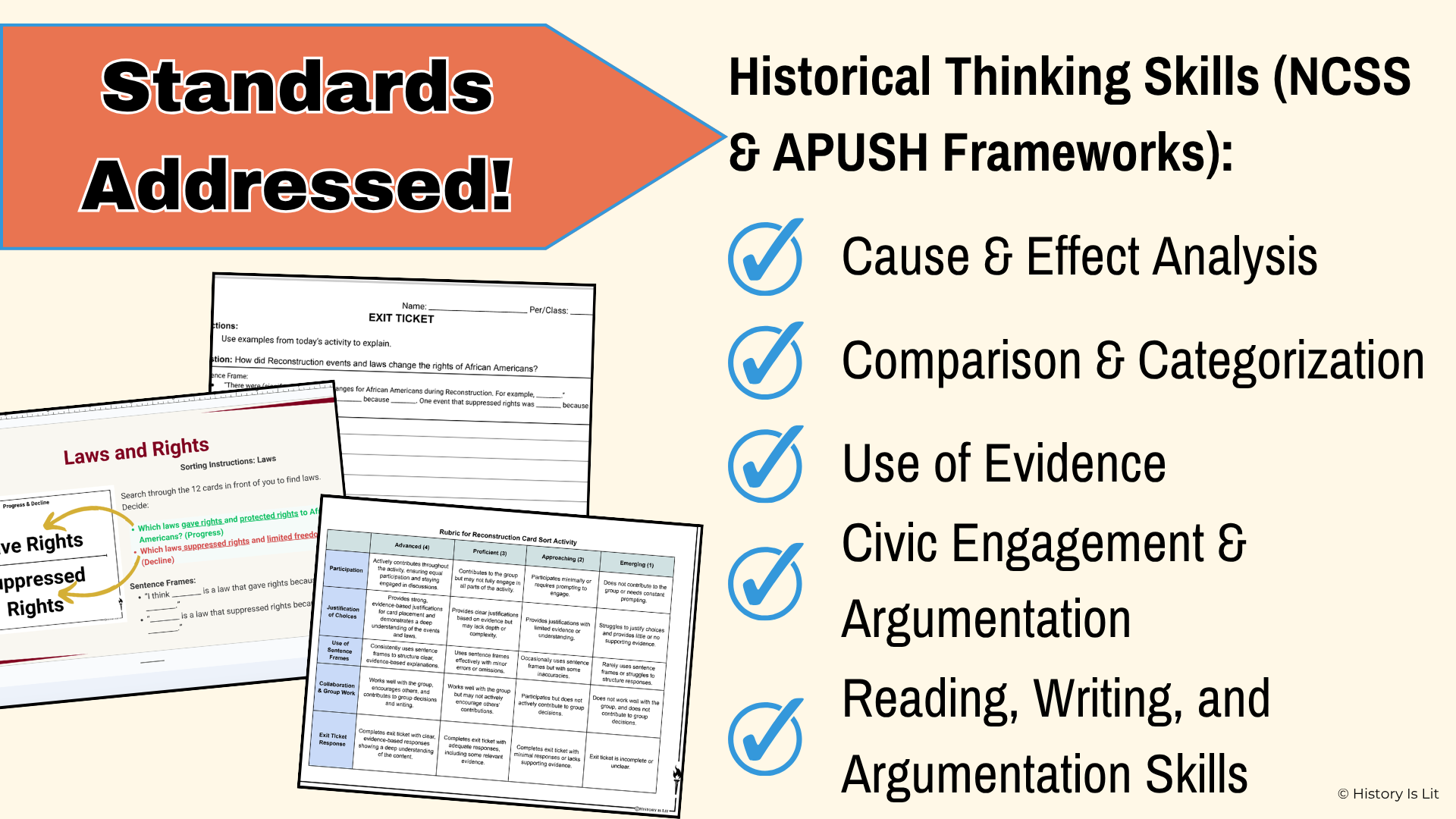
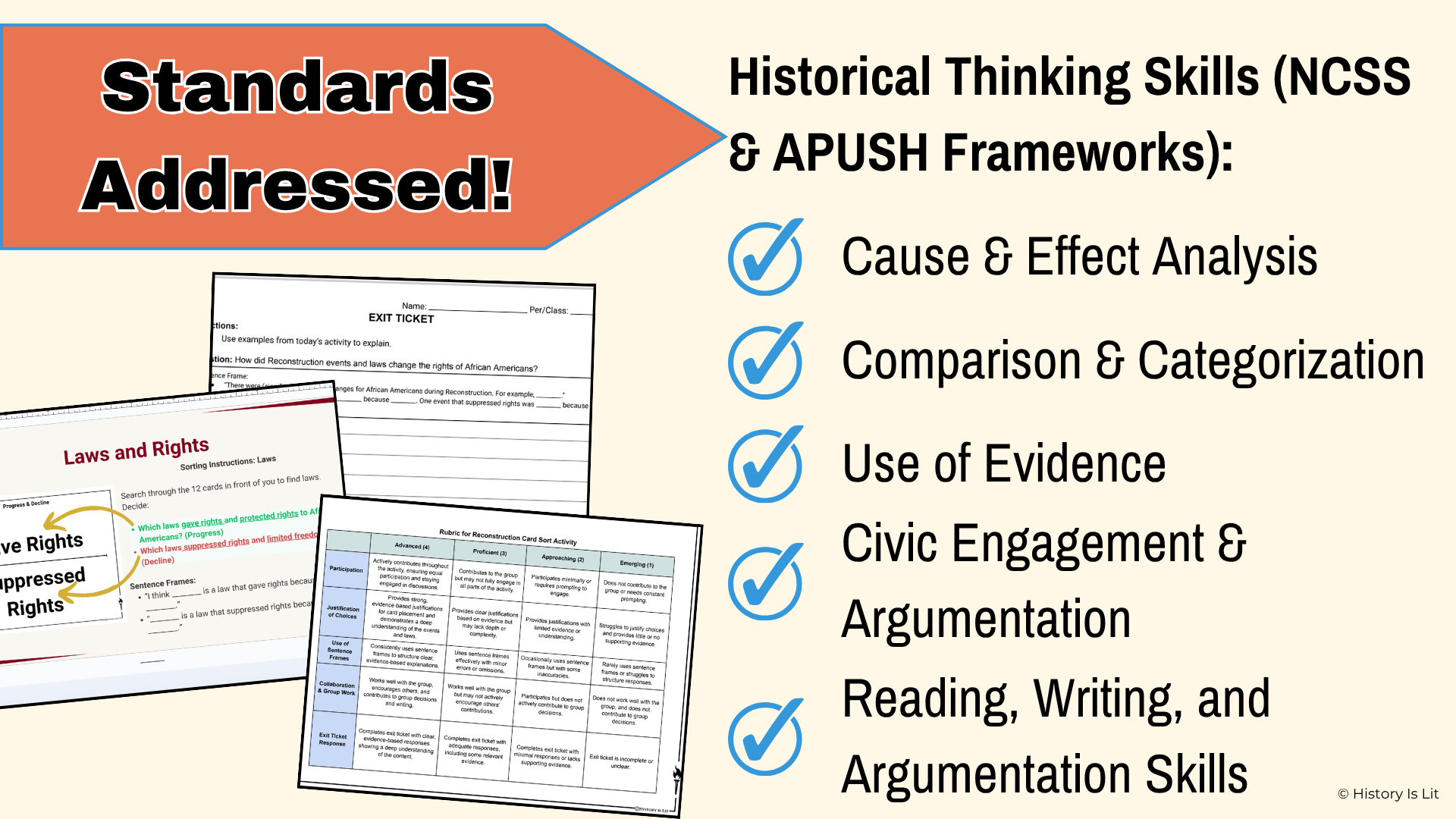
✅ Historical Thinking Skills – Students analyze cause and effect, evaluate historical significance, and make evidence-based judgments.
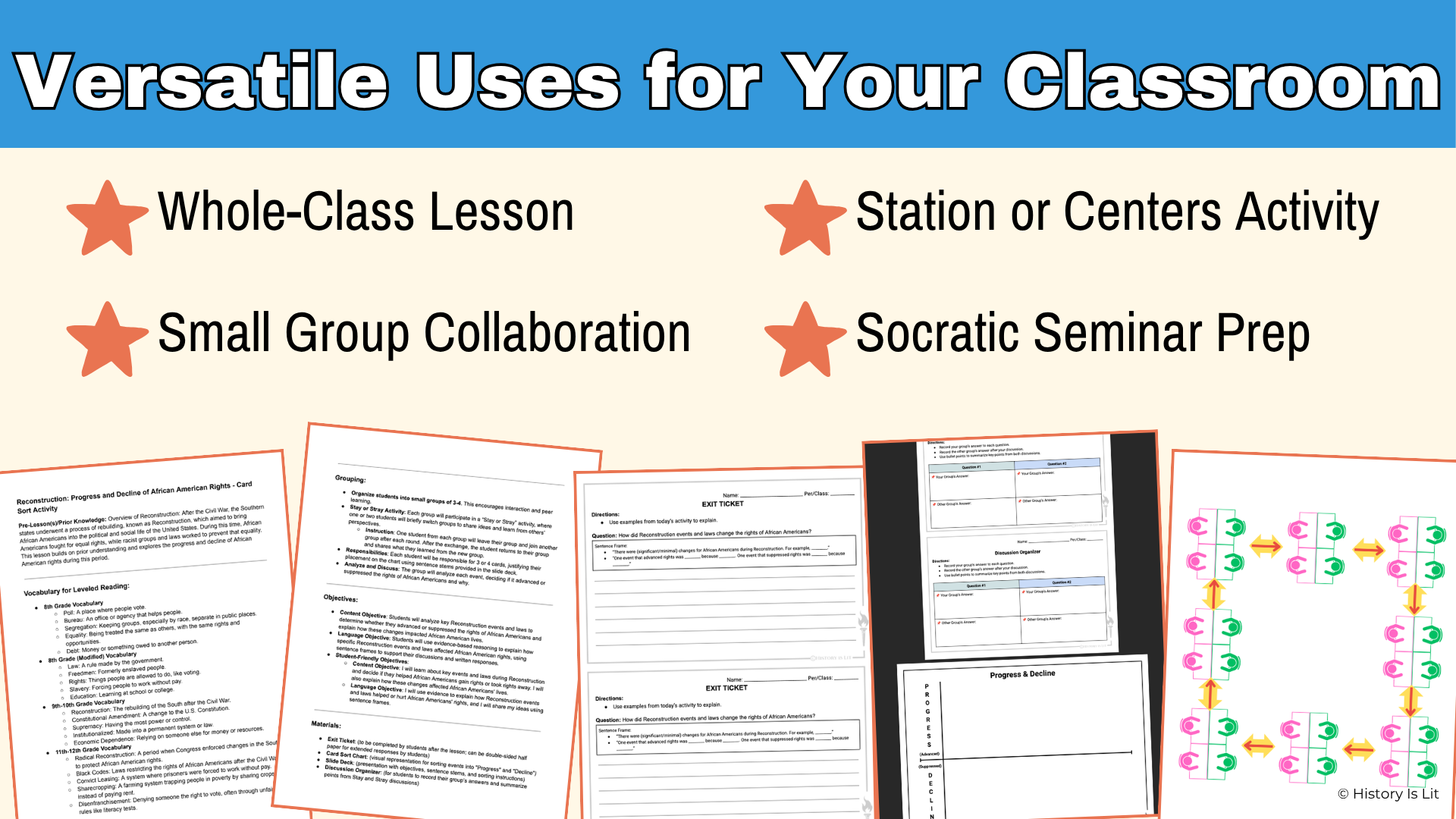
✅ Flexible Classroom Use – Great for introducing concepts, reinforcing learning, reviewing content, or assessing understanding.
Students aren't just reading about the Civil War and Reconstruction. They're actively working with historical information.
Through sorting, sequencing, discussion, and reflection, students practice making connections between historical events and explaining their reasoning.
The goal isn't just to get students talking. It's to teach them how to think critically and contribute meaningfully to academic discussions.
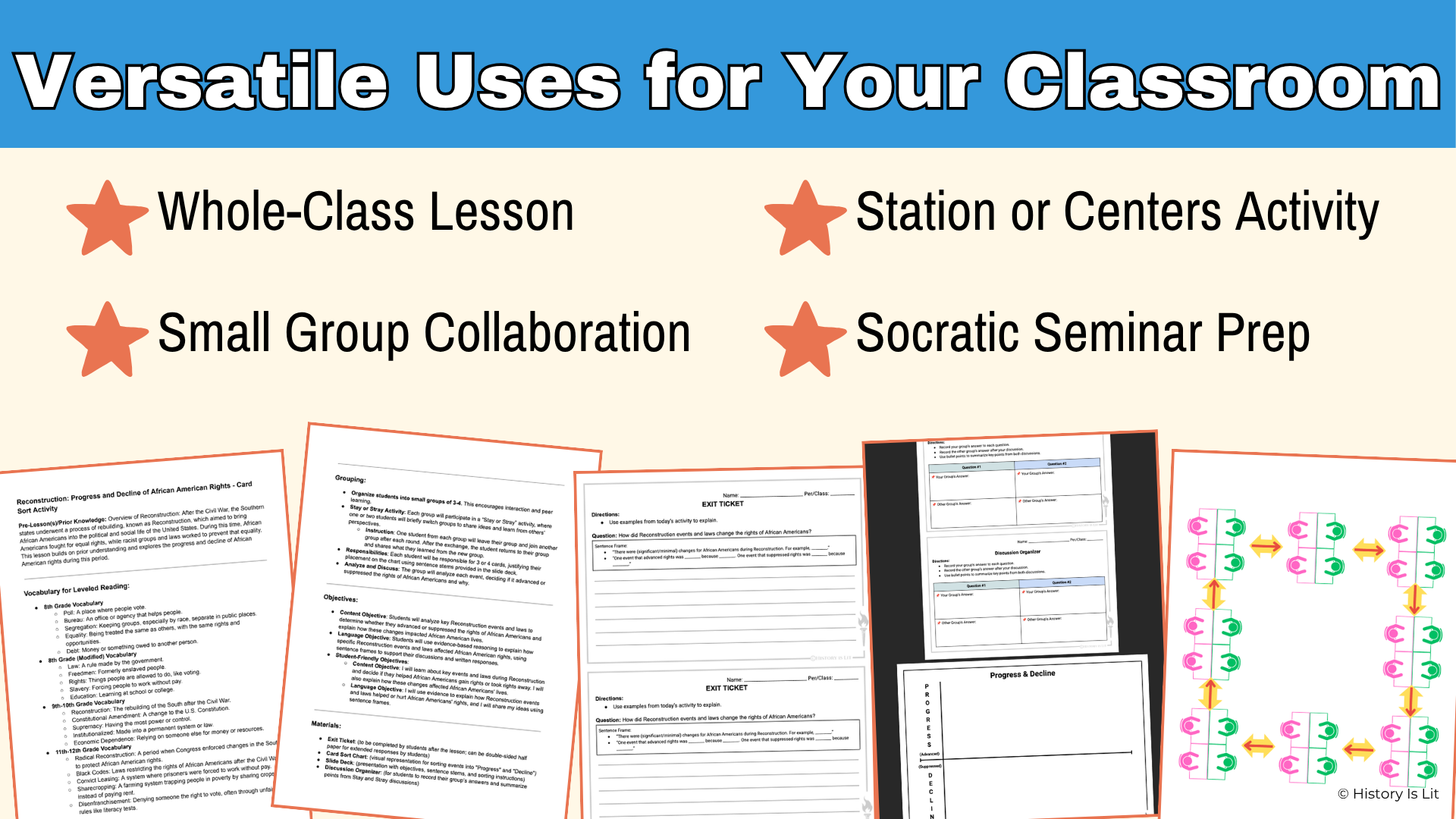
Middle and high school U.S. History classes (grades 7–12)
Civil War and Reconstruction units
Collaborative learning and small-group activities
Historical analysis and critical thinking
End-of-year review and formative assessment
Differentiated instruction
Teaching the Civil War and Reconstruction doesn't have to mean another lecture or passive reading activity.
With these interactive card sorts, students can explore important historical events, work collaboratively, and explain their thinking—all with the structure and support they need.
Get students sorting, discussing, and analyzing history with activities that make their thinking visible.
Keep History Lit! 🔥
It’s the end of the year, and let’s be honest — we’re all running on fumes. Testing is looming, Spring Break feels like a distant memory, and Spring Fever is real. Your students are burnt out, and let’s face it — so are you. Whatever worked in the past is no longer cutting it. The last thing you want is more worksheets or dry activities that no one cares about.
You’re trying to keep students engaged, but it feels like no matter what you do, they’re just done. The thought of trying to get them to sit through another boring lesson or passive activity feels like the final straw. You need something that gets them talking, thinking, and moving, but without taking up all your precious prep time. And, frankly, you need it to work — right now.
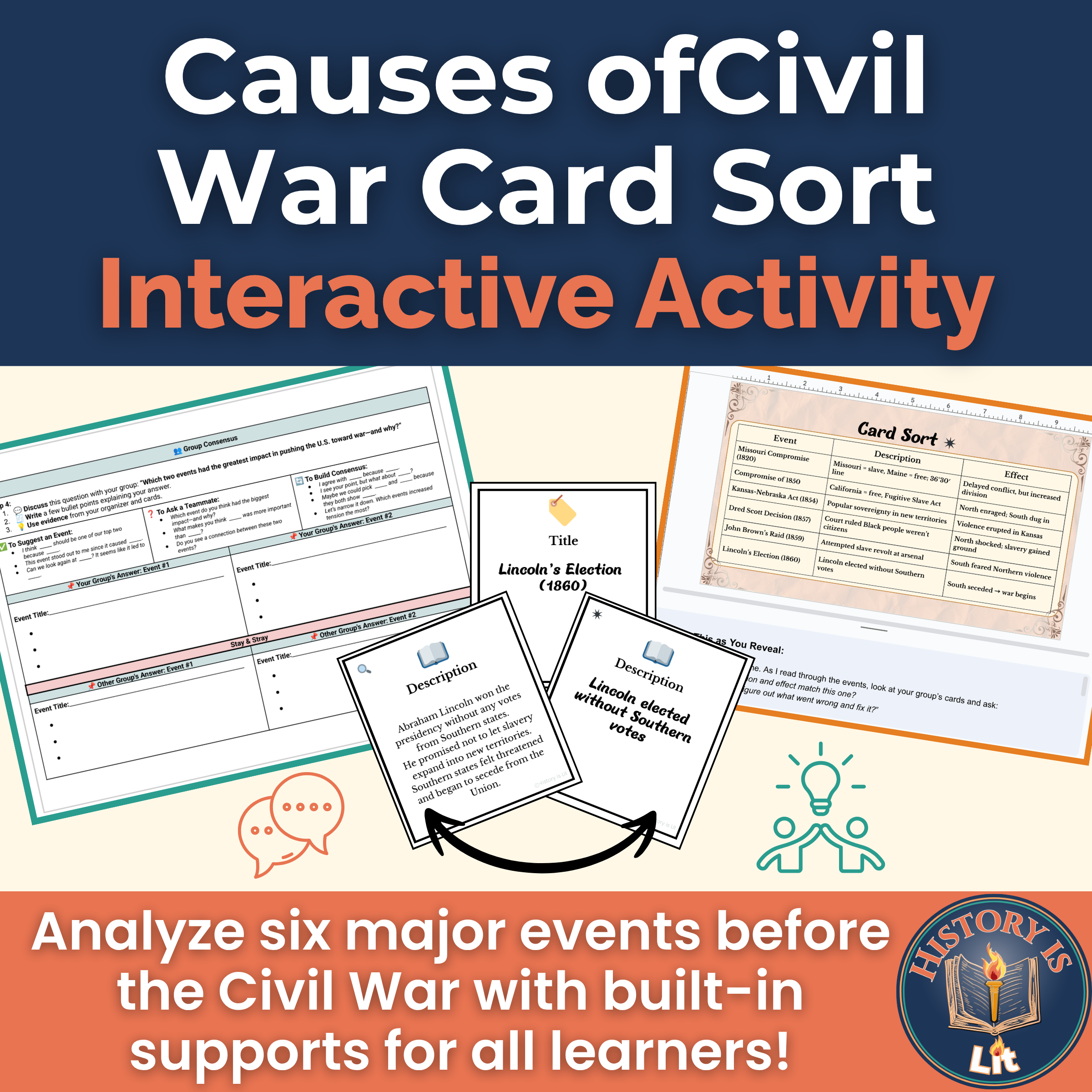
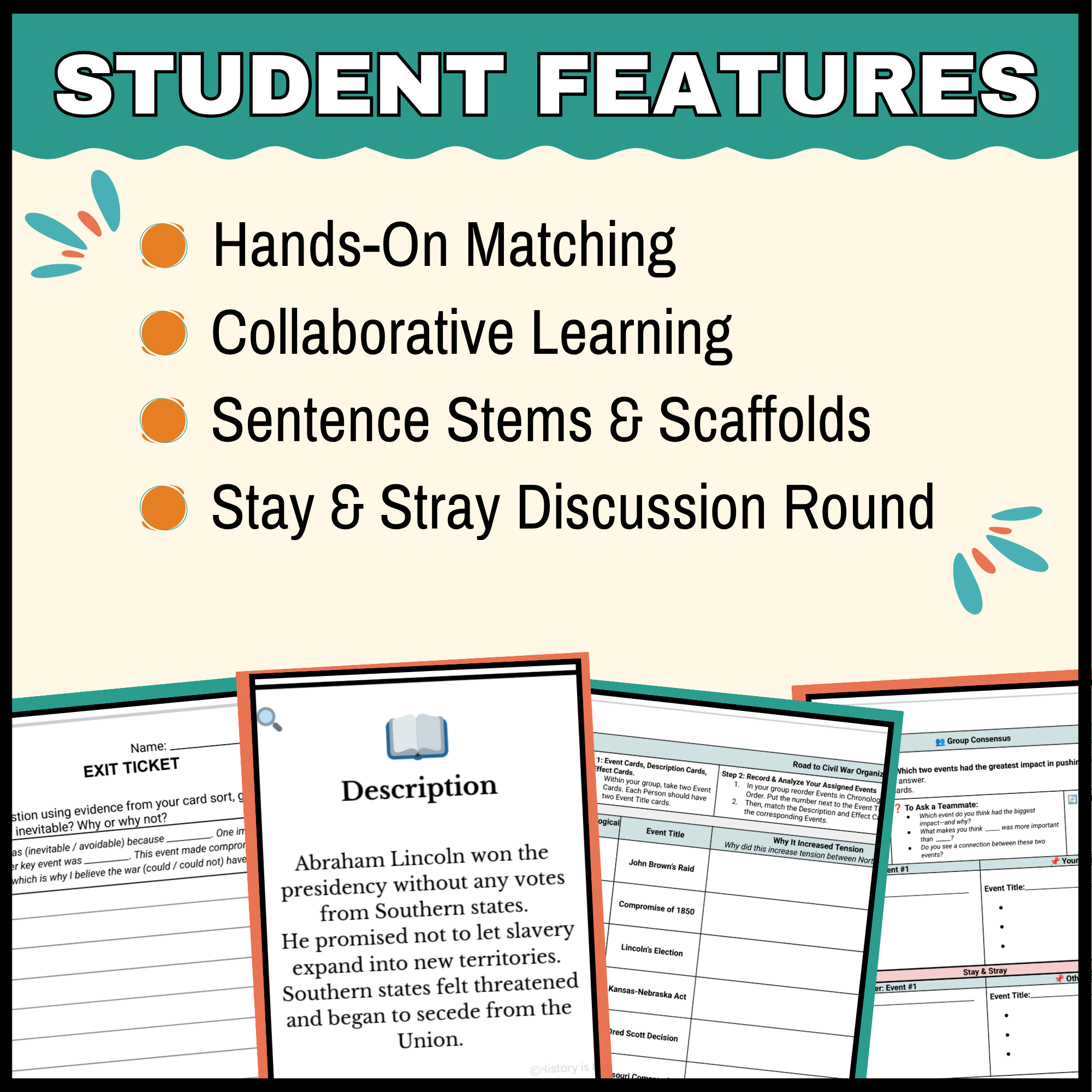
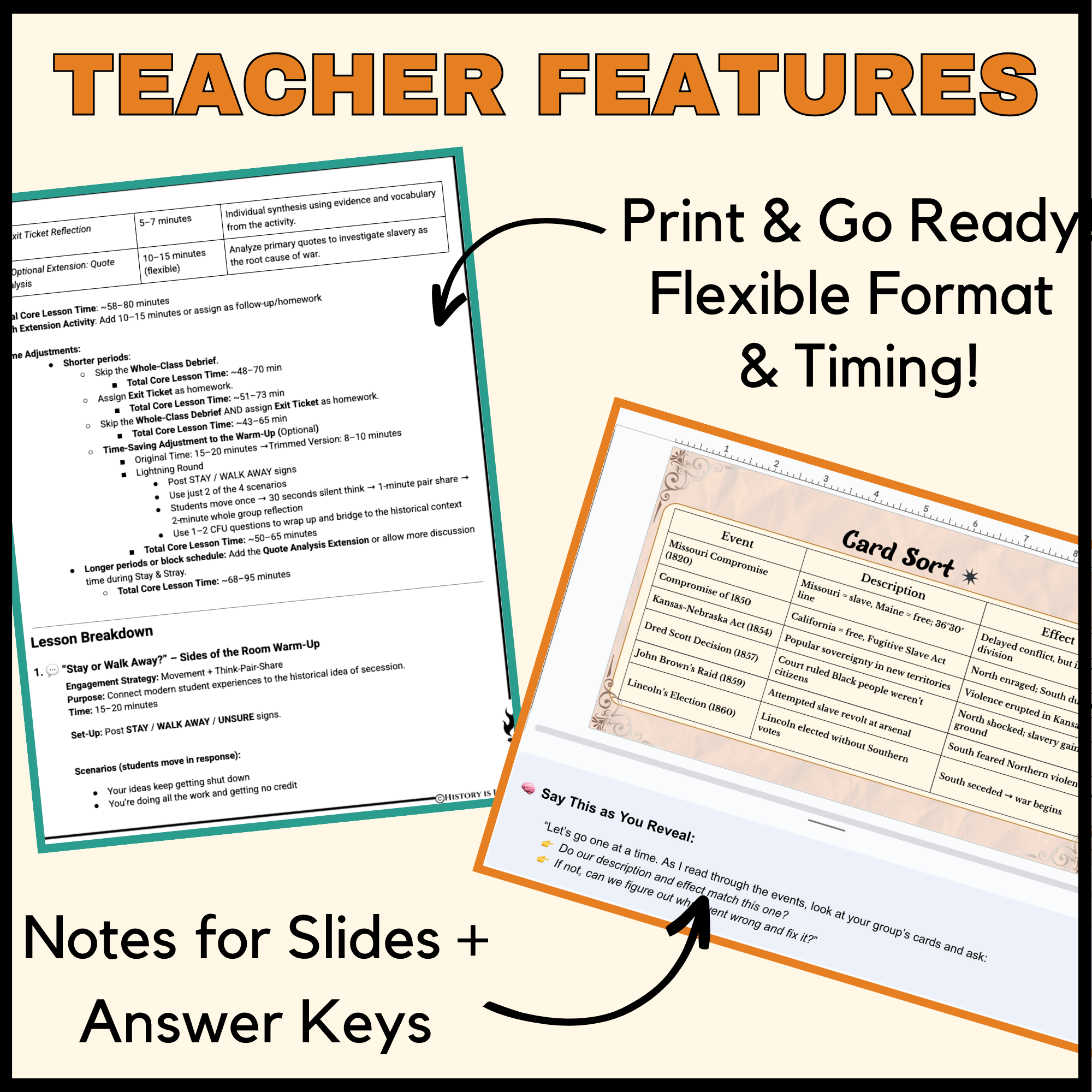
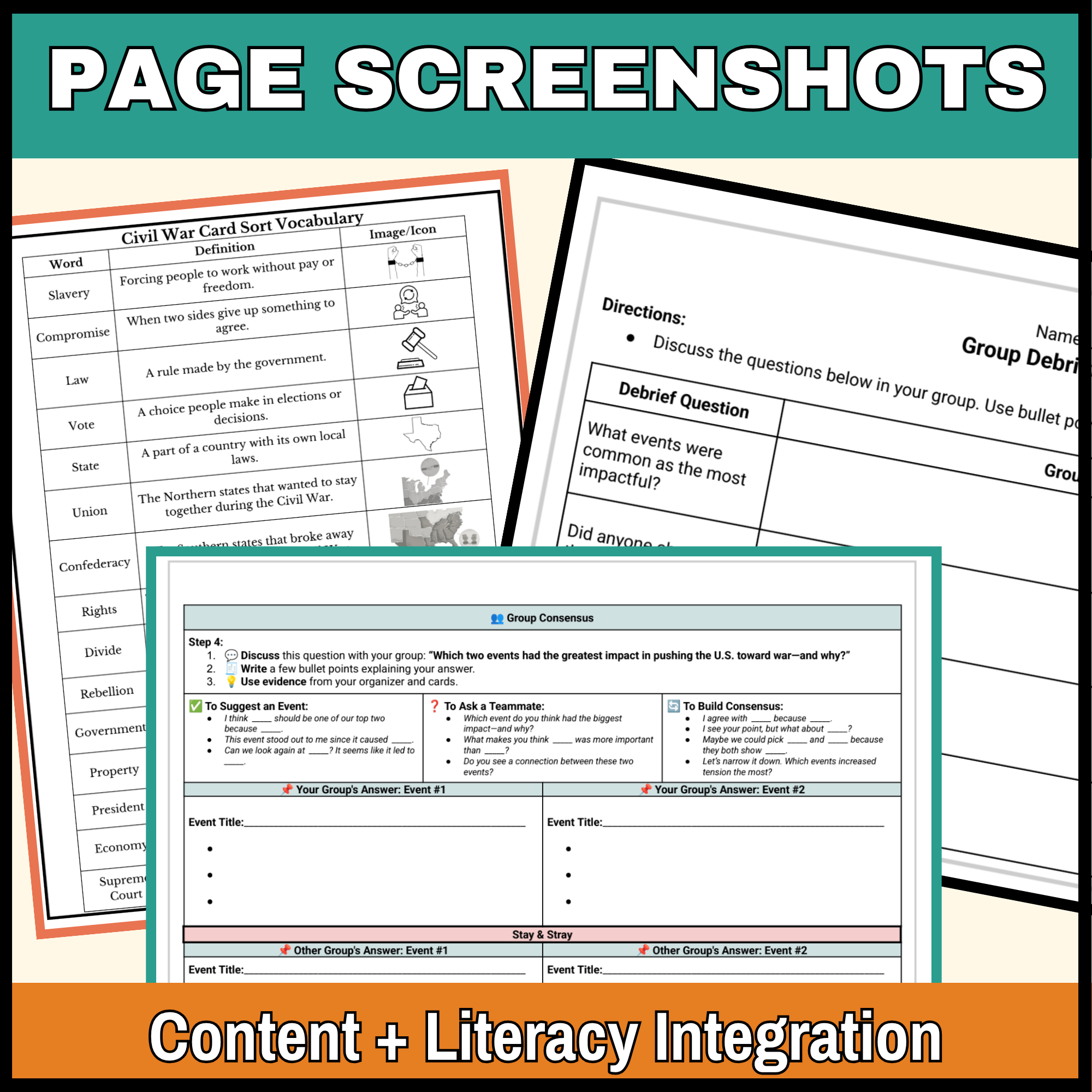
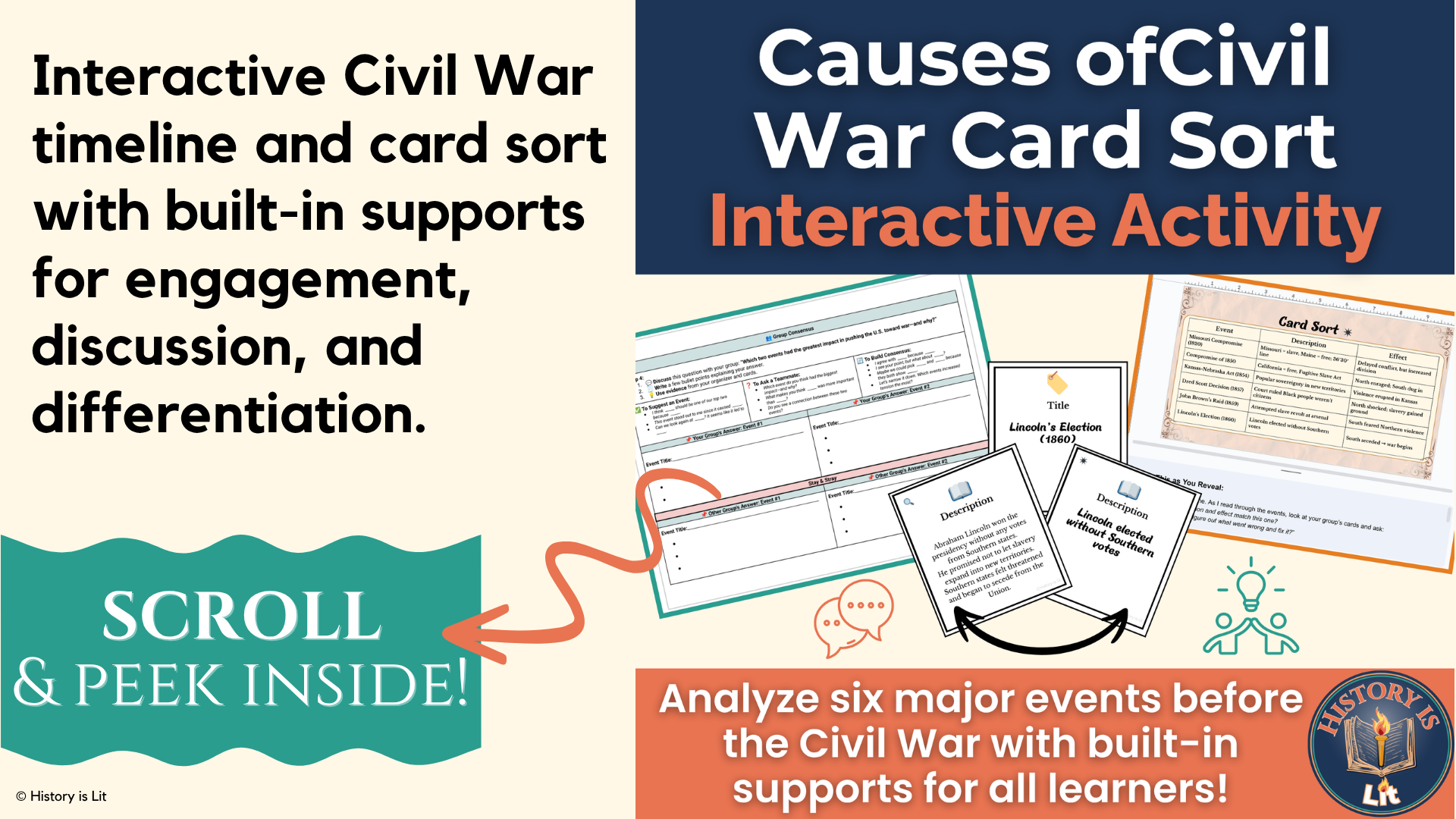
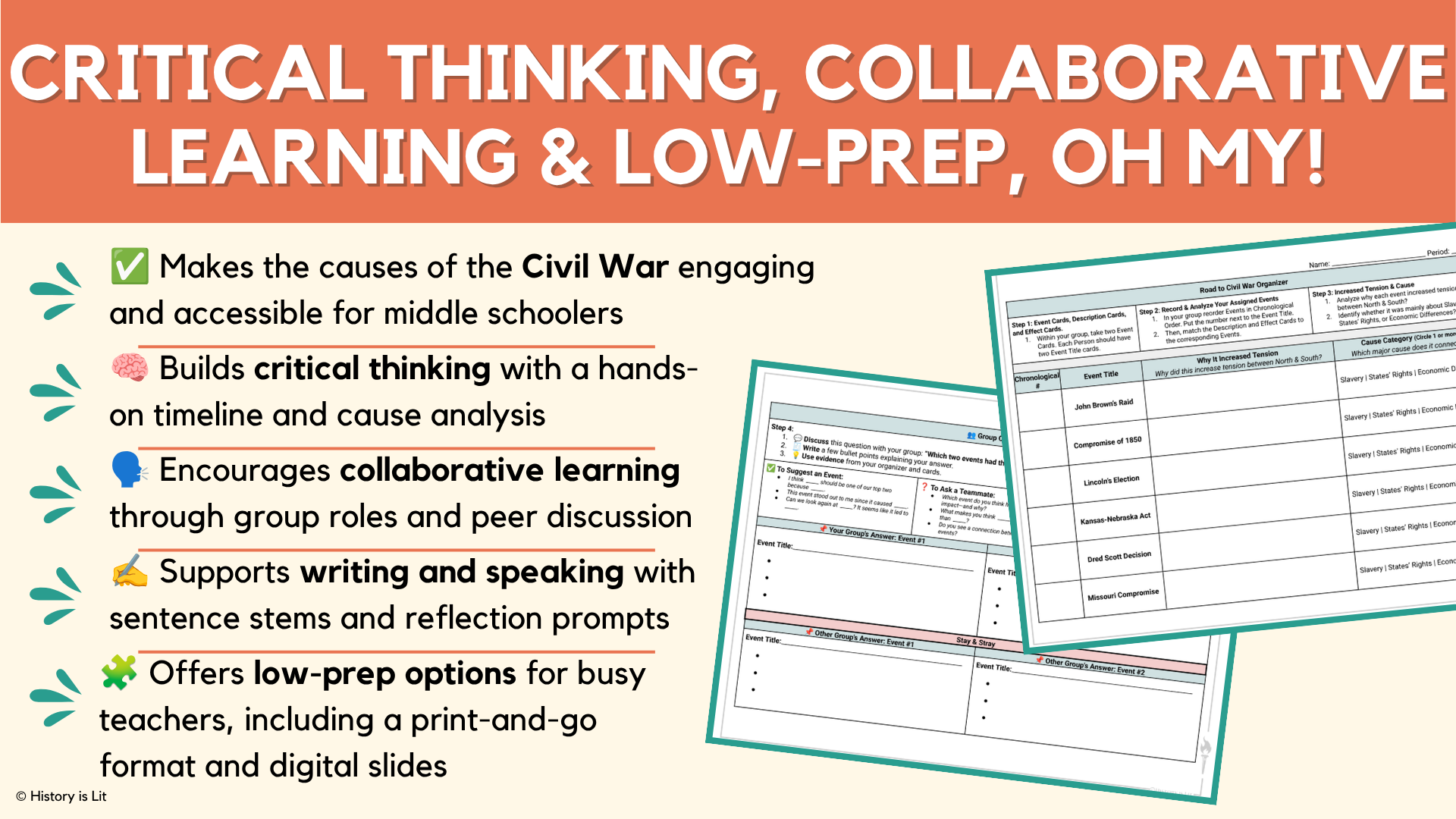
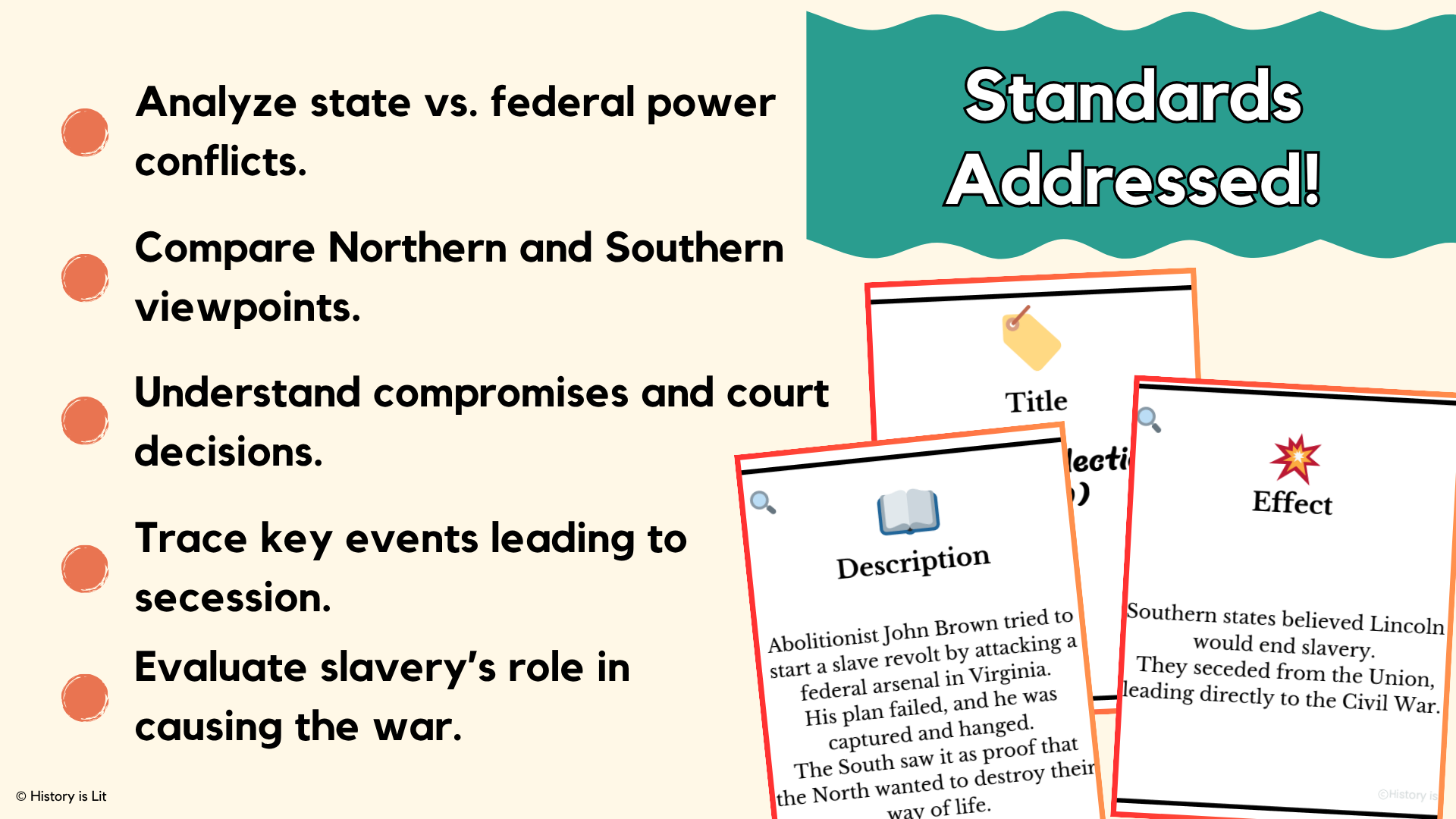
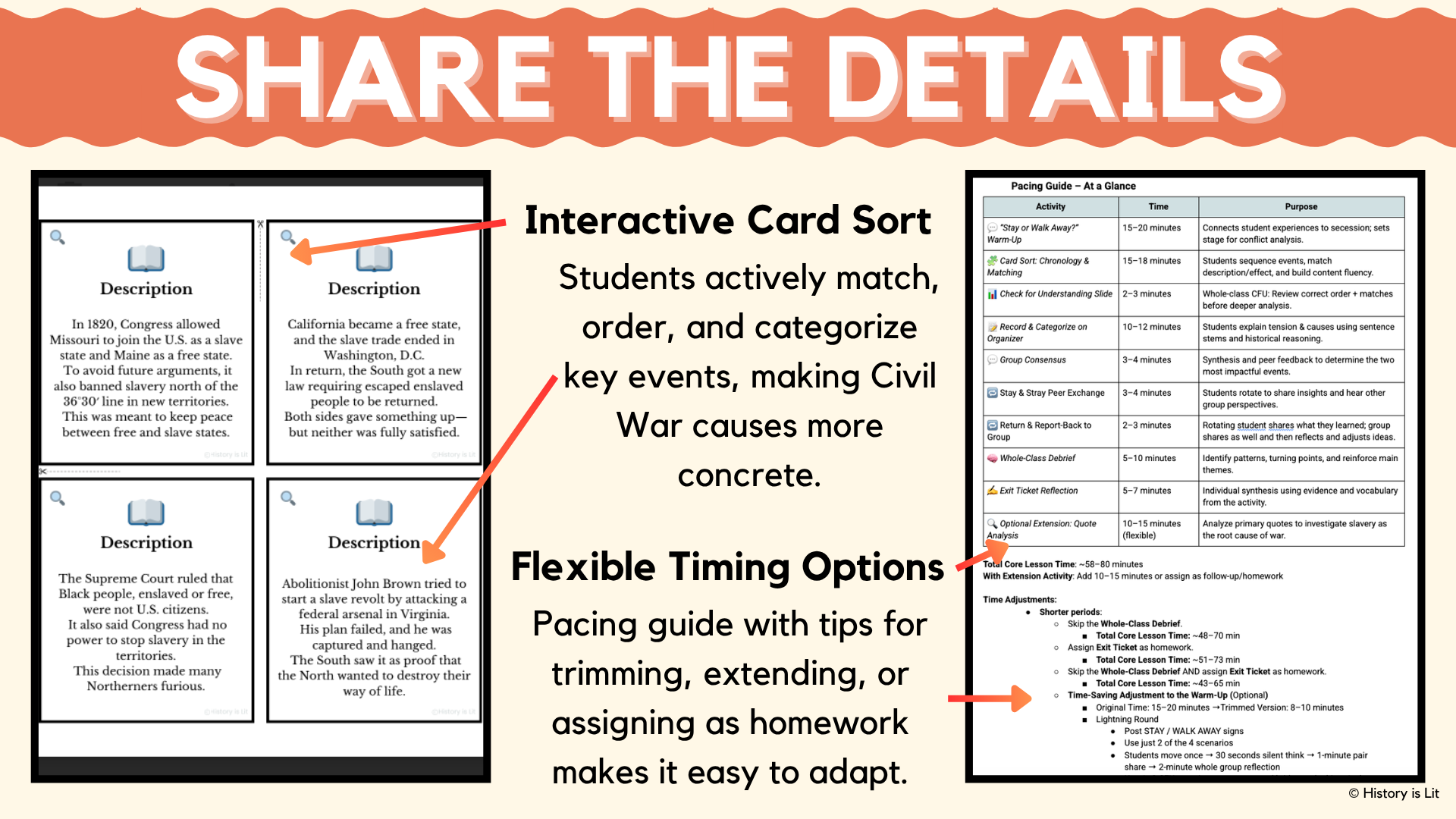
That’s exactly why I created the Civil War Card Sort. It’s a hands-on, interactive activity that engages your students in meaningful ways without the burnout. They’ll analyze six key events leading up to the Civil War, using sentence stems and vocabulary supports to build their critical thinking while you get the break you need. Plus, it’s differentiated for all types of learners and can be done with minimal prep — just print or assign digitally, and go!
What’s Included:
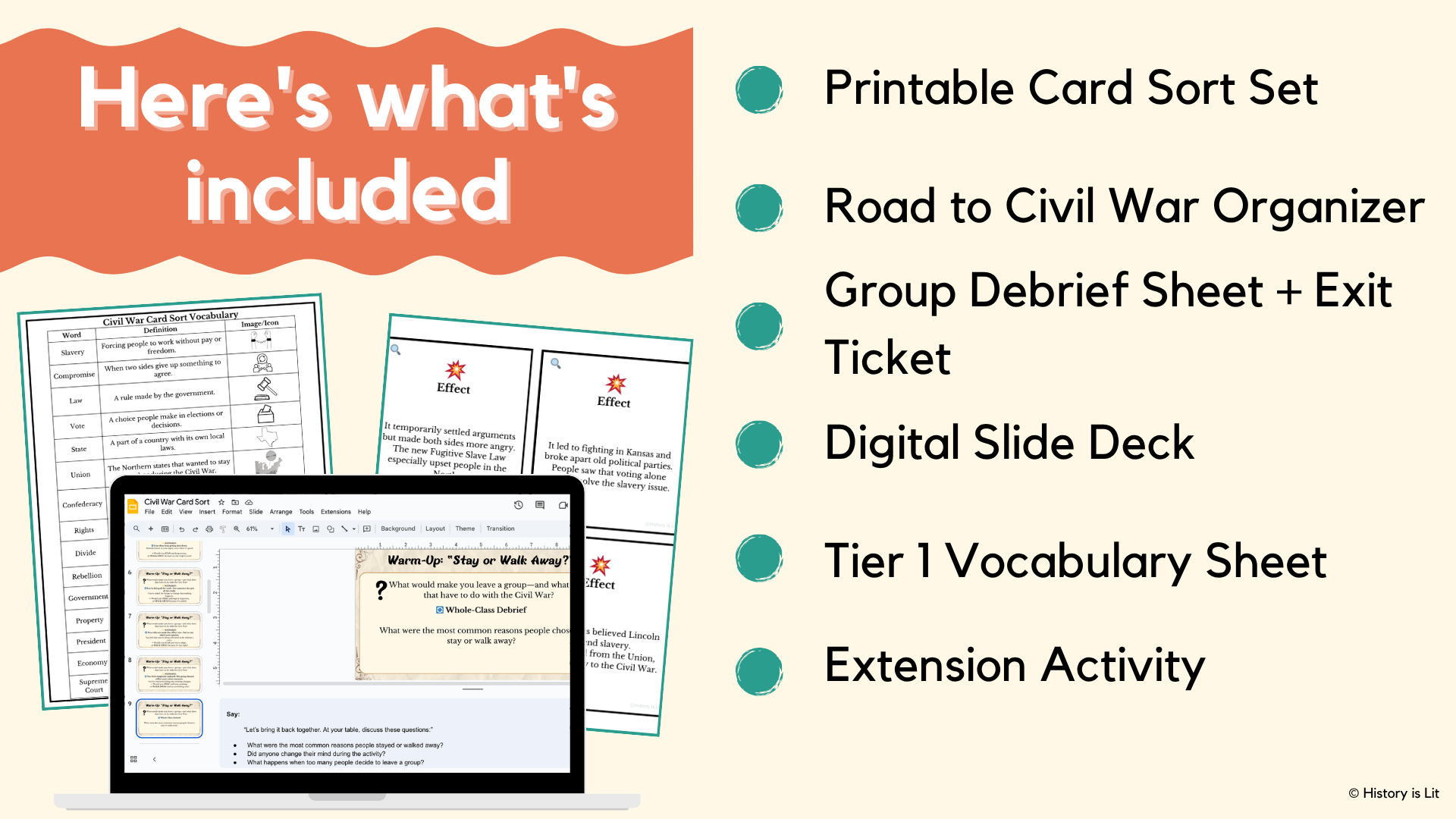
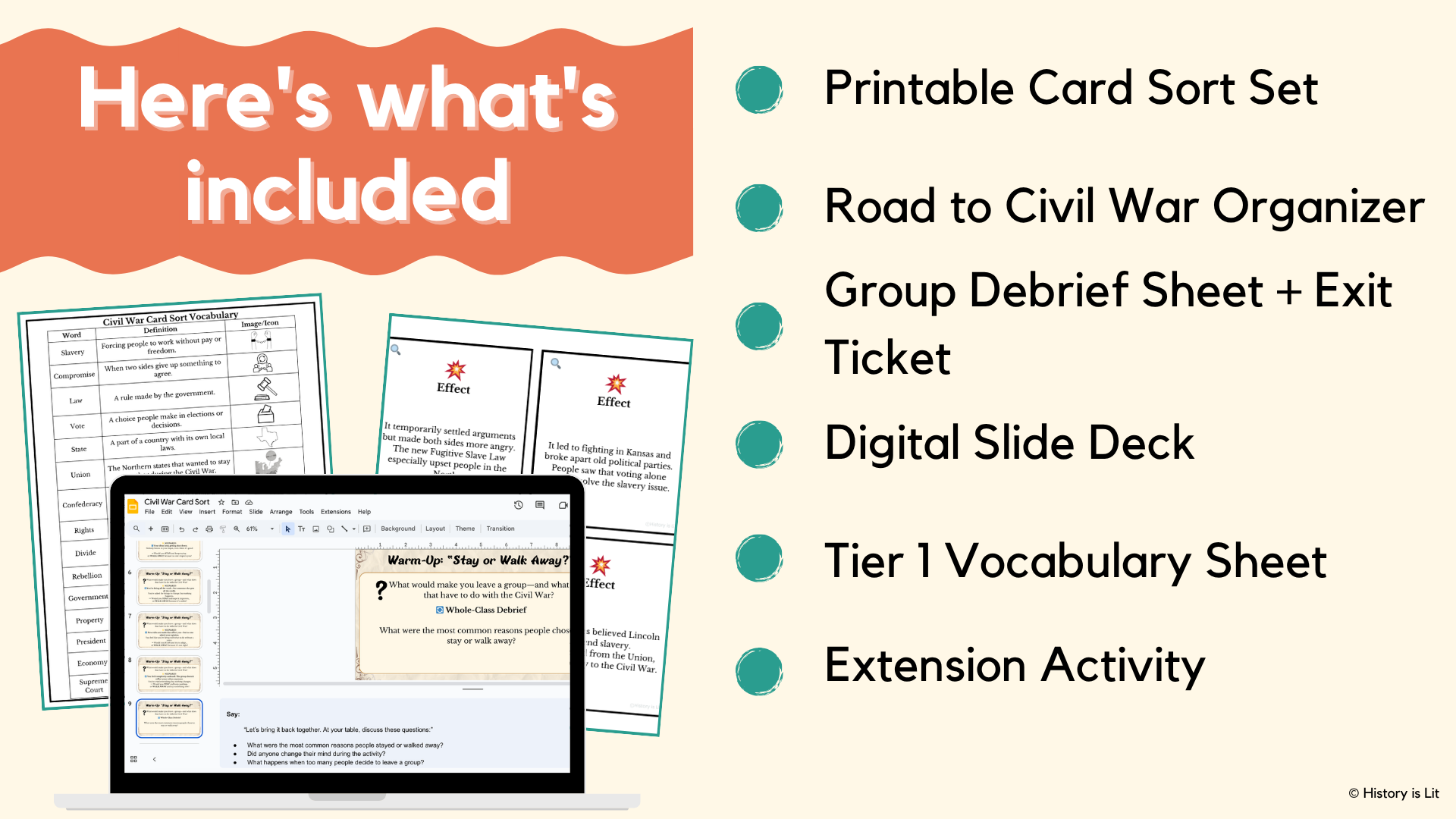
Printable Card Sort (18 cards: 6 titles, 6 descriptions, 6 effects)
▸ Includes Limited Text and Full Text versions
“Stay or Walk Away?” warm-up signs (to get students talking)
Road to Civil War Organizer (for sequencing and analysis)
Group Debrief Sheet + Exit Ticket
Tier 1 Vocabulary List for simplified language support
Optional Extension: “Was It Really About Slavery?” Quote Analysis
Teacher Guide + Pacing Breakdown
Answer Keys for both card versions
Student Rubric (for Organizer + Exit Ticket)
Why Students Love It:
They get to actively participate in a discussion — no more passive learning!
The Stay & Stray structure ensures everyone speaks, even your quietest students.
Hands-on learning helps them connect real-world events to the past.
Why You’ll Love It:
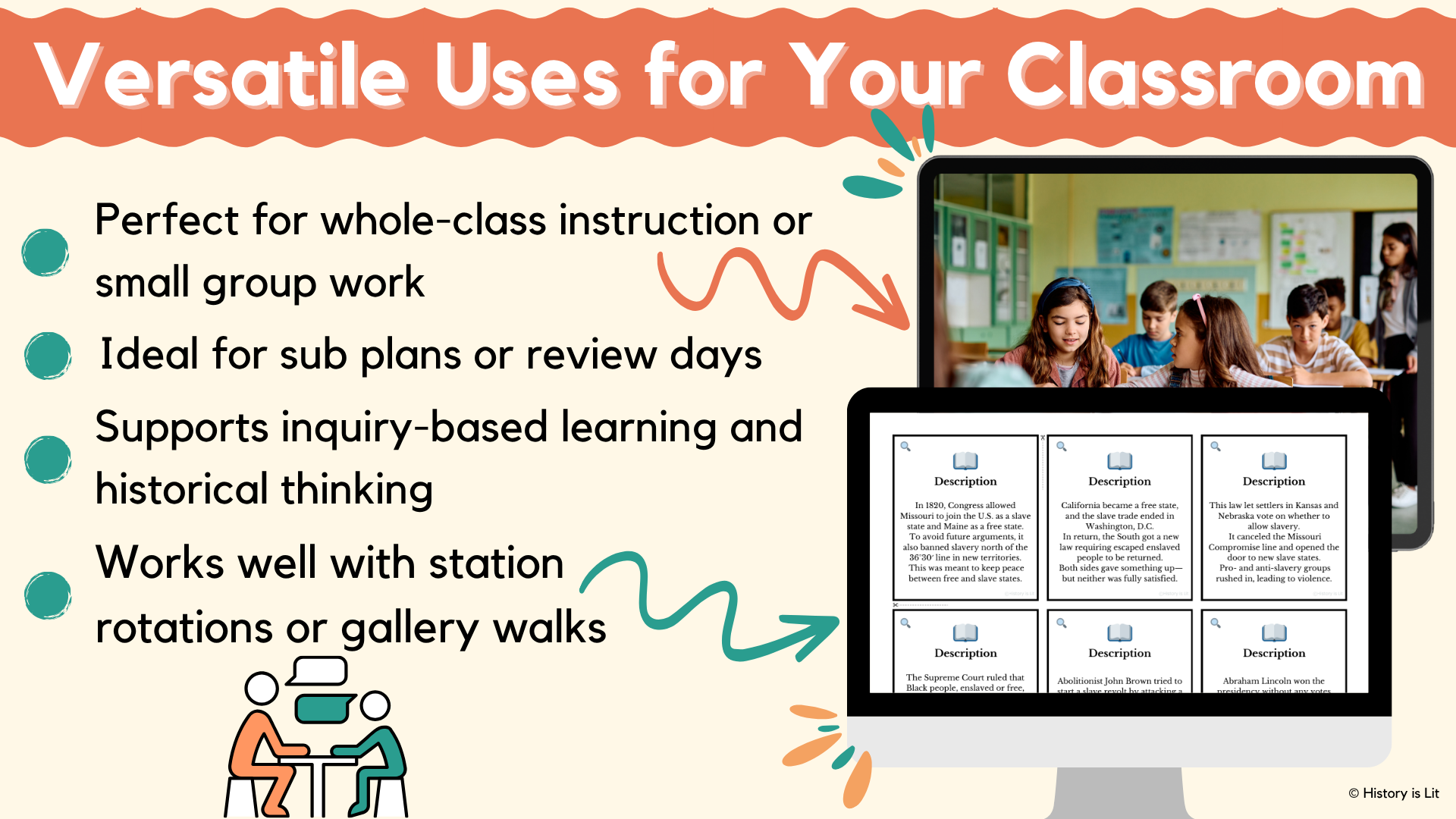
No prep — just print or assign digitally, and you're done.
Perfect for literacy integration and keeping students engaged during these final months.
Sub-friendly, with clear instructions, rubrics, and vocabulary supports.
Flexible for all learners, with different versions for differentiation.
Perfect For:
End-of-year engagement and testing prep.
Formative assessments and critical thinking skills.
Hands-on, interactive learning to break up the end-of-year monotony.
Let’s get students moving, talking, and reflecting while making sure you stay sane during these last few weeks! With the Civil War Card Sort, you'll have an activity that works for both you and your students — no extra prep, just a meaningful way to keep them engaged.
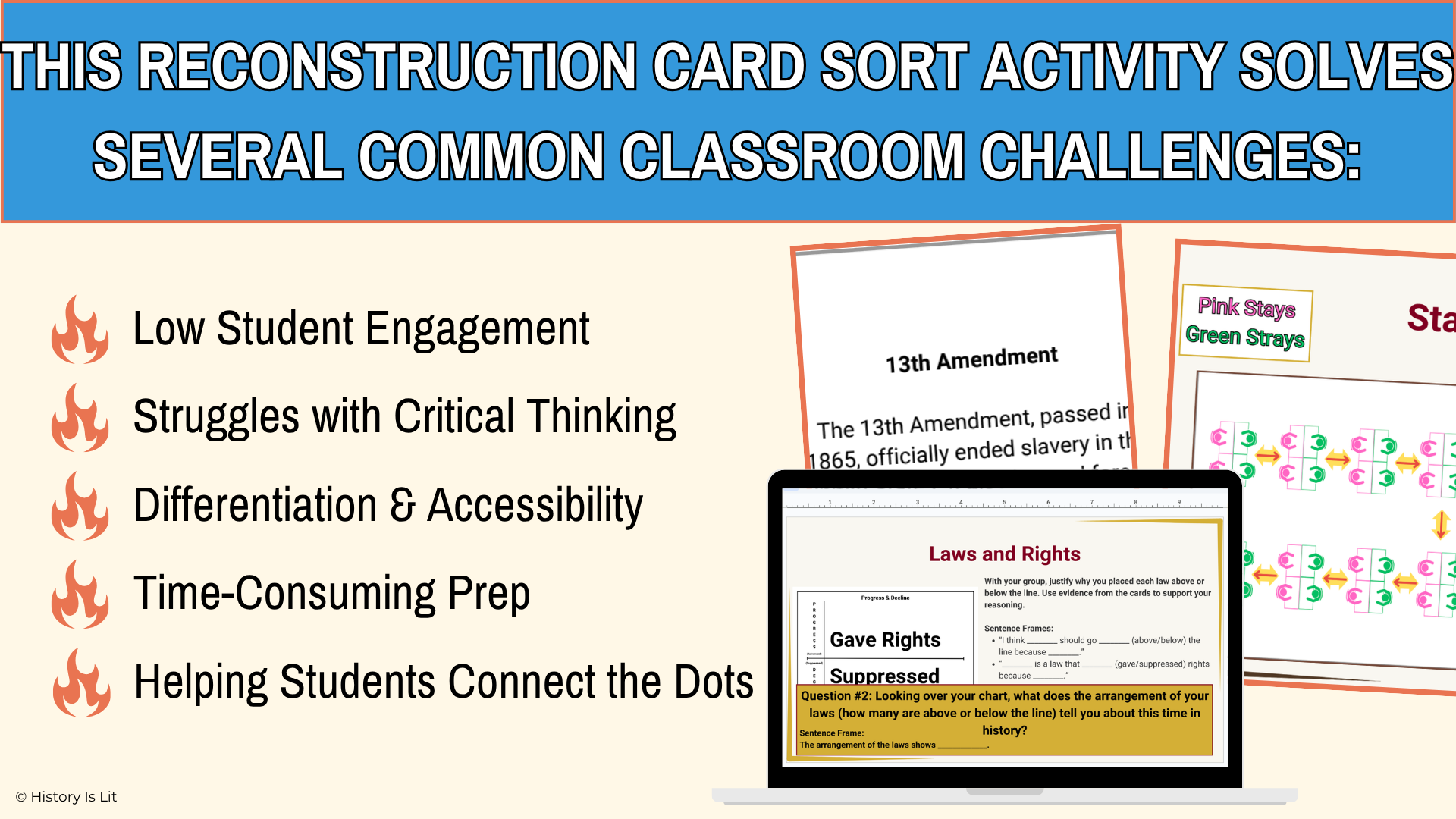
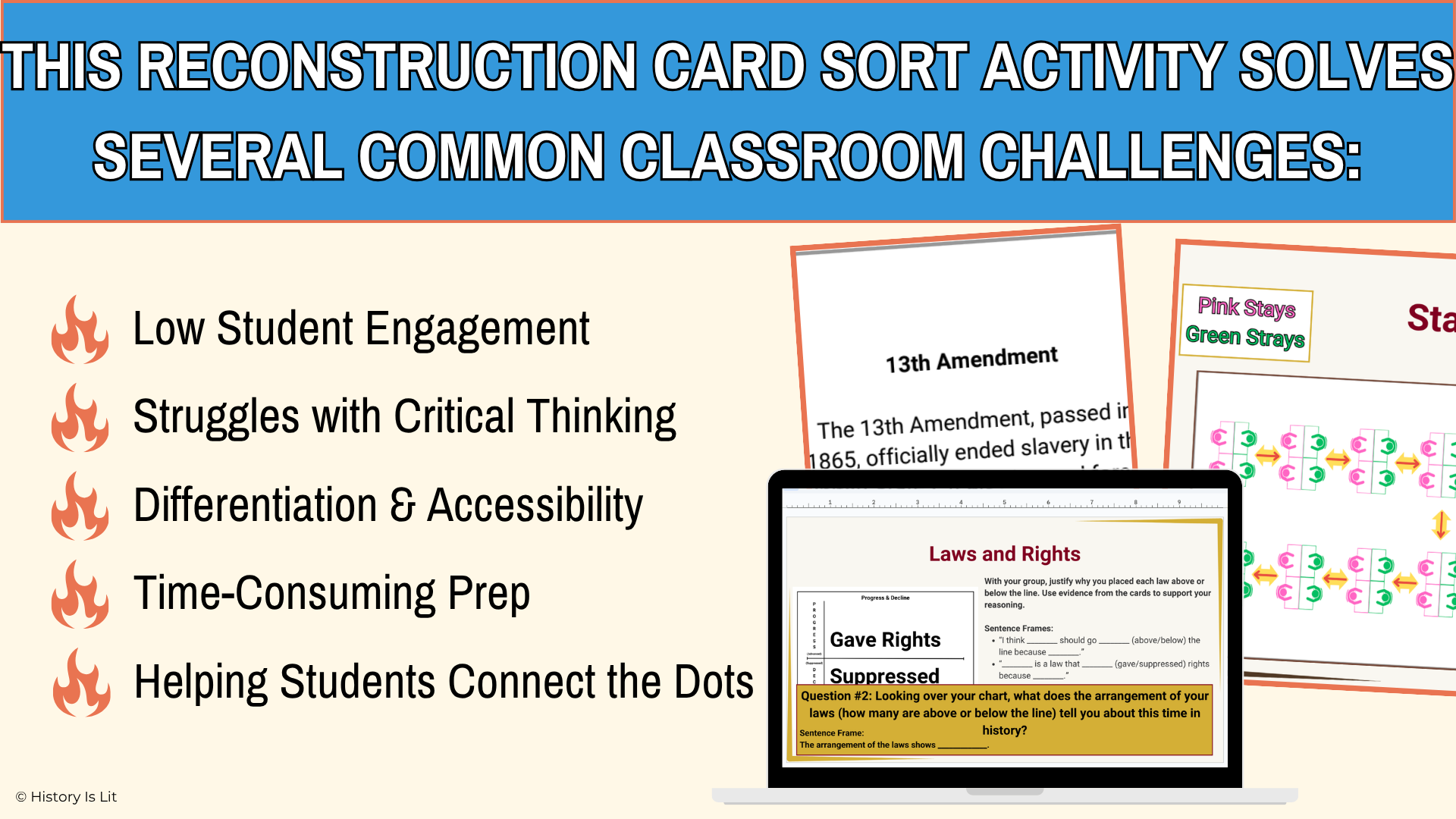
End-of-year fatigue is real. Getting students to care about Reconstruction right now? It feels like a lost cause. They’re burnt out, mentally checked out, and just ready for summer. They need something interactive and engaging that gets them moving and thinking, not another boring reading or lecture. And with everything going on at the end of the year, who has time for a complicated lesson plan?
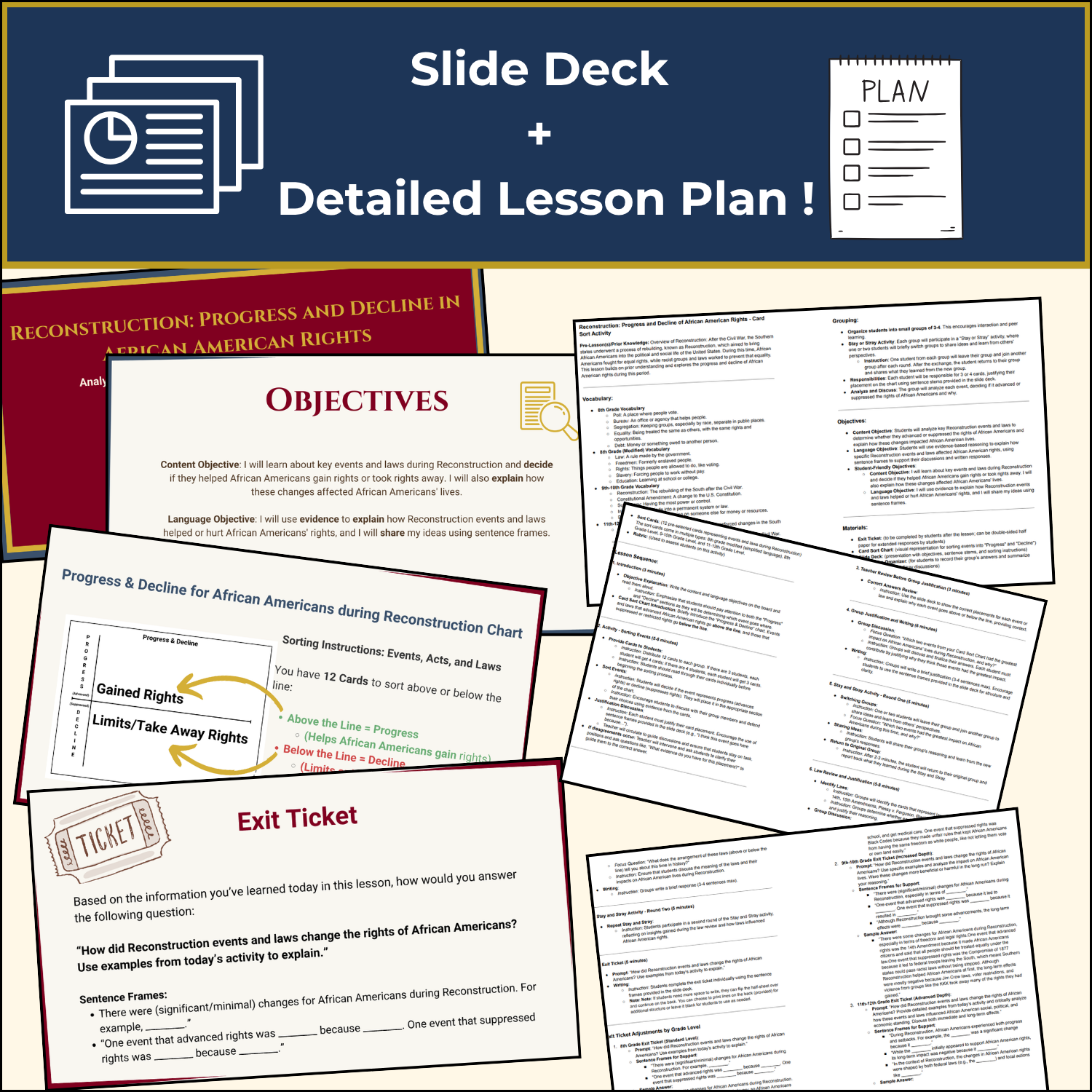
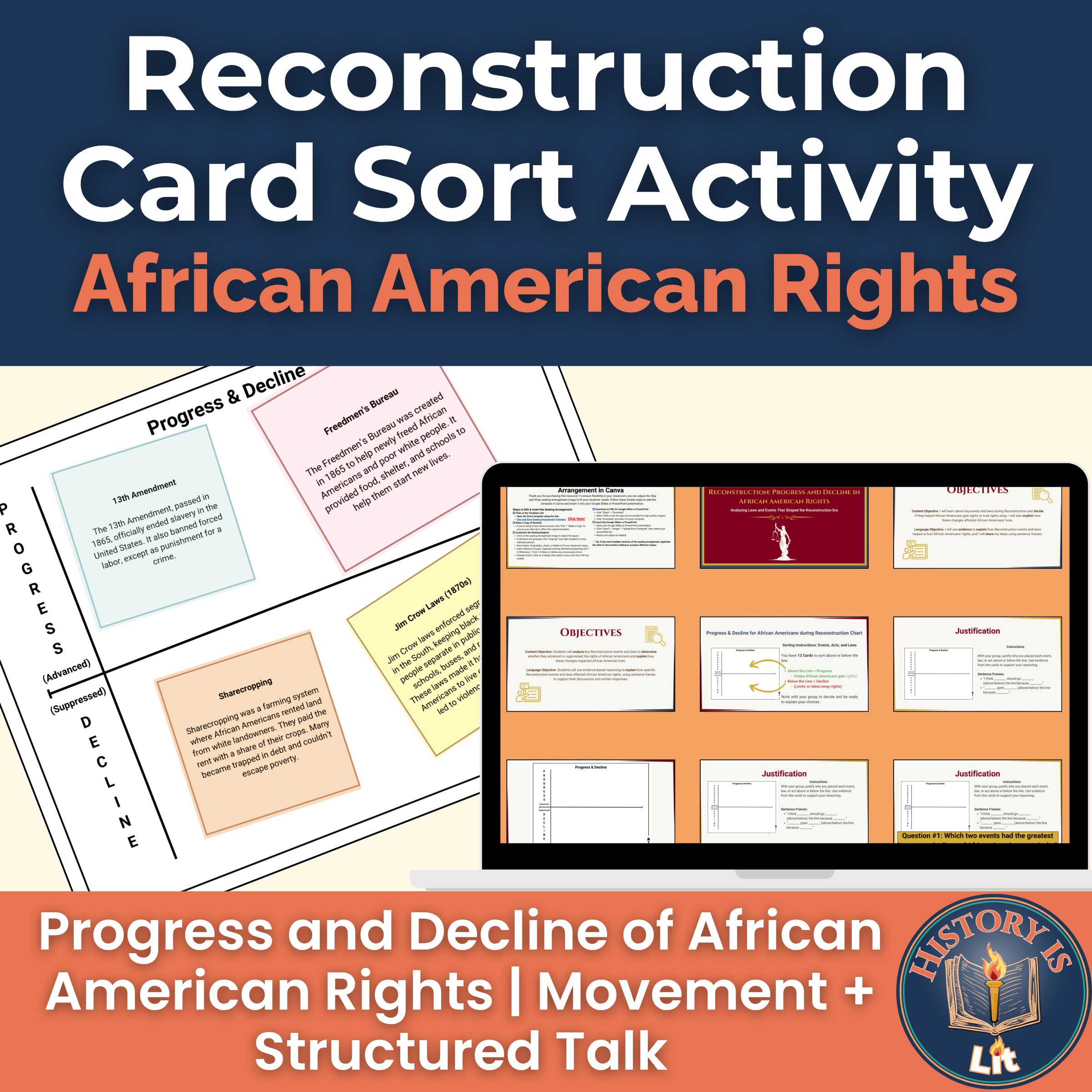
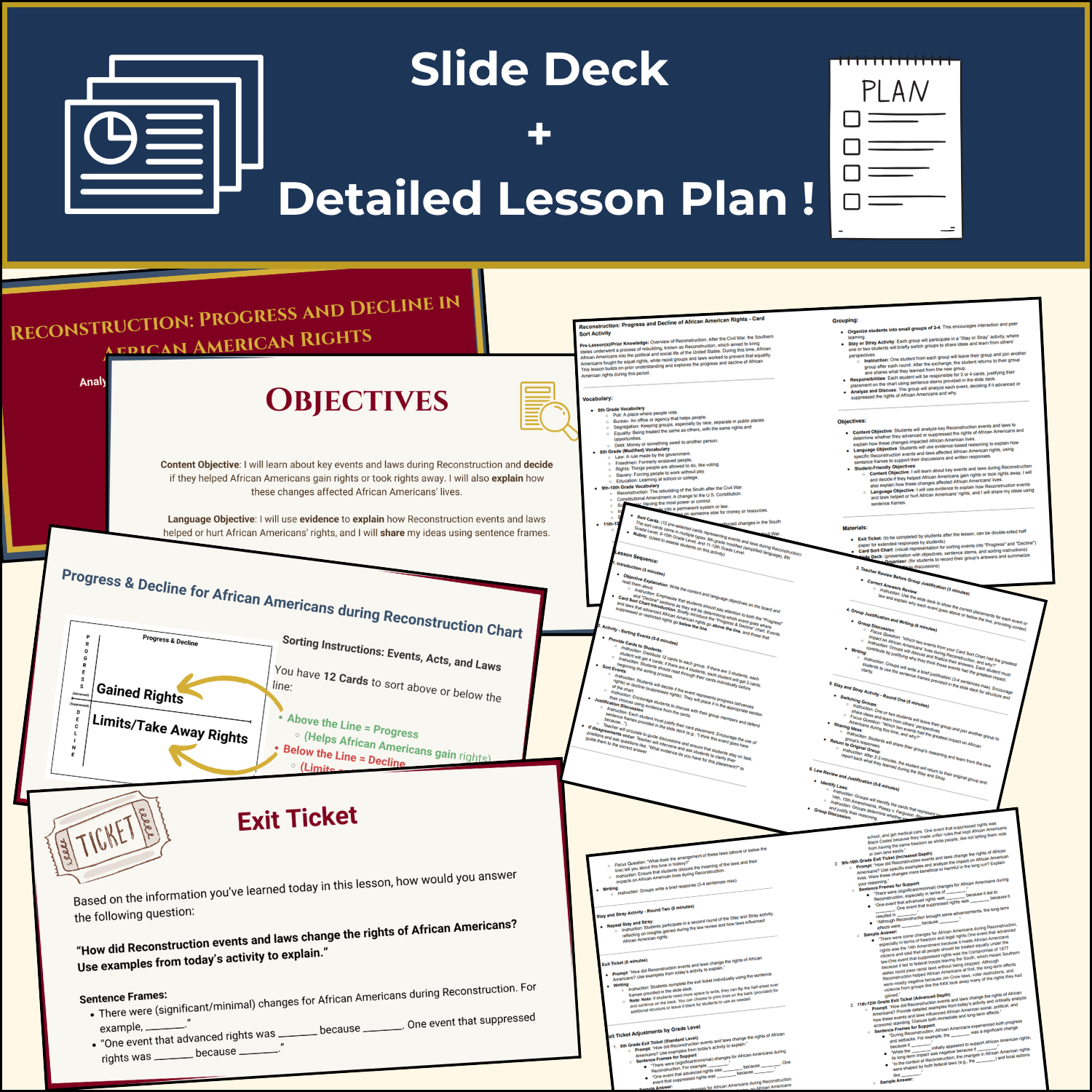
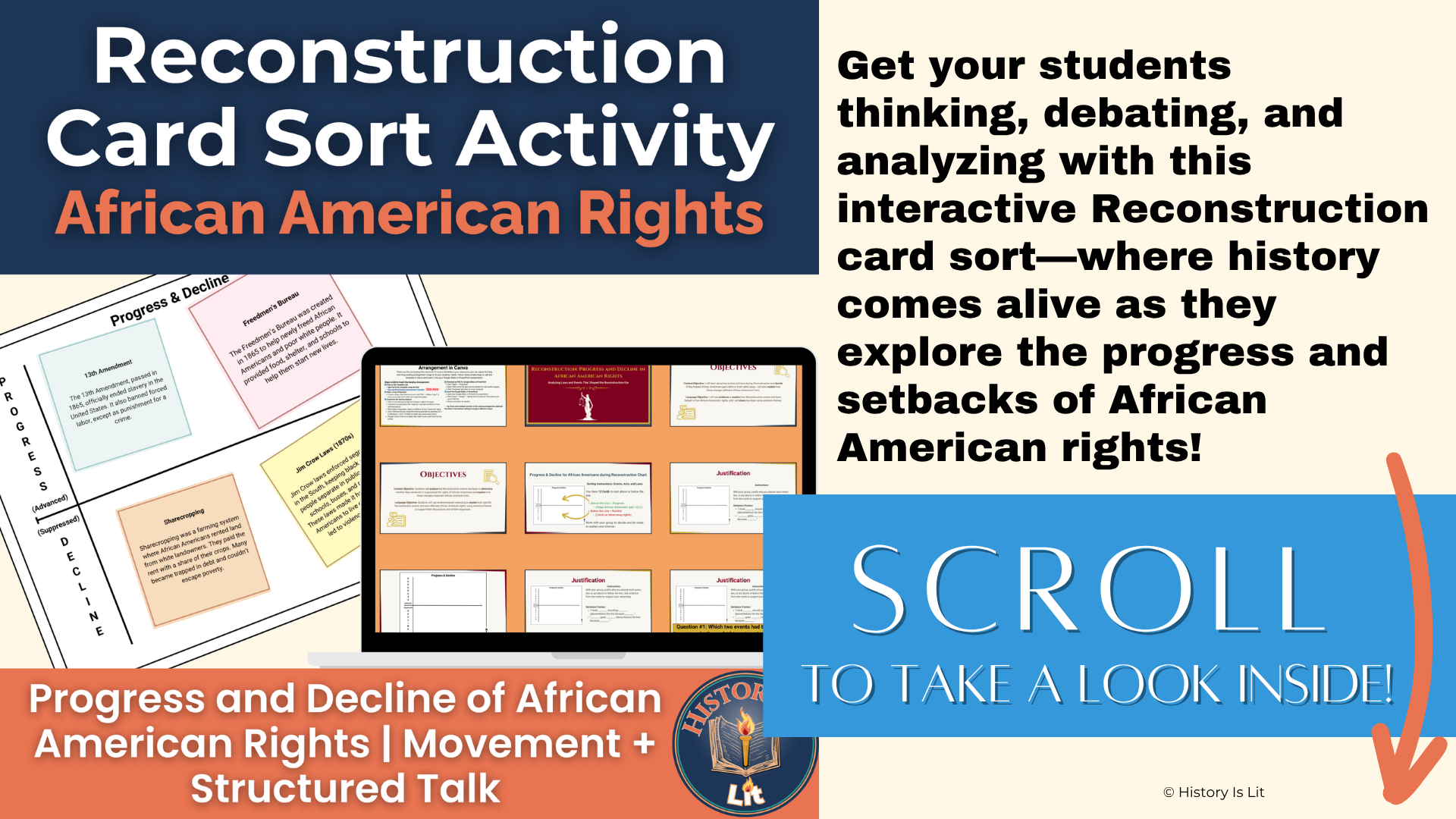
That's why I created the Reconstruction’s Impact – Progress or Setback? card sort. It’s hands-on, interactive, and designed to get students actively analyzing key events of Reconstruction. Through group discussions, Stay & Stray activities, and leveled reading passages, students engage in critical thinking without the heavy lift for you. Just print and go!
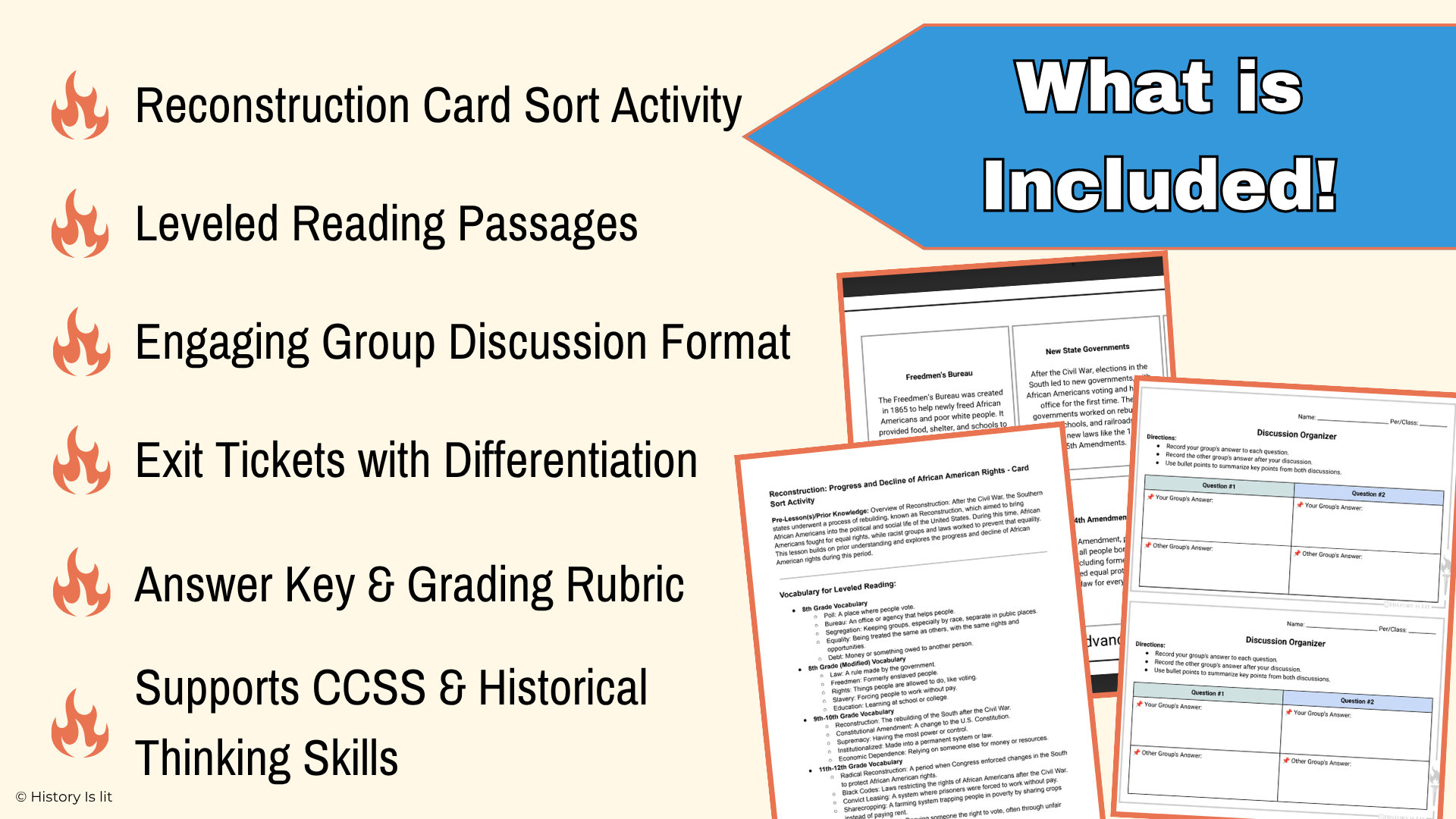
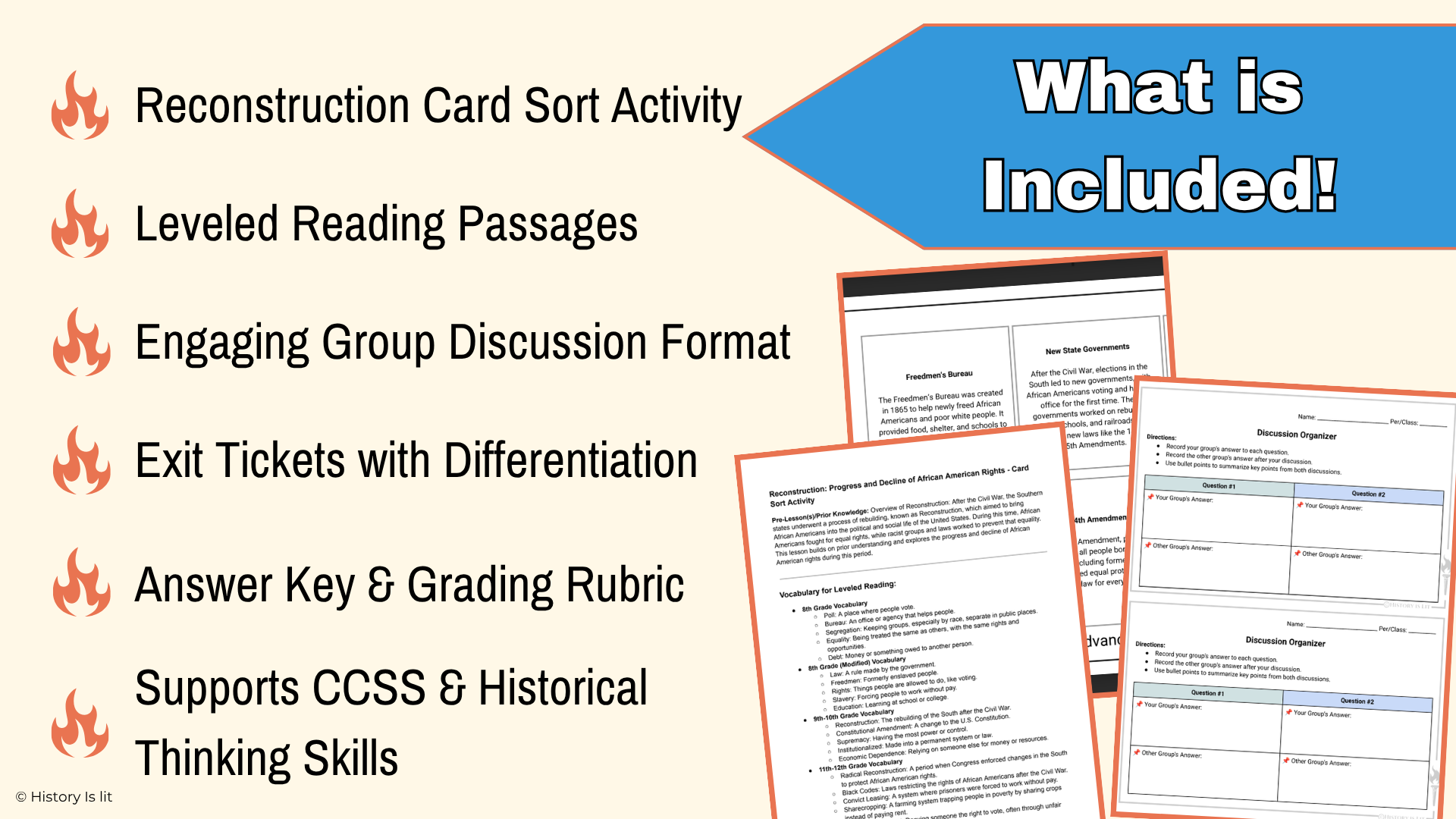
What’s Included:
Reconstruction Card Sort – Categorize events as progress or setback.
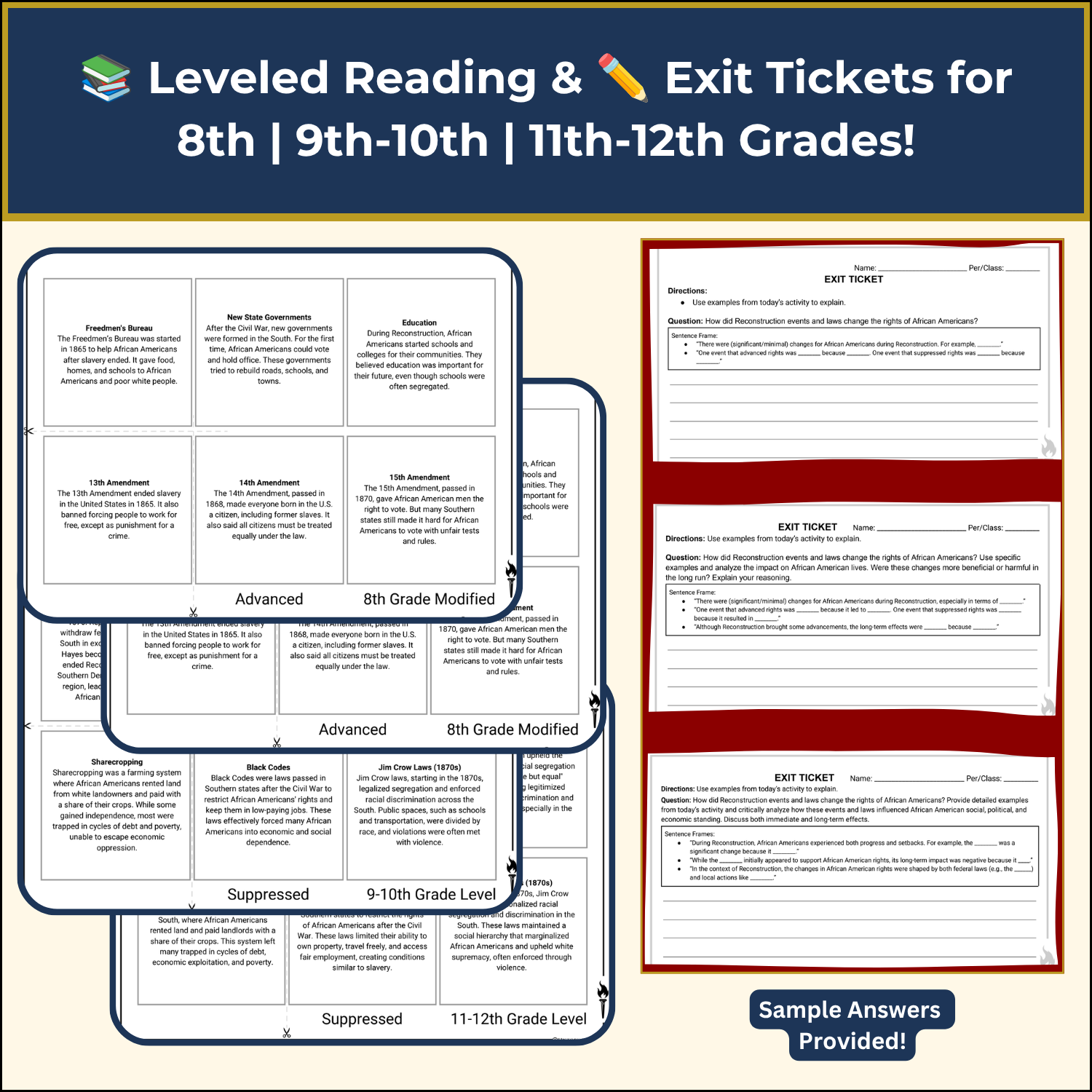
Leveled Reading Passages – Differentiated texts for 8th, 9th-10th, and 11th-12th grades.
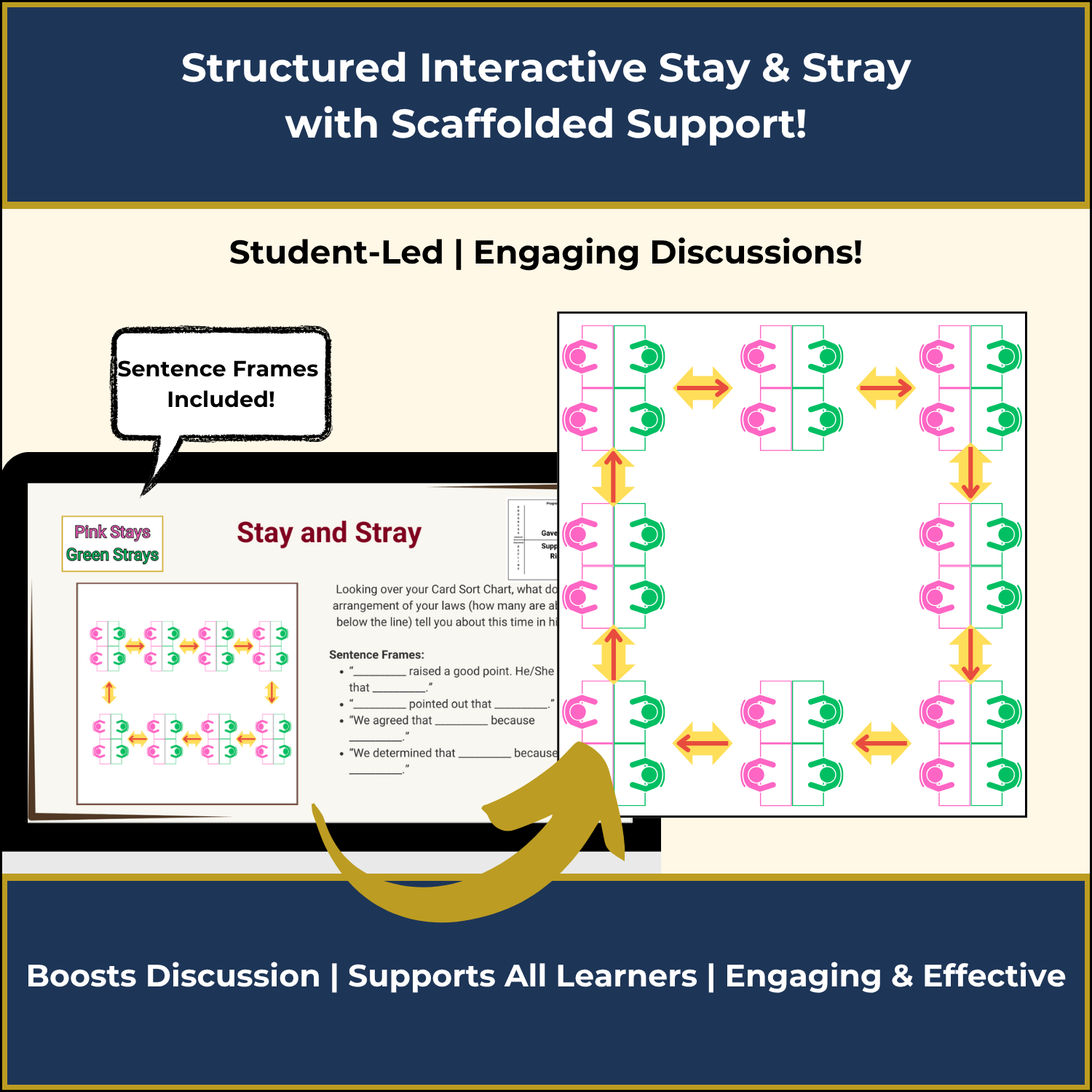
Engaging Group Discussion – Stay & Stray activity for deeper analysis.
Exit Tickets – Grade-specific writing prompts.
Answer Key & Grading Rubric – Easy-to-follow guidelines for assessment.
Why Teachers Love It:
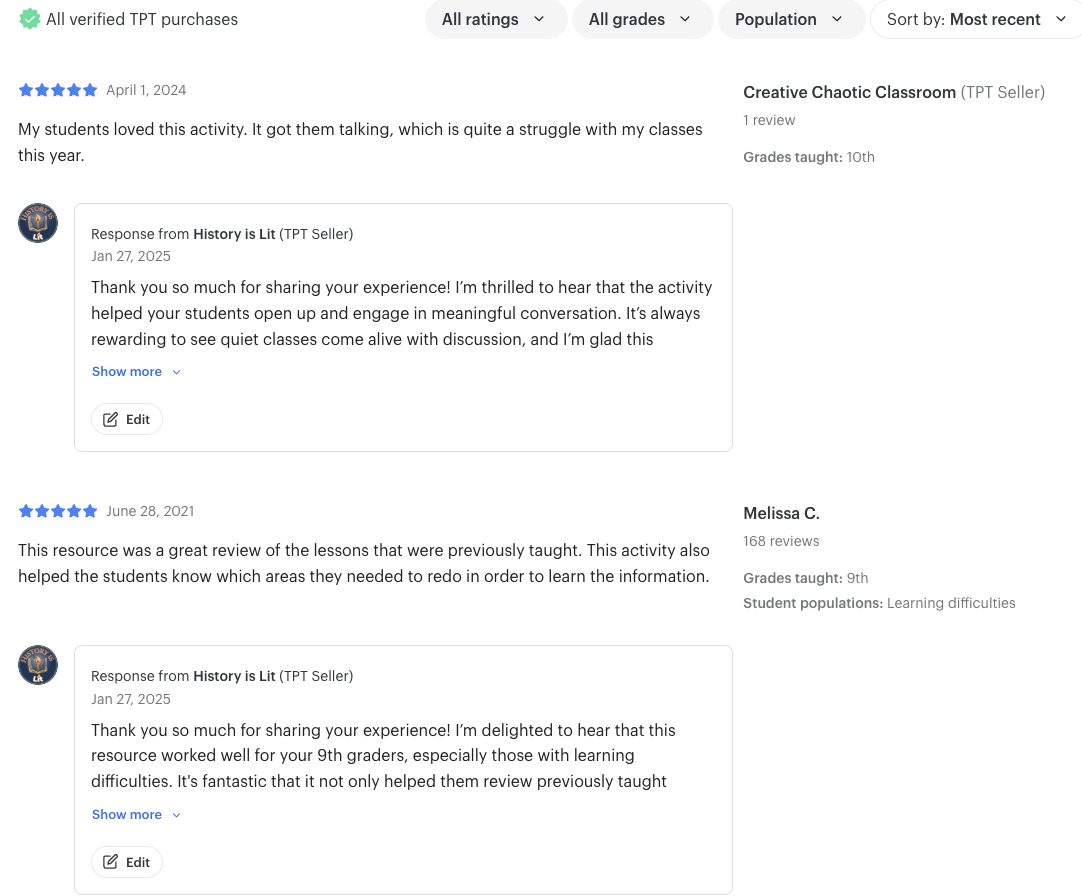
⭐️⭐️⭐️⭐️⭐️ — Melissa C. says, "This resource was a great review of the lessons that were previously taught. This activity also helped the students know which areas they needed to redo in order to learn the information."
9th Grade Class
⭐️⭐️⭐️⭐️⭐️ — Creative Chaotic Classroom (TPT Seller) says, "My students loved this activity. It got them talking, which is quite a struggle with my classes this year." 10th Grade Class.
Why You’ll Love It:
✨ No-Prep, Print & Go! – Perfect for sub plans, stations, or engaging historical analysis.
✨ Interactive & Engaging! – Promotes debate, collaboration, and evidence-based reasoning.
✨ Supports Critical Thinking! – Helps students evaluate Reconstruction’s successes and failures in a meaningful way.
Bring history to life with this easy-to-use Reconstruction activity. Get your students thinking and talking without the stress — just print, assign, and let them dive in!
No results match your search. Try removing a few filters.
