Teaching the Electoral College can be challenging, especially when students are trying to understand how presidential elections work, why the Electoral College exists, and whether it fairly represents voters.
You want students to do more than memorize electoral votes. You want them to examine different perspectives, evaluate evidence, and develop their own informed opinions about the American electoral system.
But finding accessible readings, creating meaningful discussion questions, and planning engaging civics activities takes time.
That's why I created this 8-Lesson Electoral College Mini-Unit for Middle School U.S. History and Civics.
This comprehensive unit includes differentiated informational texts, graphic organizers, interactive activities, Socratic Seminar materials, and an argumentative letter-writing activity to help students explore how the Electoral College works and evaluate its role in American democracy.
Instead of simply telling students whether the Electoral College is fair, this unit encourages them to investigate the issue, consider multiple perspectives, and support their conclusions with evidence.
Eight structured lessons. Differentiated readings. Meaningful discussions. One complete Electoral College unit.
What's Included in This Electoral College Mini-Unit?
This 8-lesson Electoral College unit provides the instructional materials, activities, and assessments you need to teach students about presidential elections, representation, and civic participation.
Lesson Plans & Teacher Resources
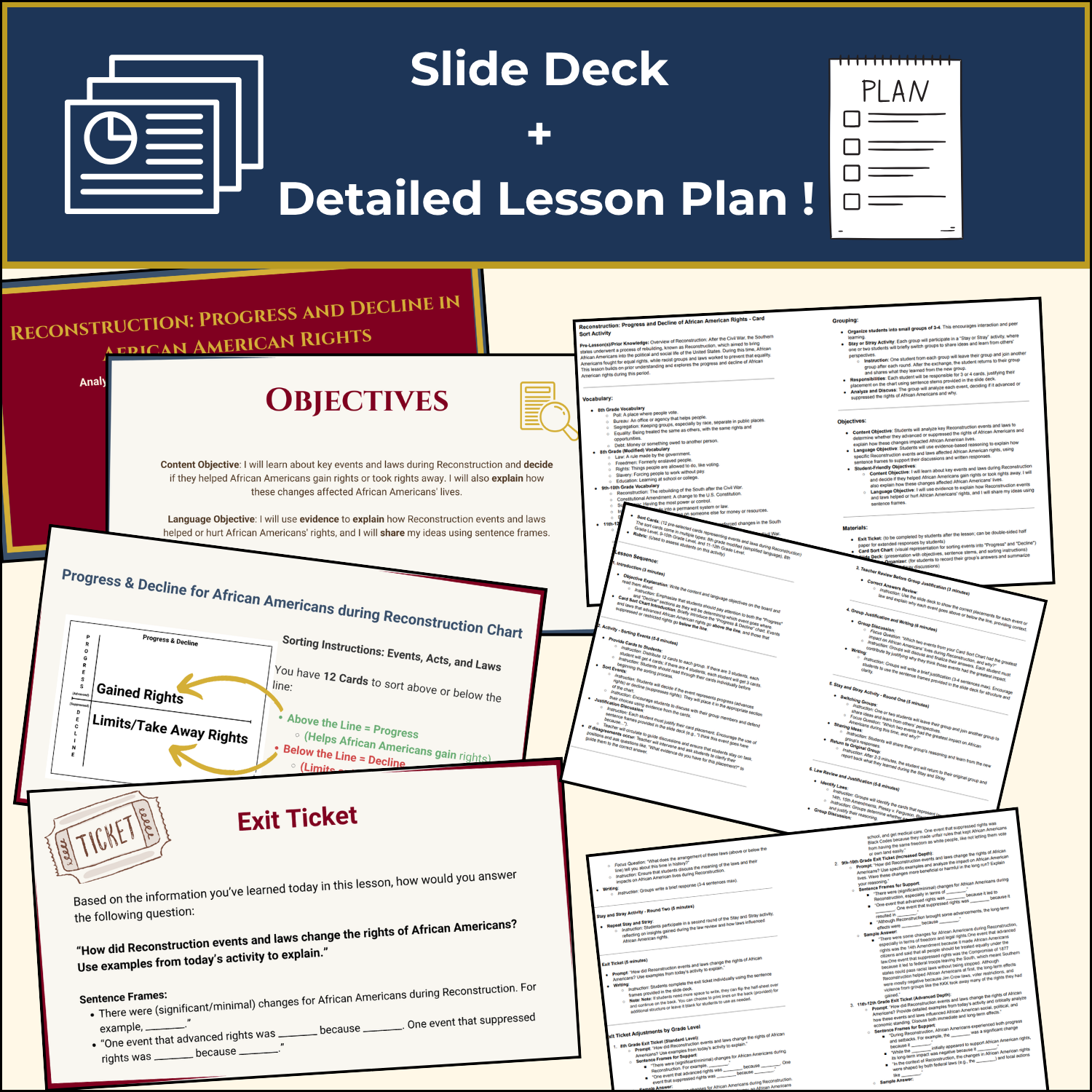
8 Complete Lessons: Structured lessons that guide students through learning about the Electoral College.
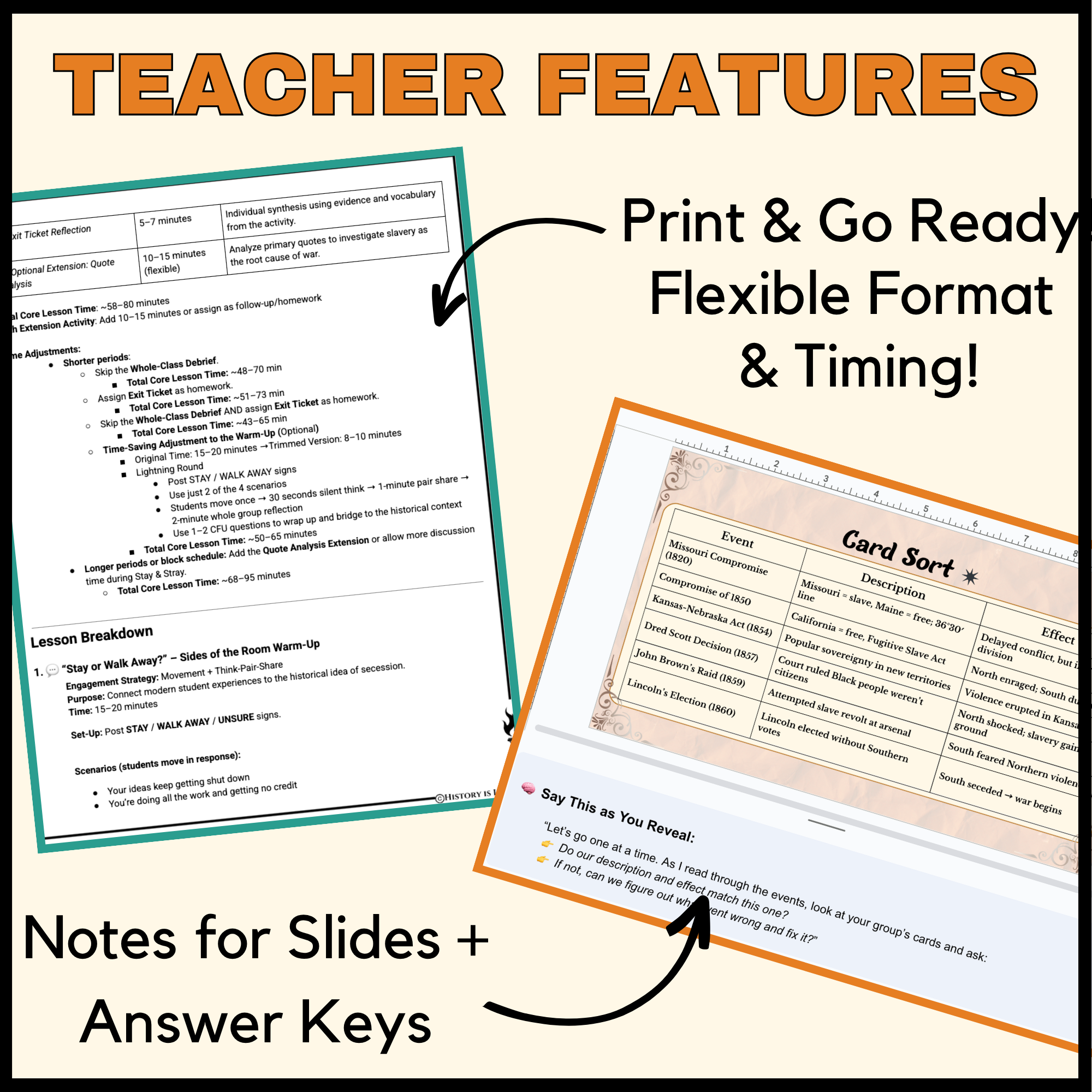
Teacher Pacing Guide: Helps you organize instruction and manage your unit.
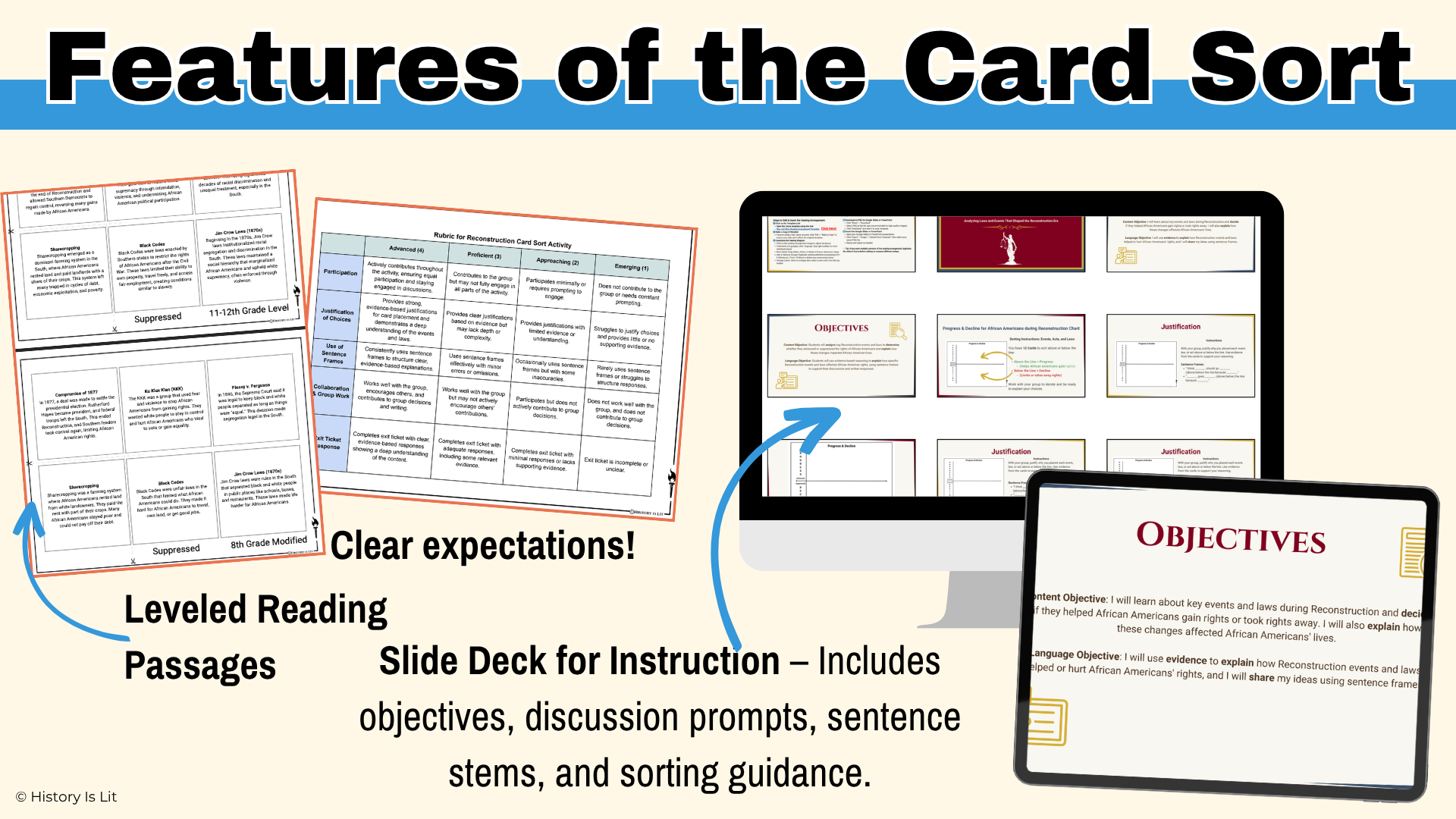
Electoral College Posters & Visuals: Support student understanding of important concepts and vocabulary.
Printable & Digital Materials: Ready-to-use PDFs and editable Google Docs/Slides.
Differentiated Electoral College Readings
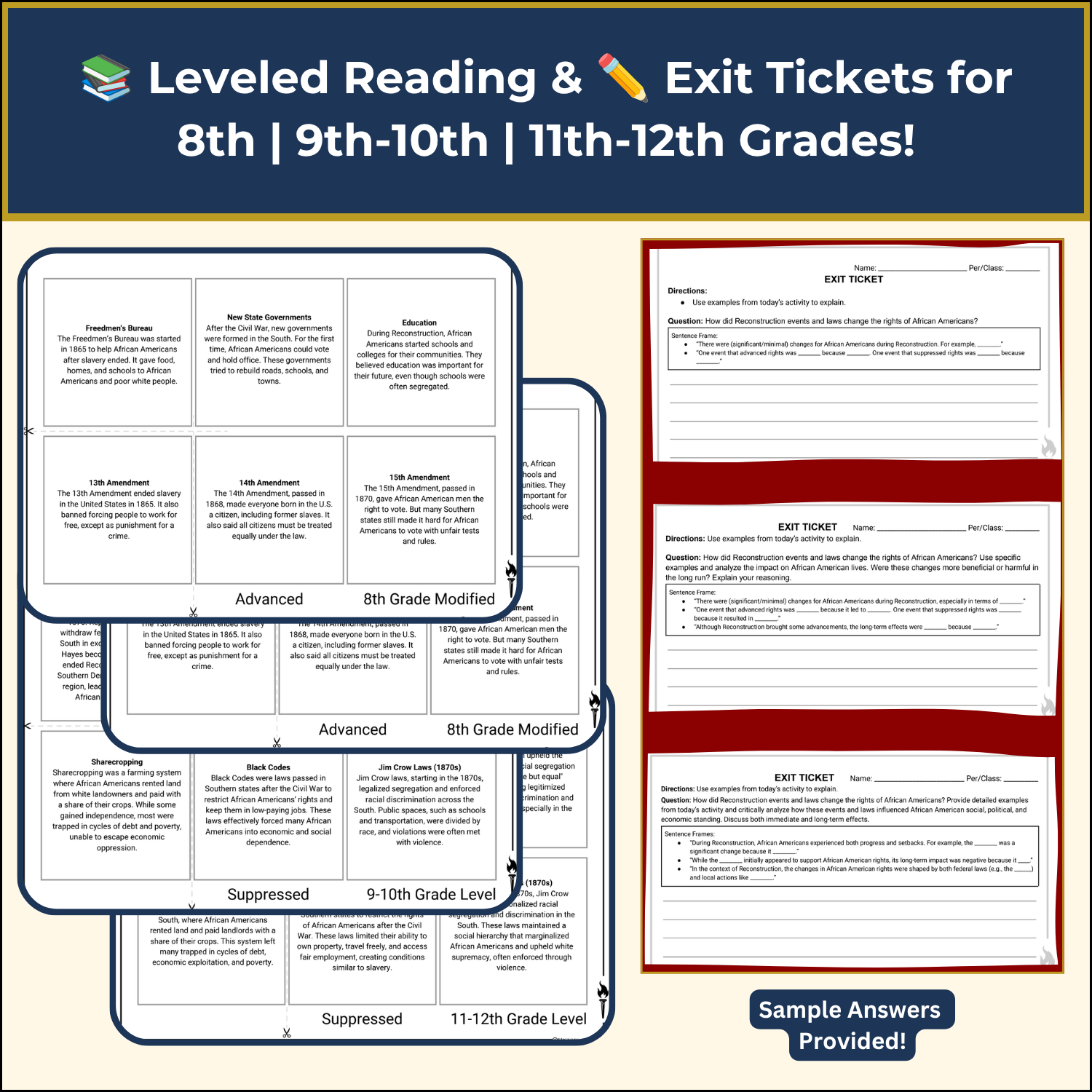
Grade-Level Informational Articles: Introduce students to Electoral College concepts and different perspectives.
Modified Reading Passages: Provide accessible versions for students who need additional reading support.
KWL Charts: Activate prior knowledge, guide inquiry, and encourage reflection.
Evidence Selection Graphic Organizers: Help students identify relevant information and support their arguments.
Interactive Learning Activities
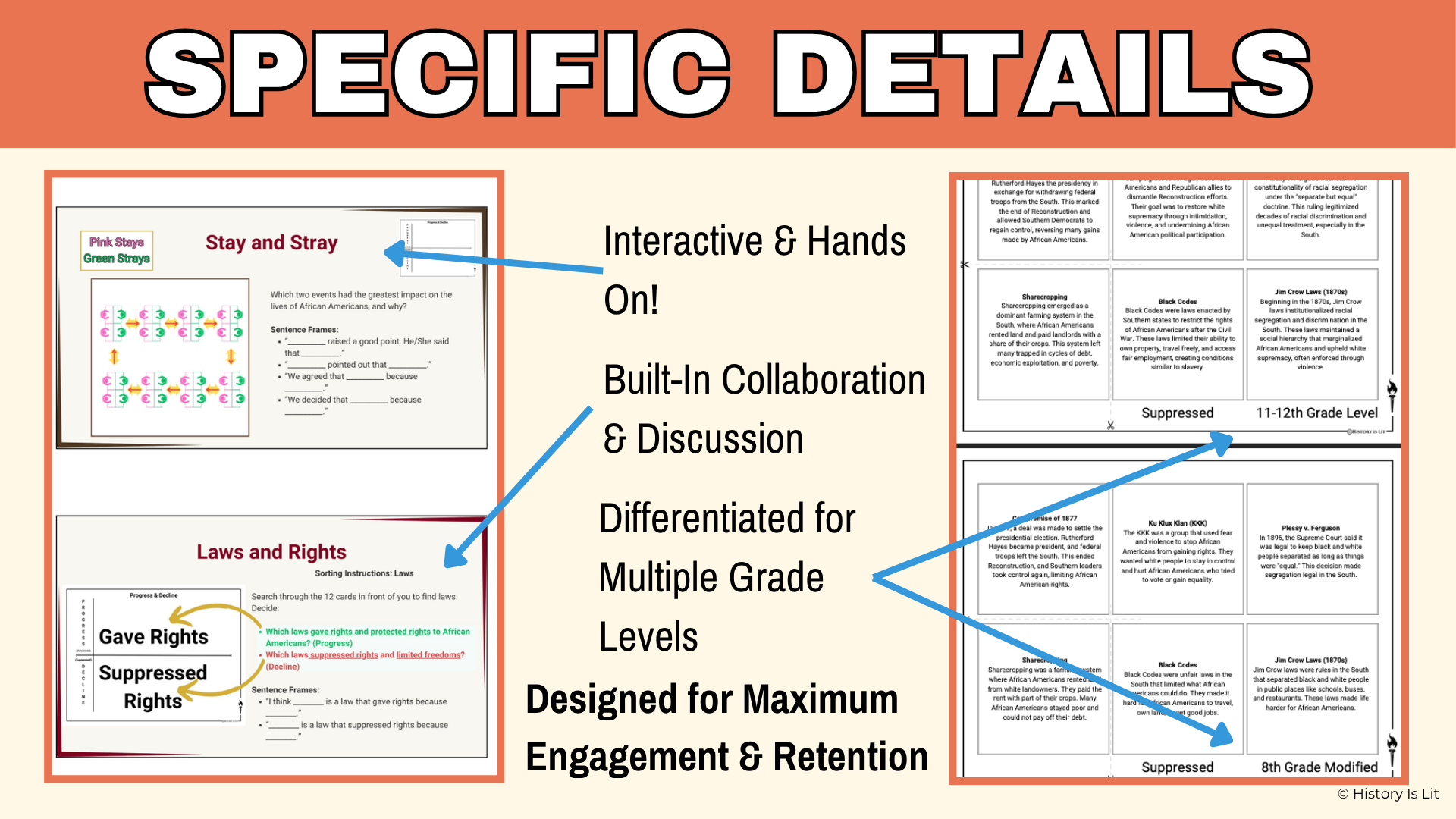
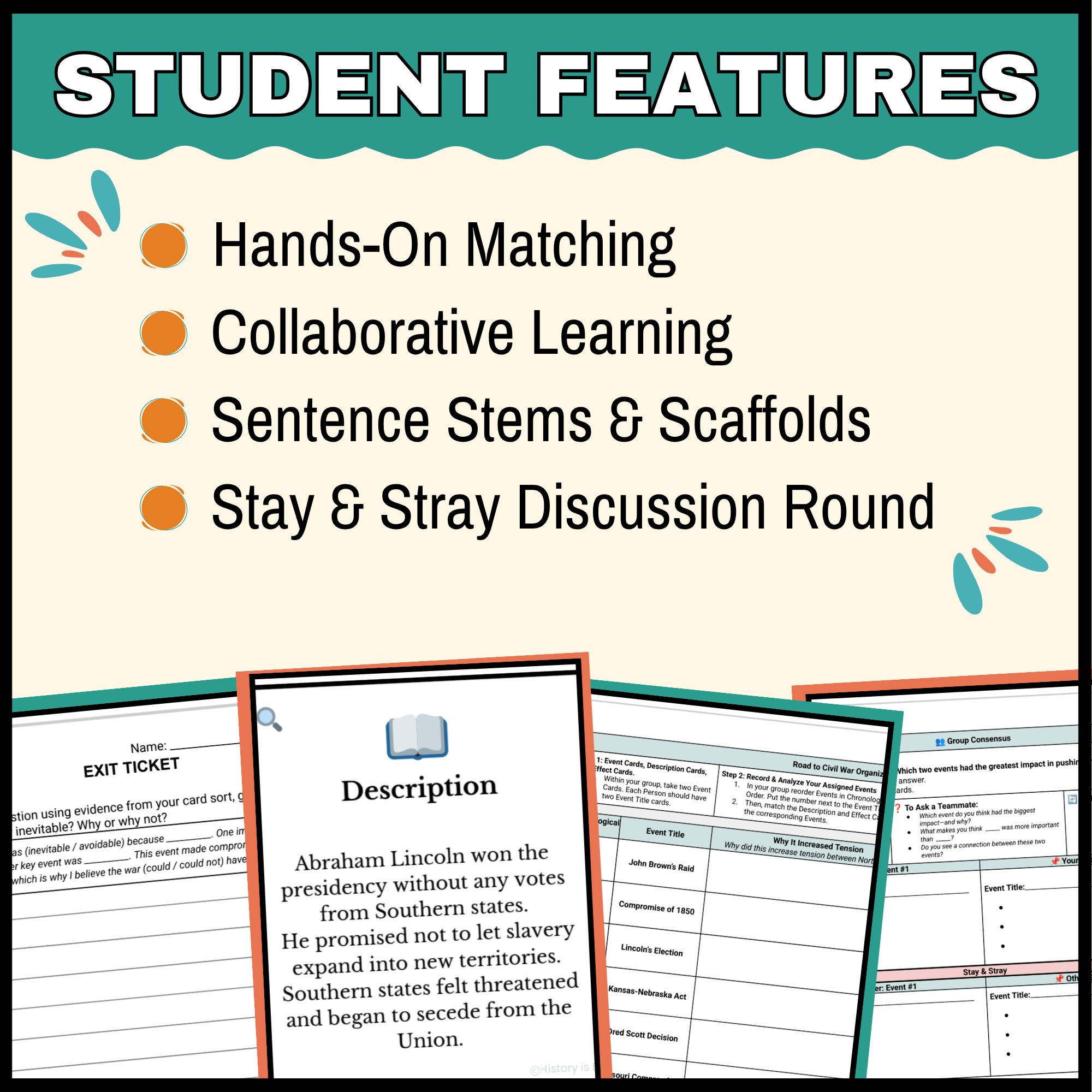
Give One, Get One Activity: Students exchange ideas and gather evidence from classmates.
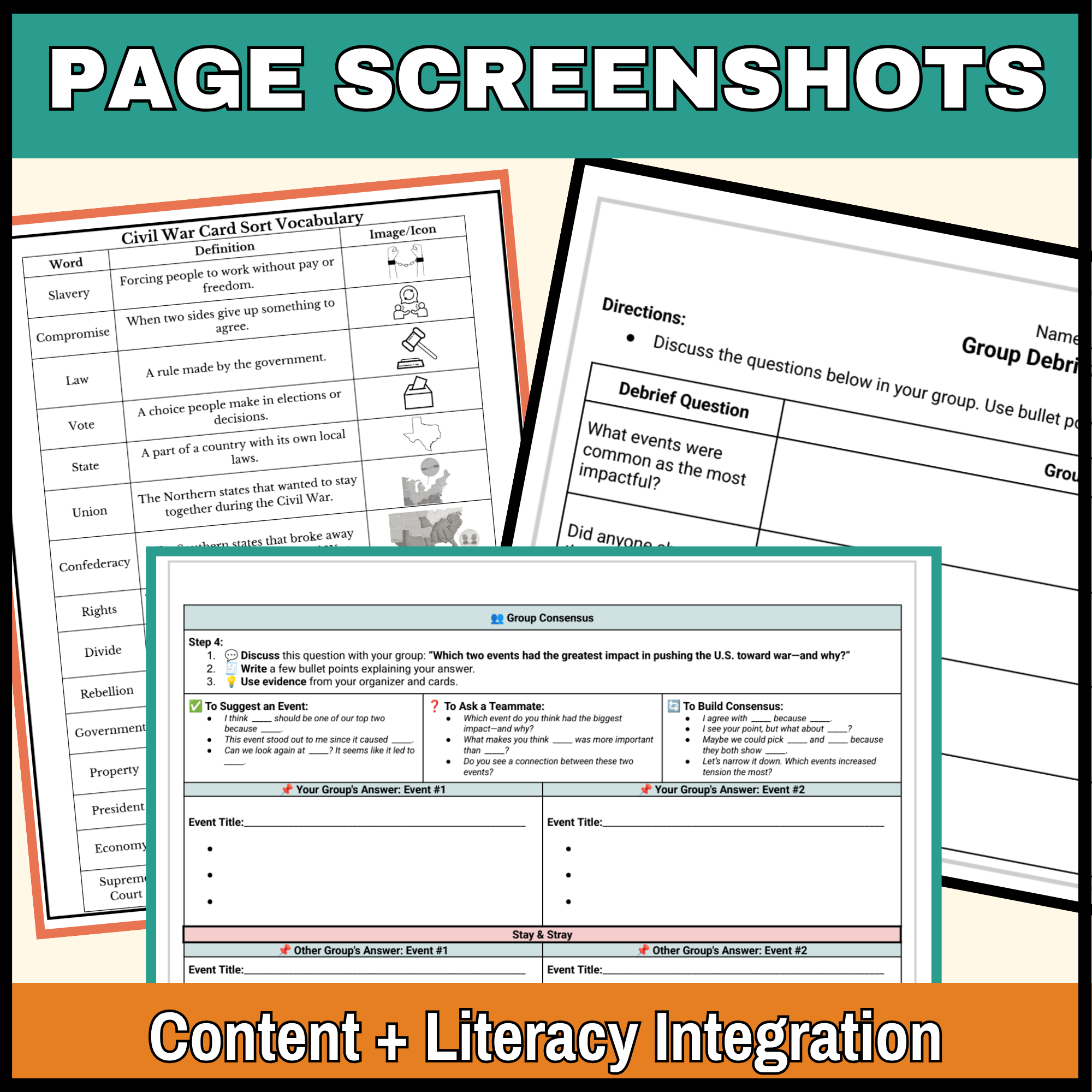
Socratic Seminar Fishbowl Discussion: Encourages students to examine different perspectives through structured academic discussion.
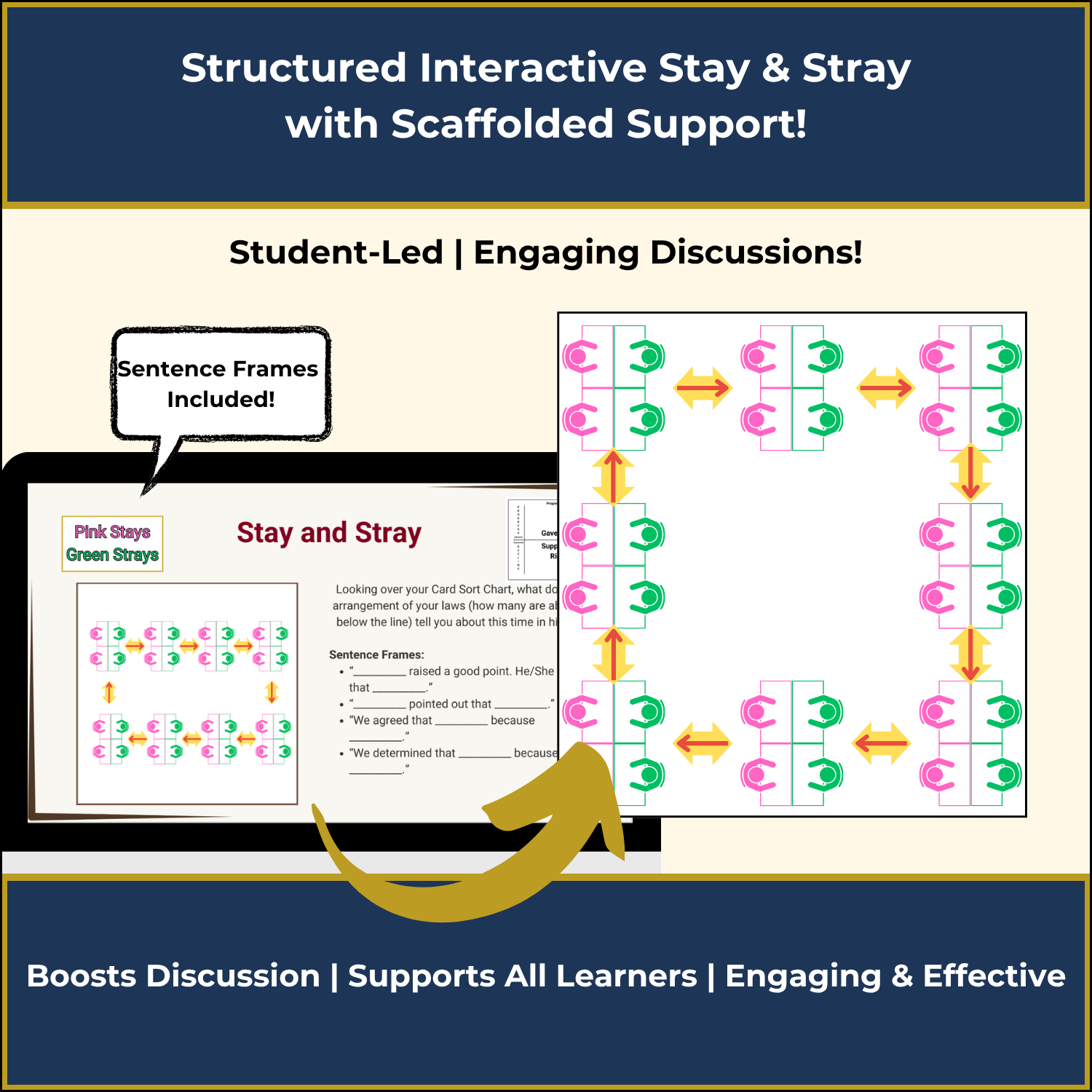
Discussion Sentence Frames: Support students in expressing opinions, asking questions, and responding to classmates.
Student Coaching Sheets: Keep students actively engaged while observing and evaluating discussions.
Feedback Tickets: Encourage constructive peer feedback and reflection.
Assessment & Civic Engagement
Exit Tickets: Check student understanding throughout the unit.
Reflection Sheets: Encourage students to evaluate their learning and consider different perspectives.
Civic Engagement Letter-Writing Activity: Students develop an evidence-based argument and communicate their position through a letter.
Argument-Building Tools: Help students select evidence and organize their reasoning.
Why Teachers Love This Electoral College Unit
Teach a Complex Topic With Clear, Structured Lessons
The Electoral College can be confusing for middle school students. This mini-unit breaks the topic into manageable lessons that build understanding and encourage students to think critically about presidential elections.
Differentiate Without Creating Multiple Lessons
Grade-level and modified readings allow students with different reading needs to explore the same essential concepts and participate in shared classroom discussions.
Encourage Evidence-Based Arguments
Students examine different perspectives on the Electoral College and use evidence to develop, explain, and defend their positions.
Make Student Discussions More Meaningful
The included Socratic Seminar Fishbowl materials provide structure for classroom conversations. Discussion starters, sentence frames, and coaching sheets help students participate thoughtfully while keeping both circles accountable.
Connect Civics to Real-World Participation
The letter-writing activity gives students an opportunity to apply their learning by developing and communicating an informed position on a civic issue.
Save Valuable Planning Time
With lesson plans, differentiated readings, graphic organizers, discussion materials, and assessments included, you won't need to build an Electoral College unit from scratch.
What Will Students Learn?
Throughout this Electoral College lesson plan unit, students explore questions about presidential elections and American democracy.
Students develop an understanding of:
How the Electoral College works in presidential elections.
Why the Electoral College was established.
How electoral votes relate to presidential election outcomes.
Different perspectives on the Electoral College.
Arguments for maintaining or reforming the Electoral College.
The relationship between voting, representation, and democracy.
How citizens can participate in civic discussions and communicate their views.
Rather than focusing only on how the system works, students consider important questions about fairness, representation, and civic responsibility.
Build Critical Thinking With a Socratic Seminar
One of the key components of this unit is the Electoral College Socratic Seminar Fishbowl Discussion.
Students use evidence from their readings and activities to discuss different perspectives on the Electoral College.
Inner Circle Students:
Participate in evidence-based academic discussions.
Ask thoughtful questions about the Electoral College.
Evaluate arguments and consider opposing perspectives.
Build on classmates' ideas.
Outer Circle Students:
Actively listen and observe the discussion.
Use coaching sheets to evaluate discussion skills.
Provide constructive peer feedback.
Reflect on evidence and arguments presented.
This structured approach gives students opportunities to practice critical thinking, respectful disagreement, and collaborative discussion skills.
Extend Learning With a Civic Engagement Letter
Students take their learning beyond the classroom through a civic engagement letter-writing activity.
Using evidence gathered throughout the unit, students develop an argument about the Electoral College and communicate their position in writing.
This activity encourages students to:
Develop a clear claim.
Select relevant supporting evidence.
Explain their reasoning.
Consider alternative perspectives.
Communicate their ideas in an organized, persuasive letter.
It's a meaningful way to connect middle school civics, argumentative writing, and real-world civic participation.
Perfect for Middle School U.S. History & Civics
This Electoral College mini-unit is designed for 8th-grade U.S. History and middle school civics classrooms.
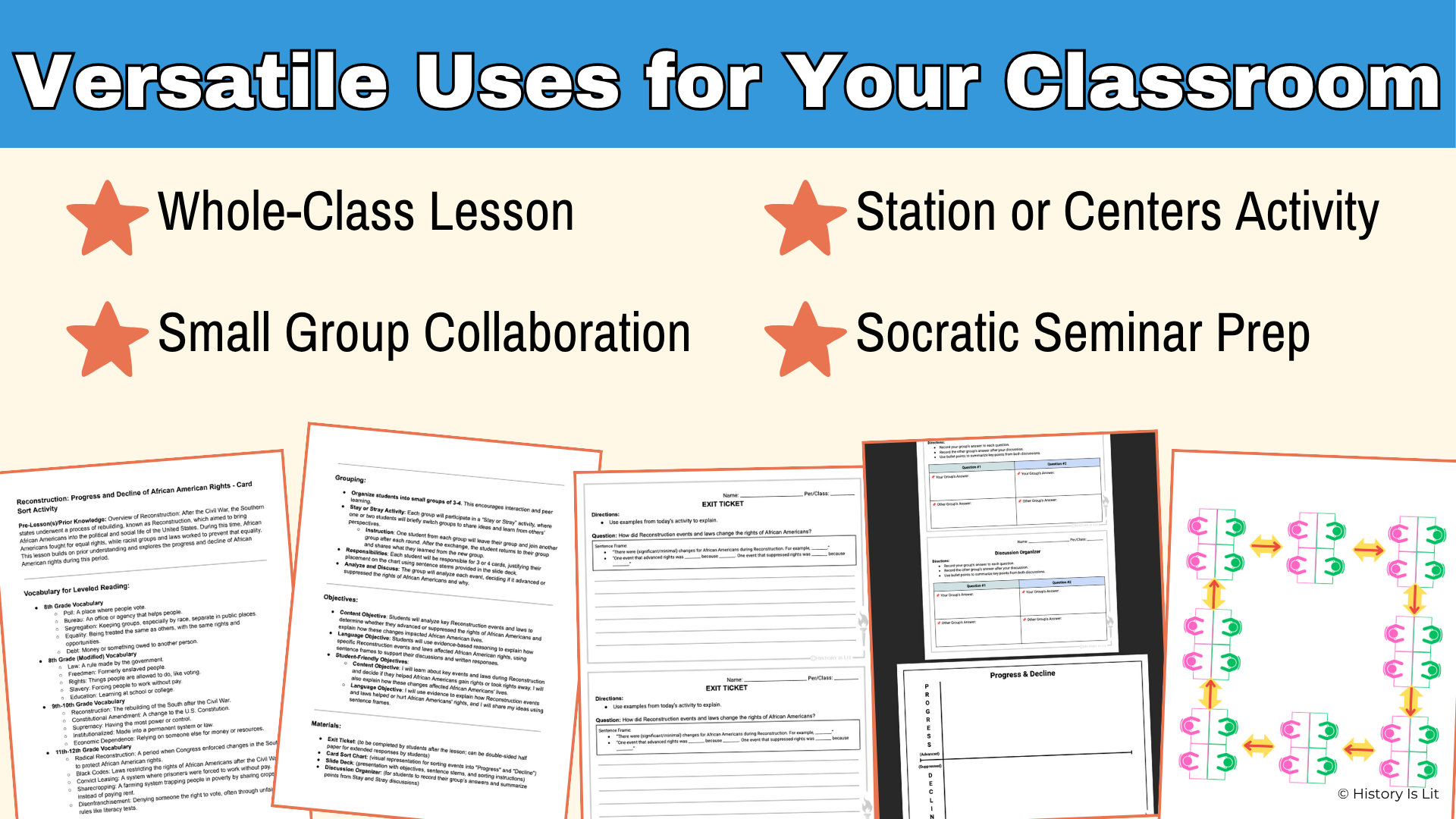
Use it for:
Electoral College lessons.
Presidential election units.
U.S. Constitution and government instruction.
Civics and citizenship activities.
Argumentative writing practice.
Socratic Seminars and classroom debates.
Primary and secondary source analysis.
Critical thinking and evidence-based discussions.
The materials can also be used when studying presidential elections, democratic institutions, or the role of citizens in government.
Standards & Skills Supported
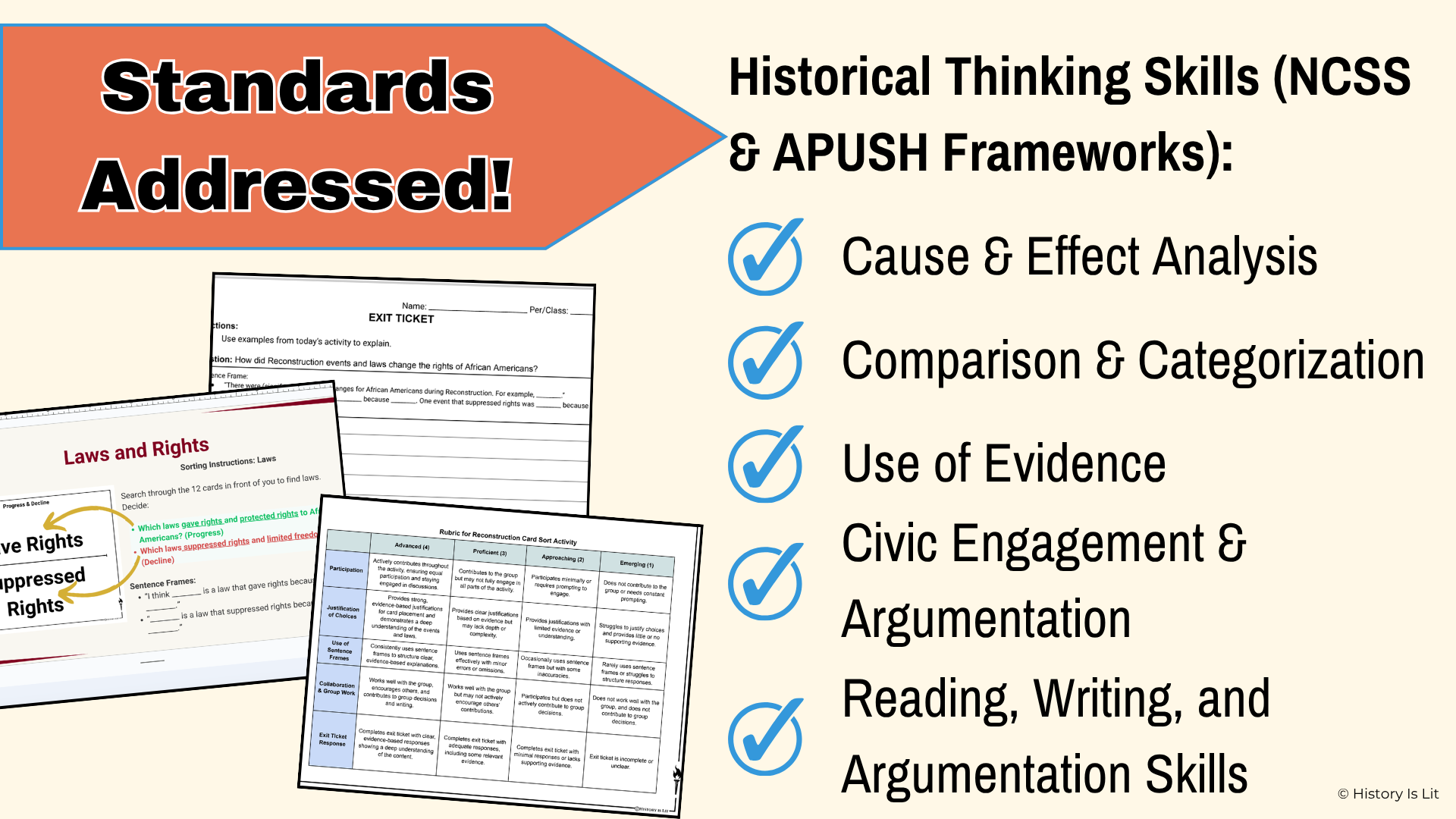
This unit provides opportunities to practice Common Core literacy and speaking and listening skills, including:
CCSS RH.6-8.1: Cite textual evidence to support analysis of primary and secondary sources.
CCSS RH.6-8.2: Determine the central ideas or information of historical sources.
CCSS WHST.6-8.1: Write arguments focused on discipline-specific content.
CCSS SL.8.1: Engage effectively in collaborative discussions, building on others' ideas and expressing their own clearly.
CCSS SL.8.4: Present claims and findings using relevant evidence and appropriate organization.
Specific standards addressed depend on the lesson and activity.
Why Teach the Electoral College Through Inquiry?
Understanding the Electoral College requires more than learning how electoral votes are counted.
Students need opportunities to investigate why the system was created, consider how it affects presidential elections, and evaluate competing arguments about its role in American democracy.
This Electoral College mini-unit uses differentiated readings, evidence-based activities, structured discussion, and argumentative writing to help students form informed conclusions.
Students aren't simply learning about the Electoral College. They're learning how to evaluate a complex civic issue using evidence and reasoning.
Important Information About the Teacher Guide
The Electoral College Mini-Unit: Lesson Plans & Pacing Guide is a 143-page PDF with bookmarks for easy navigation.
To access the bookmarks, download the PDF and open it in a desktop PDF reader, such as Adobe Acrobat or Preview.
Please note: Bookmarks are not supported in Google Drive's PDF viewer.
Teaching the Electoral College can be challenging, especially when students are trying to understand how presidential elections work, why the Electoral College exists, and whether it fairly represents voters.
You want students to do more than memorize electoral votes. You want them to examine different perspectives, evaluate evidence, and develop their own informed opinions about the American electoral system.
But finding accessible readings, creating meaningful discussion questions, and planning engaging civics activities takes time.
That's why I created this 8-Lesson Electoral College Mini-Unit for Middle School U.S. History and Civics.
This comprehensive unit includes differentiated informational texts, graphic organizers, interactive activities, Socratic Seminar materials, and an argumentative letter-writing activity to help students explore how the Electoral College works and evaluate its role in American democracy.
Instead of simply telling students whether the Electoral College is fair, this unit encourages them to investigate the issue, consider multiple perspectives, and support their conclusions with evidence.
Eight structured lessons. Differentiated readings. Meaningful discussions. One complete Electoral College unit.
What's Included in This Electoral College Mini-Unit?
This 8-lesson Electoral College unit provides the instructional materials, activities, and assessments you need to teach students about presidential elections, representation, and civic participation.
Lesson Plans & Teacher Resources
8 Complete Lessons: Structured lessons that guide students through learning about the Electoral College.
Teacher Pacing Guide: Helps you organize instruction and manage your unit.
Electoral College Posters & Visuals: Support student understanding of important concepts and vocabulary.
Printable & Digital Materials: Ready-to-use PDFs and editable Google Docs/Slides.
Differentiated Electoral College Readings
Grade-Level Informational Articles: Introduce students to Electoral College concepts and different perspectives.
Modified Reading Passages: Provide accessible versions for students who need additional reading support.
KWL Charts: Activate prior knowledge, guide inquiry, and encourage reflection.
Evidence Selection Graphic Organizers: Help students identify relevant information and support their arguments.
Interactive Learning Activities
Give One, Get One Activity: Students exchange ideas and gather evidence from classmates.
Socratic Seminar Fishbowl Discussion: Encourages students to examine different perspectives through structured academic discussion.
Discussion Sentence Frames: Support students in expressing opinions, asking questions, and responding to classmates.
Student Coaching Sheets: Keep students actively engaged while observing and evaluating discussions.
Feedback Tickets: Encourage constructive peer feedback and reflection.
Assessment & Civic Engagement
Exit Tickets: Check student understanding throughout the unit.
Reflection Sheets: Encourage students to evaluate their learning and consider different perspectives.
Civic Engagement Letter-Writing Activity: Students develop an evidence-based argument and communicate their position through a letter.
Argument-Building Tools: Help students select evidence and organize their reasoning.
Why Teachers Love This Electoral College Unit
Teach a Complex Topic With Clear, Structured Lessons
The Electoral College can be confusing for middle school students. This mini-unit breaks the topic into manageable lessons that build understanding and encourage students to think critically about presidential elections.
Differentiate Without Creating Multiple Lessons
Grade-level and modified readings allow students with different reading needs to explore the same essential concepts and participate in shared classroom discussions.
Encourage Evidence-Based Arguments
Students examine different perspectives on the Electoral College and use evidence to develop, explain, and defend their positions.
Make Student Discussions More Meaningful
The included Socratic Seminar Fishbowl materials provide structure for classroom conversations. Discussion starters, sentence frames, and coaching sheets help students participate thoughtfully while keeping both circles accountable.
Connect Civics to Real-World Participation
The letter-writing activity gives students an opportunity to apply their learning by developing and communicating an informed position on a civic issue.
Save Valuable Planning Time
With lesson plans, differentiated readings, graphic organizers, discussion materials, and assessments included, you won't need to build an Electoral College unit from scratch.
What Will Students Learn?
Throughout this Electoral College lesson plan unit, students explore questions about presidential elections and American democracy.
Students develop an understanding of:
How the Electoral College works in presidential elections.
Why the Electoral College was established.
How electoral votes relate to presidential election outcomes.
Different perspectives on the Electoral College.
Arguments for maintaining or reforming the Electoral College.
The relationship between voting, representation, and democracy.
How citizens can participate in civic discussions and communicate their views.
Rather than focusing only on how the system works, students consider important questions about fairness, representation, and civic responsibility.
Build Critical Thinking With a Socratic Seminar
One of the key components of this unit is the Electoral College Socratic Seminar Fishbowl Discussion.
Students use evidence from their readings and activities to discuss different perspectives on the Electoral College.
Inner Circle Students:
Participate in evidence-based academic discussions.
Ask thoughtful questions about the Electoral College.
Evaluate arguments and consider opposing perspectives.
Build on classmates' ideas.
Outer Circle Students:
Actively listen and observe the discussion.
Use coaching sheets to evaluate discussion skills.
Provide constructive peer feedback.
Reflect on evidence and arguments presented.
This structured approach gives students opportunities to practice critical thinking, respectful disagreement, and collaborative discussion skills.
Extend Learning With a Civic Engagement Letter
Students take their learning beyond the classroom through a civic engagement letter-writing activity.
Using evidence gathered throughout the unit, students develop an argument about the Electoral College and communicate their position in writing.
This activity encourages students to:
Develop a clear claim.
Select relevant supporting evidence.
Explain their reasoning.
Consider alternative perspectives.
Communicate their ideas in an organized, persuasive letter.
It's a meaningful way to connect middle school civics, argumentative writing, and real-world civic participation.
Perfect for Middle School U.S. History & Civics
This Electoral College mini-unit is designed for 8th-grade U.S. History and middle school civics classrooms.
Use it for:
Electoral College lessons.
Presidential election units.
U.S. Constitution and government instruction.
Civics and citizenship activities.
Argumentative writing practice.
Socratic Seminars and classroom debates.
Primary and secondary source analysis.
Critical thinking and evidence-based discussions.
The materials can also be used when studying presidential elections, democratic institutions, or the role of citizens in government.
Standards & Skills Supported
This unit provides opportunities to practice Common Core literacy and speaking and listening skills, including:
CCSS RH.6-8.1: Cite textual evidence to support analysis of primary and secondary sources.
CCSS RH.6-8.2: Determine the central ideas or information of historical sources.
CCSS WHST.6-8.1: Write arguments focused on discipline-specific content.
CCSS SL.8.1: Engage effectively in collaborative discussions, building on others' ideas and expressing their own clearly.
CCSS SL.8.4: Present claims and findings using relevant evidence and appropriate organization.
Specific standards addressed depend on the lesson and activity.
Why Teach the Electoral College Through Inquiry?
Understanding the Electoral College requires more than learning how electoral votes are counted.
Students need opportunities to investigate why the system was created, consider how it affects presidential elections, and evaluate competing arguments about its role in American democracy.
This Electoral College mini-unit uses differentiated readings, evidence-based activities, structured discussion, and argumentative writing to help students form informed conclusions.
Students aren't simply learning about the Electoral College. They're learning how to evaluate a complex civic issue using evidence and reasoning.
Important Information About the Teacher Guide
The Electoral College Mini-Unit: Lesson Plans & Pacing Guide is a 143-page PDF with bookmarks for easy navigation.
To access the bookmarks, download the PDF and open it in a desktop PDF reader, such as Adobe Acrobat or Preview.
Please note: Bookmarks are not supported in Google Drive's PDF viewer.

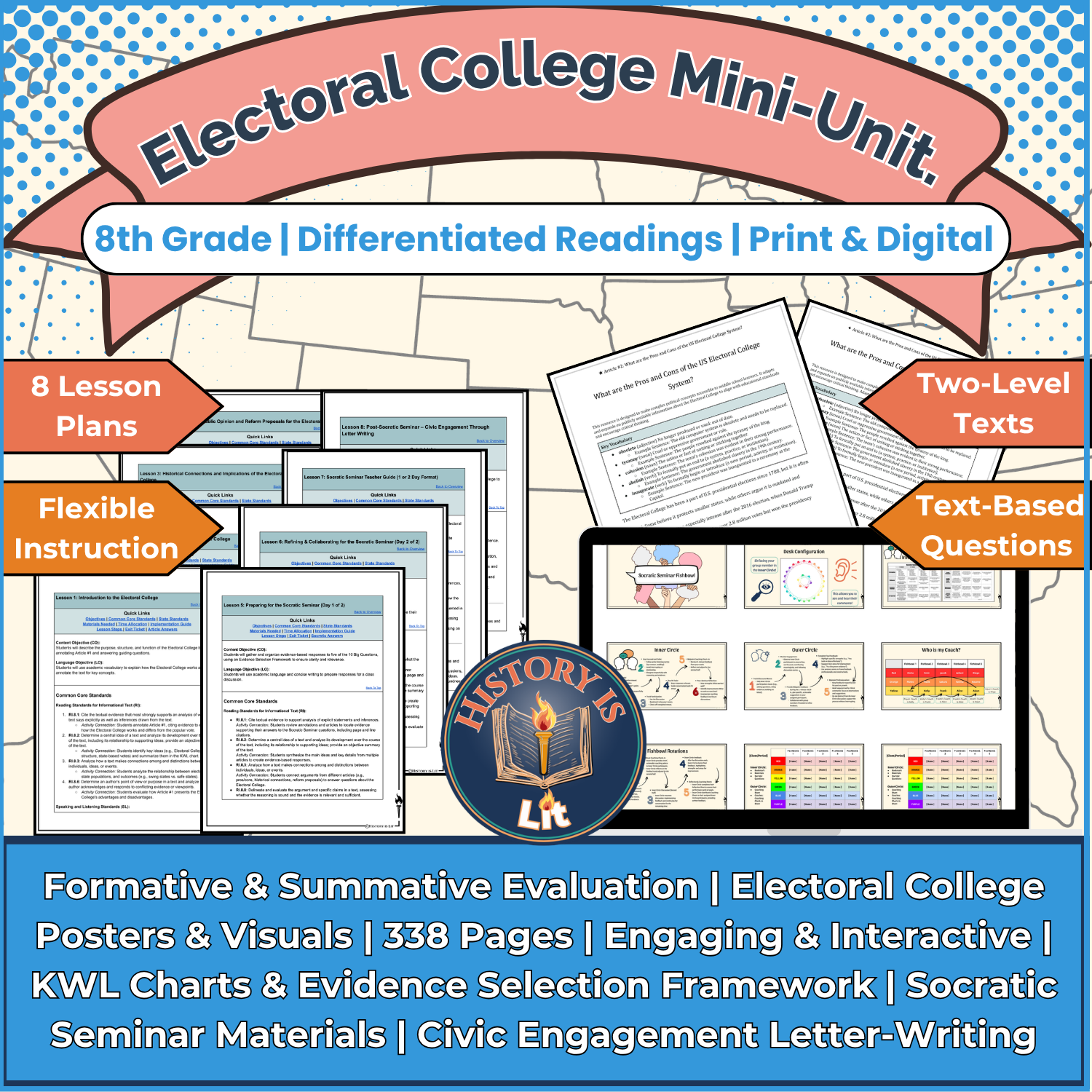 Image 1 of 11
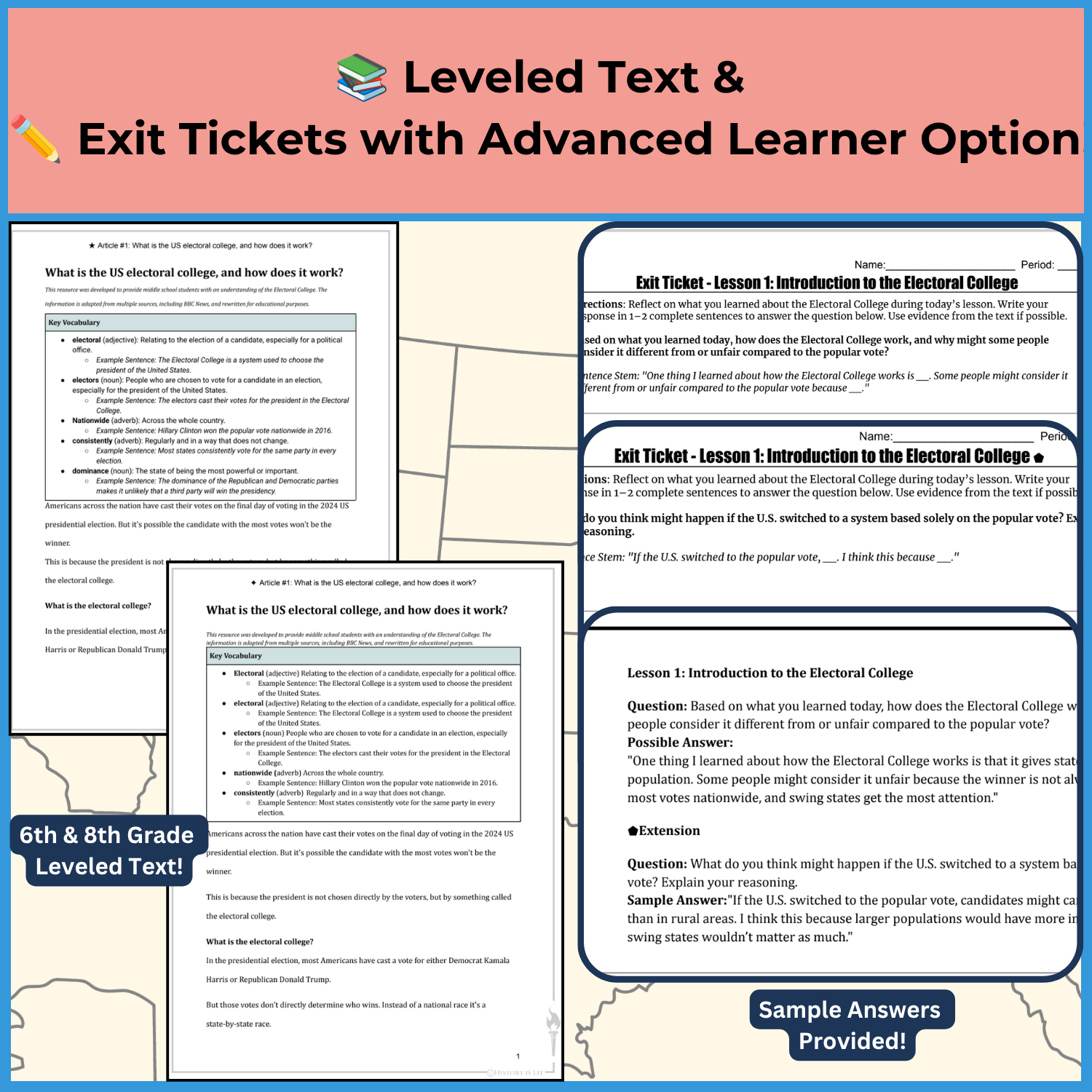 Image 2 of 11
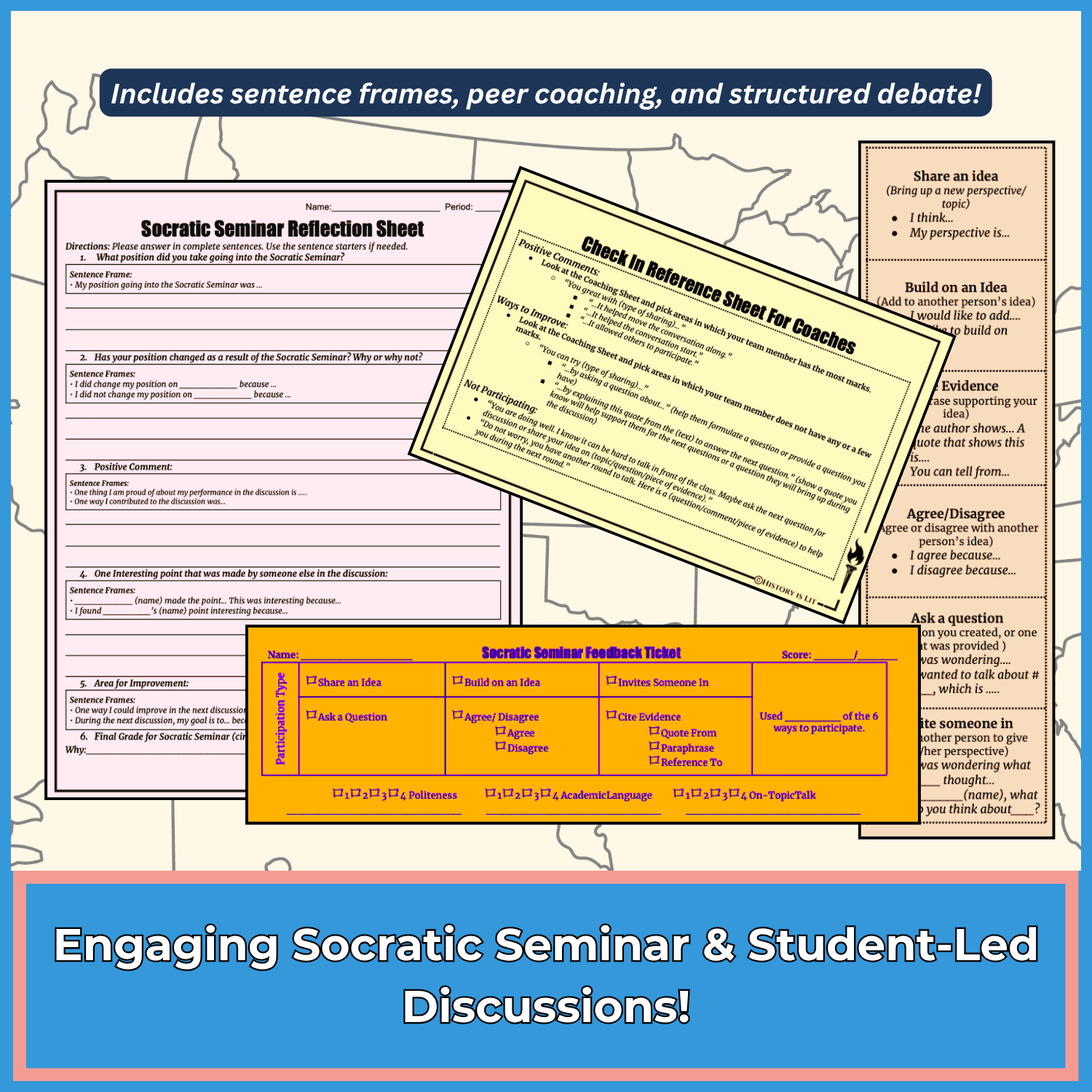 Image 3 of 11
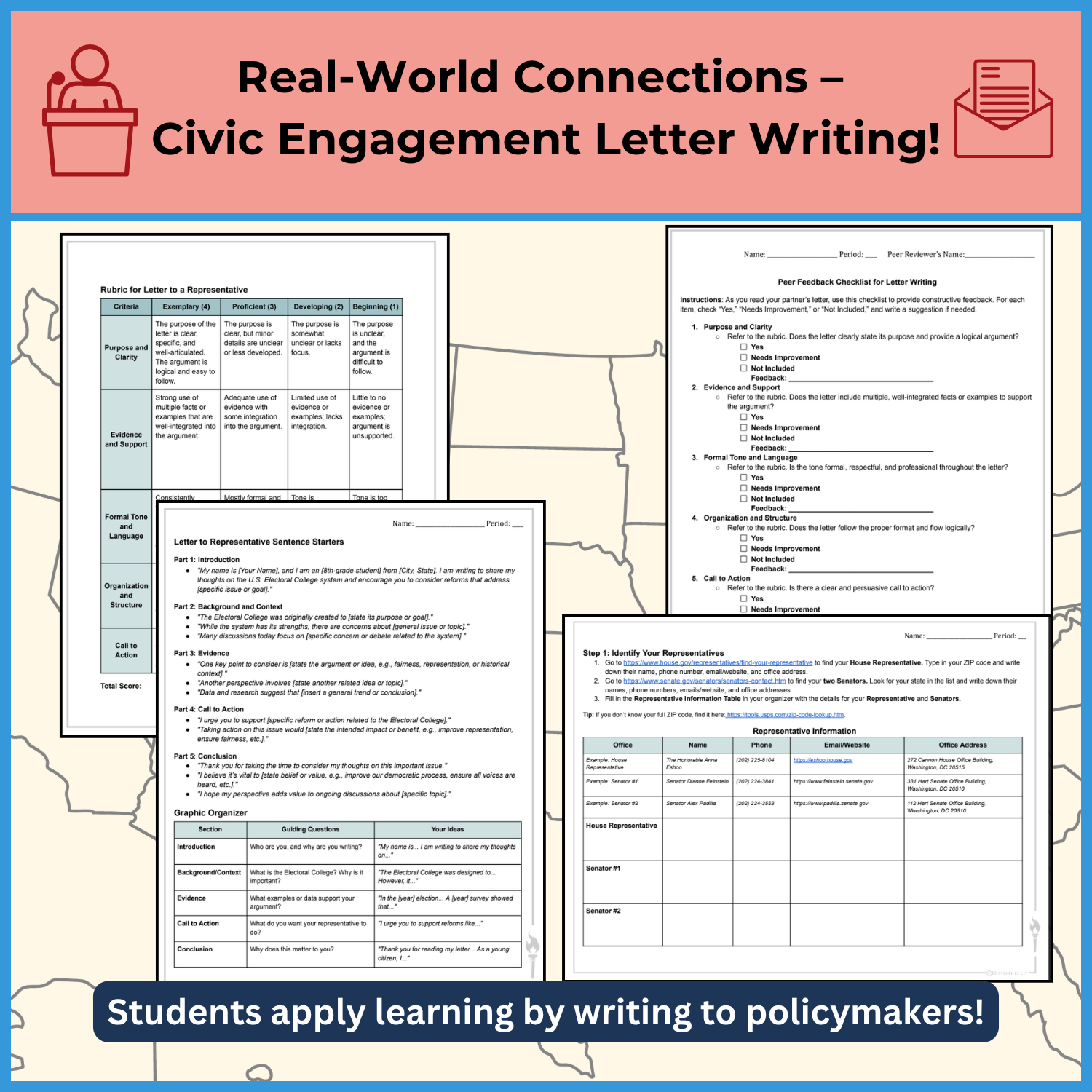 Image 4 of 11
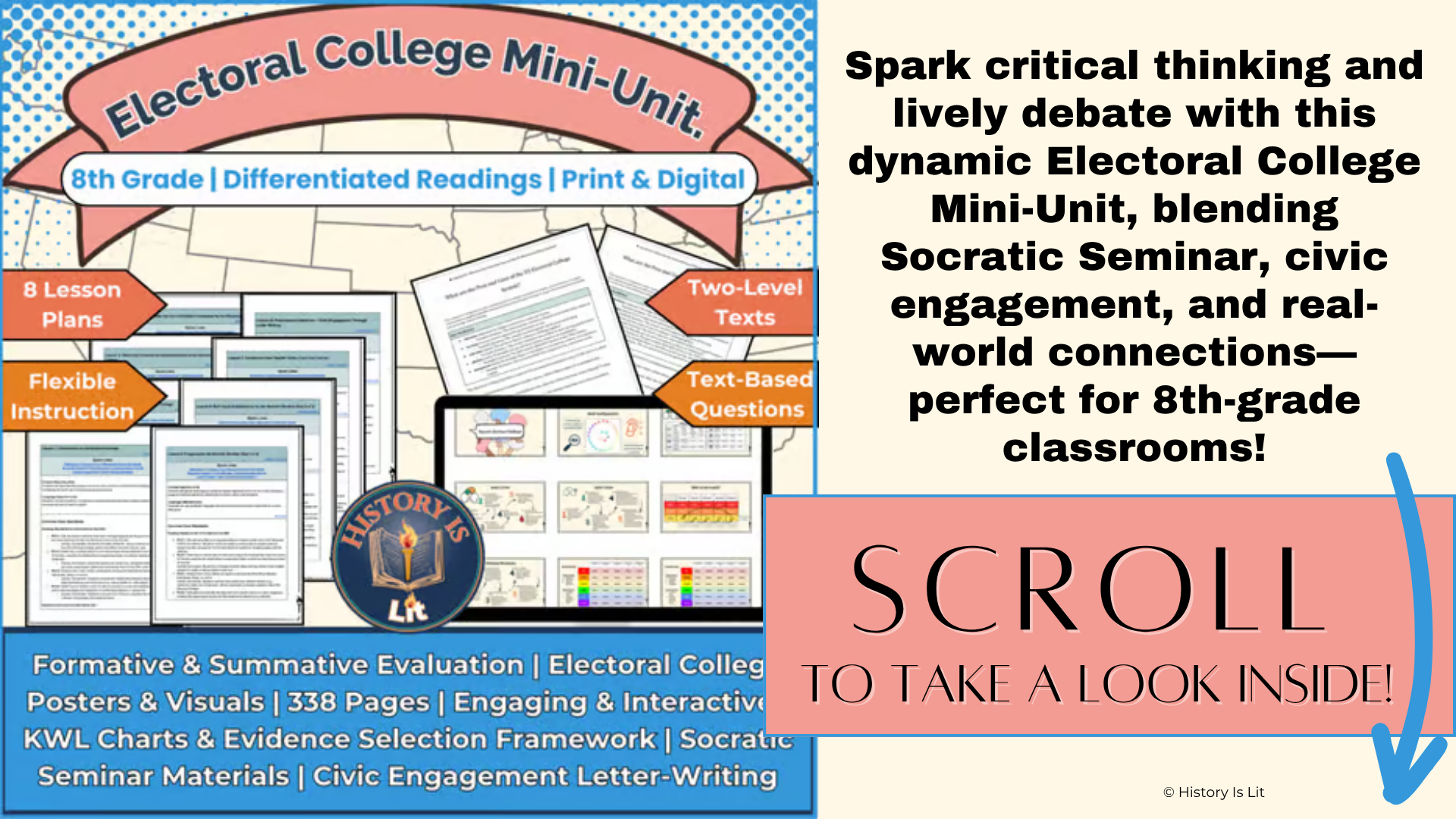 Image 5 of 11
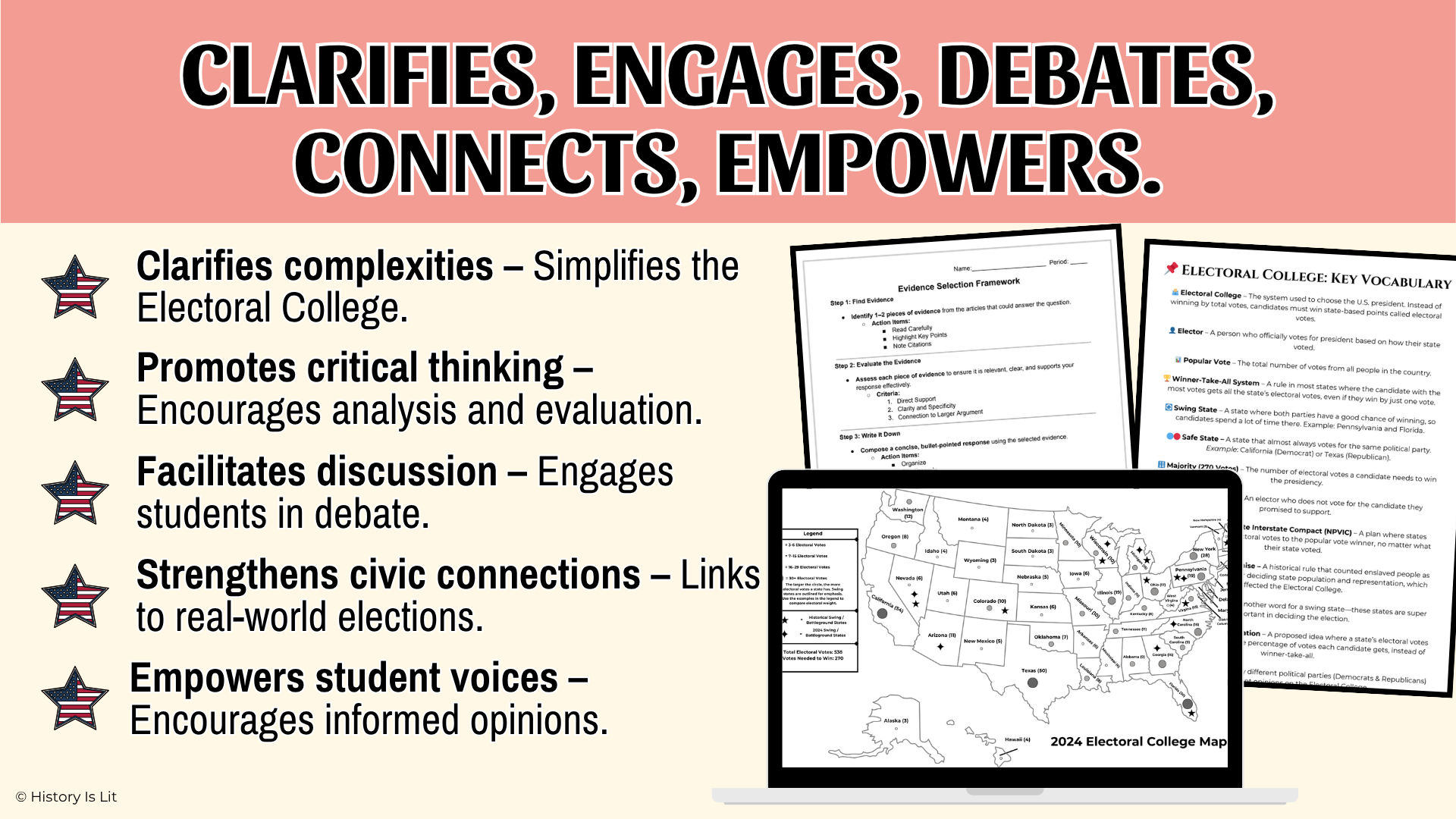 Image 6 of 11
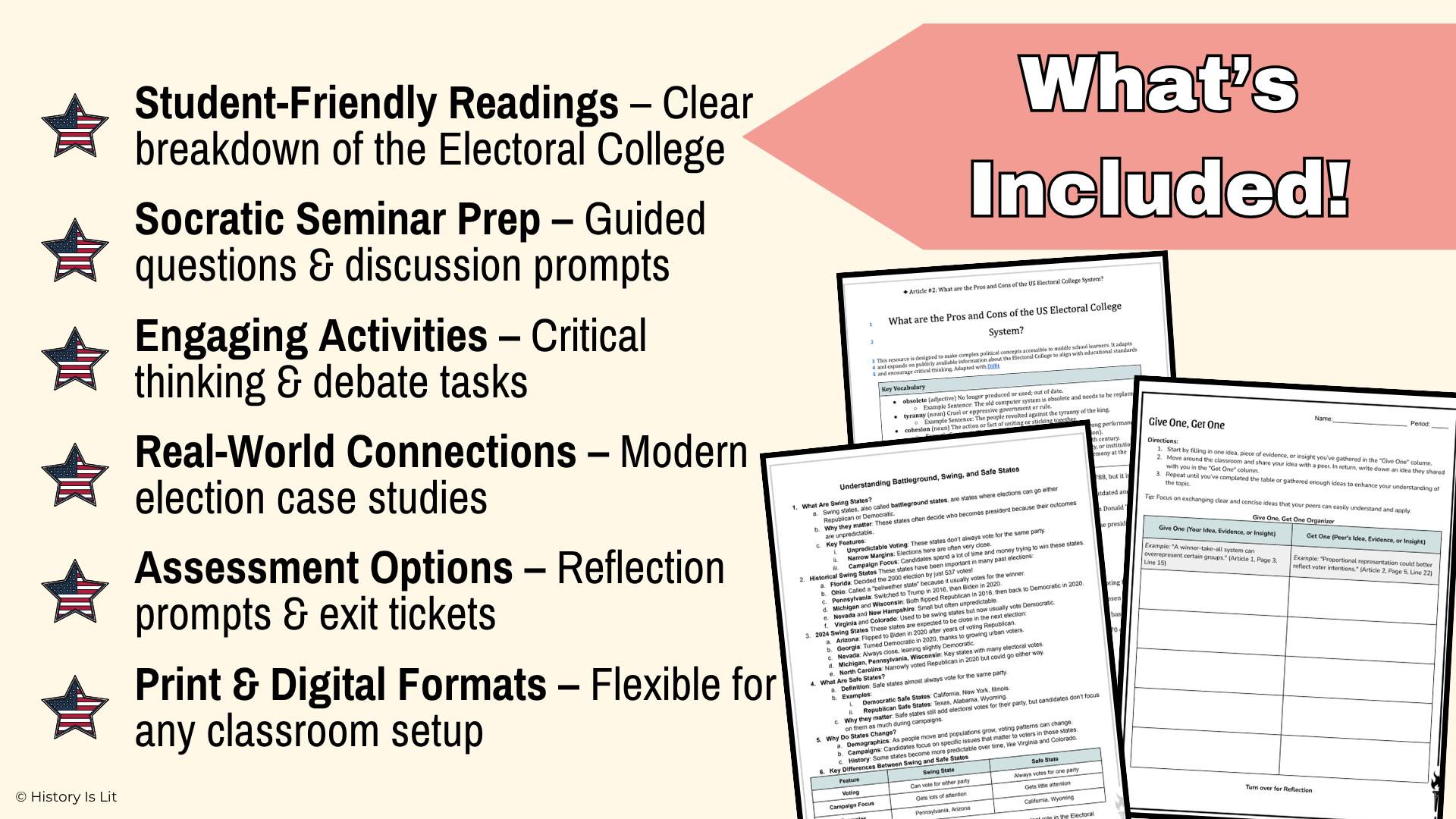 Image 7 of 11
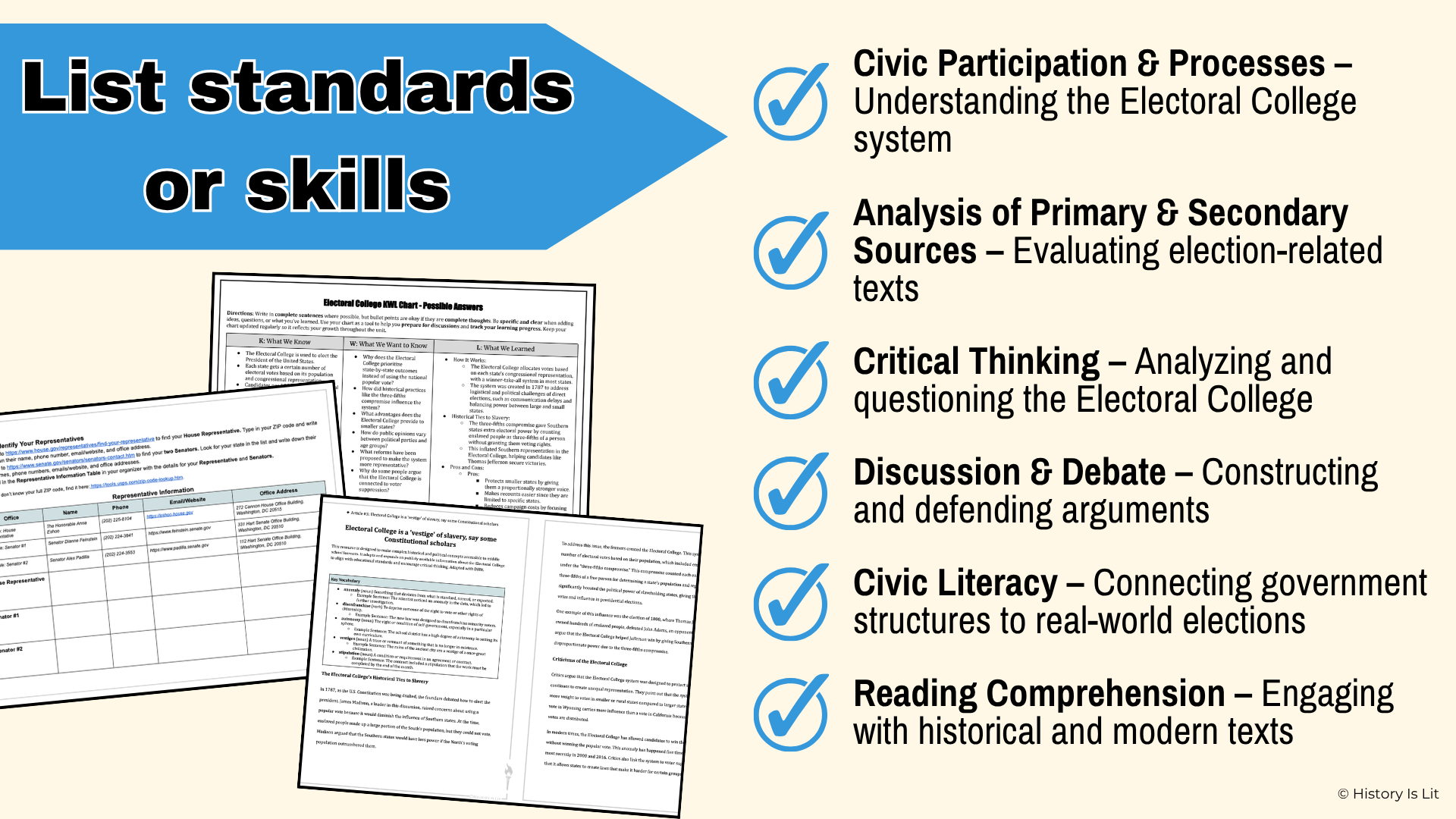 Image 8 of 11
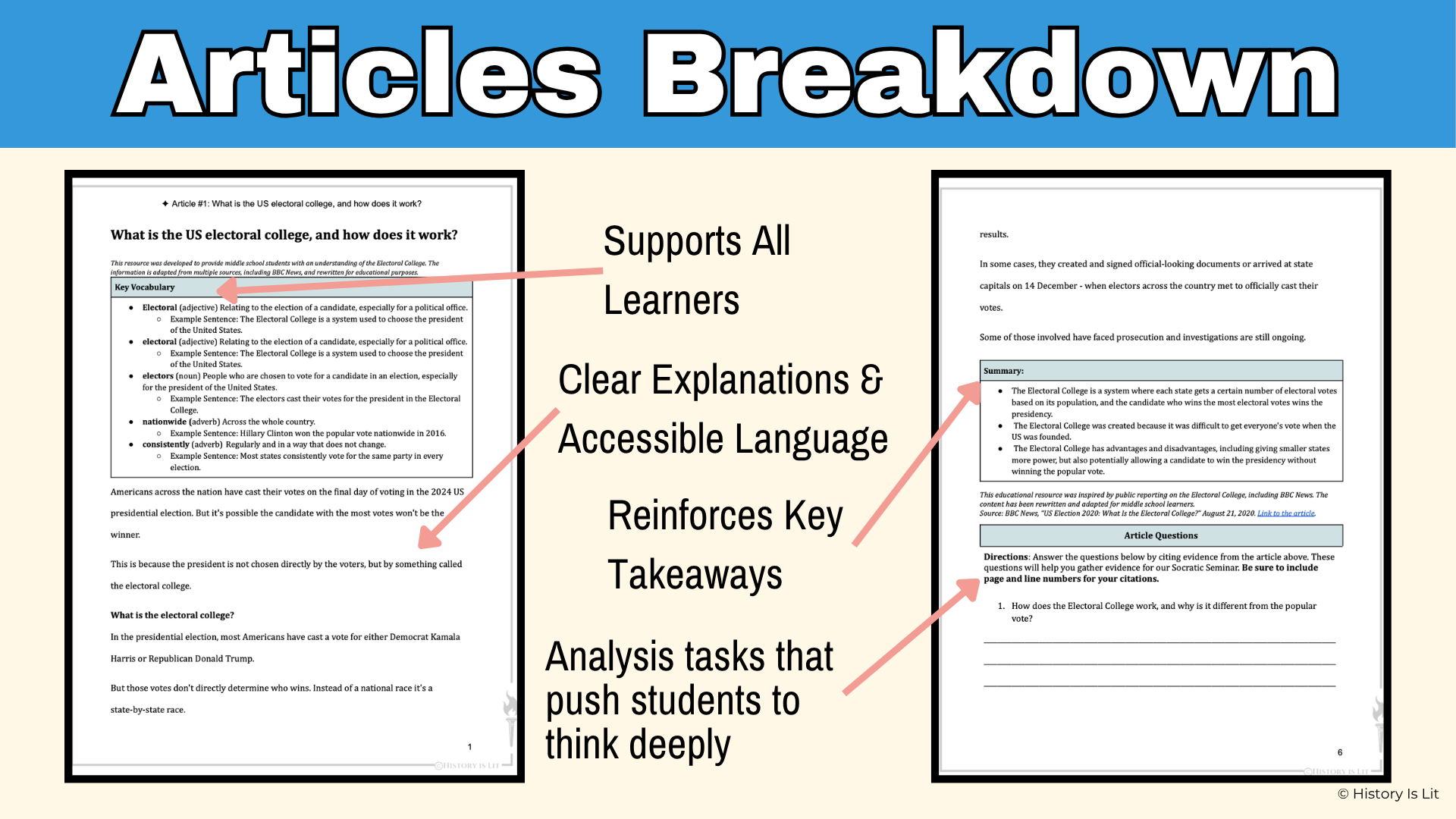 Image 9 of 11
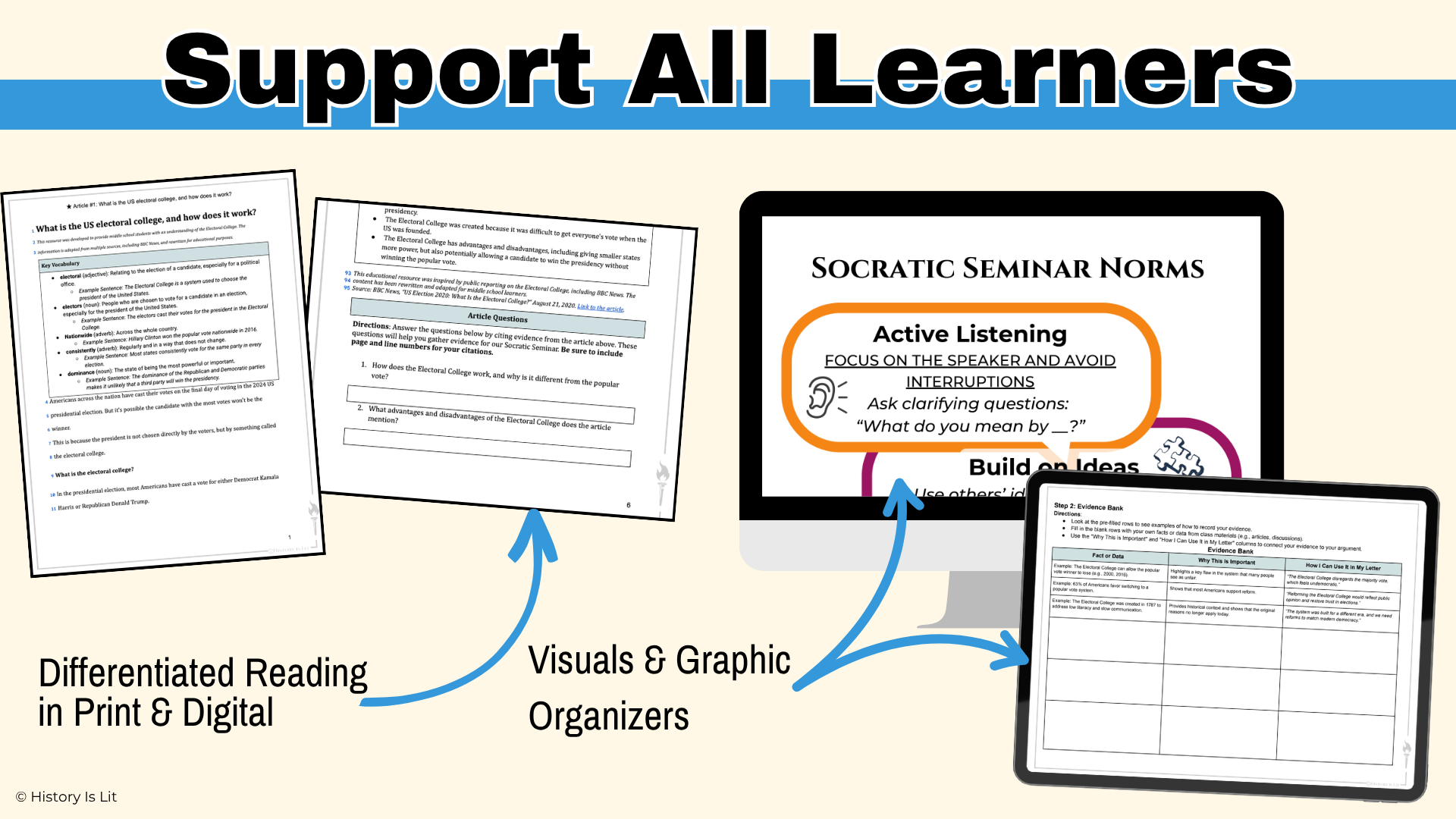 Image 10 of 11
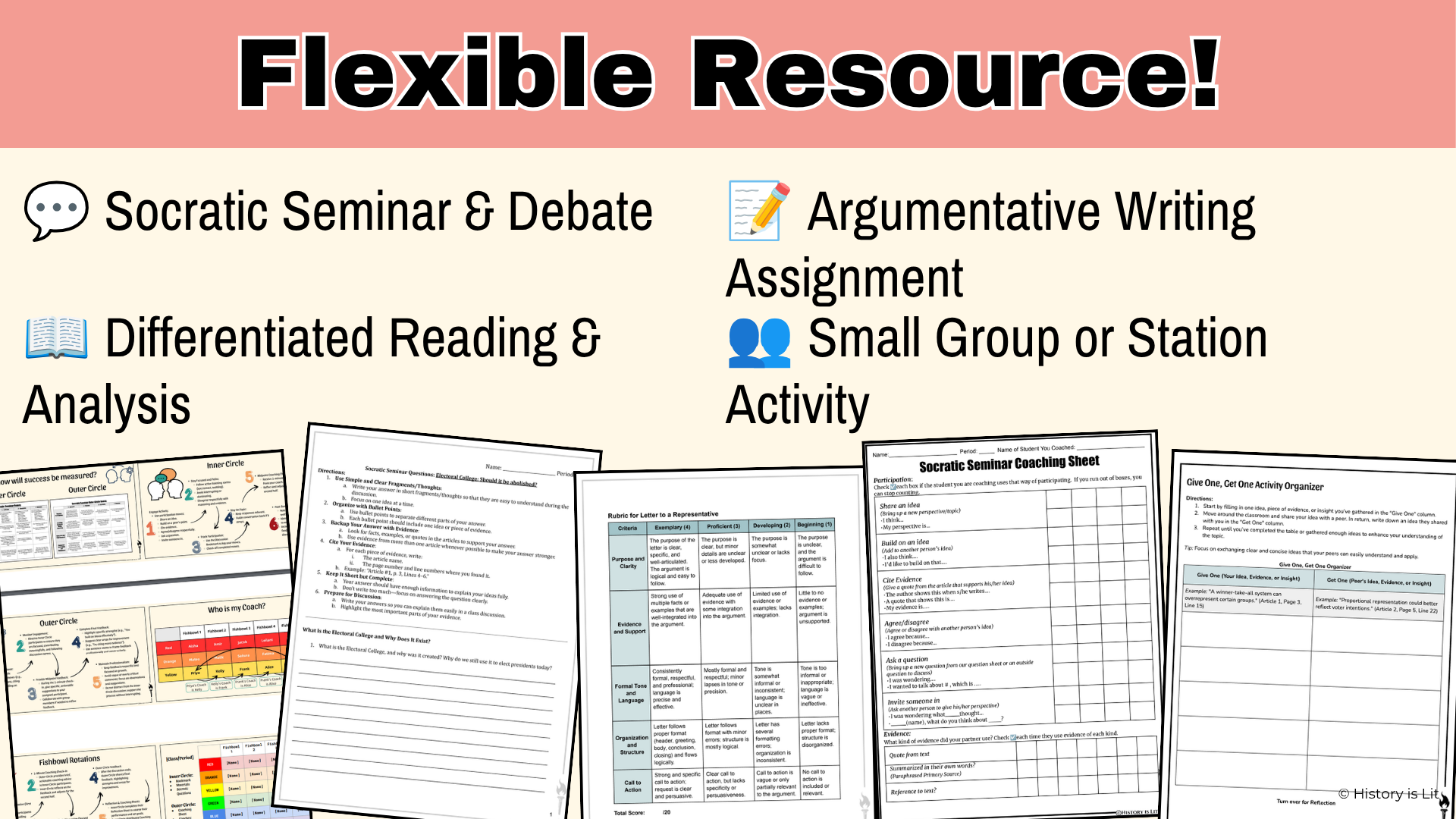 Image 11 of 11