Because it's not about how many times students talk.
Ever finish a Socratic Seminar with a clipboard full of notes, a stack of rubrics, and the realization that you still have to figure out everyone's grades?
I've been there.
Between facilitating the discussion, tracking participation, and making sure students are actually engaging with each other's ideas, assessing a Socratic Seminar can feel like another job entirely.
But here's what I've learned: I don't need to count every time a student speaks to assess meaningful academic discussion.
In fact, that's not what I'm looking for.
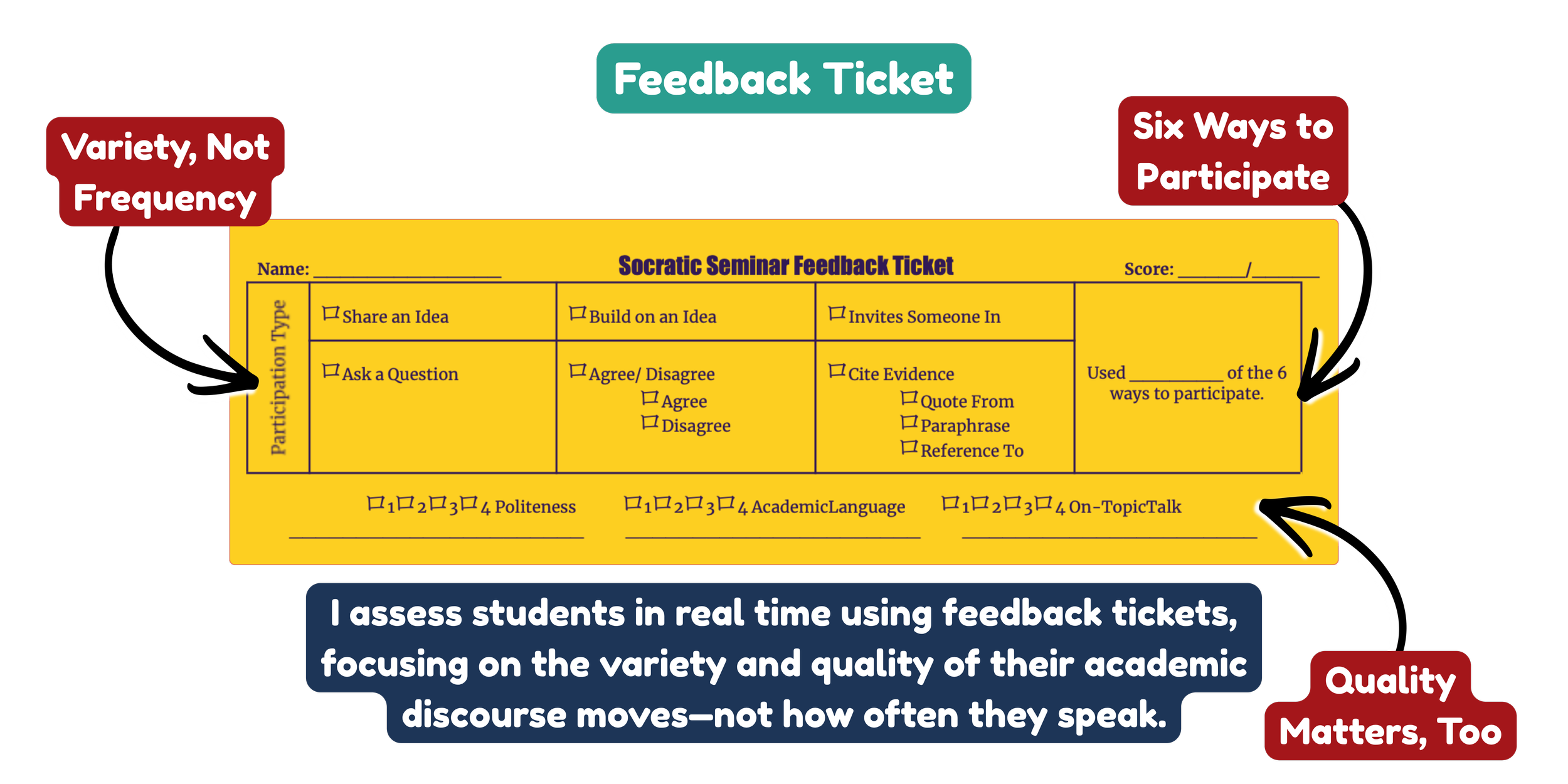
I want students using a variety of academic discourse moves. Building on someone else's thinking. Asking thoughtful questions. Supporting their ideas with evidence. Respectfully challenging a different perspective.
Because the student who speaks twice and moves the conversation forward may demonstrate stronger discussion skills than the student who talks ten times without adding much.
And my assessment should reflect that.
Six Students. One Manageable Assessment.
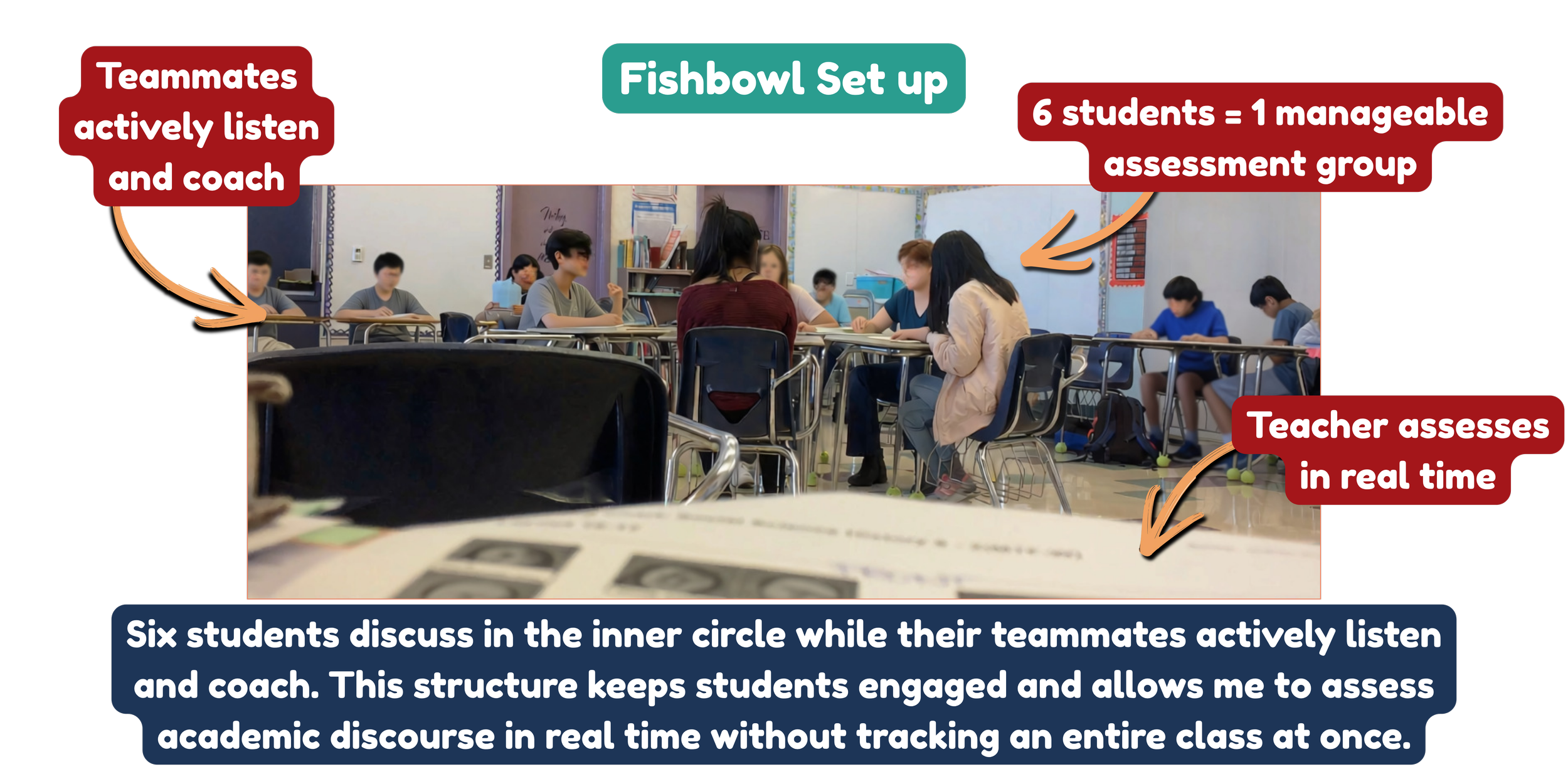
Rather than trying to assess an entire class at once, I use a Fishbowl Protocol with six students in the inner circle.
While they're discussing, I'm listening for the discourse moves we've practiced and recording their performance using feedback tickets.
I'm not writing a transcript or tracking every contribution. I'm looking for evidence of students applying different discussion skills.
Meanwhile, their teammates in the outside circle are actively listening and providing feedback.
Afterward, I do a quick cross-check of what their teammates submitted against my own observations.
And that's it.
The majority of my grading happens while the discussion is taking place.
No stack of rubrics waiting for me after school.
The Goal Is Better Discussion, Not More Talking
One thing I always come back to is that academic discussion is a skill, not a personality trait.
Students need opportunities to practice different discourse moves before we expect them to use those skills independently.
That's why I start with low-stakes discussions, provide clear expectations, and make sure students understand what meaningful participation looks and sounds like.
When it's time for a Socratic Seminar, they're not trying to hit an arbitrary number of contributions.
They're practicing how to think, listen, respond, and build understanding together.
And I'm assessing those skills as they demonstrate them.
Because the goal isn't to get students talking more.
It's to get them talking with purpose.
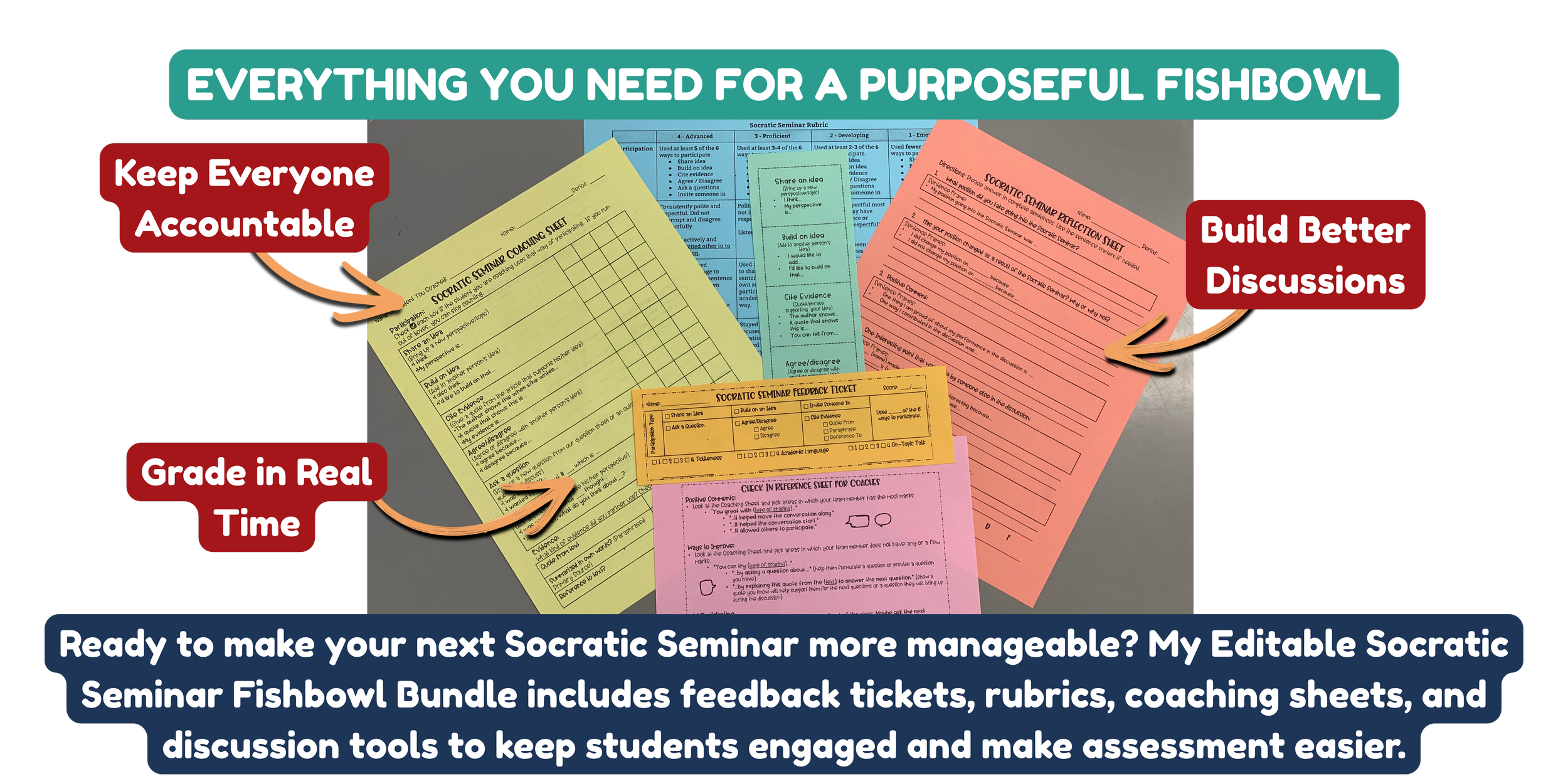
Want to try this approach in your classroom?
My Editable Socratic Seminar Fishbowl Bundle includes the feedback tickets, coaching sheets, discussion starters, and rubric I use to make discussions more purposeful and assessment more manageable.